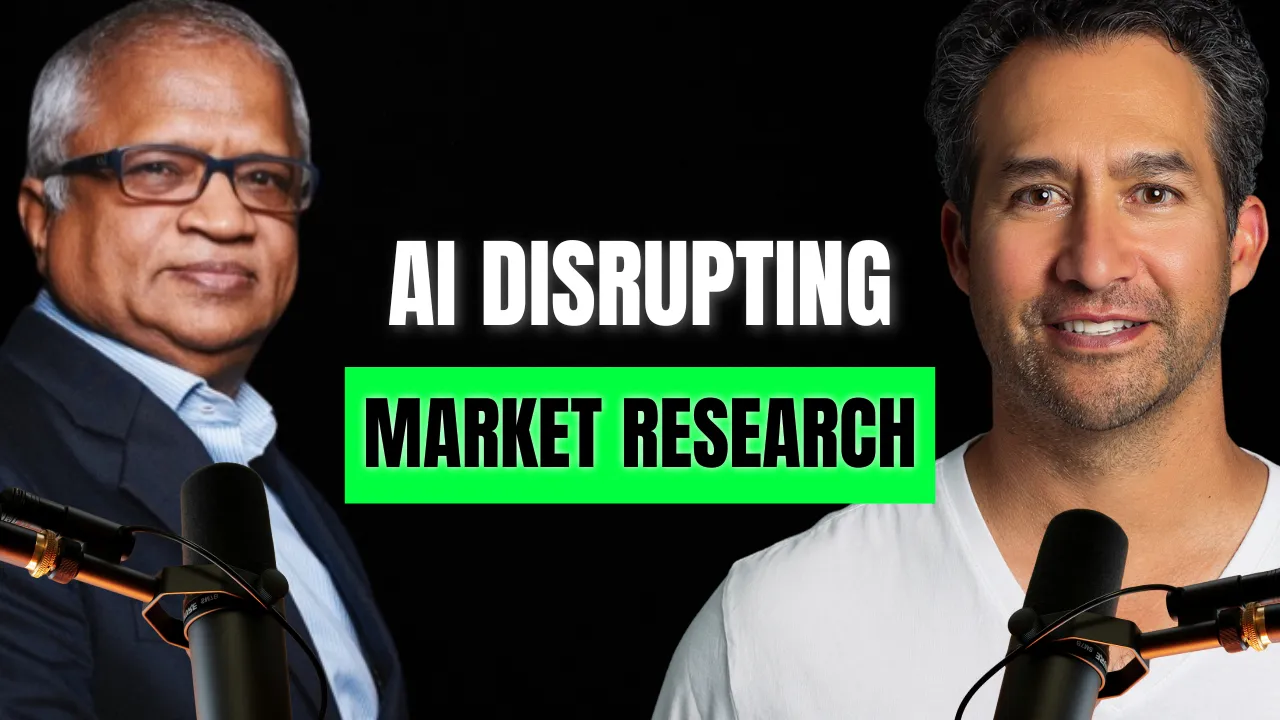
Jake Aaron Villarreal: Welcome to our podcast, Born in Silicon Valley, where we interview startup founders exploring their journeys, their successes, challenges, and lessons learned. We hope you be inspired in discovering what it takes to build a thriving startup. I'm your host, Jake Villarreal, and here with us today, we've got Asim Razzaq, co-founder and CEO of Yotascale. Asim, welcome to the show.
Asim Razzaq: Thank you, Jake. Glad to be here.
Jake Aaron Villarreal: Great. So a little bit more uh about Asim. He is uh not just the CEO of Yotascale, but he was a Senior Director of Platform Engineering at PayPal where he was responsible for all core infrastructure processing payments and logins. Asim has held engineering leadership roles at early-stage and mid-stage startups and large companies as well, including eBay and PayPal. His teams have focused on building cloud-scale platforms and applications. He's earned his BS in honors at University of Texas, Austin, and is also a published author, which is unique and I'd like to get into that a little bit too. But before we dive in, uh where you joining us from today, Asim?
Asim Razzaq: I'm uh in San Francisco Bay Area. It's nice and sunny and uh enjoying the December weather here.
Jake Aaron Villarreal: Great. Are you originally from there?
Asim Razzaq: Um I'm not originally from uh the Bay Area, but I've been here uh a while. A number of years.
Jake Aaron Villarreal: That's great. I'm, I'm from there too originally and it's uh always evolving and growing. It's, seems to be the mecca of technology. Good place to start a business. Um can you uh share a little bit before we get into your story here of the company? Uh a little bit about your, your upbringing and what really shaped you to become eventually an entrepreneur.
Asim Razzaq: Right. Yeah. So I uh I grew up in uh Pakistan, a city called uh uh Lahore and did my um... all of my schooling was there. And I, I hail from a middle-class family, so it wasn't like we had too many means. But I mean, it was a comfortable, relatively comfortable childhood and uh I think what shapes you has many different dimensions. Uh one of which is that I'm the eldest of my siblings, right? So I'm the eldest and have two other siblings. So there's always this sense of responsibility, sense of being the role model for them. I think that was uh that was important. And um, you know, my uh, in, in my early childhood my father he was uh, he started his own chartered accountancy firm, which is known as CPA here in the in the US. Right? So he um, I had some example of you know going on your own and uh doing your own thing and um, you know going through school you know ended up being in a lot of competitive situations including whether it's academics, whether it's sports. I played pretty much most of the sports at that part of the world right, so it included uh field hockey, cricket, uh soccer. Uh I did um competitive debating as well. That was part of it uh up until the high school, high school level. And um so I think a lot of those things uh help you get a broader view.
So it's not just about academics or just about sports and um, and, and your, your family sort of background and history shapes your uh, shapes your thinking. And the mindset was that, and I don't have anything against when people have an inher- inheritance and a lot of money, right? I'm not, I'm not trying to pigeonhole or corner anybody like that. But from the beginnings that I came from, you know, you had to sort of make it happen, right?
Jake Aaron Villarreal: Yeah.
Asim Razzaq: Uh and you had to hustle and you had to um make a lot of stuff work, right? Uh and I think you you hone into that fairly early in your childhood, right? That that's, that understanding that things are not going to be handed to you on a, on a platter, right? That you really really need to work hard uh towards achieving your goals.
Jake Aaron Villarreal: I like how you say that "hustle and make it happen." It seems to be the underlying theme of a lot of founders when they're building a product or a company. You don't always have the roadmap and you don't always have all the answers. So you have to find a way... use your resourcefulness. Not your resources, but your resourcefulness to figure things out. And it seems to be a common thread we're seeing amongst leaders. Um you know, we're going to talk a little bit about your company. Um, prior to this you were at companies that were well-established, well-branded organizations. Did you have any other startups that you started prior to this company here that were...
Asim Razzaq: I didn't startups but I, I was always in startups uh before uh PayPal and eBay, right? So I was um you know when I when I started in 200... you know, to kind of come and witness the .com bust here in the Bay Area days for those, those of us who remember, um I, for example, I started a company that was ground level you know. I was doing multiple roles, including engineering, uh taking care of the dishes in the kitchen, being the IT person, the architect, so it was all of it, right? But I was lucky enough to be around people who are veterans right. Because it was easy to go to companies that were not doing a lot of meaningful things. So I think since then I've been in startups of different, various stages and I feel um you know that's sort of been my calling and comfort zone. And I've even at PayPal and eBay I had the opportunity to be more like a entrepreneur because it was... at PayPal when I joined it was to help uh build their developer platform which was the third wave of growth right. So that theme has been there whether a large company or small company, right. It's uh, it's trying to do something that um, that that can be world-changing or that can have an impact um that is beyond just uh, just your, your immediate sphere of influence.
Jake Aaron Villarreal: That's great. Thanks for sharing that. Um the, the company you have today, Yotascale, um when you thought about creating uh a solution with this in mind, what was the problem you were trying to solve? And you can take this back as far as you want to go in terms of what you saw in your current work, what you saw in the industry. But maybe kind of paint the picture of the space you're in and the problem you identified and really what you're trying to solve for.
Asim Razzaq: Yeah, you know, I, it's, it's, it's a great question. And a lot of times uh people think uh there's an "aha moment." Like one day you wake up and it's like "I have to do this." And that's how books are written and that's how history is uh narrated a lot of, a lot of times, right? But I think the reality is not typically like that, right? The reality is that the seed is planted somewhere along the way. So I love your uh context there like go as far as you possibly uh you know whatever makes sense in the, in, that's relevant to our conversation. And, and I think um I would go back to when I was um doing my undergraduate computer sciences degree. There was a paper that uh I co-authored with one of the professors there, which was about resource management in disconnected systems. Now it sounds very like nerdy and complex, but the bottom line was that at the time the internet was still... I wouldn't say it's infancy, but still had challenges in terms of resources right. So how do you leverage the resources that you have in the best possible way? If you have a shopping cart and it gets disconnected right, like how do you make sure the shopping cart is in its uh in its best, best sort of... you, you, you can um manage the state of it and you can connect back and you don't lose it right? So it was, there's a lot of complex distributed systems type uh setup, but ultimately it was about optimizing one resource versus other, making those trade-offs, right? So, put a pin in that, right? That was, that was step one.
Step two was I I joined a, I would say a mid-stage startup uh back when I was working in Austin that, that um made software for the airline industry, right? So, this is a bunch of PhDs in operations research, right?
Jake Aaron Villarreal: Right.
Asim Razzaq: And I was lucky enough to be the person who was, who was sort of integrating that system into some of the front-end systems and all that. But I I saw what they were doing and it was just phenomenal. It was phenomenal. Like the system basically would do things where let's say you're Southwest Airlines, which is one of the customers, and the New York airport gets shut down because of weather. Like how do you route crew? How do you route um um equipment and planes in the most economical manner or the fastest manner, right? And it's a hard problem because if you look at the FAA regulations, if you look at the airline regulations, I mean there is I learned a lot about the airline industry. Like just lots of moving parts. Look at all those parts, like all of a sudden a small part on a plane can go out of warranty and then that's it. Like the plane is grounded. Like you could be all loaded as passengers but that's what they said, "we have a technical difficulty," right as an example. It's one example but I think the point is that it's also a resource management question with a lot of constraints. There's so many constraints and this amazing group of people had cracked the code on that right.
So kind of fast forward to the advent of cloud computing in 2007. You know, AWS came out with S3 and what have you. And my uh bread and butter has been ahead of, being ahead of uh platform engineering right. That's kind of been my key thing. And one of the things I realized with respect to this new way of doing things was that "okay, it's, it, it charges you. You're renting stuff in somebody's cloud." But at the same time, uh making the economics work becomes very, very hard. And I still remember uh there was one startup I was leading engineering for uh where the the cost was very high. They were in the data center and it was extremely high. And so they're like, "You're the cloud guy, you know, why don't you take us into, into cloud?" And this is a few years ago, but me circa 2013 or so. And I realized... I had contacts at public cloud providers. I had a conversation with them that uh actually it would be more expensive because I would have to retool, uh talent would have to change. So they didn't understand all of the stuff. We would have to have people who understand cloud economics, right? There was not a bunch of tooling and manageability, right? And it was a kind of a low point in my career because it's like, "Well, you know, you look at public cloud, I mean, it should save a startup, right? But why does it need so much uh thinking and change in talent and you know all of the models you have to build to really understand what's going on." So the manageability, especially from an economic point of view, seemed pretty hard. Well, we solved the problem a different way. Like we used some commodity hardware to kind of get through the problem that we were dealing with.
But that stuck with me. I was like this, "you've got to make this uh work for companies, right? Not work against companies." This is not like, if you have a bunch of PhDs in computer science and you know they know the, the, the front and center everything, then that's where you're able to compete. I mean if you're a normal company that cannot afford those kind of engineers, you should you still be able to compete right. That was one. The other one was that there were companies solving this problem from an economics point of view. Like if you're in cloud they would give you, "hey, here is how much it costs, here how much the resources are," but it's a very finance-oriented view of the world which, of course you know, finance has to get involved because now it's OPEX. But the engineers were getting left behind and the engineering teams were getting left behind. It was almost like being weaponized with these reports and running after engineers and saying like "bad boy" or "bad girl, you're doing a bad job, you're spending all this money," right? And this, this sort of thinking at the time that engineers don't care about cost and engineering teams don't care about cost, right? And as a head of platform engineering, I wanted to change that perception, right? One, make sure businesses succeed, they're competitive, right? That this become... this doesn't become a liability, right? And two, that we enable and empower these teams to have this, what I call the fourth KPI right. So you have performance, reliability, uh you have security, but now it's cost right, has to be a key entrant. So I think that was the genesis of it uh for me, and it was building over a period of time. So connecting back to this is a resource management problem, this is, there's basically trade-offs, there's a lot of different constraints. The system is very complex especially this day and age right. We've talked about when you and I spoke, this containers and Kubernetes and microservices and you know, think about a new flavor and then people are in multiple clouds and now increasingly you have Snowflake and Datadog and other infra components that cost you money. Like how on earth do you make these trade-offs, right? So that, that was kind of the, the, the genesis of it.
Jake Aaron Villarreal: That's great. There's a lot there that you have to think through. So you know, in our conversation one of the takeaways that I had was you've got engineers that need to be empowered to do their job, to use the tech stack that they have. Maybe decide on one of the three or four platforms that are in the cloud whether it's Amazon, Microsoft, Google, Oracle, whatever it is, and then be able to do their job, make sure that they can do it efficiently. But then you got the CFO coming to you or the people on their team coming to you saying, "Great, we're going to build what we're building and the products and the tools are great, but tell me specifically what the costs are going to be and run a report for me." And so there's a lot of back and forth going on with "you may or may not get the right answer, but it's taking a lot of time and no one's really being productive in the process." Ultimately, the information isn't as good as it could be, right? Tell me about your product and the problem it's solving for that scenario.
Asim Razzaq: Yeah, so we call it the CSI, crime scene investigation, in the rearview mirror, right? Like some, the CFO has a heart attack, right? The bill is like twice as much from last month than, you know, as it was last month. And so uh there's a lot of inquiries that happen. It's like, "who spent it? Why do they spend it?" And so you know, teams have to go figure this out. While remember, they have to sort of deliver applications and you know, the job of platform engineering and application engineering doesn't become any easier right. So where, where we solve this problem is one, we bring everybody into the mix, right? We don't say this is an engineering problem or a finance problem, or... I mean, it's a pricing problem too. If you're in product and you have customers, how much is the infrastructure of the customer costing you? Right? Are you overpricing them? Are you underpricing them? What is it? Right? So all those decisions have to be made and for us it starts with attribution. Right?
So one of the key things uh we say is that uh you know you might have heard this expression that "prescription without diagnosis is malpractice," right? So you don't go to a doctor and say "well guess what's wrong with me and you know just give me a prescription." Right? They have to diagnose and troubleshoot. So the, the corollary, the similar thing in cloud cost management is, you know, "optimization without attribution is malpractice" right, in cloud. Because at the end of the day if you don't understand where the money is going right, which team, which owner as to how you think about the business right, then all of your efforts at optimizing are going to fall flat because there's no ownership and accountability right, there's no context. So number one, we help companies really attribute in a multi-dimensional way their cloud cost right. And we meet them where they are right. So tagging is a key thing that gets uh used in cloud cost management, but you know it, it's never perfect. So that's number one: hey where is the money going? How do you want to look at it in the context of your business and keeping it dynamic, right? It's not an exercise every month you have to do. So that's number one.
And I think from there you can have lines of accountability, lines of ownership, build that trust in data. Because a lot of them, engineers don't like these reports coming from finance from some of these tools because they have no trust in the data. The data is not accurate. Half of it doesn't even belong to them, right? And some of the recommendations that are there, they're not possible to implement. And I think we, we do a really good job of uh making sure that we take all that complexity, simplify it, and we are where engineers want to be. So in tools like Slack, in tools like Jira right, we have single sign-on. So you make it very, very simple uh for them. I think that's one. The other one is uh I think we spoke about it and we did a big uh uh launch around this as well, is that with the advent of generative AI, right, you can even reduce the friction further right. So now it's a matter of asking questions. It's not a matter of clicking and really going through reports and trying to figure out. So you're effectively getting a cloud cost analyst right, that is very smart and is getting smarter over time. So the C-suite, budget holders who don't want to go read a bunch of reports. I mean, what is a CFO asking? Like, "hey how much did we spend in the last 6 months right? Why did we overspend and what do you predict we're going to spend next month, and which customer is costing me the most?" I mean these are the kind of questions at a CFO level. At an engineer level it's more about the application right because they're responsible for their application and they're responsible for the cost of that. I think combination of those things is very powerful is what we find with uh some of our customers which includes uh the likes of uh Zoom and Okta and Hulu as an example.
Jake Aaron Villarreal: Yeah, big customers and lots of data. Um, it's interesting that, you know, generative AI is becoming so pervasive in so many different industries and applications, but this one in particular to me seems like it could be very valuable not just for the engineering side, but for the business side, right? If the application allows the business uh leaders to ask the questions about cost at any level within the company and you can provide that and just get smarter over time, that's basically not hiring another person to figure that out for you, which is an ROI right there.
Asim Razzaq: Absolutely. I mean, one of the practitioners uh that we've been working with in our customer base, uh they said that this has reduced their time from 10 hours a week to 20 minutes.
Jake Aaron Villarreal: Wow.
Asim Razzaq: Bunch of questions, right? Uh and then they're answered.
Jake Aaron Villarreal: Yeah. Very, very cool. Um, if you look into the market today, how, how big is this market for Yotascale?
Asim Razzaq: I mean it is huge, right? So it's like people want to put a number, specific number on it, but the number is always increasing. This is multi-billion dollars, right? Multi-billion dollars in terms of spend. So just look at how a lot of infrastructure is moving into the cloud and increasingly to the infrastructure around right. And then uh additionally there are new companies coming up. I mean I'm not... any successful company that we talk to, we, they never say like, "Well we're reducing our footprint in cloud." They're only increasing. So it's hundreds of billions of dollars right, that's where things are at. And if you really look at the TAM and SAM and all of that right, you'll get different views on it, right? Because in some cases they're going to, you know, like uh Microsoft might combine their 365 with just the infra cloud. You know, AWS can report it sort of a little bit differently, but, but it's certainly hundreds of billions of dollars uh and, and growing rapidly.
Jake Aaron Villarreal: Yeah, it's, I mean you, you always hear about cloud. What, what, what to you is... and you don't have to answer this question, but what do you think is the biggest and the most maybe future-looking cloud platform today in the market?
Asim Razzaq: Yeah, it is a tough question to answer. I mean the way I answer that question is that certainly the, the, the big three... I mean here's how I look at the market, right? Certainly the big three, which is um you know Amazon, Microsoft and Google, they are the big three. I mean this is public knowledge so it's not like you know we're making this stuff up. But even there it is about specialization right. And again this is my take on uh living and breathing the space is that, as an example, Microsoft tends to be very good with enterprise type customers. They tend to, to have more of a hold in places like Europe, maybe financial services right. Because if you, if you think about it, you know, with Amazon having a very diverse business, you know, they might be getting into pharma or retail, like a retail customer will typically tend to go with a Microsoft right, just because there is a competitive aspect to it. Uh but I think um I, I... if you look at it certainly uh Microsoft Azure has done the first play by, with the partnership with OpenAI when it comes to generative AI right, they've got, they've got that. I mean I look at AWS as the fact that they've been around the longest when it comes to public cloud infrastructure. For core infrastructure they're pretty solid right. So when it's compute, network, storage and they're building increasingly more and more services. I think Google um from analytics and some of the machine learning point of view uh they tend to be further ahead.
So this isn't about one cloud fits everything, right? Increasingly what we're seeing is it's a multicloud world and that could be because of specializations and key capabilities which cloud provider has better. And two it could be business dynamics right. Because some of your customers don't want to be in a particular cloud for whatever reason: competitive, compliance, who knows what it is right. And so you have to be in all the clouds where your customers want to be, which ends up being this. Then there are specialized clouds right where uh it might be a cloud specifically for retail or health tech or fintech right. So you'll have a list of specializations uh where they might still be built on the big cloud provider right, but they are, they are sort of packaging some of those services uh there. And uh then you'll have a long tail, like anything, right, that people do things slightly differently here and there. But that's my view of the world. I mean it never is like "This one is by far the best" right. Because as soon you say that statement and it's like "By what criteria?" right? I'm a recovering engineer, so always to me it's like "What's the criteria we're talking about?" right. Is it enterprise success? Is it something else? Like what is it?
Jake Aaron Villarreal: Yeah, I'm curious. I mean I, my, my position on that is those three, but Oracle also seems to be getting a lot of news around their cloud strategy and you know I just read yesterday in Barron's that they're, you know, they're going to build a hundred data centers moving forward which is not just cloud but infrastructure and a lot there. So, you know, very much about the business side of things, you know, look at all the industries they're in. So there's obviously room for many different competitors and players in the space of cloud, but it's fascinating to see how much it's grown. You know, first the browser comes out, you know, in late 1999s and then the internet starts to take play and then enterprise applications and now renting space, you know, in third-party data centers. And it just seems like you don't really need anything anymore, just a laptop and an idea and you could start a company and you could build something and the next thing you know you're, you know, sitting where you're sitting, which is incredible. So that's great.
Asim Razzaq: Um yeah just one thing I want to add, like I guess one of the clouds that's not based out of the US is Ali, Ali Cloud like Alibaba Cloud. I mean I think they also have a global footprint. So I don't want to sort of argue where they fit, but they're certainly in the top five or so right. And they might argue lately they're one of the, one of the bigger ones. So that's, that's another one.
Jake Aaron Villarreal: As a company, what's your um, your... are you located in the US? Are you international? Or your customers in the US, are they also international? What's this look like for, for the listeners?
Asim Razzaq: Yeah, we live in a world now where there's no such thing as just one geo, right? And then we were remote day, day one. So uh we have obviously employees in the US. We also have employees internationally. We have customers in the, in North America, but also customers in, in, in Europe primarily. Um so yeah, I mean it's a globally distributed operation.
Jake Aaron Villarreal: Yeah.
Asim Razzaq: And we, we really doubled down with the... I think one of the things the, the pandemic did was that it helped uh change people's perception right. So as I said, we were like that anyways, so we didn't really skip a beat because distributed team and all of our processes were um around being able to run in a distributed manner. But I think um uh not a lot of, lot of people have embraced that and it's not, it's not that hard.
Jake Aaron Villarreal: Yeah. You know, when you, when you started your, your company and where you're at today, you know, it's never a straight line. Um, what... was there a major pivot or a few pivots you can recall that other listeners can learn from? Maybe shave five, 10 years off of what they're building that you can share in terms of advice or strategy.
Asim Razzaq: Yeah, I thought it was a straight line. No, I was hoping so, but... Well, I think it's a plug. Uh you know I don't get anything for this, but I think one of the uh, so in terms of advice right, I also like books because they tend to uh consolidate the information quite well. So one of the ones that was quite uh, it resonated with me, Scott Belsky's book called The Messy Middle. Uh Scott Belsky is now CPO at Adobe and he had his own, he had his own u- company that was acquired. And I think it's, it's a, it's a... I would, the way I look at it, it's a bunch of aphorisms, right? Uh resourcefulness and not resources, right? And he has a, he has a phenomenal graph in there on how the journey, how you think the journey is and how the journey ends up being, right? So there's a lot of ups and downs there. Uh I think that's number one.
Number two is one of the books that shaped my thinking uh and I eventually took the plunge was the uh found-... it's called The Founder's Dilemmas, right?
Jake Aaron Villarreal: Mhm.
Asim Razzaq: So I think um it, it really talks to the heart of "are you really meant, are you really built to do this or not?" Like be honest with yourself, right? And it talks about uh three sort of vectors of uh financial capital, social capital, you know human capital right, which is your skill set. And has a lot of very data-backed database, it's a Harvard professor right who, who did that. So I think I would, I can, I can easily recommend those two.
And I think uh based on that, yeah. The journey is never, ever um the um easy. And what I, the hustle question has to be very high. Let's just start there, right? And you have to be honest with yourself that at any given point, are you doing what is the most critical and most important thing that you should be doing for the company? Right? So, it's interesting. I sometimes give that talk on behalf of accelerators and, and what have you. And you know you'll be, you'll have like new founders in the audience and you know they kind of chuckle. Because it's like if you have to make a hundred calls to potential customers in a day right, every single call you don't make, you're behind. But we delude ourselves by saying, "Oh let me update my LinkedIn profile, let me get my..." So be, be u- comfortable with the uncomfortable. That's the first thing. And be maniacal about what is going to move the needle here. That's one.
Two is surround yourself with great mentors, right? And my definition of a great mentor and an advisor is, you know, you, you'll meet people who will always tear you down. That's one category of people. You'll meet people who will always be your fan, right? No matter what the situation is. And you'll meet people who truly care about you and they will give you genuine advice on how to improve and genuine and, and, and genuine praise right when you're not doing... when, when you did something great, right? And you need kind of that, both of things. So I think surrounding myself with some key mentors and advisors was key because founderhood is very lonely, very, very, very lonely. There's hardly any set of people you can go to and have this kind of conversation except maybe other founders or people who have, who've kind of been down that path. So surround yourself with other founders that are further along and other investors, sorry, other advisors and mentors. I think that's pretty key.
And you know, one of the key things that I realized, you know, when I started first time around... and this is like I tell people I, you know, I learned through the uh sort of the the battle scars and the war wounds... that you have this perception like "Okay, you know, I'll focus on X and I'll hire this person for this and this person for that and that, that person for that." But in an, in the, in the early part of a company, your goal in life is to get product-market fit. You're figuring that out, right? And people have different definitions of what that is, but it's like, do you have a problem, do you have a solution for a problem that is unique and differentiated that a lot of customers are willing to pay money for? That's your goal in life, right? And the CEO founder is the only person who can lead the company through that. You know, early parts of the company I thought maybe you know, the salesperson could lead us through that because they're talking to customers and all that. And the pivot point I would say is that one of the key ones on, earlier on, was realizing that I'm the only person who can lead the company through this and should lead the company right. And if you're an enterprise B2B the first 10, 15 sales end to end should be closed by the founder. No exceptions, zero exceptions, you cannot give me an excuse in the world right as to why that shouldn't be the case. If you're the CEO founder, that's your job. Okay, if you're C, CPO, I mean, everybody's helping with sales, right? Because unless you really understand the problem, you cannot really bring people in uh to teach them how to, how to sell this.
And then I think the, the, the, the last one I would say is uh people, right? Um I think some of the, my biggest mistakes that I learned from were sort of hiring challenges. And it's not, I never say that the person wasn't good enough. It's like the context wasn't the best fit for them for what we needed, right? And you get starry-eyed and all of that, right? And I think it's important to be honest with yourself and I take every hiring mistake as a mistake that I made, right? It's never on the other person, right? Um because, you know, in general people are smart and they can do good things. But if it wasn't the right context and the right person for that right stage, it's going to be challenging.
And I think the two uh sort of key moments that you mentioned. One is when uh the container revolution circa 2018, '19 started, that we, we capitalized on that. That was a big boon for us and it was phenomenal. And um you know uh then we had total platform cost. So not just doing one cloud provider but all multiple cloud providers and any cost from an infrastructure point of view. And now we're at that inflection point of really rethinking and reimagining the product by leveraging uh a lot of the aspects of generative AI, like combining the domain with uh some of the capabilities right. And that's the exciting future uh for us. So I know it's a little bit of a long-winded answer. There's never one thing. But I think uh the CEO founder's job is very, very hard and being honest with yourself, especially with people around you who can be honest with you is, is very important.
Jake Aaron Villarreal: Yeah. No, that's great. Thanks for sharing that. I want to go back to somebody you mentioned, Scott Belsky. You know, we're in the business of helping companies scale. We recruit for them. We tell the story of the founder and the product they're bringing to market, the problem they're solving, and find the right people in the process. That's what we do. You know, my first company I built got acquired and that company was also a staffing company. Um, but we got a call to go, we were, you know, based in California. There was a company that found us online, wanted us to come out and present our services to them, but they were based in New York City. So, I fly out to New York City with my top recruiter and we show up at their office and you know, New York City, you don't really know what you're getting into. We, we see a brownstone with the address. So, this is the office and we, you know, hit the button, we go up the elevator, we, we come into it. It's a condominium, you know, in, in New York City. And we, we thought we're going to an office of a startup, but it was a startup, but it was, you know, a team living in a, in a condo.
So, we start talking and they're telling us about their product and they're building these services and this product that's going to help artists, that can help graphic designers and, and all this and, and we're like, "Okay, um not exactly sure how that's going to work. What do you need?" They're like, "Well, we need a product developer and maybe some engineers and okay." They wouldn't really tell us what it was. The founders had come out of Harvard and the person that came out and sat down at the kitchen table with us was Scott Belsky.
Asim Razzaq: I see.
Jake Aaron Villarreal: And he said, you know, "I just graduated, you know, a couple years ago from Harvard. I'm building this platform. It's going to be for, you know, Behance, right?"
Asim Razzaq: Yeah.
Jake Aaron Villarreal: Designers. And ended up becoming Behance. They wouldn't share the name with us at the time. Uh and they were actually making like physical booklets and things um that maybe they would be I don't know providing to their users or whatnot. But anyway, long story short, ended up building a company. They got acquired by Adobe for 100 million. And you know that's uh, you just never know who's doing what and where they're doing it, but you can do things anywhere today. So really good.
The other part I want to bring up was you talked about people and so many companies that we talk to it, you know, the leaders tell us, you know, "it's not me. Like we, I had the idea and we built what we have, but if I didn't have the team, we wouldn't have what we have today." So, you know, it's not always about the leader. It's about making sure you have the right and the and the and hopefully the best people on the team. But it's always hard to figure out if you haven't done a lot of hiring or haven't led a lot of companies if you're an earlier founder. What's been some of your strategy in filtering out to make sure you get the talent right as you've grown your company?
Asim Razzaq: Yeah. And just to address the question, you might have somebody, somebody might have done a lot of hiring like at a large company. It's not going to be very relevant at, at, at a startup and for obvious reasons, right? Because that's, that's a very different job description. So I think it, it, it kind of changes as a startup evolves, right? There is pre-product market fit, product market fit, post-product market fit, which is pre-go to market fit and uh then post go to market fit, right? That's how I kind of look at it and I had to kind of put this matrix down for myself. And each one of these phases has like how much revenue and what are the kind of people. So I look at the people equation from that point of view, right?
Um I think one thing that is very, it's important across the board is I call it the hustle quotient right, which is you know, do you have that change the world mindset? I know this sounds very cliche and all of that, right? U and are you comfortable with uncertainty, right? And I think there's a series of questions and filtering that one can do in terms of determining that. The skill has to be there if you're hiring an engineer or you're hiring somebody to help on marketing. Of course, they need to know the, the subject matter. But I think the, the key differentiator that I've seen where our hiring has gone south versus you know it has really, really u sort of uh flourished, those people have flourished, is that right, like the "can do" attitude, not worrying about "okay this is not my responsibility, this is not my boundary," right? So I look at early employees, you always have to look at them as company builders. They're building the company with you right, so they might not be co-founders but at the same time they have to have a lot of that mindset, right? Uh and and being in those trenches. And they're not, I have to say like it's very, very hard to find that type of a person or persona, right? Uh and we can get into like where those people are and you know how you can uh how you can uh get to them. I think that's one uh one key thing.
The other one is network. You really have to tap into your network. That's why when I talk about the founder uh that book The Founder's Dilemmas it's, it's your human capital which is your, or your social capital, your network doesn't mean you know your Facebook friends, it means if you're coming from a certain industry and there are certain types of people that fit that you know, you want a referral. You always want a referral. Going through an external party is always going to be challenging right, because you don't know what you're getting into. So anyways, I think those are a lot of the key things.
And then expectation setting. A lot of times u- especially even early on in the company, like I I I didn't do a good job of setting the right expectation. So whoever comes in, it's not like "just do whatever you like," right. It's like "here is my expectation of you." And don't you, there is still people management aspects to it right, which is don't just skip one-on-ones right. Even if you're earlier on right, there has to be time where you're sitting down and you're talking about "Hey how are you doing right? What can I help with right?" That's part to the, that's part of the servant leadership piece of it. But on that continuum, be aware. Right? Because if there is somebody who's more, has a lot of success in terms of go-to-market fit, post go-to-market fit, like they this, they, they, they kind of thrive in the scale phase, right? And you try to bring that person in a pre-product market fit where you have no idea like what is the solution you're going to end up developing, right? Ultimately, it's, it's like figuring it out. You know, their, their um sort of mindset is going to be "let's go, let's go, right? let's, let's accelerate as fast as we can" because that's what they know. And you're confused, like "well did, why did we hire the wrong person?" No, you hired the, the, the person for the wrong context.
Jake Aaron Villarreal: Mhm.
Asim Razzaq: So figure... so get problem solvers in there. Get people who are not... I mean that's the other thing I will say, who are, how should I say it's, they're not afraid of doing the hard thing. I mean, I have had people who have a hard time, even if they are in sales, you know, texting a prospect when the prospect has given them their cell phone and they're not responding. Like, "I sent an email and, you know, I didn't have a follow-up email, I don't get any respons-." Why don't you just text a person? I mean, it's legit. You have, right? But it's, we have this like I don't know, right? But that's being comfortable with the uncomfortable, right? Like are you able to do the thing that make, that makes you feel uncomfortable, right?
Jake Aaron Villarreal: Yeah.
Asim Razzaq: And look, there's cliche stuff like, oh, you know, they, if they play sports and all that. I think those things can help. Those things can help. But pay attention. I a lot of times ask people about their journey just the way we're talking, right? Pay attention to the journey. Again, where did you grow up, right? What was it like growing up, right? What were the challenges, right? What is the biggest risk that you took? I mean, this is a question I ask and it's, it's, it's very telling. A lot of times people don't have an answer to this question. Maybe it's a tough question. Like what's the biggest risk that you took professionally, or if you want to share personally, like I'm not trying to pry in any personal life. But right, and if it's like "well you know I did a, I went through a master's degree when I should have gone for a job." Like that's not, I mean I get it, but it's not right. And I think, or, or talk about a really, really uncomfortable situation that you have managed. I mean, I think you, you have to sort of up the ante in terms of some of that conversation and make it real to see if there's something there.
Jake Aaron Villarreal: I agree with that. I I I I never thought this before, but I I I believe it now is that I think it's, it's good to have a little bit of that, not craziness, but like the ability to, to have the faith and, and have the courage to, to make that call or to make that text or to step up and whether you win or lose a deal, or you, you know, you have that conversation, that tough conversation with your manager that you, you're fearful of, I I think it's respected and also you get things more often when you, when you take the step that others won't take. Especially in a startup that you have to be willing to, you know, you're breaking doors down, you're break, making, creating breakthroughs. And you know it's tough, it's not easy and you have to have the right people that are not afraid at the end of the day.
Asim Razzaq: Yeah, they're not at the end of the day, they're not afraid of failure. That's the psychological core part of it because we're wired increasingly, it's like nobody wants a no. I mean, that's why an SDR job to me is insane, right? Like you're calling all day long and you're going to get a 100 nos and maybe one yes, right? Sales is hard from that point of view, right? So, it's like you have to have thick skin and you need to constantly take the shots and you have to have some emotional intelligence, right? You can't just, just keep, like if, if the, if you sense the other person is frustrated, or you don't want to have a bad reputation out there. But at the same time you have to do the table stakes and be completely comfortable with failure. That's the thing. That doesn't mean you, you are a failure. It's like what's that Wayne Gretzky, right? "100% of the shots that you're not, you, you won't take are not going to go in." Like that is literally right, that is literally so true. And startup is not like you need some rocket science. It's all these basics like are you rolling up your sleeves? You're doing the grunt work. Are, do you have people who are similarly minded and they're getting stuff done? So you're not sleeping, you know, it's a sleepless night like "oh my god, I don't know if this person is doing the things that they should be doing," right?
Jake Aaron Villarreal: Yeah.
Asim Razzaq: And you have to lead from the front because if you're saying all these things and you yourself are like shying away from "oh should I get on that plane to New York to meet this customer because we might have churn or not have the renewal," you know your team is going to be like "okay, saying one thing but you know when it really matters you're not, not really you know leading the charge, you're not leading from the front." I mean, that's the, that's the thing I think.
Jake Aaron Villarreal: And it's a good part around leadership is you're in a position to lead. Lead. That's what you're there to do. Lead.
Asim Razzaq: That's right. There's plenty of managers. We, I know that again tends to be clichéd, but like you can, you can walk into a company and within a week you don't have to have anybody's titles. You wouldn't know who the leaders are and they might not even have the title, right? And a lot of times they don't, right? A lot of times they don't, right? So I think "how do you, how do you lead" is um, and, and I think how do you lead is critically important in the difficult times is very in the good times right? And I, I we, we talk about our values of the company right? Like integrity is only tested in, in, in difficult situations. And value is only tested in difficult situations. They're not really tested in good situations right. You know, if the revenue is amazing and you know all customers are lining up and the IPO was phenomenal, right?
Jake Aaron Villarreal: Yeah, everybody's gonna...
Asim Razzaq: But I think, and I think this is kind of reminding me one thing. Like the human character piece of it is very important as well. How is this person as a human being, right? How do they operate, right? And um I forget who the story is related to. I'm forgetting the name of the person, but it was kind of... they had an interview, interesting interview technique where they would take the person for lunch. And, and maybe you remember. And they actually ahead of time ask the server or the waiter to, say, mess up their order and they want to see how this person reacts.
Jake Aaron Villarreal: Yeah.
Asim Razzaq: That situation. And it's like there's a lot you can learn from somebody in that, in that situation, right?
Jake Aaron Villarreal: Yeah. No, that's great. And you know, I, I always, you know, one of the... you never really have foolproof lit- litmus tests, but you know, we like really organized people at our company. Like that, they're on point, they know what they're doing, they take care of it, they execute, they're on time, like they're very well-oiled in a lot of different ways. And uh it's hard to get that in an interview. Like you can't say "How well organized are you?" You, you might have a test you can give them and maybe some different ways that you can kind of see. But you know I always thought you know "Why don't, let's go to lunch but have them drive, and when you get in the car look around the car and see if it's organized and see how, and see how they are you know kind of put together." Just those little things are tell signs of you know how you operate. So um you know one thing that you mentioned was integrity and character. I, those are so critical for the, the retention of the right people and just the, the, the communication too. If you tell me you're going to do something, I expect you to do it. But if you're not going to do it, that's okay, too. Tell me. Um, there's so many times, especially in the SDR world where you're selling, that somebody may tell you something that you like to hear, but they're not going to follow through and really buy. And you have to be able to understand that that's part of their process. But when you can work with the right customers that also have the same integrity that you do as a company and your people, that's really when you have, you know, really good partnerships. And that's what we strive for when we operate with companies we work with and our employees when we hire them.
So I think you, you touched on some really important things that oftentimes are part of how you were brought up. You know, those are things that were embedded in you. So, you know, if you have a good relationship with your parents, that's probably a good start of someone that's probably got pretty good, high integrity, good character. So taking it back as far as you need to in interviewing is, is what we like to do. Um but anyway, really excited about what you shared. I mean your story. Um what's exciting? What are you looking forward to in 2024 for Yotascale?
Asim Razzaq: Yeah, I touched uh on this a little bit, right? So this whole um rethinking and reimagining, especially with the combination of total platform cost and uh embedding uh this conversational AI into our, our product has, has been, has been quite exciting. So when we say total platform cost it's, it's a, it can be an intimidating area because there's a lot of different pieces to it. But you know, we follow the 80/20 rule which is 20% of the infrastructure that's driving 80% of the cost right. So I think we're very excited about that. Uh the on the um GenAI piece of it, we are, we are getting that into all aspects of the product and moving from you know, in GenAI it's level one, level two, level three right. So going from objective to very subjective. So we are at the point where we can ask subjective questions but we want to build on that even further so you can ask very complex, very subjective questions right. And so the more of that we can do that's uh, that's an ongoing exciting space. And one of my favorite parts of um you know the operations of the company is when, when the team does the demo. Like "look what we can do now" and "look what we can do now." I think that's been pretty exciting.
And then for us um it's really closing the loop when it comes to cost management right, economics. So it's like from code to deploy and back right, because that's the cycle. So how can we help you with respect to you know, at the time of coding, is this going to be an expensive piece of code in terms of running right, to all the way to when it's deployed right uh what are the things we can do for you that, that, that can sort of rightsize things and close, close the loop for you. So I think uh the, the more we can do there, that, that's going to be exciting. So the, the metric for us is engagement and reducing friction. So things that used to take hours, they should be seconds now, right? And uh if we can improve the job of the practitioners uh where we, we... you can put the lens of developer productivity, right? What is developer productivity at the end of the day, right? There a lot of the things that are taken care of for you and then you can focus on shipping more code, right?
Jake Aaron Villarreal: Mhm.
Asim Razzaq: So for engineers as one constituent, this becomes "hey, I don't have to worry about cost management anymore. Majority of the stuff is taken care of. I just have to be the, the main pilot and I've got a co-pilot you know, let's make it happen." For the C-suite right, "I don't have to chase people down. It's a simple one, two question without even talking to somebody that we can answer." I think that's exciting for us in 2024. That's a journey we're on and uh I think we live in exciting times. I mean there's a lot of innov- innovation that's happening and it's great to be at a place where we have an amazing set of customers, because data is everything right, uh and they're very engaged and they're pulling us in this direction.
Jake Aaron Villarreal: That's great. Well, for listeners out there that could be engineers, maybe on the platform side, maybe on just the software side at any capacity, or product people, people in general that might want to learn more about you or more, learn more about your company, where would they go?
Asim Razzaq: So it's yotascale.com is uh um the website. You can find us on LinkedIn. And I'll do a plug as well, which is a little bit of my pay it forward. I have a podcast myself called Always an Engineer. Uh so if you are an engineer or in engineering leadership or an aspiring engineering leader, uh it's um it's a set of podcasts that I draw from my uh battle scars if you will and where I interview some of the key practitioners that I admire and helping people not make those mistakes that I made when I was going through the journey.
Jake Aaron Villarreal: That's great. Well um really appreciate you jumping on the podcast here. Uh you've heard it directly from Asim and I really appreciate your insights and knowledge. I'm sure others will learn and hopefully shave years off of what they're building as a company too. Um there's um another podcast you can go to as Asim shared, Always an Engineer. I listened to a couple podcast episodes and I thought it was very exciting. Um as you also look at growing in the new year, what's that look like for you? Do you have roles open that others might want to look at online? Do you have jobs posted? Where, where could they go if they want...
Asim Razzaq: Yeah, I think the careers page on our, on our website is the best place to look at what's current.
Jake Aaron Villarreal: Got it. Okay, cool. All right. Well, thanks for hopping on. Really appreciate your courage uh for coming in, sharing your story, and uh really appreciate the listeners for listening. Means the world to us that you spent your time with us today. I'm Jake Aaron Villarreal, happy to be with you here today and look forward to hearing and seeing you all in the next episode. Until then, take care.
Before we wrap up, I want to give a big shout out to all the entrepreneurs that have joined to make this podcast possible and for all the listeners for listening. It means the world to me that you chose to spend your time with us today. I'm your host Jake Aaron Villarreal signing off for now. We can't wait to connect with you all soon on the next episode. Take care.
This show is sponsored by Match Relevant, a company that helps venture-backed startups find the best people in the market. And they do it in three simple steps. First, they sit down with founders to understand their story. Second, they tell their story into multiple candidate channels. And third, they schedule interviews within 48 hours. Find us at matchrelevant.com to learn more about how we do it.














.jpg)






.webp)
.webp)
.webp)
.webp)