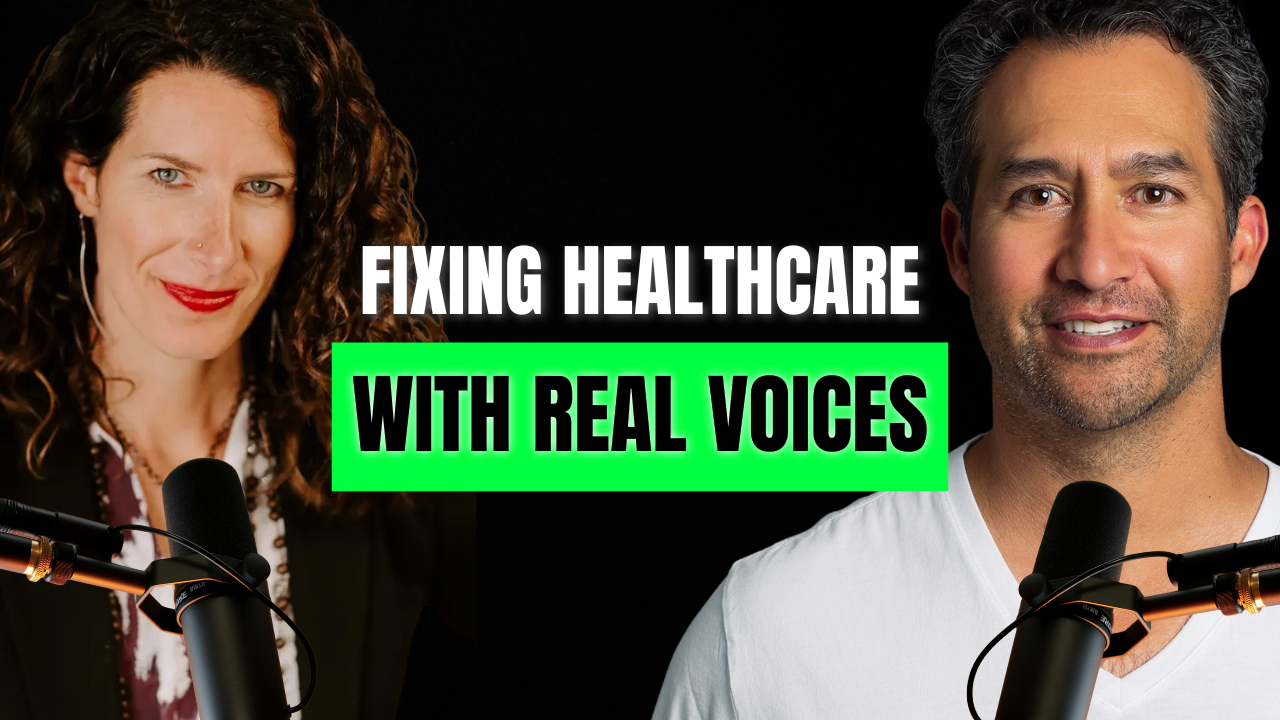
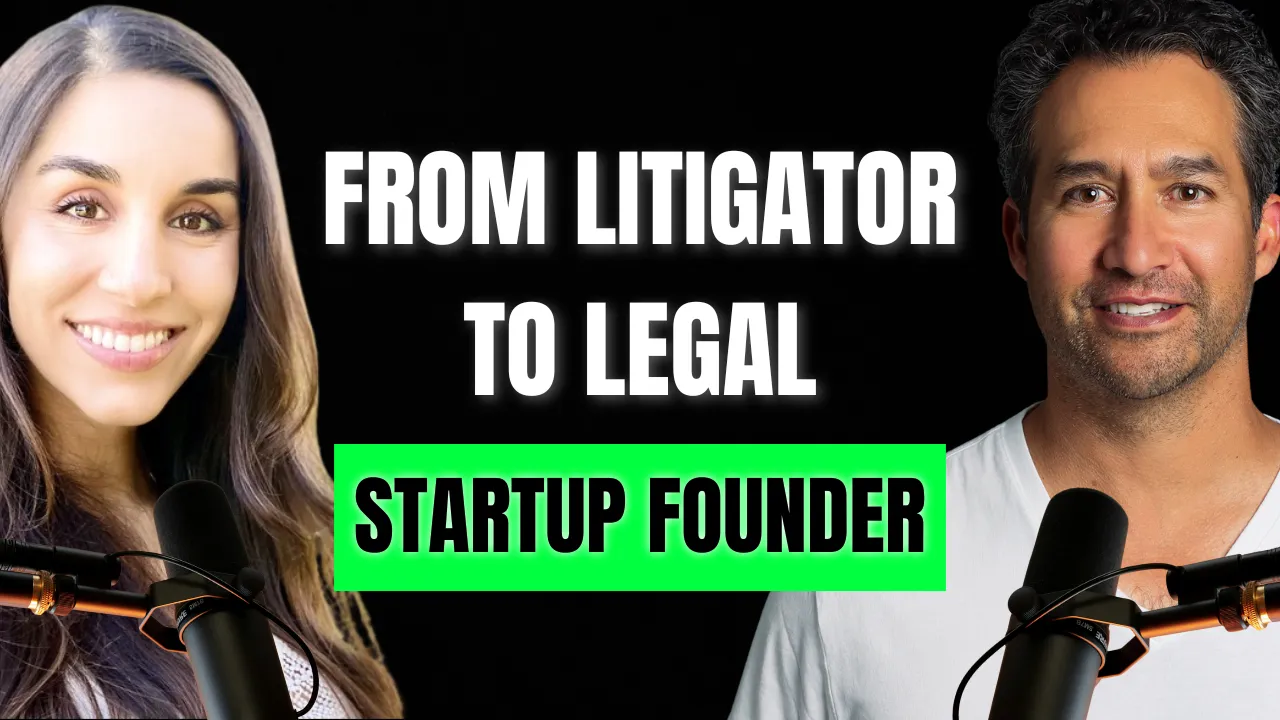
Jake Aaron Villarreal: [music] I'm Jake Aaron Villarreal, born and raised in Silicon Valley. Here to take you behind the scenes and share what it's like to be a startup founder, the journey they're on, the problems they face, the products they build in an effort to make our lives better. I'm excited to have with us today Grace Hanson, founder and CEO of Elysian. Grace, welcome to the show.
Grace Hanson: Thank you so much, Jake. Love that you've invited me to be here.
Jake Aaron Villarreal: I'm excited to have you on. Today, we'll talk a little bit more about you and your background in the company. But for the listener as an audience, Grace has spent her career at the heart of the insurance industry, leading claims and innovation teams at companies like Allied World, Homesite, Hiscox, and Hippo. Along the way, she saw a recurring problem: claims professionals buried in admin work instead of focusing on people and complex decisions. Grace believes technology should amplify human judgment, not replace it. And that belief is what led her to build Elysian. So Grace, before we jump in here, we just talked about this a little bit, but why don't you share where you're calling from today?
Grace Hanson: Yeah. Well, I am a newly minted New York resident, having relocated from Nashville less than two weeks ago. I think it'll be two weeks on Sunday.
Jake Aaron Villarreal: Wow. Two great places, two different environments, and a lot happening in both areas in technology. What drove you to move to New York?
Grace Hanson: Yeah. Well, I was sort of in Nashville a bit due to my son, um, graduating from Vanderbilt, but ultimately, you know, my team was in the New York area and also in the London area, and it just felt better for us to be able to get together more regularly if I was kind of closer to the center of where the humans were.
Jake Aaron Villarreal: Yeah. Well, proximity is power and it's good to be in a room when you need to be and collaborate and communicate. And this remote working is great, but it's always good to be able to talk to people real time. So, well, congratulations on New York. I love that. It's one of my favorite areas in the world. So, let's jump in a little bit to you. You've got a storied career. What were some of the experiences that shaped you into leading you to the path you're on today?
Grace Hanson: Yeah, I think I always probably from the beginning of my career in as a lawyer—because I am a lawyer, a lot of people don't know that—um, had a belief that a mastery of information would ultimately lead to better outcomes. And then over the course of that career, you know, having worked in Bermuda, London, US, small claims, large claims, medium-sized claims, reinsurance claims, insurance claims, I came to understand that that problem of really understanding what was happening in a way that you could then operationalize it or analyze it or take action for pricing, that was just critical to success, and I felt tools just hadn't been built to do that effectively.
Jake Aaron Villarreal: Yeah. Well, it's always good when you're a subject matter expert first and you understand the business and the process and then how it could be accelerated with technology or made better. But you're a lawyer. Are you also an engineer?
Grace Hanson: No, I'm not an engineer. Although someone once asked me if, um, if I was because I ask a lot of very probing questions. But you know, it helps being a lawyer because actually, as a lawyer, my very first case was a price-fixing case for the construction of a nuclear power plant.
Jake Aaron Villarreal: Wow.
Grace Hanson: So you had to learn a lot about what it takes to price construction of a nuclear power [laughter] plant, and I did a lot of that kind of work. So you sort of learn to, you know, you don't get, you know, you can't build it yourself because you're not, you don't have that capability, but you learn very quickly the big picture, the architecture, and sort of how things kind of roughly fit together. That's been useful.
Jake Aaron Villarreal: Yeah. Well, you know, I guess from that experience with claims and law, what did you see that's broken in the system today?
Grace Hanson: You know, I think it's like all things, you know, you start with what you've got, the tools you've got, and then you get used to those tools. And then things get better, more things are available, and instead of chucking all the old tools out, you're like, "Oh, let me buy this extra tool or let me make the tool I have a little bit better." And what I saw was that the systems that were used for adjusters had essentially been built when spreadsheets, manual spreadsheets like tabular, not even Excel, right, were created and they functioned on the basis that you capture the most critical transactional data. And then from there, the industry just kind of bolted on a bunch of stuff. I have enough gray hair that I know how much has been bolted on in the last 25 years. And I think even the solutions out there, not to say they're not useful, but they still are based on that core premise that the initial system is either there to stay or should be iterated on.
I think the journey of Elysian has been, let's just take a step back and pretend that there was no system. What's the core problem? The core problem here is lots and lots of information that has to be contextualized. And so having again lived that, being in a warehouse full of documents because that's how I started as a lawyer, to then having a claims system which had a document repository with thousands of documents in it...
Jake Aaron Villarreal: Yeah.
Grace Hanson: To me, the core problem was multimodal artifacts that created a claim file, and that claim file was hard to contextualize and hard to get through, and I wanted to solve that problem and we went after that first.
Jake Aaron Villarreal: Yeah. Well, you know, you're solving it at the right time with AI and it seems to be able to do a lot with a lot of data and a lot of documents and processing and workflow automations and different things. Not being an engineer, but building a team and raising money and seeing like a vision of where you want to go, it takes a lot of courage to do that. Um, but it started in 2023, not that long ago. Was there some moment that you thought, you know, this is the right time to do this and here's why?
Grace Hanson: Yeah. I mean, there were two papers that came out. One was an offshoot of Google Brain where they were able to train an agent to do geometry, and then the second was a paper on Minecraft Voyager, which was essentially an agent to play the game of Minecraft. And luckily, I had a son who played a lot of Minecraft.
Jake Aaron Villarreal: So do I.
Grace Hanson: Yeah. And I think I was at a point in my career where it was like, okay, do I retire and consult? And I just had never, I was always a doer. I don't think I would have transitioned well into being a consultant. Um, and you know, actually my son said, "Hey, you know, we could really build something to tackle these problems you've been complaining about." And you know, he lived in the house with me, so he heard those complaints a lot. And that was the moment where I kind of said, life is short, and I haven't seen anybody else out here trying to solve this unique, particular problem or doing it exceptionally well, and I thought, why not? Someone actually said to me, "Grace, you know, instead of asking the question 'why not me?' in the negative like, you know, 'why was it not me?' You know, ask it in the positive like, 'why not me?' Like, I mean, I'm just as capable hopefully as at least the average person out there."
And that was the defining moment. And I just said, "I'm going to do it." And I'm a bit that kind of person like once I decide—and I've said this before, and a lot of people didn't believe me two years ago, but I think they do believe me now—I'm like, once I decide, I'm just going to keep going. I'm going to keep going until I just hit a wall where I cannot climb over it, climb around it, or take it down piece by piece. In which case, then maybe I'll stop. But I don't know that I've ever had that experience of hitting a wall I couldn't climb over, go around, or take down piece by piece.
Jake Aaron Villarreal: Yeah. Yeah. That's great. I know it starts with a belief and once you have that conviction, you know, you take the island, you burn the boats, there's no going back. You actually have to make it happen. And to do that, you need people that aren't always in the same focus area that you are as the leader. You need engineers, you need product people, you need marketing, you need sales. But the good part about that is, as a subject matter expert, you've got a clear idea of what the market fit needs to be. What has it been like for you in the journey of building a product and finding that market?
Grace Hanson: Yeah, I mean I think to some degree we were, I mean I don't think we were lucky in the sense of someone who, you know, launches Facebook and it goes to 20 million viewers. But I think we were lucky in that I was building with a team. Because I have a team, you know, of other subject matter experts, I was building with a team who knew the customer. We were the customer and we were the user, and that made it easier to build something that I think once it was more mature the market recognized it as, "Oh, that wow, that solves these problems I didn't even know I had, but I did have them." And it's kind of unique.
But there are areas I know nothing about, or "nothing" is a strong word, but very, very little. Um, and sales and marketing was one of them, and I had to learn that, and I'm still learning. [laughter] I had to learn what it's like to manage engineers, and they are different. They have a different approach. What attracts them is different, and they have different needs on a day-to-day basis. And you know, there's all different kinds of engineers, and I had to learn that, you know, it's not just an engineer, it's a front-end engineer, it's a backend engineer, it's a full-stack engineer. [laughter] And I'm still trying to figure some of that out to be quite honest. You know, full-stack engineer sounds to me like a person who can do anything, but they tell me there's a specific sort of skill set around that.
Jake Aaron Villarreal: AI engineers, all sort different engineers. Yeah.
Grace Hanson: Yeah, ML engineers. I mean, I had worked with data scientists and actuaries. Um, and probably to some degree machine learning experts. But even that's evolved, like what does it mean to be a machine learning, you know, engineer in today's world versus five years ago? What does it mean to be a data scientist in today's world versus five years? Five years ago, you were, you know, cleansing data and normalizing it and trying to fit it into [clears throat] things. In today's world, that is a much easier, you know, exercise and you're really just trying to understand how to best analyze this data, how to create the best prompts, how to work with the tools that are out there. So, like it's funny, I think even experts in their area in the technology space are learning and growing as we speak.
Jake Aaron Villarreal: Yeah. And you've got the data and the data labeling and, you know, gathering it and figuring out the value of it, who gets access to it and security around it and lots of problems to solve, but it sounds, it feels like we're getting there from your now experience having been working on this for, you know, a couple years. What's the ideal customer today look like and has that changed over time?
Grace Hanson: Yeah, I mean we originally, you know, our original business model was, you know, services software and so, you know, you may think of it as a traditional TPA model, but with our own, you know, technology stack. And we did go out with that and we still are, you know, working with end-to-end customers and getting customers who are outsourcing claims. So that's definitely an ICP, as I call it. I learned that term along the way. But we built a fairly sophisticated underlying technology that enables quality review and analysis of files which we have found is resonating with customers who aren't traditional outsourcers or customers who want to combine human and automation and they're forced to sort of pick a spot, and our technology allows them to do both.
So currently I would say almost anybody could be our customer. If you're overseeing claims, we have technology to help with that. If you are outsourcing claims, you know, we focus on commercial, but we certainly have the capability on the personal lines side to help with quality. And in a weird way, it's kind of I won't say it's not a problem. It's been a happy challenge to work through the large range of potential customers. [laughter]
Jake Aaron Villarreal: Yeah.
Grace Hanson: Yeah. Everybody in the insurance chain, value chain, has some level of interest.
Jake Aaron Villarreal: Yeah. And in that, what's the challenge of going from one company profile that maybe you have a number of organizations you're working with to some other organization that's in the space, but, you know, a different delivery required? Is there some challenges around trying to fit everyone in the same box or is it pretty flexible for you? Were you able to really understand the problem of anyone in the claims space or needs claims outsourced or supported and you're able to provide a service or technology around that?
Grace Hanson: I mean, for end-to-end claims outsourcing, I think there's a fairly standard profile of that customer and it's a little easier to interact with them. For customers who are leveraging our dynamic claim review or who are interested in working with us as that becomes more of a technology offering, we're having to deal with their internal tech stacks, but we've structured our offering to be relatively simple to build on depending on your, you know, it's really an internal capability to pull data together. We take in all of the data from a claim file, multimodal in any state, but it does all have to be together. So...
Jake Aaron Villarreal: Yeah.
Grace Hanson: ...we're not going to pipe into five different claim systems or different systems. And that's sort of the customer's challenge which we'll support them with to deal with. And there is a difference, right? Every customer has a different stack. Every customer has data stored in a different way. Some find it easy to do, others find it harder to do.
Jake Aaron Villarreal: Yeah. You know, we were talking to another company recently who does workflow automation for companies that want to organize and operate better. And then in addition to that, they'll add tools and AI into their solution. But what they were telling me was working with big companies, big enterprise companies that have IT really have a lot of power in big organizations to say what vendors they want to work with and which ones they don't. In some cases, they'll just walk away if it is involved with some part of, you know, AI or some part of systems that are going to help the company accelerate how they operate. So that said, yeah, no worries. So that said, who are you selling to within the company? Is it the business leader? Is it the IT leaders that run the systems, the data team? Like, who are...
Grace Hanson: We're selling to Chief Claims Officers, to Chief Innovation Officers, in some instances to Chief Underwriting Officers or program managers. We haven't had to deal much with IT departments, but that could just be the size of the customers that we're working with. And when we have, it's been positive. I mean, I think there's been a real understanding that, you know, our engineering team is pretty sophisticated, so we went out with people who had experience across a range of industries, but also in financial services. One of our senior engineers worked in financial services, built technology for financial services. So understands sort of their unique data needs, their challenges, and can talk to them very, you know... I've lived that world too. So I kind of understand how those IT departments interact within a company, which makes it a little more useful I think.
Jake Aaron Villarreal: Yeah. Gotcha. So, if someone out there has an insurance company and they have lots of claims or a company that's got a lot of claims they want to outsource, what's your message to them? Like, why would they use a company like yours versus maybe technology that's already out there? How do you differentiate? How are you different? I know you're building from the ground up, so you might have seen a lot of stuff that doesn't work well. What is it that you get asked a lot that's different about your product or platform that they don't already have or that's not already in the market? I know you built from the ground up. So what is it that you've done that's different that's better than what's in the market now?
Grace Hanson: Yeah, I mean most of what's in the market tends to be some version of a point solution, right? Even the workflow solutions tend to focus on fairly straightforward workflows, right? We've built a very deep and multi-layered semantic layer which does contextualization of large volumes of information and it does that contextualization with reference to subject matter expertise. So we found a unique way to embed subject matter expertise into the output. So a customer who leverages Elysian actually probably doesn't need claim oversight. I mean, we are surfacing information in a way where claims professionals can review files and understand, is this file being handled well? Where data and analytics can be run at scale across any data point that the customer wants.
We do the traditional stuff as well, but we can do non-traditional stuff, and there's not really a heavy lift to that, making it easier for the underwriting side. It's again, sometimes you have to see it and touch it to understand, and people who do get it right away, they're like, "Wow, okay, this is different." Because that's one of the challenges of our industry, insurance and insurtech, is there's a tremendous amount of rhetoric out there and companies will say anything and it isn't always true. Or they say it in a way where the customer is relatively naive and so the customer sort of assumes and colors around the edges that all these other things are true when they're really not. You know, one thing about Elysian is we're founded by me. You know, Steve Rodriguez, you know, he has more years of experience than I do, 40 years heading up claims departments in very large organizations. And we have the tech talent. So, you're getting a really unusual marriage of a company building for a problem that the people who are building it know what that problem is. [laughter]
Jake Aaron Villarreal: Yeah. Yeah. And again, that's like feel like, you know, hey, you can put a picture of a pie and it looks yummy and then you taste it and it's like, but you know, somebody really knows how to bake pies is going to have an incredible pie. You can't tell that until you actually taste it, right? And it's just part of the reality.
Grace Hanson: And that's what we, you know, we spend a lot of time meeting people. We love to talk to people even if they're not a customer today, even if they're not, you know, buying today. We want people to know that we're different and that we're out there to help really the industry. That's why we started Elysian, you know.
Jake Aaron Villarreal: Yeah.
Grace Hanson: This isn't, I didn't start it because I thought it'd be really cool to go build a multi-billion dollar company, you know. It's like I said, "Hey, this is a problem I've seen and here's a really interesting unique opportunity and time to solve it because of the tools that are emerging, and let's go out there and do this because the industry needs it."
Jake Aaron Villarreal: Yeah. Let's switch gears for a sec. You've led and managed, you know, hundreds if not thousands of people within your career, hired a bunch, interviewed a lot. What have you learned there, and what have you learned now of hiring for your own company as a startup?
Grace Hanson: Yeah, super. That's a super interesting question. The first thing I learned is that it is different when you're hiring for a company that's not your own company. [laughter] Meaning, you're hiring for the culture of that company. You know, when it's your own company, you're hiring to build your own culture. And that culture is uniquely your own culture. And it isn't just about how smart somebody is or how great an engineer they are. It's about, are they contributing to this whole, right? Like a piece of art, like they're putting a bit of paint on one side and is it going to fit with the bit of paint that's on the other side?
And I, you know, I made mistakes. I made mistakes from the beginning. You know, I've made some things that weren't even mistakes, that were just the reality of a startup. A person who is great from zero to one isn't great from one to two. And that was kind of a learning, right? I have always been a longevity kind of person. And the idea that, wow, someone's only there a year and yet they can do a whole lot for you, but wow, they're not the right person. That was also a learning. And at the end of the day, you know, you create your own company, the people in it are reflective of your values. And I have brought people in who care about the industry, who care about making a difference, who really do want to transform, who understand it's a messy, complex world, insurance, and the customers can be challenging, but they also understand they're building to support an industry which basically allows the world to continue to operate. I mean, without insurance, right? And where would we be, you know, if your house burned down? Who's going to pay for it if you don't have insurance? It's such an important part of our universe, and I think they get that, and I'm proud of that.
It's so funny, we recently had someone leave who was pretty senior, and everybody afterwards was like, "Oh, you know, Grace, he just wasn't a cultural fit." And very, very smart, capable person, right? And I had to go and reflect and I thought, "Wow, we already have a culture." We're a year and a half in. We have 20 people and we already have a culture, right? It's a culture that's so clear that the employees, not senior employees, they like knew, they recognized, "Oh, this person isn't fitting with this culture," right? And that was like really a, I'm still kind of thinking about that.
Jake Aaron Villarreal: Yeah. Really cool. Yeah. As you evolve and as the leader, you're the one setting that culture. I mean, it's your vision of the company and the type of people you want to take you to whatever direction you want to go. You know, I heard something interesting the other day that, you know, most employees don't understand or know the vision that the founder has for the company. And if you ask them to tell you what it is, they don't know because it's not communicated enough or it's not communicated clearly or it's not written on the wall or they don't get a message on it. So, it's an every company problem. For you, how have you set the vision for the company and how do you communicate that to your teams?
Grace Hanson: I mean, we have a mission statement, you know, transform claims services through the application of tomorrow's technology. That's our statement.
Jake Aaron Villarreal: Nice, I like that.
Grace Hanson: We talk about it, you know, at our all hands meetings. I share it. But it is an evolving mission, right? I mean, and I think it's evolving not just because things evolve in startups, but because the world in which we're building it is evolving. And so, what does it mean to build a future state of technology? Well, in the old days, you know, you could do that and you had like a 5 to 10 year window, like not much was going to change, right? 5 years from now, you know, what does the future state of technology look like?
I have always held firm to the fact that I thought ultimately the service software model was where we needed to go. I continue to believe that. But as one of our customers pointed out, they said, "You know, Grace, you're not all that dissimilar to us. We're handling claims in-house. You're handling claims. We're both handling claims." And so changing and enhancing and supporting the process of handling claims, that's service side, is our mission. And whether we do that by actually handling the claim 100%, whether we do that by providing support to someone else who's handling the claim, whether we provide that to people who want to understand whether their customers are getting the kind of service they need from their claims adjusters or for whoever they use for claims adjusting through our quality, you know, assurance, you know, review process. It doesn't really matter. That's still our ultimate vision.
Jake Aaron Villarreal: Yeah, I like that. What would you have done differently? I know you've only been around for a few years, but there's a lot of companies starting out that have only been around for a couple years and they know there's things they would have done differently or maybe thinking about how they started or where they're at today they would change. Is there anything that you would have done differently?
Grace Hanson: I think I would have done more work kind of around the boring stuff to figure out how to do it more effectively. Like, spent a lot of time and actually money on stuff like building finance and the corporate side, and a year later when we did our seed round, you know, one of the investors was just super useful and gave us a list of names of people we could have called a year [laughter] earlier who would have probably done it about a tenth of the cost. And so I sort of wish that I had leaned more, you know, on outside resources, that I hadn't spent as much time as I did on the boring bits and focused a little bit more on selling, which that's the other thing I would probably do.
So I think those are the two things. One is that back office. And the second is trusted myself more on selling. Almost immediately went out and brought a salesperson in because I just said, "Well, I've never sold. I mean, I don't think I can do that." And as it turned out, I could sell. And you know, and I was the best person to sell because I understood the product. I understood the customer. I understood what we were building and the mission. Um, [snorts] I think that's a mistake a lot of founders make because I read a lot of articles about it after the fact.
Jake Aaron Villarreal: Right.
Grace Hanson: Yeah. So those are my two big ones. But overall, you know, some of the mistakes you make and then you learn and then it's worth making the mistake.
Jake Aaron Villarreal: Yeah. It's the best teacher, right?
Grace Hanson: Yeah.
Jake Aaron Villarreal: And the stories we tell ourselves are the bottlenecks. Sometimes you just don't know you can do it because you never done it, and then you go out and you try and, "Yeah, I actually can do it and I like it, or I now know what I want to hire because I now know the process." You know, sometimes what we've seen, and I know it's a fact, is that you hire people that you think can do the job that needs to get done, but until you really understand how you want to operate, how do you really know what person you need to bring in to do the work? And then how do you manage them to where you think it looks great versus what they think looks great? And it's just sometimes you get it in reverse order when you start. So, we've seen this a lot from companies. 2026 is here. What are you excited about as the company continues to evolve?
Grace Hanson: Yeah, I mean we have a very robust pipeline. So, I'm excited about taking the next step, you know, really going from being like a company building something that maybe might work and trying to scrap around and get our very first customers to taking it to the next level. And I think we can do that. It's scary. Uh, it's scary because as I said, I'm very determined, but being determined is sometimes just about the next step. It's not always... I've never been great at thinking like, "Oh down the road it's going to be..." I'm kind of like, I have the vision of what I want to achieve in terms of impact, but I don't have the vision necessarily of what does that look like? How many customers and who are they going to be and how are we going to integrate with them? 2026 is the year it's starting to become clear. We have some nice, strong partnerships. It's um, it's going to be a big year for Elysian.
Jake Aaron Villarreal: Really cool. I can't wait to hear how it goes and do a checkup with you down the road. If anyone wants to find Elysian, and spell it out because it can sound like it could be spelled many different ways, where do they go?
Grace Hanson: Um, they should go to elysian.is online. We have a website. You can find me on LinkedIn. We're very available. You can email me directly: grace.hanson@elysian.is.
Jake Aaron Villarreal: Perfect. Well, Grace, thanks so much for coming on. Really appreciate you taking your time and for the listeners for listening today. I really appreciate it. It means a lot to me. I'm your host Jake Aaron Villarreal signing off for now but can't wait to catch up with you all on the next episode. Until then, Grace, the world. Take care.
Grace Hanson: Thank you.
Jake Aaron Villarreal: If you like what we're doing, don't forget to subscribe, leave a review on Apple Podcasts or wherever you listen, and follow us on YouTube where we go behind the scenes to learn what it takes to be a startup founder.










.jpg)








.webp)
.webp)
.webp)

.webp)