Jake Aaron Villarreal: I'm Jake Aaron Villarreal, born and raised in Silicon Valley, and here to take you behind the scenes to show what it's like to be a startup founder, the journey they're on, the problems they face, and the products they build as they look to transform industries. I'm excited to have with us today Aaron Lee, the founder and CEO of Smith.ai. Aaron, welcome to the show.
Aaron Lee: Thank you. Excited to be here. Thank you, Jake.
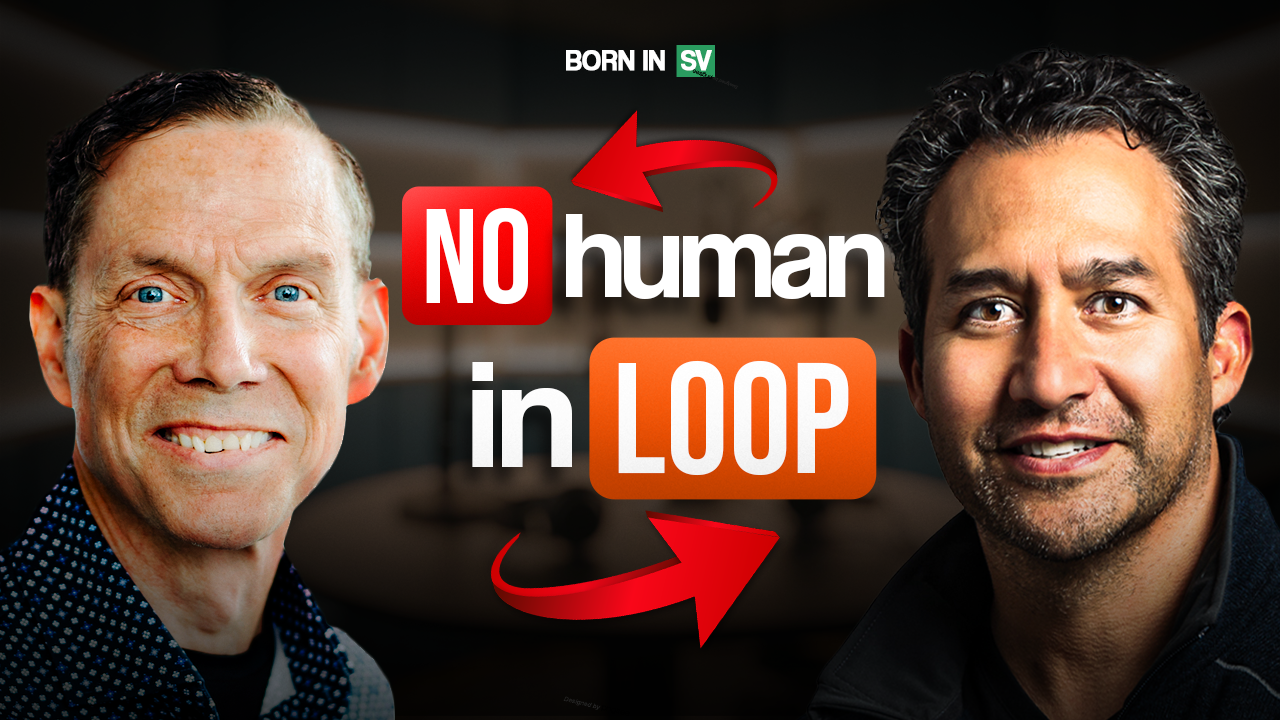
Jake Aaron Villarreal: Well, thank you for joining. Um, a little bit more about Smith.ai. It's a call answering and intake service for small and solo businesses. They differentiate themselves in many ways, which you can imagine with the AI today, there's a lot of that that goes into not just their platform, but also how they conduct business, which is, by the way, with a human in the loop. So, before we get started here, Aaron, uh, where you calling in from?
Aaron Lee: I am calling in from the Bay Area. So I live in a small town called Los Altos. Um it's right next to Mountain View, Palo Alto, which is the heart of the Silicon Valley.
Jake Aaron Villarreal: Hundreds of AI startups are launching every month battling to build their founding teams. As a leader, your job is to get results. When it comes to hiring, that's where it gets tough. So you go out and you try a recruitment firm, but they don't understand your story. They're off-target, and when they send you candidates, it's a waste of time. We believe you should never have your time wasted. That's why we launched Match Relevant, because your story is more than just an open role. It's your founders' journey, the problem you're solving, the product you're building, and why it matters. When we work with companies, we make sure we understand your whole story. So, we go out and do a search, we're on target, it's worth their time, they're interested, and more importantly, it's worth yours. And when it comes to hiring engineers, we work to make sure we get it right by deploying a team of seasoned CTOs that have built some of Silicon Valley's best companies. They can collaborate with you in the technical interviewing process. They can be a sounding board, or they can run it for you. When it comes to building teams, there's no time to waste. Let's make it count. If you have a role that needs to be filled, book a time with a hiring guide at matchrelevant.com and learn how we do it.
Yes, great place to be and I know that area very, very well. Well, thanks for joining us here. Um, we're going to dive into Smith.ai, but before we do that, give us a little background of your origin story. Kind of where did you start and how did you get into technology and end up at starting your own company?
Aaron Lee: Absolutely. So I was born and raised in Hong Kong. I did my undergrad in Cambridge and even when I was in undergrad I really got fascinated by all the machine learning and AI. I did my undergraduate paper on like optical character recognition, OCR, which is basically given an image you have to recognize the characters and the zip code and the postal code in it. And uh back then we were running on a small PC and uh we were using neural network to train the model and it took like more than a month to train the model. And now if you use ChatGPT, you can submit the image and they will get back to you with the characters in it within a second or two. So that is how much we have gone.
After that I went to Princeton to do my PhD in computer graphics. I also worked with companies like Nvidia. I interned there, almost got a job there but decided that my friends told me, "Hey, it was a really tiny company, how big was the gaming market? Like you should really join another small startup called Google." So I joined Google back in early 2004 and I was one of the first engineers to build Google Video, and later on I was the uh monetization lead on YouTube, building all the infrastructure, search monetization. And left Google in 2008, like end of 2008 like after almost five years there. And I started my first company called Redbeacon. And uh that quickly got the funding in 2009, took the top prize as a TechCrunch, and it was a marketplace that connect the homeowners with the home improvement professionals. Uh we raised our first round of funding, went nationwide, got the notice of Home Depot. They knocked on our door and said like, "That is exactly the thing that we need to connect our two-sided marketplace." And before you know it, we got acquired by Home Depot in early 2012.
And then I got promoted to be the CTO, rolling it out like the services to all the 2,000 Home Depot stores. And if you go to any of the Home Depot store today, you'll see my work there. So stayed there for a few years. Again, left in 2015. Really like tried to scratch my entrepreneur bug and started my second company called Smith.ai.
Jake Aaron Villarreal: Ah, that's great. I love that story. I don't know if I heard you correctly. Did you say you were also part of the monetization or the strategy around YouTube?
Aaron Lee: Yeah. So, that was really kind of the transition for me uh from being an engineer in training. So, I, I, I spent a lot of time writing code, building like scalable systems. And back then like when we first built Google Video, we were ingesting terabytes of data every day. And now it seems like a small amount, but back in the early days like almost like 20 years ago, that was really some of the most groundbreaking approach. And as I move, continue on from engineering to monetization, I get exposed to more kind of like, I call the, the advertising side or the commercial side of the business. And that really got me start going into like engineering to product to business to sales and marketing.
Jake Aaron Villarreal: Wow. I like that transformation because as a founder you don't always have access to get experience in all those areas. You start with what you know and you grow and then when you get invited to or you get promoted into an opportunity where you can learn something new and different. That's really where the transformation starts. And where that goes we're never sure. But to be a startup founder, you have to understand first and foremost, "Am I solving a problem? And if I'm solving a problem, is it valuable enough for someone to pay for it?" And then if it is, you have everything else in line to do, which is, you know, go out and build the product, find the market, hire a team, get funding, all those things that go into it. But really excited to see that you've got that track record of success. And being the CTO at Home Depot. Before we start talking about your company here, what was that like going from Google, a big company, then starting your own company, growing that, going from small, then back to big? Um, what was it like working at Home Depot? And what did you take from that before you left?
Aaron Lee: Yeah, I mean, Home Depot was a really fascinating experience if you think about like working from Google, which is a very, very much like technology-focused company, right? Building technology to serve billions of people, to forming my own startup, which is a tiny team like you have to like, like work a lot less with a lot less resources to deliver a lot more. To where Home Depot, where they have both the marketing channels, the brand awareness, and the distribution kind of like 200 stores and the two-sided marketplace. Now the biggest difference is like Home Depot was not really a technology company but more like a big box retailer. So the business and the marketing is their strong suit, right? They have the brand name, people recognize it. So when we call and build our kind of the two-sided marketplace, like both the, the providers and the consumers, like people recognize the name. Like you don't need to explain to people what is Home Depot, right?
Jake Aaron Villarreal: Yeah.
Aaron Lee: And, and people just get it. They, they, they, they already have the trust in the brand. So when you combine that with the technology, like the scale is just so much faster. I don't think we could have done it with the venture money at, in, within the same time, because like there's only so much the money can buy, but you cannot buy the brand name. You cannot buy the like Home Depot brand. You cannot buy the recognition. You cannot buy the uh the distribution channels of like 2,000 stores like immediately when we turn it on like it just go live, right? I mean, it just go live nationwide.
Jake Aaron Villarreal: Yeah, that's, that's amazing. Well, you got that good experience there and you left and, and you've got Smith.ai. You've raised 10 plus million. You've got, you know, hundreds of employees. Talk us through the problem you're solving at Smith.ai. I think it's fascinating.
Aaron Lee: Yeah, it's really something that like we started early on like when I was at Home Depot. Uh we, I was interacting with the pros like Home Depot call them the pros, meaning these are the small medium business owners who basically either running it as a solopreneur or they have like husband and wife team or they have a small team of like 15 to 20 people. And they have no time, right? Because everyone is wearing multiple hats. They have no money because they're not like some of the big corporation. They have like millions of like revenue. They're really small business that power the economy of like the country. And they have no technical expertise, right? They don't understand machine learning. They don't understand like AI. And these are the people that still they need to answer the questions or calls from customers. So every day when people call them or text them, they're just too busy, right? They could be on the road. They could be up at the attic or like down at the crawl space. They don't have the time. They don't have the money.
So when people call them, a lot of the times they miss the call and they thought, "Oh, they will just leave a voicemail. When I get home like later tonight, I will get back to them." And they never do. Right? So it's a huge missed opportunity. And they even came to Home Depot, like to me, and say, "Hey, I know Home Depot has a huge call center. Can you answer the calls and the text for me?" And we said we can't do that because it's designed for the corporate use. We cannot overload the Home Depot call center with the customer call center. And that is when I know there's a huge opportunity there.
Now, at the same time, being a technologist, I also know that there's got to be something that we can, we can do so that we can offer things that are faster, better, and cheaper. And as I was talking to my friends at Google, like there was a huge AI development at Google, and I thought, well, it would just take a few years for the AI to become a commonplace. Like remember that was back in 2015, and that was also the same year that OpenAI started. And we thought, "Oh, I mean, it shouldn't take too long, right? Technology is moving fast," right? Like I'm the optimist. And we were too early. Like we, we were literally like, like being at the very, very cutting edge at the, at the front center. And over the past like, I would say eight or nine years we become the, like kind of the expert in understanding voice and voice AI and omni channel whether it's voice and chat, Facebook or SMS. So that is how the company started to form. But in the early years of the company like we are building our own technology. We're building our own platform to basically solve one single question which is: How can we conduct, how can we have a perfect conversation on behalf of our clients so we can convert their callers into customers?
Jake Aaron Villarreal: Yeah. Wow. That's amazing. So the, the focus uh out of the gate was really for these people doing work on homes or landscaping or whatever their manual labor was where they didn't have access to get on a call, respond to a text or even respond to an email real time and you're kind of filling the gap or the void where that, that call comes in and there's a conversion to a lead, to a booked call or potentially even immediate revenue.
Aaron Lee: Absolutely. I think like phone calls is one of the most underrated kind of like channel that people thought because we say, "Oh, nowadays who use phone call?" Actually if you think about it, for someone who is giving you five minutes of undivided attention calling you because they have a project in mind, they have a problem that they want to solve, that conversion is like 10 times higher than a chat on your website. Because like people browse website all the time. I, I have like many tabs on my Chrome, right? I mean, you don't really pay attention to those chats and that's why chat is very low engagement, but you just want to like get some information. But for someone to call into your business, that is a huge, huge opportunity. And for someone who's not picking up the call or for someone who can call back in a day or two, you already lost that customer or the potential customer. I think that is the part where we have been trying to tell our clients like, "Don't miss any one of your calls because if you miss one of them, like you're losing, you're leaving a lot of money on the table."
Jake Aaron Villarreal: Yeah. Why is this space important to you?
Aaron Lee: I think it's because like, are we... like me, I've been serving SMB for the past decade. We believe that's the most underserved community, is a very, very huge opportunity. In US alone, there's about 30 million SMB and they just don't have the help that the, I call the Fortune 1000 companies have. They have no dedicated team. They don't understand the technology well enough. Like even if you tell them like ChatGPT or the AI is the future, they, they wouldn't know how to take advantage of that, right? So we believe that we could be the layer that can help them to focus on what they do best and bridge the gap between the technology and like the understanding of the, the advantage of the AI to the next level. So I think that is hugely important to me and my team like, how can we help these people who's like really working hard and they don't have access to the technology or they don't even know how to deploy them to be able to be competing with the, the large corporations?
Jake Aaron Villarreal: Yeah. Well, you know AI is prevalent in almost every sector currently and it's growing. I think the number is like 1500 AI companies are launching a week currently, which is pretty fascinating. When you think about your technology, there is a human aspect of it as well. So, it's not just set it and forget it. "Here's AI. It's going to automate everything." Yeah. You actually have real people involved in your service. Walk us through the service or the product so the listeners understand exactly how it works.
Aaron Lee: Yeah. So, basically, we answer any inbound or outbound calls. We also handle chat and SMS and Facebook. But the majority of the traffic is coming from the inbound phone calls. When the call comes in, we have two products. Number one is we have the human answer the call every single time and we have AI to assist our agent. So think about AI as the co-pilot. So the AI will tell our agent what to say, what questions to ask, how to qualify the caller. At the end of the call they write up the call summary right, so that has been the product that we've been running for the past like eight, nine years.
Now we have a new product which is like uh, is still in early, early beta. We call the Voice Assistant. So basically it's an AI-first product where the AI is talking to the callers, right? They're asking the questions, they're collecting the information, gathering your name, your email, your phone number, your contact info, understanding what project you're looking for, and qualify. At the end of the call, we always like transfer the call to the human agent for two reasons. Number one, we believe the conversion will significantly increase by human touch. Like, meaning maybe you're on the fence, maybe after talking to the AI, you still have some questions, right? A human touch is the best way to book an appointment and convert the caller into a potential customer.
Number two, as opposed to many people's belief that AI is working for every aspect and is like working flawlessly, what we notice is sometimes they hallucinate. Meaning they don't know what to say. They start making things up. Sometimes they collect the wrong information. Not because they are wrong, but because in the traditional phone calls the voice quality due to the reception, due to the area, it may not be the best. So you have the background noise, you have the caller accent, you have like maybe like there like uh the the the reception area in your, in your mobile network may not be the greatest. That is where the human comes in, that the human comes in to make sure that all the data that the AI collected is correct and we are able to convert them.
So that's why we believe like, whether you prefer a human voice as the first interaction or you want to be on the cutting edge that you want to try the AI solution, both of them we believe is much better and enhanced by human in the loop. And that's why we believe at the current stage, which is still the early stage of AI development, having the human in the loop is still the best experience to both our customers and their customers.
Jake Aaron Villarreal: Yeah, you know, it's, it's great when you have a product and a service that really solves a problem. There's always a question of how do you defend against the competition? What's the moat? What's your strategy been around staying in the market, innovating, but also staying ahead of the competition?
Aaron Lee: Yeah, I think they're twofold, right? I think the uh, everyone have access to like the foundation model, like the, the, the OpenAI or the uh the Claude from Anthropic and other models. And the, at the end of the day, it's really about the outcome. Like, can you deliver the outcome? It's not so much about the technology, right? Every time when we like explain our product to our SMB and the business owners, they always care about: "Will my customers get the, get the best experience? Will I be able to convert them?" So it's not so much about like the competition, whether they have access to uh, make, knows how to make the API call. It's about how do we construct that conversation design. How do you have the human touch so that people feel like, "Oh I'm comfortable of doing it because like we know that like they understand my need, they collect all the right information," and, and that's how we differentiate from the market.
And like you said, there's a 1500 AI startup spawning like every week, right? Everyone have like almost like the same access to the underlying technology, but if you think about experience that we have like collected over the past like decade, really understanding how to conduct a perfect conversation is not something that AI can just learn in a day or, I don't think that's the case. I think that's like the number one thing is the domain expertise. Number two is the human touch. We still believe that AI has a way to go. Maybe they are 70% here, maybe they're 80% now, but the 20% is so important because imagine if you run a small business. If the AI got it wrong two out of 10 times and that two times happens to be one of your biggest customers, like you just want to, you just cannot. is unacceptable. We, our goal, if you look at our, our like metrics that we are measuring ourself against, we look at the correctness, and our correctness is 99.7%. We almost don't make mistakes. Now how do we know that? So we actually have another AI to listen to our calls. So the AI will actually monitor if the AI is doing the right thing or if our human agents are doing the right thing.
Jake Aaron Villarreal: Wow, that's really cool. AI is monitoring AI. God, what's the world gonna look like in 10 years? Next year.
Aaron Lee: Yeah. Really cool. I would say next year. Not, not so much about 10 years. Who knows about 10 years.
Jake Aaron Villarreal: But who ultimately is benefiting if you guys succeed at the level that you're striving to succeed?
Aaron Lee: Yeah, I believe today we are serving the customers that really care about the customer interactions. And typically they fall into three types of categories. Number one, it's like the transaction value is like really high tickets, right? It could be um, a, a remodeling of your home. It could be a general contractor. It could be interior designer. Um that's one, one category. Another category is we call the, the lifetime value. If you think about dentists, right, the medical professionals, like you may want to go clean your teeth, you spend a few hundred dollars, but if you find the right dentist, you will stay with the dentist for a very long time. So the lifetime value of the customer is worth a lot more than one single transaction. That's another type of the customers that we, we, we really serve.
The last one we, we call like "time is money," like the lawyers, right? Like their time is so important. They charge you by like billable minutes. So they don't want to spend the time to answer their phone, right? And if they were to hire someone, they need to hire someone 24/7. That's also like cost prohibitive. So if you think about these set of customers, they are the ideal customer profile for Smith.ai. But it, it shouldn't stop at that, right? If you think about like expanding our circle, like restaurant owners, a small business, anyone that people will call in using the phone would be our customers. Now, today they might say, "Well, I may not be able to afford that because I have a lot of calls and most of them are spam and all this stuff." And we already solved that problem. We basically say we have our AI to filter out the spam callers. So we don't even charge them. Like they would not, they, they don't even pay for the spam calls or the wrong numbers or the, the sales calls. So we, we filter them out. But there's still a very large customers of the, segment of the customers that could benefit from a, I call the AI solution, that is like a little bit cheaper, very effective, may not be as best as like a human like on the phone all the times, but they will still solve the need. So if our vision, if we are executing it correctly, which we believe we are, then we will benefit every single business in the, in the whole world. So that is the holy grail that we're trying to solve.
Jake Aaron Villarreal: Yeah. Wow. Big aspirations. I like it. You know every company uh goes through shifts and pivots. You've been in business now for nine, ten years. What's one of the bigger pivots or shifts you've gone through that you look back that you could share that hopefully maybe someone will learn from your experience that, that worked for you in that change?
Aaron Lee: Yeah, so we've been uh as you probably know over the past like nine or 10 years we launched like different products. So one of the product that we launched like earlier was called Keypad, which is a replacement to RingCentral or Grasshopper or Dialpad or the VoIP providers. We believe, because like we know the voice so well, that we should be able to come up with a product that is so easy to use and so affordable. So we launched the product, right? We believe we could bridge the gap because now you don't need to go to RingCentral or you don't need to go to like Dialpad or like Google Voice. It's like one single solution that we handle all your calls, whether you want to answer your call or whether you want us to answer your call.
And that turns out to be a mistake, because like, the market exists, right? I mean there's already very good products on the market, and for us to come out to compete with them that they have been around for like more than a decade is, is not ideal. So after we did that, after we learned the mistake, we say we should really focus on what we do best, which is when a call comes in, how can we best handle that call to the perfection so that the business owner will say, "Wow, you guys can handle the call better than me," right? "You're handling it day in, day out, 24/7, every single call. We don't miss the call. We handle it well. Every legitimate and qualified caller we will convert them into a customer." So we kind of like started from like "hey can we do more" to say "why don't we do less and become the best." That was really one of the biggest lesson that we learned. Instead of saying "let's launch many different products," "can we launch something is so good that people say you guys are the best. Like there's no reason why I want to use another product."
Jake Aaron Villarreal: Yeah that's amazing. Yeah, simplify help. Simplifying keeps you focused and if you execute on what you're focusing on, many times it can be much bigger than trying to do it all. So, I really appreciate that. I'm sure someone's going to hear that and, and learn from that lesson. Um, what's the biggest challenge? We're midway through 2024 that you're looking at currently as you continue to grow your company?
Aaron Lee: I think it's both like on the technology side and the, on the customer adoption, right? Voice AI is a very, fairly new technology, right? I mean, every day we're still solving a lot of the problems from like latency and the correctness and to the uh AI responses to uh human handoff. All these are the problems that we have to solve because we're the first impression of the, of the business, right? When people call in the number, we answer their calls. So we have to do a much better job to make sure every call is being handled correctly. So that is the number one thing, right? Which is how can we take advantage of the cutting edge technology and deploy it at scale. That is really, really challenging. So that's number one.
Number two, how can we get this message across to the customers, right? I'm sure everyone is interested in AI, everyone want to learn about it, but to go from like "I'm interested" to say like "Can we deploy this for my business," that is a big leap of faith, right? We have so much to, to do and to prove to earn the trust. That's another thing, right? So we are in this like transition period where we are transforming the company from a kind of like, human agents answer the phone calls every single time, to AI doing most of the heavy lifting and we only hand it off to the human agent when there's a problem or when there's a conversion event that happen. So I think that transformation would take a little bit longer time and both the product and the tech has to work really well. And on the marketing side, we have to convey that very complicated like product to something so easy for people to understand. I think these are the two biggest challenges for us in 2024.
Jake Aaron Villarreal: Yeah that's great to hear. You know, as a company, you try and make your product simple to use and easy to access. And if you do that, you take out the friction of someone wanting to use your product or buy your product. What's the game plan if someone wants to try your product? How easy is it to get started? And how fast can they expect to have your system turn on and you're taking calls for them?
Aaron Lee: Yeah, absolutely. So, today, if you come to like smith.ai, AI, the homepage, like there's a um front and center there's a uh call to action that you can sign up for the uh the Voice Assistant product. Um so once we uh you sign up, you provide some information to us, then we can actually onboard you and within a day or two like we can have the system up and running. Now as you said, the friction is the, the biggest challenge for people to use the product. So we do not assume the business owners to understand AI. We don't assume that they know how to do prompt engineering, which is a lot of the current products today on the market, they do. They assume people who understand prompts. They know how to write the prompts. They know how to perfect the prompt. No, we don't assume any of that. You just come in, you tell us what your business does, how do you want us to handle the call. We take that very high level, I call natural language, and we convert it into what the AI understands so that we can produce the same perfect call handling on every single time. So the signup is very easy. You go into the website, you click the button, you put in your name, your contact info, and we'll set up a call and we'll understand what you need and we'll take that information. Will turn into something that the AI can understand and within a few days you can put up the number, you can forward the call to us or you can ask your friends and family to test it. It's really simple.
Jake Aaron Villarreal: Wow, I love that. Well, you're talking to someone who might be a customer soon.
Aaron Lee: Absolutely. Because like a lot of the times like people learn like before they even see the benefit, they have to learn how to use the product and the learning path and the learning curve is so steep that people say, "I don't know what, what is not working. I did the prompt, it was working yesterday and now it doesn't work. So what do I do?" Right? It becomes a black box, right? That's number one thing. Number two, as I keep saying, we need to have some monitoring mechanism to make sure that the AI is doing the right thing. Otherwise, what if the AI mishandle your call, right? You have to know ahead of time. So that is what we, we really want to provide a turnkey solution so that our business clients, they don't need to learn all this advanced technology. They just, like I call it, walk up and use. They just walk up, tell us what they need, and they have a product that they can depend on.
Jake Aaron Villarreal: Yeah, that's great. So for companies based in the US or Canada or North America, let's say, and they wanted to use your service, you know, sometimes the question isn't about can you do the job. It's specifically if there's humans in the loop. It's where are they located and is the communication going to be at the level that we need and we want, want it to be authentic. We also want it sometimes to be, you know, in a, in a language that's our own language, accent that's our own accent. Where is your team? Where is your company located here?
Aaron Lee: Yeah, so all the agents are in North America. So we understand that we don't, we don't do the uh offshoring or... because we, we understand the key for the people. It's not just about the language but also the accent, the cultural understanding and all these. So that's number one. That's why we only hire agents in North America. Number two, uh we do support two language. One is English, of course, the other one is Spanish. Because we noticed that a lot of the people um when they call in, they actually only speak Spanish. So, I mean, if you don't have someone who can speak the language, they will almost hang up right away because they just do not understand. So we believe having someone who is bilingual is so important. Especially like when we talk about immigration, when we talk about like the immigration lawyers that we serve a lot in Texas, like a lot of the, the customers when they call in, they, they just don't speak English. They only speak Spanish. So you want to make sure that like whether it's AI or human, they have to speak their language. Like you have to meet where the customer need.
Jake Aaron Villarreal: Yeah, that's perfect. That's really valuable too. Uh just so you know how you compete against your competition. And you know, it's one thing to look at saving cost on labor, but it's another actually serving your customer how they want to be served. And I think that if you combine that uh, or at least the latter aspect of that, I think you're going to win a lot of customers. I think it's critically important, especially for communication. From what we've seen and what the products we've used.
Aaron Lee: Exactly. I mean like I wouldn't say our product is for everyone because there, there are certain people who say, "Look, I just cannot afford to pay that kind of money. I can only afford to pay $1 per call." And that means they probably need to outsource that to like Philippines or other countries that have a lower labor cost. But you get what you pay for. So you get a lower quality. Like sometimes you miss the call, sometimes you don't handle the call well. Now, if your transaction value is small, then you may not, you, you may be fine. But if you're talking about a customer that could be worth $1,000 to you, then you don't really want to take the chance. Like, we have seen so many customers who say, "Smith.ai, we love you guys, but you guys are not cheap." And then they switch to another cheaper provider. They came back to us after a few months, said, "Ah, that's just not worth the saving a few hundred dollars because we're losing so many opportunities." So, they always came back to us.
Jake Aaron Villarreal: Well, as we end here, let's just share with the audience pricing, like what can you really expect? Say you were just a one-person, one-man show, maybe do a construction or landscaping, whatever you do, and you want to try the service. What's, what are they looking at cost-wise?
Aaron Lee: Yeah. So the average cost is about like, depending on the call volume, right? As you have more call volume like the price will go down from like you know seven or eight down to like maybe $5 to $6. Like that is the, the cost that you're thinking about now. We do not charge per minute. We charge per call. So your call could be five minutes, your call could be 10 minutes. It doesn't matter because like we handle so many calls. So if you take the average like we can afford to absorb the different call duration, but at the end of the day we want to provide a very predictable pricing model to our customers. Meaning if you know that you have like 10 calls per day, then that is like 200 calls per month assuming 20 like business days.
Now we do not charge for spam calls, wrong numbers, sales calls, and any one of that. So we want to make sure that every call that call in, they are the legitimate, that you are paying for the work that we did for you. And it's like capped to a certain amount which is like there's no surprises when you see the bill. Like you wouldn't say, "Oh like this month I have to pay a lot more because there's some very chatty customers," right? We, we want to make sure the bill is very predictable. So that's one thing. Another thing is like we don't have a contract, so it's month-to-month. So if you have more calls in this month, you pay a little bit more. If you have fewer cost, you can downgrade your plan and you pay less.
Jake Aaron Villarreal: Yeah. Got it. Well, that's really fascinating. If anybody wants to find out more about the company, your service, the pricing, or just connect with you, where do they go?
Aaron Lee: Well, I mean, the easiest way is go to smith.ai and there two buttons. You can either like "get started" and that will... you can enter the information. Will set up the onboarding with you and really like understanding your business, because that is the most important thing. Another thing is like you can also learn more. You can talk to our, our, our sales team like there's no like, you don't need to like, you don't commit to anything. You just talk to someone, spend like 15, 20 minutes to really understand if this is something that you need. And a lot of the times when people call us, they are already missing a lot of cost. They know that. They know that they, they have... they're leaving a lot of money on the table.
So it's a very easy discussion to say, "Okay, like this is how much that we will, we will, we will charge on a monthly basis. This is how many cost that you're getting. These are the benefits," right? If you pay let's say $500, we want, we want the business to bring in a $5,000 of client. We want ROI to be so like no-brainer that people say, "Yeah, of course I want to, I want to use Smith.ai because it's so obvious." So I think that is the part of the discussion. And once you have... within a day or two, we'll get your number set up. We'll set up your, your call handling instructions and then you'll be done, right? It's very, very simple and straightforward process. And we've done it like for the past like decades. So we, we... I can almost with a high confidence that we can answer the call better than most of the business owners because that's what we do. Like we have answer like more than 10 million calls. Like it's, it's a very, very large amount of calls. We have handle business from lawyers to dentists to like home services providers to medical and wellness and like really run the gamut like from any kind of business. We serve solopreneur. We ser-... uh we serve like nationwide like franchise operators. So like yeah, we... it's not just for the smaller guys that we solve. We also handle like law firms with like multiple offices. So it's a really, really interesting and cost effective solution.
Jake Aaron Villarreal: Yeah. Well, I love it. As we wrap up here, you know, you've gone out, you've raised $10 million, you've done 10 million calls, you came from Google, you were the CTO at Home Depot. You've really got a great transformation in your story and also innovation in which you're delivering to the market today. So really excited to continue the process with you in the future. Find out how things go as you grow and um see how things are as you get through the next phase of AI, which is again, penetrating everywhere.
Aaron Lee: Yeah.
Jake Aaron Villarreal: Um so thanks so much for coming on here today. I really appreciate your time Aaron and I also appreciate the time of the listeners listening to us. It means a lot to me. I'm your host Jake Aaron Villarreal signing off for now but can't wait to catch up with you all in the next episode. Until then, take care. If you like what we're doing, don't forget to subscribe, leave a review on Apple Podcast or wherever you listen, and follow us on YouTube, where we go behind the scenes to learn what it takes to be a startup founder.

























.jpg)












.webp)

.webp)
.webp)
.webp)