Jake Aaron Villarreal: I'm Jake Aaron Villarreal, born and raised in Silicon Valley and here to take you behind the scenes to share what it's like to be a startup founder, the journey they're on, the products they're building, the problems they're solving in an effort to transform industries. Today, I'm happy to have with us Bob Miles, founder and CEO of Salad. Bob, welcome to the show.
Bob Miles: Thank you, Jake. Great to be here.
Jake Aaron Villarreal: Well, glad to have you here. You're uh the first one that we've had on the show calling in from Puerto Rico. So um really excited to chat about your company, your experience, why Puerto Rico, but more importantly the problem you're solving in the market today and, and why it matters. If we give a little background of Bob to the listeners, he is founder and CEO of the company. He spent a decade working in the mobile space area before moving to the US to join a consumer drone startup. Um, now he's got Salad, which has been running for seven years.
So, I guess before we jump in here, uh, and talking about your company, Salad. Bob, I love the name. The com- salad.com is, I'm assuming, hard to have gotten. How did you get the name? Give me- give us the backstory of that.
Hundreds of AI startups are launching every month, battling to build their founding teams. As a leader, your job is to get results. When it comes to hiring, that's where it gets tough. So, you go out and you try a recruitment firm, but they don't understand your story. They're off target. And when they send you candidates, it's a waste of time. We believe you should never have your time wasted. That's why we launch Match Relevant, because your story is more than just an open role. It's your founders' journey, the problem you're solving, the product you're building, and why it matters. When we work with companies, we make sure we understand your whole story. So, we go out and do a search, we're on target, it's worth their time, they're interested, and more importantly, it's worth yours. And when it comes to hiring engineers, we work to make sure we get it right by deploying a team of seasoned CTOs that have built some of Silicon Valley's best companies. They can collaborate with you in the technical interviewing process. They can be a sounding board or they can run it for you. When it comes to building teams, there's no time to waste. Let's make it count. If you have a role that needs to be filled, book a time with a hiring guide at matchrelevant.com and learn how we do it.
Bob Miles: Yeah, that was a classic kind of hustle to, to get that name. It was... we, when we were founded uh, salad.io was the only domain available and we run that for a couple of years. But I noticed that salad.com was, was not used. And it had been owned by Hidden Valley Ranch since 1996.
Jake Aaron Villarreal: Oh yeah.
Bob Miles: And yeah, they weren't using it. And so I, I, and, and obviously you know a ranch, a salad dressing company, not the most um technically uh savvy folks in the world. I, I you know tried emailing them, nothing back, tried calling head office, sent snail mail. And eventually I, I got the right contact and, and we made a deal, uh that was right after uh um in, in kind of mid 2020 there. So yeah, managed to scoop it up from Hidden Valley Ranch.
Jake Aaron Villarreal: You don't have to give me the number, but was it a price point you felt was worthy when you did it?
Bob Miles: Yeah, we... it's funny. I, I often ask people that and, and there's a real spread when it comes to domains. You know, some people will, will say at the high end, "that's a you know, a million dollar domain." And, and some people say, "surely that's only worth 10 grand," or "10 grand would be a lot." Um, we were, we were in the lower end of that spectrum. So, I think we got a great deal. There's a couple of, there's calculators you can go to online that will kind of estimate the value of a domain. Um, and we came in about half of what... I was happy with that.
Jake Aaron Villarreal: Good negotiator. I love that. Always a good skill to have as a founder and just in general in life. So really cool to hear. Um give us a little background of you uh before we jump into your company, your origin story of what were you like? Did you have that DNA entrepreneurial bug, insight, pedigree? Like what was- give us a little insight about you and how you got into technology and ultimately be- how did you become an entrepreneur?
Bob Miles: Yeah, I um, ever since school kind of had my own businesses. Um and, and so, you know, when I left school, it was installing shower screens and, and gutter guard on, on roofs to, to pay my way to get my pilot's license. That's what I wanted to be. But then I, I quickly realized um that's not my, my career path. Uh not enough room for creativity as a, as a pilot for good reason, right? Um so I then went and studied engineering, um did, did six years of that, kind of bachelor's and master's in aerospace. Joined an airline, and I lasted nine months at Qantas before um I took off back, back on my kind of entrepreneurial startup journey. And like you said in the intro, spent about a decade kind of focused on iOS and Android as a product manager. And that's when I then came over to the States and joined a consumer drone startup that kind of married that aerospace background with uh with my love for startups. And uh that's how I then found myself in the States founding Salad.
Jake Aaron Villarreal: Is this your first startup?
Bob Miles: No, I have a long history of failed startups, Jake. Many learning lessons.
Jake Aaron Villarreal: You know, they say that the best entrepreneurs are the ones that get knocked down and get up because they can actually use that experience from when they failed for their next company. It's the ones that don't start again that they really don't get the lesson or the benefit from that. Is there one or two just incredibly less- good lessons that you could share with other entrepreneurs that might be going down a path that they're just not going to succeed that might be helpful?
Bob Miles: Well, if you- if you're not going down a path, if you're going down a path where you're not going to succeed, I, I think the best thing would be to recognize that as early as possible. Uh but the, the flip side of that is, is kind of the, the resilience point you were making before. Uh and I think that is one of my biggest lessons from multiple startups is um and, and certainly I attribute that to, to, to our seven years here at Salad. Um to be a successful founder, you need a level of resilience because you just get beat up, you know, every day. And um if indeed there is a market that exists for, for what it is you're, you're developing um, quite often uh you're- it comes down to, to luck. And, and luck is kind of a function of how much time have you spent to, to create that luck, to create that opportunity, whatever that inflection point might be. So I think um you know resilience is, is probably the most important thing if you're going to go and, and, and found something. But yeah, but of course you can't be, you can't be too delusional, right? Because um if no one wants to buy what you're selling, then, then it's a path to only one place. So there's certainly a balance there.
Jake Aaron Villarreal: Yeah. It's incredible that you say that word resilience because this last week, just to kind of go behind the scenes of our own company, we had an opportunity. We were working with a company. We help companies grow and hire and you know fill roles, high-level positions and some mid-level. Uh we had a great run with an organization and this last week there was like two or three people that resigned from that company that we had placed there for different reasons, all kind of focused in one area, and it was a real shocker. And it was also painful to hear that. And so God, you know, I was going into the weekend, I was on a call with one of my mentors and I was asking him, you know, "We hit a, we took a real blow over the weekend," and it was, really before the weekend. It was kind of devastating, but you know, as a leader, I had to kind of see it for what it is and not worse than it is. And, you know, communicate that effectively on Monday when we sit down with the team.
And, and he was like, "Jake, there is really one difference between a winner and a loser across everything you do in life, and it's resilience. The winners are the ones that get knocked down and get up and get knocked down and get up again. And the losers, the ones just, they just throw in the towel. They just don't get up." He's like, "That's the real common denominator. So, if you feel like that's enough to keep you down, then stay down." I'm like, "No. It was a blip in the process," but it was something that was interesting because then I started to research resilience. And if you go online, there's a lot of stories behind what it means and who has it. And you just look at a, a lot of companies, a lot of people in general that have succeeded. It's a core to who they are. So, it's such a, such an important word and also such something to think about when you're going through those up, ups and downs as a founder, which we will all be going up and down through that experience. So, really incredible.
Um, you know, when we look at the market right now, you've got AI companies that are launching every month, all battling to build their founding teams and growing and scaling. You are in a space that supports the growth of AI companies and companies in general. Um, talk a little about the problem you're solving so the listeners know what this story is going to be about.
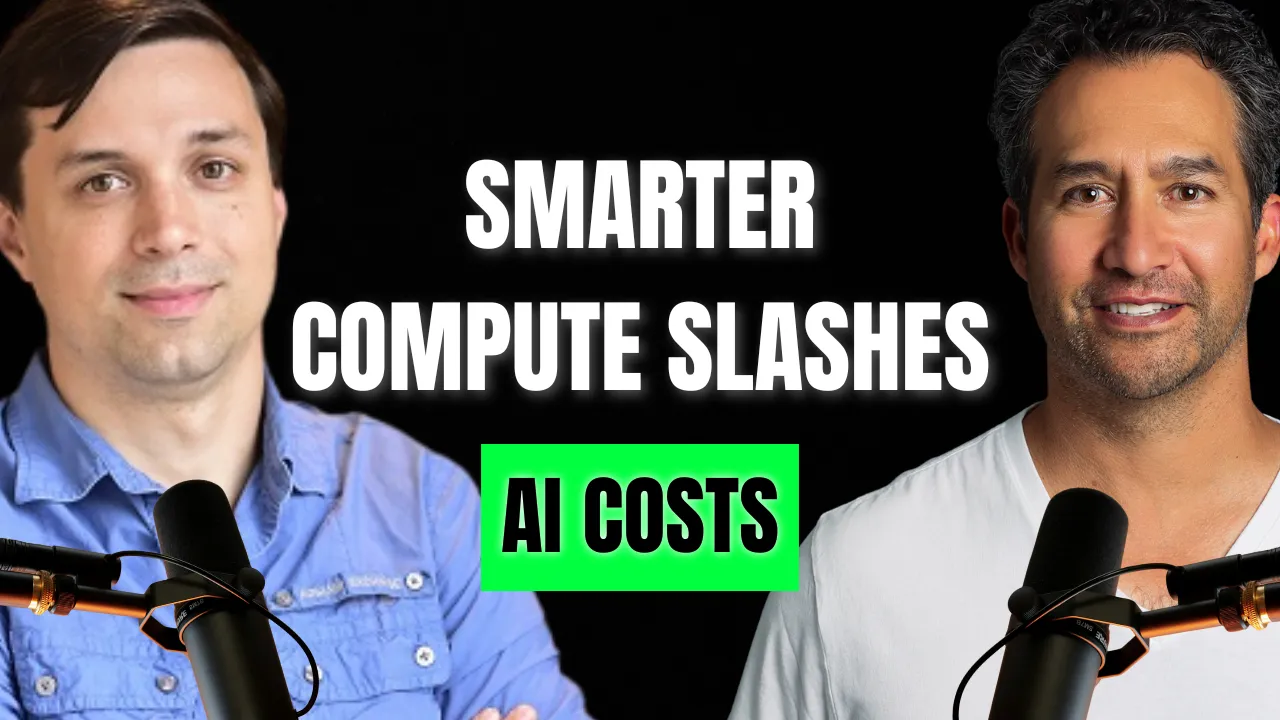
Bob Miles: Yeah, here, here at Salad we're uh developing a, a cloud that, that gives access to massively scalable uh low-cost compute resources and that includes GPUs. Uh what makes us different and how we can do that is the infrastructure on top of which we run. So, so we don't run any data centers here at Salad. Uh instead we've built our products and services on top of latent. So we're, we're a distributed cloud. Um we run across uh tier 4 data centers. Um we run across uh esports arenas and gaming cafes. And we also run across uh hundreds of thousands of gaming PCs. We pull together all of these resources and use those to power our, our products and services. And because of that model, because we're a spot buyer of compute, we can access those resources for a lot lower cost and deliver lower cost products and services. Uh but also we're incredibly scalable, too. You can go from zero to 3,000 GPUs uh in the matter of an hour with Salad.
Jake Aaron Villarreal: So, just to kind of pull back a moment, when we look at AI, you've got really three areas of focus. You have algorithms and models, number one. You have the data that goes into those models that has to be trained. And then you've got the inference, which is when you have the trained data, then you ask it a bunch of questions and it will respond back to you based on those questions. And we've all seen it with ChatGPT and other platforms, how incredibly accurate and good it is. Sometimes it's a little bit unaccurate, but for the most part, it takes a lot of power to provide that information back to you, that compute power. And that compute is becoming more and more expensive for AI companies, but companies in general. So your product is helping reduce the spend of the compute cost for any company that's building a platform that's going to take a lot of data in and provide responses back to that. Is that accurate?
Bob Miles: That's right. Yeah. Where, where our real sweet spot is, is at the inference kind of phase of, of the AI journey. Once you have that model trained and, and you're looking uh to, for it to serve inference, that's where kind of the characteristics of our infrastructure are really well suited. Um and of course the value proposition of, of having, you know, 5 to 10x more compute per dollar um is, is a, a really important value proposition for what are very expensive models to run quite often.
Jake Aaron Villarreal: Yeah, it seems pretty straightforward as a, as a solution. Um, and as a buyer of technology, if you're the CTO of a company or a CIO or whatever role you're, you're in, that you have to go out and put a cost model together of expectations to really scale out whatever solution in AI you're building. Talk about some numbers. What's the, when you say reduced cost, what does that really look like? Apples to apples from say, if you were to go buy, I don't know, Nvidia's processors or technology or any other vendor out there. What's your service or cost look like versus theirs?
Bob Miles: It depends on the model or the modality in which you're running. You- there's a real spread. Um the, the way to kind of normalize it is, is teraflops. It's kind of like horsepower for cars. You know, how many teraflops does a card have? Um and, and we're anywhere from five to 20 times more price performant. Uh and the reason we can do that is because we're running on top of these latent machines. We're not, you know, charging for dedicated kind of resources over a one month, three month, three-year contract. Um so, so it's the equivalent of kind of an interruptible spot price, but we've productized it where um uh for certain backend infrastructures uh you can actually run your production workload on top of our infrastructure because we handle all of the orchestration, the failover, the distribution.
There's no real apples to apples comparison unless we, you know, do talk about teraflops. That's, that's a little um a little too dry though. Um let's take, take one example, maybe Stable Diffusion as a very common, or FLUX, um very common open-source text to image uh uh model, AI model. And you can expect like I said, anywhere from five to 10 times more images per dollar. Uh we actually just recently did a benchmark where you can get uh 14,000 images per dollar, Stable Diffusion images, on top of our platform. So for those AI startups that you know perhaps got their $100,000 credits from AWS and then GCP and then finally Azure, and now you're, you're kind of looking at that reckoning um on you know your P&L, uh where you're actually having to pay for compute. That's the real sweet spot for us. That's where we come in with a really strong value prop um where we can take those inference workloads and actually help our customers drive a positive margin um and positive gross margins uh with our lower cost of compute.
Jake Aaron Villarreal: Ah that's really cool. Walk us through the user experience um you know for the listeners that are just hearing this. I mean, is it a screen you log into and connect like, "you know, this is how much compute power I need and you know, this is where I'm going to be connecting to," like what's, what's it feel and look like?
Bob Miles: Yeah. So, the, the, the way you interact with, with Salad Cloud is you go to portal.salad.com and much like AWS or GCP or Azure, we actually have a suite of different products and services. Um, we have three today. Uh, so there's, there's an infrastructure product that we sell to VPNs. Um, our primary product is a container engine. So very similar to the hyperscaler um, fully managed container services. That's, that's kind of the mid-stack platform as a service. Um, and, and then we also have a transcription API which is highly opinionated, fully spec'd, you know, "this is how you interact with it." And, and we do have a portal where people can, can actually use the product through a user interface, but most of our customers are developers and they're actually um uh kind of architecting and, and integrating with the API to kind of manage the infrastructure automatically, programmatically. Uh but there's multiple ways to, to interface with it.
Jake Aaron Villarreal: Got it. That's great. You know, as you bring a new product into market, especially competing with big organizations like Amazon and Azure and, you know, Google and Oracle and all the others that are out there that have, you know, organizations that have full, I wouldn't say infrastructure... I wouldn't say call centers, but just the data centers in place to distribute this. What, what's, what's your story around that or to that when you say a distributed you know offering which does not have like one data center it's connected to? What's the, what's the feedback you're getting from your customer base and what's the opportunity to talk through that a little bit.
Bob Miles: Yeah, I, I think our, our real USP, kind of our unique value proposition here, selling prop uh is really cost. You know, where it's prohibitive in the hyperscalers, uh you can drive positive margins with Salad. And I think one of the biggest challenges for us is what the hyperscalers know, which is that the cloud industry is very sticky. There's like a 92% retention rate. You know, once you're on a big cloud, you, you typically through a function of vendor lock-in and, and just other fires to fight, you end up staying with that vendor. Um, that's why they're all offering, you know, $100,000 credits to, to, to new startups um because they want to lock you in, get you early. So, that's definitely the biggest bit of friction to, to, to bring people over.
And um given our model, originally I was quite hesitant about kind of embracing, you know, we're very transparent about it, but embracing it in the marketing copy around what is our infrastructure: you know these hundreds of thousands of gaming machines and these esports arenas and these idle machines and data centers uh uh. But now I've come to learn that developers are actually, they find that very cool um kind of how we're powering our, our products and services, they find it, you know, surprising. And then, and then they want to understand, "Well, you know, what about the security posture?" And that's where we've spent a ton of time um 20 developers for, for years kind of working to unlock these resources and, and harden them to the point where we're very confident in the security that we provide. And um that actually becomes a story that, that really kind of engages and excites developers.
So uh but yeah, we're very new to market. I, I think the other challenge is all of the enterprise-grade GPUs are what the market has been conditioned for to, to want. Those are the H100s, the H200s and the Nvidia cards. Um and we actually have consumer SKU cards. So, so we very kind of different um different model of GPU and, and that's another reason we can drive such high price performance. But a lot of developers aren't used to, to or they don't, they're not kind of conditioned to ask for those specific GPUs. So there's a bit of an education piece there too.
Jake Aaron Villarreal: Yeah. Are there specific uh industry categories that this you're targeting that makes more sense for this or is it "hey, anybody that wants to save cost on compute power, give us a shot."
Bob Miles: So we, I, I think this is the most exciting thing about our business, but also the most challenging at the same time. The, the container engine is workload agnostic. So, so yes, we can appeal to, to anyone who wants to reduce their cloud costs. Um and, and that means we can, we can, being workload agnostic, we can service anyone in any industry with, with any workload type. Uh which is very exciting five years from now, you know, massive TAM, total addressable market. Uh but, but the challenge lies within how do you bring this to market? How do you position it?
And so we've had- we've been in the market for a year now. And, and over the course of that year we've really come to learn and, and start to uh, and we learn just through time, um start to identify different customers from different industries and different verticals come in and start to really show meaningful usage on, on the platform. And so um text to image was that first kind of industry, very compute intensive, that, that, that kind of discovered Salad. Um and then we came across transcription. There's drug discovery with molecular dynamics. Um there's, there's various engineering simulations. There's rendering u- with, with Blender um and kind of visual arts. Um so so many different profiles that, that we look at these days.
Jake Aaron Villarreal: As a company is, are you building a marketplace or is it just a product solution you can come to the website and buy?
Bob Miles: The latter. So, so the nature of our infrastructure and the nature of our business is that we are a marketplace because we are incentivizing suppliers to provide us that compute and then we are selling different products and resources as, as if we're AWS to, to you know the cloud market. Um, but we're not a direct marketplace in the sense that we're connecting buyers and sellers directly, unlike, you know, Uber and Airbnb where you connect a driver and a rider or a guest and a host. We kind of disintermediate and we pull all of these resources together and use those to then power these, these products and services. So, it's a marketplace, but it doesn't really present that way.
Jake Aaron Villarreal: Got it. Okay, that makes sense. You know, um, who cares most about this product when you're out there presenting or pitching to a company? Is it, is it the founder that's got a AI startup or is it someone in the data side of the business at a bigger organization? Who... who cares about this service?
Bob Miles: Yeah, it's, it's kind of an interesting, it's an interesting time in the AI world because there's, there's tons of money sloshing around for, for AI companies. Um and, and that means that quite often the highest concern within those companies is not cost cutting. You know, there's always other fires to fight: recruiting, for example. Um and so, so you know that profile of, of customer who, who's not really hurting with the unit economics of, of serving their you know AI model, product, service, whatever it might be, um they're not really a fit. Um it's more kind of the bootstrapped or, or, I mean a lot of our customers are venture-backed, um, but those who have kind of been an overnight success, um, the cost of their goods sold, which is GPU, uh, GPU cycles, are starting to hurt. That's really kind of the sweet spot for us. And we can find an audience with either the founder there or a developer who's kind of been charged with "go and reduce our cloud costs." So, there's a couple of ins for us in the market.
Jake Aaron Villarreal: Yeah. Really cool. If you look at a company that's been established for a long time, the AWSs of the world, what would they say about what they can deliver versus a company that's coming in and carving out a new niche, maybe part of their business, too, that, you know, they're trying to, to def- to defend their moat. Um, you know, what is it that you say to them? And what's the moat that you're building around your service and company?
Bob Miles: Yeah, I, I think what stops them from doing this is the innovator's dilemma, in the sense that you know if they, if they adopted our model it would really start to hurt their margins because that's where we apply, apply pressure, right, is, is being a lower-cost um solution. And really we're not doing any innovation on the cloud side here. You know, it, it's in our best interest to make the products as similar to what the hyperscalers offer so that there's very low switching costs. So, it's very easy to go from AWS to, to GCP to Azure to Salad. We want to have a very similar, similar lineup of, of products and services.
Uh but, but I think you know, this is... the cloud computing market is a $1.5 trillion TAM by the end of this decade. It is, it is monstrous. And, and it's only growing as our lives become more digital uh and, and you know demand for compute resources and cloud services continues to, to grow exponentially. Um so I, I think the market out there is huge. Um we, we will sort of just a different profile of customer who has a different profile of compute um which is you know what we're seeing today, the more costly compute, the accelerated compute that's the GPUs. So um I think really too early for, for them to have an opinion on us and what we are doing. Um hopefully we become painful you know several years in the future.
Jake Aaron Villarreal: Yeah. Well from a cost perspective I know that when Silicon Valley Bank went under and a lot of the regional banks went under, um startups that were not in the AI space in particular had to quickly pivot to "you know, path to profitability and making sure I have a viable business offering that's going to succeed and be sustainable." And uh it's changed a little bit with AI companies where that's not necessarily so much like line one for them to build and grow a business. They can get, you know, funding based on their idea and then go to market. But you start to look at operational costs and you start to look at what it's going to take to get your product into market whether it's this year or a couple years from now. So, uh 100% cost is a big part of the equation as they go forward. And if there's other options out there that can help in the process or at least give them something to look at, I think that's, I think it's great. You know, worst case, and probably not beneficial, but you know, it could help drive down the cost of maybe what they're going to pay for another vendor with, if they know that here's a different cost structure that can help us here. But I think based on what you're sharing, it's, it sounds like it's a really easy option to consider.
When you look at your company and compare it to other companies maybe in previous eras or you know that helped carve out a niche in the market, do you, do you see any comparisons of what other companies and other industries did that you're kind of modeling?
Bob Miles: Yeah, the, the most famous in our space, the analogy we often kind of draw is uh SETI@home. I don't know if you're familiar with that one, Jake. That was kind of the late 90s, early 2000s. A bunch of um, um folks at home would, would essentially contribute their idle CPU towards searching the stars for extraterrestrial um beings. And we had a similar thing during COVID, there was Folding@home, folding proteins to, to kind of map and, and understand and um generate the, the, the various proteins of the virus. Um so there's always been these, these distributed computing kind of altruistic, charitable networks contributing compute resources.
Many people, because the idea is not that novel right, to "let's pool together a ton of GPUs and a ton of computers and resell them on the market because most computers are idle most of the day, internet connected." So it's not, not a novel idea. We've seen a ton of um competitors kind of come and go over the last seven years um, and I would say really only in the last year have we crossed the threshold where we've successfully demonstrated that we can serve a you know classic cloud customer um spending six figures a month uh atop of consumer devices. And, and that was a really meaningful threshold to cross. Uh but, but I think in terms of anal-, like analogous other businesses in other industries, it's the shared economy, right? The path that was kind of forged by Uber and Airbnb back in the day. Um that, that's probably a very, very good similarity to draw. We're just doing the same thing in the, the digital space.
Jake Aaron Villarreal: Yeah. Got it. You know, the question that probably a lot of people are thinking is if you're accessing idle computers or machines, is there some collaboration there? Is it, you know, people that say, "Hey, you can access my computer and I get paid somehow"? Or how does it work? Like that's, you know, a question I think a lot of people would want to understand.
Bob Miles: Yeah. So, we, we target gamers and their high-end gaming machines. And essentially they download a executable, our program from, from our website. Um, they'll install that on Windows. And they then configure what we can use and when from their machine. So how much storage, uh, uh when we can use the CPU and GPU, how much bandwidth. U- and then based on that user configuration and, and based on the host hardware that we detect, that node will then call in and say "hey, I'm available for work." And, and when we match a job to that node, um you know, we'll then leverage those resources.
And the way we do it, for, for the technical folks listening, um we actually spin up... we use WSL 2 and spin up an entirely isolated virtual machine. So, it's this isolated machine with our own runtime security and host intrusion detection system and, and... share tracking and, and it's kind of like a, a reputation system that we run um on top of that. And then that provider, as long as they're, they're behaving um you know, in a fair and honest way and actually providing that compute, um they will then be rewarded in kind of like a points program. And, and with those points, they can redeem games, gift cards, subscriptions, downloadable content. Um, and, and so it's a reward system on, on the supply side.
Jake Aaron Villarreal: Yeah, sounds like a win-win. God, for gamers, you know, it's, I'm sure there's a lot of items that you can provide to them. They'd love. I've got two little boys and they all talk... all they do is talk about games and want to play games. And they're not professional gamers, but I know that there's uh, there's a lot that could be said there in terms of being able to collaborate with them and provide things that they would want. So really cool strategy. I love that. So you're really having to serve a couple different markets. One of them is, you know, making sure that you got the compute with the gamers and being able to build that portfolio of infrastructure, if you will, and then you've got the customers, you're going out and trying to get them to understand what you can bring to the table from a value perspective and cost perspective. So, it's really telling two stories.
Bob Miles: Yeah. And that's been a huge challenge for us is how do we... and, and these, these two, you know, user profiles are entirely different demographics. We- gamers on one side, kind of, they got their own culture and, and kind of persona. And then we've got developers, you know, startup founders, DevOps engineers, infrastructure engineers on the other side. And, and reconciling the two from a brand perspective has, has been a real challenge.
Jake Aaron Villarreal: It's interesting just to think about the fact that gamers are powering compute for startups indirectly. I mean if you think of it that way.
Bob Miles: Yeah. Absolutely. No, it's very cool. We, we've got gamers' machines right now who are running molecular dynamics simulations to discover new drugs. Right. It's, it's... and, and powering um one of our larger customers which we you know we both publicly have kind of shared um called Civitai. They're one of the largest like, top 10 AI um website doing text to image. So we um... and there's everything in between. So, so yeah, it's, it's really cool. It's, it's kind of how we see the future going um is all of the world's idle compute being, being leveraged um for, for various uh, various jobs and workloads.
Jake Aaron Villarreal: When you started the company seven years ago, that was way before the AI hype. Did you do any shifts and pivots to capture the direction in the market where you're going after today?
Bob Miles: Yeah, the, the, the, the hypothesis, the vision we've always had, kind of zooming out looking at our marketplace is: the demand's going to be exponential into the future. And it's inevitable at some point in time that that demand, the pressure that builds from that demand um has it spill over and, and become serviced by the billions of connected consumer devices. So that was always part of the vision. That's what we're starting to see today um with this AI kind of Cambrian moment explosion. Um, we're now starting to service some of that demand that would typically be powered by a data center. Um, but we actually got our start kind of recognizing that the two-sided market problem was solved by crypto. So, back in 2017, um, there were really compelling unit economics from mining crypto for, for a gaming PC. It was, you know, 30, 40, 50 bucks a month. And so we, we actually tapped into those unit economics, tapped into that as a monetization mechanism and really spent the first four years of the business trying to understand the supply side. Um which was no easy challenge, right? How do you find, um convince that you're bona fide and trustworthy and legitimate and motivate and retain all of these gamers to, to share their compute? Um, originally all, all of the revenue came from crypto. And now we've, we've kind of... which we still, you know, allow gamers to opt into today and, and still, you know, generate a meaningful amount. Um, but, but it's really those other three products I've described before that are primarily the, the revenue these days.
Jake Aaron Villarreal: Yeah. As you look at going into 2025, not too far away, if I'm, if these numbers are accurate and you tell me if they're not, $22 million raised. Is that correct?
Bob Miles: Yes.
Jake Aaron Villarreal: Okay. And you're going to be growing and continuing to scale as you head into 2025. What uh what are you excited about whether it's the product or the market or the traction as you head into next year?
Bob Miles: We, so we, we have a vision to build out a suite of different products and services. And we just launched our first API product recently, which is a fully spec'd u- transcription API. So, automatic speech recognition. Uh, you put in an audio file and it spits out the transcription and uh or sorry, the transcribed, you know, text content um with, with all sorts of bells and whistles like speaker identification and, and whatnot. Um, and that's really our first API product that we've launched. I'm really excited to see that come into the market. That's a $2.1 billion market. Um we've come in about half the price of the incumbents for a product that is just as performant. The reason we can do that is because of the, the infrastructure on top of which we run. Um we are not constrained by GPU resources and that's really the first kind of API SaaS product that we're launching and, and we... I'm really excited about that. We, we launch that successfully and, and um over the next you know six to 12 months if we can demonstrate meaningful traction in the market, that's then a playbook we can, we can repeat over time.
Jake Aaron Villarreal: Really cool. You know anytime you bring a new product to market or a new category you got to evangelize and get people up to speed on. There's a lot of marketing, a lot of sales, a lot of go-to-market strategy that goes into it. What's work- what's been working for you in terms of getting your message out?
Bob Miles: Yeah, the, the... so for, for the product we launched a year ago, the container engine, because it's workload agnostic, the only real strategy we could run with was kind of a content-first bottoms-up strategy. And then that was kind of blogs u- uh with, with different benchmarks in terms of price-performance, um reference architectures, how-to guides. And, and eventually kind of the marketer developers then came to find us. Um with the transcription API, you know we're kind of doing a little more targeted outbound, um but, but there's, there's kind of a different strategy for each one of our, our products because they have much like the marketplace very different user personas and buyer profiles.
Jake Aaron Villarreal: Yeah. Got a lot going on over there.
Bob Miles: Yeah. It's not, it's not a, it's not a not complicated business.
Jake Aaron Villarreal: Yeah. I, I, I like, I like what you guys are building and, and what you're creating. It just seems like you have a target market, really two sides of the marketplace, and uh a solution that's right for the market. So, I'm really excited to, to kind of see where things go and super happy that you came on here to share it. Um, there's a lot of other services that we're seeing come up that are trying to help support AI, whether it's from the infrastructure side or optimizing how the actual hardware is being used and in different layers of the tech stack, how some companies are coming in with some really interesting ideas. U- yours is very straightforward. Okay. I think that's part of the benefit of what you're selling and presenting. So, really cool. Um, if anybody wants to find salad.com, it's easy to find salad.com. You can check it out there. If anybody wants to find you, Bob, where do they go?
Bob Miles: I'm not, I'm, I'm not on X. Um, LinkedIn really is the spot. Um, Bob Miles on, on LinkedIn.
Jake Aaron Villarreal: So, they want to talk product with you, strategy, just get a better sense of who you're doing this with and the success you're having. Uh, find Bob Miles on LinkedIn and, uh, you can catch up with him there. Bob, um, God, I want to thank you so much for your time today and sharing your story. I think it's got a ton of value in the market and I think others will soon realize what that looks like when they start going into their build and their cost of whatever AI they're trying to get to market. Uh, I want to also thank the listeners for joining and, and spending your time with us today. Means a lot to me. It keeps our show going. And so, um, as we move forward here, uh, can't wait to catch up with you in the future, Bob, and to see what happens in the next 6, 12, 18 months and, uh, see if we can help you in any way, support your business by getting the word out. I'm your host, Jake Aaron Villarreal, signing off for now. I can't wait to catch up with you all on the next episode. Until then, take care. If you like what we're doing, don't forget to subscribe, leave a review on Apple Podcast or wherever you listen, and follow us on YouTube, where we go behind the scenes to learn what it takes to be a startup founder.












.jpg)








.webp)
.webp)
.webp)
.webp)