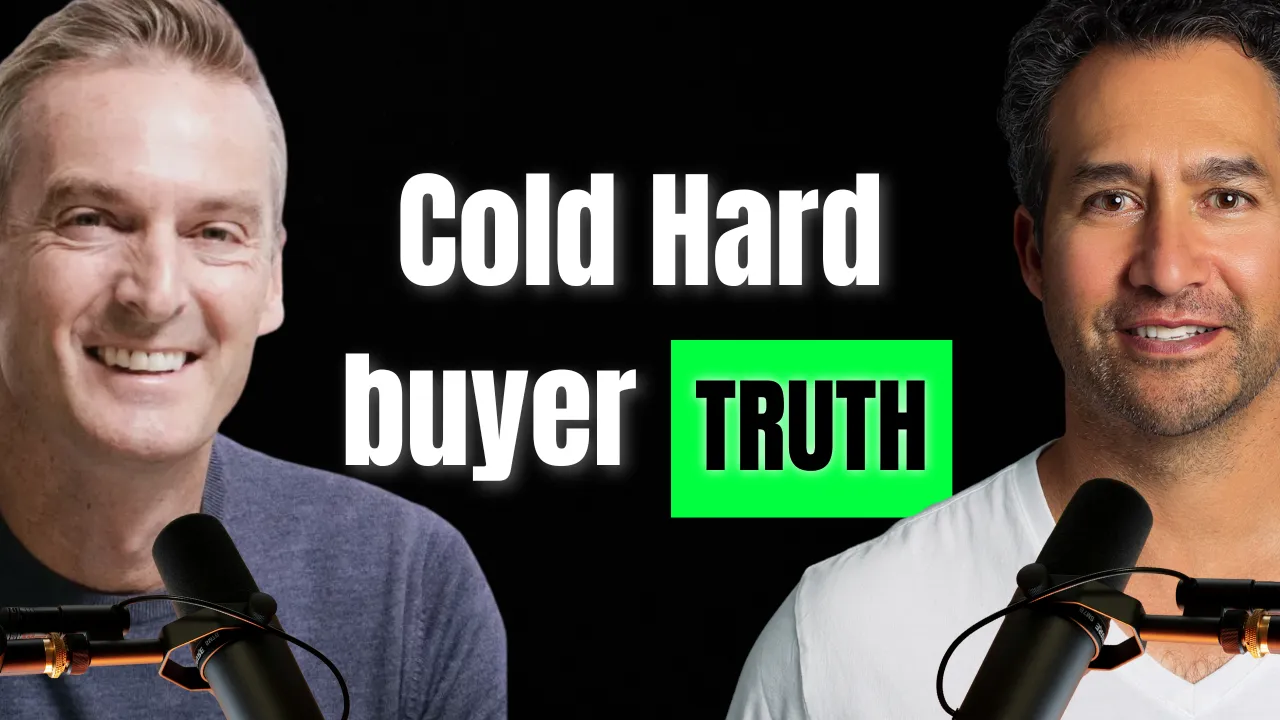
Jake Aaron Villarreal: I'm Jake Aaron Villarreal, born and raised in Silicon Valley and here to take you behind the scenes to share what it's like to be a startup founder, the problems they solve, the products they build, and an effort to make our lives better. I'm excited to have with us today David Henriquez. David, welcome to the show.
David Henriquez: Thanks for having me.
Jake Aaron Villarreal: Well, David, I'm excited to have you. Uh, David's the co-founder and CEO of Copley, and we'll dive into exactly what that is. But before we do, David, uh, where are you joining us from today?
David Henriquez: In Boston. So, right in downtown near Long Wharf, right off State Street.
Jake Aaron Villarreal: Really cool. I love the East Coast. I lived in New York for a bit and got up to Boston some, a few times. And when I was working for Oracle, a lot of hustle and bustle going on in that town. Great sports town, too. Excited to get back there when I can. Uh, a little bit more about David, uh, he is not only the co-founder and CEO of Copley, which is an AI marketing agent. Uh, but prior to that, um, he worked at a company called Klaviyo and was there as a forward deployed engineer really from Series A to IPO. He's got a unique career that span both direct quota-carrying sales roles and software engineering roles. So we'll jump into kind of what you're building today, but I want to go back a bit and learn a little bit more about you, David. So kind of walk us through some of your early experiences that helped shape you in getting into technology and, and your opportunity today.
David Henriquez: Sure. So I always uh kind of start in the same place. So when I was very young, I had a friend in the second grade who taught me BASIC programming. And we used to spend a lot of time building choose your own adventure games in BASIC. And that was really my introduction to programming. So we, you know, had to write line numbers. We used a lot of goto statements. Sometimes we'd run out of line numbers, we had to figure out how to deal with that. And it was just a lot of logic and figuring out how computers worked from the command line interface using different keywords, figuring out different things. A lot of taking inputs and then doing things with them to progress you through different games we would make with different themes.
And from a really young age, I, I fell in love with computers and technology. And all through high school, college, I would make websites for family members and friends, small businesses. And then after college, I ended up not going into technology at first and going into sales. Typically technical sales roles are what I had. So it was still, it was still technology-driven. Worked at a couple startups. Then decided to switch back to kind of my roots in engineering. And now I've had a career that's basically, half of it has been in quota-carrying sales roles and half of it has been in software engineering, some engineering management roles.
Jake Aaron Villarreal: Yeah. Well, it's interesting because we're seeing so many companies, specifically in AI, that are building and, and finding market fit and hiring the go-to-market teams much earlier than they typically have. But one of the areas that we've seen a lot of companies come to us for is forward deployed engineers, which I know you've had that role. And it's a combination of, you're very technical, but you're also sales focused. You can understand the business problem and communicate that effectively. It's not a combination you are born with. You kind of, I think, have to learn both ends of that and gravitate towards them. But it is a role that we're seeing a lot of interest in. In your current organization, you're the co-founder, but talk about what was the inspiration behind the problem you found, and was it a technical problem you wanted to solve or was it more of a business problem that you had to integrate technology to help solve?
David Henriquez: Yeah, great question. So, it was really a combination of both. So at Klaviyo, I worked with a lot of the fastest growing e-com companies of this generation. So you know, you can think of like, go to Klaviyo's website. I mean, a lot of people know Klaviyo if they know e-commerce. Like all of the big celebrity-backed brands and now a lot of just well-known brands in general are on Klaviyo. And so I started in 2018. We were lesser known then. So a lot of the largest deals we had, I ended up being assigned to because I was, I was working with all of the sales reps. So, I got to see what a lot of these companies were doing, and there were a few in particular that just did things completely differently. And the way they treated content at their company was just completely different, and they tried to make it into a much more scientific endeavor that I just didn't see as a company. Like we, the other people I worked with, we just didn't see that from a huge amount of other companies we worked with.
A lot of the marketing we saw felt very subjective. It felt like a lot of just kind of guessing. They weren't really sure why things were working. And then we had these other companies that were maniacal about testing and measurement, and they were treating marketing, again, like more of a scientific thing where they were coming up with a hypothesis. They were testing it. If it worked out, then they would scale it. If it didn't work, then they would, you know, kill it and move on to the next thing. And it...
[The Journey to Copley]
...created this really dynamic environment where the marketers weren't as nervous to create new content. There wasn't as much anxiety around like, 'Oh, we need to send this email and it has to hit this number' because they were running a process that they believed in, and the results of that process was going to result in, you know, success because of all the testing and everything that got there. And these companies were very unique in doing that, and they were growing really, really fast. And then during COVID, it was kind of like the boom time for e-commerce in general and everyone was doing great. People were selling out, you know, I think like the first two weeks of COVID when it really hit, the lockdowns hit, the CTO of Shopify said they were doing Black Friday numbers like every day for a week or something like that.
Jake Aaron Villarreal: Wow.
David Henriquez: So yeah, it was, it was, it was awesome for all these companies. Fast forward to post-COVID, the world opened back up. Retail opens back up. There was, you know, that example of the chart that showed growth in e-com. It had always been taking a huger piece of overall retail sales. After COVID, e-com dipped a little bit. While the trend stayed the same, you saw Shopify stock, you know, come down a lot. It's now since fully recovered. That was obviously an overreaction. The feeling in the market, it really was that, that we just came out of this boom. Wow. Everything's now way harder. And during COVID, all of these brands that weren't online and weren't focusing on e-com are now focusing on e-com. The ones that had already been doing it are now investing more in it.
So coming out of that with you know, this opening of the market and the, this restriction of how many, you know, it's kind of like a constriction of your customers, it was really, really tough and companies were having a hard time. And it's continued now. It's gotten even tougher and you see a lot of people in e-com that are saying things like, "This year is going to be a really tough year for e-com companies in 2026." And we saw this. And what we saw was essentially, these big brands who have these really complicated, advanced systems of testing and deploying content are going to just get better and better and better, and the rest of the market is going to have a really hard time keeping up with that.
And so at Copley, we've set out with the mission to really democratize this level of advanced content creation, testing, deployment that the big companies—and we're talking like 500, 700 billion dollar plus companies—are doing, and bring that to really like the lower and upper mid-market. So brands doing between 10, 20 million and like 300 million. That's really the range where we see the biggest challenge right now, and where this technology and this kind of cultural idea of, of testing content and trying new things all the time... we think it's just going to be make or break for these brands. If they can't figure out how to become content powerhouses, we think it's going to just get really, really tough for them to compete in the market.
Jake Aaron Villarreal: So it's specific to e-commerce companies, correct? Or is it content online for any type of company? Say you're a, I don't know, a company that does yard work and you have a, you know, a website. But, you know, if you tell a good story, you know, you're born and raised in a certain town, you might want to go to the person that's born and raised in your town. And that might be a content story that, you know, would resonate with the residents around that organization. So, is it only selling products or it's also services for any type of website, really?
David Henriquez: Yeah. Yeah. Great, great point. So, one of our most successful customers is actually a B2B AI tech company. So, we're not just focused on e-commerce, even though that's a lot of our DNA. Part of what we think is, is happening here is like, the e-com I guess DNA again, that like we have and that like is present in e-com marketing, this expertise around social marketing, using ads on Meta, organic posts, TikTok marketing, all of these things... it's been honed and it's been perfected in the e-com world because the metrics are just so clean. You post a post, you, you, you put out a post, you see the impressions...
[The Inspiration Behind Copley]
...you see the clicks, you see the sales. It's a really tight feedback loop and you can improve that really quickly. And so what we think is also happening is, is that same strategy and the principles that are in e-com and have traditionally been like hyper-optimized there, are going to these other markets. And so it's like, part of what we, we see happening is the content strategy going from the way that e-com brands and the way that those companies speak to their customers, evolving into B2B and other industries as well. In your case, service providers that you mentioned.
Everyone is, we think, is going to become a content creator and AI makes that really, you know, a very different experience. Now people can create content that before you maybe needed to be an expert in Photoshop and you need to be an expert in video editing and you needed to be a good scriptwriter and you needed all these skills that like, you might not have if you're running a landscaping company or if you're running a services company. But now AI serves as like a real, you know, democratizing layer for creation of content to allow people to get their stories out.
So, we think a lot of what's happening and has happened in e-com is going to extend, and you're going to see like the e-comization of the enterprise. And you're starting to see this already on LinkedIn and other places where brands are now focusing on their employees being influencers. Having 10,000, 20,000 followers on LinkedIn is now something that's really important to a go-to-market executive at a company, where before, you know, that just wasn't even something that you thought about. Maybe 10, 15 years ago some executives might not even have a LinkedIn presence, and today the creation of content and sharing ideas and sharing content is happening in B2B and in other markets almost as much as it's happening in e-com. So we think that's going to continue.
The way we think of ourselves is that our DNA is in e-com, but content is something that everyone needs to get good at. And we're here to help everyone. And right now, we're very focused on social and ads because it's one of the biggest budget items for companies is their advertising budget. You know, it's a great system when you have good ads because you can like pour more money into it and get more out the other side. So, it's like a really great growth lever when you can have it, but it's something that a lot of companies just aren't quite good at yet. But, we think it's going to change.
Jake Aaron Villarreal: Yeah, makes tons of sense. You know, us as a company ourselves, you know, we're not content creators. I mean, we have the podcast, but when it comes to ads and services, you know, we're always thinking about what's our message, how do we want to get it out, what's the content look like? But you know, some of the bigger questions are, how do you really know what's hitting them? You can look at what you're spending and are you getting response out of it, but you know, is your system a way to A/B test content, you know, in large amounts and rapidly? Is it AI-driven? Walk us through the actual product itself.
David Henriquez: Yeah, sure. So, we're about to relaunch Copley in about five weeks now. And it's going to be a Slack-first experience where you essentially have a marketing agent in Slack that can help you with strategy, with insights, with planning, and with content creation and deployment, almost as if it's an employee. So, like you can chat with it, you can talk to it, you can um go back and forth. Then we also have a web app that's very um you know, sophisticated. There's a lot of features there. We've spent two years building that.
But the key to Copley is ingesting all of your content, analyzing it, labeling it, figuring out how it performs at scale. So we have customers with tens of thousands and even going back years, hundreds of thousands of distinct pieces of content that they've run across different platforms. We analyze all of that to figure out like what actually resonates with your audience. Different products. Um, you know, how the different messaging you use of different products works. Um, and it, it doesn't just be products. It can be like for lead generation, right? Like how are you making your money with content? And so we figure that out. We try and then take, you know, that's our layer of taking the subjectivity out of content. So we figure out what are the things you've been doing that work, what are the things that your competitors are doing, what is inspiration that you like in the market.
And from there we use that with frontier models to go and generate content. So we can take existing product images, even just like products with white backgrounds, your existing ads. You can start from scratch if you want to. Your existing assets and everything that you have as a brand, and then enhance it and edit it to make many, many variations of it. So the idea here is multivariate testing at scale with the ability to run contextual bandits and other experimentation tools to be able to get a ton of content out, test it, and see what works, and then scale the things that work and kill the things that don't work.
Jake Aaron Villarreal: Yeah, that's great. Well, we're a big user of Slack. Why Slack for your next launch?
David Henriquez: Yeah. So what we've found in the last few months is one of the big challenges we see coming is, you know, like there's a lot happening right now, and this thing we keep hearing of over and over and over is like the death of SaaS. And it's this idea that software as a service models from 10 to 15 years ago are dying. And what people I think mean by that—and I, I just saw a post yesterday on LinkedIn that was a pretty good example where it was a startup that had been paying $30,000 a year for different tools. And in the last two weeks they've replaced $30,000, that 30,000 spend, with tools they've built for Claude Code. And they admit right away, like, the things they built aren't like 100% replacements, right? They might only be doing 20 to 25% of what they were paying for, but that was the only 20 to 25% of what they were using before. So they can now build bespoke software that solves their exact use cases. And imagine if you can do that as a company, right? Like how many SaaS apps, how many products are about to get built in the years to come? It's going to explode.
And so from our perspective, there's kind of this fundamental problem with building software now and getting users where you don't want to be another thing you have to log into. We're all competing for attention. I think Amazon like 20 years ago said something like one of their biggest competitors was Netflix. And people were like, "What are you talking about?" And they were saying, "Well, you're not going to be shopping on Amazon if you're watching Netflix. If you're doomscrolling on Facebook, you're not going to be on our site." And that is the attention economy at, at work where you need to win the right to someone's attention. And it's becoming harder and harder and harder every day. And I think it's only going to get worse with, with the ability now to like spin up apps and, and write code really fast.
So what we're trying to do is go to where our customers work today, so they don't have to use us as the fifth, 6th, 7th, 10th, 20th SaaS app that they have to log into. We're right there working with them. So when they have an idea, they can just say, "Hey, Copley, we just got this feedback about this product, some really great positive review. Can we spin up some ads using that review as social proof?" Like boom, done. And so that's where we see the future going, is tools that come to you, that work with you as seamlessly as possible. And I think that trying to become another website or another platform that someone has to log into, it's just a really um, difficult hurdle. You know, you used to say that you had to be like 10 times better than the current way that people do business in order to win the right to like, win a customer. I don't even know if that's true anymore. I think that that's not even enough. I think that not only do you have to be 10 times better, but it has to feel seamless, and it has to feel like something that's like, almost like too easy.
And so that's really the motivation behind Slack is we've been testing this with early customers and the efficiency and the ease of use, and just how much better results they get from being able to just quickly talk in Slack and being able to quickly go back and forth with an agent versus having to log into a system, learn a new UI, figure everything out, and then remember to come back every day and just have that be another thing that they have to go and do. Versus it's a notification in a channel next to you. You're already going to be checking Slack. To us, it just, it just makes a ton of sense that this is where we think software is going, and this is where we think agentic software is going, that it's going to feel like you're working with a teammate more so than you're logging into a web app.
Jake Aaron Villarreal: Yeah, I like that. You know, you said that when content becomes easy to create, it often becomes worse. What do you mean by that?
David Henriquez: Yeah. So, I think one of the biggest challenges that I've seen in my career at times was creating content. So, years ago, I worked at a web development agency. We built websites for a lot of like Series A through D startups and...
[Copley's Unique Approach to Content Creation]
...they put a ton of pressure on you. "We have this go live date. The website needs to be done." Then you get there and they'd say, "Oh, well, we have to write all this blog post. We have to like rewrite our product page. We have to like create all this content." Uh, it was a huge bottleneck. It was really hard to get content created. But now with generative AI, it's really easy to get content created. You know, I could go type right now, "Hey, look at my product page for coffee.com. Recommend how to make it better for this audience," and ChatGPT or Claude or whoever is gonna respond with that in seconds. So when content is that easy to make, the result is it tends towards lower quality, right? So the high fidelity, high production value, really high quality content goes through many cycles, takes a very long time. The very quick and dirty, "I'm going to just go to an LLM and get some content created for me fast," isn't always going to be very good at first.
And so in our world, that's not a problem, but it's something that you have to design around. And so what we think is, in a world where an influencer reaches out to you and says, "Hey, I can have 50 ads using your product next week." And someone else says, "Hey, I can redo your whole website for you in, you know, two days." You need to have systems in place to be able to test that. Because when you can create content really fast, it's not like the content creation itself anymore that's valuable. It's how the content performs for you. So you need these systems in place. You need software in place. You need all these things to be able to test the content quickly. And then if it doesn't work, be able to kill it. Get, move on to something else. And if it does work, great. Scale it up. Go from 10% of your website impressions to 50 to 70 to 90 to maybe serving all of them. Scale your ads from being a small budget that you're testing with to a much larger one. And so we think in that world, the challenge of creating content goes away. But now the challenge of corraling content and making sure that it performs for you becomes even more significant.
Jake Aaron Villarreal: You know, I love the space you're in. I know there's lots of opportunity in there to build a great company. From your experience, where do you usually see your customers get growth or content wrong?
David Henriquez: Yeah. So, the biggest thing that we see is really just subjectivity. At the end of the day, right now for a lot of brands, the, what goes live is not typically a data-driven process. It is a process of subjective human emotions, where they think something looks good or they have an idea that looks good. We've heard many times that the marketing team, last minute, has the CEO or sales person swoop in and change up their plans and say, "Well, I don't think this is the right direction. This isn't the way I want to say this. I think we should do this." And when you get to those kinds of thoughts, like, "I think this is better. I think this is the idea," or whatever, you end up with one person's or maybe a small team's view of how your content should look, should perform, should work for you. And the reality is your customers are not always going to be represented by what you think.
How many times have people, you know, there's all these stories from Silicon Valley of all these apps that like, I think Slack is a good example themselves. Like Slack was building like a video game or something and they ended up having this app inside and they're like, "Oh, wow. This is actually the thing that our, that's like valuable and that like people are going to use and that people like want." And now they, they created Slack. It got bought for $30 billion, right? So like, think about that. Like you're building this like piece of software within a video game that becomes Slack. If you're selling products, the things that your customers care the most about and that they like the most, very well may not be the things that you think matter. Unless you're like super, super tight with them and you know, you're reading every review and you know, at scale like you obviously don't have the time or the bandwidth to be able to do that.
So you need to be able to try a lot of different messaging, a lot of different visuals, a lot of different content to reach different pieces of your audience. One person's opinion, one group's opinion of like what looks good or what they think is the right way to say something, it's just very unlikely statistically, right, to be like the best idea. And that's the biggest thing we see people getting wrong, is that it's a very subjective process. They're not using data correctly. They're just not treating content like a scientific process. They're treating it like subjective personal preferences. And those are not the ways that it's happening at bigger companies that are growing really fast. They are treating it completely differently. It's much more of a math equation than it is subjectivity at that level.
Jake Aaron Villarreal: Yeah. When it comes to the space you're in around content and marketing, what do you think humans should stop doing entirely as AI gets better?
David Henriquez: Yeah. So, it's a really good question. I think that a lot of the busy work and minutia of day-to-day work is going to disappear. I think that meeting together with humans, driving consensus, setting the vision, very much like brand... When you think of marketing, and you think of like brand marketing and performance marketing, I think a lot of the brand marketing is going to always maintain its human element. There will be AI companies, right, that like, "Oh, I used AI to come up with my brand," and, and there's going to be a million of them and some of them will work. Um, so I'm not saying it's impossible or anything. But I think that largely we're going to continue to see into the near future that human-centered brands are going to definitely still be a thing.
But the minutia of performance marketing of, "Hey, this ad set is like doing slightly better than this one. We should up the scale, up the spend here, we should lower the spend here. This ad is, has a very low conversion rate. We should kill it. This ad shows promise, but it's not quite working right. Let's change this. Test five different headlines of it." That type of like in the weeds minutia, it's just better for machines to do that than humans. Humans should definitely have the right to approve it, to go in and inspect what's happening and make sure they're in control of what's happening. But that's just like, not even really fun work for humans to be doing, like constant data analysis, constant tweaking and changing of things. That's the type of stuff that AI and computers are just really, really good at.
They're not as good at figuring out like what is the next product that we should build. Like it could give you some ideas and there's, there's a lot of things happening with that, but like that's the stuff that humans are good at. And so I think like in the future what's going to happen is humans are going to do more stuff that humans are good at. And the stuff that humans typically aren't good at or it's kind of a slog, it's, it's just like in the weeds nitty-gritty stuff, that's where AI is going to really shine.
Jake Aaron Villarreal: Yeah, I agree with that. I'd love to have an AI agent in my Slack channel that when we're talking about creating a new strategy or brainstorming or content creation or different ads to run, if it could, you know, you could prompt it and it could respond and actually then help create it. And then you could run it and then it could test...
[The Future of AI in Marketing]
...it and it could tell you, "Okay, spend your money here versus over here because this is getting traction and this isn't." I mean, if it saves you money, solves a problem, and does a task that you don't have the skills to do, it's like a no-brainer not to at least try that. So, I'm sure you have a lot of companies that are listening that want to try it out and want to use it. One of the big questions we get a lot of for guests on our, on our podcast is, you know, how much does it cost and how easy is it to use and implement? And maybe that's a website that shows that information, but kind of what's the day in the life of trying your product look like?
David Henriquez: Yeah, great question. So mid-February, um, we're going to be launching. It's going to be as simple as signing up, adding it to Slack, and then we'll have a credit-based system where you can, you can try it out. And then for teams, for larger environments, we'll offer a subscription where you get discounted credits at scale. But the goal is going to be to be able to provide value to everyone from individuals at small companies to teams at much larger companies. The pricing will be competitive with, you know, what it costs today to use AI models to create content. So, yeah, it's, it's not going to be um, like a necessarily one-size-fits-all type thing where it's just like ChatGPT and everyone just signs up and has an account. Like ChatGPT offers enterprise plans, they do all kinds of different things behind the scenes. We're going to try and be less like that and more of a turnkey operation.
But, you know, it's going to start at hundred, a couple hundred a month, and then go up to maybe thousands a month. But, we're not trying to get six, seven-figure enterprise deals right now. We're not trying to like reinvent your entire marketing team and make this into a three to six month process. What we're trying to do is just immediately add value, sync in all of your data, create insights around your competitors, around what you're doing, and get you to value really, really fast with being able to in Slack, you know, do all the things you just said. Create campaigns, launch campaigns, analyze campaigns, be proactively given ideas like, "Hey, maybe you should try this. You should change this audience here. Why don't you change the way that your lookalike audience works?" Um, and, and just basically have all these ideas brought to you where it feels like this agent is like a superpowered marketer who's just always on, always thinking about the next thing, and always trying to get you ahead.
Jake Aaron Villarreal: Yeah, that's great. Well, you know, David, we had uh a conversation before this podcast. I know you're a very transparent, open thinker. So, I want to switch gears a little bit here and talk just about as an entrepreneur, like some of your experiences and some of your insights about building. One of the things that you shared which I thought was really interesting was you said, you know, that early on, or you know, charging customers early forced you to think differently about building. Kind of walk me through what you meant by that.
David Henriquez: Yeah. So it's, it's tough as an early startup that's, you know, you're trying to take the plane off while you're building it and you're trying to charge tickets for it. And a lot of people are nervous to get on a plane that's being built while it's taking off. So, it's a, it's a really delicate balance of, of trying to get people to pay, build things, and build for the future while servicing them in the day-to-day. But what that forces you to do is be incredibly detailed and specific around how you prioritize different things and identifying what you're building is actually the most valuable to your customers. And it doesn't have to be perfect, but by charging people for software... and it feels really awkward and it's really hard to like, you know, especially as someone who likes to build products, who, who can maybe, you know, I wouldn't say that I'm a perfectionist, but like, you know, everyone building stuff like, you want to be proud of it. You, you don't want to put broken stuff in front of people.
But putting things in front of people very early allows you to get a, a real reality check on: is what I'm building valuable enough that people are willing to use it before it's perfect? And is the promise of what we're doing and is the core features that we're building good enough that we should keep going down this direction? Because once you have a product that's like demoable, that's you know, enough of a prototype that someone can use it to try and get value from it, charging works as a great filter to figure out: maybe there's some design partners, maybe there's some early pilots who are talking to you who are actually not ever serious about paying and they just like the free work or they just like, like, you know, being part of a startup environment and they think it's kind of cool. But it's not something they're actually going to be willing to commit to long term. It helps weed those people out really fast and it helps you understand like who are the people that are going to be with you as you build this.
When things are free, it's really easy to get the answer yes. But like even charging anything at all—and you know, the first customers we charged, it, it wasn't like very expensive. It was just to make them feel like this was a real engagement and this was like really something we were doing together. And being able to do that helps you dramatically in prioritizing and focusing on the most important things. And avoiding, you know, customers who be like, "Well, I'm, I'm not going to pay yet, but if you do this, I will, but if you do this, I will." And just like really holding them accountable like, "Okay, we did the thing you agreed to. Now it's time to pay if we're going to continue to work together." And then oftentimes they'll just say, "Well, actually, we need this, too." And you realize like, "Okay, this person's just not serious." Like, they're just not...
[The Role of Humans in an AI-Driven World]
...someone who feels the pain enough of what I'm solving. And then you have to have just real conversations with yourself and your team like, are we actually solving something that's painful enough that people would pay to fix it? Or is this a nice to have? Or is this just like, it's just nice and people like it, but it's not these people, like we're just selling to the wrong person, maybe it's the wrong persona, maybe it's the wrong industry. It just, it... I guess the shortest way to say it is like by charging people, it makes things get real much faster and it gives you real feedback much faster. Even just charging... like you could charge a hundred million brand hundreds of dollars a month. Like anything at all to go through the sales process, to get them to put in a credit card, to get them to actually do that is immediately 10 times better than 'we'll do it for free.' You know, maybe they don't even have to sign paperwork. Maybe you're just like working with them to make it a paying situation. Just makes it a lot more real for everyone.
Jake Aaron Villarreal: Yeah, great insight. We've been asked to be design partners of companies and it's been really fun to be subject matter experts in a field and then have them build something you actually can use. And it's solving a problem that you can, you know, you know, accelerate how you operate. So there's I think a tremendous amount of value both ways for the builder and for the design partner to get involved in the process. So really cool. You know, as you've gone through a company where it was Series A to IPO and now you're building a company from the ground up, what has building teams taught you about hiring that you didn't expect?
David Henriquez: That I did not expect? Yeah, this is a tough one. I, I read this beforehand. I think that, I think the biggest thing about building teams that you might not expect between Series A to IPO and in a startup environment is there's a huge difference in the kind of the startup mentality and what makes a good startup employee versus what makes a really good larger company, like scaling company employee. And sometimes they're, they're similar and, and sometimes like you'll get people in a scaling company environment that are great startup people. And when the company goes public, you know they're going to leave, right? Like there's a bunch of people like that you always have at a company where you're like, "Yep, they're there through the IPO. There's no way they're probably going to stay after." And then a lot of times you get people who come in while it's scaling and they want to grow with the company, like they're going to be, you know, in leadership. Like we used to joke in engineering at Klaviyo, there was like one guy we, we knew who was like, he was going to become a director of engineering. Like we knew that, like that was his destiny. He was going to, he was going to climb the ranks and he is now. And we always knew that from the early days. And then a lot of us, you know, we knew we were going to leave and we weren't going to be there.
And I think one of the challenges that you know people, they don't always realize is in the earliest stages of a startup, it's a very, very tough environment. It's, can be a very fun environment, it's very rewarding, but it's, it's very, very challenging. Before you have product-market fit, before you have revenue, before you have like really anything, you're just a bunch of people with an idea that are kind of crazy trying to make something from scratch and create value. I think that it can be just not a great environment for people who need structure, who, you know, are used to kind of like having work-life separation and who aren't always thinking about work all the time.
And you know, I think sometimes you'll be surprised by people that you worked with who you thought had that mentality. And then you get them into a startup environment, you realize, "Oh, actually this isn't a good fit for you." It doesn't make them bad people or anything like that, right? It just doesn't make them the right fit for this stage of the startup you're at. And I think sometimes, you know, even some of the best people you worked with, you need to reset how you think about them and their skills and, you know, what they contribute and the kind of environment that they want when the environment has now changed to a startup from the company you guys were at that, you know, got really big.
And so there's a bunch of friends that I have that I, you know, had, would have loved to bring in early that I know are just a much better fit. If we get to a Series A, if we get to a Series B, then we can bring them in. They're going to be autonomous, they're going to be able to just run and take off and do everything we need. But right now today, it wouldn't probably be the best fit for them. And I think that's something that I've seen a lot of people make mistakes with. And that is something that, um, you know, I had to talk to a lot of like mentors and advisers and others about, like the team comp and how we, we set this up. Like it's not always the most intuitive thing because sometimes you think when you're leaving a big company, like, "Oh, I'm going to get all my friends and we're going to go all start a company together. It's going to be awesome." But the reality is they all didn't join when you joined, right? Some of them were there with you when you joined like Series A or pre-Series A. And then like some joined at B, some C, some... like there's different people that are comfortable in different environments.
And so you need to just be realistic around what is the right schedule of like when you should bring this person in. And not everyone is like, you know, a pre-revenue, pre-product market fit type person. Some people are just much more effective and they're going to have a funner time, they're going to be less stressed once you get to a certain level.
Jake Aaron Villarreal: Yeah, you know, companies have to hire at different stages, at different roles. What's been the most challenging kind of role that you had to hire for and you really had to learn a lot before you got it right?
David Henriquez: Um, well, fortunately, we haven't had that problem yet. My co-founder um and from college, Mike Thor, was at Salesforce as Director of Engineering. He had a 50 to 60 person engineering team under him. Some of his best...
[Charging Customers Early: A Learning Experience]
...engineers joined us um right when we started. And my other co-founder Sean was the Global Head of Sales at Klaviyo. Hired 300 people there and you know he has a huge network, and then I have my own network. I was able to somehow convince both of them to get involved with me. Um, so I like to think I'm, I'm a decent recruiter in that way. Um so, so far knock on wood, um, we've been very lucky. We haven't had a challenge with hiring. We have a lot of people who want to join us um as things grow. Thankfully so far hasn't, hasn't been a problem. You know, if it was a problem... Um, I've certainly been in that shoes before, like at a bigger company in an environment like that. Um, you know, I think you just need to, you need to just go out and, and do all the obvious things to try and hire.
Like we have a couple people who came from Northeastern. Northeastern has a great program here in Boston. They have a five-year program, you do four years out of school and one year you have to intern with. So when you end up hiring people from Northeastern that have been, you know, either through their program and they're right out of school or you get someone who came out of their program and had maybe one job for a year or two, you end up getting people who feel more experienced. They feel like a little ahead of their careers. So we've, you know, worked with Northeastern to find ex, or find alumni to find students there. We've considered bringing in some interns from there. Like you got to just use the resources available to you. That's my biggest thing I would tell people is just like, if you're not able to find employees, you're not able to find people to join you, you need to just make that your priority. You need to get involved in the, in the local ecosystem. You need to talk to different startups, the ones with big communities, you know, you just have to put in the, the groundwork to go find people.
Jake Aaron Villarreal: Yeah, it's a really good point. I think it's that groundwork and that intention of, you know, you got to just prioritize it when it comes because we all are looking to add people to help our companies grow and get rid of the ones quite frankly that aren't helping you grow. And it's always this balance of assessing the people you have, and you know, you're really building two companies all the time is the company you have today and the company you want to be.
David Henriquez: Yeah.
Jake Aaron Villarreal: So the talent pipelines, you know, you should always be talking to people, always be networking, always be thinking about what do I want to hire today, what do I need to hire in 6, 12, 18 months. So you're not caught, you know, in a bad position when growth hits, when those clients start signing up and you're like, "We actually need to scale this team or that team," or you know, it's founder-led growth and I only have so much time to, to support, you know, our, our, our targets. So yeah, it's a tough...
David Henriquez: It's a tough thing for people. But like you have to be ahead of the game. You have to be like talking to potential employees even if you can't hire them today. Um, because things are going to change really fast in a startup environment. You need to just be transparent with them that like, "Hey, look, like I don't have a, a role today, but I might have a role for you in a month, two months, three months." And you need to be like keeping people warm all the time, keeping them updated. I find like sometimes we'll just like write up like investor updates and then we'll make like a, a more like publicly accessible one and we'll send that to the people we have that we're keeping warm. Like we're always trying to keep on top of mind and always have people ready to go for when you know, we have more customers, when we have more funding, when, when all those things happen, like you need to just be like able to capitalize right away.
And then one other point you made that, you know, I wanted to just quickly address. Like you know, if someone's not working out, and like you hear this all the time but I think it's always worth repeating, like in a startup environment you need to move really fast both with hiring but both with like being able to move on from someone if they're not the right fit for your environment. There's nothing worse in a startup environment than having people there that don't um fit for whatever reason. And you can't afford to have that as a startup. Like you need to just have everyone going in the same direction. And nothing will kill your environment faster than having people that shouldn't be there working alongside each other. Um, because everyone notices that. No one can hide in a startup. It's, it's a really tough environment for someone that, that shouldn't be there. And so you need to be able to do that really fast.
Jake Aaron Villarreal: I love that. Nobody can hide in a startup. And that's absolutely correct. Well, David, really great story. I love what you guys are building, and I'll be signing up to try the service out myself. Uh, I think it'd be really helpful as we continue to create content, and for sure I'll give you the red carpet treatment. So...
David Henriquez: Give me the red carpet. Give me the keys to the country and let's roll.
Jake Aaron Villarreal: Anyway, really happy to have you on the, on the podcast here. If anybody wants to find you or Copley, where do they go?
David Henriquez: And you can find us from there. copley.com.
Jake Aaron Villarreal: Very cool. Well, thanks for joining and thanks for the audience for joining as well. It means a lot to me. You spent your time with us today. I'm your host Jake Aaron Villarreal signing off for now, but can't wait to catch up with you all in the next episode. Until then, David, the world.
David Henriquez: All right, thank you. Take care.
Jake Aaron Villarreal: If you like what we're doing, don't forget to subscribe. Leave a review on Apple Podcast or wherever you listen and follow us on YouTube where we go behind the scenes to learn what it takes to be a startup founder.
























.jpg)















.webp)




.webp)
.webp)

.webp)