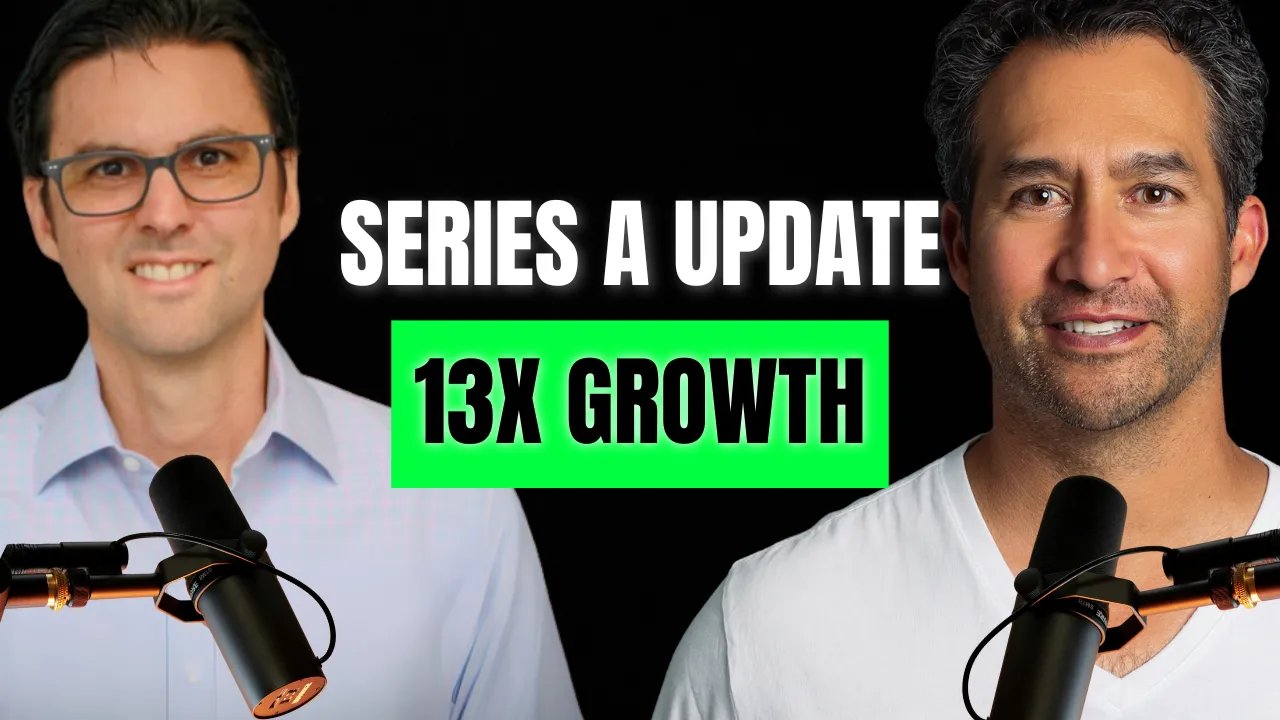
Jake Aaron Villarreal: Daniel, really excited to have you back on the show as an update from where we were at, you know, a while back where you were starting and building your company, Landbase, and talk us through a little bit more about where you're going with your new round of funding. And just for the listeners that don't know, Landbase is an AI-powered lead generation platform that solves a lot of problems. Uh, I'll let Daniel talk about that specifically, but Daniel, welcome back to the show. Why don't you just kick it off and just give us your kind of a snapshot update of where things are at with your most recent round of funding?
Daniel Saks: Great to be back on the show. We started Landbase to help businesses find their next great customer. And we believe in a world where you no longer should work for your software, but your software should work for you. And what we've seen since our launch in September '24, less than nine months ago, is tremendous momentum around that impact. So a business's number one problem is just, how do I grow my business? How do I find customers? And in the past, it's been a lot of friction to do so. And now made possible by agentic AI, and specifically Landbase's model called GTM-1 Omni, the first model built for go-to-market, it's been transforming the way businesses grow very efficiently.
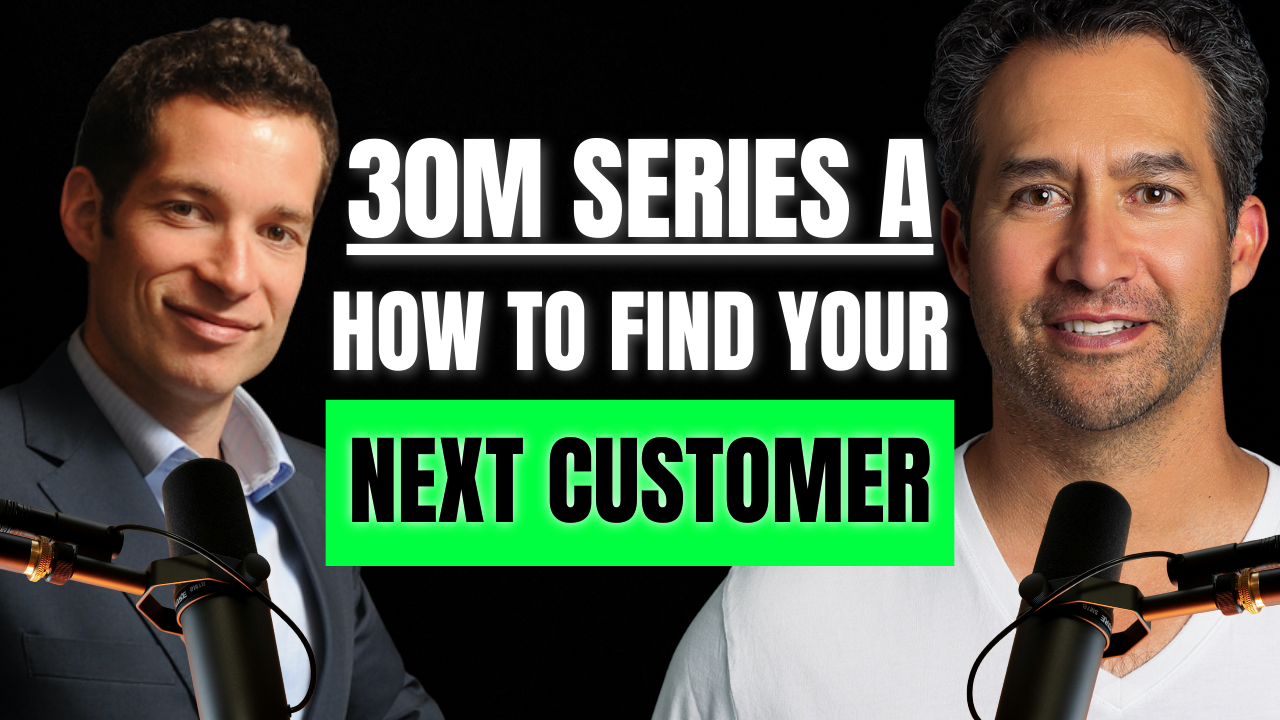
Um, so due to that, we've seen a lot of market momentum from customers, from stakeholders, PR, but also now investors. And we were excited to announce our Series A funding that was led by Sound Ventures. So that's Ashton Kutcher, Guy Oseary, and the team over there that's early investors in Airbnb, Uber, Spotify, and now, you know, big investors in all the language models—OpenAI, Anthropic, Stability. And we also have participation from a lot of our existing investors who have been phenomenal. That's like 8VC, Afore, Firstminute Capital, and and co-led by Picus.
Jake Aaron Villarreal: Yeah, it's amazing. I love that, that whole lineup that you have of investors. Walk us through a little bit about from the insights of what it was like raising a round in today's market. A lot of founders of AI companies are kind of in the trenches going through that. How did you land with Oseary and and Ashton Kutcher and and how long did it really take from really beginning to to get to the point where they signed off and everyone was on board to raising this next round?
Daniel Saks: So, I'll tell you something. We wanted to raise earlier in the year, but I had a pretty major ski accident in January. I had to have surgery on my MCL, ACL, my meniscus. I'm still on crutches. It's like six months later.
Jake Aaron Villarreal: Oh wow.
Daniel Saks: I couldn't leave my bedroom for like three months, and I'm a big, like, believer in in-person relationships, and I saw this Series A as the opportunity to bring in something with someone who I didn't know. This was the first time we actually pitched Landbase broadly. So when we did our first seed, I called up people who we knew and got a great round of investors together. But I knew that the A was a very important moment to choose an investor that's gonna, you know, add something different and and add, add something unique to, you know, Landbase.
So I kept saying like, "I'm going to go as soon as I can fly." And my PT and my doctors are saying like, "You can't do this. You can't leave." Anyway, I said, I think this was like a month and a half ago, I said, "Fuck it. I'm going to do whatever it takes." And I literally had to stab myself with a pill that like, or sorry, with a needle to make sure that I had, I didn't have blood clots when I flew. I had like a nurse come with me. I had like a big setup to make sure that I was okay but, you know, wheelchair, crutches, whatever I needed. And I did 50 meetings in two weeks across San Francisco, Silicon Valley, New York, LA, and met some great people, had really early momentum, and was going to plan to keep, you know, the process going.
But then the Monday after those, you know, 50 pitches was liberation day. If you recall, like Trump announced tariffs, the stock market crashed, and I've known from my experience if, if markets close, you know, they can really close. So, you know, we wanted to optimize for really speed and great partnerships. So I quickly looked at, you know, those who showed, you know, interest in second meetings and term sheets and ended up really narrowing it down to a few finalists and went in person again to go meet Ashton and Effie and Lucas and and Guy who are the kind of partners and and people like that were working with us at at Sound.
And what was so fascinating is I've worked with a lot of tech investors in the past, and they focus on certain things, a lot of metrics, you know, product demos, slides. Uh, but at Sound, it was, you know, just a group of people in the room. They didn't want any like screens up and they just went deep on brainstorming. And our tagline, which I knew people didn't love—I could see it from conversions and feedback—was "Intelligently automate your go-to-market, powered by GTM-1 Omni, the world's first domain-specific model for go-to-market." So that was like, I thought technology, you know, really kind of made sense to describe what we did. But our customer was like any business. So they went through this brainstorm of saying, "Look, how can, you know, how can we simplify this so everyone understands?"
And honestly, I tried this before. I was like, "We could say 'generate leads that convert,' but that's maybe overpromising. Or we could say 'the fastest way to launch campaigns,' but then it's not obvious what the campaigns are." So there were in my head like all these people telling me your messaging is off, and no one had a solution. And Ashton just out of nowhere, he's like, "What about 'find your next customer'?" And it was just like, wow, like it immediately clicked. And I'm like, why didn't I think of that earlier? It was so funny.
And then, you know, from there he was just like, "Do you know what this does? Like this whole Landbase thing is, it's like there's this experience where you like shut down your laptop on a Friday and you just hear that sound of the laptop going away and you feel that, or you like close your office door and you put the sign 'gone fishing' because you're going away, and you just like are, you know, checking out. And like all these software tools, they require you to be addicted to it. They require you to be like, you know, working on the screen 24/7, always on. But what Landbase provides for is a world where your software no longer works for you. It works... for your software. So, you should do like a commercial that's just this feeling of where like everyone calms down because Landbase is working for you. More of what you love." And I was like, "There you go. There's the the value add or differentiation that I've, I haven't had in the past in investors." It was...
Jake Aaron Villarreal: Wow. Yeah. You never know what's going to come out of a brainstorming session and whose idea it's going to be that works. That's really cool. So you don't have investors only putting money into the company, but they're bringing value, which could be marketing or introductions or whatnot. That's really cool. So you had raised prior to this, was it 12.5?
Daniel Saks: Exactly. Yep.
Jake Aaron Villarreal: And then this is your 30 million Series A. Okay, cool. You know, walk us through what's changed since we last spoke to where Landbase is today. Cuz I look at your website today, it looks really great. It looks fresh. And for the listeners that might not have listened to the first episode, if you're a company out there that is looking to generate leads and to maximize your campaigns and to execute on your sales model, whatever it is to generate new opportunities, like what is it that you're bringing to market today that's going to help them? Whether it's reduce their spend on campaigns or improve their conversion of go-to-market and getting new clients, like how does your AI platform help them today?
Daniel Saks: So we help businesses find their next, next customer, and we do that by being the fastest way to launch sales and marketing campaigns. So you can come to Landbase and all we need is who you sell to and your URL. And our models do a lot behind the scenes. We go to your website. We go to your competitor's websites. We go to our database and we put together the best fit of your potential customers that you can target, and then we also come up with a sequence in which you can target them.
What we launched new last week in in conjunction with our Series A is a Vibe AI experience is what I call it, where you can in natural language tell us who you want to sell to, and then we'll come up with that list right away for free. You can see it. There's a lot more secret sauce behind it, and and in our paid editions, there's a lot more that we can do. LinkedIn, inbound, outbound, a lot of different things. Um, but what was kind of game-changing since we spoke last is we took all the power of our models and our technology and we put it in an experience that's front and center on our homepage where you can just tell us what you want.
And what we saw is that there's like vibe coding companies, Lovable, Cursor, Bolt, that are some of the fastest growing companies of all time. And it's because they've democratized coding and engineering for non-coders or made it, you know, 10 times more efficient for an engineer to code. And that's super powerful. And what we noticed is that there's like a look and feel for these vibe coding companies. And that actually doesn't exist in other categories. And my belief is that the next generation of decacorns are going to be Vibe AI companies that have a secret sauce in either the agentic AI models that they have or they own their own data moats that are going to be able to really differentiate just like the vibe coding companies did.
So Landbase is pioneering this experience for go-to-market, "Vibe GTM" we're calling it. And what, all you have to do is tell us a few things in a prompt and we'll instantly populate a list of companies and customers you can go after. We give you like a full perspective of intelligence why they're a good fit, you know, how you target them, what message you want to write. And what we found on launch is there's always like interesting launch stories. So even though we had overwhelming interest, you always learn a ton. And the thing we learned is that a lot of people just tried a one-shot prompt, meaning "I want to sell to, you know, people with blah blah blah blah," and they put it in and the results were okay, but not like amazing every time. But just like vibe coding, the magic comes from when you actually interact with the AI and you improve it and you teach it. So the one like learning we had is that you can get really good at prompt, prompting your way through Landbase, and it can create like magical outcomes. Um, so one of the things we're going to be doing is building like prompt libraries and and and and and kind of experiences to really help make this experience really magical and to train people just like on vibe coding how you vibe with it. We want to do that for Vibe go-to-market.
Jake Aaron Villarreal: I love that. Yeah, we've experimented as well and we've built AI agents and we're continuing to look at the modern technology stacks that are helping do it quickly and there's complexity behind the scenes. But yeah, it's really fascinating to see what technology and AI specifically is allowing us to do in in many different sectors. But you're focused on generating leads and executing campaigns and doing it quickly. Is there a certain profile of a type of company that this works really well for? Like if you're a small company that doesn't have any real history, you're just starting, is it going to work for them? Or do you have to be an established organization in a specific vertical? Like what's the target for your company?
Daniel Saks: So just like the vibe coding companies where they democratize coding for non-coders, Landbase is democratizing digital go-to-market strategies for people who previously wouldn't have been able to do it. At my last company, AppDirect, we spent at least a million dollars on a software stack to enable this. And then we had a ton of people across product marketing, sales enablement, rev ops, SDRs, AEs, all to execute this type of experience. What Landbase has done is offered this experience for free for anyone. So whether you're an insurance broker, a fleet management company owner, whether you're a seller at a big company, you can come to Landbase and instantly vibe with it to find your ideal next customer and to understand the best messages you can send and execute those campaigns always on in in this experience. So yeah, that, what I would say is it's really making it easier, faster, better, and cheaper for people to run these campaigns.
Jake Aaron Villarreal: That's great. Wow, that's exciting because I was thinking about this being like a specific type of company that had, you know, visibility in the market. Companies already knew who they were. They had brand recognition and you only had to be, you you had to be at a certain level to actually use the platform. But sounds like, you know, the cuffs are off and anyone can use it, which is great.
Daniel Saks: Yeah. The last time we spoke, we had just trained our model GTM-1 Omni. And one of the interesting intelligence pieces is we actually did this massive analysis because we had 200 million contacts, 22 million businesses, 40 million campaigns, and we were able to understand what's the secret sauce of a campaign. And a lot of people think it's the list that you target or the message. And actually that's important, but the most important thing was the credibility of your company as the seller and the individual that's selling the piece. And if there's not digital credibility, it's actually really hard for the other side to ever want to respond to any type of campaign, whether that's an email, a cold call, you know. So what Landbase got really good at is understanding like relevance and digital trust.
And I mentioned this last time, but we came up with this digital trust score. It's also free. You can go to landbase.com/digitaltrust and learn more, get your score. But most companies, let's say score, it's a one out of 100 cycle. And if you're like a startup or an unknown company with very little digital presence, you're going to be below a 30. Below a 30 means you're you're you have almost no chance of being successful. It's very, very difficult. Now, if you're in like the 50 to 60 range, you might be an established company with some good stuff, some press, some analysts, some community, some ratings and reviews talking about you. Now, you can really do well with digital demand gen. The best companies scoring on this metric was like a Rippling, Ramp, Verkada, who are like insanely good at digital demand gen.
So with this trust score, it gives us a really good sense of who's a good customer because when we spoke last, the only way to use Landbase was to pay us 3K a month in a sales-led motion and we didn't want to take on customers that we didn't think we could deliver for. So with this free experience, we'll allow anyone to try it because in the past if you, the only way to run these strategies would be hire people, aggregate software, or work with an agency which actually would be a high cost experiment. So we think we're now the lowest cost to experiment. So you know, whoever you are, you can come, you can get, understand the baseline of where you will perform on a strategy. We can help you create content that boosts your digital credibility and we can help you drive campaigns that are more likely to convert.
Jake Aaron Villarreal: Wow. Well, I'm definitely going to try it. That sounds really cool. In our last call, you predicted intense competition in the AI sales space. Now that you've been in the market longer, how has that played out and what surprised you so far in the competing crowded field in sales?
Daniel Saks: So, I think we are in a point where the market is rationalizing. So going back to like 2023, 2024 every day there were new companies getting started in similar categories, and some of those companies will still be around. The ones that didn't raise capital can run hopefully cash flow businesses. But what I've always found, that the best venture outcomes, so like the decacorns, unicorns, and beyond, need to have some form of category leadership or differentiation and moat. Um, and oftentimes there's different ways to build the moat. It's your brand, it's your traction, it's your product, it's your data. But capital matters too.
So one of the reasons why we did want to raise our A on the sooner side as well as raise a bigger number is because that differentiates us in the in the space. So if there are a thousand or, you know, 10,000 companies that started in the last few years in AI go-to-market in our category that I say could be competitive, we're probably a top five now in terms of capital raised and market traction. So I I think like the way I've thought about it is if you're going to raise venture money, it's your fiduciary responsibility as a CEO to optimize for the biggest outcome, even if that means inherent risk because you can't try for something big if you don't swing for the fences, and and there's always risk associated with that. So I'm playing the game which is, you know, go big and and and capital's required to do that.
I also think that there's a ton of of amazing companies that are operating lean. In fact, Landbase has actually acqui-hired four, going on five of these companies which are really great teams that have built one awesome product alone, bootstrapped whatever, and feel like, hey, they'd rather attach themselves to a bigger horse and build a bigger platform. So I think like what I'm seeing in the space right now is that you're seeing consolidation where there's some players that are getting more capital. There's some teams that want to join those companies, but there's also a lot of, you know, focused companies that are building great things and there's room for both.
Jake Aaron Villarreal: That's great. So you've you've gone out, you've raised the money, you're going big, swinging for the fences. Where are you planning to put the funding into? Is it growth around acqui-hires? Is it hiring more? Is it building more technology? When you put that plan together, what, where do you, where do you start?
Daniel Saks: What's pretty amazing if you look at like the vibe companies specifically, a company like Bolt, Cursor, Lovable, they have very small lean teams that are driving huge impact. And therefore in this tech era, I actually don't think you need massive teams. What you do need is investment in focus, training the model, your brand, getting the right customers on. So a lot of our efforts are actually to invest in offering our service for free to customers because there is a real cost of that, to be able to essentially work with more people, to get more data, to be able to perform better. So there's like a flywheel that's involved. So we're actually reserving a lot of the cash. We didn't even need it necessarily, but we're reserving it for giving a lot of free value away to customers and that hopefully further refining our product experience to make it faster, better, cheaper, and making our data and and moats better.
Jake Aaron Villarreal: I like that strategy. You know, in our last conversation, you said drinking your own champagne, you know, provides lessons that you you've learned in using your own product. What's something that you've learned about your own product now that you've got it in market and you're fine-tuning it?
Daniel Saks: So the the the "drink your own champagne" comment came from, yeah, how do you, you know, be the best customer of your product. So the first thing that we did is we actually focused on our trust score or our digital trust score. So we were at zero because we were a startup. We got it past 30. We got it actually to 60, which was one of the fastest companies in our, in our knowledge base or our data that accelerated this trust score. If we would have started outbound campaigns before that, our data would have said that you'd, um... So now we've used the intelligence on our platform to tell us what channels to go after. So while we do email, phone, and LinkedIn, phone is actually a really good strategy for us and doing warm targeting. So you want to find out who is interacting with my social, with my website, and then we want to have reps, human reps, retarget them. And that creates a really great unique go-to-market that other people aren't doing.
This was only made possible by the intelligence in our model, and that's how we went from 0 to 150 customers in less than six months, you know, high paid, and and kind of enabled this insane growth trajectory of of revenue. So really what that, you know, drinking my own champagne did is guided us on what to do and what not to do. Even though interestingly enough, you know, we could have started with email campaigns and just tried because that was our platform. So I think like the intelligence of GTM-1 Omni can do so much, and again we're opening up that intelligence so any business can check it out for free.
Jake Aaron Villarreal: That's really cool. You know every company is looking to optimize their own business and data tells you where you should go, sometimes you're not thinking about. So the fact that, you know, you're going to more of a sales-driven motion with phone calls and people, you know, on the street I think is, that's amazing. There's human in the loop. You know, they say AI is going to replace everybody everywhere, but it doesn't necessarily tell a true story as we continue to learn and evolve. But the ones I think that use the best tools uh can elevate and and and be more successful in my belief. With the $30 million now in the bank, what's the next major milestone for Landbase? Are you expanding beyond lead generation and going deeper into perfecting what you've built?
Daniel Saks: Um, so yeah, the key piece now is really getting more users on the platform and expanding across channels. So we started with email, LinkedIn, phone, and now we're going beyond outbound strategies to inbound. So things like helping you write social posts, landing page, LinkedIn content. And really the intent is to just keep delivering for our customers an experience that they can, that they can vibe with, that they can interact with to scale to things that they previously wouldn't have been able to do.
Jake Aaron Villarreal: Yeah. Really cool. Well, lastly, just want to ask one question maybe for the listeners. When you're raising capital and you're working with great teams and then you bring in, you know, the star factor of like an Ashton Kutcher and, you know, these other well-known investors, what's the biggest surprise that you've learned in collaborating with them that you didn't know when you first started the conversations and and bringing them on as as investors in your company?
Daniel Saks: I think the most interesting thing about working with people, especially, you know, high-profile people—because in my past, I've worked with many governments. So, I had Justin Trudeau, the prime minister of Canada at our office. I spoke to the prime minister of Portugal. So, all these like high-profile things is like they're all people, and if you, you know, go behind the curtain and have a one-on-one conversation, they're going to give you great insights and and be really helpful. So I think, you know, all my investors have contributed throughout the years, have their own kind of secret sauce or magic way to contribute. You know, you talked about how people can help through intros or through recruiting. So I think what I love is just, if you're, if you're looking for great people who can help, that can just only make your company and your mission grow faster.
Jake Aaron Villarreal: Yeah. Really cool. Well Daniel, thanks so much for coming back on. Super excited to see where you go. I think there's a ton of companies we can make introductions for you as well. So, we'll do what we can here on the show. And if anyone wants to find Landbase, landbase.com.
Daniel Saks: Yeah, exactly. Just go to landbase.com. Start vibing.
Jake Aaron Villarreal: All right. Start vibing. Thanks so much for joining, Daniel, and thanks for listeners for listening. I'm your host, Jake Villarreal, signing off for now, but can't wait to catch up with you all in the next episode. Until then, Daniel, the world take care. If you like what we're doing, don't forget to subscribe, leave a review on Apple Podcasts or wherever you listen, and follow us on YouTube where we go behind the scenes to learn what it takes to be a startup founder.













.jpg)
















.webp)

.webp)
.webp)

.webp)