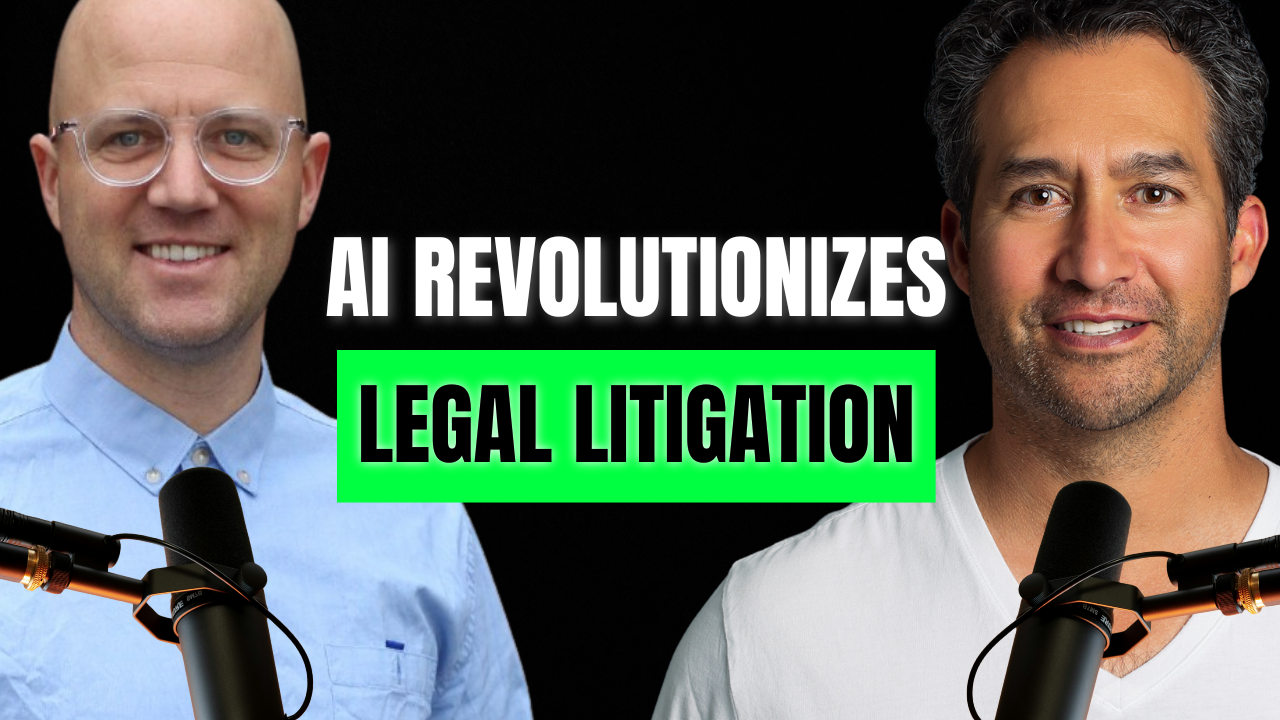
Jake Aaron Villarreal: I'm Jake Aaron Villarreal, born and raised in Silicon Valley. Here to take you behind the scenes to share what it's like to be a startup founder, the journey they're on, the products they're building, the problems they're facing in an effort to make our lives better. I'm excited to have with us today Dorna Moini, founder and CEO of Gavel. Dorna, welcome to the show.
Dorna Moini: Thank you so much for having me, Jake. I'm a huge fan of you and the podcast and I'm excited to be here.
Jake Aaron Villarreal: Well, we're excited to have you on. I know we had a call a few weeks back and just that your story is really interesting to us and I think really anybody in the legal field should really be interested to hear what you're about to share because it's fascinating. A little bit more on Dorna, uh she's not just the CEO and the founder of Gavel, uh which is by the way the complete automation and AI suite for lawyers, but it's really a solution that I think will be useful for so many people. Prior to Gavel she was a litigator at Sidley Austin and today or now she teaches at law schools across the country and explains how lawyers are using technology in addition to running her company. So without further ado, Dorna, before we jump in, where are you joining us from today?
Dorna Moini: I am in Los Angeles in Marina del Rey. For anyone who's who's closer by here.
Jake Aaron Villarreal: Hundreds of AI startups are launching every month, battling to build their founding teams. As a leader, your job is to get results. When it comes to hiring, that's where it gets tough. So you go out and you try a recruitment firm, but they don't understand your story. They're off target, and when they send you candidates, it's a waste of time. We believe you should never have your time wasted. That's why we launched Match Relevant, because your story is more than just an open role. It's your founder's journey, the problem you're solving, the product you're building, and why it matters. When we work with companies, we make sure we understand your whole story. So, we go out and do a search, we're on target, it's worth their time, they're interested, and more importantly, it's worth yours. And when it comes to hiring engineers, we work to make sure we get it right by deploying a team of seasoned CTOs that have built some of Silicon Valley's best companies. They can collaborate with you in the technical interviewing process. They can be a sounding board or they can run it for you. When it comes to building teams, there's no time to waste. Let's make it count. If you have a role that needs to be filled, book a time with a hiring guide at matchrelevant.com and learn how we do it.
I love it. It's a great area. It's a little bit kind of in LA, a little bit outside of the mecca of downtown, but uh it's a great place to be. We're not too far away, so I get up there quite a bit. You know, born in Silicon Valley. We call this area of LA "Silicon Beach." So, yeah, there you go. Silicon Beach, Silicon Valley. I think in in New York it's Silicon Alley. So, anyway, I actually had heard that one. Yeah. So, lots of Silicon people all over. Are you originally from that area?
Dorna Moini: I'm originally from Orange County where I think you're calling in from, right?
Jake Aaron Villarreal: Yeah. Yeah. I'm in Laguna Beach. You're from Newport Beach?
Dorna Moini: From Newport Beach. Exactly. And then was gone from Southern California for a while. Spent some time in New York and San Francisco and then the sun always draws you back to Southern California.
Jake Aaron Villarreal: Yeah, it does. God, and the warm water, too. It's so fun to get into. So, really cool. You know, before we begin, give us a little background of you. Let's go back to the beginning. Where did you grow up? We know Newport Beach, but what were some of the early experiences that helped shape you and kind of where you're at today?
Dorna Moini: Yeah. So, I as you said, I I grew up in Southern California. And I think one of the things that really was was a big factor for me in going to law school, which I eventually did, becoming a lawyer, and then really led led led pretty quickly into what I'm doing now with Gavel, is that my family is from Iran. And I saw sort of firsthand at a pretty young age the differences between different legal systems and how the you know, while we have we have there, there's a lot of inequality in our legal system in the US, it just doesn't compare to legal systems across the world. And so I began to really appreciate the systems that we have in place in the US and wanted to be more part of that. And that was the reason that I went to law school, was to work in in international human rights and then like many lawyers decided to become uh a big firm lawyer to pay off student loans. And I'm sure we'll talk more about it, but really that, that whole process led into me using technology to solve some of those problems that I thought were were so salient at the time that I was growing up.
Jake Aaron Villarreal: That's great. You know, when you get into a field, you start maybe in one area and you kind of progress and grow and, you know, you move up in whatever area you're in. Did you start in a specific area in law?
Dorna Moini: Yeah. So, I started as a litigator. I did mostly employment litigation, which is mostly trade secret cases on the employer on the on the employer side. And uh I did that at Sidley Austin, a big international firm. And while I was there, I I also was doing a lot of pro bono work. So that was much of what led me into into what we're what we're building today at Gavel was some of the insights that I got from that area.
Jake Aaron Villarreal: Well, one of my best friends is a lawyer in LA. And the stress level seems to be pretty high when you're litigating depending on the case and the case load. And you know, he always asked me, "God, if there was ways to do my job better or easier or faster, with less stress, I'd love to know about it." So, we'll dive in uh to what the product that you've built is, but when you were thinking about creating it, you're not an engineer by trade. Uh coming up with an idea and having a vision is part of being an entrepreneur, but is this your first startup? Is this your first step into being a leader of a a company?
Dorna Moini: It is. So, it is my first startup. However, well, maybe I'll tell you a little bit about the origin story of Gavel, which will lead you into deciding for yourself whether this is my first startup or not. So, when I was working at Sidley, we I did a lot of work in pro, on pro bono cases in the area of domestic violence specifically. And so I was helping a lot of domestic violence survivors complete their court paperwork, taking them to court, taking on appeals, really doing the entire process. And so what I initially was finding, like much like your litigator friend, was that there are other ways that I could make my job easier and help myself actually work on the stuff that I went to law school for. And at the time I lived in San Francisco and so at the time, like, all the engineers of the world I feel like were were in San Francisco, and I asked a friend of mine who was an engineer, I said, "Will you help me build a tech tool for domestic violence law so that I can actually speed up the the rate at which I can draft some of the documents that I'm that I'm drafting for my domestic violence violence survivor clients?"
And we basically did exactly that. So we built this platform. It was sort of like TurboTax, like, but for domestic violence law. And we launched it, had people using us at the firm. We were, had pro bono lawyers using us at the legal aid organizations. And then we had consumers using us. And what ended up happening was that it wasn't just those people, those consumers, those those uh the domestic violence space that was interested in this. It was other lawyers in other areas of law, other jurisdictions who were saying, "I want to build something like this that automates my practice, part parts of my practice, but for other areas of law and other jurisdictions." And so that's eventually what became Gavel and we can talk a little bit more about what the product is as well if you'd like, but that, that's why I say it's sort of a transition into what we're working on now, but I guess I would almost qualify it as as two two startups that one that led into the other.
Jake Aaron Villarreal: Yeah. No, that's really cool. So, the product itself, uh, if you're a lawyer listening, it sounds like it speeds things up. It makes it automates some of the paperwork or maybe all the paperwork and in general just makes you more efficient. It sounds almost like a co-pilot or an assistant to what you're doing in your job, but I don't want to get ahead of myself. Why don't you share exactly what it is and maybe give us a use case of who would use it?
Dorna Moini: Yeah. So there's two main big pieces of functionality that we have now in the platform. So one is rules-based automation. Meaning if you can express it in a set of rules, you can automate it inside of Gavel. So I'll I'll give you a specific example. Let's say you are... I'll say, let's say you're a corporate lawyer and you have a set of documents that you're drafting for an M&A transaction. What you can do is you can take those documents. You can say these, you can load them into our system and you, we we will help you build a workflow that says, "These are the hundred pieces of data that you need to gather from your client," like you know obvious, the obvious ones like what are the party names, what are what are the deal amounts, but there may be many, many more complex pieces of data that you or your client needs to to fill out. Then you have that information flow into generating documents. So you set rules. You might say, "If the deal is more than $1 million, then I want this paragraph to show." Uh you can set all those specific types of rules. You can even do calculations, like that. That logic can be very complex. So that is the first piece of what we do, is allowing you to automate large sets of complex documents based on rules that you can express that may be very complex rules, but they're rules that you can express.
Second piece is that you can uh use our AI tool, which is directly inside of Word, to then negotiate any of those different different agreements or documents. So once you have generated those documents, you pass it over to the opposing counsel or they've passed over a document to you, you can use our AI Word add-in which is called Gavel Exec, and it will help, you can basically like you're describing, almost more like a co-pilot, you can ask it to redline documents, negotiate for you, give you, give you an understanding of what that contract is. So, there really, it's a rules-based component plus a, a uh an AI assistant that is on top of that that that can help you through the process. Uh and it really it does do, it does have, efficiency is definitely a good good term to use, but it also, for a lot of our customers, it allows them to generate much more revenue. It's it's really a, a money generator because they're able to use more value-based billing and as a result they're making more money because they're charging on flat rates or different different forms of rates but they're able to get that work done more, more efficiently.
Jake Aaron Villarreal: Cool. Thanks for that explanation. What... is there any particular space within legal that's using it more than others? Like I don't know, real estate or construction or like walk, walk us through that.
Dorna Moini: Definitely. Yeah. So, anything that is... most of the areas that are more rules-based um use us very heavily. And so some of those would be uh estate planning, uh family law, corporate which is a very broad one, you know, corporate could mean like financing, M&A and what all those areas, fund formation, real estate is also a big one for us. And then uh bankruptcy and employment are two others that are are really popular for us. But really any... there are a lot of areas and we we always we hear about the most interesting areas of law on our platform, like we have someone who's a horse lawyer, like horse, like riding horses, like wow, very unique things that we never would have thought of and I never really even knew were specialties in the law.
Jake Aaron Villarreal: Yeah. Horse lawyer. Never heard of that. My sister has a horse. Should I dive, dive into that one a little bit? But that's great. You know, this is really like sounds like your second startup. What's, what's one of the bigger surprises that you didn't know when you started the company that you've realized as you continue to build and grow and kind of scale this company that you, you know, were wish you would have known maybe before you started the company?
Dorna Moini: Yeah. You know, I think that one of the things that I've learned a lot about, and I mean this might might sound obvious, but is how important the people really are. Like I just I don't think I appreciated that having the best engineer versus like the top 10% engineer would have such a dramatic impact on the output that you can have as a company. And so that's something that early on I didn't, I didn't really recognize. And I also, to be honest, like I was a I was a non-technical founder and I didn't appreciate, I didn't really know how to assess some of those, some of those uh some of those skills. And so over time, as I, you know, about two and a half years ago we hired an amazing CTO who is like, has worked at the best companies, has had a startup that he scaled himself into a large, much larger company. And having him on board has made me realize the impact that you can have with really just having the best best people on your team. And it sounds obvious, but I don't think uh it was something that I appreciated very early on.
Jake Aaron Villarreal: Well, the other challenge to that too is if you're not technical, how do you really know how good they are? And going through that process is is a great learning experience. We talk to companies all the time that are hiring here in the US and they also hire internationally. There's a different level sometimes of talent that you're hiring whether it's local or international and you can go cost effective wise hire more people in different locations, but in the end it's the people that are the best, the smartest and the ones that are aligned with your vision tend to do the, do the best work. And it's I think as a first-time founder sometimes it's hard to see that because you want to be cost-effective and then you make decisions that end up being what's called technical debt, which mistakes that other engineers make that you have to go ahead and uh fix and ultimately it's a, it's a challenge. So it's, it's lucky that you were able to do that early and find the right CTO or partner that's really driving that uh because we've heard some major disasters happen for for lots of companies.
Dorna Moini: Yeah. What's what's cost effective in the near term is very cost ineffective in the long term.
Jake Aaron Villarreal: Yeah. It's, it's a lesson I think a lot of us have gone through, ourselves included. I mean, we're in the people business. We help companies hire and you know, you try and look at strategically what you can do to add more headcount to the company and how can you do it cost effectively, but you know, the proof is in the pudding. You kind of pay for what you get unfortunately. So, you know, AI is in all sectors of the business. You know, we were at a VC firm in Silicon Valley a few weeks back and talking to the the CEO and he was saying that out of all the Fortune 500 companies that they work with, you know, what are the the key things that are on the mind of a CEO of you know, big companies? And it's AI. You know, how does it help you? How could it generate more revenue? How could it reduce your headcount? What's our strategy? You know, who's leading, you know, head of AI for our company? All these are top of mind and it's impacting a lot of industries. The legal industry, uh you look at gen, you know, generative AI and you look at different solutions that, you know, on you know on on a browser you can put in a contract and try and get some better results and it can have an impact for different areas within legal. But what's your view on how it's impacting and how it's helping or hurting the industry?
Dorna Moini: Yeah, I mean I think you're definitely right. This is the biggest shift in humanity that we are going to see at least in our lifetimes. We've gone through automation of physical labor in the past and now we're really starting to automate cognitive labor, like the the knowledge work that we really thought was never, never going to go away, or many of us thought was never going to go away. But I think particularly in the legal field, we have an opportunity to amplify lawyers to still have massive, massive books of business and massive, massive amounts of work to do, but we just need to focus it in different areas. So, uh, a legal specific... there are so many people who just don't have access to legal services. You know, there's a lot of different stats that I can pull up, but it's like 91% of... 90% of uh low-income people don't have access to legal services at all. 77% of people who are accessing legal... legal in general, are not doing that through a lawyer. But a lot of those would actually prefer to use a lawyer for some of those areas. So, how can we as lawyers position our pricing and our value proposition in a way that actually makes sense for the middle class, the massive amounts of people who have disposable income, but they just don't have, you know, $1,000 an hour to pay for for an attorney. And I think technology is is one of those answers. And it can be, it can be a boon for both sides. The consumers have access to attorneys, but they can do that through a model that is tech plus attorney, whether it's AI or other forms of automation, but you're you're having that lawyer guide you through that process. And I think for, in that area, there's still a ton of work to go around. So, I wouldn't, I wouldn't... as my view is that lawyers should not feel like they're being replaced, but they are going to have a dramatic shift in the way that they work and the business models that they're working with.
Jake Aaron Villarreal: Yeah, you know what we're seeing right now are companies are shifting how they hire people that are knowledge workers in different fields. And if you don't have AI experience or knowledge of the tools that are out there, you're actually not getting offers today, which is crazy. So, you know, if you are hiring somebody that's a lawyer, you might start thinking about how much experience do you have in using AI, because I know you're going to be much more efficient for us. So what are, what tools are you using? Uh how is it benefiting you? And you know, how long have you been using them? And those three questions alone will show how aware they are of what's happening in the industry. And that's not just legal. We're talking medical, we're talking healthcare, technical. I mean Mark Zuckerberg, I heard he was on, you know, a podcast a couple days ago and he was saying that I think the number was crazy. It was like 70% of their development, software development work in their Llama product and their AI models will be replaced by AI that's going to be able to reason, be able to test, and be able to deploy code better, faster, uh, more accurate than humans. And they're not an enterprise software company. So they don't have to make it perfect to sell the product, but internally it's going to drive their development. And you know, they're a technology company. So it's interesting to kind of see how fast things are accelerating, and that's by 2000, I think he said by two... end of 2026, that's like, wow, not that far away. So it's wild what's happening.
Dorna Moini: But it's so true what you say about just the skills that people need to have. Like I talk, talk at law schools a lot, and oftentimes we'll use Gavel in the law school class and have the, the students play around with it. And I've had so many people who go into law firm interviews and they say "Me being able to talk about having used Gavel or technology within the law school environment was a reason that I got hired at this law firm," even though there wasn't a direct, you know, application for what they were going to do with that technology. Technology. But it just made the firm think of them as someone that they want, you know, as an as a junior associate, meaning that's what they want in their in their partners, you know, eight, 10 years down the line. Just...
Jake Aaron Villarreal: Yeah.
Dorna Moini: Exemplifies a certain mindset.
Jake Aaron Villarreal: Absolutely. And you know, companies even in technology that have traditionally built, you know, we call it full-stack engineers, which are front end and backend systems, but you know, they're now hiring people that can come in and show them, you know, how AI can impact their culture and their company from a development perspective. So there's a lot of these tools out there today for development, like Cursor and a number of other other ones that do the development like a co-pilot for you as you're developing, and if you have that knowledge, you can bring it in and influence the culture of a company which just makes them more efficient. So it's pretty crazy what what's happening, but it's also in a good way effective and the knowledge workers aren't going away. Just if you don't have that AI knowledge, it might hurt you in the future. So a lot to consider.
Dorna Moini: I think the, I've heard this quote a lot, but it's it's that "lawyers are not going to be replaced by AI, but but lawyers who don't use AI are going to be replaced by lawyers who do use AI."
Jake Aaron Villarreal: Yeah. You know, the one role I think that won't be replaced by AI is the plumber because there is always a need for plumbers and it's actually cost effect hourly. It's like the number one highest paying role in Silicon Valley if you can believe that.
Dorna Moini: Wow. Yeah. Amazing. I wonder though if like something like ChatGPT will allow you to plumb your own pipes. Because the other day I was sitting, sitting with my son and he had like some toy that had broken and I was like, "I wish I were an electrical engineer. This would have helped me so much in my parenting life." And then I was like, "Wait a minute, let me just pull up ChatGPT." Started taking pictures of it. We figured out how to put that wire into the right part of the circuit box and the toy is working again.
Jake Aaron Villarreal: That's awesome. Yeah, you never know. God, that would be crazy, right? If AI replaced plumbers, you're like, "Okay, how do I unplug my toilet?" "Okay, ChatGPT. Okay, honey, get the hose." Exactly. That's crazy. You know, as your company, you're growing and expanding it. Talk a little bit about the competition. I mean, there's other platforms and technologies out there and you don't have to name them, but you know, as you build a product or a service, you're trying to look for how can you, you know, become an advantage for your customer base and also compete against the competition. Sometimes you create a moat, something that's hard for your competitors to also create or build. What's been your positioning there for the company?
Dorna Moini: Yeah, definitely. So there are sort of a few main ways that we, we really excel uh in comparison to the the other tools that exist in in legal tech generally in the market. First, I'll say that we have taken the approach that we want the lawyer to be really be in the driver's seat and we want them to be part of building what they want to build. And so particularly with a lot of our rules-based automation, we are the perfect balance. We're sort of like the Goldilocks solution of ease of use and power. So there are a lot of tools out there that are very powerful, but oftentimes they require you to put in a lot of technical work to get it to where you want, want it to be. You need to hire an engineer or hire someone who really understands complex, complex coding. The on the flip side, there are a lot of tools that are very easy to use, but they just don't have the robustness. You can't add layers of logic. You can't really get it to do exactly what you want and get, get your documents to be nearly 100% complete. You're going to get like 50% of the way there and you you need to drag it along in the other 50%. So that's one of the things that we really excel at. Our interface is really clear. It's really easy to use, but we also have a lot of power embedded in that.
Uh, on the more on the AI tool, AI side, which is a newer side of our business, and it, it really is part of the entire work stream of being the end-to-end automation suite. It's really about building systems that deeply understand the legal domain. And uh, so you know, as I said, like Gavel is not just an AI tool. It's a full automation suite. We also have access to a lot of proprietary data that we have from lawyers who have worked with us specifically, purposely on uh on building out these datasets that we that we've partnered with. And that gives us the best results in terms of accuracy and collaboration with these attorneys.
And then I think the third thing, which is really you can't replace, is the customer intimacy. We work, you know, we come from this field. Everyone on our team is either a former lawyer, former paralegal, or an engineer. And we work so closely with the lawyers who we know or the, and the lawyers on our platform, that we can anticipate a lot of their needs before they can even voice exactly what they want to get out of it. And I think that level of product market fit and have being a company that's been in the space before the, the, the AI hype is really hard for anyone else to replicate. So we, we understand how to integrate these tools best into legal society. So, that's, those are really the main ways that, that we, that we keep our customers loyal and uh and keep getting more customers, mostly through a lot of word of mouth.
Jake Aaron Villarreal: Well, if you got the expertise and you're talking to your clients and they know that you know what you're talking about, I think that's really good for credibility and social proof. What, uh, what's the vision or mission that you've created that people that come on board need to either buy into or be a part of or that, you know, you need to qualify to make sure they're on board with, with what you're doing?
Dorna Moini: Yeah. So our vision as a company is to make access to the law universal. And the way that we do that is by empowering the attorneys to serve and reach their clients better and, and faster and more efficiently. So I think in terms of people coming on board our company, I I would say that every single person who works for our company really deeply cares about our mission of making leg, legal services accessible. And, and it's not even just for the consumers, which are a lot of times what we think about. We think about the, the consumer, which is very, very important to us. You know, we talked about all of the people whose legal needs go unmet. But it's also for the lawyers themselves. Like, they are encountering this world that is so much more competitive. Pricing is so much more transparent. Lawyers are, I mean consumers are wanting more digitally convenient tools, and they need to be able to tackle this market shift. And so it's, it's really, it's, you can be a selfish lawyer and just think "I just want more revenue" and you, and you should still be caring about access to justice because, because those two things go hand in hand, that it gives you more market to share, to to really serve.
Jake Aaron Villarreal: That's great. Yeah, sounds like that's been well thought out. You know, people are the key to a company, as you talked about. What's been your secret sauce for hiring really good people?
Dorna Moini: Yeah. So we have put in a lot of systems for uh you know, systems in place for hiring and we really have tried to treat it like a repeatable business process rather than just a gut instinct. Like I I think the gut instincts are important as well, but uh we all, you, even past your gut instincts, you need to have the people who come through your funnel meet all of the repeatable things that you've set in place. And we, we actually use a framework from a book called Who. Have you heard of this by Geoff Smart and Randy Street?
Jake Aaron Villarreal: Absolutely. Yeah. Really cool.
Dorna Moini: Yeah. I think it's really helped us identify the best A+ players through structured scorecard, having really consistent interview processes across the board, and having really clear outcomes. And I think it's also, it's also been attractive to the candidates. Like I've had a lot of candidates come to us and say, "Oh, like I loved Gavel, not because of all the other things that you guys do and the mission, which they also love, but but because I saw that the process that I went through, through the, through the the hiring process, and it gave me a lot of faith in what the company, company is." But yeah, I mean, I'd, I'd be curious, what, I know you work with a lot of companies that grow and scale pretty rapidly. I'd be curious what, what trends you're seeing in the market and and how, how others are, are treating that process.
Jake Aaron Villarreal: Yeah. Well, it's a good question. I mean, we work with a lot of companies in the US and some outside the US too. But I think some of the bigger trends that we've seen is, you know, when you look at AI just in general, you know, everyone's battling for the similar kinds of talent, whether it's AI engineers or Head of AI or data scientists or machine learning. And so you've got, you know, hundreds of companies that are launching every month, all trying to find similar types of people, whether it's founding engineers or anything on the technical side initially. And then, you know, they're looking for what's their story? How do they differentiate themselves versus another company? And we think, and the patterns we've seen are, the companies that have the best stories often get the best talent. And that's really from the origin story to the problem you're solving to why it matters, the mission you're on. All those things are important.
But I think the biggest trend we've seen is the adoption of AI in that process of recruiting. So like us as a company, we use and have built... and we've been doing recruiting in the AI space for you know, seven years now. But to really deploy AI agents to really see how it works and to see the difference of delivery and speed. I mean, it's helped us internally be able to do our job more efficiently and deliver faster and ultimately more profitably. So, that's what we've seen probably is the biggest trend is just the adoption of AI in the process.
And, you know, recruiting or hiring in general, whether you're an agency or you're a company on your own, that's a process that could be very efficient. You know, it's looking at resumes and using AI to make sure that it's seeing the right keywords, and that's been around for a long time. But when you talk about being able to deploy agents that can, you know, do the search for you and they can, you know, review and rank and then schedule the calls and send out messages, and like, this is really, you know, game-changing. So you can adopt it, you can use it, you can build upon it and I think all that's important to do.
And in hiring in general, there's always the people side of it too, that AI can really help be efficient in a lot of the components and the steps in the process, but like you talked about gut instinct. At the end of the day, you still need to talk to someone. You still need to use your mind to figure out, are they the right fit? Am I filling anything that I shouldn't be filling in the process here? And if you're a candidate, it's great. AI is great if you maybe are on the market and you're already, you got your job posted out there on a job board or wherever and you're looking in at candidates or you're a candidate rather and you're looking at you know, who's picking me up, who's interested in talking to me, and do I have to do a video before I ever meet anybody and is it going to be shared? And all these questions come up. But if you're actively looking, that's great. Use the tools. Let the tools, use the process to help you best.
But if you're not actively looking, that's really where there, I think there's still a lot of growth to happen with uh the technology because a lot of the candidates that we're talking to are currently working at, at Google or working at some of the bigger companies, that they're not putting themselves out there to make a change. So you still, the human aspect still needs to be very involved in telling that story of where they're at, where they could be going, what company they might be joining, and what that journey would be like if they did join. So there's a lot of steps. I think the number is like 27 steps to someone taking a new job. There's a lot that happens in the middle. So lots of technologies helping innovate, and at the same time, the people aspect is I think still very important.
Dorna Moini: It's interesting because there's actually a lot of parallels between what we've been talking about on the legal side. Like lawyers need to start using technology because otherwise they're not going to be able to serve their clients in the same way and they're going to get get subsumed by other, by other lawyers. But I think the same thing sort of applies to your industry where you are at the forefront of how you're using technologies and that enables you to put your people powers in the best places. Like you don't waste your time on the parts that don't matter, but you're actually putting your, you're able to get in front of more people I'm sure and work your charms uh because you're using technology in some of the other parts of the process.
Jake Aaron Villarreal: Yeah. And it's been, it's been a good learning experience. I mean, we have the same, we we've adopted the same methodology in terms of who we bring on board and hire too internally. You know, if they don't have experience with AI tools in their process, that's qualifying them out of working with us. So there's two sides of the sword, but definitely uh I think innovation is here and continuing to grow. You know you as a leader of your company, you've been doing this now for a bit. What's, what's been the breakthrough for you that you feel is worth sharing that you know, as you started the company, your company's evolved. How have you evolved?
Dorna Moini: Yeah, that's a good question. So, I was at a law firm for like about seven years and I went straight through from undergrad to law school to working at a law firm. That was really the only work environment that I had had. And a lot of being a lawyer, at least, you know, in the space that I was practicing, was about like billing, billable hours. So it wasn't, I didn't really know as much about delegating and letting go of things as I have learned now uh in being, in being more of a leader. And I'm sure as a lot of law firm leaders have had to, had to experience this as well. So I would say the the biggest sort of breakthrough for me has been learning to let go. And early on I was involved in every single decision, every single product detail. If a customer had emailed us about something, I knew exactly what they, what they had said, where it was in the pipeline of like whether a developer was going to work on it, if it was like some some change we were going to make. And as I grew, I had to really evolve from being a doer to being more of a coach and a systems thinker. And so I think for me, it's really realizing that being a good leader means creating the right systems and hiring people who you really trust to actually go ahead and run those, run those systems. And that's where you know the hiring, important hiring, good people comes back into play. But it's been, it's also been a really good way to retain great talent because every person in our, in our team has grown so much from the time that they came to, to join us and we've really empowered them to take ownership of things. Really the full startup mindset. Even no matter how big we grow, we still embrace that startup mindset to really allow them to grow into, into what they want to be in their careers as well.
Jake Aaron Villarreal: Yeah, that's great. Well, we're halfway through 2025. What's on the roadmap? What are you excited about as you go forward?
Dorna Moini: Yeah, so we have, we have a lot of big changes in store for our uh Gavel Work, Gavel Workflows, which is our rules-based automation platform. A big, big change that's coming out in about a month that will make logic even more robust, make it even easier to set things up so that you can have really powerful automations within your law firm. But then the other tool that we are, we're, we're, we've launched in a smaller group right now but we are about to launch to a much larger group is our, the AI tool that I mentioned, which takes on the, the latter half of what a lot of transactional lawyers are doing, which is the negotiation, the contract analysis, the revision, and really is your assistant inside of Microsoft Word. So, that's one of the things that we're really excited about and excited to get more of our customers uh their, have their, get their hands on it and build it into the full automation suite and see how, see how they use it.
Jake Aaron Villarreal: Well, exciting company. Excited to see how things go for you. And you know, if you're out there and Gavel seems like a place you want to work for or in the future at least connect with, just ask, I'll ask you the question, Dorna. Are there any roles that you've tried to fill, you need to fill, you want to fill in the future, or maybe you just need to continue to add to your company that you want to share?
Dorna Moini: Yeah, definitely. So, two sides I would say. One is on the customer side. We are always looking for people on our customer team who are guiding our customers through everything that they're they're setting up and just being their their support system. A lot of that is really strategic and working with with the customer on what they want to accomplish. Uh so a lot of we oftentimes mostly have lawyers and paralegals and people who are former legal professionals in those roles because they just resonate so well with the, with the customer. And then we are always hiring new engineers because uh we're growing and there's always always more room for for excellent engineers on our team.
Jake Aaron Villarreal: And why not hire engineers? Engineers need some love, too, right?
Dorna Moini: Exactly.
Jake Aaron Villarreal: So, very cool. I think I might know a few people that could be helpful on the customer support side that are lawyers. So, I'll have to send those over to you.
Dorna Moini: Okay.
Jake Aaron Villarreal: And they are out of Orange County.
Dorna Moini: Yeah.
Jake Aaron Villarreal: So anyway, I'll go ahead and connect with you after that. If anybody wants to find Gavel or find you, where do they go?
Dorna Moini: Yes, we are at www.gavel.io and you can search me on all the socials. I am uh dorna_gavel. So dorna_gavel on basically all the socials that you can find. And I also talk a lot about how lawyers are using technology on those channels. So, if you're interested in that topic, there are bite-sized pieces of information that uh give you almost as much information as one of those uh continuing legal education courses you sit through for an hour.
Jake Aaron Villarreal: I like it. Well, thanks so much for joining. Appreciate you coming on and sharing your story. And for all the listeners for listening, it means a lot to me. You've spent your time with us today. I'm your host Jake Aaron Villarreal signing off for now, but can't wait to catch up with you all in the next episode. Until then, Dorna the world. Take care. If you like what we're doing, don't forget to subscribe, leave a review on Apple Podcasts or wherever you listen. Follow us on YouTube where we go behind the scenes to learn what it takes to be a startup founder.




























.jpg)
























.webp)





.webp)
.webp)



.webp)