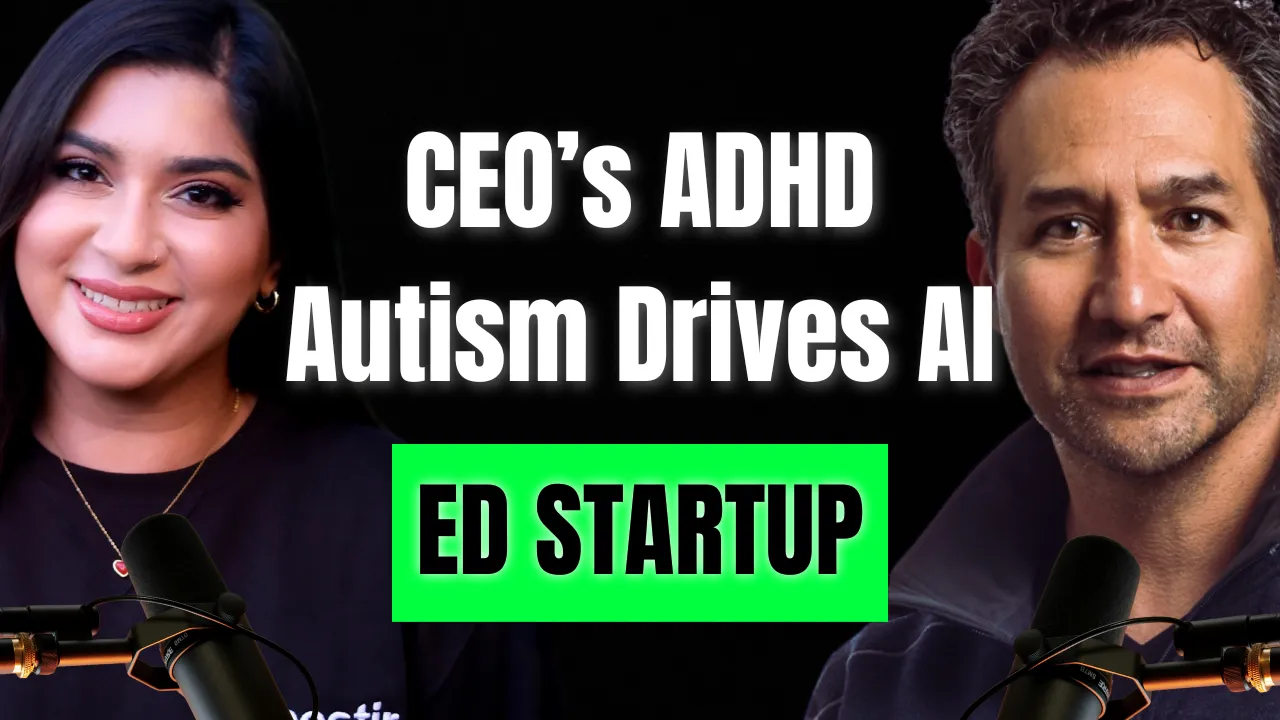
Jake Aaron Villarreal: I'm Jake Aaron Villarreal, born and raised in Silicon Valley and here to take you behind the scenes to share what it's like to be a startup founder, the journey they're on, the problems they face, and the products they build in an effort to transform industries. I'm excited to have with us today Mark Doble, co-founder and CEO of Alexi, an AI company in the legal space. Mark, welcome to the show.
Mark Doble: Thanks for having me.
Jake Aaron Villarreal: Great. A little bit more about Mark. He graduated from law school at Queen's University in Kingston, Canada. And after a year working in a law firm, he quit to start Alexi. It's a software de- as a software developer, Mark saw the rate of improvement in AI and was convinced of the tremendous value it could bring in the legal industry. I guess before we jump in here, Mark, we know you're you're in Canada. Whereabouts are you dialing in from?
Mark Doble: Yeah, in Toronto. Yeah, right in our office right downtown.
Jake Aaron Villarreal: When I started this podcast, I had this vision to go behind the scenes to share what it's like to be a startup founder in Silicon Valley where I'm born and raised. And weekly, we dive deep in the trenches to find the wins, the losses, and the lessons learned with the hopes that it helps you run a better startup. But here's the thing. If you've gotten any value out of these conversations or been inspired at all, hit the subscribe button. And I get it. Your podcast feed's probably overflowing. But to stay up to date what's going on in Silicon Valley, stick with us because at the end of the day, we're all just trying to build something that matters. And we're better when we do it together. So, hit that subscribe button and follow us wherever you find your podcasts. Now, let's get back to the show.
Very cool. We know there's a lot of publicity around AI coming out of Toronto and Canada just in general. So, I, I love this, the fact that you're taking the, the, the benefits of AI and embedding it into a business that's really, really growing. So, we'll talk a little bit about your company here in a minute, but before we do that, give us a little background of you, your origin story of, you know, how you got into technology and more importantly, how did you get into the startup world?
Mark Doble: Uh, sure. Yeah, I think it, it happened um... well, I guess depends on how far back you want to go. Um my, my parents have been entrepreneurs and, and so I think there's definitely something kind of in how I was, was brought up. And... but, but really during law school, early in law school... prior to law school, I was um getting into um software in, in a big way. Just the, the, the power that um you had in, in, in writing code and being able to build things and, and provide value was, was super exciting to me. And then, and then also with, with AI, you know, some of the earliest large language models that were coming out, um it was just incredible to me what, what was, what, what you could do and, and what was clear you, you could do in the future and, and how fast things were improving. And that was just, was super exciting.
And then when I, when I was looking at artificial intelligence through the, the context of the law and, and things that we were reading during law school, debating during law school, was um, combining these two things together into um you know these very exciting concepts and, and um building, building products and value for, for customers, for law firms was something that just really drove me to um, to start the company.
Jake Aaron Villarreal: Yeah. Well, it's a big transition going from, you know, spending a lot of time studying to, to get into law school, to pass the bar, to, to start studying... working in the industry, and then quitting. What, what really was the ultimate kind of flag that said, "You know what, it's time for me to kind of move on from law, but really help the industry"? Walk us through that a little bit because I know there's a lot of people that look to transition from one industry to another or maybe be, be an entrepreneur at some point, but things have to line up for that to happen. Walk us through that a little bit.
Mark Doble: Yeah. Well, I think that there's, there's, I would say most people in law school, you know, you start in, in law school with this idea of what it's like to be a lawyer. And then I think that's very quickly corrected during law school. You maybe spend a little bit of time in a law firm. And I think there's, there's very few people going through law school, graduating from law school who, for whom litigation, the practice of law... even, even maybe they're more business people, but there's very few that come out being like, "Yes, this is, this is the work for me." Um, and so it was pretty early in law school where I realized that, that there was, I, I wanted to do something in technology. I was very likely to, to start a company. That was, that was what I wanted to do kind of early in law school.
Um but, but there's... but, but you're right. I think there's, there's a lot of other people for whom it's very difficult to make that transition. And it's not like it was easy for me. It's just that um you know my very supportive wife at the time, and, and was... still, still am married, but my wife at the time was, was also very supportive of, of it. And, and, and that helped. You know, and, and there was um, it, it was, it was the, the kind of thing that I just couldn't stop thinking about. About this company. It was, it was um I, I couldn't sleep. I was thinking about it. I... every, every waking moment it seemed like I was thinking about, about this company and, and, and what we could do. And so it just became very clear that I, I had to, I had to do it.
Jake Aaron Villarreal: I love when people follow their passion and whether you win or not, at least you're going for it. And you know when we look at businesses, it's always about what problem can you solve in a market and is it going to be valuable enough for someone to pay for it, whether it's a product or a service. Walk us through your thoughts initially about what you wanted to try and build with Alexi. Um just kind of give us the insight there of kind of where it started. What's, what was the vision?
Mark Doble: Yeah. Well, it really started around this idea that um, that if we build an AI that knows the law, then there's, there's opportunities that we can't even imagine for what we will build for, for law firms and, and within the legal industry more generally. And so that, that was with my co-founder who's now our CTO. Um what, what we were thinking about is yeah, let's, let's really focus on building an AI that knows the law. And, and, and yeah, there's ways to turn this into a product and a business. And that led us into legal research, a legal research product. Um and, and in particular, a product that could fully automate the production of legal research memos. These are 10 to 20 page comprehensive answers to routine and complex legal questions.
And uh, and, and it was, it was, at the time, it still is, a, a really difficult technical problem to, to do this really well. Um and, and the law is also very technical, very detailed, very nuanced, lots of ambiguity. And so getting this product right um was, was really difficult. But we knew if we did it, then this would be, this would be kind of manifest knowledge of the law within AI. And at that point we could then go and, and apply the same sort of technology to a bunch of other different applications within, within the legal domain. And, and that's um uh and that, that really is how, how it started. A lot of the details we had no idea at the beginning. And, and, and, and so with, with the improvements of these foundational models of GPT-3 and 4, soon to be 5, and these other, other large language models, it certainly helped us. But there's a lot of, a lot of um R&D still required on our side to be able to get the product to, to work properly.
Jake Aaron Villarreal: So that's great. You know, a lot of times even today, you can take contracts and throw it into ChatGPT and it kind of gives you like that legal lens of, "Oh, maybe I should change this" or "This is what this really means." And really, even without being a lawyer, you can really be, I guess, someone that can have the good use of ChatGPT. Um, with your product or your platform in particular, what area within a law firm or for lawyers is it helping them solve? Is it speed around digesting content? Is it making better decisions when you're going to court to litigate? Like as a lawyer listening, what is it you're selling them?
Mark Doble: Yeah. So, while we started in legal research, it's really the entire litigation workflow now that, that, that we focus on. So what we did earlier this year when we were mapping out our product roadmap for the next 12 months, 18 months, we, we looked at every single document that gets generated or analyzed in the course of litigation, and define document loosely. You know, an email even can fall into this category. And, and we set out to build functionality for every single one of these use cases, one of these documents. Knowing that um, building, building functionality for all of these use cases in a single platform unlocks this opportunity to, to, to really um, build kind of next level analysis on a file, to be able to suggest um courses of action and, and to be able to help um, help, you know, generate a document before the user even knows that this document needs to be generated.
And, and, and when you take this platform approach and really embedding in, in the workflow the full life cycle of a litigation file, um, really, really interesting and exciting opportunities start to emerge in the kinds of products that, that we do. So it very much is a, a platform approach and as opposed to just single point solutions for, for litigators.
Jake Aaron Villarreal: Yeah, you know, we see AI in almost every industry today and there, it's developing, it's getting better and the term co-pilots being thrown around a lot where it kind of helps you do your job better, more optimized, faster, quicker, cheaper. Um, in your platform, do you look at it as a, as an assistant to helping a lawyer as well or is it looked at differently?
Mark Doble: Well, yeah. So, the way we think of co-pilot um, we would, we would I guess compare that to um an agent, an AI agent. And, and we, we, how, how we define co-pilot at least, um, it's, it's kind of like a, a Grammarly or a, an AI that sits beside the user while the user is doing the work. Whereas an agent goes out and does the work for the user and brings back a work product. And um, and, and we're very much in the, the agentic kind of workflow. And so it's still, the AI is still working for the lawyer. It's not replacing the lawyer. It's not competing with the lawyer. But um there it, the AI is acting more like an associate or a colleague within the firm, getting that first draft of the document for the lawyer then to go in and use and decide... maybe they want to make some changes, maybe it's ready to, to submit to court or to send to the client um, or, or not.
And so that, that kind of agentic workflow is very much how we see the future of AI within the legal field as opposed to this um more co-pilot Grammarly sitting within the application where the lawyer does the work themselves. I think we're, we're, we're moving beyond that, that world now. And it's very much AI agents acting more autonomously um, getting the work done for the lawyer.
Jake Aaron Villarreal: Yeah. Why is this space important to you?
Mark Doble: Well, um I, I, I certainly think that I believe very strongly in a lot of these more um fundamental principles about access to justice, you know, the rule of law. These are um... the legal system is such a, a, a critical institution within, you know, advanced western liberal democracies. And, and, and, and I think to, to the extent that, that AI... well AI certainly can um erode some of these, these core principles, but I think more than anything, I'm very optimistic that it's going to significantly enhance how society, and improve the way society is, is functioning and, and in particular through the administration of the legal systems.
And um, um, we, we, we at very least want to make sure AI is a force for good within these institutions. And there's a lot of ways that it could go wrong. And so at least we work really hard to make sure that, that it's not. And one of those key, key things is, let's make sure human lawyers are the intermediaries between this AI technology and the consumers of legal services. This at least for, for the next several years is, is absolutely critical that we make sure that happens. Um and, and, and I think it's, yeah, it's critical to the legal system that um, we integrate AI properly.
Jake Aaron Villarreal: Yeah, that makes sense. I know there's a lot of discussion around that topic in particular. Um, if you're a law firm or a lawyer out there listening to this, kind of visually walk us through what the platform is like. Do you log into a dashboard? Do you upload documents? Do you have certain criteria you got to put in and you get output out of it? Like, just kind of give us a simplified version of what, what it, what the experience is like.
Mark Doble: Yeah. So the main user experience uh right now is, is around document generation and in particular research memos. So it's, it's a, you, you, the user would describe some fact scenario, some legal issue that their client is in. They would describe it. Our system generates legal issues, generates questions that need to be answered, legal questions. And then the lawyer, the user can confirm, "Yes, these are the right legal issues. I need to know what the law says on all of these legal issues." And then, and then once they confirm that, then the system generates these comprehensive research memos going through case law, legislation, regulation, everything that's relevant, the sources of law um that's relevant to answer the question.
And, and unlike a ChatGPT which, which just kind of gives um a response from a large language model, our tool references every single point that it makes. So if it, if it's stating that this is the law, there's always a reference for it. And it, it points to real, actual authoritative sources to um, yeah to verify that this, this is true. This is what the law, the law says.
Jake Aaron Villarreal: Yeah, that's great. I, I like what you're building. I'm sure there's a lot of legal eyes that would look at this and, and, and try it out. Are you in Canada and the US and in different countries? What kind... where's the, where's your target market?
Mark Doble: Yeah. Across the US and Canada right now. Yeah.
Jake Aaron Villarreal: Got it. Really cool. If this succeeds, which it sounds like you're have, you have a lot of traction in um, who benefits the most from this?
Mark Doble: Ah, that's a, that's a tough one. Well, in, in the short term, I think the, um, the, the, the litigation firms that are approaching AI and view AI as, as an enhancement to their business, they're certainly going to be the short-term beneficiaries and, and long-term beneficiaries of this. I think the, that there are several firms who are, are pretty reluctant to adopt artificial intelligence. And, and you know I think legal technology has, has had a bad rap over the past several years, but, but with modern AI it's, it's totally different. It's, it's as if legal tech is just getting started and, and what's possible. And, and the law firms that succeed over the next several years are going to look very different than, than the ones that have been succeeding over the, the previous several years.
So, um, the ability to do way more, to provide way more value to their clients at a, at more affordable rates um, is, is, is, is very real. And shifting the business model from this, this, this kind of high margin, low volume business model to, to lower margin, but way higher volume and way higher quality services to clients. This is what we're going to see and we are already are seeing this rapidly happening within the market. Um, and uh, and, and yeah.
And then, and then I think the three to five years post there's, there's, there's going to be a, a pretty significant difference in how consumers of legal services view their law firm and their, their lawyer. You know, it, it, law firms notoriously have one of the lowest net promoter scores of any industry. It's um, I think it's, it's airlines might be worse, but other than that, like law firms, most, most consumers of law firms have, have law firm services, legal services have a horrible experience. And, and then you get a massive bill at the end of a horrible experience. And it um, and I think we're going to see that change in a pretty meaningful way over the next several years.
Jake Aaron Villarreal: Wow, that's really cool. When you're out there selling or pitching your product or your service to, to law firms, who cares most about it? Is it the, is it the owner of the law firm? Is it the lawyers within the firm? What are you, what are you experiencing?
Mark Doble: I think it's the, the users who, who would care most. The users are, when, when we see their reaction when they use the tool and, and they see the value that it provides um, that pe-, people get very excited. Um there, there are people who I think for not, not really based in, in any good reason, get, get, there are some existential concerns. They get concerned about their job. But um, I think if, once they start to realize like, "Look, this is going to enhance your productivity within the firm. It's going to make you look like more and more of a superstar within your firm," um, then, then they, they start to come around. But, and then definitely the, the owners of the firm, they see the business impacts that it's going to have. And so... Um, but yeah, the users, that's who we focus on when we build product, and, and I think they're the ones that, that respond um most intensely to, to any demos or pilots that they use.
Jake Aaron Villarreal: Got it. That's great. Talk a little bit about the company. You, you went out um, how much did you raise in venture capital? How big are you today as an, as an organization?
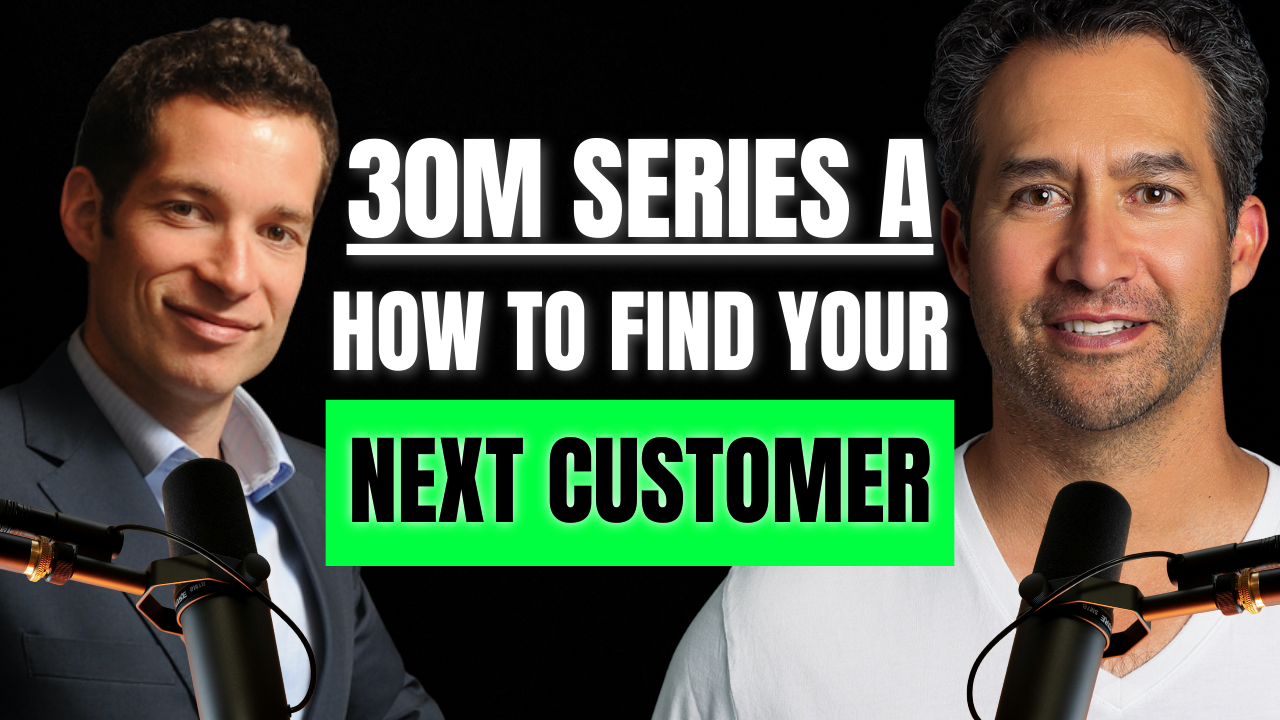
Mark Doble: Yeah, so we're, we're in that kind of early Series A stage. We've raised about 15 million to date. Um, great, amazing group of investors and um yeah, we, we really focus on the impact that our product's having and, and, and so that's where we're, that's where we focus. There's thousands of lawyers now, right across the US and Canada that are, are using the product. And um, but yeah, it takes capital, takes, takes a team to, to make that happen. And so yeah.
Jake Aaron Villarreal: Yeah, that's, that's really cool. You know, every company that starts with a vision, they have a north star you try and go for, and there's a lot of left and right decisions and pivots. Um, give us a little background of your story because when you started building it and where you're at today, that was way before ChatGPT came out, and there was this sort of influx of interest in AI over the last 18 months. It's really changed the, the market and, and, and helped and hurt companies in that space too. What was your experience like?
Mark Doble: Yeah. Well, it, it was... well, well, one, I think like the, the... we saw the, the fairly gradual although, although rapid but, but consistent improvements in the performance of these foundational large language models. And so when, when ChatGPT came out, there was, there was... it wasn't, it wasn't a total shocker that, that tools like this were, were available, or, or these just scaling these models allowed for such cool products. Um, but it did, I believe at least, it did cross an important threshold. You know, when people start, people talk about the Turing test as this ultimate test for "do we have AI," um, and, and I do think that, that ChatGPT did cross this, this really important threshold. And I think that's one of the reasons why we saw this, this huge reaction um globally really around, around this tool.
And, and it did in many ways kind of feel like aliens landed, landed on Earth, you know, when, when a tool um like this was just so impressive and, and astonishing really in, in all the things that it could do. Um, and so for us, it, it was... people talk a lot about when you're trying to find product-market fit, you know, you're always iterating on the product and the market is this kind of fixed, this fixed thing that you're trying to build into. Um, and, and, and, and the market, in our case at least and many others, the market just shifted so rapidly. But, but it, it, it really helped our, our product-market fit. You know, we, we were trying to sell generative AI tools to lawyers previous to ChatGPT and, and we couldn't say "generative AI." People had no idea what, what that was. And now it's, it's almost like you have to say "generative AI" to, to get anybody's interest, right?
And so um, there was yeah, there was a pretty big, pretty big shift um, in, in the market that has benefited us um, in, in, in significant ways. And, and a lot of people talk about, "Well, is it very competitive now? All these other new competitors have emerged." Um, that's true, but I think there's... we're all benefiting significantly from, from the way the market in particular and the way society in general is, has um, evolved in their understanding of AI due in very large part to Chat.
Jake Aaron Villarreal: Yeah, I know we've seen a lot of benefit for AI companies that are building and growing where there just wasn't the interest. It was harder to actually open doors when you were selling your service or product. But now it's more uh almost a need to hear what you're doing so they can see if it's, you know, something that could be an advantage for them. Um, what's the biggest challenge you're, you're, you're facing right now as a company?
Mark Doble: The big, the biggest challenge we're facing as a company? Well, we've grown in headcount. We've more than doubled in headcount over the past several months, and we're um, we're, we're still, we're working, we're, we're learning and figuring out how to work together as, as a team. And I, and I, I feel really good with the team that we built and amazing people, brilliant people working very well together. But um there are some growing pains. You know, there's communication breakdown, you know, there's silos, and we're, we're trying to figure out these things. But um, managing the growth in headcount to, to keep us still performing at a very high level. That's probably one of the biggest challenges right now.
Jake Aaron Villarreal: Yeah. Well, that's a good problem to have. It's a lot better than other problems where you're running out of money or your burn rate's too high and you can't figure out how to get out from under it. So, sounds like you're in the growth mode stage, which is great. Um, describe maybe some of the difficult times when starting and building Alexi that you went through, because oftentimes on our show it's, it's really the lessons that others can take from what people have gone through that helps them accelerate their company, or just in general they can learn from. Kind of walk us through one or two issues that came up that you were able to kind of work through and, and learn from.
Mark Doble: Oh yeah, totally. So, we're, we're definitely on... I mean there's, there's a lot of really difficult work that we have to do right now, but this is, this, it feels like the high of the high. And I know we, we don't want to get complacent and, and the best moments come after some of the most difficult moments, and, and, and, and probably some of the worst moments can come after some of the, the easiest moments. And so, we, we got to make sure that we, we still, even though things are great right now and, and we're, we're in a good spot, um, we've, we've got to, we've got to be, we've got to have this, this mindset of if we're not 10X, 100X in, in outcomes, things that we're building, like we're... death is always a, a potential outcome um, and soon. And so we always have to keep that in mind.
But, but yeah, there's been several unbelievably difficult moments in, in the past and, and in, in building the company to get to where we are now. And so um, I mean I, I remember, I remember one moment in particular, and there, there, there are several. But one in particular where uh, it was myself and my co-founder and a couple other people, where we were, it was a really tough time. We had customers um giving negative feedback, you know, and the product maybe wasn't where, certainly wasn't where it needed to be. And um, investors were not interested and it was, we were kind of completely running out of money, if not completely out of money. And it was like there was, there was... we were out of options. It felt like there was, there was really nothing to do. And now I know mentors that I've worked with like, there's always options. There's always options. I, I didn't really have that mindset in the time. May, maybe I did kind of more subconsciously.
But I remember in that moment um, just looking up and there was this sentiment like, "Okay, I guess that's it. Like we're, we're done. We're all, we're going to move on our way." And I remember, I remember just looking around and saying like, "I'm not giving up. Like I'm, I'm never giving up. We're going to make this work." And then, and in that moment the, the sentiment really shifted and it was like, "Okay, we're going to do this. We're going to, we're going to find a way and we'll make it work." And um it was, it would have been very easy for it to just go in the opposite direction and for the company to completely end.
But I think one of the big lessons from that is like look, just that, the, the mentality of just never giving up. We'll figure, we'll figure it out. Um, is just so important and, and especially in the most difficult times when others are, are, and maybe even yourself, you're, you're ready to quit, right? But just, just always convincing yourself that we're going to find a way, we'll make it through, and never quit. Um, it's, I never would have expected how important that was until going, going through that moment. Other moments where it's been very similar.
Jake Aaron Villarreal: So yeah, it really talks a lot about the attitude of the founder, but it also talks about the attitude of the people on your team. Uh if they buy into you know that same mindset. Oftentimes when we work with companies, and we work you know with a lot of AI companies ironically right, right now, as you can imagine. Um, but you know, it's, it's, it's oftentimes not about what they can bring to the table in terms of their skills, but oftentimes it's about the attitude they bring and do they fit your culture? And sometimes it's the can-do attitude that you're not going to see on a resume. But until you go through and do some behavioral interviewing and really understand, "In this situation, what did you do and how did you get through that," and, and really understand that person how they operate. I think that's really where you start to, to build teams that have depth that you can depend on short and long term, and especially in those dark moments that we're all going through at times and will go through in the future. Um, I think that's important. It really helps shape your culture, too. And sounds like you've got the right leadership and team and team to do that, which is really cool to see. Um, as a company when you started, you had a vision. Has that shifted much or has there been any pivots that you've really learned a lot from?
Mark Doble: Um, well yeah, I think one of the, the... maybe an important one is, is our, our focus, our recent focus on this, the segment um... really understanding "this is the segment of the market that we need to focus on." I think that's been a big one that's been, been very positive for us. I think we were on, on, on the one hand trying to keep the, the target segment as broad as possible and, and "Yeah, maybe we can solve something for everyone." And on, on, on the one hand thinking that we could do that. And on the other hand, not really knowing which segment, so we're just going to try them all and maybe we'll figure it out. Um, but then once we've, we've committed to, you know, "It's just generalist litigators, that's where we're going to provide the most value right now, at least in the short term. It's also a great launching off point if there's other directions that we want to go in in the future. But let's really just focus on the generalist litigator."
And, and that, that, that carries through not just in the product—certainly in the product, but not just in the product. In the messaging, you know, in the, the go-to-market, in, in, in how we do trials or sales, all of, all of this stuff. Um, it, focusing on that segment makes a huge difference. And that was something we didn't do very well at all in the, in the early days, thinking that you, we could make this... VCs want huge markets. Okay, we're going to say we're selling to lawyers doing everything that, that they do. But um, it caused way more problems than, than just focusing with a plan to expand, but focusing narrowly.
Jake Aaron Villarreal: Yeah, I know we hear this a lot, that the riches are in the niches. And if you keep a focus that's more narrow, oftentimes you have that success and, and maybe that is your company and your focus long term. But I like the fact that you're looking at it as a foundation to start and you never know where it can go. I think that's really a smart way to, to look at it as a leader. Um, you know, there's breakthroughs in companies, but what's been a breakthrough for you personally as you've continued to build the company and grow and evolve with the organization that's worth sharing?
Mark Doble: Oh, interesting. Uh well, I, I was um during high school and, and throughout my undergraduate studies, I was, I was fairly competitive in, in cross-country ski racing. And so I, I took the way my, my health and kind of fitness and things was, it was obvious to me that that was important to be good, good at, at ski racing, especially cross-country skiing. But then early in my, my um, more, more professional life and starting the company, my, my health and, and it was something that I didn't, I didn't take very good care of. And, and still there's a lot of things I can do better. But it's very clear to me now that to perform at, at an elite level in business, you've got to take care of your health. You've got to get really good sleep, you need to, to be energetic throughout the entire day. And, and that requires you to take good care of your body.
And um, I think this yeah, this is, is um something I, I didn't fully appreciate before. And I think I'm starting to learn more now how to, how to get the best performance out of, out of, out of me personally, right? And, and um, I need to treat my body like an athlete, you know, like an athlete would, and so that I'm rested and I can, you know, I can run, you know, and, and these sorts of things. And, and that um, you can be in decent shape to, to perform well at, at your job. And I think that's, that's yeah, that's important. Yeah, I did, did not always, always think that.
Jake Aaron Villarreal: Yeah, I think that's really important. And it's a blind spot that as you're building a company, you don't think as, as important. It's more academic and, and cerebral. But physically, you need energy at different times of the day and consistently over time to, to really have an advantage to lead. So, I think that's really smart to, to look at it that way. Um, looking back now, you've had your company for a number of years. What's something you wished you would have known before you started that you know now that you can share with us? It would be good insight to know as a founder maybe just beginning their journey.
Mark Doble: Uh well, it's going to be way harder than you thought. Intelligence is not the most important thing, um, nor is hard work necessarily. There, there's far more leverage in making smart decisions than there is in, in working more. Um, use your, your gut and your instincts way more than, than data even. Sometimes your gut and instincts tell you something different than data. Probably trust your gut and instincts. Um, there is so much out of your control that you absolutely do not have control over. Um, but try and focus and, and on the things you do have control over. Um, I mean all these things that I, they, they're, 10 years ago I would not have, I would, I would have said very different things I think. And so these are yeah, important things.
I think the, a resume or the things that people have done in the past or the companies that they've worked at or the degrees that they have are, are almost negative indications sometimes. That, that you want, you want people who, who can, can learn really quickly as opposed to, you know, it's the, the rate of improvement, the rate of learning, as opposed to where they are right now at that particular, at that particular day. And, and um, and so that's, these are yeah, the, these are important things that I never really knew how important they were before.
Jake Aaron Villarreal: Yeah, that's a great one. The rate of learning. We've heard that from a number of successful startups where they really look at how can they figure out how someone operates and how do they learn, because as they're evolving, they have to keep up or maybe you know, come in at a higher level and continue to still evolve. So, I think that's really... um as we look at 2025, it's coming fairly quick here. What's on the roadmap? What are you excited about about your company and your product?
Mark Doble: Yeah. Well, I think we, we, we've got a couple big announcements coming up later this year. But just, I, I believe that we've got one of the most innovative, exciting products that we'll be launching later this year that um, won't share too much about right now, but yeah, that, that, that we'll be announcing later on. And, and um, I think it's yeah, we've spent a lot of time on, on building this out. And I think leverages our core competency within the company and, and applying this in, in really exciting ways. And so that's something that we're all working really hard at right now to get this, to get this out and, and um launched in, in an exciting way.
And so I think we're, we're... the, the rate of adoption, the rate of improvement in products and, and um, is just, is mind-blowing right now. And like I said, the, the change that's happening in the legal industry is just so significant. The rate of change is so significant. And so, who knows where we'll be in, in 12 months. It's really hard to predict. It's hard to predict more than a quarter at a time. And so, that's what we're, what we're staying focused on the next three months.
Jake Aaron Villarreal: That's great. Well, cool. As we wrap up here, Mark, if there's any roles that you want to share that, you know, someone listening might want to hear and apply directly and maybe might be on the roadmap for a growth role for your company. Anything worth sharing for, for them today?
Mark Doble: Yeah, so any, any... yeah, a lot of, we're building out a, a marketing team. You know, we've never, we've never really had a marketing team before. And so there's, we've got, we've got uh great people supporting a marketing, who would support an eventual marketing team. But great growth marketers, product marketers, brand marketers. These are, are people that we're looking to, to meet with and see if there's a fit. And um, and, and then also people on the, the hardcore AI science side of things. We're, we're actively recruiting for AI scientists. And um, and then anybody who's even interested in the, the intersection of legal and, and technology. And um, yeah, please feel free to reach out.
Jake Aaron Villarreal: Very cool. Well, Mark, I want to thank you so much for coming on and sharing your story. I, I know there's going to be a lot more breakthroughs in the future, and I love the space you're in. I have a lot of friends that are lawyers, so I'm sure they're going to be listening to, to this story as well. Um, and thanks for the listeners for listening. That means a lot to me that you spent your time with us today. I'm your host, Jake Aaron Villarreal, signing off for now, but can't wait to catch up with you all in the next episode. Until then, everyone, take care. If you like what we're doing, don't forget to subscribe, leave a review on Apple Podcasts or wherever you listen, and follow us on YouTube, where we go behind the scenes to learn what it takes to be a startup founder.











.jpg)






.webp)
.webp)
.webp)
.webp)