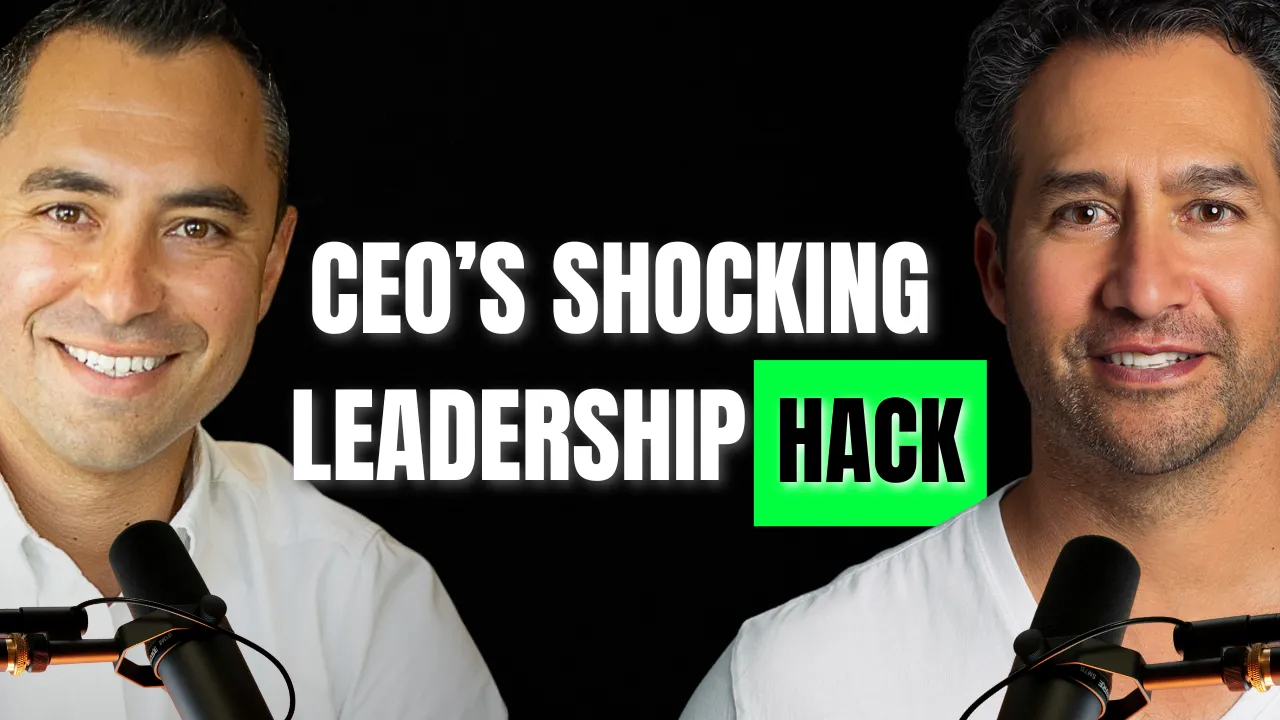
Jake Aaron Villarreal: I'm Jake Aaron Villarreal, born and raised in Silicon Valley. I hit here to take you behind the scenes to share what it's like to be a startup founder, the journey they're on, the products they're building, the problems they're solving in an effort to transform industries. I'm excited to have with us today Jason Smith, the CEO and co-founder of Klue. Jason, welcome to the show.
Jason Smith: Glad to be here, Jake.
Jake Aaron Villarreal: Well, happy to have you here. Um, I know we had a, a pre-conversation a few weeks back and really excited to talk about your story and kind of how it all started. But a little bit more for the listeners that don't know who Jason Smith is. He's located in uh north of uh United States in Canada. Uh he's a five-time startup entrepreneur and CEO and co-founder, as we talked about, of Klue, a leading competitive enablement platform serving 500 clients globally like Dell, Salesforce, Google and others. Before Klue he was president of Alida, scaling it to a 500 person market leader; a Vice President of EA, or Electronic Arts; and he co-founded Columbus Group, a web pioneer acquired by Telus. He's raised over $100 million in venture capital, earned the Ernst & Young Entrepreneur of the Year, and he advises startups, holding distinctions from UBC's Sauder School of Business. Jason, great background.
Jason Smith: Wow, thanks for that intro.
Jake Aaron Villarreal: Hundreds of AI startups are launching every month, battling to build their founding teams. As a leader, your job is to get results. When it comes to hiring, that's where it gets tough. So, you go out and you try a recruitment firm, but they don't understand your story. They're off target, and when they send you candidates, it's a waste of time. We believe you should never have your time wasted. That's why we launch Match Relevant. Because your story is more than just an open role. It's your founder's journey, the problem you're solving, the product you're building, and why it matters. When we work with companies, we make sure we understand your whole story. So when we go out and do a search, we're on target. It's worth their time. They're interested. And more importantly, it's worth yours. And when it comes to hiring engineers, we work to make sure we get it right by deploying a team of seasoned CTOs that have built some of Silicon Valley's best companies. They can collaborate with you in the technical interviewing process. They can be a sounding board or they can run it for you. When it comes to building teams, there's no time to waste. Let's make it count. If you have a role that needs to be filled, book a time with a hiring guide at matchrelevant.com and learn how we do it.
You know, when we talk to founders and we've talked to a lot on this show, um, you know, it's, it's always good to understand where people are coming from. And so, we always ask a question: give us a little background of your origin story. And sometimes that comes in different flavors. Give us a sense of you. You've been an entrepreneur. You've had a lot of success. You're building an incredible company today. Um, take us back a little bit farther. Um, as you kind of grew up as a kid, what, what kind of DNA did you have? Were you always that kid selling products and services to your friends, lemonade stands? Give us a little inside of you.
Jason Smith: Wow. Okay, let's go all the way back. Yeah, you know, Jake, I was a little bit of a hustler, I'd say. I, you know, I grabbed the family lawn mower and took it around the neighborhood and knocked on doors and tried to convince people to let a 10-year-old cut their lawn. And uh probably mangled a lot of lawns, but made enough money to, you know, get the pocket change that I wanted to go buy, you know, some stuff from the store. And uh, you know, that, that was maybe actually, you know, in truth, that's probably the beginning taste of "Look, you could do it." You could grab something that you maybe have tal-wise, equipment wise, and just start knocking on doors. And that, that was probably the most revealing thing, knocking on the door. Like, it's intimidating knocking on a door. And when you're 10 talking to adults and trying to actually make some money...
And then and then, you know, you get to 12 and you hire a buddy. And then you understand the, the challenge of your buddy showing up because, you know, well, they're not really thinking about it as a job. And so then you're doing their job for them, or how to pay them and make a buck off them, and all these little things that you learn [in] just simple lawn cutting business. But I'd say um... sorry about that. I'd say probably the most uh instructive entrepreneurial thing I did is my mom worked for the airlines when I was a kid. And I had a friend that lived in Vancouver. I grew up in Toronto. And there was a store in Vancouver that sold cool clothing called Westbeach. It's actually the founder of Lululemon that actually found this company called Westbeach. And uh he had this cool clothes. It was kind of surf brand-y. And you know for Canadians that there's not a lot of surf. It was uh, it was kind of a cool brand. So, every time I went out and saw my friend in Vancouver, I would buy a whole bunch of hoodies and a bunch of gear from Westbeach and I'd bring it back to my high school and I'd hawk that. And um you know, and, and, and I realized there was a bunch of learning on that one too because you bring this stuff back and uh you sell it to all these early adopters. And then you bring more suitcases back and suddenly those early adopters are gone and then real selling has to begin. And you end up with inventory and you wonder why you've done this. But, uh you know, good lessons on just trying to make a buck.
Jake Aaron Villarreal: Yeah, I know. It's funny you bring up Lululemon. Uh I saw the founder um speaking about his early entrepreneurship and you know starting with that store. And then eventually kind of coming onto the idea of you know what could they do different for women, and eventually we all know the story of where that company went and the success there. You know you never know where your ideas are going to come from. And I think one of the, the, the problems that a lot of people that have never started a company have is "what do I want to build?" "What product do I want to bring to market or what service can I bring to market?" We always go back to "what...
[The Birth of Klue: Identifying a Market Need]
...problem are you trying to solve?" And is there enough value in bringing a product or service to market that someone's willing to pay for it? But the inspiration of those ideas come from different places in different times. Walk us back a little bit of your company Klue. Where, where did this idea come from? And, and kind of give that, the insights about, as an inspirational leader, how it came together?
Jason Smith: The origin story of Klue is quite simple. I was, I was running a company uh previously called Vision Critical, now called Alida. And um, it was about a 500 person company. He had about 100 sales people. And I remember sitting on a call... I was president of that company, and I was sitting on a call with a um one of my salespeople where a very educated prospect was on the other end. And um, I was asking us how we compared to a certain competitor. And the salesperson um started kind of bumbling along an answer that I'd heard before. It wasn't bad, but the prospect doubled down and said, "Huh, interesting that you'd say that you're not as good or you're better there and they're not as good over on this other point. I got a demo from them yesterday and they seem really good at doing that. Um, so tell me again how you're different."
And there was this moment when the salesperson was either faced with, "Well, two roads. One, I'm gonna make stuff up now because like I'm caught and I'm on my heels and I don't know the answer of truly why I'm differentiated," or "I admit that I don't know that." And um unfortunately the salesperson started bumbling down the um, "well this and that," and throwing out a bunch of things. Again, to an educated prospect. It was like that, none of it resonates and so you lose trust in the deal. And as I watched that happen I thought, "This is crazy, like we should know everything about our competitors." So, we built... I actually asked our product team to build a wiki of everything we could find about our competitors and put it into something that our salespeople could use. And uh it was awesome for two weeks, and then it got out of date. And then um uh people wouldn't go when it was out of date. And then people wouldn't update it because people wouldn't go. And it became this flywheel. And that was the moment where I'm like, "Somebody needs to fix this and solve this."
And um, before I started the company, uh I, I, I took a trip uh with my kids, Jake, that I don't know if we want to go down that path, but there's something that I did uh ahead of it to reset. But I, that was the idea that was in the back of my mind throughout that entire trip. And when I came back, uh, we set about trying to build the company that would solve that problem for that moment of that salesperson asking and responding to, "How do you compare?"
Jake Aaron Villarreal: Yeah. Well, it's a problem that every company has, which is a great opportunity for a product you're bringing to market. Whether it's, you know, enterprise, you have thousands of sales reps, or maybe middle of the pack, but there's always opportunities to sell. And you always get the questions that you need to answer, which are: How are you different than your competitor? What do you do that really should be worth me spending the money with you versus somebody else? And having the information, you know, top of mind has always been a challenge, I think, for everybody. Sometimes you get lucky and they don't ask the questions you don't have the answers to. But if you were to somehow magically snap your fingers and have every piece of data that you could get access to, have it in front of you when you need it, you got to at least try it. That would be my gut instinct.
Um, but you tal- you talked a little bit about something of, of, of a, of a travel, which you know, I've traveled a little bit myself. And you know, I know that it's not always the right time to travel uh especially when you're working. But sometimes there's a need to kind of get away and kind of look at life and look at the world differently. I know you've traveled. Leaving mid-career or even part of your career of taking some time off is, is tough, but you did it differently. Walk me through a little bit of what you shared about your experience and your travel.
Jason Smith: Yeah, I'm sure you've got a, a lot of entrepreneurs listening. And it's um, I think the, the cool thing about an entrepreneurial journey is you, you really have chapters in a book. They begin, they end. And um sometimes those are natural conclusions. Sometimes they die off. Uh and, and, and so, you know, I always look at those chapters as a moment to sit back and reflect and think about resetting and what do I want to do next and gain the energy to actually do it. In this particular case, I'd been seven years of building Vision Critical. Went from zero to 500 people. You know, great success um and exhausting. And I had two young kids. I had two young kids uh you know during that process and I missed so many bed tuck-ins and so much time with them that I had this moment. I think it was a 7:00 p.m. call at night that I was having with a couple members of the executive team. And it, I was looking at a picture of my kids and I realized, "Oh my gosh," it was two pictures actually. One when they were born, and the other was now they were seven and eight years old. And you just saw the difference there. And I'm like, "Wow, I've done this all while building this company and I've missed a lot of that moment."
And so I think as entrepreneurs we're very binary. We tend to go all-in on things and that was my approach to you know resetting kind of the parental connection with the kids. It was, "I think if I'm going to do this, it's not a week-long holiday somewhere. Um I'm going to quit and I'm going to go around the world." And um my wife left her job. We bought four around the world plane tickets and then we started mapping like, "where do we want to go around the world?" And it was 13 countries, including Egypt in the middle of the revolution that we went through. And uh some wild stories. But you know, I think the TLDR: just great connection. And like we do with our businesses where we're all in, I was all in on my family. And um and literally all the business ideas that I had on that trip, I'd write down in a little book. And I'd close that book after I got the idea out, and then I would get back to the moment. To experience a- wherever I was, where it was, you know, whether it's Costa Rica...
[Finding the Right Co-Founder]
...or Tanzania. There was this like "get in the moment, get with your family." And do what we do in our businesses, which is in the moment and always focused on our businesses. So it was a very rewarding year and I came back, you know, very, very focused on now what to build next just by actually, ironically, focusing on my family and letting the thoughts percolate in the back of the head.
Jake Aaron Villarreal: Yeah, it's amazing. You're one of the 1 percenters of the world that will ever do that in their life. And maybe it's less um in terms of just taking time off and being able to go out and explore and learn and have a maybe a different worldview. Coming back with business ideas that you might not know about or think about when you're in the trenches just running a company. Um, but when you come back and then you start to formulate, "Okay, here's what I want to do now and it's going to be this idea of Klue." Um, you didn't do it on your own. You found a co-founder and you guys built what you have today. What was the journey of finding that co-founder? Because it's like finding your partner for life in some ways. Got to make sure they're, they think like you think, or you collaborate at the same capacity. Like how, what was your process in finding a co-founder? Because we talk to so many companies that they're solo founders and they have kind of tried, it didn't really work out. But sometimes you need to give it more time. What was your strategy?
Jason Smith: You know, I think the co-founding question is such a good one. It's such an important one. It's uh, it's easier and harder, you know, with a co-founder in many ways. So, I have great empathy for those that have multiple co-founders and have the challenges that kind of erupt, you know, downstream, and, and solo co-, solo founders that are trying to do it. My own story was this. Um, so first, this is my fifth company. So, I've had some battle wounds around what it's like to have founders and some of the tension that goes with that. You know, when I was in, coming straight out of university and starting my first company, you're naive and you have ego in a way that you probably shouldn't. And so when you're in a co-founding relationship there, you know, and you get some success in that first business, suddenly you start to kind of believe things that maybe you shouldn't be believing at that age. And you're just kind of caught up in it all. And then you know, if you have other co-founders that are also caught up in that, then ego sometimes comes into play and there can be challenges on "well who gets to run what?" "No, this is the direction we're going to take." And that conflict with um you know this combination of maybe a lack of battle wounds and maturity with this uh um um maybe success driven ego is a real challenge, real recipe. And so, you know, my anecdote for that was trying to talk to more advisors. I'd highly encourage people to talk to folks that are a little more tenured, gone through it a couple times, just to be a sounding board for, you know, some of, to reflect on some of their own issues.
But my own journey on this one was, you know, fifth company. I kind of knew what I wanted and I kind of knew that I would not tolerate certain things. And I knew for certain that I needed complementary skill sets. So, in my case, I'm not a technical co-founder. I needed somebody that was going to be really strong technically, technically strong, and also could potentially scale and manage a big team. And so um I refused to start the business until uh I had that. And you know, I had the financial luxury to be able to do that. But literally I spent, Jake, a year in coffee shops. And um, and, and, and even more, it wasn't just the co-founding relationship. I came back from that trip with 17 different ideas. Like 12 of them were really stupid, and I figured that out really quickly. But they, they seemed smart at the time. You write them down. And then, you know, five were really percolating. And I, you know, I just tried to find as many smart people as I could, pour these ideas out on them, and, and start every conversation with, "I need you to be so damn honest with me. I need you to tell me if my haircut is ugly, my baby is ugly, because I'm going to spend a decade doing this. So, I need you, I need you to be really honest." And then I would share this idea that I was going to work on. And that kind of gave them the freedom to kind of be a little more harsh because nobody... there's nothing in it for that person to say "that's a dumb idea." It's way easier for them to end the coffee going, "Ah, it's cool. Good luck." And so you have to pull that out of them. So I did that.
And at the same time, you know, I was talking to different technical people that I could potentially found the company with. Uh work with some of them, paid some of them to actually start to build a few things. You know, questioned maybe "Is this the right person?" And, and fundamentally, Jake, I would sum it up, sum it up as: when I found my co-founder, it was about trust. It truly is about: is this somebody that you can trust? I mean, there is the complementary skill sets, but ultimately, is it somebody that you can trust? And there's little things that you will see on that journey of discussion of founding a company that will lean you forward into that trust bank and say, "This is somebody, this is somebody that I'm pretty sure I could trust." And the easiest measure of that is if you flip it around, and there's a decision being made, um would you have made that same decision? Would you have done that same thing? And if you would, then you can have empathy in how they've approached it even if it's different than your opinion. But if it isn't, then there's a question there.
And, and I had one scenario where uh I thought there was a guy that I was going to go into business with. And uh we had kind of nailed everything on the Friday of "okay, we're going to start this company. It's good." And literally been working with this guy for a long time, um months. And uh, and we over beer, "this is it. We finally figured out the percentage ownership, etc. How we're going to work."
[Navigating the Startup Landscape: Lessons Learned]
On Monday, he comes in and tells me he's going to move to another country for uh months and uh "but don't worry, you know, we'll still start the company." And I'm like, "Why didn't you tell me that? Like, I..." and, and I so badly wanted to start the company because I've had that idea for so long that I was like, I just, I was... "You're trying to tell yourself that you can just... 'It's okay. That's not a big deal, right?'" It's not a big deal that you've been working together for that long and he didn't tell you that. But it is. And so, you know, literally talking to one of my advisor friends, he's like, "Dude, would you, would you have done that? Like, would you have done that?" And there's zero chance I would have done that. I would have had that discussion throughout our founding discussions of, "Hey, I've got this trip planned. Can we find a way to make it work?" Whatever. I would have been open with it. And so when you get those little moments, you really have to look at it and go, "10 years, 10 years of discourse, challenging conversation that I'm probably going to have with this person. So am I going to now be suspect on everything they say, or am I going to lean in and go, 'I trust that person'?" And that to me is the pivotal point of a founding relationship. Complementary skill sets are obvious, but like that moment of trust, because then you can have real, honest conversations. And there's a transparency, candid, candidness that you can get through some of this stuff because you're going to have tons of disagreements. But it's, it's like, do you trust them? And if you can't, if you can't trust them and as soon as that's broken, that's how companies fail.
Jake Aaron Villarreal: Yeah. Yeah. No doubt. That's, that's incredible. Um, just for insights, how many people did you talk to before you finally said, "I think I've got the right one."
Jason Smith: I literally like, it's actually embarrassing. I, I, I probably had 500 plus meetings that year. I would go, I would sit in one coffee shop and I'd have like, you know, you do your coffee and then you'd have juice and then maybe a muffin. And I'd have three of those meetings. And then I'd go to a new one because I'd feel kind of embarrassed that I was in the same one. And then, you know, I'd decaf in the afternoon. And literally I'd probably do like... I tried to do three, three plus meetings a day and sometimes there were six meetings where I just lined them up. And uh you know, benefit of the network where I had enough of a network that I could ping people. Um, but you literally end every conversation with: "Who else should I talk to? Who, who do you know?" And that led to the next, the next, the next. And each follow-up, and, and literally sometimes he's like, "Oh, yeah. I'm going to meet him later today, maybe." And like I could have a meeting that they talked about the person either the next day or the same day. And um, and that's just from trying to push it forward.
And, and here's the other thing in the, in the founding piece that I found really interesting. When you have these ideas, you're baking them in your own head and you kind of get more and more conviction around them. Um, but when you have these smart person meetings and you sit across from somebody that you respect and you're pouring out this idea from them and you see them flinch and that eyebrow slightly raised and you give them the permission to give you the honest feedback, there's this moment when they challenge you. And you're going to either be like stumbling back and leave that meeting going, "H- yeah, I don't, I don't know. I don't know if I'm that motivated," or "Screw that. Let me see if I can prove that wrong." And you're gonna, you're gonna lean in, and, and you're, and whatever data you find or you know something you, you reveal, you're going to go, "Ah, I've got more conviction," or not. And those are super important steps for you to build the kind of the armor that you're going to need to get through like years and years and years of pain. Like you're not starting a company going, "Awesome, where's my TechCrunch article? Thanks for the 15 million pre-seed round. Let's go." Like it's, it's painful. We all know that. And so you need to build the conviction through these meetings where people challenge you. And if you're stumbling after those meetings and feeling... you always feel doubt, but I mean like you're not motivated to go try and figure out why that might be wrong or might be right, then I think that's a gut check moment and you're not ready to start that particular company.
Jake Aaron Villarreal: Yeah, that's amazing. It also I think helps you understand people in general as you grow and build your company. You, you have to hopefully get the right co-founder or founders, but then also as you build your founding team and you add more people, then you start to scale. Like your intuitive thoughts about people and then are they the right fit for the company... there's a lot of value that you also probably gained through that experience that now you can shape the company the way you want to with the right type of people. And I think that's really a great way to, to build and scale a healthy company.
Um, let's talk a little bit about the company itself. So, I talked about, you know, "I have to create something that people are willing to spend money for because they see the value." And we have a general con- concept of what you're building. Um, walk us through uh a little bit of the company today. We're working with a lot of AI companies. A lot of companies have platforms that AI is embedded into it. But just functionally, uh, walk us through what a salesperson gets if they were to use your product.
Jason Smith: Yeah, great. Great. I'd love to give you a bit, and I'll try not to make it too pitchy. I'll try and give you kind of the real, the real meat of it. Um, you know, like a lot of companies, we've been playing in the first Gen ML era for a long time, and then Gen AI came along and kind of supercharged all the work that we were doing. But at the end of the day, you know, the process... I'll start with the process and then I'll give you the kind of the seller moment. It's um, there's, there's a whole bunch of data from a whole bunch of sources. Some of it's out external on the web. Your, your competitor's website, you know, job postings, LinkedIn, um uh lots of blogs, lots of articles, lots of um uh press. Um, but the web page changes are kind of super interesting where your competitor will change things on their website. And it could be like a small price change or something that they add to a tier or a case study that's removed, meaning they probably lost that client, and a case study that's added, meaning they gain that client. And these are just all little signals that if you can gather them up, they start to get pretty interesting for a revealing story. That's external data.
Then there's like internal data. And working with our clients, they got Gong calls. They'll record sales calls and there's a whole bunch of meat in that. They'll put things in notes in Salesforce, Slack conversations. There's usually competitive intel channels where they're like, "Anybody come up against?" "Yeah, yeah, I heard these guys." And there's a whole bunch of data that comes in there. Emails as well. Those are kind of the internal sources. Um, and then there's license data. Like Gartner and Forrester do great, you know, reports that you can get your hands on. Um, and then there's a whole bunch of thin slices on each industry that you can kind of license up. And the last thing that you know we're really heavy on is uh, is interviewing is win-loss is talking to buyers. "Why, why'd you choose them? Why'd you choose somebody else?" And really getting the cold, hard truth from the buyer directly. And if you do it through a third party, you get all sorts of reveals like "oh, it really a broke culture. Oh, wow. Didn't realize that." And that's not something you're going to tell the rep, right? So um you get all this great data.
So those are kind of the data sources. And you fish through those and then you put all the good stuff in front of a product marketer who puts their spin on it, contextualizes it, and makes artifacts. And those artifacts could be like in the AI age like just "Ask Klue," and you just ask for something and it'll give you kind of the output back. Or it could be like a battle card where it's kind of preset and go in and "here's everything you need to know from a quick dismiss, to landmines they're going to lay, to strengths and weaknesses, pricing that they've done in the past." So um, that's kind of the, the product. The salesperson how it manifests itself: like, salespeople wake up every day and they got 30 deals in their pipeline. They don't want to know more about the competitors. They just got to get rid of them in a deal. And so they're sitting there going, "All right, I got the economic decision maker. I understand the budget piece now. Uh there's some maybe compelling event. Oh. Oh, you're talking to who? Ah, okay. Yeah. This is how we compare." And like, and you always get that question. So like 99% of deals, like the buyer is going to be looking at somebody else. And so you've got this moment of "how do you compare?" And they're either going to directly ask that or they're going to be fishing it through questions where it's like, "So, do you guys, are you able to do this level of reporting and kind of tie it back to the... Uh-huh. Okay. Can you show me that?" And like, and, and we're in this like "tell, show" moment for a lot of our products. And a lot of them kind of look the same. And so there's like this very subtle edge that you'll gain throughout a deal cycle.
And all of that, if you know that competitor, you can pick up the signals. "Oh, they're using words like tiles instead of boards. They're probably talking to so-and-so. Ah, yeah. You're looking, you're actually explicitly asking about this feature that I know my competitor has that I don't. Okay, it's that competitor." And even if you haven't asked them, you can kind of pick up these little cues if you're aware of what these competitors are doing. And so, it just starts with like, you got to collect all this data, you got to curate it, you got to put it into something. And then you got to get sales people to actually use it. Once they start using it and they realize if they know about the competitor of the deal, they'll sniff it, and then they'll more appropriately respond.
Jake Aaron Villarreal: Yeah. Yeah.
Jason Smith: And I'm just going to preempt you to your next question because here's how we think about things and you're shaping the whole prospect around, you know, maybe your orientation, your point of view. "This is how you want to think about it." It's about engagement. It's not about fact finding or however you position your product. So, um, yeah, point simple. It's like the question that two million salespeople get asked in every deal is "how do you compare? How you different than, how you better than?" And they'll either name the competitor or they'll do it kind of more subtly than that. And so Klue... I just, I want to give, I want to give sales people the confidence that when they go into those deals that they can sniff who that prospect's talking to and then out-maneuver them in the deal.
Jake Aaron Villarreal: Yeah, that's great. You know, we have a service that we provide to lots of startups, lots of companies, which is we help them recruit and scale and grow and find the right people uh for leadership, for engineering, for different roles in the company. And we get asked a lot of times before we ever work with a company, we'll be talking about who we are, what we do, and how we do it, and you know, why companies have used us. And at some point, they'll say, "How do you really differentiate from everybody else?" Like what is it like that you do that you know the 2,000 other recruitment firms in California don't do. And you know, you have either a good response or answer, or hopefully you've got insights over the years that you can you know provide some value proposition...
[Understanding Competitive Dynamics in Sales]
...that is either unique or is you- is like your competitors, but and then you also do these things that maybe they don't do. One of the things that you guys do that I think is incredibly cool and useful is if you lose a deal, you actually understand why you lost the deal. Which you will never hear that if you ask the prospect why they didn't choose you. Talk to us about how that works.
Jason Smith: Oh my gosh, there's so much. And I want to circle back to another point. I'll give you a VC story in it, but I'll I'll answer your question first. Um the uh uh we've done a whole bunch of analysis on this. And so, look, a lot of sellers uh they don't love Salesforce. They don't love filling in a CRM. And one of those fields in there is uh "reason for loss" and uh or even "reason for won". And it's better on "reason for won". They'll give a whole bunch of reasons why, you know, they're awesome and uh some other things. And if it's a loss, like there's a lot of pretty high level stuff. It's the product, it's the price. Um, and when we go back and interview the buyer, it, it turns out that well over 60% of the data in the CRM about reasons for loss is like blatantly wrong. Blatantly wrong. And so we make all these go-to-market decisions on, "Oh, we need to fix this in the product. We need to fix, reduce our market pricing because of this competitive threat." And it turns out a lot of that stuff is like on pretty shallow proof points. And so if you go and talk to the buyer and go, "Let me understand this like, what, you know, you, you chose them over them for what reasons? Okay, that, let me double tap on that. Double tap on that." And a couple 'whys' in, you start to get on the real reveal. And all of that is recorded, and all of that goes into the, you know, on our platform, and then summarized up into these decision-making themes that not just on that particular deal, but in aggregate over the hundred deals. And you can start to make some real go-to-market calls. And often, like... and so competition is one piece of that, but it's often way bigger than that. It's like "how... I, I didn't like your pricing model." Well, that's not a really competitive thing. It kind of is because they like the competitor's pricing model better, but like they just didn't understand how you price. So, is that because your pricing model, or is that a comms issue on how you're actually explaining it? Um, "your differentiation feels pretty high level. It didn't feel deep enough and actually the competitor went into this depth and actually proved the stuff. You just kind of made the claims." Well, again, like it's competitive, it's kind of more how you're selling.
And so these are insights that are just the highest signal ever. Like we literally bought this company called DoubleCheck and, and brought this into the fold in '23 in Klue because they were doing it for us. And I, I as a CEO, I've never leaned in more to these like literally video recording clips emphasizing these key reasons that you kind of know, but there's nothing like five buyers that in like no uncertain terms are telling you, "you're missing because of this and this and this and this and this." And so there's no shooting the messenger of my enablement team going like... But it's like, I can't deny this anymore. We've got to fix this. And so I, I just think of it as cold, hard buyer truth. And yeah, we connect into the CRM so that every time there's a closed uh won or lost deal, we'll selectively pick folks that we can go and speak with, and we handle all that interviewing and do all the rest of that. So that part is uh like the highest signal data that you can get to orient your go-to-market machine. For sure.
Jake Aaron Villarreal: Yeah. You talked about a VC story. Let's go back to that.
Jason Smith: Yeah. Uh um I was just going to talk about in the sense of like your, my, my competitive lens. You were sharing your experience of like you get asked "how you different then," and it feels kind of light sometimes. So in my case there is nothing better than to speak to VCs and turn the tables on them. So basically my talk track kind of went something like this. Be like, "Yeah we think Klue is really interesting. We're curious about you know how you're approaching this." And I give them this and then I'm like, "Oh, can I flip this around?" Like, "How are you different than so-and-so?" "Well, we have like, you know, X blah blah blah and we've done this." I'm like, "That sounds exactly like what they said. They have operating venture partners. They've got connections. They've got great founders. How you different again?" "Well, we've raised a lot of..." "Yeah, they have too." And like literally I would keep pushing them on this to the point where they would be uncomfortable and they'd be like, "Uh, we're not that different really at the end of the day." And so there's this moment of reflection. And I'm like, "What I just did there, what I just did there is what educated buyers do every day to sellers around the world."
Jake Aaron Villarreal: Yeah.
Jason Smith: That is what Klue is trying to fix. And it was such a perfect weave-in of our message of like that discomfort that they physically felt of knowing that they're not able to articulate their differentiation well to some, to an educated buyer, and knowing that that buyer is looking at other competitors. And it, it uh... and in this case VCs. And it was just, it made it so real. Like they would literally pause. It became like them on the back foot, not, not, not the, not the, not me on the back foot. And so any, any entrepreneurs out there looking to raise money, if you can weave, if you can weave that, that story of yours to a VC that really understands that space and make them viscerally feel it, it just, it becomes much more powerful when you're seeking funding.
Jake Aaron Villarreal: Yeah, it's interesting you share that because we had a guest on the show here last, probably six months ago, where she was out pitching and pitching and pitching. You know, sometimes you have to pitch, you know, a few times, and sometimes it's hundreds of times to get your funding. And I'm sure you know and a lot of founders know what that process is like. But she had gone through this multiple rounds and then at some point she just said, "You know what? I'm going to reverse the conversation. Instead of me going up there and presenting on how, what we do, why we're so great, why you should invest in us," she reversed it and said, "Tell me about why a company like ours would be interesting for your portfolio. Tell us about how you would support companies like ours and where does it make sense for, for, for you?" And when she turned that, the conversation was different, the energy was different, and the response and the result was different. And I think within a two-week timeframe, she had four term sheets. And it was a difference in just turning around the conversation. And um, but it's similar to what you're talking about, which is having people experience what it is that, that you're selling...
[Navigating Investor Conversations]
...them, what you're pro- providing to them, that like that value of, of getting pressed into "differentiate and presenting who you are and why you're different." And being able to do it in a way that really builds the trust, but also gets them into a decision point where you feel like it's the right choice. So...
Jason Smith: Yeah, and I think you're hitting something else there. The underlying confidence that you have if you're the one doing the questions versus answering. And it just, it's a different framing. And so suddenly there's "who's on the back foot really." And, and back foot maybe is too strong, but it's confidence. It's just a sense of "this is a founder that knows what they're doing and what they want." It's not, there's no whiff of desperation. "This is something that I'm going to miss because they're really confident and they're going to move on to the next one." And it does create a, a yearning. We've all been around those confident people. We all have those. We've seen those, you know, these confident people that you're like, "Ah man, I just I want to be, I want to be more confident like them, right?" And like, and there's an attraction to that. And I think if you're connecting that with your business, um it's fantastic. I love that story. Kudos to that female founder.
Jake Aaron Villarreal: Yeah. Well, I really I like your story as well. And there's a lot um to, to happen with where you're at today. And as you head into 2025 as a company, as a growing company. What's, what's the biggest challenge you see in the, in, in your company or in the market right now?
Jason Smith: Well, you know, traditionally, it's always, you know, it's the, the default answer is talent. It's always trying to find the right talent um that you could bring into your company. And there's this never-ending, as your company continues to grow, there's this never-ending upgrade cycle. Some people grow with the company and some people you need to bring in that have seen that growth and can help level it up with different ideas. So I think companies uh are ever evolving in terms of their cultural fabric of the people. And you, you, you need to grow that. I you know, you, you know, Jake, in your world on the talent side how critical that is.
I think what's unique currently, and it's two years old unique, is like literally two years ago we just saw ChatGPT bust onto the scene. And like, and it changed everything. And like, I you know, I started my first company when the internet came online. I think there was five of us online. Like it was pre-Netscape, it was NCSA Mosaic with Andreessen doing that at you know at university with a web browser. And like, I remember that explosion of the internet. I remember the explosion of the cloud. I remember explosion of mobile, um, social. And um, and people have said this before, but like the Gen AI side just completely changes everything. Easiest way to think of it is we come from this world where you can get a better and better survey tool. You know, you need this to be able to... but you still come up with your 30 questions and you get, you go find the people that get the answers and you come up with a report. You get your results and you analyze it. Like in Gen AI it's like "This is the problem I need to solve, connect up some agents and give me the answer." I don't even know what the questions are to ask. And I don't, and, and that is so fundamentally different of a way of thinking of generating the answer, not just... and the, and the solution, I shouldn't even say answer. It's generating the output, solution, problem solving. Could be code, it could be a product, not just an answer. We're used to an answer because you know that's how we're, we've all started in search.
But it is so fundamentally different that that makes like... I'm in 2025 forecasting and planning right now. And it was really hard last year. It's hard this year. What, what new thing is coming out? And it feels like every week there's something new and advancing that you're trying to bake in. Like I lit-... we literally had a conversation with our team. I'm like, "Well, will salespeople exist in three years?" I mean it's, it's a, like it was a crazy thought. And then literally while we were having that discussion, we you know had an inbound from a company that was inserting a digital avatar inside of the calls and actually you know being kind of that, somewhere in between the sales-led sale and the product-led sale of like a customized demo deck thing. And you're like, it's actually pretty good. It's still early days, but it's pretty good. And so that like, I don't need to talk to a salesperson, sign up for Notion, and run through to I'm going to buy SAP and I need like a year-long sales cycle with a lot of people... That, that, that delta between the two I think is going to narrow. And so it suddenly becomes like, "So how do you build your business if you're helping sellers?"
And so these are fundamental questions that I think every SaaS, SaaS entrepreneur is asking themselves. And the way that we're approaching it is, uh, we might be a Series B company, we've raised $80 million. Um I'm thinking like a seed-stage company all over again. It is like you have to rethink. The problem hasn't changed for us and for most companies. People still want to know about their competitors. People still want to out-maneuver them. People still want to know about their buyers. But the solution, the way that we've solved it in the past is uh, is completely changing. And I think the challenge for a lot of companies like ours is we have hundreds and hundreds and hundreds of clients that are doing it a certain way and are, you know, right now still pretty happy doing it that way. And they want, you know, a better card editor or a, a green button. And we're like, we're, we're maybe going to rebuild the entire house out of clay, you know, and it's...
[The Impact of Generative AI on Business]
...going to be generating the output, and you're going to verify it. And, and that's like mind-boggling. And so you're living in this kind of future state "what if" trying to bring it back to the real world. You've got all these existing clients. I think there's huge tension between this you know product-market fit scaling of these later stage companies like ours or mid-stage companies like a B-stage company, and frankly, the startups. And so you know, both have advantages. If you're starting fresh today you have an advantage. And I'm starting with a bunch of clients that want to experiment. So, I've got a built-in advantage as long as I don't let the existing scaffolding get in the way. And uh, and so I, that's what I would say today is like still a monster challenge. It has been for two years. It's predicting where this future's going to go and trying to build for that ahead of time.
Jake Aaron Villarreal: Yeah, thanks for that honest answer, because we talk to so many people and you don't always get it. One of the things that we're starting to see and it's becoming more real every single day we have new conversations with innovators is this idea that yes, I mean our business is people, right? So like you take people out of the loop and our business goes away. Recruiting, there is automation that's been happening for years. And you know, with AI there's absolutely going to be a major shift in how people recruit. And you know you talk about avatars, I mean we're experimenting right now with avatars. Or you know you're... I'm not interviewing you. I've got me, my digital twin that I've now created that's interviewing you and it's running 24/7. It's not getting tired. The output's incredible. That you can see subtle differences where you know every once in a while you're going to see this and these hands move and you know it's like not really at the right time and the eyes might be you know shutting a little bit too early or the mouth, but the output is the same. Like, "Tell me these 15 answers to these questions and I'll assess if that's the right fit and I'll put it into a CRM and I now know ranking that these are probably the 10 best candidates out of the 200 that were interviewed. I wake up in the morning and I know now who to talk to and who to present to my clients." That's a different... that's a different landscape.
And so we see a world in the future and I don't know how far away it is where you might not be hiring people. You might be hiring agents that are created for every level in a company. I mean that's kind of big picture, but we've all heard this. You know, you're going to have your sales reps and your customer support reps and your marketing people. And you know, "I'm going to license this team from this company and this team from that company. No one's doing it all yet." And they communicate with each other, and, and then you have to finesse it a bit. But I mean, maybe that's the new world. I don't know. But it's, there's a lot of acceleration happening now. We're seeing it and hearing it, and um it's pretty exciting. A little bit scary, too.
Jason Smith: Oh, and this is it. So, you know, tell me Jake, what's the world look like in three years? It, it's, it... and if you're building your business knowing that there's development cycles, what's it look like next year? Like that avatar that you're talking about, you know, holding up their hands. Well, they went from showing six fingers on a hand to now the hand looking pretty good and maybe it's just slightly dorky. And so, next year, what's it going to look like? It's going to be really smooth. And so, and, and, and the whole agentic world of like, it's not just going to do one thing well. It's going to connect and do multiple tasks in, in simultaneously and in sequence, connecting to other agents. Like it's a given that's going to happen.
But you know, even back to my salesperson question, like why do we still have real estate agents? Like we haven't needed real estate agents for a long time, but we still have them. So humans are really good at creating friction despite technological potential. And so I think there's, I think there's still going to be, you know, um a lot of human involvement on pieces, people. There's going to be a flip to like, "I don't want to deal with an agent anymore. I want to deal with a real... is this a real human?" A lot of labeling on it. But there's zero question that productivity is going to happen. I was literally talking to my head of marketing yesterday. I'm like, "What would the book look like if you wrote it called the 'Marketing Department of One'?" Like, we're talking about how many new people you need next year. I'd like you to write the book called "The Department of One." And by M- by that I meant like, what... how could you have agents do all that work? And again, it's impossible right now, but it is potential. And if you have to, you have to get in there and explore it.
And I use the analogy of like the iPhone. Remember the early days of the iPhone where we explored like a billion apps? And you flip through your phone and like you got all these apps that you'd never use but you downloaded them just to try it. I feel like we're in that in AI. And we're all experimenting with these new apps and another app and another app. And some of them fit and some of them don't. But you have to go down those roads to understand what will fit. And get more educated to know what you do want when the right one comes along. And so um uh you know in our company we've, we've had AI days where we actually have no meetings and we force everyone to see if they could replicate what they're doing with AI. And it means just experiment, experiment, experiment. And again, a lot of wasted time. Like there's a lot of stuff that veneer-wise, marketing veneer, look great, but just aren't there. And it takes a lot of time to get there. But if you're not experimenting with it, like you're, you're, you're not going to know when the right thing comes along and you're not going to get that advantage. So it's super important to go down the path. It just makes... when you're you know your core question. It makes forecasting this stuff out in the future a real challenge.
Jake Aaron Villarreal: Yeah, I understand that. Um, you know, companies talk about creating a moat around their company and keeping the, you know, the defense up so that the competitors can't really capture the market you have or, you know, they, you put things in place. Maybe it's just you got to market first and everyone's trying to catch up and that's your moat. Or maybe it's a technology patent that helps you stay ahead of the competition. We're seeing what we call a, a people moat and trying to create a moat around keeping your people. Because there's hundreds, if not billions, and multiple billions now of dollars being put into startups. But now these are not just small startups. There are the big FAANG companies and you know the big AI companies that have you know $5 billion in funding and they're trying to ramp up their teams and hiring a thousand in six months and more.
And they're looking for people everywhere, including going to the smaller startups and saying, "You know, you have a team of eight people that are all really good ML engineers. And even though we have a thousand people, we want all your people too. We're not going to buy your company, but we're going to start messaging your people." And you're never going to know about it, founder, but your people are getting hit three or four or five times a day. And eventually that number is double their salary and more equity and a product that's got a brand. And you know, you get that email that says, you know, "I'm giving my two-week notice," and you didn't really even know that they were looking. So creating a moat around your people is engaging with them better, understanding what their career journey is going to be like with you, what's it going to be like in terms of their satisfaction level, and having those honest conversations to keep them loyal. What's your thought around um keeping your team, building it, but also making sure that the transparency is there and you know where your people are at?
Jason Smith: Uh you ever seen that show Severance? We just remove all cell phones and uh and force them to stay at work the whole time. So provide bedding. You know, I think you're hitting a very, very valid question. And certainly it was, it was nuttier in terms of that level of recruiting and poaching that was happening a couple years ago. With the FAANGs hiring less, it's um it's been slightly better for the top talent poaching. But you know there's a handful of fundamentals. And um I think people need to be inspired. Mo-, we talk a lot about the vision and um and mission that people get. And like, the, the cold hard, the majority truth is the majority of us don't, aren't saving the world with what we're doing. And so it's hard to be super inspiring on that particular um saving the world piece. What is inspiring is doing something that really does provide value, doesn't hurt the world, and provides meaningful value that your customers are actually really getting benefit out of. And if you can articulate that in a way that resonates for the people you're hiring, I think that's a huge one.
But the number one thing for me is other people. Other people. It's who you're with. And if you feel like you're with your people, um you're staying. And there's a risk when you leave that um tribe, that community that you've developed. You ever gone to those hotels where you're sitting around and you're looking like, "These just aren't my people." And there's this moment where you're like, "This doesn't feel like it." And there's other places or hotels that you might go to and you feel like you fit in more. And um and that's just, that's normal. And we're all looking for that level of community. And so if you can combine all of the basics: you got to, you got to comp people right, you got to give them the autonomy, you got to give them the authority, um you got to have a great culture. And in my opinion, that means you need to be able to be candid. But you, you can't have the right to be candid without having some care and curiosity about that individual and their opinion first. If I care about you, and you feel that, and I'm curious about your opinion, then I have the right to be candid. If, if I, if I don't start with that... if you, if I feel like I'm on a, if I, you feel like I'm on an upper pedestal or something looking down at you and I don't care about you, when I'm candid, I'm a jerk. I'm not like trying to help you. And so like you need those things. But when you're surrounded by a bunch of people that are all trying to elevate, that are all achievers, other achievers want to be around that. And um, and if you have the right type of conversations that can break down the communication walls... and those happen very, very quickly, misinterpretations... and so that's back to that candidness of being able to be direct, peel back the veneer. It's okay to be vulnerable and um and talk about faults and uh we all have them. And so you know if you build a culture with that, then I think you have the achievers that are now this mix of vulnerability and psychological safety that are willing to work on some of the things that are problems in a very honest way and actually move forward aggressively on the things that are working. Um uh that's, that's the flywheel. Great people with a great candid culture with care and curiosity, I think is the core of it. And if you can, if you can accelerate that with a, a mission that resonates for those people, it's, it's, it's, you've, you've got...
[Building a Strong Company Culture]
...everything you need. By the way, you need money too. You need money. You need to be able to build a business with money. And it's very difficult... I found that in the early days, that first million in ARR is so challenging because you're convincing these highly talented people to work for nothing, equity, and they've got to want to buy in. And um, and there are people that come from big companies that say they want that, but really aren't ready for it. And there's others that really are craving it. "Get rid of the politics. Let me get in and make a real impact." And when you find that magic mix of those people... not the people that say it, but really do want it... um then uh then you've got something. And then you can afford to pay them when you raise the next round. And, and hopefully it, it stays ahead.
I, you know, literally I just had one of our senior people poached by um by a company willing to pay astronomical amounts, like you know, well into the seven digits a year. And um and it's just something that you can't compete with as a startup. And so you have to wish those people well. But you know, you know, some of the environment that they're going into is going to be a lot more cutthroat than the environment that they've left. And so people are willing to trade some level of comp for the right environment. But there is a, there's, there's a, there's a reality of that delta that just becomes um you know, impossible to match. So in this case, it was literally me going, "I'm not even going to fight to keep you. That's fantastic. You should take that. It's a great opportunity. Super rare." And uh and then we'll find the person that is the right fit for us. That hopefully, maybe it's a good sign. We can find great talent that uh is there. But man, those are big dollars. We can't afford to pay that unfortunately.
Jake Aaron Villarreal: Yeah. God, you really explained that really well. Um I want to just add something to that. You're talking about culture. You know, there's a book called The Culture Code. I don't know if you've read it. Um...
Jason Smith: Yeah.
Jake Aaron Villarreal: And just some of that I kind of feel comes out of that which is you know I think the question was asked "how do you build a culture that people want to be a part of?" First it's about creating a safe culture that you could actually be a part of and feel like you can express yourself. And you know another part of it was you know if someone as a leader leads with this very bold bravado way of communicating and you know "I said it how it is and it is what it is and take it like a man or a woman," and you know that's great, but you leave people feeling like they don't want to talk. So, you know, I think the, the, the term was um candor, but a caring candor is the right way to communicate what you should be sharing that will help people, but also in a way that they feel like you're not trying to bully them. And ultimately you build that relationship of trust and the culture becomes stronger. So really cool insights from you and uh really cool story about what you're building. If anybody want...
Jason Smith: Jacob, before you go on, I just wanted to hit one point. This is not a Kumbaya thing. This is not something that isn't feeling uncomfortable. I want to be clear like these are uncomfortable conversations. Performance is required. It's not a feel-good, forgiveness everything. But you can have those hard conversations when you genuinely believe that there's more for that person, that you're trying to unlock their potential, and they see that. And that's part of the care and "I'm curious about your opinion. What am I missing? Educate me genuinely." You're not just saying that. Then you can have those hard conversations of, "You're better than that. There's more that I think you can give because I see that in you. Do you? Where are we on that?" And those are hard conversations. And, and sometimes when I hear psychological safety and like the you know "safe environment," it can feel too like warm, fuzzy, Kumbaya. That ain't what we're building in startup land. It's hard. It's just you can have hard conversations and still feel like people got your back.
Jake Aaron Villarreal: Yeah. I also think there's a certain standard as a leader you set. And if you give into what you're seeing isn't at the standard that you feel is good for the company or for that person and you don't address it, uh you know, you start to see a, a sagging company. And it's really, it comes from I think the top. You know, what are your standards of success and are you keeping your people at a high level? And if, if they're not, well why not? What do you, why aren't you able to do the things we expect you to be doing? And you can have those conversations. But, you know, I love the question, "Tell me more. Tell me more why that's not working. Tell me more about what you feel should be different or..." And it just lets people open up and then hopefully you can get them in a place where they're more motivated, inspired, and you can lead. So, yeah, I think this is going to help a lot of people at the end of the day. Um, if anybody wants to find you, Jason Smith, easy name to remember, or find Klue, where do they go?
Jason Smith: So, you know, klue.com is uh the URL. Fun story about getting that URL, but we'll leave that for another episode. klue.com. Klue's with a K. And uh you know, there's lots of free resources there if you just wanted to get started in the compete world. Um in terms of me personally, I'm on LinkedIn. So, linkedin.com/in/jasonsmith, I think it is. Um, I, I read a lot about uh things that I've learned, things that I've shared. Try and be relatively open about those things. So, um, give me a follow, connect with me on LinkedIn is probably the best way. Jason Smith, a Klue you could search for on LinkedIn, or one more. O nei. And if you want to learn more about what it's like to take a year off and travel around the world, you've got a great YouTube video that captures exactly what you did in 10 minutes. So I, I watched it. I was inspired to do it again. I now have a seven and an 8-year-old. I've been working for a long time. I've done a little bit of a travel. I might be the next one on that venture to take, to take you up on that.
Jake Aaron Villarreal: I want to thank you so much for your time of coming here and sharing your story and for the listeners for listening. It means a lot to me you spend it with us today. I'm your host Jake Aaron Villarreal signing off for now, but can't wait to catch up with you all on the next episode. Until then, Jason the world. Take care. If you like what we're doing, don't forget to subscribe. Leave a review on Apple Podcast or wherever you listen. Follow us on YouTube where we go behind the scenes to learn what it takes to be a startup founder.





















.jpg)











.webp)


.webp)
.webp)

.webp)