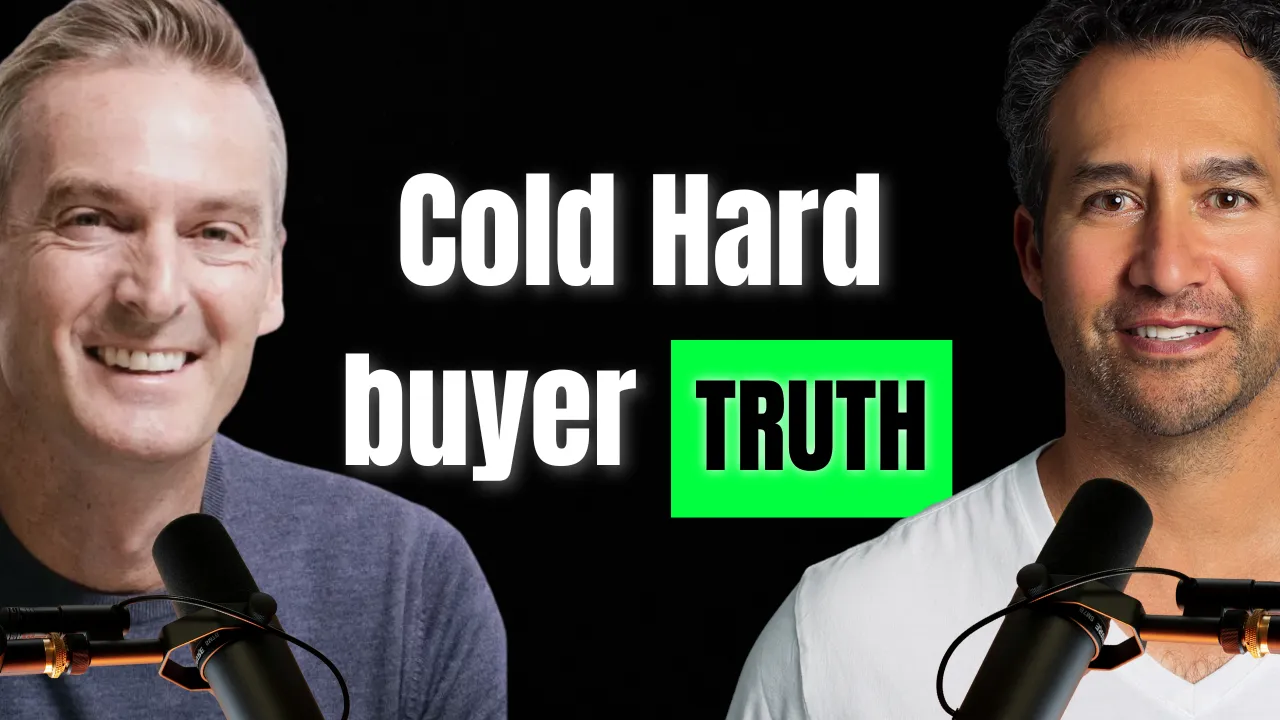
Jake Aaron Villarreal: I'm Jake Aaron Villarreal, born and raised in Silicon Valley and here to take you behind the scenes to share what it's like to be a startup founder, the journey they're on, problems they face, products they build in an effort to make our lives better. I'm excited to have with us today Keith Zubchevich, CEO and president of Conviva. Here with us today, Keith, welcome to the show.
Keith Zubchevich: Thanks for having me. Good to see you again.
Jake Aaron Villarreal: Yeah. Well, we have kind of a past where we both went to the same school and it's been a number of years. We have different tracks, but both ended up in technology and technology services. And at the end of the day, it's always good to reconnect with people that are in the same space. Keith, before we jump into Conviva, give me a little shout out to where you're calling in from today.
Keith Zubchevich: I'm in Foster City. So, since the last time we talked, I actually moved up to the Bay Area. So now I live up here by the corporate office. So I was commuting up and down the coast, but now I'm a full-time Bay Area resident. So I was not born in Silicon Valley, but now live in Silicon Valley, which is cool.
Jake Aaron Villarreal: I love it. So much is going on. Just driving up the 101, it's a billboard of every company that's innovated. If you're going from Foster City to San Francisco, I was just up there last week and it's just crazy. All the big companies, all the AI companies that are trying to rise above the noise. They've got their messaging out there and it's just everything is moving so quickly. Um, before we jump in and talk about kind of where Conviva is today, give us a little background of you. I know you joined the company and you've been leading as the CEO for a number of years. So just give the audience a little background of you and how long you've been there and when you started what Conviva was, and then we'll focus on what you're doing today.
Keith Zubchevich: Yeah. No, it's a great starting point. So I've been with the company 19 years now and the company was founded 20 years ago. So I call myself the fifth Beatle. There were four founders and then I came on board, so I was the fifth Beatle. Um, and we were focused on video. The intent of the company was you could put a business on the internet, you could measure it for the first time. Digital businesses could be measured on the internet. And so we picked video, and then streaming media took off and we built a great business with some massive logos like Disney, Paramount Plus, you know, Peacock are all our customers. Done. Um, and we've been measuring their streaming media, their streaming media apps for probably the better part of 15 years. So since the inception and the launch of streaming media, we've been a critical piece of that market, measuring the video experience. So giving publishers the ability to see how their technology is delivering to their viewers and creating the best experience possible, and that's what we've been focused on.
And now we're looking at the next big wave, because that was a massive wave. TV moved to the internet, that was not a trivial migration. I mean, we were watching cable news for a long time and now we're watching CNN apps. So it's that big of a transformation, but from that point forward it's been focused on experience. Now we have another big wave coming in the form of agents, AI, and it's bigger than streaming media because it's affecting every business, right? Streaming media was just television moving to the internet, but AI and agentic is going to affect literally every business, every person. Everybody's going to be affected by this next wave. So we're really excited. As you mentioned being here in the valley, man, everything is changing so fast. I mean even the San Francisco area, downtown San Francisco a couple years ago, you didn't even want to go down there, and now I call San Francisco the city AI rebuilt, because all the AI companies went downtown and now downtown is thriving in literally two years. It's had that kind of an effect on San Francisco, and it's just tentacled out to the rest of the world now where every business, every company, and every person is going to be touched, affected, or disrupted by AI, which is just incredible to be a part of.
Jake Aaron Villarreal: It is unlike anything I've ever seen in 30 years in tech. You know, I've been in technology now for going on 30, 31 years. I have never seen anything this transformational and this disruptive as far as a technology wave is concerned. It's exciting to be a part of, and it's a bit, I don't want to call it anxious, but a bit unnerving of what's possible as it continues to take over business and potentially people's lives. It's really that big of a disruption. So it's very exciting to be a part of it.
Keith Zubchevich: Very exciting. Extremely exciting.
Jake Aaron Villarreal: And we're seeing it from all walks of life where AI is, you know, touching people from the morning you wake up to the evening to when you go to sleep in some form or fashion. You don't even sometimes know it's impacting you, but it is. And you know, I came from a background of being in companies, technology companies, big tech. I was at Oracle for seven years. You know, just seeing companies that are, you know, very large transform very quickly into delivering AI or delivering agents or being able to take the data and make good use of that information with some form of agentic flavor to it is, it's unbelievable. And so I guess when you look at your company today, what was it that you saw that you said, "You know what, this is our time to make a change or to pivot or to take advantage of what we see out there because we can really help"? Like how long ago did that come and what since have you actually, what are you doing now that's helping bring value to the markets?
Keith Zubchevich: Yeah, I mean this whole thing really happened a year ago. We weren't thinking or talking about AI or agentic at all a year ago, and now we've pivoted the whole company to focusing on agents, right? The whole concept of agents and AI is really for the most part less than—of course chat and OpenAI and all these AI companies came out years ago, but I would say that it started to percolate and become very real topics in business in just the last year. And you look at the transformation it's already started to create. Salesforce is now Agentforce, for example. I mean massive $50 billion dollar companies are basically in one year saying we're no longer this, we're that. And every business is doing the same thing.
And that's on the external side, but I think the other profound impact is what it's having on the inside of technology companies. Everybody's got to, because by the way, let me just say, AI and agentic is better than a human. So the concept of what it represents and the productivity gains that it will deliver to businesses is that if I can build an agentic solution, it's just a more automated, smarter, faster solution. But it's also on the inside of companies, you know, we're rearchitecting all of our workflows. Marketing teams are being restructured because now instead of humans writing, I have agents creating content. And then on the flip side, on the inside of the company, I have product and engineering teams who used to be product process workflows—MRD, PRD, pass into an engineering team, you know, project managers, they build, they come back out. There's this manual human-based product delivery. Now it's all automated through agentic, right? We're all building products and we're actually developing now leveraging Claude Code, for example, where the humans are no longer writing code, AI is writing code. So the efficiency gains, productivity, people are reducing engineering teams down 10%, 20% of original size and accelerating product development. Think about that. You reduce by 90% and you accelerate by 300%. Those numbers have literally never, ever been possible in any other technology innovation. And one of my co-founders said the other day, "Your laptop is now smarter than you." Like, it used to be our laptop made us smarter and it made us more productive, but now your laptop by itself is smarter and more productive than me. That's profound to think about.
So that's the impact it's having. And so now we've pushed the company to really measuring the experience. So one of the things we're really focused on is, you know, as much as AI is coming and agents are coming, it's not perfect yet, right? So, everyone has had an experience with an agent or some AI where it's hallucinated or it's given a bad answer, maybe a loop, it didn't get you what you wanted. So, it's not perfect yet. So, our mission at Conviva is to help AI and agentic become smarter about people because in the video world, we were measuring the viewer's experience to tell the publisher, "Hey, this is what you need to do to meet your viewer's experience expectations." We're going to do the same in AI. So, how do we teach agentic or agents the ability to understand consumer behavior? So, it's now more personal. It's not just a step-by-step robot that just asks the same questions of every person, but really can start to personalize the agentic experience based on who you are and what your behavior patterns are and how you want to buy.
Right now, all of a sudden, agentic becomes a benefit not only to the e-commerce companies, but a benefit to consumers. Because if e-commerce companies deploy agentic because it automates, it makes things simpler, they get rid of this complex app structure, it's actually more ability to automate their consumer journeys. But if consumers don't like it, it's not going to be successful. So, our mission is to ensure that as an e-commerce company launches agents that we're there in a real-time way to teach the agent all about consumer behavior patterns and measure the experience to make sure the agent is always getting smarter. Not just about how to sell them something, but who they are and how they want to buy it. So you know whether you're a researcher kind of shopper, you're a transactional shopper, you're a high-value customer, all those things will change the conversation. So we want to be able to capture all that, feed that to an agent so that not only e-commerce companies can have successful agents, but consumers will have successful agent experiences. That's our mission and we're going to help facilitate this whole, you know, AI agentic wave to where it really does affect everybody's life, because everybody wants, once you experience a good AI experience, you're hooked. You're hooked.
Jake Aaron Villarreal: Yeah, 100%. Yeah, I agree. So, you know, the customer side experiences agents and there's a lot of pushback that it's a bot, that it doesn't actually understand what I'm asking because it's not the questions it's expecting to respond to. But as the company that, let's in this case say an e-commerce company, you don't always know where the agent's connecting or not connecting with your consumers unless you have something that's telling you, "This is where you're breaking down. This is where customers are dropping off. This is where you're selling more." Like that type of intel is kind of the holy grail of how do you operate better, more efficiently, a better user experience, but also more intelligently with the technology you're deploying, because if you don't know what you're not doing well, how do you fix it?
Keith Zubchevich: Yes, that's exactly right. That's how we built the video business. When we first started measuring video years ago and all these massive broadcasters were launching streaming media apps, their mindset was, "Well, the internet works, so the video must be good." And what they learned when they turned Conviva on is, "Oh my god," like the complexity of delivering anything through the internet and the complexity of a streaming media app, it's a very complicated process, was delivering bad experiences to viewers. Well, they're thinking, "All my lights are green, everything's working," but on the other side of the equation, the consumers and the viewers were very unhappy. So that's where we built the business. You can't look at system performance and think you understand the viewer's experience.
And it's going to be the same with agentic. Businesses that think they're measuring the agent and the agent is happy, high-fiving like, "Oh, I answered that one. I nailed that one." Well, if you don't confirm from the consumer side that they're happy, right? It was efficient and it was answering the questions and I'm going to come back again. Then you're guessing. You're actually blind, right? Your business is not to serve agents. Your business is to serve consumers. Well, if you're only measuring agents, then you're missing your business. Your agents are not your business. Consumers are your business. So it's really important for you to understand, are they happy? And that's why when we talk about measuring every consumer experience, not sample, right? If I'm sampling I'm missing a ton. So Conviva's value proposition is you should measure every single consumer, every single consumer's experience. You should understand first of all their behavior pattern. Who are they? How do they prefer to buy? And then tailor that experience by using an agent and tailor it to that consumer.
And by the way, there's probably 10,000 patterns. So you have to be thinking like everybody's different. You and I buy completely different ways, right? We're not all the same. We're not all the same. Well, how do I personalize if no two humans are the same? Agentic can do it, but it requires that feedback loop that you just mentioned to understand is it working and are consumers happy based on who they are. Not even just, you know, system level, but I want my... like for example, I'll give you an example. I'm a frequent flyer. Obviously, I travel a lot. 2 million miler on United and when I go buy tickets, like to me the faster the transaction the better. I have like two minutes and I can book a whole trip to New York in like two minutes. I know how it works and I make it happen and I'm done. I don't want to spend more than two minutes booking a ticket. My wife when she's booking our vacation will spend an hour. She'll look at every city, every time, every flight, the seat charts, who's got what. "Well, we'll change to this airport." She'll spend all day. Now, that's United and those are two different shoppers. It's really important that your agent understands the difference between those two people or else the agent is pissing one of them off, right? If it's me on the phone and meandering, "What about this? What about..." I'm like, "I got to go. I got to get off." Or if it forces my wife to go to the transaction, "Well, how about we close? You ready to buy? You ready to buy? You're ready to buy." My wife's like, "No, I'm not. You're frustrating." So the ability for an agent to personalize requires the ability to understand the difference between two different types of buyers, two different types of shoppers, because if you get one of those wrong, one of us is not happy and we're not coming back to United again.
Jake Aaron Villarreal: Yeah. You know, I like patterns. I think it's the key to understanding how to build a business. What other companies have done, you can see things with more clarity and you can follow or you can create. So I think that's really important when you look at the market today and you look at AI agents from big companies that are building them to small consultancies that are shipping them out. What's the, kind of where is your moat in this space because you've got a company that's been around for a long time, but what's the technology that you have that others don't, or what's the value that you have that you know the listeners might want to know about?
Keith Zubchevich: Yeah. So the moat is one: consumer scale measurement. We sit today in 8 billion devices around the world. We measure human scale and that's a very hard problem and not a lot of people can do that. There's very few companies that can actually pull that off. That is one, you measure human scale. Second, I collect and process every human individually in real time. So I process you and aggregate you all in real time. That's how we built the video business. You have to know exactly what your audience is seeing as they're seeing it. Well, it's the same with agentic. You have to see every consumer's conversation as it's happening because if it goes rogue, I got to know right now. So I can't wait for tomorrow to find out my agent went rogue. I got to know now.
So the ability to collect every consumer, human scale session, process that into behavior patterns, stateful behavior patterns. We'll talk about that next, but process that into behavior patterns and then load that into a pattern database that is in real time showing you trends and what's happening. So one, I see that my consumers are happier. Two, I'm seeing trends in what I may need to go fix in my agents, maybe on my backend systems. You know, maybe even something went viral, I'll pick that up in the conversation. So, if something's going viral, I need to know right now, just like if something's going wrong, I need to know right now. So, our moat is the ability to collect human scale sessions in real time, monitor them as they're happening, extracting all the semantics. So, for example, you and I ask questions very differently, but it's the same question. We can determine that. So as we collect real-time sessions, we match the semantics, not the word for word. So that's another sort of moat. We're going to get... this is sort of deep techy, but it's really important. Consumer scale semantic patterns in real time. That's our moat.
And then from there, it's about giving everybody the opportunity to tune their business based on those patterns. So there's a lot more underneath the covers in the technology platform, but that's primarily our moat today. And we built it for video. So, the cool part is we've landed these massive e-commerce companies that are launching it. And I remember we were at dinner with one that's the fifth largest e-commerce site in the world. And they said, "Well, you know, Keith, you don't really work with retail. Can you handle my scale?" And I said, "We work with Disney." She was like, "Okay, done." You know, like Disney's way bigger than us. So, that's why I said we did this on probably the largest scale possible. Television is massive scale and we're now moving into agentic. So for us, the technology was baked and is built at scale in a market way bigger than agentic is right now. So our moat is actually overbuilt for where we are in the market, but as soon as this takes off, we're ready for it. So I think startups when you drive up and down the freeway, there's a lot of AI startups who have great technology, but scale is going to break them. We learned that the hard way, right? When streaming took off, like we had to build scale and we learned how to build scale. And right now there's a lot of AI startups who will melt when AI takes off because scale is a very hard problem to solve. You can do something once. Can you do it a billion times?
Jake Aaron Villarreal: Oh yeah. You know, in real time, that's a very hard problem. Well, we're seeing companies break there right now. So I understand what you're talking about. I want to ask the how question. So you can capture all this information and you can put it into systems. You get better data to e-commerce companies, but how are you capturing it?
Keith Zubchevich: We catch it from the client side. So, every session that comes in, we organize it into a stateful behavior pattern. And let me tell you back to that point, and I'll give you a little stat. We're pushing it out today. We're launching it today. So, you heard it here first. Across our data set, 70%—it's actually 69% or 67% of consumers don't buy in a sequential funnel. Now that means that 70% of us bounce around in the product, right? So when you set up how people see consumer journeys, everything is sequential. But 70% don't buy like that. We bounce around, we research, we load the cart, then we go back and look at a review, we come back through, we look at price, "Let me look at a different version," right? "Let me see if there's a cheaper version." Nothing is sequential. Well, all of that is lost in today's product analytics marketplace. So when we talk about patterns, you mentioned you love patterns. That's a big differentiator because patterns pick up the bounce around, meaning it's not sequential. So, how do you track when somebody is in the shopping cart and then goes back to the search? How do you catch that in product analytics? They abandoned the shopping cart. So, you think you lost them. You didn't lose them back at search. Well, the search team thinks we have another consumer coming through. No, it's the same person and they're in research. So behavior patterns are the new way to see consumer journeys because two-thirds of digital businesses' tool sets or two-thirds of digital business consumers aren't even seen correctly in their current tool sets. So that's the reason why patterns is such a differentiator for us and the reason why we're saying it's critical. But then when you move to agentic, patterns are everything because now you can personalize 10,000 different patterns. I can have a conversation with Jake and I know exactly how you buy. Then I get Keith. I know exactly how he buys. And then 10 million consumers, every single one of them, I know how they want to buy and I'm able to meet them where they are and move them through how they want to purchase, exactly how they want to purchase. So they leave happy and it was an efficient experience.
Jake Aaron Villarreal: Yeah, that's amazing. But we're hearing a lot and seeing a lot of stats of AI proof of concept projects that, you know, you spend millions of dollars, you don't see the outcomes you want, you waste a lot of time, and at the end of the day, you're exploring. Talk about your product. Now, when you go into an organization, stick with e-commerce. It's a big e-commerce company platform and they want to implement or use your product, how quickly do they get to outcomes?
Keith Zubchevich: Immediately. So, every session is the pattern to an outcome or it's a pattern to abandonment. So, we collect everything. We do every session and then we organize it all to give you the intelligence of what you need to do. But here's where our cool part comes. Every e-commerce company needs to be deploying an agent. Period. If you're not thinking about it or planning on it, you're dead. Like, if you think people are going to want to tap into an app and go through all these steps in the product in say a year or two, you're done. There will be somebody that will come take your consumer because they'll build a better experience. And if it's even your product, maybe chat will take your consumer and still sell them your product. So, people are going to want to engage with an agent. So, our job now is to tell e-commerce companies, we'll take all the patterns from your product. So, we'll take your app, every consumer pattern, we'll collect from your product and we'll load that into a behind-the-scenes agent.
So essentially what we can do is the agent not talking to your consumer is actually talking to the consumer because we're taking the patterns and loading them in behind the scenes and we'll watch the agent get smarter on your consumers without actually talking to a consumer yet. That's really important because if you launch an agent into the wild, it starts off as a toddler. It doesn't know what it's doing. It's going to learn consumers as they're talking to the consumer. That's not the place you want your agent to learn is in the transaction. So we take all the consumer patterns from the product. We load them into the agent behind the scenes as if it's talking to every consumer and you watch it get smarter about your consumers. As soon as you reach a testing score on your consumer of conversion rate, you can move it to production. Now you've launched an agent into your consumers that's tested, that's mature, it knows your consumers, and now it can start talking to consumers with trust. So the whole concept of people launching agents in e-commerce, you pick your poison. You either don't do it because it's not ready or you do it later. You're going to still hit the same problem, which is it's going to learn your consumers either talking to them in real time and costing you money or you can do it behind the scenes. We advocate do it behind the scenes. Load all your consumer patterns into it. When it's mature and ready and knows your consumers, it launches out into the wild. That's how we are launching e-commerce agents.
Jake Aaron Villarreal: Yeah, that's great. Let's talk about scale and let's talk about like the mom and pop e-commerce companies too. Like, what's your ICP? Where's your focus? Are you going after like the big e-commerce, I know you're probably going after multiple industries, but just sticking with this, you know, if it's I don't know, a TikTok shop, you know, one person entrepreneur that's got millions of followers and they're selling lots of product and they want to use agents and they're building those interactions, is that also a target for you or what's kind of your focus?
Keith Zubchevich: I mean, we will do any agent because every agent has the same problem. It's starting off as a toddler. So our mission is to create better agentic experiences no matter how big the company is because it's the same process. I need to take the patterns, load them in. It's 10,000 patterns or 10 billion patterns. It's the same problem. We tend to focus on the enterprise because that's the biggest risk. I go back to the video business. There's so many similarities when you look at the broadcasters had $20 billion dollar TV businesses and they had to go launch this new thing called streaming. They didn't want to. They had a great business. "I don't want to deploy this immature technology." It's the same with e-commerce. You have billion dollar, literally tens of billions of dollars of revenue that now they have to deploy an agent, right? Wouldn't want to, but I need to. So they're massive billion dollar businesses are at risk with this new technology. So that's why Conviva says, "Let us help you mature it faster and see it." Because the worst thing you can do is be a $20 billion revenue company and then launch an agent and it costs you a billion dollars because you have no visibility. You just see your revenue fall. You don't know why. And now you realize, "Oh my god, I have an agent out there who's just completely bungling every transaction." You need to know that as you launch it because there's too much money at stake. People that have smaller businesses, less risk. They want to become a big business. So it's somewhat the same value prop, we'll help you become bigger and more successful faster. But for our focus and our scale, we're really trying to start with some of the larger e-commerce companies who will fail if they don't have a Conviva. They will absolutely lose revenue if they don't have Conviva and we're very with conviction on that because again we lived it in the streaming media market. The streamers that did not launch with Conviva struggled on their launch. You look at our launches, we had some massive—Disney Plus, HBO Max, right? We did some of the absolute largest that people still watch today.
Jake Aaron Villarreal: Yeah. Including me.
Keith Zubchevich: Because they launched with an eye on your experience, not just their business, not just their technology. They knew what you were experiencing and they were making adjustments. It'll be the same with e-commerce with agentic. Successful e-commerce companies will know the consumer's experience, not just whether their technology is working or not.
Jake Aaron Villarreal: Yeah. Keith, I want to switch gears here. Talk a little bit about this transformation of going from a different product set to where you guys are at now and heading internally. There's a shift that has to happen too. It's not just selling a new product to market. You also have to tell your internal employees about the change and sometimes people are on board and sometimes they're not. We're seeing this across the market where how do you do the transformation? The second part of that is do you have the right people or if you do, how do you get them upleveled with AI? What's been your strategy on going from no AI to all of a sudden a year later you're 100% or a significant amount is focused on AI? What's worked for you?
Keith Zubchevich: And that's like that is the other part of this whole wave is the internal restructuring and the internal innovations. And so I have now converted my entire product and engineering team over to build pods. So we are now officially AI-centric, AI-first product development. That was a hard change. I have a founding team that's super smart who stayed out in front of all this and were flawless in the execution of moving us to this new structure because you're right, it is a new way of thinking. And that's the way I'd summarize every team, is it's a mentality thing, it's not a skill set anymore. So even marketing, it's no longer about a function, it's about your mentality. How do I look at doing my job in a completely different way? And you got to tap into that and the people that can't, it becomes very obvious and you're stuck in the old way. So in this migration embracing AI and really learning how to use it in more effective and innovative ways. There's no limit on AI. The limit is what you think you can do with it. It's already possible. You just haven't thought about it. And so to tap into that mindset with employees is absolutely critical. Absolutely critical.
Jake Aaron Villarreal: Yeah. Did you do any sort of internal trainings? Did you have any tooling? Did you have curriculums? Like everyone's trying to figure it out, but it sounds like you've accelerated within 12 months and you have figured it out. What are some things you can share that other founders might want to think about?
Keith Zubchevich: Yeah, I think the first thing is you start with a core group that leads the way because you got to show what's possible. So within the product and engineering team, which is where my co-founders all really focus, they're all product and engineering minds anyway. So they did the first pod and said, "This is how you do it. This is the tool set. This is how it's done." And then they just replicated that pod. So it was very easy to do. But on the flip side, in the sales and the marketing teams, it was about all of us learning how to do it. I was even creating my own documentation. I was creating my own slides. We had salespeople who were creating their own marketing videos. So, wow. First time marketing was no longer creating marketing videos. We built an AI agent that was actually enabling the salespeople to create their own videos. And if you needed a video for your customer, you could literally create a Conviva customer video with the customer logo in it, the customer's name in it, and you could personalize and send a customer a video on Conviva and do that all in an hour. So, but that was just everybody trying and failing, trying and failing. So, it really takes leadership to drive the standard and then you have to have, you know, sort of the second and third tier leaders who are committed to it because comfort is the enemy of progress. How I've always done my job is what you're breaking. You just got to get out of that mindset and there's no easy way to do it. You just got to commit to it and everybody agree that we're going to learn how to do this. This is another thing. If you're not doing it now, you're in trouble because now everybody's in the same boat. We're all learning together and making mistakes.
Jake Aaron Villarreal: Yeah, I will mature fast.
Keith Zubchevich: A lot of companies will mature fast. If you go to do this later, you're going to experience organizational inefficiencies at a time when the rest of the organizations are not. So, you're going to be behind because learn while everyone else is learning. Don't learn when everyone else knows how to do it and you get left in the dust. So, it's conviction, it's leadership, and I think the time for people to do it is now, or if you wait, it's probably going to be too late.
Jake Aaron Villarreal: Yeah. As a leader, people that work for the company are looking for the north star, the direction, the path, but with everything changing so much, you don't actually always know all the answers. How do you handle that?
Keith Zubchevich: Yeah, I issued a mandate. I came into my one of my staff meetings and I told my whole leadership team, I said, "By the end of what I don't remember what month it was, it was earlier this year." I said, "By the end of the month, I need your plan on how you're going to cut your organization in half, or you're going to give me 5x productivity. One or the other. You can't do what you do now and do the same things. I need you to give me your organizational review for half the number of people on your team. And in engineering, that's, you know, 220 engineers going down to 110. Or you're going to give me 5x productivity improvement on the same number of people."
Jake Aaron Villarreal: Wow.
Keith Zubchevich: And I force that exercise because that's what the mentality that you have to have is it's one or the other. Anybody who's like, "Well, I'm going to stay the same." No, you can't. Then I'm going to take half your team. Yeah. So you tell me which you want. You keep your team and give me 5x performance over what your goal used to be 5x. Or if you can't do 5x, then I'm going to give you, you get half the people and you get the same goal. So that's why I said really about the metrics and being able to have conviction that you can set that plan in motion and that in the end literally every leader came back and by the way cut in half and gave me max minimum performance improvement. My engineering team cut it almost by two-thirds and gave me 3x improvement.
Jake Aaron Villarreal: Wow. That's incredible.
Keith Zubchevich: But you got to be able to say this is the deal. This is the goal.
Jake Aaron Villarreal: Yeah. I love that. Yeah. We're seeing some pretty crazy stuff when it comes to talent. Um, the in today's world we're in the people business. So think about, you know, people looking for companies and companies looking for people. That's kind of intersection we live in. And a job description is different than what it used to be. Now it's about not so much the function but the mindset like you talked about. And you know, are you a system thinker? Are you a builder? Are you a creator? Are you uh open to innovation when it comes to AI? Talk to me about what you've created, whether it's in your current company or at a side project that was AI led that you were part of that you built. And I'm not talking for engineers. I'm talking across the board. This is for people in marketing. This is for people in sales. This is for people in operations. What's your mindset with AI? Because the real challenge becomes how do you find these people that already have either the experience or the mindset in this accelerated growth spot we're in today. So for you, how do you look at talent today?
Keith Zubchevich: We, number one is that you actually said it. It's a system thinker. I need system thinkers because every function, literally every almost every function, but I'll go so far as to say every function in corporate America can be done better with AI. Period. No matter what you do, you could be the best lawyer on the planet and an AI agent will be a better lawyer than you because it can scan way faster, summarize way faster, right? Decisions way faster. So any single function can be done better with AI. So I need everyone to uplevel and think, "Oh, instead of just doing a single marketing function, I'm going to build an agent that does multiple functions." Now that means marketing still needs to know marketing, still needs to know how it works, still needs to be a quality human-in-the-loop marketer. But now I'm moving them up to being a system thinker. So instead of somebody writing presentations, for example, I have a documentation agent that generates everything. LinkedIn posts, white papers, blog posts, white uh presentations, product briefs, everything, all out of the agent. So now in marketing, instead of becoming a function product marketer, it becomes a product system, product marketing system.
And I'll give you the other really cool example. My wife, zero technology background. She's an entrepreneur, but she does podcasts. She's written books. She's building a product. No technology background in her whole life, in her whole career. Like I you know, teaching how to use a laptop. She's literally building a product for her audience because she has a podcast for housewives. She's building a product, an agent product by herself, by the way, with a product person. Let's give her a shout out.
Jake Aaron Villarreal: Let's give her a shout out. What's her podcast?
Keith Zubchevich: Behind Every Great Man. It's uh, Behind Every Great Man.
Jake Aaron Villarreal: I like that title. Yeah.
Keith Zubchevich: And she's speaking to the woman. So, behind every great man is a great woman. And so, she's speaking to the woman who holds the house down. Behind every great man because men take the credit, right? We all look at that. The woman is the real worker, right? She's everything. Yeah. She has a podcast, Behind Every Great Man, and then she's building a product for those women that can actually help them run their life. And she's never had a technology background. It's fascinating to watch and she's in beta now and she started it two months ago.
Jake Aaron Villarreal: Wow. And for her as you're leading your own company, she's leading her own company. What advice did you give her and what product is she now building that is going to help her?
Keith Zubchevich: She's essentially building an agent to be a COO for the wife. Like in other words, to be able to be there for the wife. Like, and she'll be mad at me if I tell too much because I don't want, you know, she hasn't launched it yet. It's only in beta. But my advice to her was anything's possible now. You can do this. First of all, it was "You can do this." And she's like "Really?" I'm like "You can do this." And so she just started on her own by the way and figured it out using Claude. And now she's in beta in two months, which is just remarkable.
Jake Aaron Villarreal: It's amazing how fast it's, you know, AI is taking the covers off of problems that you couldn't figure out if you didn't have the expertise before. Like as um a product thinker, you couldn't engineer because you didn't know how to code. So you depended on engineers. Yes. You know, as someone who's running your own business on the financial side, you need a CPA because you don't know all the rules and regulations behind what you need to do on the financials when it comes to tax season. But now you throw it into any LLM and you're like, well, that's why they ask me these questions. That's how I can save more money. This is how I could strategize on my retirement. And you have better conversations with your CPA. You don't get rid of them, but it's helping, I think, everyone be able to do more with technology. Kind of what you were talking about.
Keith Zubchevich: Yeah. It's not corporate America. It's all of us. That's why I said this is a disruption that's not going to rearchitect and reinvent digital business. It's going to reinvent our lives. Everything we do will end up being agentic driven because it's way more efficient. It's way more effective. I joke, my son told me the other day, he's like, "Why do you say dial? When you say dial the number? What do you mean dial?" And I realized my son has never dialed a phone before. I'm like, "Man, we used to have phones stuck to the wall." Yeah. And I joke in five years, in 10 years, people will not believe we used to type in keyboards and we used to thumb type in apps. Like they'll make fun of us for being cavemen.
Jake Aaron Villarreal: If you like what we're doing, don't forget to subscribe. Leave a review on Apple Podcast or wherever you listen. Follow us on YouTube where we go behind the scenes to learn what it takes to be a startup founder.
























.jpg)
















.webp)



.webp)
.webp)

.webp)