Jake Aaron Villarreal: I'm Jake Aaron Villarreal, born and raised in Silicon Valley. Here to take you behind the scenes to share what it's like to be a startup founder, the journey they're on, the problems they face, the products they build, in an effort to make our lives better. I'm excited to have with us today Martin Sajon, founder and CEO of Q99. Martin, welcome to the show.
Martin Sajon: Thank you.
Jake Aaron Villarreal: Well, Martin, thanks for joining. Uh, a little bit more about Martin and his background. He is a multi-exit entrepreneur and cyber security expert with 15 years of experience. He's the CEO and co-founder of Q99 where he builds AI and quantum capabilities to turn complex, siloed, and unstructured enterprise data into decision-ready intelligence. He previously led Neuralis which was acquired by Coalfire. You got a lot of great background and experiences, multiple, you know, startup founder led organizations and I'm just excited to learn from you here today, Martin, and also to dive a little bit deeper into what you're building today. Before we do that, where are you joining us from?
Martin Sajon: Washington, DC.
Jake Aaron Villarreal: Very cool. Well, when we talked in our kind of earlier conversation a few weeks back, you shared that you weren't from the US, but you've come from a different part of the world. Where are you originally from?
Martin Sajon: So, I grew up in Buenos Aires, Argentina, and I moved to the States around almost 8 years ago.
Jake Aaron Villarreal: Yeah. Well, what a, what a great country and a great town. I spent some time there as well. I lived there for about four or five months and went and studied at La UBA. I think that's pronounced the right way. Anyway, it was the University of Buenos Aires and uh a lot of fun. Um, a lot of innovation happening out of South America, Argentina, Brazil, Chile, Colombia, lots of great engineering and and creative artists, entertainment. A lot going on all over the world. Good news about technology, you don't have to be anywhere in particular. We happen to be based out of Silicon Valley, but want to learn a little bit more about you before we jump into your story here. Um, talk a little bit about kind of your upbringing and what were some of the moments that helped shape you into getting into technology and ultimately taking on leadership roles as an adult?
Martin Sajon: Yeah. So, what brought me into technology was actually my dad. He, it's a retired attorney, but he always loved technology. That's kind of his failed career. And I started learning how to build computers when I was 5 years old. That, that was kind of...
Jake Aaron Villarreal: Wow. Five.
Martin Sajon: Uh yeah, it's when you think about it, it's kind of crazy, but I just sat down and looked at my dad and his friends building the the first desktop, right? When parts were available and you could build your own computers with those SCSI disks that had just a few megabytes, right? When you think about it and the space that we got just on our phone in the '90s carrying 256 gigabytes was kind of this sci-fi dream, right? And yeah, I just I just fell in love with it. And from that moment on, I knew that I wanted to do something with computers, right? And kind of the experience that shaped my path towards where I'm at today. It's interesting cuz I I sucked at school. I was really, really, really, really bad because I I'm not good with structured learning and it's fun because now I'm doing things with unstructured data and it's pretty much my upbringing, right? I wasn't good with structured learning, I was very good with unstructured learning or learning what I liked and one of the things that shaped me the most by being this kind of person right now you might perceive me as this outgoing or or or very shiny person um given my how my personality is. But in reality, I'm a full introvert. Right now, you're seeing kind of the extroverted part because I just hit the switch and get going, right? But the what what changed me the most and what made me kind of what I am today, it's the adversity that I faced as a child. Pretty much you see me kind again as this extrovert person when in reality I'm the total opposite. And that pretty much made me face a lot of adversity cuz I was the bullied kid at school. You might not think about this, but I dropped out of high school. I repeated three different grades. I finished at night school. And a lot of the bullying was super hard on me. And my parents weren't present in the fact that they were working and I couldn't see them. And I pretty much saw all my other friends like, "Hey, their parents were at the school events and everything," and I couldn't get it right. It's like, "Hey, why why are my parents not here?" But later on in my life I understood that hey they were working and that's why we never missed a plate of food and we always had a ceiling above our heads. So it took me a while but I I would say that kind of the adversity that I faced as a as a as a child in school with all the bullying and everything that's kind of my, I understood that I could turn that adversity into strength and that's what pretty much enabled me to keep pushing.
Jake Aaron Villarreal: Yeah. Wow. Thanks for sharing that. You know, we've had 250 guests on this podcast and I'm sure that more than one person's been bullied, you know, and really no one talks about it, even years later. And it does inspire you to have a little bit of a chip on your shoulder, too, where you know, "This is how I used to be, but I'm going to make sure that that doesn't happen again." And you you can use that as a strength and you can change, you know, how you look at things, too, and your future. And all that is shaped by when you're little, you know, you keep telling yourself the same stories over and over and you can take you in the same direction or you can change that story and you go in a different direction and you know, you know, three or four or five exits later and a leader and you know, success and yeah, I mean I I wasn't bullied growing up, but you know, I had a kind of, everyone has their own unique story. You know, when I was seven years old, I was, I got, I went out one day and I was playing in the yard and all of a sudden I had bumps all over my skin, like little red rashes, and my eyes turned really red. And, you know, I went to Stanford Medical Center and they said, "Uh, yeah, we found out what's wrong with you. You're allergic to the sun." And I was like, "What? Are you kidding me?" So, you know, talk about trying to figure out not to get bullied when, you know, your eyes are red and people think you're doing drugs at like a seven-year-old, 8-year-old. It was, you know, it impacts you as a little kid. And but, you know, you I I kind of, you see this outgoing personality. For me, too, I'm kind of like you, more introverted. But for me, it changed when I went off to college because I was able to kind of now have a total clean slate, new environment, new people. No one knew my backstory. And I really evolved. I became a different person and I just kind of grew up. But yeah, you don't know what's going to shape your life until you get down the road and you look back and you go, "Okay," so hopefully some of these stories can help others think about their current situation and and become better for it.
Martin Sajon: It's not the most comfortable thing speaking about the past and and the things that make you suffer, right? So I always try to get out of my comfort zone and release this message. So the person, the kid that might hear this out in now or in a few years that it's looking to be an entrepreneur or it's looking to be at Valley, it's like, "Hey, I can actually get out of this and I can turn this into my own strength." So yeah, absolutely.
Jake Aaron Villarreal: Yeah. Really cool. Well, we have a lot to talk about and not a lot of time to do it. So I want to get to the important stuff for you. First talk about the company that you were building that got acquired because I think that's kind of the goal for a lot of founders is "I want to build something that gets acquired" and it might not be everything you think it is but what was your experience like and then from there we'll kind of talk about how that moved into starting your current company today.
Martin Sajon: Yeah, of course. So pretty much the story about the previous company and my background is in cyber security, offensive security to be exact. So the infamous ethical hacker. Obviously right now we're seeing a lot of automation. Two decades ago I started my career almost 18 years ago, there was a lot of manual work and obviously it's a, the work that you do repeatedly it just gets old right. So we wanted kind of to automate this and when we started our previous company we started as a data aggregation, correlation, and normalization engine for vulnerabilities. So people started comparing us to the Qualys of the world, to Tenable, to Rapid7. While they were siloed tools. They didn't share their information with others. We were compared to many massive companies and we were like, "Yeah, that is fantastic," but obviously there was kind of a an asymmetry within what they were doing and what we were doing and obviously massive backs when we were just a small startup. And we started trying to get out of the risk space, vulnerability management space, into fighting a a kind of an asymmetric fight. How can we separate ourselves from the pack and do something that no one else is doing instead of kind of for our core which there were a lot of different players doing it? That took us pretty much to start building a penetration testing workbench, a way of starting to automate penetration testing reports. Aside from the data aggregation part of the platform, and we started doing the the infamous attack surface management, now everyone's talking about it. We were doing it, not at first, not in an automated manner. You just inputted your website and we started doing that as a service. But based on that service, we just kept building. So when we figured out that selling to enterprise customers was going to be hard because obviously we don't have the maturity and we were always missing the dime for the dollar, that integration, that API, that feature, we said instead of just going for the enterprise customers why don't we go to the service providers that are actually selling services to the enterprise customers? And we started going and partnering with service providers, security service providers or penetration testing firms, that they could start using our platform to automate a lot of the repeated work and also give added value to their customers. And we said, "Hey, you know what? It might be a good exit strategy for the future" because no one when you're building, you're not thinking about exiting, right? You're building and you want to build build this game-changing company that eventually will get acquired for billions. That didn't happen to us, but it was a great lesson. So pretty much we started looking for new partners and customers within that space and one of the key things was finding customers or partners that competed against each other. So the biggest competitors, and obviously now you are... when they had the bar higher you were actually pushing it lower. So every competitor has kind of the same feature set or same tool. And when one of our customers got acquired by another PE firm, the PE firm said, "Hey, you know what? You're a full service play. I want you to start productizing." And we were kind of the first in line if they wanted to productize cuz they were already using our product for their operations.
Jake Aaron Villarreal: Smart.
Martin Sajon: So, interestingly, and this is crazy, I was having lunch with a VC from the Bay Area here in DC. 30 minutes in, we got the term sheet from our lead investor.
Jake Aaron Villarreal: Wow.
Martin Sajon: I was like, "Great. Hey, look. I got the term sheet from the lead investor. So, it's more reasons for you to invest, right?" 15 minutes after that or 30 minutes after that, I got the LOI from Coalfire to acquire us.
Jake Aaron Villarreal: Wow.
Martin Sajon: So, we went back to our investors and say, "Hey guys, we got two opportunities here at the table. We go and raise our seed round or we get acquired." This was literally at the beginning of the pandemic when the world didn't shut down.
Jake Aaron Villarreal: Wow.
Martin Sajon: Those were two very tough decisions to make. because we didn't know what what was going to happen, right?
Jake Aaron Villarreal: Yeah. Wow. That's amazing. And then you go off and you live in the Caribbean islands for the rest of your life, right? You're now retired.
Martin Sajon: That that's kind of the the wish, but didn't happen. We were just too small with not a lot of revenue. It was a strategic play for them and maybe for us to get some money in our pockets and buy a house or whatever you wanted to do with that money. But obviously though what I take the most out of that, it's not the the acquisition by itself. It's the lessons that we learned of going through that acquisition in a pandemic with all the adversity that you can imagine cuz while we were going at it, my wife lost her job and she was sponsoring my green card back then. So we needed her to get a job to to in order to continue the process. My mom having cancer in Argentina, the pandemic, we were in lockdown. A lot of things happening at at the same moment and it was just pure craziness. The process was supposed to take three months. It ended up taking eight.
Jake Aaron Villarreal: Wow. Yeah. You never know how long it's going to take to get acquired. We we went through the same process and you know we got... I built a company that got acquired and they you do end up, you know all of a sudden the numbers kind of change a little bit here and there. You're like halfway committed. You're like "Wait a minute."
Martin Sajon: Exactly.
Jake Aaron Villarreal: But you, you know, you have to make sure you get your right deal. Well, you started 12 startups and you know you are, you know, continuing to build. What is it that keeps you going back to want to start another opportunity?
Martin Sajon: So I could tell you the neat story but I'm not going to lie. Jake, one part it's a thrill, right? Like it's like we cannot cover the sky with our own hand, right? And the second part is that building something from scratch and seeing the impact of of it. After a few rounds, you got to realize that startups aren't a lifestyle like some people positioning them. They are kind of a craft. You get addicted to turning chaos into something that creates real value in a way. And also after each venture I I call myself a serial failure cuz obviously from those 12, 90% of them failed, or well a little bit less right, but 10 failed, nine failed actually, three were successful. Within that there were a lot of a lot of lessons and each venture teaches you what actually matters and you get, when when you just keep building you just get faster at spotting signal, clearer signals about what not to build, what you're comfortable with, and there's nothing wrong with building in public and being wrong in public. I've been wrong in public a thousand times. But it's fantastic because you get to learn and people are just scared of that because we keep painting failure as something that should be covered when you should be failing fast because that's the biggest lesson that you're going to have. So it's less the, it's less "I need another startup" and more like "this is the problem I can ignore and I know I can take a real swing at it." So yeah, that's kind of where I'm at.
Jake Aaron Villarreal: Yeah. No, that's makes perfect sense. Well, you know, the value of starting a startup and failing is great only if you start another one because you can apply all the lessons to the next run and you can get better and better as you go. The worst thing you could do is try and build something, you fail and you give up and say, "You know, that's not for me." You just go get a job again and you just you can never take advantage of those valuable lessons that you can apply. So really, you must be, you know, much farther ahead than most startup founders having gone through 11 or 12 of those. But you know, it is tough work. It's also hard. It's hard emotionally on your family. It could be at times. Um, lots of pressure, lots of stress. You know, feel free to answer this question or feel free not to, but in our last conversation, you talked about a moment in time where you were going through an intense time and you kind of woke up, you know, through the night and the next thing you know, your wife was dialing 911 and, you know, there were some warning signs that were going on maybe that were ignored. Walk us through that moment. What would you have done looking back now that you could have looked back and helped yourself out? Or maybe for others that are highly stressed, going through building or maybe going through some issues that they want to, you know, continue to move on in life but not really take seriously.
Martin Sajon: Yeah. So, as we know building startups, it's not just a lonely job. It's also a very stressful job because you never get to unplug in reality, right? When everyone else is going to vacations like we are almost at the end of the year. You're already planning Q1.
Jake Aaron Villarreal: Yeah.
Martin Sajon: For next year and your road map and everything else, right? So, being totally honest as as I am and totally open, I ignored all the signals. I wasn't taking care of myself. The house was on fire and I couldn't escape. And if there's one thing I would tell my previous self, it's don't be stupid. pretty much. I was so... This was towards the end of the acquisition and we were so on fire. We were running in circles around the house burning. I was trying to keep the company alive through an acquisition that we didn't have any more money, right? So again, the acquisition was supposed to take 3 months, ended up taking eight. We were fundraising, so before getting into the acquisition, so we were very light on money. We had to cover all the all the salaries and just keep moving. And yeah, I was just so overwhelmed with everything. I wasn't taking care of myself. I was sleeping 3 hours a day. People, it's like, "Oh, you need to grind and not sleep." And it's the total opposite. Sleep should be religious. You should be, if there's one thing that it's a non-negotiable. Right now in my life, it's sleep. I'm going to sleep seven to eight hours.
Jake Aaron Villarreal: I love that.
Martin Sajon: That's the cornerstone of your health.
Jake Aaron Villarreal: Right. Right.
Martin Sajon: But given that I was trying to keep the company alive. I was looking at innovative ways of paying salaries because we were running out of money. I maxed out all my credit cards. I maxed out the credit cards from the company just to keep the company alive one more month. People tell you that you shouldn't tell your team what's happening if the company is in a bad position or whatever. I I'm usually very contrarian. So I went the opposite way and say, "Hey, we're about to die. It's I know you've guys been here and pushing it. If you want, if you feel like you need to jump the boat now, I totally get it. You'll have my utmost respect. But this is where we're at." And everyone said, "We're going to stay here and we're going to fight till the end."
Jake Aaron Villarreal: Wow.
Martin Sajon: But on that, I ignored all the signals that my body was telling me. I wasn't... I was sleeping super poorly. I wasn't eating properly. I wasn't getting out of... we were living in a one-bedroom apartment. My wife was working from the bedroom. I was working from the living room. Uh I wasn't getting out of the house, not going even for a walk because I was so overwhelmed with everything that needed to be done that I just didn't take care of myself. And if there's one recommendation that I can give anyone and everyone at the same time, it's like just take care of yourself because if you're not here, then it's you're not going to have a company, people are going to lose their jobs and yeah, uh you always you need to take care of yourself and listen to the signals that your body is telling you. Right now I'm super data forward. I use my Apple Watch to measure the stress, to measure my workouts. I use the Oura to track my sleep. That's when I I bought the Oura and "I need to get my sleep better and understand what things are disrupting my sleep and how are things, how can I optimize things." And that helped me a lot. And now I pretty much face things completely differently.
Jake Aaron Villarreal: Yeah. Well, you're not the only one, you know, that's gone through stuff like that. And, you know, we all have to take care of oursel, but the sleeping is such a big one uh for for for a lot of people that don't know it. I mean, if you don't get six or seven hours, I mean, six is low. You should be seven or eight minimum. And then you feel like 100% different throughout the day. In addition to that, just drinking water, right? Staying hydrated, moving your body, like the little things that we don't think matter are the difference between you having enough energy to send those emails at the end of the night or you know all the things you got to do, family, friends, house, company, employees. It's like it adds up and yeah, I I understand exactly where you're at. Well, those are, that's really good to know. What was was the point where you said, you know, post-acquisition "I'm ready for my next thing?" What did you see in the market that you felt could be solved and talk a little bit about Q99?
Martin Sajon: It's interesting when when we got acquired I stayed with the company one year and a half and then we left and said "You know what, we're going to chase a passion project" which was a calendar platform where we we made Microsoft to Google interoperable free API while removing for privacy purposes removing all the data. So you weren't going to have any conflict of running your corporate calendar with your personal calendar. Everything kept up to date. We built a whole different user experience. It was amazing. Uh but it wasn't attractive for VCs. So we started growing up, costs started eating us out and we had to shut down. And it's very interesting because I've always said that kind of the technologies that we build are kind of ahead of their time. We started with deep learning applied to cyber security almost 10 years ago when we started Neuralis, that's gotten that it was ahead of its time because now you're seeing the tech get a lot of traction. Right now WhatsApp launched kind of scheduling with Teams, now you're seeing Google, you're seeing Superhuman get into the calendaring space and a lot of more calendar companies being born and we did that five years ago and didn't work. So after that I said, "You know what I'm going to look for a full-time job. Let's take a break from being an entrepreneur."
Interestingly, I have kind of this weird background cuz I'm good at sales. I've done sales my entire life, but I'm also a technical founder because of my background in defensive security. And I also understand and can build products. So, when I started looking for a job, I was overqualified for everything. And three months went by, four months, and I was going insane. And this is part of what we're speaking about being a founder, right? You're always looking at things that you can solve. We are uh kind of uh problem solvers by nature and I was going insane uh till a friend of mine was started building Q99 and said "Do you want to come on board?" And I said, "You know what, I love it. I would love to come on board but I I'm not sure if I have one more in me. But you know what you mentioned something at the beginning which is family having been from from what I've been through and my wife already, this is the first startup that I built with her. I was like, 'If you pitch my wife and she's good with it, then I'm in.'" So, I sat them both, put the pitch deck on the TV, and I was like, "You got one week. If after this week, she's good with it, then let's do it." And here we are.
Jake Aaron Villarreal: Wow, that's awesome. That's a good technique. I like that. I'm gonna actually use that next time I build a startup.
Martin Sajon: Yeah.
Jake Aaron Villarreal: So, talk, talk about Q99. What's the problem it solves in the market today?
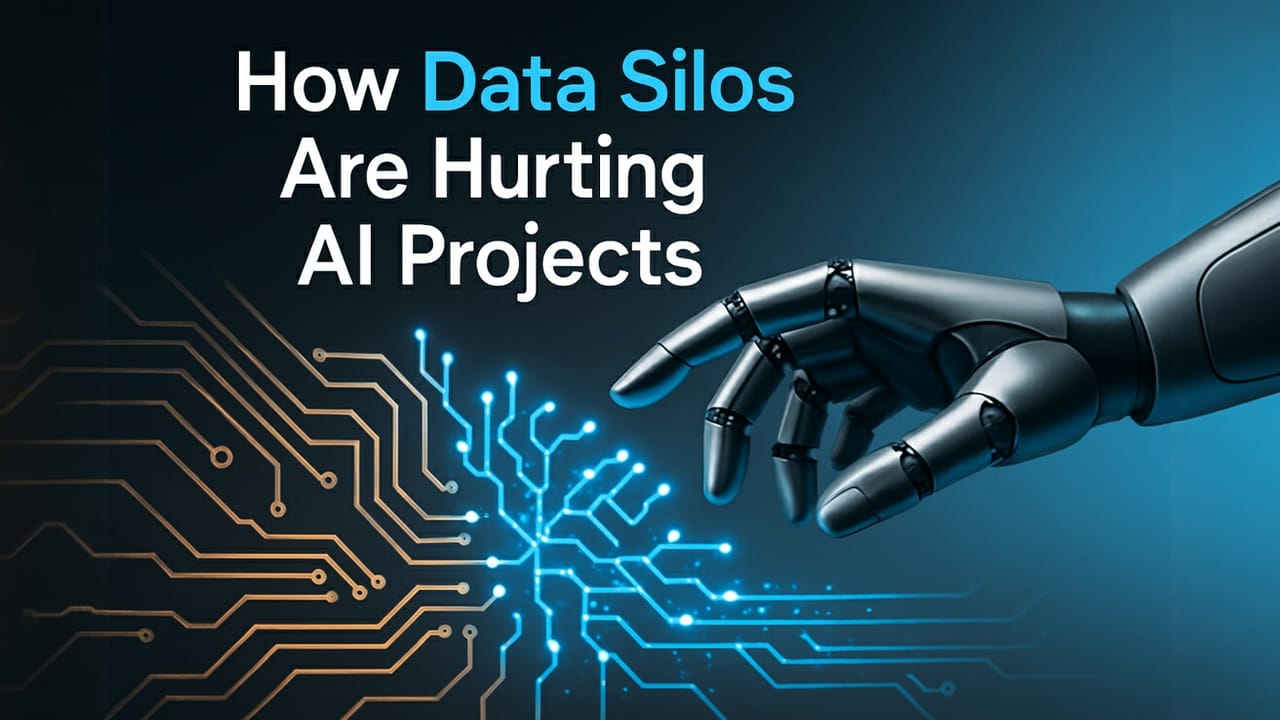
Martin Sajon: Yeah. So, we're looking to solve a few problems starting with data. I mean data it's the core of everything that we do these days and data has a massive problem which is data entropy. You got data everywhere. It's disorganized. It's disconnected and mostly most of all it's unstructured. So 80% of enterprise knowledge or data lives in unstructured documents and operational sludge that is constantly changing right? And it's becoming one of the limiting factors of AI. Models are getting smarter by the day but the inputs are messier which makes RAG hallucinate, agents break. This is what we're starting to see right now and workflows still depend on human. I mean we are we are looking to get us out of the middle but we are more in the middle right now because we need to see how things are working. So what we're doing pretty much is that we clean, structure, and validate it into a reliable intelligent layer. And on top of that, we are building what we call industry models. And industry models are extremely focused solutions to problems our customers might have with performance improvements of 24% over the state-of-the-art and up to 99% accuracy. So let's say that you're in the retail industry and you have several problems of supply chain or energy. So we're looking at ways in which we can respond to those problems and then move horizontally. Right? Once you solve a problem within your industry, we know that in that vertical everyone else is going to have the same problem. So we are trying to land, expand... well land, validate and expand right. So on top of that we, right now our go to market it's kind of mid-market to large enterprises with mission critical operations, especially where downtime risk or inefficiencies are very costly as we know uh and we started with energy, industrial operations and the idea it's to expand into supply chain and national security. That most of the reason why we are targeting these industries is that they need high trust insights and most of those insights are across siloed systems. So we are trying to break the silos and structure the unstructured information which is kind of the lifeblood and that gold mine that we are not tapping into to feed, to feed it to AI and not just have better responses on the questions that we're looking for, also to build better models.
Jake Aaron Villarreal: Yeah, that's great. You know, a lot of people that aren't super technical don't even know what quantum is. Um, you know, you shared that quantum will help us discover unknown unknowns. Give me a specific example. What's one unknown unknown that Q99 could help solve?
Martin Sajon: Fantastic question. Quantum the the word itself has a lot of weight, right? Because it's something that has been overpromising over the past 20 years and now 20 years later, we are seeing a few of those promises come to life. But AI it's also unlocking the speed in which we're seeing the growth of quantum. And quantum proposedly the unlock that AI needs in regards to power, right? Because classical computing has its limits. So I'll give you, since we mentioned supply chain for example, I'll give you kind of, I'll give you an example. So the known known, it's easy. You know that you have a tier one supplier and you know who your suppliers are. So if they send you an email saying "Hey, we are late," your current AI can actually flag that delay. That's easy. That's being done widely across the industry, right? But the unknown unknown, it's what happens when you're four layers deep. You got this multi-hop, right? So imagine your supplier's supplier's supplier, a tier 4 vendor that you never heard of is secretly owned by a sanctioned country, Russia, China, North Korea, Iran, etc. So you rely on a single factory that just flooded, for example, and you have that data. You don't have that data in your database. So on a supply chain you say, "Hey, you know what, it's a tier 4 supplier. I don't care where it comes from. It comes from China, great. Everything comes from China." But on national security, that's a whole different scenario cuz imagine putting a part of that tier 4 into an F35, right? So you don't even know you should be looking for it because it's a hidden relationship buried under millions of data points, and that's where we come in.
We're doing something called quantum embeddings on knowledge graphs, and pretty much we use that for link prediction. For a classical computing, mapping those relationships between different data points and finding one hidden link, it's exponentially expensive because all those multi hops mean time on a GPU cluster or on a supercomputing looking for disconnections. And the problem is that it hits that complexity wall or complexity ceiling and it simply gives up cuz you need a lot of time and a lot of money. And why we took this into quantum, because you can fill those holes probabilistically and look at the topology of that knowledge graph in reality because we're doing it over knowledge graphs. So we know that by running this on a quantum computer that it's perfect to navigate high-dimensional spaces, we can tell you, "Hey, there's a 95% probability that this specific component is reliant on that risky node four hops away." Pretty much what we're doing, it's finding that link that it's not on your data set, on your database, on your data set yet mostly because the complexity is just way too high and way too expensive to compute. So the whole idea around the unknown unknown it's once you find that, it's taking the remediation or the proactive action of "I don't know, let's say US sanctions China tomorrow, then you know that it's that sanction is going to come up so you can change suppliers rather than reacting after your production rate stops because you don't have that part." That's what we call discovering an unknown.
Jake Aaron Villarreal: Yeah. Wow, that's great, man. Going to school at night really taught you a lot because you're obviously really intelligent in this in this area, you know, and you're caught in an interesting position because too quantum for AI VCs, too AI for quantum VCs. How do you explain Q99 when you're trying to raise capital or trying to share the advancements you have in in the market today?
Martin Sajon: Yeah, that's a fantastic question and it's something we keep fighting with cuz obviously if you go to the generalist it's harder to explain cuz they don't know much. They haven't been in on our side of the table and quantum it's, again it's still very hard for anyone to explain. Whoever says that they understand quantum they're full of [expletive]. So one thing that I'm I'm pushing forward it's, "Hey, we got a window. Quantum it's coming whether you want it or not. So right now we are early enough to define a category and we are late enough that the path of what we want to do it's clear." That simple phrase, it's making them think of, "Hey, is there a market for this?" Yes, there is. In fact, IBM did like $1 billion in quantum, right? We see more and more quantum computers come up. But what they need to understand is that quantum is not here to replace classical computing. It's just a component on top of it that makes it better and that it's not a once for all, right? The problems that we're running on quantum computers right now, they are 95% AI or even more and just a very small percentage of the problem that we are taking into a quantum computer to actually look for the solution. But that is right now. As we keep evolving towards, for example, 2030, supposedly we will have fault tolerant computers, then the amount of data that we will be able to take there it's higher and that will enable even more possibilities. So that's what technically we're banking on. We are using quantum strategically right now, but obviously going through two different tracks where we can use it strategically now and then pave the second track where we will be the first in doing this and can actually surf the wave when it gets bigger.
Jake Aaron Villarreal: Yeah, I like that. You know, when you look at the market today and for listeners out there that might potentially be customers or prospects, who are you selling to within a company and and what's the one-line message to them if you've captured someone who was a potential buyer? What would you share with them that would get them to say, "Let's have another conversation."
Martin Sajon: That's a fantastic question. So, right now, we are focusing on the energy sector, right? And the energy sector, bar is because it's not the same selling to the person in renewables or renewable energy, which is maybe the guy that it's in charge of the solar panels, of the batteries, than uh oil and gas, well, you are selling maybe to a drilling engineer which is looking to solve a very different problem around drilling, right? They might get stuck. They might have fluid losses. So the solutions that we're trying to sell them are kind of different. One, it's "Hey, which transformer or which power line it's going to get harder and how it's going to fail? Let's predict that before it happens." And for the drilling guy, it's like, "Hey, I'm going to predict if you start having fluid losses or if you're going to get stuck based on a baseline that we can generate out of your historic data and then train the model to look for those patterns instantly." So if you ask me how would I position this more generally and not just focusing on a very particular industry, could be supply chain, energy, national security, finance, etc. Right now the problem that we have is that most enterprise AI it's static. It learns one, and then the world changes every single day right, and that pretty much makes the model decay. Our system doesn't just memorize the data, goes back looking for the data you already have. It learns how to learn. So it actually adapts to the new data and the new patterns instantly at inference time without needing a massive retraining. So that self-evolving nature, it's what pretty much it's making our models cheaper, faster, and more precise. We are at the end of the day, we're not just giving them new solutions and new technology. We're also saving them a ton of money because again being contrarian, the market is going for bigger models. We're actually going the total opposite way. We're looking at making the smallest models that we can. We actually quantize them to make them smaller and make them run faster, and also cheaper which is also saving, not just cost of data center it's also saving energy, water, everything that comes behind that no one thinks about.
Jake Aaron Villarreal: Yeah, it's amazing. Yeah, so if I'm out there in the market and I hear this and I think, "Gosh, you know, we should try this or we should at least explore it, but we also want to be cost effective in what we're going to experiment with," what's the model? How do they... is it like you pay, like is it outcome-based fee with you, organization, or like what's the risk on their end and what's the, you know, reward for them as well?
Martin Sajon: That's a fantastic question. Obviously outcome based sometimes it's hard to quantify and hard to charge cuz several companies are opposed to it. While it's something that starts coming up, what we're doing it's something a little bit different. Instead of just pushing you, "I don't want to be another product in your technology stack cuz we know that you have hundreds of those." We want to be sitting at the middle layer between your applications and your data and we play very well with others. We don't want to say, "Hey, you know what? Just replace all those free products and buy mine." What we're doing is doing a POC to show you the value that we can bring and quantify that value. Once we have proven ourselves that we can bring value to the equation, we can save you money, we can optimize time, and we can solve the problems that we are set to solve together. That's where we move into our yearly license, and that's where we negotiate: "Hey, are we going to go for a yearly license? Are we going to go for revenue sharing based on the amount of money that I'm saving you?" We are kind of, we have kind of that custom enterprise pricing based on the solution that we're bringing to the equation. But first, we want to prove that we will actually bring value to you.
Jake Aaron Villarreal: Yeah, I like that. It's a win-win model. We've seen a lot of those evolve, and you know, you want to pay for the value you're going to get and but kind of show me first and then let me spend more later and know that I'm going to get an outcome that makes sense for us and for you. So, really cool. I like the flexibility there. You know, you talked about the network of people that you know in in our previous conversation. There was a guy, the founder of Cirrus Logic, who told you, "If you've never been fired or failed, you'll never be a billionaire." He did seven IPOs, well known. What's the failure from your 12 ventures or 11 that taught you the most valuable lesson?
Martin Sajon: Yeah. So as we discussed I failed a lot and learn a lot. So for example given that we're talking about product, this is one of the capital sins on building product. We landed a marquee customer early on. I treated it like "Hey, I love the validation. This is fantastic. I can use the logo everywhere." Right. And we went all in on custom features for the customer itself to keep them happy, right? It's like, "Hey, I'm going to develop." So, we ended up developing for them and not with them, which fast... everything looked amazing. We felt the momentum, and then what we we learned the hard way that we built, what we were building was technically the word "full", not a scalable product. So, sales stalled, delivery got heavy, margins collapsed, and the roadmap just became a negotiation. So the lesson I took forward simple: optimize for repeatability and not for applause, which is what we were getting from the other side. Now we're seeing that obviously with, we seeing the solution do that with the infamous forward deployed engineers, which is technically nothing new. You just build a base product, which is what SAP has been doing for decades, and then have engineers to build on top of workflows that actually connect back to the enterprise logic. So pretty much if you can sell it twice without heroic effort, you don't have a business, you have a project. And that lesson, it's kind of a big part of how I think about building companies today, right? Narrow down the ICP, prove the ROI, and make the product scale, or scale it.
Jake Aaron Villarreal: Yeah. Yeah. No, that's great. Really good lesson. And we've heard many trying to figure out how to build and grow and scale and not get too entrenched in, you know, their big customers that are maybe paying the bills, but it's not really helping them long term. Yeah. Um, I love what you guys are building and excited to see where things go for you. What's on the roadmap as you head into 2026? It's just around the corner.
Martin Sajon: It is around the corner. Just finished it. Well, road map. We we had kind of the first discussion of Q1 road map and we got several very cool things uh coming up, um pretty much getting a a bit more qubits than the count that we can access right now. So the quantum embeddings that we're using, we're using all the way up to 10 qubits. We want to unlock that probably to 100 so we can actually target bigger data sets and bigger responses to the questions that we have or our customers might have. So that's one thing, keep on working on the R&D hoping that quantum computing keeps moving forward, and then just building solutions to problems that our customers might have or future customers, and we are super excited of what what the future will bring.
Jake Aaron Villarreal: Yeah, really cool. Well, we'll end on this note. Well, we didn't talk too much about it on the front end, but how big are you today? And if there's people out there that are looking uh and hearing your message and feel like, "Hey, I want to connect with Martin and you know, I think I can contribute at a high level for that company," talk about the on the road map of growth and you know, what's the organizational chart look like? Where do you need to fill gaps? Where are you excited to bring people on board?
Martin Sajon: So I mean as a startup you're kind of always growing, always looking for to fill the gaps, and the gaps are kind of weird, right? Because we got anywhere from people that are scientists around quantum that work with quantum algorithms, but then we got data scientists and we got knowledge graph experts. So we are always looking for people, and the way I think about people is that I'm not the classical person that looks for that person that it's highly educated. The person might be an artist that got into building AI, and people just come from all sorts of life and I like those weird examples that come from a different background. To give an idea, our head of energy markets never worked on startup. He joined two months ago, he worked 17 years at Chevron doing all sorts of things around drilling, uh working wells, working on operations center and everything, and now he's in a startup doing sales, helping me with product and the whole shebang. We got people from all sorts of walks of of life. I mean the best way to find me it's on LinkedIn uh with name last name Martin Sajon, and I'm always open. I might take a little bit to respond to messages because I get an amount of spam that it's insurmountable. It's crazy and all important messages just get lost in the sea of spam. But yeah, we are raising our pre-seed round right now and we're looking to scale and the more customers we can bring on board, the more we can scale. So I'm always open to speaking with people. Part of my calendar it's blocked to meeting new people probably every single day. I truly enjoy that and I I'm always learning. I don't mind cold reach out and just "Hey you got 30 minutes for a coffee or a chat or whatever," and just I enjoy to learn about people's lives and who knows where that is going to take us.
Jake Aaron Villarreal: Yeah, really cool. Well, Martin, I want to thank you so much for coming on and sharing your story and excited to see where things go for you in the future at Q99. I also want to thank the listeners for listening. It means a lot to me. You spent your time with us. I'm your host Jake Aaron Villarreal signing off for now. We can't wait to catch up with you all on the next episode. Until then, Martin, the world, take care. If you like what we're doing, don't forget to subscribe, leave a review on Apple Podcast or wherever you listen, and follow us on YouTube where we go behind the scenes to learn what it takes to be a startup founder.












.jpg)








.webp)
.webp)
.webp)

.webp)