Jake Aaron Villarreal: I'm Jake Aaron Villarreal, born and raised in Silicon Valley here to take you behind the scenes to share what it's like to be a startup founder. The journey they're on, the problems they face, the products they build in an effort to make our lives better. I'm excited to have with us today Prasanna Venkatesan, founder and CEO of Petavue. Prasanna, welcome to the show.
Prasanna Venkatesan: Hey Jake, uh, thanks for having me. I'm super excited to have this chat with you.
Jake Aaron Villarreal: Well, I'm excited to have you on as well. A little bit more about Prasanna. He leads the company. It's an AI-native data analytics platform. Previously, he sold his company to ZoomInfo during COVID, serving as VP where he built their India operations from 15 to 500 people. He's building his third company focused on delivering breakthrough AI solutions for enterprise data teams. Before we jump in here, Prasanna, where are you joining us from today?
Prasanna Venkatesan: I live in the Bay Area in a city called Newark. It's on the east side of the Bay. Uh, I live here with my wife. So, yeah, it's a very pleasant morning today here.
Jake Aaron Villarreal: Yeah. Well, I love that part of the Bay Area. I'm from there. And there's so much innovation and so much happening with AI and data and technology and innovation. Great place to be. We always believe proximity is key to growth, and you know, you're around the investor community, the talent, the innovation ideas. It's not uncommon just to walk down the street, it seems like these days, and any coffee shop you walk into, you see founders talking to founders and venture capitalists talking to other founders. It's uh, exciting times. So, we'll jump into what you're doing, what you're building, who it's helping, why it matters. But before we do that, let's go a little bit deeper into your origin story. Walk us through kind of where you originally came from and what early experiences helped shape the path you're on today.
Prasanna Venkatesan: Great. So I am originally born in a city called Chennai. It's a southern part of India, but I grew up in Mumbai which is kind of the, you know, business capital of India, large metropolis. Uh, and so, and I grew up in a very diverse environment. Uh, Mumbai is very diverse. So you typically see, you know, in your school classroom you kind of see people from all over the country. So that kind of trained me, tuned me to, you know, work with a diverse set of people very early in my life. I think that kind of, uh, you know, inspired me.
Another thing that I need to mention is, uh, I grew up in a very conservative household of sorts. So, uh, most of the family is, uh, we are priests. So I come from a priest family.
Jake Aaron Villarreal: Yeah.
Prasanna Venkatesan: So I'm one of the very, very few people who kind of stepped out, to put it that way. So it's like 80% of men in my house are priests. And so that had a big influence in my upbringing. So faith was a very, very important part of life. And so, uh, you can say I was kind of half-trained to be a priest in our family, that's kind of the norm. And so those two factors I think were the biggest influence. Of course, parents, they always have the biggest influence in your lives, right? So, I think these three factors, I would say, kind of shaped who I am. And yeah, uh, that's kind of the quick background.
Jake Aaron Villarreal: Yeah. Well, I love the priest aspect of it. You know, I think that there's like spirituality and belief and doing the right things and, you know, all that plays really well into running businesses. I mean, it's a very spiritual experience if you think about it. Like, you know, you're dealing with people, emotions. 80% of business is psychology. So, working through the process of leading, mentoring, the ups and the downs. I mean, you got to have a strong anchor to keep you, you know...
Prasanna Venkatesan: Totally. And most importantly, this... I keep drawing this comparison with my family, right? I keep telling them, "Hey, we both are in the business of giving hope," right? So, you give hope about the Almighty whether, you know, you believe Almighty exists or not. You know, most of us have not seen the Almighty, God. So, but you are giving hope through that medium and I'm also in the job of giving hope because we are creating something that has not been conceived before, that has not been built before. So hope is very, very important in this line of business. So that's the comparison I draw with my family. We have the same business of giving hope to people.
Jake Aaron Villarreal: Yeah. So it is a spiritual experience. So you are totally bang on. Yeah. Exciting. Actually, I haven't really talked too much about this but I... it's a funny story. Funny. It had a big impact on me. My first company, my first startup, I had left Oracle. I had been, you know, the promised land and had a lot of fun, a lot of success, and I felt like I had made Larry Ellison enough money, and it was time for me to leave and build my own company. So, I did it, but I did it with a couple partners that were good friends, but we weren't really suited for partnerships. So, we spent a lot of our own money to bootstrap this thing. And I remember at one point we were down to, I was personally down to like $4,000 left in my bank account. And I'd already gone through it all. There were no other options. Now I'm like under my covers in my bed literally crying like there's nowhere else to go. I'm going to be a total failure.
But it was in that moment, the next day I walked into our office and I just, my partners decided to kind of do some other stuff outside the business, and I was like leading the organization. We had like 15, 20 employees and, um, we'd already cut down a big staff. And at that point I was thinking, there's nowhere... I have no other way to get through this. And so there was this little window in my office, and as I'm looking up I could see the sky. And I remember looking up with this window and just literally getting down on my knees and going, "God, if you're real, if this is a true experience that you can help people, you know, this is uh, I need help." And that's a very selfish thing to ask, right? You're talking about a business where it's not like a health issue. But honestly, that was the moment that our business changed. I don't know how it happened, but like literally within the next couple days, we had a $50,000 check come in and like, we ended up getting acquired like, you know, a year later. So, I do believe that things happen for a reason, but there is a higher power and since then everything is... I look at things totally differently. So, but I go back to that experience because it was a spiritual experience for me and it actually helped shape how I lead and how I try and inspire others. And anyway it's...
Prasanna Venkatesan: Sure. I mean, like we can definitely start this conversation off agreeing to that. Totally.
Jake Aaron Villarreal: Yeah. So anyway, let's talk about you. I mean, you've had a few different startups. You got acquired. Um, a lot of experiences that were very positive. What was it like when you first got acquired? And walk us through what it's like because that's kind of the dream for a lot of founders is, "I'm going to build something. It's going to be valuable. We're going to get acquired. I'm going to go live on an island the rest of my life." But a lot of us don't do that. Walk us through that a little bit. What was that experience like for you?
Prasanna Venkatesan: Yeah, I mean like it is surreal. There's no question about it. So obviously uh when there is interest, so one thing that is generally recommended is if you have a term sheet, if there's real interest, don't start planning your island life yet, right? Because the transaction has to go through. But uh, it's a very surreal experience because again, I've gone through very similar experiences that you laid out. I mean like, when we sold the company, just around that time, I was kind of fully broke. I had really no assets to my name, no savings, nothing like that. So from there to jumping to where we went after the acquisition in terms of net worth and all, it's a massive jump and leap. So it feels very humbling. It's a big validation moment in your life. No questions about that.
But at the end of the day, the decision-making process is very, uh, you know, it's not straightforward is kind of what I would say because you got to account for so many different factors, right? Not just you, but your team and your investors, your employees and a whole bunch of stuff. So it kind of gets very overwhelming is what I would say. Because obviously, you know, you are getting an acquisition offer when you're doing well, which means there is uh runway and roadmap to grow. So you are making this most fundamental decision: Do you want to bet for the much bigger outcome or do you think this is kind of the right time to hang up and exit? Because what life after exit is, is not clear. There's no clarity there, right? You kind of have to figure it out from scratch. So, it's a very overwhelming experience when you are kind of making that decision.
And in fact, in a party last week, someone walked up to me and said, "Hey, I'm, I kind of have an offer. There is interest from a company to acquire. How should I make this decision?" So my general recommendation in these kind of situations is, you kind of have to be selfish. You know, uh, you have to give the most thought about you, your co-founder, the founders and their immediate families, because they are the ones who are kind of bearing most of the brunt in terms of building the company. And it really has to come down to what you and your immediate family want in terms of outcomes because you are the one, you know, they are the ones who have kind of risked it the most, both in terms of capital risk, time risk, health risk and all kinds of stuff. So it really has to be that.
Of course you can layer in other factors in terms of outcomes for, uh, you know, your team. For example, the way we did it, we set aside a pool of money to distribute to our team, even team members who had not vested any stock, right, who are kind of still within 12 months of serving within the company. So we set aside some money to, you know, distribute to them. We did a bunch of things like that. But ultimately the core decision has to come down to what you and your founders want, what kind of outcome they want. Right? So that is my rubric in terms of making that call. And again, that's why these kind of things is better to have alignment before. So run through these scenarios before, have someone who has done it before advise you and have alignment. Because when that offer comes, it's very, very possible it'll come at a time when you're not expecting it and it's not like you have a lot of time to make a decision. You got to make a decision in a week and there's never enough time to make these calls. And if you have, especially more than two founders, three or four founders, it could get very complicated very soon because bringing alignment is very difficult. So, it's always good to have these chats once in a while and keep bringing alignment, so you're prepared for a situation like this. That's kind of my recollection of this in the last uh 3 to four years. But of course, I still remember this. Me and my co-founder still agreed. That conversation we had back and forth on whether to do it or not is private. We would never share outside, who wanted to sell, who wanted to hold back. Finally, what mattered is we both aligned on the final decision. That's what matters. That's just all private.
Jake Aaron Villarreal: Yeah. And it sounds like it'll stay private, which totally, for sure, makes sense. Well, you know, you went from being a founder and a leader and then a VP of a public company. What surprised you the most about that experience of now being at a public company and being a VP?
Prasanna Venkatesan: Yeah, I mean like the thing that the biggest jump that I've seen, I experienced it. So quick background, right? So before this, I had served in a public company before, but in a much junior role, you know, not in a senior role at all. So the senior role was definitely an experience for me. So the biggest thing that I realized and it took a while for me to realize that is, look, in a startup everybody's aligned on one single outcome, which is the company should succeed. That's kind of the primary outcome everybody aligns on, especially when you are small, 20-50 member team. Everybody's kind of signed up for it because that's the kind of people you bring in at that early stage of the company, because as a founder you are involved and betting in hiring every hire that you make. You exactly know what kind of people you want to bring in and you ensure that everybody's totally aligned to a point where people literally resign if they think they are not being valuable to the company, right? They will do that in a startup. That's the kind of alignment you have.
But in a large company, that's not the case. Priorities are different. And in most cases, people could very much possible have an even split on priorities. They want the company to succeed obviously, but they also want their position, their salary to be taken care of. So that's a very clear split. People have equal priorities because people have lives. They have to take care of whatever in their lives, right? Family, you know, market, kids, this, that and all of that. So that is something that I didn't think it through fully. So I kind of went in with a mode that I'm going to treat this like my next startup and I'm going to blast my way through. And obviously, I found a lot of resistance. So, I had to course correct and all of that, but I did have this alignment with the CEO of the company that acquired us, like, "I'm going to put my job at risk to make things work here. If you fire me, so be it. But I'm going to really push to make things happen." And I did do that, you know, till the end. Uh, I left. But it was with a lot of fighting, you know, uh, that's what I realized. Big companies operate very differently. And you can't blame anyone. People just operate naturally, right? They want to defend their position, title, what they're doing. And it's very natural how people operate. That's a big learning for me.
Jake Aaron Villarreal: Yeah. I remember when I was at Oracle I was you know, had gotten promoted. I went from like an inside sales rep role where you're basically just smiling and dialing all day long. They have like a ticker on the wall of how much revenue each rep is doing a day and over, you know, 300 reps are looking at the wall judging themselves based on what they're contributing to the company. And basically you get fired after like a year and a half or you get promoted and the promotion is to get to the field where the money you make like annexes. So you make nothing for a year and a half and then all of a sudden you're like living a totally different life. And I got promoted. I moved to New York City. That's where they put me. And in that experience, um, I remember the management team, the middle management team, everybody was aggressive and everyone communicated in a way that was like they were defending their territory, their region, their sales team. And they were fighting for new accounts or protecting revenue or commissions that came in. And I was like, "Wow, you have to have that character to to be a middle manager at Oracle or else you're not going to make it." That was kind of like the the culture.
Prasanna Venkatesan: Totally.
Jake Aaron Villarreal: And so I I always remembered that and always thought, [laughter] do I have the character to make it as a middle manager in Oracle? And you know, you could do it different ways though. It doesn't have to be that way. It could be your own way. You know, everyone inspires people differently. It was, I remember that experience. The company you have today. Walk us through that because you had experiences. Now AI is transforming everything. What inspired you to start a head of view? What problem did you see in the data analytics space that convinced you this was worth building another company? Walk me through the product you're building and who needs it.
Prasanna Venkatesan: Sure. Uh so a lot of inspiration to start this company, focus on this problem, actually came from my work at ZoomInfo. So part of my job as VP of Engineering, I was heading a few data products among other things. And I developed very strong conviction that the data space has structural problems, uh leading to huge inefficiencies, like massive inefficiencies. I would actually say that data teams are one of the most inefficient teams in an enterprise because you're like, far, far away from your goals. You know, you have this massive, you know, dream that, "Oh, you want to bring all data together, the entire company should be data driven," but you're not even 5% there. That's what I kind of learned and realized, and it's a structural problem. The way data stack has evolved has led to a point of why we are where we are.
And I felt that a combination of, you know, lower compute cost, how much general cloud technologies have advanced, and what AI can deliver. I strongly felt that, not just me, both... all all the three of us, all of us, you know, had strong data, you know, background in ZoomInfo, the three founders of Petavue. And together we kind of strongly felt that this is a massive problem for us to go and attack and solve, where you can actually deliver 10x or even 100x productivity gains in a real way. And we are already starting to see that happen with our customers, where customers are really dropping pre-AI tools, even like Salesforce Einstein, Tableau, Snowflake, and then moving over to Petavue because they see extreme productivity gains in being able to do, uh, you know, a consolidated way. One tool that can do, you know, what two, four different tools can do. Not just it's going to save money, but huge time savings and clarity. That's what is missing.
So I, I'll give you an example of why I say it's a structural problem, right? In data, one, one simple thing kind of exposes the structural problem. You know, by the time you get to metrics and reports that you present to an executive, there are like five people kind of who are involved in the pipeline of building that, right? There's a data engineer who's bringing data together. Then there's an analyst who's kind of building the metrics. Then there's another, you know, business person who's kind of building the reports and the insights on top of it. That, like, four or five people get involved, to a point where by the time these insights reach executives in a board meeting or weekly review meetings, there's no one person who can exactly explain how this whole thing has come up because there are three, four different people and spread across three, four different teams. That is what you would actually call a structural inefficiency. There's no single owner for these things and that causes a massive problem.
And it has evolved like this because the stack is very tech heavy, which means the people who are needed to bring all the data together, calculate the metrics, you need technical people. But then these technical people don't have business context. The business context is provided by someone else, and there's always a communication gap and these things become very, very slow and inefficient. So it's, that's why I call it a structural issue. The only way you can solve this is bringing all of these things together, and thankfully AI can bridge the gap between a business person with business context who doesn't have tech skills, but they can actually give them tech skills because AI can write the code. That's how we kind of zeroed in on this problem.
And another thing I'll tell you why we picked this problem is we had the conviction that AI will be much better off in terms of giving accurate results that are not subjective. So, math is not subjective. Either it's right or wrong. Now, you know, the first challenge with that is, you know, you're not 99% accurate. You're either 100% accurate or, you know, 100% wrong. So it will take a while before you get there to 100% accuracy. But when you get there, you can define it. There is absolutely no subjectivity. That's why we said this is, this is the problem we liked because it kind of checked all the boxes for us. Massive problem, big time, but also you can deliver neat, accurate results that are not subject to people thinking whether it is right or wrong. You know, we can defend that the results are accurate. That's why we picked this problem. We still continue to build and grow on that conviction we came up with, you know, 18 months before.
Jake Aaron Villarreal: Yeah. Really cool. Give us a use case. Who's the persona you're selling to in a company? And what is it at the end of the day the outcome they're going to get by using your solution?
Prasanna Venkatesan: Got it. So, today uh the personas who are using us are business teams uh mostly business ops teams, marketing, sales ops, uh CX ops. The primary challenge that they face is they have data in disparate systems. Typically their core marketing and sales systems and these stacks are massive. They have data spread across a few tens of systems out there and uh it's almost impossible for them to bring all this data together and automate, you know, the job of creating metrics and reporting on them and extracting insights. The only way people do all of this is through Excel sheets. And I I'm sure all of us can agree it's extremely inefficient, right? To do it in an Excel sheet because doing it itself is tough, but maintaining is 10x harder because you have to manually maintain all these things on a daily basis. That's kind of the core problem.
And this is an age old problem. Even if you go back and look at Tableau's pitch 20 years before, this is exactly the problem that they pitched for: "Hey sales teams, you don't need dependency on IT teams to actually do this." And that's exactly what Tableau pitched 20 years before. We are back over at it, the same thing. So today the clear value that people see are two very clear and obvious value with Perview. One is their ability to bring all this data together and compute metrics and get to insights. The productivity gains there is massive, you know. Quoting our customers, they say, "What used to take 2 days for me, it takes 20 minutes in Perview." That's literally a quote from one of the calls that we had. In fact, one customer, you know, after the pilot we asked them, "Hey, what's the value of you using Perview?" They actually almost got offended. They're like, "How can you even ask that question to me? It's so massive value, right?" So almost they kind of got offended in that call that I would even bring that question up. So that's kind of the productivity gains we are seeing.
But the other bigger value in my opinion, which is across the org productivity, is when you present these numbers, since it's one system where the end-to-end calculation is happening. So it's almost like Perview is taking the data from source, it will do all your data cleanup, it'll do the metric calculation and insights on top of the metric by bringing multiple metrics together. The whole thing is done in one singular system in a simple ChatGPT kind of a conversation. Right? So what that means is there is clear visibility and trust you are building in all these insights when you report to people. So anyone who's consuming these insights can see the simple conversation in English and they know exactly you know how this insight was derived, which you know, in our line of business, we strongly believe that that is a massive uh advantage because today most of the times people spend time debating about, "Is this number accurate? Hey, I also calculated the same metric but I'm getting a different number. What filter did you put?" This back and forth is really taking productivity off the teams and the opportunity cost is high because you're not making decisions fast enough. Hey, you're supposed to make decisions with data, but you're just debating if these numbers are right or wrong.
So, what happens is most of the time and effort is just gone to ensuring that you report the right numbers to the executives. But anyone below an SVP or VP level is just not getting any insights because your team is just so busy just taking care of the top layer of your organization. Anybody else does not get anything. They're all operating on intuition. That is wrong. That's a massive gap and that's what uh we're going to fill. We're already seeing just in the first month of using Petavue, right. So we are seeing customers do massive amount of reporting and insights in just a month that would have taken them a few months. That's kind of what we hear from customers.
Jake Aaron Villarreal: Yeah. Well, I took a look at your website. You have a video of walking through how it works and what you get and the results. And I can tell you firsthand from our own experience going to the board and presenting numbers and having one person say "this is the forecast" and another person saying "well we're going to look at a different number because this deal fell through" and like nobody seems to be aligned at times when you're having these big executive meetings. So if it is a single source of truth with real data that is across disparate systems and you have one application that can pull it all together and everyone's on the same page and you can look at things differently but you get the same result. I think it's a no-brainer.
Prasanna Venkatesan: Exactly right. So, see, a single source of truth is not formed only because you bring all the data to one place. That's not single source of truth. Single source of truth happens only if there is clear alignment. Just bringing everything together does not mean single source of truth. Everybody should align that, "Yeah, this makes sense and we all can understand and agree." In the pre-AI world of doing analysis and insights, that has never happened. So, you're right. Bang on.
Jake Aaron Villarreal: Yeah. You know, you're competing against companies like Tableau, PowerBI, Looker, and others. You said that they can't keep up because they're doing piecemeal AI. Make the case for why Agentic native architecture beats retrofitted AI.
Prasanna Venkatesan: So, yeah. So, I'll repeat the same there. It's piecemeal AI what these companies are doing. I go back to what I said a few minutes before, which is there is structural inefficiencies in what most of these tools are doing. For example, if you look at the AI in Tableau or you know Looker, you still have to do all the work manually in terms of computing the metrics in a different tool, cleaning up the data in a different tool. You still have to do all of that, and then these tools are literally just doing very basic filtering and explanation of those filters at the top layer, and they've always remained a top layer tool, right? So, uh dashboards and reporting engines have remained a top layer tool. They continue to remain at that layer and they are not consolidating vertically. And if you don't do that, you don't remove those inefficiencies, your productivity gains are not seen. And most importantly, the full visibility in terms of understanding very deeply how exactly certain numbers are calculated, it'll never happen. If you don't deliver the productivity advantages and visibility, you're not going to break through. This is not a breakthrough solution. And people don't want that. People will see through that very soon. So that's why we strongly believe those teams, those companies cannot pull it off. And of course uh they have massive uh disadvantages, right? Innovator's dilemma, they'll always go through that. So they have to break that and rethink, rearchitect the entire platform and engine to be able to figure this out. That's not happening. I mean, if there's anything I'm very, very confident about, it's that.
Jake Aaron Villarreal: Yeah, well you're unlocking something I think is really incredible, and you talked about how quickly it gets results and they're accurate. Tell me about, you know, the process of connecting disparate systems that have data in them like Salesforce, HubSpot, maybe the data warehouse of a company and three other systems to Petavue, everything's connected. What's happening under the hood in those 20 to 30 minutes from connecting to insights that would normally take two days?
Prasanna Venkatesan: Got it. So uh first thing is Jake uh I think it's very important to align on one thing, right? So and uh it's funny, I was in an event in the Bay Area, you know, a couple of days before, and there's one scaled up startup CEO actually they're operating in the service support space, he actually stood up and said, "Hey, we are in the world of non-determinism and everybody kind of has to get used to, you know, results not being accurate all the time. We all, we should all get used to non-deterministic outcomes." I I totally disagree with that, and it's very shocking that it came from a CEO operating in AI delivering AI solutions. Nothing could be further from the truth. People are not going to rely on or accept non-deterministic inaccurate results once in a while. Nobody wants that. You know, just because AI makes things faster, it's not going to change fundamental behavior. People still expect things to be right and accurate that they can rely on so that they can go and conduct their business like the way they want. Right? So it's very, very important to understand that, and that's the job of building AI startups. LLMs are already getting you there 80%. The real effort is making it 100% accurate, and that's literally what in my opinion startups have to do in whatever use cases that they're targeting, and that's where the opportunity even lies at the end of the day. So accuracy is, you cannot compromise on that. You have to deliver it and that's kind of our motto. It's always been that. In fact, I keep telling my team when we are building the architecture, our order of priority is accuracy, latency, and cost. This is the order of priority. Until you solve the accuracy problem, don't go for the latency or the cost problem. You know, you can take care of those problems later. First, you have to solve the problem of accuracy. It's always been our motto.
So, to walk you through what happens. So, you connect your systems and again, the goal is 30 minutes, right? You don't want two days to do analysis. 30 minutes do analysis and most importantly accurate. You want results that you can rely upon, that you can go and take it to your board and report and not get fired for that. Right? So people are going to make big decisions. So 30 minutes. So you connect your systems. Perview instantly pulls metadata from these systems. Tries to understand what data you have, what objects, what columns, what do these columns mean, maps to your uh, you know, business, you know, in the context of your business, what could these data points actually mean. We instantly create what we call a semantic uh layer. So all of the data points are very clearly explained in plain English, both for the LLM and the AI engine to understand and also for the user to understand and review. Right? This is what kind of happening instantly almost. Right?
And depending on what data tools you are connecting, we either choose to sync the data to our site, kind of building a warehouse of sorts underneath, or we keep the data where it is, right? That is purely a decision of optimization in terms of query times and all of that. But essentially if your data set is small, we don't sync anything. We just keep it there. Now when you run queries, when you run an analysis, [clears throat] what happens in Perview is—and if you're okay, I can actually walk you through a couple of examples. I'm not sure if we can do a screen share here or I can send you a video recording later. But what happens with with Perview is that uh you ask a question at a very high level, right? Let's say you're asking a question saying, "Hey, you know, I want to understand what happened to my campaigns' performance of my campaigns in the last two months, but uh I want to correlate that with outcomes, you know, in terms of what happened in the pipeline," right, "what my sales teams ended up doing." And typically this data set is there in two, three different systems, you know, your campaign data itself could be spread across something like an outreach and marketing system and then your actual real performance data of the deals is obviously sitting in Salesforce. But you want to understand the full impact of your campaigns.
So, Perview recognizes what you want, maps your business intent to data and presents a plan that you can control. The most important thing here is you kind of control how the analysis is done, but without having to do all the hard work. It exactly gives a very nice plan that you can quickly review and approve, saying "Okay, this way of analysis where you bring data from these two systems and actually correlate with the third system and doing calculations like this," you can look at that and approve. That gives you immense confidence that the system is actually thinking in the right direction and working in the right direction. And once you approve the plan, we have built enough verification underneath in the system to guarantee the execution of that plan is accurate, 100% accurate. So that's where kind of the secret sauce or the differentiator really comes into the picture. We have built very deep tech to make that happen and all of this happens in 10 minutes, right? So uh in a span of 10 minutes. So what we are seeing is, you know, uh people once we threw this open to our customers, they are doing massive analysis and use cases beyond our wildest imagination. Actually now a lot of our customers are even using it for planning use cases, data-driven capacity planning for next year. "Next year, what should my forecasting be," right? "So how many reps should I hire and what should the quota that I should give them be, if this is the revenue that I want to reach next year?" But all of that data driven based on what's happening last year, a variety of different kinds of use cases called data-driven decision making. This is what we are seeing and very clearly people don't want to go back to their old way of doing things. Old way would have been just bring everything to an Excel sheet and do it, or wait for your data team for two months. As we do this, this is 20 minutes tops. It's a massive difference.
Jake Aaron Villarreal: Yeah, there's so many questions I have and I know we don't have a ton of time here but I do want to get to some important stuff as well. It I think really is like the secret sauce we're seeing a lot of startups deploy which is helping them succeed versus others and it's really bridging the gap between what their product should do and the outcomes they want it to do versus these pilot projects that you try and get up and running and they don't often deliver and they fail. And we're in the business of helping companies grow and hire and find the right people. The demand we're getting the most of out of any role today from AI startups is forward deployed engineers. And I know there's a big gap to be bridged with that kind of experience, combination of technical and business and customer engagement. Let's talk about this a little bit. Some people say it's just consulting with extra steps. Others say it's the future of software. You're building a hybrid model. What's the truth that both sides are missing about FDEs?
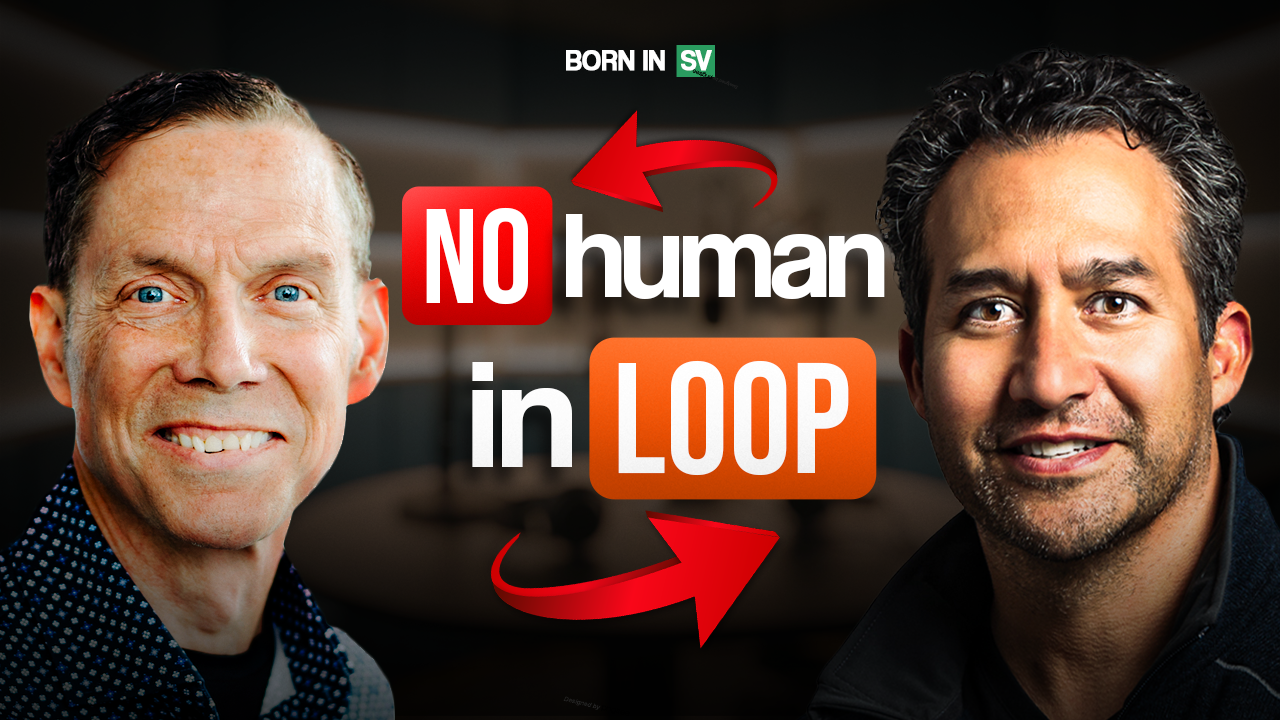
Prasanna Venkatesan: Yeah, sure. I think it's a very important critical component to make this work. If you take a step back, why, why do you even need a human in the loop? Let's just call it human in the loop for a second and we'll get to why it's called FDE. You know, why do you even need a human uh in the loop to make this work? It's a more fundamental question. And how is that different from typical customer implementation that has been there as part of SaaS, you know, forever? The most important thing that we have come to realize is it's kind of a chicken and egg problem, right? Which is you want to make this software that you're building, which is an AI-native conversational interface, work really out of the box you know for all kinds of imagined scenarios and use cases that your customers want it to work. You know if that's kind of the ideal situation, right? If you were to do that then many of these things kind of won't matter. It's like typical SaaS, you do implementation, move on.
But you cannot get to that point of ideal state without customers having actually used it, because you need the usage and the data points to even determine what are the use cases that you make this work for. What are those edge cases? Where are the rough edges before your thing can actually work 100% for all the kind of questions and the use cases and the prompts people are actually putting? Again, the important thing to understand here Jake is if you're doing consumer, if you're doing ChatGPT, I'm sure all of us can realize that ChatGPT is not like it gives you answers for all the questions that you ask. A lot of cases it's not able to turn around and give you the kind of answers that you want, but it's a $30 tool. You will forgive it, right? But you're selling a, you know, 10k, 20k, 30k license in an enterprise. People are expecting this tool to give them the outcomes all the time. They are not okay with seven out of 10. They want 10 out of 10. And you cannot do 10 out of 10 unless you even know what people want. It's so, it's a classic uh chicken and egg problem.
And that is where we strongly believe and not just believe, we have already operationalized it and we are seeing massive impact, is you need humans in the loop. And the way these humans have to operate is a little bit... not a little bit, kind of very different from how uh customer implementation teams and post sales teams have operated uh in the SaaS era. So the name of the game here is to be very, very proactive. That's what we call it internally. So you cannot wait for the customer and the user to come and tell you that "I asked this question. I don't think the system understood what I want or it's giving me something else. Can you help?" That's not going to happen because people are still building trust in your systems. They're still on pilot. They have not signed a long-term contract yet. So, it's not like they're fully bought in. So, you are kind of in a situation where they are not fully bought in. They're still building trust, but it's working only seven out of 10. So, how do you bridge the trust? How do you get them to 10 out of 10 believing that the system can give them an outcome every time that they want? That's where humans in the loop is kind of very important.
And the thing is you can't put a non-technical person who doesn't understand the product in front of customers because these conversations get technical very soon and someone needs to diagnose and investigate what's happening in the product to even understand if that particular uh prompt or a question that a user asks, does it fall in the seven out of 10 where it's working, or three out of 10. So it's very complicated that way. So you need technical people out talking to your customer in a proactive sense, not even waiting for the customer to ask questions. So if you bring all of this thing together, it starts to look very different than, you know, typical SaaS customer success and some people are calling it forward deployed engineers to make this work. This is how I think about it, especially when you're doing this in mid-market. This is not a case where you go and gather requirements and just building the product along with the customer. Our customers, they don't have the patience. They want something working. That's what they want. So, we are not building the product with them, but we are just massaging the rough edges based on the usage that they're giving to make it 10 out of 10 instead of, you know, eight out of 10. Eight out of 10 is what we see in our product today without human in the loop. This is how I would explain it and it's it's creating a massive impact for us. Massive uh difference.
Jake Aaron Villarreal: Yeah. Yeah. We've heard crazy stories where you know Palantir, you know, 20 years ago created this idea about the forward deployed engineer and you know we see companies today that, we were just having a call with one of our clients who had deployed a very big proof of concept and the way they got through it and succeeded was to deploy forward deployed engineers. And in that experience they were able to capture a lot of requirement requests that the customer had that the product didn't currently have, and they were able to bridge that gap, bring that back to the product engineering team and build these features in, which for their next customer, which was a big name that everyone would know, decided to use their platform and it was like a massive size deal, but it was the features from the previous company that helped them build into the platform that the next customer got value from. It's, it also helped them continue to build their product with more value in it as as they got new customers. So there's almost like a double value that you get from that type of skill set within your team. The question is for a lot of companies is, well if you don't have a title of a forward deployed engineer, how do you find these people? Like they have a different title from the past. Maybe it's a solution engineer or they're an account manager who's also a technical person. It's kind of a, you have to massage that out a little bit.
Prasanna Venkatesan: You're right. I think that's where the opportunity is to help companies here. This is this is definitely a title or a person with multiple skill sets, overlapping skill sets, and it's not going to be easy or straightforward to go and, you know, bring someone in for this or even promote, you know, you have other people in your team, just move them to this. There is a little bit of nuance to this. And that's where I think there's a very clear opportunity to help both in terms of hiring people or even in terms of, like we discussed in our last call, even in terms of setting up, you know, an operation where you supply these people, right? So, you know, some kind of an outsourcing. I think there's going to be a combination of this, but there's definitely a massive... In fact, even before hiring people there's even opportunity to educate. Even going and telling companies "Hey, today if you're doing AI in enterprise without a human in the loop in this model, it's just not going to work." I don't think people have even realized that yet. So it starts with that education and then once they understand it, then the next question they ask is "Okay, what am I... how, how do I even bring these people in?" Then someone can go and offer help. There's a massive uh you know, opportunity there. In my opinion, it's a it's an AI scale opportunity. That's how I put it.
Jake Aaron Villarreal: Yeah. You know, it's interesting. AI agents are being developed, you know, it seems like for all parts of the enterprise and, you know, they're orchestrating and they're doing the work that people want to get done that, you know, basically technology is helping them do it. Do you think that there is going to be an opportunity in the future for like an AI agent to be a forward deployed engineer that it's actually asyncing and doing the work that instead of having to hire someone to go on site and that human in the loop which we need now... but do you think in the future there is an opportunity for an AI agent to be a forward deployed engineer?
Prasanna Venkatesan: Yeah, it's it's partly yes. In fact, what we have analyzed already is out of all the data points from the FDEs that we have deployed, what we have already identified is opportunity to automate, agentify parts of what they're doing so they can be more efficient. This is something that we're already seeing. So you could call that we're kind of trying out, experimenting an agentic FDE of sorts. But I think for someone to launch that as a product by itself, we need a little bit more clarity here in terms of what's happening. That's, that's what my take is, because people have not yet figured out how to identify business functions that have been established for decades. That itself is kind of being figured out. This is almost like a function that's getting established as we speak. So agentifying that would probably need more clarity. Yeah. I mean agentifying, at least productizing that would, we need more clarity here is what I would say.
Jake Aaron Villarreal: Yeah. You know, it's interesting. There's so many different areas of innovation happening within AI. You recently had been at Dreamforce and and you were talking about a story where someone had, you know, stood up and really with a lot of courage said, you know, "We want to see breakthroughs in AI, not piecemeal AI." You know, it was a room full of Salesforce executives promoting Agentforce. From your opinion, what do you think is really happening with AI adoption in enterprise and what the big vendors that aren't really talking to us about?
Prasanna Venkatesan: Sure. I mean, I I again, we hear what we hear on the news from Salesforce and all of that, but beyond that, I I'm kind of closely connected with, you know, people in a few public companies and we have a... I mean, I have a good sense of what's happening beyond what you hear in the news, right? Under the hood, what's happening. So, there's definitely an adoption challenge. There's no question about it because uh uh we have oversimplified this. We have sold uh too much of a dream without realizing what people need. I go back to what I said before. People will not compromise on accuracy. People don't want to live with non-determinism and all of that. In the context of doing business, people are used to getting things done right. And I don't think nobody's going to change that. So, it needs a lot of engineering and effort to get products there.
And it's it's not like executives are explicitly stating it: "Hey, don't come to me with results that are not accurate." But that's what they expect. It's important for builders to understand that and move in that direction. Everybody's doing pilots. Pilots are great because everybody wants to test it out. Everybody wants to be ahead of the curve. So it's almost like we are in a situation where buyers have to put so much effort in finding vendors than the reverse because they're like so many people offering so many things. Who are you going to take a bet on? Because there's no proof anybody has kind of figured it out. We are in that situation. So it's extremely early stage of adoption. If someone were to come out today and start a company on any of the major massive use cases where a lot of funding has been raised, I think the opportunity is still wide open. That's how I put it.
Jake Aaron Villarreal: Yeah. Yeah. Got it. I want to fast forward 5 years from now. What does the data analyst role look like? Does it exist? What does a company's data stack look like if you win?
Prasanna Venkatesan: Uh sure. On the role, I think it'll definitely continue to exist. I don't think uh with current technology and whatever engineering we can do on top of it, uh foreseeable engineering even in the next 5 years, I'm not sure if the role itself is at risk. But what's going to happen is people are probably going to have the same number of analysts or maybe a little bit less. See, it'll kind of shuffle around, right? Some companies will try to optimize immediately and, you know, let go a few people, but some companies will be like, "Let me retain the people or even get more, but let me get 10x more insights." So there will be some shuffling around that will happen for the role. But I do think that human intervention and guidance is going to be critical in the age of AI, especially to get far more 10x outcomes. That's what is going to happen with the role is my belief.
So if you are an analyst today, you know, if you're picking up your next job, if you're choosing what company to work for, you have to work for a company who has an opinion on these kind of things. How are they thinking about AI? Are they really thinking about AI as a job killer or are they thinking about AI as a 10x multiplier with the same team? That's the kind of company uh you want to go for. Not just analyst, any role for that matter, right? So that's how I would think about it and how the role will evolve.
Now in terms of the stack, I do strongly believe that people move towards a more consolidated stack because that's where... so consolidation is going to happen. Before the consolidation happens, the next 5 years is definitely a consolidation wave because only with a consolidated stack you can see real AI uh you know, productivity gains. You cannot see productivity gains if it just continues to split across three or four different tools. It's not going to happen. And you're already starting to see that happen with uh you know, other stacks in CRM. You're already seeing AI native, consolidating all the AI native CRM. They are pretty much giving you the stuff that you are getting from five different tools today, they're just bringing the whole thing together. So it comes with native call recording and call uh transcripts.
Jake Aaron Villarreal: Yeah.
Prasanna Venkatesan: Native CRM just comes with that, right? So that is how it's going to happen in any uh you know use case, any stack for that matter. Consolidation before things get standardized and deconsolidation will happen. Best of the breed of the world, and until there is no standard, you cannot have multiple tools interacting and figuring things out. So that's, that's what I expect to happen in the next 5 years.
Jake Aaron Villarreal: Yeah. Well, exciting times for innovation and AI in particular. Right around the corner, 2026. What are you excited about? What's on the roadmap as we head into the new year?
Prasanna Venkatesan: Our roadmap is pretty exciting. I think so we are launching extremely agentic native uh capabilities. We're going to redo the entire phenomenon of dashboards in the BI era. We're going to rebuild it, very agentic native dashboards. So one problem that we are targeting is creating a dashboard is kind of 10% of the work. Maintaining a dashboard is 90% of the work. We've already solved the problem of creating, but we're going to also automate maintenance of dashboards, fully automated, agentic. So we're kind of going in that direction. We are very excited about the opportunity to do personalized insights to everyone in the company. I think that's where organizations will move. As I said, if if you can do insights fast, "Can I do insights for everyone?" that's kind of the question uh people are going to ask, and we are kind of heavily moving in that direction and doing all of this keeping in mind you can deliver again verified, accurate results that people can run their business on, not, you know, they're already second-guessing their metrics, you don't want another layer of second guessing. Nobody's going to appreciate that.
Jake Aaron Villarreal: Yeah, got it. Exciting. Well, I'm really uh looking forward to seeing what your continued growth looks like and innovation. If anybody wants to find Petavue, where do they go?
Prasanna Venkatesan: petavue.com. It's all out there. It's easy to reach out to us. Find me on LinkedIn. Text me. I'm pretty responsive and we would love to work with you if you have the kind of problems that we spoke about.
Jake Aaron Villarreal: Very cool. Well, Prasanna, thanks so much for joining us today. I had a lot of learning experiences with you which I love, and hopefully the audience got that too. Thank you as well for joining us. It means a lot to me that you spent your time with us here. Uh, I'm your host Jake Aaron Villarreal signing off for now, but can't wait to catch up with you all in the next episode. Until then, Prasanna, the world. Take care. If you like what we're doing, don't forget to subscribe, leave a review on Apple Podcasts or wherever you listen, and follow us on YouTube where we go behind the scenes to learn what it takes to be a startup founder.
















.jpg)







.webp)
.webp)
.webp)
.webp)