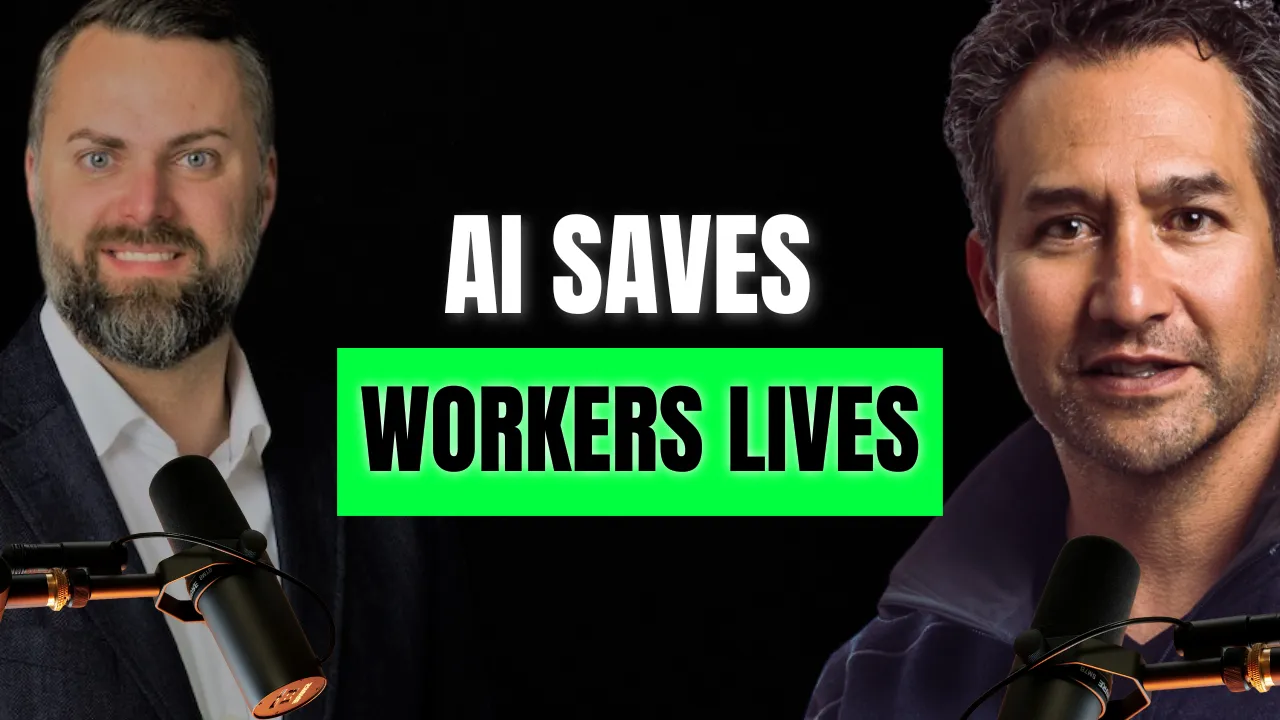
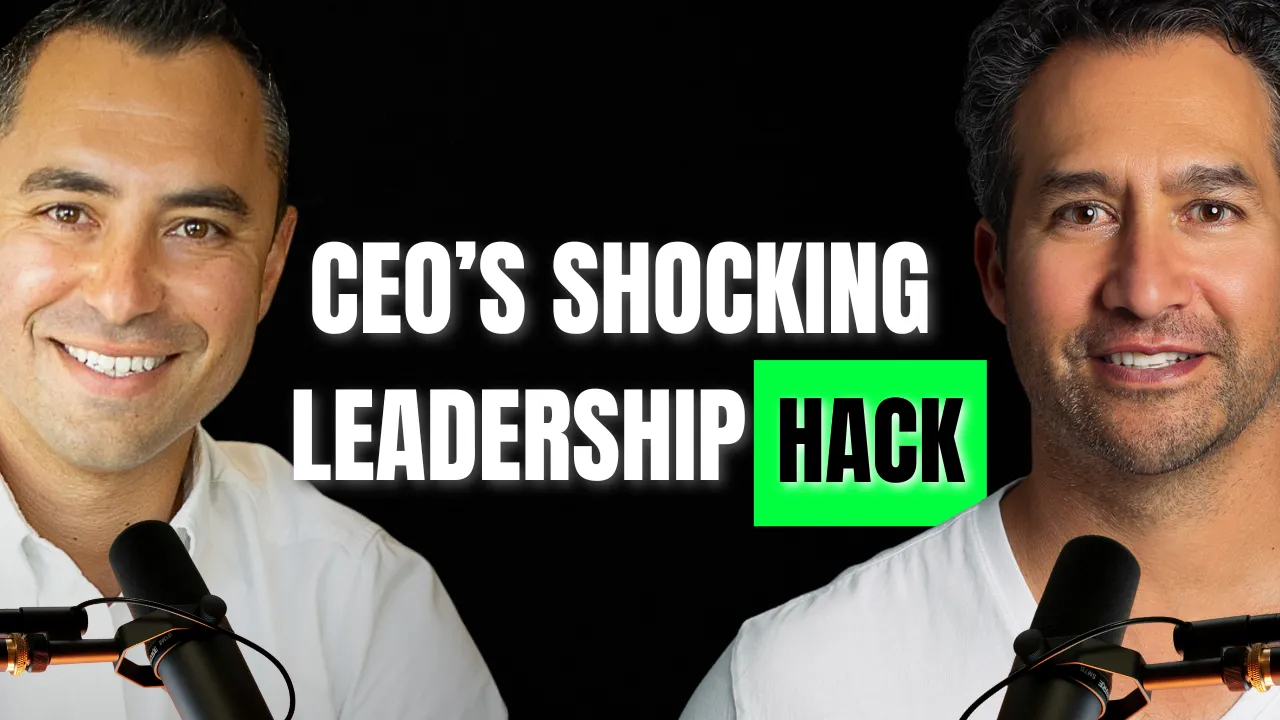
Guest: Yacoub Nuseibeh, Founder and CEO of Noorai Host: Jake Aaron Villarreal
Jake Aaron Villarreal: I'm Jake Aaron Villarreal, born and raised in Silicon Valley, and here to take you behind the scenes to share what it's like to be a startup founder — the journey they're on, the problems they face, the products they build, in an effort to make our lives better.
I'm excited to have with us today Yacoub Nuseibeh, founder and CEO of Noorai. Yacoub, welcome to the show.
Yacoub Nuseibeh: Welcome. Thanks for having me, Jake.
Jake Aaron Villarreal: Well, I'm happy to have you here. I know we had a call a couple months back, and what you're creating is incredible — I love where you're taking things, and we'll talk more about your solution, your platform, when we jump in here. But before we do that, let's take a step back and give us a little bit more about you — where you're from originally, and kind of what's been on the path that helped shape you to be in the position you are today, leading this startup. Kind of walk us through the progression.
Yacoub Nuseibeh: My family comes from Jerusalem, Palestine — we have a history of 1,400 years there. I grew up in Jordan, went to study in Lebanon, and then went to Boston and worked for Bank of New York Mellon. So I started my career in investment and investment operations. Later, I joined the Abu Dhabi Investment Authority, in Abu Dhabi, in their operations.
Then I did my first startup, back in 2018, which was a robo-advisory wealth management platform. And later I was asked to create — not actually an AI, sorry, a decision — a simulation and forecasting platform for the Abu Dhabi government. That's still existing, and it's being run internally within the government. After that, I decided to take that concept into a global and commercial basis, where I created, a couple of years back, Noorai — which is basically a decision intelligence platform that helps leadership, whether across different domains, more predominantly financial and macroeconomic, make decisions and see simulations for their markets.
Jake Aaron Villarreal: Yeah, got it. Well, you just shared a lot there. So just going back to where it began, in Jerusalem and Palestine, and from there coming to the U.S. — in terms of startups, you've been at big companies — is this your first startup, or have you had multiple startups?
Yacoub Nuseibeh: Actually, technically speaking, this is my third startup. The first one, like I said, was a robo-advisor wealth management company, around 2018, 2019 — it was with other co-founders. But also I co-founded, at that time, what was called the Center of Insights and Forecasting for the government, so I consider that a startup too, because it was typically like that. I'm also chairman of another startup in the education technologies space, called Augmented Education — but this one, to my — I guess it's like my only-founder startup, because I just decided to put everything I know, my experience, and my love of making a difference in this world, into a tool that helps leadership first, but also decision-makers at different levels as well.
Jake Aaron Villarreal: Yeah. Well, what I recall from our conversation is the platform you built helps billion-dollar decision-makers understand macro and micro impacts before committing capital — particularly valuable in uncertain economic times. So that, to me, is something — if you're out there running a huge enterprise, or maybe even a smaller organization, it's hard to make good decisions, especially when they matter. Oftentimes you don't always get all the data right, and you go down the wrong paths.
We'll talk about what your platform actually does and how it works. Your background — talk about that a little bit. Are you an engineer by trade, come up the ranks and learn it as you went? Are you more on the data side? And, you know, business intelligence obviously is key to what you're creating here, and some of the data that you're capturing and presenting. So kind of give us your background there.
Yacoub Nuseibeh: Sure. I'm not an engineer by education — actually, I studied business. I do love math a lot — I like quant, I have a quant certificate, master's equivalent, and I'm a CFA charter holder since 2004. I'm a combination of things. I like to think of things holistically, and because I've worked in a lot of different domains — even a lot of things that actually help shape ideas differently than the current way — because usually there's a lot of specialization, and I understand how big companies work like that. But when you come to look at solutions for things, you can't think in a myopic way. The more experience, the more industries, the more countries even you work in, and cultures you've crossed with, the more ideas come to your mind, and solutions — and that helps a lot.
Because we think — I'll talk about the platform later — but the thing is that the world is a lot more complicated, and it's not just one linear thing, for example — it has so many different things, and we can see that clearly nowadays. In every little aspect, something happened in another country or another place, and it's affecting everyone — that's how the world actually works. And so you have to come with solutions — you have to have that very high, holistic level, and try to see how things correlate somehow.
Jake Aaron Villarreal: Yeah. Well, that leads me to my next question, which I think will have a lot of interest as well. You built a forecasting platform for Abu Dhabi's leadership that caught the attention of asset managers and governments. Tell us about that project and how it became the foundation of Noorai.
Yacoub Nuseibeh: Sure. So basically, I was asked to create something called the Center of Insights and Forecasting, immediately. So basically, through the statistics center, where the data was — but statistical data tends to be, for example, census is done every ten years. However, in a vibrant, very rapid-growth area like Abu Dhabi, and the UAE in general, every year people — and the dynamics of people change, massive projects, new cities spring up here and there — so these things, you can't be static, it's not made for that.
Similarly, for the macroeconomic — even microeconomic — perspective, through the city, through the emirate, that was difficult for them. So initially I created that platform — now it's called Bay, they renamed it, gave it an Arabic name — where all data is collected, macroeconomic, social, demographic, and through this I built a full understanding of what's happening. I could do nowcasting, forecasting, and at that time, basic simulation — if we do this, what will happen to our economy, our inflation, our unemployment. These are ways we could help leadership ship — you know — more or less based on data, and based on relevant data that historically happened to them.
And it's just not pure data science — if everything I say in that world is data science, and I consider myself a model architect, so I combine data science and theories, whether demographic or web theories — and that apparently helped a lot, because it's different than the traditional way of doing things. And that's why accuracy — whether in doing population estimates down to the neighborhoods, or forecasting GDP or inflation — was really, I would say, pretty accurate, very close to being very accurate in general.
Jake Aaron Villarreal: Yeah. Well, you know, it's one thing to build a tool or a platform for a company or a government to use, but how does — what's the impact of that? Like, from your view now, knowing Abu Dhabi — what are there specific buildouts that you've seen the country do, based on tools that you've created for them, that have made them make decisions which was, you know, "We're going to construct this building in this area, we're going to add more schools in this general area based on population growth" — like, what's the real impact to the people that live there that you've seen?
Yacoub Nuseibeh: Very good question. Policies — you want to assess the impact of policies. So a lot of times they would consult with us — okay, we're thinking of maybe doing such and such, what will be the impact? For example, I think post-COVID there was genuine concern from leadership — and I have high esteem for them — about the inflation. If you remember, back in '21, '22, there was massive inflation, pretty much every year, '21, '22 or something like this.
Immediately, you're like, okay — here's what we can do. We created a tool for them — okay, here's the typical impact, and what's happening for a — and this is different than CPI, by the way. This is what a typical family spends on, from this background or that background — that's the impact of doing this. If you want to change these prices of these — let's say, utilities, water — that will be the impact. Some families will go from this level to that level.
There's also something about the impact on demographics — they might potentially go into distress. This was — I love the genuine concern about everyone, whether industries, our population, whether nationals, with expatriates — and that was always taken into consideration in their decisions. Other than that — stuff like, you know, health, for example. Okay, you need to know, because people are from different parts of the world, there are different concerns. For example, some health concerns that some nationalities potentially have — higher risk for certain diseases, like strokes or heart attacks. So in those areas where there's a concentration of this, you might want to make sure that there are rapid-response clinics, so that people can be treated within a certain amount of minutes.
This is the stuff that really makes a difference for everyone living there, and that comes from the genuine concern from the top. There's a lot of other examples — I just gave you a couple of those, obviously — but that's why I loved working for that, because it mattered for everyone.
Jake Aaron Villarreal: Yeah. Well, there was a lot of change around that time, so it's really good to have data to make better decisions. Your approach combines machine learning with traditional economic and demographic theory in an unconventional way. Why do you think most forecasting platforms miss this, and what does it unlock for your customers?
Yacoub Nuseibeh: Well, at that — machine learning, nowadays we do use deep learning, but still the fundamentals are the same — the data science plus the theory. The way I look at it, like I said, a lot of things are not in isolation — unless you're talking about, obviously, a closed environment, or something transactional, or biological, or physical — yeah, that's fine. But when it comes to people, the economy, the countries, supply chain — prices of things are determined somewhere else, ultimately — now oil or gas is being impacted. It's a lot more complicated than a straightforward thing.
So if you look at just the data, it's not going to give you a full answer — it might actually, they usually fail in doing so. And especially, like, forecasting economy, or inflation, or stuff like that — if you use just machine learning, or even just deep learning, you have to combine both. You have to understand what are the drivers for that country, what are the components of that country, or that place that you're looking at — there are so many things, and what matters to people, and people's decisions, may not be by theory — they tell you they can make rational decisions, that's not necessarily true. So having both together gives you actually a lot more accurate picture.
In fact, for forecasts, roughly — I don't know if I can say that — but about two-thirds of our forecasts have been within 25 basis points from the actual. Okay, and I'm not talking about market — I'm talking about fundamentals and macroeconomic indicators. Okay, that's a different thing, like market prices.
Jake Aaron Villarreal: Yeah. Got it. Well, you know, when you look at your market today — correct me if I'm wrong here — but you're building for governments and enterprises, where contracts take longer and require more negotiation. How does that change your go-to-market strategy compared to B2C?
Yacoub Nuseibeh: All right, I guess because the first one — I had a B2C, the first startup — and honestly, that was — you might think you have a superior product, better earnings, I guess, for returns for investors and the clients alike — but honestly, getting people was very difficult, and it required a lot of big budget for marketing. However, it's obviously more rewarding ultimately, it can become a lot bigger. But the thing is that, in my view, even with probably my experience and my network historically with governments and banks and financial institutions — yes, they do take time, but I think it's a combination of things.
One — you have to have a product out there, you show it, and the first immediate impact is like, "I want that product." Okay, and to do so — actually, even for the government, by the way — you have to think, you are the user, and you have to think, "Okay, this is for a minister, I have to be — I'm a minister, what do I need to do for so and so? If I'm the asset manager, or the bank risk manager, I have to cater for that." And that's not typical. I understand you're right about it taking a lot more time. However, I think it's a lot more rewarding ultimately, because you're dealing maybe with less — there are a lot of people, but it's stickier.
Usually the contracts are for a couple of years, and if they like the product, they will also take it, or recommend it — and it will be noticeable. From the strategy for funding, obviously that's more of a challenge, and investors have to understand that part. But the traction, generally speaking, investors do look at the traction and the communications between you and potential big clients, especially PEs and stuff like that.
Jake Aaron Villarreal: Yeah, makes total sense. Let's tie this into what's happening in the world today. We have a lot of unrest, we've got different impacts around the world globally, from potential battles and wars to the cost of oil and gas, and there's a lot of decisions that have to be made by companies that are serving various markets, too — and these are big enterprise companies. They don't have all the data, they have to make decisions, but they also need tools that will help them make better decisions.
Give us a use case — a tangible one — today, where a company's using your platform right now that's helping them make better decisions, based on some aspect of change that's happening, either in their economy, in the world, in their market. Give us something tangible — so what I want to do is, if other enterprise organizations are listening to this, they're going to know that's something that's interesting to me that I might want to try.
Yacoub Nuseibeh: Okay. There's two big things that actually — one, I did not notice myself when I created the platform — it's actually these big guys, the financial institutions, like big banks, or banks in general, and asset managers. When I first demoed that, the first question was, "How were you able to speak with all this data?" And I'm telling them, like, millions of data points, or even billions of data points, through AI agents — because we cannot do this normally. Okay?
So the forecasting-simulation-scenarios part — they were like, "We don't even have that part together, we have it in every form" — and if we want to ask about our exposure, think of big asset managers, they have millions of assets, or million banks, millions of loans, or customers — "I cannot find this information quickly, I need to ask teams to put it together, it takes hours minimum, two days potentially." I was like, okay — because we have to create engines that get this data from different places. Think of Bloomberg, potentially, not as the source but as a data aggregator — from IMF, from Federal Reserve, from OECD, from SEC, the different places — and all this I have to take and ingest and normalize, so that you do comparisons, plus your own — the enterprise data.
So that's the first part. The other part that — now we know, let's say, this is a big asset manager — what's my exposure to Apple, across all the different portfolios, or another company — and that goes by, obviously, the stock, futures, if you have futures or options, any exposure directly or indirectly to it, in different bonds or whatever they have — immediately you see that part. Then the next part would be, okay, then you can measure impact — okay, what will happen if the Federal Reserve cuts interest rates by 25 basis points, for example, on my portfolio, across all countries, all domains? Because there's also not an immediate impact just on U.S. assets — it can be something else as well, because markets, even equity markets, respond to that.
So it's a lot more complicated. By having these in our massive decision engine, you will see that impact pretty much immediately, or within minutes. It can also give you insight — the other parts — but, okay, maybe I'm trying to not be too technical — you're over, let's say, exposed to this country or this currency, we suggest a hedge there, and potentially by that — the person, okay, you can take it, do it, it's up to you. But, like, anomalies — because we also take transactions, you're a broker, we have — certain, like, this broker is charging a lot more basis points, I guess, versus others — maybe you should renegotiate these. I see anomalies in operating expenses can be also for CFOs, by the way, and auditors — there's a lot of things because we ingest all of this and immediately pinpoint that for you, or you can add, obviously, your own assumptions.
And for the macro part, like government — okay, again, if government spending goes up by 10 percent, like military, how will that impact my state? It doesn't even have to be the country — like, state of Massachusetts — and what will be the impact on inflation, for example, with oil prices? Now, that's a lot of things at the same time. But the way it works is that it combines all of these in a — I would say — a very smart way, that technically speaking, an LLM cannot do. By the way, they can help you in answering, giving text, looking back at things, and summarizing — but the forecast is not necessarily part of an LLM, prediction and forecasting.
Jake Aaron Villarreal: Yeah, so this really is bringing the data together to predict the decisions you should make, that will be in your best interest, or your company's interest, as you think about placing big bets on whatever it is that you have to do — as an organization, or a company, or a country, or a state — that's given you that arsenal, that insight, that you don't have today, all in one platform.
Yacoub Nuseibeh: Yeah, yes, that's true.
Jake Aaron Villarreal: Really cool.
Yacoub Nuseibeh: And I'll tell you, even another example — budgeting, actually, we're asked, for a company, an enterprise — okay, we have lots of suppliers, can you help us? Since you have data on a lot of countries, and even the CPI for these products, can you help us find, like, substitute — maybe other suppliers, potentially. What I'm saying is, you give it all the data that you currently use, and potentially we can give you these forecast simulations to help — any data can get connected there. It's not just really for financial and investments, by the way.
Jake Aaron Villarreal: Yeah. Got it. Really cool. So you talked about agents — is your platform built in a way that it's agents talking to agents, to provide the information in a very streamlined, coordinated fashion?
Yacoub Nuseibeh: Yes. And I'll tell you honestly, that's a blessing in a way, and it's difficult in another way — because, like I said, it just — even Claude, that's very good with spreadsheets now, okay, but it has limitations — I think maybe 200,000 tokens, or something like this — but if you have hundreds of thousands, or millions, of data points, it's not going to work with big spreadsheets and a lot of data, and obviously it's going to be very slow.
The reason why I think it's a blessing is because I'm trying to serve two users at the same time. One is the leadership — CEOs, CFOs, head of investments — these guys don't have time, they want the answer quickly. Okay — "Dropped by 5 percent today, what will be the impact on my portfolio?" As a U.S. asset manager, the global asset manager, he'll just see a quick number and that's it. But a technical person, or a researcher, would like to go more in detail and start making assumptions — "I want to change that part, not for that portfolio, analyze it a lot more technically." The agent allowed us to have both users at the same time, because — and actually, people, leadership, are already asking us, "We want this on our phones," because they go to a meeting, and things happen, you're in a negotiation — questions, "Not sure if I get this investment, how will it impact my asset mix?" You'll get that answer quickly while you're there, for example.
Jake Aaron Villarreal: Wow, that's real time. I like that. Well, let's switch gears a little bit here. You've built a company, you've got traction, you've got customers — people are behind every company that does well, and it's hard to get the right people all the time, unless you understand what it is that you need them to do, and you're clear about who you are as a — too. So give us a little insight for other founders that are growing, that are looking to hire — like, what's worked for you to find the right people? Because it's a different world today, and, you know, from what we see, and we work with lots of startups, it's not just about coming in and doing a job anymore. Oftentimes it's coming in and doing a job, plus what your understanding of AI is — what tools have you understood that are good, and how do you use them, and being able to come to the table with more than just your experience. It's about fitting into the company, it's about understanding the leverage of AI and how that can help you do your job differently or better. You don't have to have tons of years of experience anymore — in some cases it's actually the younger generation that's more fluent and more AI-ready than the mid-level or senior-level people in companies.
So having said all that, for you, being in a company that you're building that is very AI-focused — what's your strategy, what's worked for you in finding people, as you continue to build and grow your company?
Yacoub Nuseibeh: Well, first I'm going to say there's no way you're going to get it 100 percent correct, even with people with good backgrounds, and technical — you're right, things are changing quickly. But at the same time, ultimately, it's the team that creates everything. As a founder, I have the vision, I help them, I help the team envision this, and how, with the strategy, to do this, and optimize their skill set — that's as any leader should be doing. I call it uniting the intentions — but they're always going to be the ones doing the job, they're going to do the actual coding, the actual analysis, the actual — even marketing and business development. So that dynamic, for me, in environment, is extremely important.
And you are right about the different generations, or different skill sets. However, look — I think, at the simplest form, they really have to believe in what they're doing — it's not just a job, okay? And that means they have to do things — I mean, not because they're forced to, because they believe in the outcome or the product itself. The first thing a leader should do is at least keep them — this is what I think it will be — something like this, give them a picture, or a drawing, or whatever it is, that has to be in their minds always, in the meetings — like, "Oh look, this is what we're building, and all of us are building this great tool." I always give, like, an example — an iPhone, or another — it's like everything has to work perfectly, more or less. Your part is not just the OS, or the glass, or the colors, or whatever it is — all of us are building this. So if you are not aligned with this, there's a problem.
Okay, as a team, yes, you might come and do your job, and that's fine, but there's no alignment, ultimately — the whole product has to work, and not because you're — and obviously, sometimes I don't like to force, but really, one of the most content moments for me in this startup is coming in one weekend and seeing the team — at least half of them — especially, you know, they are playing music, and singing loud, and coding at the same time. I loved it, I really loved it. I didn't ask them to come, but they really love what they're doing, and it shows — has always shown in the quality of the output. Someone asked me, like, "Oh, why do you think I'm not motivated, I'm doing my best over here?" I was like, it shows in the output — the quality of the output always shows. Yes, you can have QA and all this, but ultimately it shows also — you're trying to improve things without someone asking you. "Oh, I saw this new tool, or even something that is cheaper, more accurate, or whatever it is" — I'm testing this on my own. These are the people that keep — and ultimately these are the true founders of the company, or co-founders of the company, because when it becomes successful, I want that dynamic everywhere.
Jake Aaron Villarreal: Mhm. Yeah, it's really cool. Yeah, there's a lot of different ways to find the right people and to bring them on board, but I think what you're talking about is: do they have the belief in the vision of what you're building, do they have the care to actually want to do the job? And really, even when people aren't watching them, that's really like the definition of character — they're doing what they want to do to help in some capacity, you don't have to be overseeing them to do that, whether it's on a weekend, or at nighttime, or in the mornings, but no one's watching. I heard Elon Musk a couple weeks ago talk about — you can hire people that can do the job, but you can also hire the people that have the wrong attitude, and could be toxic for the company, as well as their heart isn't in the right spot, or they don't care enough about the product or the vision to really have a long-term impact. Those aren't like verbatim, but it's kind of the context is there too.
Yacoub Nuseibeh: And, you know, any size company, I think it's important when you're going to build a team, everyone's kind of has the same DNA, if you will — everyone's ultimately going to bring their own character, but, you know, for me, it's a blessing from God that it really — how they work well together, and it shows. Actually, I was told, "Oh, you — we always, others always, see your team together, they play pool together, they eat together" — you know, while it seems like you are true — obviously that's not always the case all the time — but it shows how really they become family, and that's very important.
But I want to go back to actually, now, one point — you do need the mix of both, meaning that the youngsters — I love having interns, by the way, I've had almost 200 interns throughout my career, in different parts of the world — and the really good ones, the ones who blend in — you can see, but maybe they'll just bring a small basket of chocolate, they want to belong, they want to be part of this. But the more experienced — especially when you're working for stuff like, I think, enterprise, and like, government, or banking — but I think in other places as well — you do need these — have these wise men, who are, like, okay, a bit slower, more methodical, but they do have that capability to put structure, and not let things fall off — because also, rushing to things might not be the right outcome, and it might take things down for the whole company, and not just for the job itself, for the person.
So it's a combination, and you want to have more dynamics down, and a bit more structure, a bit more — not totally on top, the leader at that time — while I'm more like the youngster, to be honest with you, I'm like, "Let's do it quickly," and I don't know what — but my role has become to sort of optimize and balance all of this together, because we need all to move at the same speed, with the most optimal outcome, that is good for our clients — and obviously our products and our investors.
Jake Aaron Villarreal: Yeah, really cool. I just want to touch on the internships — 200 interns is a lot. What's worked for you there? How have you found them? Are these interns that come in and do work, like, at a nominal pay, and then they become full-time employees at some point? Are they free? Like, for those that haven't tapped into internship talent, what's worked for you? How have you gone about it that's been successful?
Yacoub Nuseibeh: I think, honestly, internship is the best way to test people, and potential employees — and at the minimum, you know, you can, if they want to be helped, be guided. I was asked by the executive director of, like, a big sovereign fund — "Why do you help — you were job-placing them in summers, in financial companies, you're taking so many within your team" — I was like, because the first reason, honestly, because when I was at their age, in university, I wanted someone to guide me — I didn't know where to go, and now there's the internet, and maybe, I guess, Jim and others to help you, potentially, but I wanted someone at least to tell me, "Am I — is that what I'm looking for, is that the right path" — that's at a minimum.
But when you also test their capabilities — because I think everyone has one major skill that they were created with, at least one — there might be two, maybe, but not more. So if you match that with a job that requires that skill, the person will do the job easily — it's not going to take them maybe — it'll take them maybe a couple of hours, versus others who are not maybe good at it. I'm not good at sales, for example, I'll never be good at sales — I'm more into other stuff. But for the thing that the person will do that job easily — but if they actually love what they're doing, they'll become stars, and that's what I want from everyone. Become a star — no matter where you are, no matter how hard the conditions are, in leadership, or managers, or the pay — if you become a star, something, it will be rewarding at some point.
Jake Aaron Villarreal: Yeah, yeah, yeah, makes a ton of sense. Well, you know, look, as you continue to find those stars and build out your company — where would companies go to find you, or to find your organization? Is it your website, do you have a LinkedIn? What's the best way to find you?
Yacoub Nuseibeh: I mean, you can reach me directly on LinkedIn — I try to be responsive, but it's obviously been overwhelming. The website is noorai.ai — you can find that info there, and we monitor that as well. And I think you can email me too, and we all work as a team.
Jake Aaron Villarreal: Yeah, we'll put that in there. I always like to give space on the show for founders to talk about what their growth looks like in the next 6 to 12 months, and oftentimes it comes down to — there's roles open, what do you want to hire for? And if anyone hears it and they want to find you, it's a great way to kind of promote your growth too. Talk about that — talk about where you're at in terms of positions that you're interested in and starting to roll out, or talk to people about — because I think organically is the best way to meet people, and sometimes you never know who's listening. They just might find you and could be the next star of your team.
Yacoub Nuseibeh: Sure. Okay — you mentioned earlier, we deal with enterprise and government, and these do take some time, but the thing is, it's either — not either zero or one, but it's either steady, or suddenly, you know, even 300 percent. So we are — thanks to God, obviously — in that domain, now we're experiencing, honestly, tremendous growth.
There's a different — I'm already taking interest, if people are interested. I do pay interns, in general, when things are — I would say — comfortable financially. When things are not, I ask them to bear with me, until we can — because I want everyone to feel comfortable, and feel like they belong. I want them to belong, and I want to see more happy people — employees, and interns, and potentially employees — and they come to work because they love coming to work, not because — you know, we have to really — we've maybe gotten accustomed, and it became normal, for most typical people to go just to do the job because they have to. Honestly, I don't think the world should be like this — yes, it's not perfect, sometimes we have to do things we don't like, but generally speaking, it would be great for most, especially younger generations, to see this more and more. We haven't seen it that much, maybe, but I really would like that, and they can reach out — hopefully we'll get more and more growth. Like I said, it's now like 300 to 400 percent recently, but we're pretty much open to things.
Jake Aaron Villarreal: Very cool. Well, all right, well, that sounds great, that sounds fantastic. If you're out there and it sounds like an opportunity you want to explore, reach out — we'll put in the links, the company, and access, and how to get there.
Yacoub, I want to thank you so much for coming on the show and sharing your story, and also the listeners for listening today. It means a lot to me that you spent your time with us. I'm your host, Jake Aaron Villarreal — we're signing off for now, but can't wait to catch up with you all in the next episode. Until then, Yacoub — the world, take care.
If you like what we're doing, don't forget to subscribe. Leave a review on Apple Podcasts or wherever you listen. And follow us on YouTube, where we go behind the scenes to learn what it takes to be a startup founder.
















.jpg)










.webp)
.webp)
.webp)
.webp)