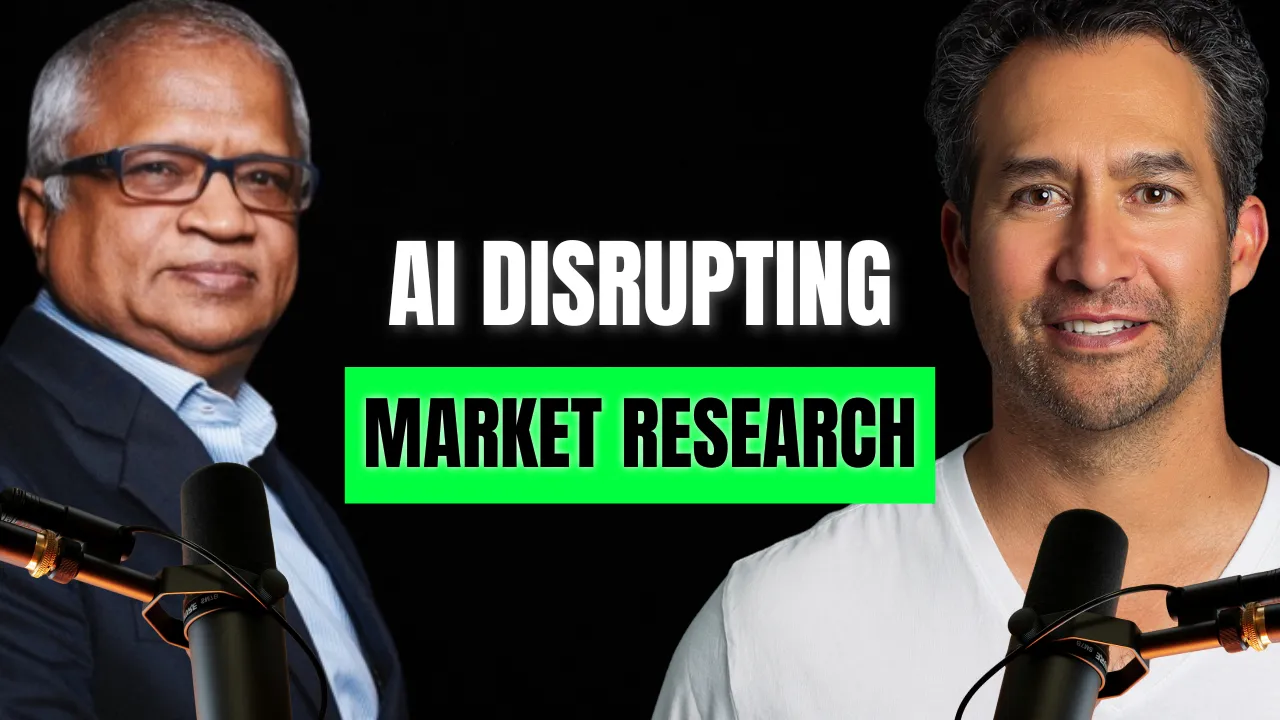
Malur Narayan: Hey Jake.
Jake Aaron Villarreal: Hey Malur, how are you?
Malur Narayan: Very good. How are you doing?
Jake Aaron Villarreal: Good. Yeah, thanks for uh, hopping on here. It's always good to get these going here. So since we last spoke, I know you were just kind of ramping up and you got, you know, a small team in place. So, we're going to jump straight in here and really talk about you and your company. Let me just, I guess for the listeners here, just a quick little intro: I'm born and raised in Silicon Valley and uh, spent a lot of years at startups and a long time at Oracle. Where are you joining us from today?
Malur Narayan: I'm calling in from Austin, Texas.
Jake Aaron Villarreal: All right. I love Austin. Such a great town and lots of innovation happening there. I haven't been there for a little bit, but I know Oracle moved there and a bunch of companies moved there. Though in terms of just growth and opportunities in technology, it's just burgeoning pretty crazy.
Malur Narayan: Yeah, there's actually, uh, I mean lots of events happening as well. Like yesterday and today there's SaaS talk happening here, which is I guess one of the big events in the SaaS world. So you got a lot of people here. I'm supposed to be headed there later today, so...
Jake Aaron Villarreal: Really cool. I like it. Well, for the listeners, just a little bit more about Malur. Malur Narayan is the founder of Extreum, and he is leading this company, and we'll kind of dive into that. Um, I guess a little bit before that, Malur, talk to us about you. What were some of the early experiences that shaped you into really getting into technology and what was the inspiration behind wanting to start this startup?
Malur Narayan: Yeah, you know it's uh, interesting. Um, although I've always been fascinated by technology, I quite stumbled into it. When I was applying, this is like mid-80s, um, I guess I'm dating myself here, but you know, I always wanted to do computer science and computer engineering, and the only place that was available, the only university that I could get at the time, was this place quite remote in a remote part of India. You know, ended up doing my early part of engineering there and then moved to Canada very early in, around 1990, uh, to pursue AI, machine learning, a master's in AI and machine learning, which at the time was, uh, you know, it was only for academics, right?
So, you know, I was writing papers on reinforcement learning and a bunch of stuff, which at the time was all very novel. This is pre-internet days, right? But it really got me hooked into what the future is going to be like because it gave me a first inkling of what some sort of automation—and I don't want to call it intelligence, but machine learning—what learning is. Machine-based learning is what state machines are, and how past experience can influence the ability to make future decisions. And that was the onset of what, you know, early stages of machine learning.
An interesting story there, you know, when I finished my master's, I got a job at this company called Bell Northern Research, which is one of the flagship Canadian telecom companies at the time, and they hired me as a technical writer. I don't know why, but I said, you know what, I'll take it. So just before that, I had opted out of an internship at NASA because, you know, they weren't going to pay me enough, and um, also dropped out of a PhD and decided to go work at this company as a technical writer. And the funny thing is they had been writing, you know, for 15 years they had been writing code in this proprietary language called Protel, which had over time, uh, you know, become so large, you know, over 10, 20 million lines of code and nobody, it was all spaghetti code, nobody knew what was going on inside.
So they say, "Hey, Malur, here's, uh, you know, this was the fiber optic system. Hey, can you go uh, write a system description?" That's what they called it. "Tell us how this works. Go through the code and figure out how this works and document it as a, you know, like a user guide." So I started that. After about two days, I realized, you know, this is going to take me like 10 years. So I did what I knew best. I started writing code, and I wrote one of the earliest versions of what we call, what at the time anyway was, I wrote a reverse engineering type of code which was able to pull information from the code and depict it in a visual way, what we call today code analysis tools, right? So it was visually able to tell you that this program called this program, and here were the interconnections. And that was like a huge moment at the time because all these people who spent years writing documentation about software looked at this and go, "Oh, you know what, I can tell very easily now which module is connected to which sub-module. So if I make a change here, I need to go make sure that this thing works."
And that actually worked really well because then they saw, you know, the one-eyed man is the king in the blind world, right? So I was amongst other people who were all writers, and I was a software guy who came in and wrote a piece of software that automated most of those things. So that was the onset of my journey and I very quickly rose through because of that. And I started, eventually we made that into a small business unit which got spun off into a product called Guru, which was really cool. And that was my experience in semi-entrepreneurship, if you will, where I had to go get funding and you know, try to raise money for the team. And I realized I had a knack for working with people.
So after almost a decade of product building and research and stuff, I decided, uh, I'll go get an MBA. And you know, they moved me around and I lived in different parts of the world, growing mostly on, you know, wireless technology side, growing businesses. But you know, sales, business development, growing businesses for the next 15 years, uh, 18 years. And then I started, you know, when I moved back to the US after being in Asia for about 10 years, I started investing in a lot of companies as an angel investor. Burnt my hands with it, lost a lot of money [laughter], then realized maybe I should take control of this and start founding companies so I at least know what I'm doing instead of, you know, just relying on other people.
So that's kind of what I did. I joined hands with a couple of other people that I knew in my first startup called Strides, which we just shut down last year, and it was early for its time. It was a bit like what Bardi is today. I don't know if you're familiar with Bardi, it's one of these connection software, but the idea was to help people connect with board members. It's too early for its time. And then, uh, I joined as a founding CTO for a couple of other startups before I launched this company about a year and a half ago.
Jake Aaron Villarreal: Yeah, really good. I like the experience that you started where you started as a writer and then ended up becoming an engineer and then moving into the business world and investing in companies at the same time. I think the heart of what we're all doing is looking at what problems can be solved with technology and then how do we bring that to a market that has a demand for it. So, we'll talk about your company today, um, that you're building. Before we do that though, give us a little context. Talk about the space it's in and what you're solving for in that space and what was the problem you saw there that led you to think we could build a product or a platform or some AI, you know, tooling that will help in this specific niche.
Malur Narayan: Yeah, it's, it's really very interesting how it came about because I would have never thought, considering what kind of grades I got in chemistry in my life [laughter] through most of my, you know, education, that I would end up in a material science company, a company dealing with material science and chemistry. So the story, the way it occurred was very interesting. I was handling, I was working for a large consulting firm handling one of the large verticals, almost a half a billion dollar business, and I was also handling sustainability for that company. So I was meeting a lot of people in that space and I happened to meet with an executive from a semiconductor/laser optic company.
Um, I was having breakfast with him, incidentally at South by Southwest. This is about maybe five, six years ago, just before the pandemic or maybe right after, and he came to me with a very unique problem. He said, "Hey look, we make this material called silicon carbide which we use in, which is largely used in, we're the second largest manufacturer of silicon carbide that's used in EV batteries and automotive, but you know what, that market is kind of up and down. The EV market is going down at the time." So he was like, "I really need to find other places I can sell this to, right? And there must be an easier way to do that than to try and go to conferences and talk to researchers and read market reports because all of that is very ad hoc and, you know, it's not scientific, it's not data-driven."
And the first thing that came to my mind, this was pre-GenAI, uh, you know, that's a perfect problem for a machine learning model, right? And I said, "Hey, why don't we take a crack at it?" We tried doing it at the time, but it didn't work out. But the problem stayed with me for a while, and I started talking to a number of people outside of my company and other people, anybody who had anything to do with machine learning or software development or even material science, I would bring this up.
And so, fast forward to about 3 years ago, I was speaking at a quantum computing conference. I had just gotten into quantum computing and I was invited to speak at this event. And I met my two co-founders there. They were both in the, one was in the audience, the other was a speaker, and when I found out that my co-founder, this lady who was there in the audience, was a material scientist, I asked her, her name is Sirisha, "Hey, what do you think of this?" And she said, "Looks like a great problem." She had worked in the manufacturing industry for many years at Texas Instruments, she's got a PhD in material science from Carnegie Mellon. So her and I, we got along really well, so did the other co-founder Rego who had worked at NEC Japan for many years in scientific computing.
So the three of us kind of got together and started working on this for an XPRIZE Google grant proposal, thinking, "Hey, let's see if this has some value and some merit and get some traction." And sure enough, as we started working on it, it became abundantly clear that this was not a one-customer problem, this had many layers to it. And we started, and really we moved more from a technology solution to more of a business solution, which is where I think we got a lot of traction when talking to many, many different customers, and that's how we kind of launched. Even before vibe coding was a thing, we very quickly built a prototype, showed it to a few customers, they liked the idea, they said, "If you can pull it off, that would be fantastic, but it seems like the holy grail." But you know, we're not here to solve small problems, right?
Jake Aaron Villarreal: Yeah, well, so talk about the specific use case and problem it will solve and what's the vision you want this to become.
Malur Narayan: Right, so I think like I said, when we started, the original hypothesis was, hey, you're a manufacturer of a material, you want to find new use cases for this material. We would be able to do that by almost doing like a matching, you know, we joke around and call it Tinder for materials, right? Where you have applications on one side, materials on the other side, and you're matchmaking. But over the last year or so, as we've done several pilots and talked to many, many customers, it's become abundantly clear that the problem we're solving is around decisions on materials. So companies spend months and thousands of dollars figuring out what material to use for a particular product, right? Whether it's the next generation shoe or it's the next greatest toy that you're making or it's a drone or it's a rocket ship. No matter what it is, you have a bill of material, you know, you kind of know the recipe, but you want to find the best material for the job.
And that today is a very, very complex task. 20 years ago that might have been relatively straightforward because you had a fewer set of materials to choose from. Now you got, you know, millions of materials and you've got so many different trade-offs you have to make. So you got to look at cost, you've got to look at performance, you got to look at quality, you got to look at compliance, you've got to look at geopolitical issues like, hey, is it coming from a country that's banned or high tariffs? You got to look at sustainability and the impact on the planet. Manufacturer, can I manufacture this at a cost point that is going to be viable for me? So, you know, not just technical viability, but commercial viability and economic viability.
So, in the end, what we're building now is what we call the Bloomberg for materials, which is really an intelligence platform that gives you very quickly a snapshot of the best material for the set of requirements you have by considering each one of those trade-offs, which otherwise would take you months or years and lots of different people. Like the way this is done today, for example, if you compare it to how this is done today by a lot of the CPG companies and companies that make products, they would have to go with the engineering department, the R&D guys, then they would have to go talk to the supply chain folks to say, "Hey, can somebody supply this at the volumes we want, the cost points we need?" They would have to go talk to the sustainability and regulatory compliance folks. They have to go talk to the marketing folks to make sure we can sell this. So you know, there's all of that, so you're talking to five different departments, and as you know in large companies, that can take months or years before a decision is made. And that's the problem we're solving, is we're speeding up your decision-making on what material to choose for a product.
Jake Aaron Villarreal: Yeah. Who are you selling to? Who is the ICP and who in the company actually looks at that and says that's a value that's going to help me either save time or make faster decisions or get better pricing on a specific product or source it from a different global area? Like, who is the buyer? Is it the product lead? Who are you selling to?
Malur Narayan: Yeah, we're selling to the, typically the product designer, because the material decisions are made usually at, most of the times, at new product design time, right? So when you're designing a new product is when the first instance of a material choice comes in. So you're talking to either the lead engineer who's designing the product or a product manager or even a higher up, you know, the business unit leader who's looking at multiple aspects of that product.
But we also find sourcing and procurement as a potential ICP because oftentimes a trigger for a material decision is driven by many, there are many triggers. First one is what I mentioned, which is you're designing a new product. The second one is you've had a product recall, you've had some quality issues. Now you got to fix, you know, some material that you put in was incompatible or didn't work out. Now you got to replace it with something else. So that's a second trigger point. The third one could be a compliance issue. You're not compliant. You know, like many of the companies that are putting products like beauty products, etc., on the consumer shelves are going to have to be recalled if they're not PFAS-free by 2027 according to EU laws and Canadian laws and California laws. So that's another trigger point is a regulatory requirement. And the fourth is a supply chain requirement where your supplier has gone belly up or the material that you're looking for is no longer available and you got to pull it off the shelves. You just can't get enough of it. So those are kind of four trigger points that drive a material decision, and therefore our ICPs tend to be either on the sourcing side or on the design side when they're looking for new materials.
Jake Aaron Villarreal: Yeah, well said. What's the biggest surprise for you that you've had when you're entering this market and this industry that you didn't know before that you've learned as you've started to build this platform?
Malur Narayan: Yeah, there's quite a few things. Being from tech, you know, I spent three decades in tech, and my other co-founders also have been in semiconductors or, you know, quantum computing, those sorts of things, you know, high-performance computing. So we've got a background in semiconductors, networking, aerospace. So that was our initial thought, is that this is where the market would be. But surprisingly what we realized through the last year is that the greater demand and the greater pull and the greater urgency is in CPG companies and packaging companies who have a high volume of products or, you know, high number of SKUs. So they're making decisions every day about what material to use for the next generation of product which is to be released in 6 months. Whereas in aerospace and semiconductor or automotive, if you're making a decision about a material, that's going to show up on the road or in the field 5 years from now, right? And also the regulatory barriers are much higher because, you know, to get approved for an aerospace vendor, it takes you like 3 to 5 years, you've got to have all this compliance. Whereas, you know, the industries like CPG, beauty, fashion, these are all fast-moving, high volume.
And that was a big revelation for us, and it's an area that we're not very familiar with, right? So a lot of learning. In fact, yesterday I was talking to one of the largest beauty companies in the world and the R&D team, and here I am with my limited chemistry knowledge trying to sound intelligent, but I realized that okay, as a founder and as a problem solver, your biggest strength is to be able to understand the problem and apply common sense and technology to how that can be solved, right? You don't need to be the expert necessarily in that field because my co-founder, she's a material scientist. So, I didn't need to be the expert, but still, often, you know, I put myself in uncomfortable situations throughout my life by trying to speak about things that I know very little about. Right.
Jake Aaron Villarreal: Yeah. Because, you know, you're always learning, you're always getting into new things.
Malur Narayan: So that's a big learning for me as well. As a founder, you tend to have to put yourself in a lot of uncomfortable situations and you have to learn very, very quickly.
Jake Aaron Villarreal: Yeah. And adapt and execute. A lot going on there for founders. You know, for you, you've invested in 18 or more startup companies. You've led your own. You're building your own now. Uh, how you find your partner is crazy sometimes. You know, you met yours just, you know, at a conference, but you don't always go with the intention of "I'm going to find my partners at this place." Sometimes it's just, you know, serendipity. You just find who you find at the right time for the right moment. But people are really critical to any organization. You know, you can have an idea and a product and you can have a strategy to go into the market, but it's really nothing without the people. Talk to me about what's worked for you as a leader in this organization and others that, when it comes to people, you're able to identify and bring the right ones on board that help you execute your plan.
Malur Narayan: Yeah, that's a great question because you know, throughout my career I've led teams, multiple different teams from small teams to extremely large teams and lots of direct reports, and the best teams I've had have always had a cross-section of different types of people, right? So, you know, when we talk about diversity, it's diversity of thought, diversity of culture, diversity of upbringing. All of those things play a big role in how you form your team and how you make sure that it doesn't become a one-track, that you don't have a bunch of yes-men, if you will, right? Who are just agreeing to everything you say. So, I've always encouraged being challenged, and therefore I gravitate towards people that I can relate to and people that I can easily trust because so much of team building is really about trust, and the trust goes both ways, right?
I've had many situations in my corporate career where I've been a confidant for my employees even when they've had to make a decision about going to another job, and they'll come to me and say, even though they're working for me, they'll come and say, "What do you think? I've got this opportunity somewhere else, what should I do?" And at that moment is a true test, right? Are you going to give him or her the answer that suits you, or are you going to give them the answer that suits them, right? Or the best thing for them. And I've always tried to do the latter. And that's called, you know, what we call perspective, right? Having, putting yourself, empathy and perspective, putting yourself in the shoes of the other person. And my theory there is that if somebody has a great opportunity, they're going to go there probably themselves, and eventually they'll want to come back or we will find a way to work together, and there's always going to be opportunities to do that. So I always, you know, trust is one of the key things I look for in people.
When I'm evaluating people, you know, obviously one of the things I look for is you come recommended by someone that I already know because then that shortens the trust cycle a little bit more. Second one is how you show up to the interview or how you show up to, not just even before the interview. How do you reach out? Like there's a lot of cold emails you get, and how you write that cold email and ask for a role makes a big difference in trying to get that first impression out. So if I often look at, even yesterday somebody reached out to me from Boston—I was at MIT last week for an event—and somebody from that event reached out and said, "Hey, you know, I've got all this experience, I'm looking for this type of role." And I thought the way he brought it up was very, very good in the sense that he wasn't trying to force-fit himself into a particular role. He was like, "This is what I can do. This is what I'm great at. If you have a need, I'd love to talk to you." Right? So, I think those things make a lot of difference. And then obviously when you talk to somebody, I'm looking for people with high agency, people who are action-oriented. People also thinking beyond just this current role. Are they passionate about what they're doing? If the salary disappeared, would they still do it?
Jake Aaron Villarreal: Yeah, that's a great one. That's a really cool one. That's great.
Malur Narayan: Yeah. And those are some of the things I look for.
Jake Aaron Villarreal: Yeah. I like where you're headed with the trust factor. It's incredibly important, not just when you're working with someone, but you know, when they have a change of mind and they want to make a move, like do they still have that relationship with you to have that conversation. I think it also helps you be able to, you know, if it makes sense for them and for you, to figure out what needs are not being met that you can keep them with your organization that you don't know about, right? So those lines of communication are important.
You know, I've done, you know, 30,000 interviews of candidates looking to join companies. And there's two things that we look at when we help organizations or even hire ourselves. But I learned something new this week that I didn't really think about at the level. So I'm going to tell you the two things that we know that have worked for us and for other companies well, and it's helped companies scale significantly with success. The first one is you're clear first on your identity and your culture and what you want, you know, and culture could be many things to many companies, but one of them is let's just say how you operate. You know, how you think. Do you operate at pace, at speed? Is that important to you? Are you more about trying things and breaking them and innovating, or is it more "I got to have everything right before we start and deploy"? So whatever your culture is, make sure that whoever you're interviewing, you have a filter for that so you can align and make sure they fit there. That's one. The second and last thing you need to do is just to make sure that they have the competency that you need to fill the job that you're going to pay them to do. If you get those two things right, it's great.
But I heard something from Elon Musk just this last week on X, and they were asking him about hiring and how does he get it right at scale? And he said that he's often made mistakes because he hired people, and it might not be the exact words he used, but he hired people that could be toxic for the company even though they were subject matter experts in their field and can bring a lot of value to the organization. But their heart was different. Their heart and their care behind who they were maybe wasn't always about serving their comrades or the company or the people they connected with and worked with. And so if you miss that part of it, your culture could change pretty quick based on the people that aren't aligned with how you operate and your heart. It's about caring too. Are you passionate? You mentioned passionate, but passion to me really means do you care about what you're doing? So that's the part that you try...
Malur Narayan: I heard part of that interview as well, and one of the things he mentioned in that same interview was also what I said earlier, which is around the passion piece, which is, yeah, money is important, but are you willing to do it if the money was less? Would you still do it?
Jake Aaron Villarreal: Yeah, because you love it so much that it doesn't feel like work. Yeah.
Malur Narayan: Right. I think that's an element. And the second thing you talked about, culture is so important, is you're right. I think having a toxic person with a bad attitude can really derail your whole team. And I've had that through my career in various teams that I've been part of and also led. But one of the things... those two things you mentioned about when you're screening for people, those are key. But I also look for, you know, people who are self-driven in many ways. So yeah, they're not waiting for someone to tell them what to do. And last week or so, I've been interviewing for some interns and got 300 applications in like one day.
Jake Aaron Villarreal: Nice. That's a good problem.
Malur Narayan: Through that, my first test was let me ping them on LinkedIn. I shortlisted a few of them that I thought were most pertinent and relevant to the experience they had, which comes out to the second point you mentioned. If they have 60% of the skill set you're looking for, I think they're good enough. Right? You assume that they'll learn the other 40% on the job. But then you know what... so I pinged them on LinkedIn, all of them, and only three of them responded on LinkedIn. The others didn't even respond. So to me that's like, okay, you know what, LinkedIn is the number one job hiring site right now [laughter] for, if you're a student and an intern, you should be pretty active on it, especially if you have applied for an internship.
Jake Aaron Villarreal: Yeah.
Malur Narayan: And if you didn't even bother responding after a week, then I'm sorry. I'm not even going to bother sending you an email or a text or whatever. So to me, that was one filter. And I finally shortlisted two people. And the two people I shortlisted all came very, very prepared for the interview. That's a big difference, right? They had gone through our website. One of the guys I interviewed hadn't even been to our website. He had no idea what we do. So he got on the call, he talked about himself and then I said, "Okay, do you know what we do?" And he said no. And he's trying to make it up. But the other two came prepared with a presentation. Like they had three or four slides saying, "Hey, here's what it was" for a marketing role. So it was like, "Here's how you can improve your website. You know, I couldn't tell what this messaging was... it was okay here but it wasn't great here if you're trying to target this audience." Which I thought for a third-year undergraduate student, that was really good.
Jake Aaron Villarreal: Yeah.
Malur Narayan: So that immediately impresses you. And then you look at the culture fit as well. You know, is this person going to be able to work independently? I mean, that tells me, that shows me high agency, right? I mean, if you're doing that even before the interview, you come prepared. It tells me that you put in the time and effort to learn about the company.
Jake Aaron Villarreal: Yeah. Well, you talked about the motivation, too, and having people that are wanting to do the work and not sit and ask for directions, but take ownership and try stuff. There's like the push and the pull motivation. The push is someone's telling you what to do and the pull is "I want to build something. I want to do something. I don't need you to tell me how to do it. Just let me try it and let me share it with you." So, and that's the people you don't have to call to wake up to get on the call. They're ready to go or you don't have to direct them. They're thinking about the future already.
What we're seeing across all the companies we work with, and a lot of them are AI companies, is you know, you're not just looking for the people that can do the work. You're looking for a different mindset in AI, which is a system thinker, a builder, a creator, a learner, a problem solver. Those don't show up on a resume. Those are, you know, things that hopefully you have. But with AI, they can use the tooling, but you have to start thinking differently. And if you're building an AI company and it's going to be anything about data and agents and automations and workflows, like that's system thinking, you should be looking for those kinds of people. And it's so new, everyone's learning as they go, too.
Malur Narayan: And it's accelerating. When you put out a job description for a, you know, for a lead developer role, you'll see 90% of the candidates will have all the same set of technical skill sets, but those don't matter that much anymore. Yeah, you sure need that, but really all of those things can be learned, you know, because of all the tools available to us now. A junior engineer can still develop as fast. So really what the differentiator is: how do you approach a problem? How do you plan? How do you prompt the system? How do you get, you know, how are you thinking end to end? How are you making most effective use of the resources you have at your disposal? Those are the things that matter the most.
Jake Aaron Villarreal: Well, I want to give you some space of sharing kind of where the company is today. I know that, um, you know, you're a company that's coming into the market. What are the kind of roles that you want? And if people are out there hear it, they might reach out to you too. Just a little promo.
Malur Narayan: So yeah, we're looking for... we're still early stage obviously, just about to in the final stages of closing our pre-seed round, which also means that we are looking for talent. Even though I'm technical, I'm less involved in development than I was before our CTO. So we're trying to augment the team with a couple of developers. You know, initially we were looking at contract type of resources, which is what we have right now to support our CTO, but very soon we're going to be looking, I think I mentioned this to you last time as well, we're going to be looking for a full-time developer, and we're looking for somebody who's exactly the type of people we talked about just now, right? Somebody who's passionate about it, who wants to work on the bleeding edge of science. And material science is very hot right now because of everything that's happening in the world. Supply chain is hot right now because of everything that's happening in the world.
Jake Aaron Villarreal: Oh yeah.
Malur Narayan: So we are intersecting those two: material science and supply chain, and AI, which is also, you know... so that is a powerful combination, and you're going to be working with some of the best people in the industry. And one of the things we... like I said, you know, we're not micromanagers. We want people to be able to push back and say, "This is that way to do it and this is how I do it." And you know, that kind of attitude and that kind of personality goes really well in a company like ours. So yeah, so that's one role we're looking for, and there's a few others that, you know, are data scientists as well because a lot of our product is also based on proprietary data and we're building a community of material scientists as well and users. So that's another area. Building communities is not easy. It's not just a technology thing, right? It's a whole different understanding the psyche of the user is very important there. So yeah, those are some of the roles we're looking for.
Jake Aaron Villarreal: Really cool. Well, if anyone wants to find you, Malur, or find Extreum, how do you pronounce it? Make sure I got that right. Is it Extreum?
Malur Narayan: Yeah, it's Extreum. And when we came up with the name, I was thinking of an atrium as an atrium that is surrounded by all the different data points and we kind of bring it all together, right? That was kind of how... and then Extreum sounded more like something on a periodic table that would fit [laughter] the name.
Jake Aaron Villarreal: Thank you. Yeah. Yeah. I know that's really cool. So, where would they go if they want to find you or Xtrium?
Malur Narayan: Yeah, extreum.ai is our website. malur@extreum.ai is my email and uh, I'm on LinkedIn. If you type my first name, I'm the first one that'll show up on LinkedIn and I'm pretty active on LinkedIn.
Jake Aaron Villarreal: All right. Really cool. Well, thanks so much for jumping on here and sharing your story. And for the listeners, it means a lot to me you spent your time with us today. I'm your host Jake Aaron Villarreal signing off for now, but can't wait to catch up with you all on the next episode. Until then, Malur, the world. Take care.
Malur Narayan: Thanks Jake.
Jake Aaron Villarreal: If you like what we're doing, don't forget to subscribe, leave a review on Apple Podcast or wherever you listen and follow us on YouTube where we go behind the scenes to learn what it takes to be a startup founder.













.jpg)











.webp)
.webp)
.webp)

.webp)