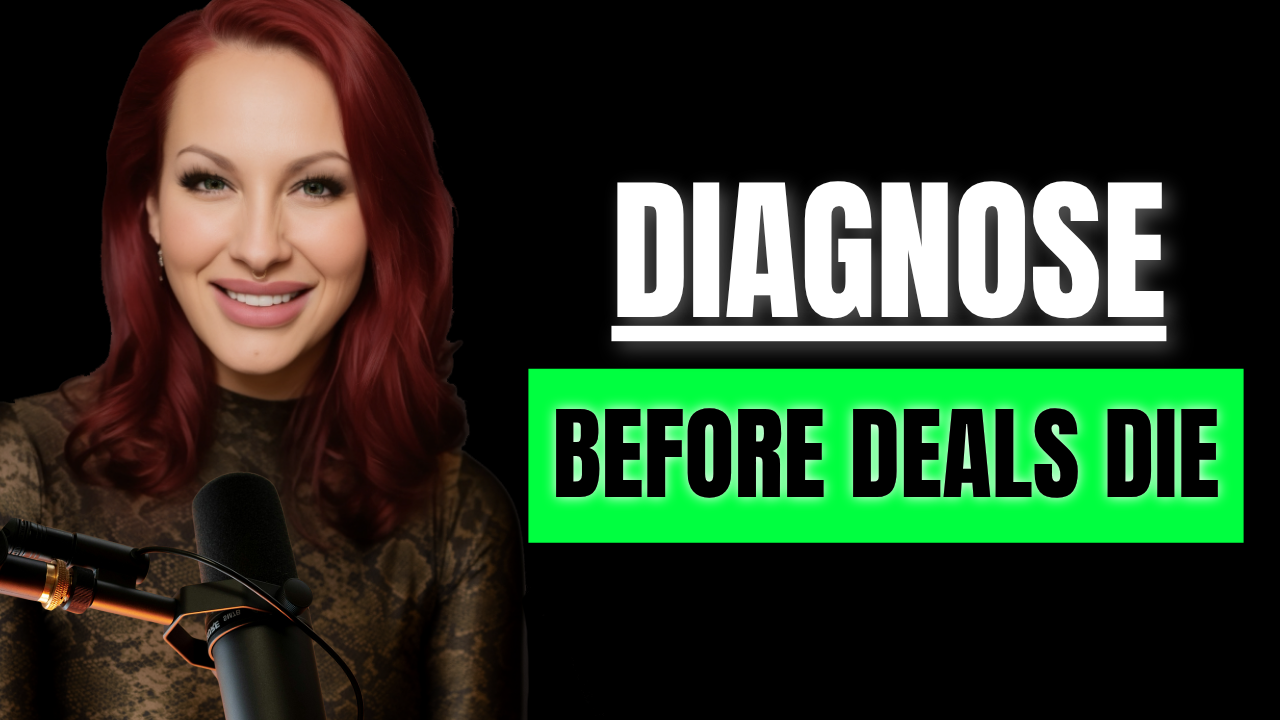
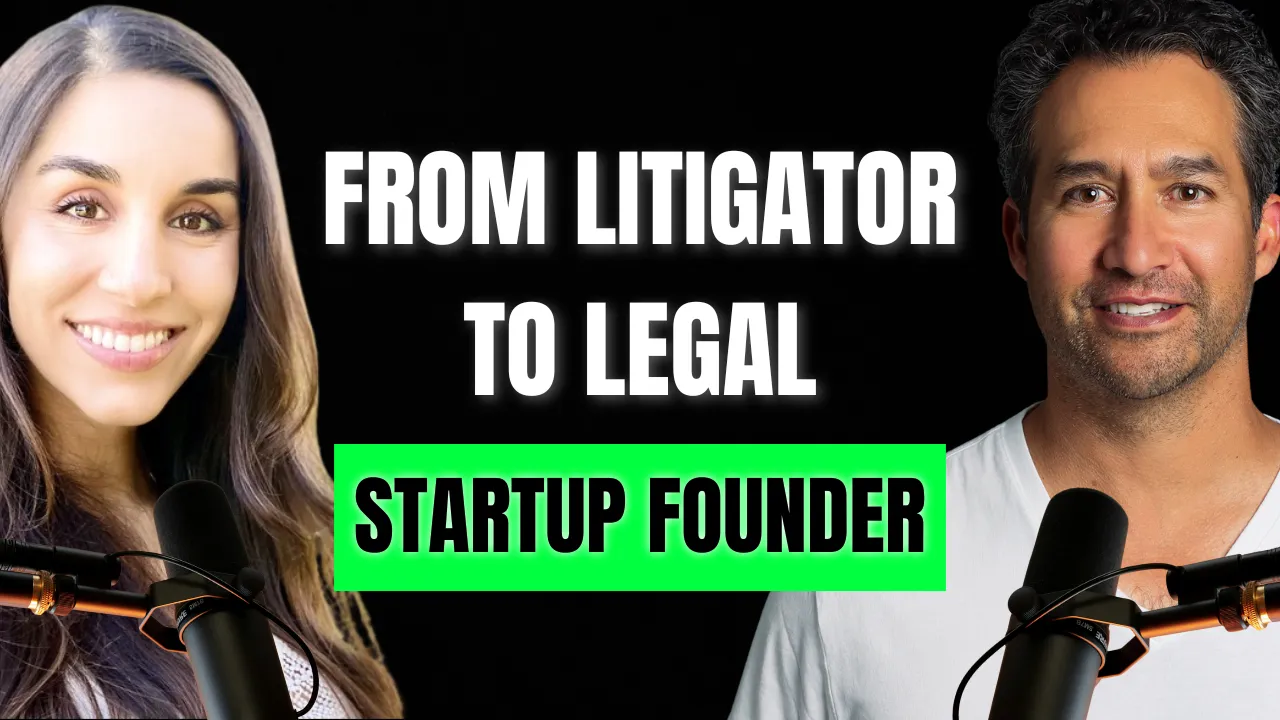
Jake Aaron Villarreal: I'm Jake Aaron Villarreal, born and raised in Silicon Valley, and here to take you behind the scenes to share what it's like to be a startup founder. The journey they're on, the problems they face, the products they built in an effort to make our lives better. I'm excited to have with us today the founder and CEO of Katsu, Liz Connolly. Liz, welcome to the show.
Liz Connolly: Yeah, it's great to be here. Good to see you again.
Jake Aaron Villarreal: Well, good to see you. Always excited to have people come in from different parts of the world. Where are you joining us from today?
Liz Connolly: I'm out here in Sacramento, California.
Jake Aaron Villarreal: Yeah. When I started this podcast, I had this vision of going behind the scenes to share what it's like to be a startup founder in Silicon Valley, where I'm born and raised. And weekly, we dive deep in the trenches to find the wins, the losses, and the lessons learned with the hopes that it helps you run a better startup. But here's the thing. If you've gotten any value out of these conversations or been inspired at all, hit the subscribe button. And I get it. Your podcast feed's probably overflowing. But to stay up to date what's going on in Silicon Valley, stick with us because at the end of the day, we're all just trying to build something that matters. And we're better when we do it together. So hit that subscribe button and follow us wherever you find your podcasts. Now, let's get back to the show.
Very cool. Capital of the state. I love the area.
Liz Connolly: Sunniest city in the United States. [laughter] It's crazy. Which I love, but yeah, not everyone's taste.
Jake Aaron Villarreal: Good good warmth and heat when you need it and understand what that's like out in that area. For the audience, let me give you a little background on Liz. She founded her first direct-to-consumer company in 2015, hitting half a billion dollars in sales under her leadership. She recently started Katsu, an AI academy designed to help DTC founders grow their business. So Liz, we're going to jump into your company and the problem it solves and what you're excited about, what's happening in AI and how you can take companies on that journey as they learn more about AI in the future. Before we do that, let's go back a little bit in terms of you and you know, what were some of the early experiences you had growing up that shaped you into becoming the person that you are today in terms of a founder, a leader in business?
Liz Connolly: Oh god, so many. I think probably the biggest ones center around like hard work though, which is I'm sure the most cliche thing you could possibly say. But I found at a relatively young age, maybe like high school, that if I worked harder, I could actually do better or as well as my peers. And it was very frustrating to me at the time because I would see people like working less hard than me, doing as well if not better on tests or, you know, in different departments and whatnot. And I really started to connect the dots of like, it's okay if you have to work harder at some things. And I took that for years and years into entrepreneurship as well. Early days of Trifecta, it was very much just like, how much can we possibly work? And part of that was I wasn't great at delegating. I was bad at holding people accountable. Like there were there were some things behind that that probably didn't need to work quite as hard. You know, weekends, after hours, just basically constantly. But that that's been, you know, kind of just part of my journey is is learning that maybe I don't have to work quite that hard. You know, get some sleep occasionally. But that really shaped my entire life is realizing the connection between how hard you work and the actual outcome. Like there's there's nothing that you can't outwork essentially in my view.
Jake Aaron Villarreal: Yeah. Well, that's great. You know, I look at it as you what are the models that you look at when you grow up that also help shape how you operate or how you do things. And for me, it was my dad. He was in construction, but every day waking up at, you know, 4:30, 5 in the morning. And his consistency of just working hard labor and coming home at 5:00 on time, being that leader and that visual model for me, it really engaged me in thinking about to get what you want in life, you have to work hard and be consistent about it. So, yeah, you know, you can be smarter and sometimes you do things faster and differently and still get the same outcomes, but I really appreciate your your honesty there. Now, Trifecta was your, was that your first company that you started or was, how many?
Liz Connolly: Yes. Yeah. Yeah. So, that was my first company. I founded it with my brother and it was not his first company. So, he had founded several. So, that kind of helped us launch like a rocket ship is because he had so many contacts in the health and fitness space already. And I had, I had started basically a department within a company and taken it from you know this is an idea inception to about a $30 million you know new line of business which you know of course I was in the warm and fuzzies of a big business. It wasn't my money that I was spending, all of that, but I got the I got the bug a little bit and I was like oh holy, I can do this you know. So that that was my experience right before starting Trifecta, and then even before that I had been a part of a startup that got acquired and so was part of that acquisition and everything and the the hypergrowth. So I was around it and kind of like really in it, but I had never really taken the jump and and started anything on my own until that point, which you know I was 25 so I was still [laughter] still very young when when we got started.
Jake Aaron Villarreal: Yeah. Quite young. Well, you you went through that experience with Trifecta, I know a lot of success came out of that. Before we jump into your current company, what was the the idea behind Trifecta and what was the inspiration behind wanting to to start that business?
Liz Connolly: Yeah, I mean, it really just came down to the obesity epidemic in America. I mean, everyone's so familiar with it at this point, but even back in 2015, it was, it was like talked about, but not a ton. And people weren't really sure like, "Oh, do we all just need to exercise more? Are we all just, you know, driving too much?" Like, it it wasn't necessarily, I think, as big of a push on food as it maybe is today. I think around that time, maybe a couple years earlier, was that that documentary about the the guy who goes to McDonald's every day.
Jake Aaron Villarreal: Oh, yeah.
Liz Connolly: You know what I'm talking about. And so, like, it was starting to get like a lot of traction of, "Oh, what we put in our bodies is pretty important and does have this huge effect." So, we wanted to go after that problem. And what we, what we looked at was like, "Okay, well, why don't people eat healthy? Well, they're doing the McDonald's thing. Okay. Why are they doing the McDonald's thing? They don't have time." And so, the whole premise behind the business was, let's ship meals to people's homes because then it's like as easy as it could possibly be. It's ready to eat. All they have to do is warm it up and it's, you know, everything we make is healthy, so they don't have to think about that piece. So, that was kind of the impetus behind it. And in 2015, paleo was the hot thing. So, that's what we started with. But, you know, at this point, we have everything from keto to vegetarian, vegan, you name it. And we're really kind of diet agnostic because we know, you know, anything, each person needs a different thing to be healthy. Like what what is it you can stick to? That's what's important for... I mean, for instance, I'm a vegetarian. Would I recommend that to most people? Probably not because it's it's probably going to be really hard for them to stick to. That just happens to be something that works really well for me and I enjoy it. So anyway, that's that's kind of the the origin story behind Trifecta and what what problem we're trying to solve.
Jake Aaron Villarreal: Yeah. Yeah. Got it. Well, you always want to start with the problem being solved and then executing and delivering that into the market where people are willing to pay for something. So, super high growth, a lot of success there. You know, you said something in our prep call that we do before every podcast that that stuck with me. You said, "I'm not sure I'm loving being a solo founder this time around with your new company. After building Trifecta with your brother for a decade, what's the hardest truth about going solo that no one warns you about?"
Liz Connolly: Oh, that's a good question. Well, it is quite different, right? It's like, it's almost like this is a terrible example, but like being a single parent or something. Like you can do it, but it's there's going to be some harder aspects. You know, everything is on your shoulders. And so I think for me probably the biggest area is like realizing my weaknesses more and having to shore them up, because the first time around, you know, if I have a weakness in this area, there's a good chance that my co-founder is good in that area and he's able to shore up that weakness, handle that part of the business. This time around there's, you know, unless I hire someone for it, which is totally possible and I have done with several things, like video editing I know how to do but I'm not phenomenal at, so I have somebody who does, you know, video editing for me. So I think that you know obviously you can hire or you can learn it, but that's something that I think I maybe took for granted a little bit the first time around, just always having somebody there that probably could shore up whatever weakness that I had. Cuz again, you, I was 25. I I was quite young and yeah, I had a lot of weaknesses and I I'm sure I still do today. I just put in more effort on them, I think, than than I maybe would have in the past.
Jake Aaron Villarreal: Yeah. Got it. Yeah. Well, it's an incredible experience and I'm sure there was a lot that came out of that and we'll dive a little bit more into that, but you know, let's let's let's talk a little bit about the company you're you're bringing to market today.
Liz Connolly: Sure.
Jake Aaron Villarreal: Katsu, what first of all the name I love. What was what what have you been observing in the market that you thought, "You know, I think there's there's there's something that can be solved here" and what specifically are you looking to solve?
Liz Connolly: Yeah. So with Katsu, I actually originally kind of was thinking more helping employees more directly. And that was because at Trifecta, that's what I spent a lot of my time doing is is mentoring my team, mentoring employees, you know, helping them get to the next role, whatever that may be. Like really, that that was such a focus, but it was something that I loved doing. So I'm like, hm, how can I how can I do more of this? I'm really helping a lot of people in this way. Can I do this like just you know as a company itself? And the pivot that actually happened to get me where I am today to to actually helping founders is I was watching an Alex Hormozi video and he's talking about let's say there's a room full of people and you can go into that room of people. They're all the same type of people. You can go into that room of people and help them. Who are they? And I just had like this light bulb moment of like, wait a minute, it's founders for me. Like I want to help people that were like me. Early stage Trifecta trying to figure things out, not sure what the next step was. Not having a community of founders was that was really hard for me. I knew like one other business owner when I started that company. And you know, today I probably know hundreds. You know, it's it's just fundamentally different. And I I joke that I I literally have a persona for Katsu that is young Liz because that's, you know, that's who we're talking to, is like a 10-years-ago version of me that still had these specific things to learn, like delegating, like teaching the team to be accountable, things like that. So, so yeah, I I think that's kind of what I I really like resonate with the most.
Jake Aaron Villarreal: Well, yeah, it's it's a lonely path when you're building on your own and you're trying to figure things out. So, a community of other other founders would be great or in general just teachings along the way to help you know create that roadmap for them. There is so many different directions you can go in this. Talk a little bit about the focus, the niche, the areas that you're addressing with your product, your platform, and who are you looking to serve first?
Liz Connolly: Yeah. So, I'm really looking at direct-to-consumer founders because that's, you know, obviously the breadth of my experience. I did some B2B prior to, you know, Trifecta, but a lot of my experience is in direct to consumer. And I've found that a lot of direct to consumer companies have a lot of the same challenges. So whether it be, you know, setting up their marketing funnels or getting their teams, you know, change management with their teams, getting their teams excited about something new like AI for example, or maybe it's just a change in leadership. These like commonalities of that kind of segment I think has been really interesting to me. So that's that's where I've I've kind of dived in and niched down a little bit. And I know I mentioned like I'm still in this process as we speak. I'm still figuring out, "Okay, is this niched down enough?" I think it is. I'm also looking at non-technical founders. I'm looking at, you know, not not huge companies. So probably under, you know, 20 million in sales. I know that sounds like an astronomical number, [laughter] but but you know, I I think after a certain point, they will have a lot of this stuff in house and they aren't necessarily needing to to get help with it. So that's that's where I'm at today. I'm sure it will continue to evolve and change, but the process I've kind of gone through is like, what are the commonalities that I I'm seeing a lot and do those kind of like fit under some specific umbrella. And so far that's really been like that DTC piece that I've been talking about.
Jake Aaron Villarreal: Yeah, got it. Yeah. [snorts] You know, when you start a company and you're looking for product-market fit as well as funding and growing it, you have two two options really. You bootstrap and you pay as you go or you go out and you reach out to investors and they help support your vision and and invest in your future. And you know, most founders would kill to have opportunities for people to want to invest in them. You shared in our pod prep call that, you know, it's kind of there for you when you're ready, but you're holding off a bit. What are you protecting by saying no to easy money?
Liz Connolly: Oh, yeah. I just I don't necessarily look at it as like easy money and I I haven't been down the due diligence process. So, it's never done until it's done, but I have had several investors say like, "Hey, we're we're ready [laughter] when you are." But, you know, again, I haven't I haven't done the due diligence. One because it is very very time-consuming and distracting from your core business, but two because I really want to figure out exactly my space and exactly... in any like financial model there's levers and what those levers work out to be are like very much assumptions early days and then as you get a little bit of traction you start to like really dial in, "Okay, this is our customer acquisition cost. Okay, this is..." like all these little details of it become very clear and then you can pivot and make changes and all of that. But I think it's for me feels like a little bit weird to go out and raise capital before I have those like really dialed in because it, I don't know, there's just something in me that like really wants to have that figured out first and then be able to say like, "This is what you're investing in" versus like, "This is kind of what I think assumption-wise that we're looking at." And maybe that's like the Type A in me. I'm not sure because, you know, there's tons of companies that just invest on an idea and they don't even have a model, you know. So...
Jake Aaron Villarreal: Right. Yeah. We see that a lot.
Liz Connolly: Totally. Totally. So, so I don't know. I I think that's that's just my personal case. I'm fortunate that I have, you know, a little bit of money that I'm able to get it going without without necessarily needing that influx. And then, you know, the same case with Trifecta early days, we were... I pretty much just put in my own money and we saw if it would sink or swim and we swam and we were off to the races. So I think it is very much like a very I think personal decision to each founder and you have to do like really what makes sense for you. Because if you if you do it because of pressure or you know whatever it is. It's like it, I don't think it's going to end well.
Jake Aaron Villarreal: Yeah. You want that experience to be good. And we've seen a lot of companies with, you know, just a couple founders in a home, you know, raise large amounts of funds and, you know, it's a technical product and they're engineers and you they're still trying to find their product-market fit. There's additional pressures on them from the investors and they're trying to figure out, you know, what direction to go. So, I think there is some value to having certainty about, you know, what your product is, you know, where you're taking it, you know, how you're going to get there. Yeah. I think that's really, it probably makes things a little less stressful in that journey to grow. And I think we all want to have a good experience too. If 95% of your mind is thinking about what we need to fix and what's not working, your life is going to be probably very different than, you know, having clarity of where you're headed and how you're going to get there.
Liz Connolly: Totally. Totally. And you know, this is, because this is my second rodeo. It's like being it being fun, it being, you know, exactly what I want and helping people in the way that I want to help them. And like all those pieces I'm able to really really do with a lot of clarity versus having a lot of opinions. Not to say that that we didn't kick ass and take names with Trifecta because we did, but like there were a lot of opinions in the room and there was a lot of, you know, just feedback or direction or things like that where, you know, I know we talked about the the cons of being a solo founder, but one of the big pros is like, you know, if I decide I want to do this, I go and I do it. You know, I don't have to check with anybody. I don't have to make sure that it's going to work with the, you know, strategy that we've all agreed on. Like there's, the buy-in is me, right? [laughter]
Jake Aaron Villarreal: Yeah.
Liz Connolly: Um, so that is quite freeing. It's lonely also, don't get me wrong, but it is quite freeing.
Jake Aaron Villarreal: Yeah. Yeah. I I like that aspect of being a solo founder, which I am, and I've had the other as well, where I it was me and three two other buddies, and...
Liz Connolly: Okay. Yeah.
Jake Aaron Villarreal: It was always a question of whose idea is going to win and then debating and having, you know, the courage to step up to really have conviction about your idea. And if it didn't get, you know, the result you wanted, being able to live with that but always feeling "Are they holding me back or am I holding them back?" And that's a question of you know the best ideas should win, but sometimes egos get in the way. On your own you could decide, which is very very much the case for the solo founder. You know, when it comes to Trifecta, it's just such a a part of your life that was a very positive experience. Almost the dream of what founders would want, which is that hypergrowth, that hyper scale. Was there a moment for you when you said, "We have to either decide to really go big or figure out how we're going to continue to go because it's going to break if we don't?"
Liz Connolly: You know, to your point saying like it's such a dream scenario. I mean it was in a lot of ways. The early days we turned on the website and immediately started getting orders. And we had two things at the time. We had an Instagram that I had gotten like 10,000 followers on. I mean it was it was teeny. And then we had a a partnership with the Paleo Diet. So, like I mentioned, Paleo diet was super hot in 2015. And so, we had a partnership with the actual Paleo diet. And those are the only two things we have going as we get this launched. And we immediately start getting orders. Like, I remember Greg calling me and he's like, "Oh, do you know a Sandeep Kumar in Maine?" And I'm like, "What? No." And and he's like, he's like, "We just got our first order." [laughter] It was not, you know, a family member or anything like like, it's just this random person online that has found us. And it was just so exciting and so cool because it it took off like like a rocket ship. But I actually forgot the question. What? I got too deep into storytelling.
Jake Aaron Villarreal: Yeah. No, it's a great story. What was there a specific moment where you thought as you're growing like "we need to either scale this or we're going to break because we don't have enough people to to operate the business" or aspects that needed to be shored up?
Liz Connolly: No, I mean we we pretty much were all in from day one. So, you know, there were various times that were like trying, but before we got launched, I put in I don't know, maybe 150 grand, something like that. Like, it was a a good chunk of money, especially at that age. It was like pretty much all the money I had type thing. I've never been a big spender and I was in sales prior to that. So, I I had saved a decent amount of money, but I mean, we we put it all in, you know, and that was just to, you know, get everything set up to be able to actually take it live. And so, that was definitely like nerve-wracking before we took everything live to be like, "Wow, I could just this, all this money could have just gone into something that isn't going to be something." But then after that, you know, it was really just like keeping up with the growth because we we did grow so quickly and that's why we ended up raising capital was to keep up with the growth. I mean, you you think that growth is like the perfect thing ever, which it is, but it also can be very capital intensive, right? To actually service those customers, to actually, you know, be able to grow your team at that rate to all of those details. They're not free. So, yeah. So that I think that was like as we went, that's why we started to raise capital was to continue to be able to keep up with that.
Jake Aaron Villarreal: Well, you built the company. You it was going for roughly 10 years or so, and at some point you brought on a a CEO.
Liz Connolly: Yep.
Jake Aaron Villarreal: To run the company. For a decade you were doing it with your brother. Was there a moment for you that you thought this was the right decision or did we make a mistake?
Liz Connolly: I don't know that I ever felt like I made a mistake. I did laugh at like how quickly we, so we we hire this this CEO. He's awesome. He spends time with... I mean several months before we actually like stopped working in the day-to-day. And I'm still on the board and everything, but I'm not in the day-to-day. And and I, you know, first thing I do on my my quote "time off" is like I go to France and I visit a friend and we have a great time and then you know vacation's over. And the first thing you do is like, "Oh, this is going to be so cool, like I have so much free time and nobody else is able to hang out." Like everybody has jobs, [laughter] you know, other than like my parents who are retired, which is super cool, but like, you know, eventually like you you want some people to hang out with. And that I think was like the biggest push towards I would have started another company no doubt but I started it like [snorts] fast because I I it was immediately like, "Okay, well I'm certainly not going to sit on my hands and and just hang out. So I'm either going to start another company or get a job." And I don't know, the prospect of getting a job didn't sound super appealing to me after, you know, founding a company and running it for for a decade. So, so I went the the entrepreneur route for the second time. Yeah.
Jake Aaron Villarreal: Really cool. Well, I love that story. Congratulations on that.
Liz Connolly: Thank you.
Jake Aaron Villarreal: We when we talk a little bit more about Katsu, you know, you're in the process of guidance or education or training or a platform of community. Is it specific to any one topic like AI education was mentioned as you know a focal area? Is that the case? Is that where you're still working through the idea of what you want to bring to the table?
Liz Connolly: Yeah. So, so I would say it's it's focused on like the core areas of a of a business, which is like growing revenue, keeping your costs reasonable, and then a huge focus is how does AI work into all of that? Because I think that's an area that a lot of founders, CEOs, executives are struggling to figure out, "Okay, how does this actually work into my business versus just like..." I mean one of the biggest changes is LLMs, right? Actually being able to go to ChatGPT and things like that. So that's I think the stepping stone and the place that most people have started which I think is really positive. And I think people think they're like more behind than they are. Like if you're using ChatGPT or Claude or something, you you're doing better than probably a lot of folks even. But we we see it, it it's so ubiquitous in social media and all of these places that people think like, "Oh I'm so behind." And I just I I don't resonate with that. And I think that in fact we're still like so early on in this growth curve of AI. And so anyway, I want, I really want to help people with that journey and help them not feel like, "Oh, this is such a big bucket that I can't even hope to like dive into the details."
Jake Aaron Villarreal: Yeah. Especially if you're not technical.
Liz Connolly: Right. Right.
Jake Aaron Villarreal: So like it's one thing to to see it and to try ChatGPT, but if you were to really say "How do I implement ChatGPT into my business? Do I actually have to go and get someone technical to do that? Can I create it with, you know, just understanding how ChatGPT works or whatever the LLM is, whatever the product is, right?" There's a lot out there. It seems to be evolving every every hour. It's crazy what we're reading and seeing and and experiencing. So I think it's a, it's a great space, whether it's direct to consumer or enterprise or large-scale organizations, there's always a need and especially now in this big transformation. I mean, I went through, you know, the dot-com boom and bust, and then there was cloud transformation and there was mobile transformation with the iPhone and now you've got AI which may be bigger than anything outside of the internet. So really exciting times. When you're talking about really niching into your market as you continue to refine and define it, walk us through that experience. Walk me through the actual process. Are you in a Google Doc on a whiteboard? Like, how do you figure out your niche?
Liz Connolly: Yeah. So so kind of like I mentioned before, I'm looking for those commonalities of problems that I'm solving. So I think with Trifecta it was very like this big problem of, you know, the obesity epidemic, and then there's all these little problems within it. It's like, you know, how to count your macros or we're teaching them, you know, how to lose weight or how to gain muscle, whatever it may be. And I think that Katsu is really very similar in that there's this, I think growth is usually... growing revenue is usually the like main thing that companies are after, especially you know, young companies. And then there's a bunch of stuff on top of that that's "Okay, how does how does AI help with that? There's how do we keep our costs reasonable while we're driving that revenue because you can't... I mean, very unlikely that you're going to drive a bunch of more revenue and spend zero more dollars, right? It doesn't really work like that. So, but how do we keep the costs reasonable or a good ratio so that we can grow?"
And I think when I'm going through that process, it's just again going back to personas, like what was young Liz up against? What, the other one that's helped me a ton is like, I lead an accelerator and basically the businesses in that essentially come to me with their problems every time we meet. So I'm learning, you know, what what are they up against on a day-to-day and how how can I solve for those in the platform. So, customer feedback, of course, is super useful as well. There there's so many different areas that I think can can really help. I'm a big fan of like, "fish where the fishing's good." You know, I had literally in my accelerator, one of the guys had just seen this entrepreneur speak and he's like, "Okay, so what I need is referrals. Like, this guy really talked up referrals and I need to go get referrals." And he tells me all the stuff he's tried for referrals and he's gotten goose eggs, zero referrals. And I'm like, "Well, what is working?" And so we talk through what's already working and I'm like, "Do more of that." And he, you know, and he did and it it worked really well. But it's it's so funny, people just really get that like shiny object syndrome and want to go to the new thing and want to get this, you know, which I'm not saying don't diversify, but I think, you know, "fish where the fishing's good" really applies to like niching down because it's probably like hitting me in the face a little bit and you're you're, you know, ignoring it or or not taking it for face value.
Jake Aaron Villarreal: Yeah. You know, it's amazing. I didn't know that you were leading or running an incubator or an accelerator. You think of like Sam Altman and you know Y Combinator and you know thousands of startups going through that and eventually you know he's found a platform and an an opportunity to build something that's really changing the world in some ways. What have you gotten out of leading your incubator or accelerator so far?
Liz Connolly: Well, so technically it's not mine. It's it's through a company or an organization called the Entrepreneurs' Organization. I'm just leading the the group. So what I'm, I mean like I mentioned, what I'm getting out of it is the learnings of like, I'm so incredibly useful to these folks because I've been through it. So I can like really easily be like, "Hey yeah, here's here's how I've approached it. Here's here's the gotchas that you should look out for," all of that. But at that same time, I'm noting what they're asking about, what they're talking about, what's bothering them, what's challenging them. And like all of that stuff I'm noting down and making sure that I'm addressing with my content and courses and all of that. I get the same thing when I do like speaking engagements as well. Anytime, you know, I I like to keep them very interactive. So, I'll get questions and we'll walk through like specific use cases with different folks. And that whole time I'm just tracking like, "Okay, this is what people are worried about or up against right now. I need to make sure that I'm addressing this in the best way that I can."
Jake Aaron Villarreal: Yeah. Yeah. Well, you've [clears throat] got the background of having success and now you're innovating a new product, a new platform. You know, you said something provocative. You said "growth solves everything." Quite literally everything. It's going to piss some people off, but what [laughter] what's a specific problem you've seen founders try to solve with better culture, better processes, or better hiring that actually just needed more revenue?
Liz Connolly: Yeah. So, okay. So, culture is such a good one. Okay. What makes people happy in a company? They want to get paid more money or they want to move up in their role. They want to have a good product. They want to have like a fun team and A-players surrounding them. What does growth give you that solves all of those? Well, more revenue means you can pay people more. More revenue means you can, you know, I already forgot the second one. Let me try to remember what was it. We were talking about hiring or... no, culture. Oh, product. Yes. So, the second one is product. Like it absolutely solves for that. You can make the product better, add more features, fix more bugs, all of that if you have more revenue. And then, you know, just growing people and making the team fun. Yes, money solves that, too. Like, it just it... and give me any example within a business, I can tell you how growth solves it. Like, it it just makes... winning makes the team happy. It makes your investors happy. It makes your customers happy. Like there's nothing that can beat winning and winning is growing the company. And I I just, I will die on that hill. I really will.
Jake Aaron Villarreal: Well, I you know, we look at it and I don't disagree with what you're saying at all. We look at it as progress. So, if you're growing and revenue is coming in, it changes the the mindset of the employees. You can see the tangible energy change. You also build momentum. So progress leads to momentum and revenue allows you to add more people in different roles or improve their salaries like what you talked about, market differently, experiment more, build new products. Like all those things, yes, can be solved with revenue. So you either generate the revenue or you go raise capital. Either one can help. Different pressures come with both, but yep, I'm I'm on your side. I will die with you on that hill and hopefully I don't piss any of my employees off either.
Liz Connolly: No, it just, it really is so important and I believe to my core that every role can be a revenue-generating role. If you don't believe that, you just haven't looked hard enough at that role. I mean, even like a CFO who you would think isn't necessarily in the revenue, "Oh, that's like more of a support role" or whatever it may be. No, they can go out there and they can save you vendor costs or they can they can do deals for you with partnerships. They can help other folks in the company who are driving revenue. I mean, there's just like endless amounts of ways to do it. And you have to like think about that for every single role so that it's not a drain on your company. You know, if if this, if this role you feel like, "Oh, it's really not adding to the bottom line," then you really need to think deeply about like how how you can rework it to make sure that it is adding to the bottom line because they want to contribute. There's no employees out there, at least to my knowledge, that are sitting there like, "Oh, I just want to, you know, screw this company over and not do anything all day." Like, again, I'm sure they exist, but I don't think it's common. Like most people really want to contribute and they want to further their career and kick ass and take names with the company. So I'm a big believer in people as you can tell.
Jake Aaron Villarreal: Yeah. I mean, you know, a product is one thing, but it's nothing without the people behind it. And we, we're in the business of helping companies hire and find the right people and the right core skill sets. And you know, we have this internally like our own values. And I wished I would have known this when I first started business, you know, 10, 15 years ago, which was like, who are you really? What do you really look for in the people you want to bring on? And, you know, we look at it and we we we call it CEO and it really stands for, you know, one, are we hiring someone that's courageous? Like courageous from the perspective of do they have a belief and are they willing to stand up for what their belief? Are they willing to ask for things that the company needs or they willing to pick up the the phone and call that customer that they're maybe might be having some challenges with? So, do they have courage? The second part is energy. Like, do they have good energy and a lot of it? Because when you're growing or running an operation, you have to have, you know, positive people, but also ones that have a lot of energy to do work that sometimes is tough to do.
Liz Connolly: 100%.
Jake Aaron Villarreal: And the other part is the O, which stands for organization. I think organizational skills are so important and I wished I would have known that earlier on personally as well as the people we brought on because when you're organized and everything has a place and everything has a process, you just operate differently.
Liz Connolly: Yeah. And I think more in sync. So, you made me laugh with the the energy one because I I remember oh my my HR person wanted to kill me after this interview. I I come to her and I'm like, "This is my exact reason for for not being super interested in hiring this person." I was like, "I just really didn't like their energy." And she's like, "We can't do that. Like, that's not a thing. I can't like write down you didn't like their energy." [laughter] Um and so of course you know we got into more details, but you know it is super important though having that that energy and that excitement and that passion. It it's keeps you going on the day-to-day and if you don't have that and you know those can be the type of people that are like really painful to be around. So I I love that you guys have that in there.
Jake Aaron Villarreal: Yeah. Yeah. And there's also ways to manufacture the energy too. Like we've done a lot of studying around how do you do it? Might be, I mean this is right up your alley in terms of you know health and [snorts] you know, drinking enough water and eating the right foods and at the right times and you know changing your state of mind from just going out and stretching or walking or you know you can get up for things when you have to get up for them. And I I don't know if that's looked at as much as it should be in business and in the people that you decide to hire, but the ones you actually have working for you totally and you know as you operate your business, you learn more about this stuff. But, you know, it would just be nice if someone told you that early on of these are the, this is a good strategy that's going to help you with your people and educate them to bring value to them. Also, it's going to benefit your company. So, yeah.
Liz Connolly: Totally. No, we're we're big fans of like standing desks and we always did like healthy healthy snacks. You know, we don't need to have donuts at the office. Like, everyone's going to feel like crap after that. Like why are we [laughter] why are we doing that, you know? And another one even I would consider like in the energy category is we do tons of dress-up days. That's like a really big thing and it just makes it fun. You know, like what why would we not have fun? It doesn't take away from the work at all. It builds this like camaraderie with the team and you know you look over and you're you're working at your laptop and next to you is Batman or somebody in like a dinosaur costume. Like it's just so fun and I think that's how it should be. Like it it doesn't need to be so serious. We don't have somebody sitting on our operating table like we're we're selling food or you know we're selling online courses, whatever it may [laughter] be. Like it doesn't need to be I think as serious as a lot of people make it.
Jake Aaron Villarreal: Yeah, I hear you. Well, that's really cool. For the listeners, I want you to walk a little bit more into your product and and the platform itself. So, if they and I know you're still building and growing and fleshing things out here, but yeah, if they were to go to your website or go to the platform or sign up or start working with it, like what's the vision? What will they be experiencing?
Liz Connolly: Yeah. So initially what we want to get them started with is like we want to teach them the basics. So there's a whole section on just the basics to get get them going. Everything from like LLMs to basic terminology, you know, just kind of getting you started so that it's not so intimidating. And then from there, I really like to dive into with folks, how can you use the AI that's in the tools that you already have, whether that's automation, whether it that's generative AI. I think a lot of people when they think AI, they think like going out and getting a bunch of new tools or some new fancy thing. And the reality is, let's say you run a service company and you use Zendesk for instance. Well, have you implemented a chatbot with Zendesk? Have you implemented their little... they have this thing that like helps your customer service people answer questions in real time. Like it's just like this little helper that you can pop in. There's tons of stuff like that in all of these different software systems that we're already using. And I really push people to explore those because, you know, again, it doesn't have to be like this big new, you know, "Oh, I need to go get n8n and start implementing automation across my business." Like that's great, but you know, have you even really looked at what you already have? So I try to kind of like I said like slowly dive into it.
And then another kind of I don't know if you call it like a philosophy but something that I I push as well is like as a founder you don't necessarily need to know every detail of how something works. Sometimes you do but not necessarily and you just need to know that it can be done. Uh so in a lot of these cases where it is more technical, maybe it's an automation you want to set up and you don't necessarily need to know every single detail of that, but you need to know that it's possible and you know some of the basics and the architecture around it and then having your normal technical team do that implementation. So I think that's kind of like a disconnect as well that I've seen is like founders feel like I have to know everything about this and I'm sitting there like well do you know everything about like your current software stack or you know like your current architecture? And the answer is usually no. So I'm like "Okay, well let's step back and think about like what do you really need to know to be able to to you know get what you want out of this automation or AI or whatever it is."
Jake Aaron Villarreal: Yeah, that makes sense. I mean, we look at it where, you know, what outcomes do you want? So, if it is AI and you're going to implement something, what outcome? What outcomes do you want it to do? What's the reason behind wanting that outcome? Is it going to improve revenue or decrease the people I need to do something or optimize our business in some way that it's not optimized? And then how do you get it done? Like you said, you don't know... you don't need to know how to get that done. There's people that can do that.
Liz Connolly: Yeah.
Jake Aaron Villarreal: Technical people you can hire, maybe people on your team that can learn and implement. So I think there's an unlock there that for a lot of people they get stuck.
Liz Connolly: Yeah.
Jake Aaron Villarreal: And if you can help educate them and help them on a path that gets them unstuck, you know, I think there's lots of opportunities there. And so it's interesting and exciting to see where the future is. I know at the enterprise level that this is happening all over, but the area you're focused in on which you know people direct to consumer, you know, I'm not sure what level they're they need to be, how much the revenue they're making a year if that plays a part into what your focus is, but you know I know there's a lot of questions that need to be answered and if you can help solve that I think you're on to something really important.
Liz Connolly: Yeah. Yeah. Yeah. Totally. Totally. I mean, if I can if I can help any founders not quit and keep going and keep trying to help the people that they're helping, like that is a huge win for me. And that that means the world to me cuz I I had so many people helping me throughout my journey. And I I really do just want to like pay it forward and and help help the next person, you know.
Jake Aaron Villarreal: Let's fast forward here. Let's look at 2027.
Liz Connolly: Oh, okay.
Jake Aaron Villarreal: Katsu has achieved everything you hoped for. What did founders learn from you that actually changed their business trajectory in a way that they they couldn't have done without your specific approach?
Liz Connolly: Oh man, I I I hate to stick on growth, but it it really is growth. And I think, you know, I have an entire like large section in the AI Academy about growth. And funnily enough, like not a ton of it actually relates to AI. A lot of it is more just like how to grow a business and more just like general business strategy and tactics and a lot of it comes down to how to get in front of like a bigger audience because that's that's usually what people are missing. You know, it's not that you need this one perfect little tweak to your product. Like maybe that'll help, but a lot of the time it's just you need to get in front of more people. And so I I do spend a good amount of time on that. And I think if people can take that away and grow their businesses, I think that would be like, oh, that would be amazing. And then the other piece is, and I've kind of touched on this too, is like community. If you know people can feel community within this and connect with other founders and things like that, that is a huge win for me because I I cannot describe the amount of like difficulty and loneliness that came for me in the early days of my first company because I had no community whatsoever. I had friends of course but nobody who had started or was running a business and so I felt just very almost like disconnected, misunderstood. Like there was just a lot of, just a, like I said a lack of community. And I think you don't know how important it is until you don't have it. It's just like, you know, people say it takes a village to raise your kid and having having your kids in a community with other kids and and parents and everything like that makes a huge difference. It's the same in business. Like, if you have a community of folks around you that are striving in the same way, it it and having the same challenges and all of that, it just is so so valuable. And so, I'm I'm hopeful that that is an area that I want to really help as well.
Jake Aaron Villarreal: I love that. Well, as we come to a close here, I have a couple more questions for you. You know, you started in your 20s. You're now in your 30s. I started in my 20s. I'm now way older than you. You could probably be like a little kid to me. I'm an old man now. What were some of the things that you wished you knew when you were in your 20s that you could go back and tell yourself now?
Liz Connolly: Oh man, I you know, have you ever read the book Radical Candor?
Jake Aaron Villarreal: I haven't, but I will.
Liz Connolly: Oh, it's a good one. Okay. Basically, there's this concept of your your communication style is usually like ruinously empathetic, which is not great, or you're like basically an asshole. On the other end of the spectrum, there's like there's two. And in my 20s, especially my early 20s, I was very ruinously empathetic. I would go above and beyond to work around someone else. I would go above and beyond to not hold someone accountable, to not delegate because I felt like they had too much on their plate, whatever it may be. And instead of doing that, I wish I could have just said what I meant. And that book when I did read it really changed the the paradigm in my mind. And I realized I could be both nice and I could say what I meant and that in fact that might be even nicer because I'm giving them the opportunity to grow and learn and all of that. I I just God, I wish I knew that in my 20s for sure because I I just I feel like I could have solved so many problems, so many sleepless nights, so many weekends that I worked like my goodness, it it would have made a huge difference. But you know, we all we all learn in our own time.
Jake Aaron Villarreal: Yeah. Well, you know, business is 80% psychology and 20% execution and mechanics. And you know, I went to school at San Diego State, which you know, is a good business school, but my focus was psychology. And the degree really helped shaped the business I ended up getting into down the road. But, you know, we're in the business of people's psychology. And so really understanding them and what drives them, what motivates them, what makes them want change, all that plays really well into helping recruit and find people for companies. But what I wished I would have known when I was in my 20s, which I didn't know then, was if you're going to build something and you're really clear on what you want it to be, hire the right people, pay the right amounts, pay more than you want to because you're going to get that better quality more with that person, and invest more in marketing early. Hire salespeople sooner and have a mental, psychological feel for how business is going to flow up and down and prepare yourself for the psychological experience you're going to go through. Yeah, I wished I would have known that because I think a lot of times you don't think about your mind. You just go through your experience and you're not sure why you feel good or bad or positive or negative. And at the end of the week or the month or the quarter or the year, you're left with feelings that if you were just aware how you could have adapted and had to solve some of those in the process, you would have been better for it. So that's what I would have learned.
Liz Connolly: Yeah. Yeah. Yeah. That's so common, I think, for especially like the the the newer someone is to entrepreneurship, the more they really feel those ups and downs of entrepreneurship versus, you know, somebody who's like a war-hardened veteran is just like, "All right, well, you know, there's ups and downs." You know, they've they've kind of gotten used to it and and have, like you're saying, the tools to handle it. Whereas early on, you're just kind of like, "Oh, bad sales day. Oh, now it's a bad day for me," you know, and that's I think very very very relatable.
Jake Aaron Villarreal: Yeah. Well, if that's in your platform on education around that mindset, then sign me up for that, too. I [laughter] love it. You know, we started this conversation talking about how you're not sure you're loving the solo founder journey, but I think you probably are enjoying it a lot. After everything we've talked about today, the Trifecta journey, raising capital, not raising capital, building Katsu, what's one thing you are sure about as you head into this continual path of exploration and growth of your current company?
Liz Connolly: That's a tough one. I I guess just just really really enjoying the journey. I am from a young age really wanted to help people and so that just comes super naturally to me and it's like an obsessive focus for me is like how am I helping people and so that comes naturally. What I think I have to put a little bit of effort into is like making sure I'm having fun along the way. And it's not like that's hard necessarily, but I do have to kind of like pay attention to it. And so this this time around, I'm very much like "We're going to have fun with this. And if we're not, we're going to figure out how." So I'm very very sure about that this time.
Jake Aaron Villarreal: Yeah. I love that. Well, Liz, if anybody wants to find Katsu or find you, where do they go?
Liz Connolly: Yeah. So the the website is learninkatsu.com and then we also, I'm over on YouTube. So if you go to I think it's just Liz Connolly on YouTube. That's a great place to connect also.
Jake Aaron Villarreal: Very cool. Well Liz, thanks so much for coming on and sharing your story. Really enjoyed where you're at today and where you're headed. And for the listeners for listening, thank you for spending your time. It means a lot to me. I'm your host Jake Villarreal signing off for now, but can't wait to catch up with you all on the next episode. Until then, Liz, the world take care. If you like what we're doing, don't forget to subscribe, leave a review on Apple Podcast or wherever you listen, and follow us on YouTube where we go behind the scenes to learn what it takes to be a startup founder.


























.jpg)











.webp)


.webp)
.webp)

.webp)