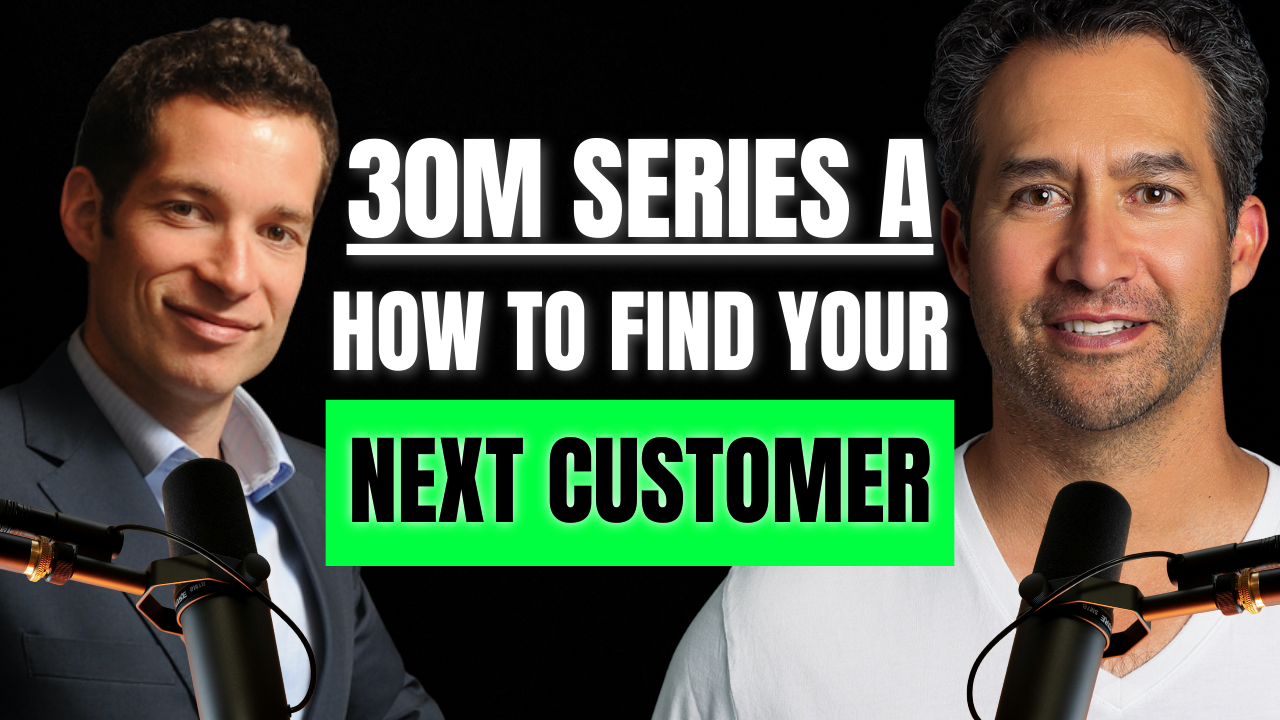
Jake Aaron Villarreal: I'm Jake Aaron Villarreal, born and raised in Silicon Valley and here to take you behind the scenes to share what it's like to be a startup founder, the journey they're on, the problems they face, and the products they build that are transforming industries. I'm excited to have with us today John Tabis, founder and Chairman of the Board of The Bouqs Company, as well as Partner at M13, an early stage venture fund. John, welcome to the show.
John Tabis: Thanks for having me. Great to be here.
Jake Aaron Villarreal: Great. Well, great to have you here. A little bit more about John. He's not just involved in building his own companies, which he's done a great job of doing, also investing in companies that he's currently doing, but he's got a background in brand strategy and marketing. He's been at Disney prior to this, worked at Bain & Company, and he's just a good strategist overall. So we'll kind of dive a little bit more into your background, John, and then we'll really understand your perspective of how you see things in today's world with AI and a few other areas that we think will be interesting to share. So I guess before we dive in on you and your companies and your experience, where are we connecting from today?
John Tabis: I'm in Pacific Palisades. So we're a a close suburb of Los Angeles in the sort of South Bay area. It's a little bit further removed from like the Silicon Beach hotspot than I was when I was living in Venice for about 12 years, but moved down here in the pandemic for a little bit of space, a little bit of little bit of quiet and some some great areas for the kids to run around and play in.
Jake Aaron Villarreal: Hundreds of AI startups are launching every month, battling to build their founding teams. As a leader, your job is to get results. When it comes to hiring, that's where it gets tough. So, you go out and you try a recruitment firm, but they don't understand your story. They're off target, and when they send you candidates, it's a waste of time. We believe you should never have your time wasted. That's why we launch Match Relevant. Because your story is more than just an open role. It's your founder's journey, the problem you're solving, the product you're building, and why it matters. When we work with companies, we make sure we understand your whole story. So, we go out and do a search, we're on target, it's worth their time, they're interested, and more importantly, it's worth yours. And when it comes to hiring engineers, we work to make sure we get it right by deploying a team of seasoned CTOs that have built some of Silicon Valley's best companies. They can collaborate with you in the technical interviewing process. They can be a sounding board or they can run it for you. When it comes to building teams, there's no time to waste. Let's make it count. If you have a role that needs to be filled, book a time with a hiring guide at matchrelevant.com and learn how we do it.
I love that area. I'm not too far from you. I'm down in Laguna Beach, but we do get up to LA. I lived there for a while myself. So, just a pristine area. Thanks for thanks thanks for joining. In terms of you, walk us through a little bit more of your origin story before we get into kind of your company. Where did where did you grow up? Walk us through your entrepreneurial mind as a kid. Like how did this start?
John Tabis: Yeah, sure. So I grew up in the deep hills of Pennsylvania outside of Pittsburgh, about an hour and a half northeast of of Pittsburgh in a a village. There's about 300 people called Rural Ridge, Pennsylvania. Literally, the word "rural" is in the name, so you know that you're pretty far out there. We had a single stop sign. We didn't have any stop lights.
Jake Aaron Villarreal: Wow.
John Tabis: We had a gas station that in my living life never operated and a post office and a and a dive bar. And that was pretty much what we had. But great great town to grow up in in the '80s. You know, close-knit, a lot of cousins living next door and grandparents down the street from there and a really sort of tight-knit community. And so I really loved loved my childhood. Grew up on, you know, a lot of acreage with neighbors on one side and a whole bunch of woods on the other. And so lots of opportunities to roam and explore and and adventure as a, you know, 8, 9, 10, 11, 12-year-old boy um out there. And uh and a lot a lot of time in nature like fishing, hiking, all that kind of all that kind of good stuff. Fort building was was a favorite pastime.
I grew up with a thinking around career stuff more along the lines of sort of two eras in my childhood. One was really focused on just creative pursuits, right? I thought of myself as a creative. I was going to write books or I was going to draw comic books or I was going to be a TV producer, right? Everything that was sort of entrepreneurial but much, not even thinking about it as entrepreneurship, much more around I just like to create stuff. My talents in that area were mediocre at best, but it's what I sort of envisioned myself doing.
And then as I as I got older, the idea of business really sort of started to take hold in high school and then in college primarily around sort of a a a desire to have a safe or a stable career, something where I can, you know, make good money and not, you know, struggle so much as as my family did, you know, growing up in in the hills of Pennsylvania. And it was really an interesting dichotomy because part of me had this dreamer, you know, "I'm gonna be a TV producer" kind of mindset, and the other part of me was like, "just get a good job at a good company and keep it because then you're safe." And that's literally my mom and my dad. Those two personas coming in out through me. My mom was like the safe one. Check the books, double check them, triple check them, make sure you're good. And my dad was this dreamer of like, "hey, everything's possible," but was never really a risk-taking guy. I was a public school teacher for thirty-some years before before retiring. And so it was really through those those two lenses that I looked at the world.
And when I left school, I was very much on the safe job. Collect the best names, the best learning so that you can just be sure you're safe from a career perspective. So that was Bain & Company and then Disney post-graduate school. But and those were great jobs by the way, like great people, amazing learning, a great training, but there was always this missing piece of I just kept searching out like why, why do I feel unfulfilled? I'm not, I'm not creating stuff in the way I always wanted to create stuff. And that really manifested for a long time as just side hustles, pet projects, personal hobbies. I I helped produce a film when I was in business school. I I tried to get a couple things off the ground, some nonprofit efforts. Like there was always these other things that weren't my job and and eventually I started thinking like I have so much energy and passion for these things. Why is that not what I do day-to-day?
And that all kind of came to a head in call it 2011-ish where I'd been at Disney for a while and again great job, great boss, you know, good pay, good benefits, cool stuff. We worked on like streaming and cord cutting a decade before it became a thing. We worked on the Disney brand in China and South Korea. Like we did a lot of really cool stuff, but I just I needed to create stuff and that really wasn't part of the job scope and it really wasn't the culture where where we did that. We created a lot of media and a lot of entertainment properties in very entrepreneurial ways, but on the business side that that isn't really what we did. We we spent a lot more time buying companies. And so it became this exploration of how can I scratch this itch to create while trying to keep the safety as part of the journey which you know isn't really necessarily very often provided.
Jake Aaron Villarreal: Yeah. You know it's it's a thought process that goes through a lot of entrepreneurs' minds of when do you start a business and what idea do you really try and take to you know the finish line or really build around. You had a really and still have a really successful company, TheBouqs.com. Just a little bit about that. Touch on that. How did that idea come around and and what really were you looking to solve in the market that you saw was an issue or a problem that it could be worked on?
John Tabis: Yeah. So, I like I said, I had had a couple things that that I played with, business plans, teams, working on stuff, but never really got anything launched or or or got a lot of traction. This one came as a result of sort of two things. One was I decided I'm going to move from Disney into the startup ecosystem because I have to inch my way towards this dream somehow. And I left Disney to go work at ShoeDazzle.com which was Kim Kardashian's subscription shoe business.
Jake Aaron Villarreal: Oh yeah.
John Tabis: It was like a rocket ship up and to the right you know lots of funding and just raised I don't know a $50 million Series C. It was like the talk of the town. And a buddy of mine was friends with their COO. We met, we hit it off great. They had hired a new CEO. He hired me to be VP of Strategy and now I'm in the ecosystem and it was great validation for this idea that I wanted to be in this space because in the first week we were making decisions you know like that, just decision, decision, decision, and like yeah we'd do work but it was fast work and really scrappy work and then you had to make a call because there was no time.
Jake Aaron Villarreal: And that was e-commerce for selling shoes.
John Tabis: Correct. Correct. It was a I think the first pure subscription model around fashion. I could be wrong on that, but yeah, if not the first, it was pretty pretty darn early, right? And you know, rapidly growing, you know, large business sort of when I joined, but only about a hundred employees, so still relatively early. And so that solidified for me like this is what I want to do. I want to be in this. The energy, the excitement, the way of thinking was just completely new to me. And I was I was addicted on day one. So that was great in the sense of I got to try it out.
My co-founder for Bouqs, Juan Pablo, and I were good friends from back in undergrad at Notre Dame. We we had been in a band together. We were just good pals and and our friendship really sort of accelerated post-graduation where we were good friends in school, but really became close post-graduation. And he just happened to grow up in Ecuador in the flower industry. His uncle had a flower farm, his dad had a dairy farm up in the mountains outside of Quito. You know, if I think that where I grew up was rural, this is like 10x, right? This is way out there. And we started talking about it because he was back in Ecuador. He was helping run one one of those farms and looking at like, hey, what new sales channels can there be? Like what could be different here for us? And he's like, you work at a direct-to-consumer startup. You might have some ideas around marketing or supply chain.
And I just started to learn about, for him as the farmer, what were the challenges? And there there was a bunch of them. There were issues with transparency. His farm invested more than the average farm in their people and the way they protected the land, the way they protected labor. They got no credit for it because their product got mixed in with a whole bunch of other farms along the way and there was no way to charge a premium or be recognized for what they did. There was a lot of waste in the supply chain. Somewhere between, you know, 40 and 50% of all the flowers that would leave the farm would die without ever being monetized. So, just massive economic and environmental waste. And the economics were tough. They're at the very end of a value chain that was very long and convoluted. And so getting paid and getting paid well was tough. They didn't have a lot of power. It was viewed as a commodity product even though we knew there are better and worse ways to propagate a flower. And so he really came at it from that supply chain side.
And I said like, "Okay, great. Really interesting and fascinating. Let's talk about supply chain. But when I go out and shop, I have this experience that feels like it's 1992. Like web 1.0. Lots of upsells that I don't want, bait and switch pricing, what I order is not what shows up," sort of all the basic tenets of sort of lifetime value to customer acquisition cost just seem to be missing. And that's when I got really excited because I was like, if the customer is an afterthought and the farmer is an afterthought and in the value chain, they are the two most important players, the one buying the product, the one producing the product, there's got to be a massive opportunity here to do something different. And that's when we decided to really dig into the space and build something. But honestly, we were doing it as kind of like a side project just like all the other things. It was going to be a little bit of time here, a little bit of money, but nothing big. And if it works a little bit, great. Maybe a lifestyle business. And we worked on it over a summer. And we launched it. And it was, it was too big to ignore. You know, we did $8,000 in our first month and then 12 and then 20 and then 40 and then 100,000. In our first 12 months, we did over $2 million in revenue with almost no marketing budget because we had invested a grand total of $18,000 in the business. And so that was when we got through that first year, we said, "Hey, this is not like, this is a company and we got to really, you know, make this thing work."
Jake Aaron Villarreal: So fast track, you know, from where that started and where it's at today. Did you have to go out and raise capital? Did you go into new markets? And just as a company, how big is it now?
John Tabis: Yeah. So we we raised a lot of money, almost $90 million in venture capital. Um, plus some debt you know on top of that over time. Company's now you know 50 to 60 employees. Call it you know within a stone's throw of $100 million of topline, a large large portion of that subscription recurring revenue. It's a it's a big brand that's still growing very nicely and really matters in the space. You know, I I would, you know, even three years ago, I would have said we're still relatively small, and I don't know if we're going to matter. The Bouqs Company is going to be a major brand in floral for decades to millennia to come. It's, it is, it is absolutely a thriving business that can survive on its own and no longer sort of need to be propped up by outside investment. And so we are here to stay and and I think you know just at the beginning of what's going to be a pretty amazing long-term growth story. Not as clean and straight and up into the right as I or anybody, any founder would want, but you know very rarely that happens. And it took us a little while to to get our feet under us, but it's a really strong business with a great team running it. So really excited about where we are.
Jake Aaron Villarreal: Yeah. Really cool. And you know for listeners out there that are entrepreneurs that are already building startups that might look to move on at some point from their company whether they get acquired or you know what's the path look like from being a founder to being a post-founder, sometimes it's be, being the chairman of the company. And when you become a chairman what's that really like? What's the difference of being a CEO and running a company to now you've got a different title? Is it less activity day-to-day in the business? Are you more just a mentor to the CEO? Like what's that look like?
John Tabis: Yeah, I mean I think there's a lot of flavors of it, right? And I think it depends on circumstances and what you want, what the company needs, all those types of things. I I created The Bouqs Company for a large reason to make myself CEO. My sort of adult dream was "run the show, make the calls, be the decision maker." And that was a large reason for becoming a founder. I did not become a founder because I thought I wanted to found things. I became a founder so I could be a CEO. And that was my hypothesis going into it. At least in year three or four, I don't remember exactly when, when I realized that I really loved being a founder. And I genuinely didn't love being a CEO. It wasn't, I wasn't great at it. I was I think decent. We had a lot of success and and for the eight years I ran it, I think we came up with pretty good results, but it wasn't what scratched my itch every day once we got to 40, 50 people. It was no longer as creative. There was a lot more process. It was a lot more about prioritization and managing multi-layered teams. And while those things are fine, that's not what gets me up every day. What gets me up every day is the dream of "what if?" What could we... if we built this? What would happen? What magical new thing can we come up with, which is very much an entrepreneurial founder kind of mindset, not a scaling CEO mindset. And so for me, I knew pretty early on that long-term CEO was not my title.
But we were raising a ton of money and a board that was backing me as CEO. That doesn't just happen overnight, right? There's a process you have to follow to kind of get that to fruition. So in 2019, we went out and recruited a CEO, hired a great individual from Amazon. And I would say for like the next year after he joined, we were sort of co-CEOs. He had the title. I was Executive Chairman. I was in the business every day alongside of him and the team helping out, but, but gradually really stepping back and making sure that the team had the ability to do this without me and that happened you know in relatively short order. And then I would say you know year two of that I really was Chairman of the Board, not a day-to-day operator of the business. Others will step away completely on the on day one and have no role in the company. Others will stay as co-CEOs forever and really sort of be in that seat. We all aligned around a plan that had it sort of gradually you know stepped back and now as Chairman with our CEO Kim, I'm very much there to help her, right? Whatever it is that she needs. If she needs advice or or some help in evaluating an option or, you know, assistance in and having a meeting, holding a meeting, setting up a meeting, whatever it might be, I'm there to help as I would help. So, I have the sort of all the trappings of a typical board member, but then plus a lot of, you know, personal time spent with her and helping make sure the business is in a great place. But I have no direct reports. I have no official decision-making uh capacity outside of a board member.
And I really love that space. It gets me enough in the business where I can feel connected to it. I can feel like I'm having impact, but super frankly like Kim's a better CEO than I ever was. And so, it's really great to feel that the business is in the right hands, but you can still make your mark, help where you can help. You know, my superpowers are not running a team and a P&L day-to-day, but I can make things happen for her that are genuinely value-add where she appreciates that involvement. And so, we have an amazing personal relationship. She was my CMO for two years before she was recruited to go over and run Skims with Kim Kardashian. Kim Kardashian keeps coming up. It's not not planned, just how it's happened. And and by the way, she was, ShoeDazzle was acquired by a competitive business called JustFab. Kim was General Manager of ShoeDazzle for a period of time after I had left. So there's a lot of Los Angeles, you know, subscription e-commerce sort of overlap going on there. And then she's doing an amazing job, you know, running the company. So it's it's to me it's it's a really great balance between having engagement in my baby, making sure it's doing great and adding value while shifting to what I do, you know, day-to-day now, which is on the, you know, the venture studio side for M13.
Jake Aaron Villarreal: Yeah, that's great. Yeah. You know, the creative side of taking an idea and making it into something that becomes a business that sells products or services with real value customers are willing to pay for. And that journey is very different than as a CEO running an operation where you're optimizing the business and scaling it and looking at where the revenue can be and the margins should be. And yeah, that's textbook in some ways and some are just do it differently. But that's really cool to see that happen because it does lay out a path for others that are kind of with the same mindset you have, which is "Well, once I build my company and that's the fun part where I get it to a certain level. What's my next step? Do I just start another company or do you do something different?" You went into venture, and so we'll talk a little bit about that as well as being a chairman where you're still being able to add value to your, you know, your current company that you built. So exciting to kind of transition your story a little bit here into today's world. And boy what a world it is with you know, AI all over the place and ideas are a dime a dozen. But you know if you look across the board, almost every industry has some opportunity to be optimized by AI and what that is we're still discovering. But you know we've waited 24 years for the next big transformation, it was the dot-com boom and then we went through cloud and mobile. But AI is a, is a different animal and I think a lot of value, some positives, obviously there's narratives about some negatives, but we look at the business front of it and there's a lot of innovation going into it today. So you know, as you look at companies that you invest into and support, what's your general thought about AI currently from what you're from your position, what you see?
John Tabis: Yeah, you know it's it is a fundamental shift. We, I grew up in the age where nobody, not nobody, not everyone had a computer at home, not everyone had internet, right? Especially and then phones came much later in my in my 20s, phones became normal. And so those were big platform shifts, right? Just massive shifts in consumer behavior and business behavior because of of that evolution. And what's interesting though about that time versus now is that while there's a lot of uncertainty when those things were happening, like what's going to go online? I remember when people were like, "You can't put your credit card online because all your stuff will get stolen. So, no one's ever going to shop online" and now everyone always shops online, right? There was a lot of questions, but the big difference there is that's a, that's a knowable question and an unknowable answer.
The hard thing about AI is what's the question that you should be asking. It's really tough to even envision a world where you have full automation, sentience at some point, and what's going to happen as a result, right? Our best references are sci-fi movies from the '90s, right? Like my son and I were watching I, Robot the other day with Will Smith, like classic AI robot movie, which seemed totally fictitious back then and is now kind of like, you know, we're not that far. It's like you could see it coming. And so the changes, the what questions to ask are actually even harder.
So what I think my point of view on it, and this is not necessarily the firm's point of view, is that we're we're the batter of the first inning. It feels like so much has happened and it has. It is the world is dramatically different today than two years ago primarily because of OpenAI and LLMs. But if you actually think about what LLMs are doing and generative AI in general, it's pretty surface level. Massive impacts on workflows, on, you know, students going to school and on businesses. No doubt. I'm not saying it's not, but it's the first batter in the first inning. I genuinely believe this because what we're doing right now is we have we have models that can take in a whole bunch of information and in a very fluid conversational way push that information back out. It can remember some things that it was taught in quotes earlier in a conversation, but it's still an input/output. It's a really sophisticated search engine. And again, that's pretty amazing. That's not close to where we're going to be.
And so the lens that I try to take through it is if you are a startup today and you don't have the ability or the plans to leverage those tools then I just wonder sort of about the underlying thinking of the founding team, right? Like scalability, efficiency of process, efficiency of data is enhanced so much via AI that if you're not even thinking of it and it's nowhere in your plan, you must have something else that is just dynamically unique that you're building yourself, otherwise, you're just going to be behind. And so there's a sort of a base layer of understanding and of planning that sort of I believe has to be part of pretty much every startup that's getting built today to have a belief that it can be really big in the future unless you're like all in on hardware or you know satellite or something that's that's very different. We tend to invest primarily in software, right? Marketplaces, B2B SaaS, that kind of stuff.
But I'm not naive enough to think that I or anyone that we're talking to right now is going to predict exactly where this thing is headed from a macro perspective. And so let's not delude ourselves into thinking we know exactly what's going to work. And so then it's really about founders and their curiosity, their level of grit, their level of flexibility in thinking that as this evolves, they'll be able to evolve with and on top of whatever those evolutions are. So I don't need somebody today who's the most cutting edge AI person on the planet to back them. I need somebody who's going to be capable of recruiting those people and building the right partnerships and leveraging that technology as as the the company evolves over time and as that platform, those platforms evolve over time. So it it's different but it's not that different, right? You would have said the same thing about cloud computing and AWS and you know mobile commerce five years ago. I think the difference is that this is going to play out in bigger ways over a longer period of time than those previous platform changes.
Jake Aaron Villarreal: Yeah, that makes, makes sense to me. Yeah, we've seen a lot of companies, I mean transparently 18 months ago, 10% of our customer base, and we recruit, we help build teams, was AI companies. Today it's 100%. That's 18 months and we've been around for 13 years. So to go from, you know, just knowing that it's coming and it's kind of in the background AI, you hear about it, you use it, you're not really sure how it's impacting your day, to like 100% is like the proof is in the pudding. It's here. It's now, lean into it because it's it's really like you said, the beginning of, you know, the this sort of growth spurt, you know, first inning, second inning, whatever you want to call it, but it's here. I think that the the challenge that we see is it's it's a different, recruiting AI engineers is different than your typical engineering because for, for the most part there are a lot less of them and all the big companies are going after them. So think about Google and Meta and Microsoft and you know the salary ranges from what we've seen are $100,000 more than your average engineer just for AI in particular. So I think there's got to be a little bit of a mind, mindset change for founders that when they're growing a company that, wait a little bit different, we need a Speech-to-Text engineer, it's a little bit different than like a front end or backend engineer and where do you find them? You know, so it's really interesting to see where things are going but also the challenges, it's not just about the ideas and the technology, it's also the people. They're really the ones behind building this, so there's limited supply and if you can find them you know, hire them, but lots of opportunities and innovation. Talk to me a little bit about where you're at today as partner of M13. Where, where is the focus of the venture fund and in particular what is that, what's your role in the company?
John Tabis: So M13 is a Series A focused fund. So relatively early stage investing behind the future of work, the future of commerce, uh money and health. So a pretty broad mandate focused heavily on software businesses and then and with a, with a recent focus sort of call it on emerging technology. That could be crypto obviously, AI, Web3 to an extent but you know more on the crypto side and and a lot of B2B SaaS, sort of that enablement layer below the the the application layer. Born out of Carter and Courtney Reum, two brothers who founded a company and and really became just very prolific and wildly successful angel investors in the LA scene as as the scene was growing, call it like 2014 to 2017 at the beginnings of of LA tech. And um and they had this thesis around not just picking winners but making winners. And so they've, they've really done a great job of building out a platform inside of the fund to help accelerate companies up the J curve. So we have 45 people in the firm. Uh 10 of those are full-time investors. Um but all of them except for I think two were former operators. So we really come at the business of investing from an operator's lens. We understand the journey. We know what it's like to build. We know what it's like to have the struggles of building.
Um and then on the sort of second side is that again, of the 45, 33 of them are there just to consult with and do work for the founders. So for the size of our fund which you know we're we're around a billion dollars of assets under management, relatively small in a large pantheon, relatively large considering we've only been around since call it 2015, is this this heavy focus on being in the trenches with the founders. So we have a partner plus a team on the data and architecture side of things. We have a partner plus a team on talent, go-to-market, like you name it. We have resources internal to the firm that the partners have decided to invest in those people rather than take the fees and put it in their own pockets so that we can make our companies move up the J curve faster. So it's a highly unique culture. It's a highly unique platform and and at least thus far in the history of the firm wildly effective.
And so where I come in is that alongside of that, because the brothers were both entrepreneurs and they love building, they had always had what they called Launchpad, which is the venture studio inside of the fund. Can we help start things from scratch in a way that will give them an unfair advantage versus the rest of the market because of the resources that we bring to bear through our ecosystem. It's been around like I said for since the beginning of the fund, call it five years, six years. And I joined about a year and a half ago as an Entrepreneur in Residence to figure out like what does this look like at scale? How do we do this in a way that really moves the needle for the firm, for our LPs and for the ecosystem in Los Angeles. And so spent about six months working with them sort of as a consultant, as an EIR, trying to figure out what does this machine look like. And then last July was made a partner and and and joined the firm full-time to really make this vision come to life.
And our vision is, is around sort of two main tenets. The first is that there is no programmatic way to build magical companies that create massive returns and impact the world in a positive way. There's no formula you can follow every time to make that happen because companies, just like anything, need a little bit of serendipity, a little bit of luck, a little bit of just sort of organic magic to get to where they're going to go. And so what we try to do is build a very disciplined process around how you get the right pieces to collide, like the right atoms to collide so that that magical explosion of creativity and business happens. And so all the work that we do every day is around finding massive problems to solve in the world that software can help with, validating that's a real problem, validating that there is a solution that is unique that we can build, and then be building all the right resources around that team to make it successful on, in an unfair way. Meaning that it wouldn't just randomly happen upon this set of circumstances. So the best example of that is Lifeforce, which actually launched just before I joined. Lifeforce was launched with Tony Robbins uh has you know a lot of thesis around health optimization. We built a technology and e-commerce platform to enable really customized health care around, especially around hormone balance at scale. Company shot off like a rocket ship, grew very quick in revenue, has now raised multiple rounds of funding and is off to the races because of that packaging and the and the great work of the founding team in that concept. And so we're constantly spending time with really smart people in in spaces in which we're interested and testing these hypotheses, learning from them. But we're not just learning from them. We're not just getting the information, taking it, and putting it into a deck. We're building a relationship with those folks so that they want to invest, they want to join, they want to advise. And that momentum that happens is the signal that we're onto something really special. And if that momentum doesn't happen, it means we're probably not onto something very special. And so we probably should take a, you know, take the pencil back to the drawing board and and start over a little bit. And so we're we're building for a purpose of building a company, but it's almost like the entire thing is a big hypothesis test to see if we're going to go where we need to go. And if so, we lean in more and if not, we we try to reshuffle the deck and try again.
Jake Aaron Villarreal: So you're actually taking ideas and building a team around bringing a startup to market versus finding a company that's pitching you on "give us some money because I have this idea and I want to, I need capital to to build it." So it it sounds like you're working on the internals of the idea and launching it and putting it in the market with the infrastructure around to make it happen.
John Tabis: Yeah. All of the above. We, it can be our idea. It can be one of our investors' ideas, one of our founders' ideas, but they already have a company. It could be a founder off the street who comes to us and says, "Hey, I love this space." What ends up typically happening is we get inputs, right? Lots of inputs from all over the place, right? Uh founders off the street, friends of friends, investors, whatever it might be. And we start to see patterns in the data that says, "Hey, this space is worth exploration." And then in that exploration, we'll find a former operator who operated in that space. And they're passionate about it. And they say, "Hey, I'd love to help out on that." And they might help out a couple hours a week and be an adviser, whatever it might be. And then over time, they get so in love with the team and the technology, the approach, they say, "I want to run it. Let me run it." Right? Or we have a founder that comes to us and says, "I don't have an idea, but I've got two team members and me. How can we match?" And then we go through our pipeline. We have 170 ideas in our pipeline right now. "These two are great. We start working on the two. This one falls off. This is now the one." And we continue to move that one forward.
More often than not, when we start that work, we don't finish it. 80, 90% of the time, we get to a place along the way where we say, "This isn't the right combination. We don't have the right insight. The the market isn't ready for it. The space isn't big enough." We come up just like any investor with mostly "no." Um, but that means that when we get something all the way through the process, we're feeling really confident that there's a a really strong "yes" there. So, there's no, there's no defined way. We don't go out and only look for founders with ideas. We don't go out and look for people without ideas. We take all the input and we just build this very disciplined and and repeatable process around it to get to the best combinations of people, software and thesis that gets us a lot of confidence that this thing is going to have a long life.
Jake Aaron Villarreal: Yeah, that's amazing. And by the way, Lifeforce, I've got the book sitting on my shelf and you know, I I'm a big believer. I didn't have any idea that that's where the team was being built and it was coming from, you know, M13 around, you know, how to take it to market and build around it. But I love the idea. Tony Robbins is great. So really cool that, you know, those are A-players that you guys are working with. If you are a company out there, you know, a person with an idea, maybe a great track record, what I understand, I think the value you're sharing, if they went through a Techstars or went through a company like yours... it sounds like Techstars is, you know, you have the three or four months, you maybe have a network to kind of help support you. Maybe they invest in you a little bit and, you know, really help you get off off the, off the ground. But what it sounds like you're doing is much more involved in different value levels that you're putting real people behind the idea. Is that accurate?
John Tabis: Yeah. So I I love Techstars. My my good buddy Matt Kozlov runs it here in LA. A good friend of mine, former Bain guy as well. We go way back and tried to recruit him to be my Head of Product for Bouqs way, way back in the day and he he roundly rejected me and I still rib him about it today. But I think the primary difference there is that they are, they are running a process and it is a standardized process. Every company goes through the same process to get to a demo day to bring in outside investors and sort of give that those companies a platform from which to raise.
Whereas we are specifically uh working internally with any given set of resources. And again, very different. Sometimes there's no founders and it's just our team working on it. Sometimes there's a founder and a team. Sometimes there's just a team, there's no CEO. All these different combinations to get to a place where our funds can write a check. And so it is, it is a different ecosystem because we're really focused on things that will fit inside of M13 and where we can uniquely bring value. And there is no standard process. Everyone is its own very specific, very special baby that's going to look very different in how it gets from A to Z than anything else that we're going to work on probably ever.
And so while that standardized practice that Techstars has gets people in front of a bunch of really qualified investors and I think has great results, it's just a completely different approach. I wouldn't say it's better. I wouldn't say it's worse. It's just very different. And what I say that we do is we take what happens in the wild on its own without us. A friend starts working on something in their garage, you know, nights and weekends, and then they recruit their buddy, and their buddy comes on board. Now there's two of them. And then they go to like a networking event and pick up a customer service representative. Like these things happen in this organic way in the wild. And we're just trying to do the same thing in a more efficient manner with a whole bunch of resources around it that when you get to the end of the same exact work, the same exact process, you did it faster, you did it more efficiently, and you did it better than you would have on your own. And at the end of it, you have a check from us.
And so we we we we like to tell people like, "Hey, look, at the end of the day, you don't have to quit your job and take a year of zero salary in the hopes that you might build something that will get financed. You can work with us. Keep your job. Work at nights and weekends outside of your job, very part-time. And at the end of it, you'll have a team, technology, a thesis, and money in the bank. So when you're quitting, it's not a maybe, it's a company." And that is, I think, a really compelling value proposition, especially to a group of people that I call "founders in waiting," which is this whole massive set of talent out there that have always been sort of startup curious. Maybe they've advised a bunch of startups or mentored startups and they're high quality operators who have all the qualities you would want in an amazing founder. But they also have a mortgage and and some kids, or they have golden handcuffs at an amazing tech firm, and they're like, "I'm not gonna quit that situation for a maybe," right? Really big leap to take.
Whereas instead, you can build with us on a very part-time basis. And at the end of it, you want to run it, you've got a platform and funding and a team and you're ready to go. And if you don't want to run it, then just stay on as Chairman of the Board or Executive Chairman or an adviser and get a little bit of equity, help create something in the world and and keep your day job. So it creates a lot of optionality and flexibility for a talent pool that I think is really sort of underrepresented in the founder universe because you know what I did when I was you know whatever 35, 30, how old was I gosh 35, had a nine-month-old and I had just bought a house in Venice and my wife worked in public schooling. That was inadvisable. It was not a smart well-thought-out decision. It was based on dreams and drive and belief in myself. That's not necessarily the way that everybody should get to this outcome, which is being founder and CEO of a startup. So, we want to open that aperture, make that path more palatable because I think there's just a ton of talent sitting on the sidelines waiting for a partner that can help de-risk some of that very early, and at the end of the day hopefully have an outcome that is much bigger, much faster, much more efficiently up the J curve than they would have on their own anyway.
Jake Aaron Villarreal: Yeah, I like that. You take that risk out, but you don't take the create- creativity or the dream out of what someone might have and what they want to potentially do. It's just timing is everything. And it's hard to, it's hard to take a step off that corporate ladder when you know that, you know, you're making X amount of dollars and you're stable and you're comfortable, but maybe you're bored and you're just kind of dying on the vine with these other ideas that could really bring life to not just you, but the world. And, you know, you're a great company to to collaborate or partner with. So that's that's really cool quite honestly. I mean we work with a lot of VC firms and this seems and sounds like something much more engaging transparently, and I feel like you know if someone's out there with an idea, like the next question probably is "Well how do I get connected with John Tabis or what's what's the process of you know, how do I apply, what's you know, walk us through that."
John Tabis: Yeah for sure. So you can reach us on our web website. Recently we launched m13.co/launchpad. That describes a little bit of our process. Has a link in there. It says "build with us" and and sort of provide your information. You're not really applying to a program so much as letting us know what you're passionate about, what you'd love to build, where you are in your thinking, you know, all that kind of good stuff, and and then, you know, we we have an intake process and we review those and and reach out to folks where we think there's a fit. The other way is just, you know, ping me on LinkedIn. Just look up John Tabis. Connect on there. Shoot me a note. We regularly, you know, monitor monitor those as well. And it's really, it's funny, very rarely, not very rarely, I would say more than half the time, folks come in through with, with a, with an idea of how they're going to engage with us. They think, "I'm just going to be a mentor" or "I'm going to found this idea" or whatever it might be. And they end up doing something with us, but it's not what they thought. They thought they're going to found this thing, now they're going to be an adviser to that, and they're going to found something new with us. Or they thought they're going to be the founder, now they're going to be a team member in something else. The the cross-pollination that we sort of have across our concepts and the people working on them, it's it's really a great way to explore this because it's not just, "Oh, I have to build this one idea that I have in my head." Again, we have 170 in the pipeline. We've funded multiple of them and we're currently exploring another eight, you know, in parallel. There's just so many ways to lend your expertise, your value, and your passion around what we're building. And we always say like, "Just get involved. There's no hard contracts here. We're not like asking you to give us all your ideas for life and any of that kind of stuff. We're just co-builders and we're here to explore with you and help you get, help you get to the place that you should be within the venture ecosystem. Whether it's your idea or one of ours or somebody else's."
Jake Aaron Villarreal: Yeah, you just sparked an idea. Maybe this could be an idea that I help build with you guys. Who knows? You talked about...
John Tabis: Exactly. Right. You know, that's how these things happen.
Jake Aaron Villarreal: You talked about helping build companies that come to you with an idea and we hear this term "co-pilot." How about a co-, co-builder that actually really takes the format you're creating and AI drives the process, which I'm sure you're probably already working on. But you know this is very niche. I love the fact that it's you know, venture studio to me is it it feels different than a venture capital firm giving me money. What's the biggest challenge for you right now as you continue to evolve and optimize this venture studio?
John Tabis: Yeah, I mean I think the the the hardest part with where we are now. The first year was really like, "Hey, how will we build stuff?" We we don't have it perfect, but we have it 75% figured out. There's always lots of room for improvement. And we were sort of heads down like, "How do we, how do we figure out how to build companies at scale?" And sort of what's our startup that's going to build startups look like? And that machine we now got to a place that I think is really good. It's not perfect, but it's really good.
The next phase is really about, "Okay, now how do we optimize that process while helping the companies that we've already helped launch?" Because we're still a relatively small studio. All of a sudden, we have four funded concepts out there in the market, some with customers, some building, you know, technology with an idea of launching in X number of months or whatever it might be. Now, we're not just building stuff, we have to also help founders that have already launched. And so the balance of sort of time and attention, relatively limited resources, etc., really stretches us to be creative about what what can we automate using AI, what tools can we use to really make our team of... we're actually hiring an associate right now, our team of three build like a team of eight? Because that's the kind of thinking that we need to be able to do this at scale.
We're so early, right? This is pre-pre-seed. This is a person and an idea or an idea and a team but no person. Like this is chicken scratch on a page. So the process from that to market validation and raising like a real Series A, Series B, that's a pretty long process and we are the studio. So how do we think about that balance of resources and how we make sure that we're adding value in the most critical ways for those companies as they're operating you know on their own as founders. Because we are very much a founder studio. We don't take board seats. I'm not here to put rules on you saying you have to take our money or any particular money. It's really about you're going to lead the business and I'm here to give advice and provide resources and provide access and ecosystem. But we can't be the ones driving these things, that will never scale. If that's the way it is then we'll build one company every four years and that's about what you could do. So we really have to believe in the teams, believe in the founders to get these things done and really sort of find the right size fit for our resources. You know, we know what it looks like in Day Zero to call it Day, I don't know, 90 or 120. Now, what does it look like post launch, you know, through that Series A? And that's really the part we have to figure out next.
Jake Aaron Villarreal: Yeah. Got it. Last question for you here. What are you really excited about? We're halfway through 2020... as we continue to push into the end of the year. What are you excited about where your company's at today and what you're doing? And what do you see on that road map coming forward?
John Tabis: Yeah, I mean I'm I'm jazzed about, call it the venture studio space broadly. You know, when you look at sort of overall trends in in venture or private equity or whatever it might be, this model feels like kind of where accelerators were a decade ago and that, that model kind of went through its peak and then kind of ebbed out and is smaller than it was. I think the, you know you have, you have sort of very large and sort of highly established firms doing this now like Atomic on the East Coast raised a $320 million venture studio fund. High Alpha out of Indiana is building B2B SaaS businesses in this in this model. And you're starting to see sort of the emergence of this as an asset class that you know LPs and the community in general are just generally excited about. So that's exciting for us. We love that there's sort of tailwinds behind the thesis, you know, more broadly.
And then I think for us, you know, it's really about establishing M13 Launchpad as a as a name and a player in that space where we get more and more and higher and higher quality folks saying, "I want to build something. I want to build it with you guys. Like this is a model that I believe in and it's, and you guys are the right partner to help us do this." Because the more interest we get, the higher quality founders we get, the higher quality hype we get, the better companies we're going to build. And so we, we were sort of not stealth, but not really out there last year. This year's to me like sort of our coming out year. So the second half of the year, you know, more events, uh more presence, more press, more appearances like this to really get the word out that we exist and and are a top tier partner for folks to build with.
Jake Aaron Villarreal: Well, we'll get the word out for you big time. I love what you're building and I know a lot of companies that would be super interested in in learning more about it. So you've got the website, you know where to find John. I want to thank you so much for coming in and sharing your story and for the listeners for listening listening today. It means a lot to me. You spent your time with us. I'm your host Jake Aaron Villarreal signing off for now. I can't wait to catch up with you all on the next episode. Until then, John, everyone else, take care. If you like what we're doing, don't forget to subscribe, leave a review on Apple Podcasts or wherever you listen. Follow us on YouTube where we go behind the scenes to learn what it takes to be a startup founder.









.jpg)





.webp)
.webp)
.webp)
.webp)