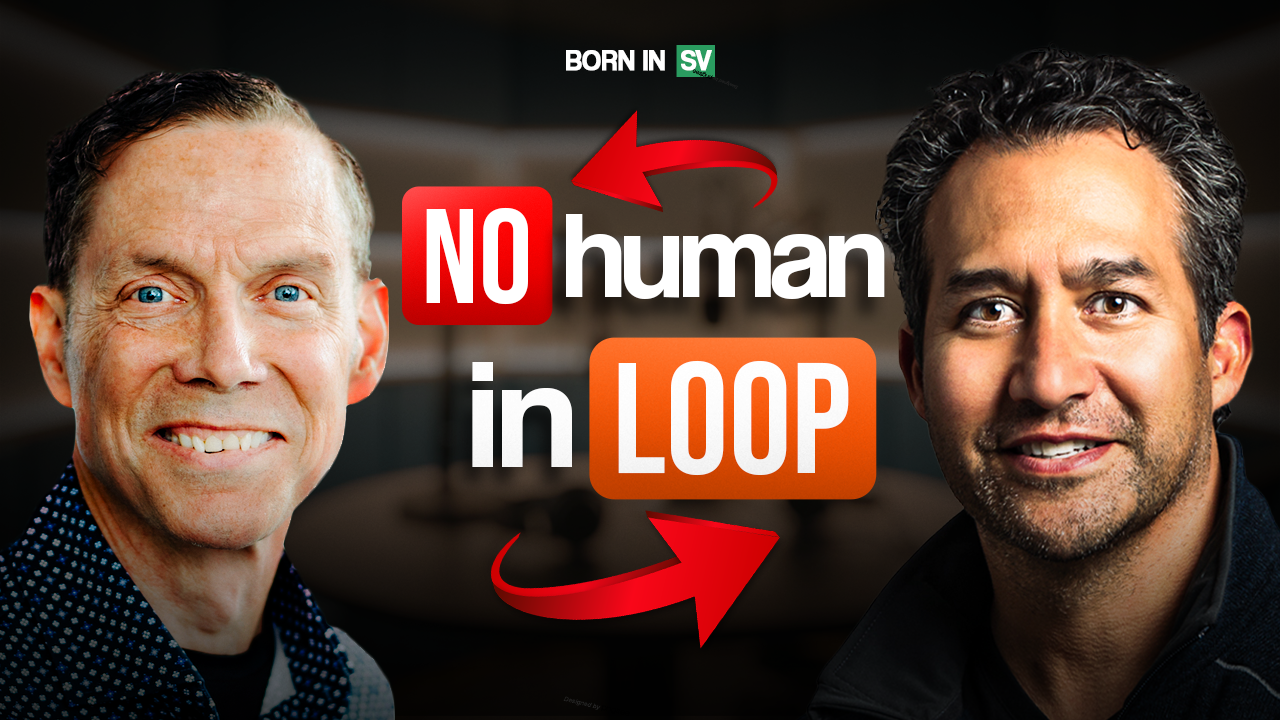
Jake Aaron Villarreal: I'm Jake Aaron Villarreal, born and raised in Silicon Valley, and here to take you behind the scenes to understand what it's like to be a startup founder, the journey they're on, the problems they face, the products they build that are transforming industries. And today, I'm excited to have with us Kevin Surace, known as the father of the virtual assistant, which is licensed to Siri and Alexa, and a few others, just to name a few. Kevin, welcome to the show.
Kevin Surace: Yeah, I'm happy to be here. Thanks for having me, Jake.
Jake Aaron Villarreal: Well, great. Well, a little bit more about Kevin. Uh, he is well known in Silicon Valley. In fact, has been in Silicon Valley for 40 years. He's been a keynote speaker on TED, TEDx. He's got 94 patents, uh, and is really well known in the industry in terms of AI and just, you know, what it takes to build a thriving company. So, we'll kind of dive into your background here, Kevin, a little bit before we get into some of the topics which will include AI and building moats and some of the things that others that are building technology companies today should be considering. So, uh before we do that, uh Kevin, where are you calling in from today?
Kevin Surace: Today, I'm in upstate New York, Western New York, actually, outside of Rochester.
Jake Aaron Villarreal: Hundreds of AI startups are launching every month, battling to build their founding teams. As a leader, your job is to get results. When it comes to hiring, that's where it gets tough. So, you go out and you try a recruitment firm, but they don't understand your story. They're off target, and when they send you candidates, it's a waste of time. We believe you should never have your time wasted. That's why we launch Match Relevant, because your story is more than just an open role. It's your founders' journey, the problem you're solving, the product you're building, and why it matters. When we work with companies, we make sure we understand your whole story. So, when we go out and do a search, we're on target, it's worth their time, they're interested, and more importantly, it's worth yours. And when it comes to hiring engineers, we work to make sure we get it right by deploying a team of seasoned CTOs that have built some of Silicon Valley's best companies. They can collaborate with you in the technical interviewing process. They can be a sounding board or they can run it for you. When it comes to building teams, there's no time to waste. Let's make it count. If you have a role that needs to be filled, book a time with a hiring guide at matchrelevant.com and learn how we do it.
Great. Well, I know we talked briefly prior to this, so you're not from or maybe you're from there, but you've, you've moved there recently. Um, I just spent a few weeks in New York City. I lived there for a while myself on the East Coast. So, love that area. Um, what brought you to back to the East Coast or what, what brought you to the East Coast rather?
Kevin Surace: Well, uh I, I actually have a company back here uh called Token Ring uh working on uh uh cyber security ring, really a biometric ring that, that uh generally, nicest way to say it, puts an end to ransomware and all the, most of the causes of ransomware. So this is a very, very big uh deal and a big opportunity and uh and a big problem, very big problem to solve. Ransomware is a huge problem. It's a multi-hundred billion dollar a year problem now worldwide and it should be solved, and so we're uh you know, we're taking our stabs at solving it.
Jake Aaron Villarreal: Great. Well, we'll dive into that a little bit. Uh before we do that, walk us through your storied career in a minute if you can. It's probably hard to do, but just give us a little preface of really how you got into technology and you know, what uh, what made you stick in Silicon Valley for 40 years.
Kevin Surace: Yeah. Uh there's no better place to start a company, run a company, and have exits in the Silicon Valley. I mean, that's just what you do. And I, it's certainly post-COVID uh we see some other both hot and warm spots um, including Western New York that has a great, great ecosystem, lots of VCs. But look, the, the, the amount of venture money that uh, that you can get in Silicon Valley is, is immense. Like it's all of it almost worldwide. And, and, and so you need money to grow these companies. You need a lot of money and, and we, there are examples of people, you know, they uh raised a seed and the thing took off and they didn't have to raise a lot of money. I get that. But most of the time, if you want to hyper accelerate growth, you need a lot of ability to either market or sell or a combination of both, let alone the technology, even if the technology is perfect.
So, you know, you're just not going to do that on a million dollars or 5 million. You're going to do it when you finally raise your 50 or 100 or 200 or 500 because when you raise that, you have an immense sales and marketing capability. And when you raise a million, you have none, right? You can't afford Google ads for three weeks. So, so it just doesn't make any sense. So, you're just not going to get that big most of the time. And, and, and so Silicon Valley supports that.
Now what's interesting is as much as the major investors are in Silicon Valley, they are more today because of Zoom uh funding companies that are not necessarily in Silicon Valley. And it used to be that they would never do that because they had to visit the offices, they had to be there for the board meetings and nobody wanted to get on a plane and you didn't have to. And today, you know, if you have one heck of a startup in the middle of the, if you're in Chicago and you have one heck of a startup and you reach out and it's on fire and it's AI, and you reach out to Silicon Valley VCs because probably because you know them, not, not, not because you're reaching out blind, you can get funded. And that's very different than it was even five years ago. So you may not have to be in Silicon Valley going forward. So that's, that's interesting, right? That, that's interesting.
So my story, look, I came to Silicon Valley 19 uh uh 85 and uh uh and it has been a uh fantastic ride. Everything I learned, everything I got to do, all the patent, all the tech, so many different technologies. When you've got 94 patents and um and different companies, public companies, private companies, successes, failures, uh everything. Uh but, but, but every single time we certainly meant to solve a serious problem that people were having and that is a key that I think we'll talk about today.
There are so many, when there are a thousand AI startups a week, I can assure you the vast majority are either a feature, an interesting feature, but not a company, or they are, they've solved a problem that nobody has. It's not a pain point, right? They've, they've got a great solution looking for a problem. And we do that a lot in Silicon Valley. We create this, "wow, isn't that an amazing solution." You talk to all your friends, "it's amazing solution." "No, no, no. I need people to say this is a huge problem and I'm writing, to write you a check for it. I need it now. Right? I need this now. I want, I need."
So, last, I'll finish with this. You know, the a great example a couple years ago is this juicer that sat on the counter and you took these bags and you it poked a hole in them. It mixed it with water and it put it in the and, and, and it turns out, you know, you didn't really need that. You just needed um you know, some uh some compressed juice and in any format. And you could you know, put it over water and ice and you didn't need the $300 machine, right? And, and actually nobody, but nobody was wandering around going, "What I need is a juicing machine, not to juice real fruit because we like juicers, but to take your condensed juice product and turn it back in, reconstitute it to juice." Nobody ever woke up and say, "I need that." Right. And so it was a great product and it was an interesting idea, but it wasn't solving a problem.
Jake Aaron Villarreal: Yeah.
Kevin Surace: So it ended badly. It ended very badly.
Jake Aaron Villarreal: Yeah. And you know, I probably have one of those on my shelf somewhere. But um when we talk about business, oftentimes it's, it is about identifying what problem can be solved and can you create value enough that someone's going to buy it, whether it's a product or a service. So Silicon Valley great for innovation, great for funding, great for ideas and finding partners. That ecosystem is incredible, but it is diversified now that things are much more remote. You can start a company with an idea. But, you know, one of the things that I think is really interesting is you've been on 30 boards. Uh, you've built companies, you've had a lot of success. Um, you mentioned to me when you start a company, and specifically, we're going to hone in a little bit here on AI, is building a moat. And that might be something that's been around for 50 years in Silicon Valley, but for sort of the younger generation that doesn't really focus so much on that. Um, walk us through that value a bit and, and, and is it totally required in today's market?
Kevin Surace: Yeah. Well, here's the thing. Some people say, "Oh, I don't need a moat." And what they really mean is, "I'm going to grow so fast. I really just take the market." But that is a moat in itself, right? So your moat doesn't have to be a technology moat. And for a long time, we said it had to be. But with hyper scaling, certainly over the last decade or so, your moat can be "I figured out how to hyper scale this thing, it went totally viral and I now have 30 million users that love it and use it every day." That's a moat. It's hard to overcome that. So you did build your moat.
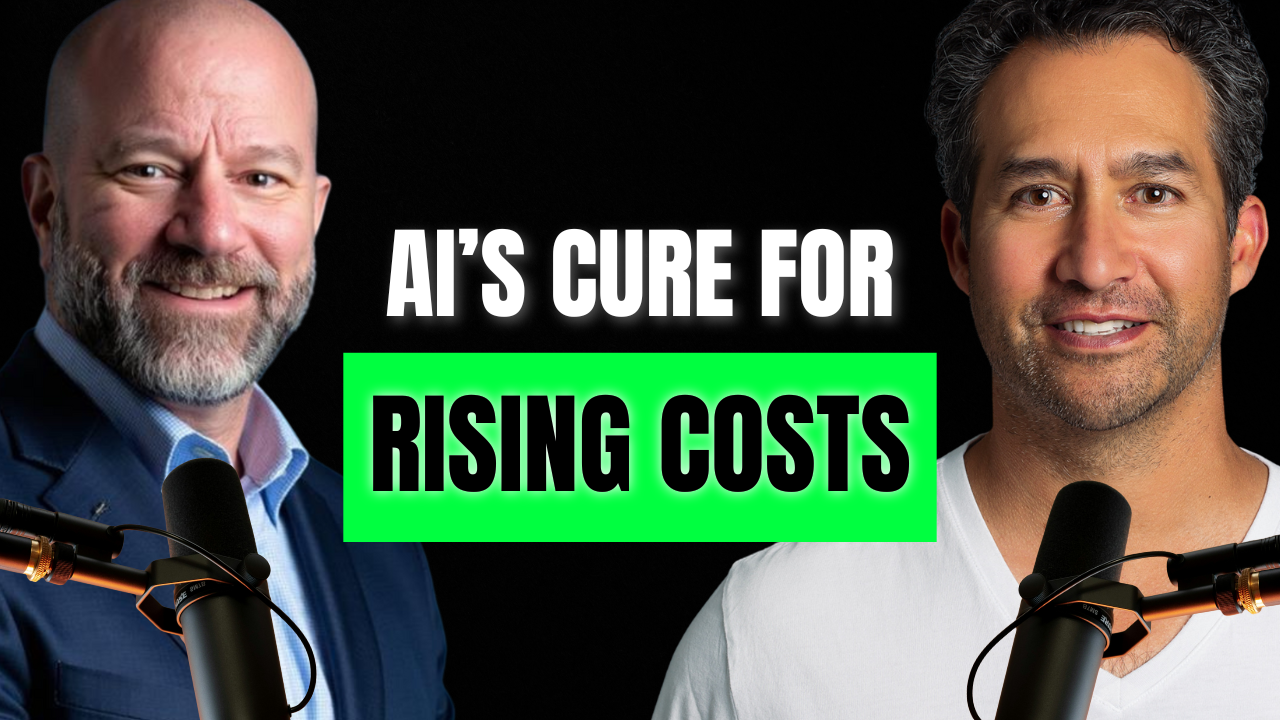
But I can tell you of the thousands and thousands of AI companies over the last year, you know, that have been born and funded and some of them at very high valuations, you know, whether one out of a hundred will really turn into a, a huge outcome is a big question. Maybe it's one out of 30, one out of 40, one out of 50. And, and, and the reason for that is they don't have a moat. And um a lot of... so, so if we go back a year, what people were doing is saying "Hey, I am going to uh build a RAG basically or embedding uh on a um on an existing model like OpenAI. So I'm going to take GPT-3 at the time and I'm going to uh target it in this way and that is going to be unique." Okay, well, but you can do that with a couple of people probably in a week, a really, really good one, right? And once you've done that, yes, that, now you've made ChatGPT-3 at the time really good or GPT-3 really good at say marketing blog writing or something else. Okay, but then OpenAI says "that's a pretty good idea. We'll just include that and anyone can make their own GPT" and that was the end of that right there. There were not five, but probably dozens of companies wiped out.
And then at the last announcement of GPT-4o with the other things that OpenAI quickly embedded like voice in and voice out and stuff like that. Again, slew of companies, dozens, maybe hundreds of companies that were adding a little bit of value to this thing that took seven years to make, right? And billions of dollars. Again wiped out because the major player took the value. She took the value. Uh, so be careful about what you think your moat is and how you convince yourself you have a moat. If you were able to write, create the technology in under, I'm going to say 6 months with a team of people, that's not much of a moat because anyone else could have twice the size team and maybe do it in three months. There's no moat there. If you were able to create technology and generate 30, 50, 100 million users, the, the number of users is the moat. You have to have a moat or else everyone's going to go do the same thing. And I, I run into so many people that go, "Hey, I've got this great idea and you know, we, we're going to whip up the MVP this weekend." You and 500 other people in Silicon Valley have the same thought and are going to whip up that same MVP. Maybe your moat is you go out and get it funded and get a, and raise $200 million. That'd be a moat, right? I got 200 million to spend on sales and marketing. That's a moat.
But be thoughtful about what your moat is and be clear that it's a real moat, number one. Number two, again, did I solve a real problem or am I just adding some something that's ultimately going to be a feature? Grammarly's... Grammarly is a great example, right? We all have used Grammarly for quite a while in whatever we're using, except you know, these transformer models, these LLMs are really able to do all of that even beyond Grammarly. And so what happens to Grammarly in the long run? Clearly, Grammarly has added AI features, etc. But I, I've got Copilot from Microsoft. I, I don't need Grammarly. It, it'll fix... I'll say, "Fix this grammar." Boom. In fact, "rewrite it better than I did. And fix the grammar." Boom. Done. 10 seconds. I, I... it comes with Office. It just happens, right? Same with, with Google. So, things are changing so rapidly. Be careful if you think you have a moat.
Jake Aaron Villarreal: Yeah. Yeah. We were just talking to a company we're working with now that came out of Google and they've built some incredible technology around call centers and being able to change the voice of someone who has an accent to what's more geared towards you know an American accent or UK or wherever it happens to be. And you know, when we qualified who they were and what they were building, the first thing they talked about was you know, building the moat so that we can ensure that our future is there and we can scale. But their moat was about time to market and having the technologists that are building technology, not off the shelf that they can integrate, but actually ahead of the curve on building the very, very hard to create deep technologies that are, you know, quite frankly, it just takes time and takes experts to do. So if you're ahead of the curve with the intelligence and the people within the company building it, that's a head start. Maybe that's also a moat too. Or maybe it's just the technology they create becomes the moat. But that was kind of line one for them. That was very important for them about the moat.
Kevin Surace: So let's, let's talk about that technology just for a second. I wouldn't normally do it, but I, I first of all, I love the technology. It's a brilliant idea. And as you know, this fixing other people's accents uh also got some bad press, right? It's like, "oh well, that isn't fair and these accents are real and what does that say?" And look, you know, if there's, that is a problem. The truth is we sent our customer support offshore 20 years ago. Some people's accents in English are more challenging for some people in the United States to understand. It just is what it... no disrespect. It just is, right? And so having technology that fixes that and cleans it up, brilliant idea.
The fact that you're ex-Google, not so brilliant. There's 100,000 plus people who are ex-Google all starting companies. So it used to be like a big thing in the first couple years of Google, but today you've literally got thousands of companies started by ex-Googlers. Not every ex-Googler is going to make the best company. We, we don't know. And, and the la- the last thing I want to say about this is while you've got a moat in that, there's another thing coming that is already here and absolutely clobbering customer support, which is replacing all of customer support with a large language model with voice in voice out, right? With speech activation both ways, and then you don't need to switch any uh anything because I have no people in the shop.
Klarna obviously famously did this with 700 people. I will not mention names but I know major, major corporations in the US replacing hundreds or even thousands of workers offshore with a large language model with speech activation. Right? So you got voice in, voice out, and um they've trained it on their data set of how to support these customers and they're doing a better job than the customer support people did. So if I've got let's say 500 people in CS and I'm using this translation thing that, that, that uh helps to translate one form of English into something that's a little cleaner, but then two months later, I replace all the people. I no longer need... the first thing all of tier one customer support worldwide pretty much will be replaced over the next few years. That is just what's happening. Nobody wants to talk about it. Talk about it a little bit in Silicon Valley, but quietly that's what's happening. So then I don't need that. So they have a moat around this, this problem. The problem set itself may be wiped off the face of the earth by the very technology that's allowing us to do all of this. So when you have a moat, you still have to look forward and say, "who can come at me from a whole different way and disrupt my entire business?"
Jake Aaron Villarreal: Yeah, very good point.
Kevin Surace: Internet, internet, Craigslist, etc. comes along and you go, "Hey, I've got this great technology that is going to help newspapers have better reporting at a lower cost." But then Craigslist wipes out classified ads, which then wipes out most newspapers. So it didn't matter that you could help newspapers have better reporting. All the reporters were laid off.
Jake Aaron Villarreal: Right.
Kevin Surace: So you have to be careful about the very thing that's going to come and eat the entire industry that you're in. It could clearly disrupt even what you've done indirectly.
Jake Aaron Villarreal: Right. Well, you know, we've both been in the industry for quite some time and you know, I was going through when the dot com was just coming and going, and the internet changed the world. And in it I didn't really understand what we were in at the moment we were going through it. It just was, you know, a new innovation, but the transformation of it was massive. 24 years later, it's AI. My opinion, it's, you know, as big as anything that I've seen. We had cloud and we had mobile and we had you know a lot of different technologies that have innovated over the years, but this is the big one. Um you know across industries you look at you know this definition of a co-pilot that can optimize you know a, a process within an industry or maybe multiple processes. But AI is kind of attacking a lot of different areas in a good way. Um, from your perspective, you know, having raised a billion dollars in your own companies and, you know, having been around for quite some time, where do you see AI, uh, just as it is today? And kind of where do you see it going, uh, in the future?
Kevin Surace: So, so look, um, we've been making strides with AI since the 1950s. This is not new. Uh, even the transformer model isn't exactly new. It's 2017, which is what large language models are based on, right. And um so we've been making this progress for a long time. And where we are today is a lang-, large, large language model allows the normal human with no coding experience to inter-, to actually interface with a computer that can write English sentences back or whatever language you want. That's pretty interesting. It doesn't mean they're always right, but we can force them to be more right, and we can train them to be only responsive within a certain data set.
So you have what seems like almost artificial general intelligence, certainly within a certain realm, because I can ask almost anything, it's read almost everything, so it can put together a sentence word by word back to me that is uh indistinguishable from a genius, right? It just is. That's fascinating. And when we implement that with voice in and voice out essentially, a virtual assistant, I can go after certain tasks that humans have never really loved doing for the most part. Customer support is a great example. Uh that is highly repetitive. Um high turnover, upwards of 30% no matter what customer support you know organization you're in. And so um you know these call centers are a great place for LLMs with voice to do uh as good or better job than humans.
And humans always listen to these podcasts and things, and anyone who says, "Well, it'll do a better job than humans," then people write to me and say, "That's terrible." And that... look, a calculator does a better job than any human at math. So, get over it, right? We've, we've seen technologies that do better than us. Excel does better at math than any human can do. Period. Because you could put uh uh you know formulas in there and they will calculate things literally millions of times faster than your brain. Get over it, right? Just get over it.
So now we have a language model, but we've always thought, "well, language is unique to humans." Well, now it isn't. It speaks... by the way, computers have spoken languages for a long time, but mostly they spoke like C++ and Python. Now they speak English, and that screws with our head, right? We go, "Oh my goodness, this is the end of the world." It's not the end of the world. It's a great tool and the first jobs that will be impacted... all jobs will be impacted at some level... the first jobs [that] will be highly impacted are mostly jobs that we sent offshore a long time ago. And the reason is we as, I'm talking to us right, we in the United States decided that we would go for the lowest cost operation for those tasks. So one of those is customer support. It just is. 20 years ago, we decided send it all offshore because a dollar an hour is better than $20 an hour. And now we're going to decide that a penny an hour is better than a dollar an hour.
Jake Aaron Villarreal: That's what we're going to do. Of course it is. Yeah.
Kevin Surace: So that, so, so the other thing is obviously, a company I'm working with called uh called Appvance um is, is doing the same for um QA, quality assurance in, in, in software. And, and what it does is it uses AI to find all the bugs in your software. It's pretty cool. And you go, "but what about the two and a half million people employed, almost all offshore, that are manual testing or are creating scripts for automated testing? What happens to those two and a half million people if AI finds the bugs thousands of times faster?" I, I, I don't know. They, they'll, they'll be doing something else. That's the bottom line, right? That is the bottom line, they'll be doing something else. Uh and, and so we pretty much crack that code today, and not everyone's using it, but those who use AI script generation uh it's an eye opener. It, it finds the bugs. In, in your, most of that code of course is enterprise grade you know things, banks and insurance companies and things like that.
Uh but look, if I sat here and said, "Someday we'll have driverless cars and you will no longer need taxi cab drivers." You'd go, "Yeah, that makes sense. I don't know when we'll have it. It's taken a little longer than we thought. Maybe it's 5 years off, but of course, you won't need a driver of the vehicle if there's AI that drives the vehicle." Okay, that's that done, right? So, many of these sort of tasks are going to go away. And they tend to be the repetitive ones because they're easy to model, they're easy to have data around. Um and, and that is uh you know, that's a great breakthrough for humanity because all of these people can then be upskilled and upleveled to do things that are more uniquely human, right? Bigger decisions across the street and really taking in all this data and deciding what to do with it. Lots and lots of things.
And even in the quality assurance realm, you know, we want you, we want people evaluating all the bugs that come back and what, what are the priorities? How do we deal with them? Who do we assign them to? What teams? All of that is interesting. Sitting there literally every day either manually testing or writing scripts test... basically code to perform tests uh is mundane and repetitive. And uh, and again, with no disrespect to those doing the job, it's just, it's a tough job and it's highly repetitive. And you could sit there for literally 20 years doing nothing but say, writing Selenium scripts and then maintaining those Selenium scripts. And, and it's great that you have great pride in that, but it's obvious a machine is coming for your job, right? Just, just is.
And, and look, we've been through this too. If this was the 70s and I was working at a car plant and all I did was take a screwdriver and go [mimics turning screwdriver]. Then the next one came around and [mimics turning screwdriver]... okay, clearly the robot came for my job and took it. By the way, making cars less expensive. But that particular highly repetitive task, all those tasks in car plants are done automatically now. But we employ more people in making cars than we ever have. Why? Because we've driven down the cost of a vehicle. And so cost of a vehicle can be $20,000, not 300,000, which is what it'd be if people were making them with no robots.
Jake Aaron Villarreal: Yeah. You know, you talked about customer service and QA, repetitive task. But the big question we get a lot is, how about development? How about software developers? You spend years going through school. You come out with a degree. You can do your job. Then along comes AI. And by the way, maybe it does my job, you know, as good, maybe better. Maybe it's just a good companion that helps me do my job faster. Like where do you see AI fitting in and helping developers versus replacing developers?
Kevin Surace: So first of all, we don't have enough developers in the world. So you're not at huge risk as we sit here, but Copilot is making people, at least developers, at least 55% more productive uh and average across millions of developers. This has been highly measured and that's getting better. And again, hunting down bugs in your code in your source code also. I mean Devin and Copilot are getting really, really good at this. Right, not perfect, but really good. Um already if you were creating a relatively simple game, that can be totally written automatically for you. You didn't write a line of code.
So Vinod Khosla said late last year he says uh, "Actually there'll be more coders than ever. It'll be all of us who, we'll code in our own language. And I don't mean C++ and Python, I mean English. We'll tell it what to do and we'll do it." Now here's why you will still need a lot of developers. Because there's a lot of code that we write that doesn't have an easy English way to describe it, right? Like some... this is a very deep math subroutine. And I've got to take this over here from this API and then I got to check the database. I got to do... oh my goodness. I, I can't put that in English. I know what it is. I know the whole task that has to be done. But there are so many systems to interface with that, that sort of, those underlying tasks are uh I can't... it's not that a co-pilot couldn't write it, but you couldn't describe it. And by the time you described it and debugged it you might as well write it. So there's a reason we have computer languages, because they're very efficient ways to describe logic in computer code, and English is not. So this whole idea that I'm going to write everything in English, I think is, is a little crazy.
That said, a lot of the logic and a lot of the code we do today can be well described in English. Certainly web interfaces, UXs, CX, things like that. So, it's reasonable to expect that in the next three to five years, we could have hired all the developers we ever need. Not ever, but you know, we're at a level and that we don't have that many developer openings anymore. And that the tide's turn where um overall our developers are 80 or 90% more productive than they have been, you know, using a co-pilot or Devin or a Gemini or whatever. It doesn't matter, Codex, whatever the model is, right. I think that's reasonable and it's coming. And so if I were going to school, I mean, I like coding, so I might go to for coding anyway, but if I were telling my kid who's 18 what you should go into, I wouldn't say coding. Just I wouldn't go be CS or developer. You might say "get some AI chops under your belt," right. Or, right, okay, who's making the most of the... Silicon Valley now, what, what career, and I don't mean seniority-wise. You tell me what career, pretty much entry level, within a year you're going to make the most in Silicon Valley. Is it a coder?
Jake Aaron Villarreal: I would say so. I mean, I would say...
Kevin Surace: Not a developer. Not even close. Pick another career.
Jake Aaron Villarreal: Pick someone else in Silicon Valley. Um, God, you know, I would say if it's I mean, it's got to be an innovation if it's technology. So either product or or engineers, or if it's not any of those...
Kevin Surace: This is how everybody thinks. But I can tell you the going rates in Silicon Valley, and I know what you know a brand new developer out of college gets and what they get after a year, etc. And of course it depends on the company and it could be you know 125k or could be 250k. Great. No. The number one thing you can do with only one year experience in Silicon Valley is plumber. $350 to show up to your house today, and I'm only there 20 minutes. And I can do 10 to 12 of those calls a day. Okay. That one-year plumber could make 700k a year if they want to hustle. And you're not going to get that as a coder with one year experience. Point to that as a coder with 25 years experience. So 700k plumber. Why? There is no AI. People are retiring from the field faster than they're entering. There's a huge shortage. And if you don't want to wait six weeks for someone to come fix that leak, they will show up and they're going to make 700k a year doing that.
Jake Aaron Villarreal: That's great. And you know, that's very insightful. Yeah, AI is not going to replace fixing your toilet. Maybe in some level it can give you guidance on how to do it. But um you know let's talk a little bit about hiring because uh you mentioned you know you're going to tell your 18-year-old you know kid to go to school to become whatever they want to become. But when it comes to hiring, you've had multiple companies. Like what are the, some of the things that you've seen in your experiences that have really helped shape the growth and the, the teams that have really done well in your organization? Because we, we work with a lot of first-time founders and you know, you're not interviewing people 40 hours a day, or a week rather, right? And you don't, you know, you don't have as much time to truly spend maybe all of it in just making sure you get it right with your engineering teams or your foundation teams. So, what are some of the things that you think are worth learning or grow- or, or studying when, when...
Kevin Surace: When... first of all, not everyone should work at a startup. That's the truth. Not every... it's not, not everyone's built for. I've had so many startups where we thought we hired well and you know 10 or 20% of the people leave quickly. Like in three weeks they go, "Oh my God, I can't do this. I quit." You go, "How did I, how did I miss that? I shouldn't have hired them," right? And so, you know, for coders we tend to give them coding tests or we give them some kind of a complex thinking test and we try to do all this. Here's the bottom line. Look them in the eye and say, "Look, you're joining a startup, we're going to have 20, 30 people. You're going to be working 60, 70, 80-hour weeks, probably never 40. At least for the next two years. 60, 70, 80, probably weekends. Okay? You're going to have the time of your life and you're going to work your, your butt off and there's going to be no time for dating. There's going to be no time for family. There's going to be no time for anything. Are you ready?" "Oh, I, I don't think I can do that." "Thank you very much." You know, you sort of just need to set that bar coming in right away.
And hiring managers, CEOs, VPs, etc. are very afraid to do that. "Well, if I tell everyone it's 80 hours a week, they won't join." You don't want them! You don't want them. Okay? Wrong person for a startup. And you go, "Well, this startup isn't going to be that because we're so well planned and so well..." No, no, no, no. Sorry. They all end up with not enough money, not enough time, people chasing them, all kinds of problems. You need your people there and you need them there a lot. And I don't mean in the office, could be remote, but you need people, you know, at the desk working away, not for 40 hours a week, but for 60, 70, 80. If they're not willing to do it, don't hire them. So, just start with that. Um, and you'll, and you'll eliminate some, some errors.
Um, don't hire... you can hire people who've been at big companies, but they got to have the startup attitude. Here's another thing is that you will not think this when you're starting your company, but I assure you, you will change your business plan, business model, and product five times, maybe 10 before you have a success. And that might happen once a week. And there are people after week three that go, "You're a nut. I'm getting out of here. You're crazy. You can't make up your mind." "No, I made up my mind, but then I got new information, so I made it up again." And so actually great founders can change on a dime. They don't hang on to their idea. They switch as soon as there's more information coming in. In other words, you're as steadfast as you can be. And then all of a sudden there's a new competitor. There's new technology. There's new information from the field and new information from potential customers. And you go, "Great, I was wrong, but I was right for all the information I had at the time, but now I realize with more information I can be more right. And so we're going to shift gears."
"But last week you told me the product had to be blue. You know what? We tested that. It's going to be red."
"But, but I spent a week making..."
"I don't want to hear that. It's now red."
"Well, we can't change on a dime like that."
Wrong person for this company. You will be changing on a dime. So, so I hear these complaints all the time from people who get themselves in to these startups and then they just can't swing back. And then they say, "Well, management is swinging to the left and swinging to the right." No, actually management continues to move forward based on industry feedback, based on feedback from clients, etc. So, um be ready for, for those kind of swings. So, you've got to have uh people who can move at the speed of light and they're okay. New information came in. We're going to shift a little bit this way. We're going to change our model. We were charging this way. Now, we're going to charge that way. Change our pricing model. All good. All good.
Jake Aaron Villarreal: I love that. Let's reverse that a little bit. How about for the employees that are joining a company and they are trying to assess the leader or the founder of the company?
Kevin Surace: Sure.
Jake Aaron Villarreal: You said that, you know, be able to switch on a dime and be able to... So, that could be great in terms of they're sort of on track of where they think they need to be going and you kind of buy into their, their philosophy and their path. But what should new employees be looking at in terms of trying to understand, do I have a great leader that I'm joining as well?
Kevin Surace: You know, the best leaders know that they're not the best leader long term for their company. And that's a very controversial thing to say. And again, I'm going to get emails and people are going to yell at me because most founders think no one else could run this as good as I can. That is wrong. That might be true this week and it might be true for the first year and for this stage, but your goal is to maximize the shareholder value including your own. And that might mean, very certainly will mean someday hiring a CEO far better than you. Now, you might be the chief strategy officer. You might be just on the board. You, you uh might be the chief technologist. Whatever it is, or you might be nothing. You might say, "I did that. I'm going off to do something else." But don't think that you're the best at doing everything. That's impossible, right? It can't be. That, that would be to say that there is no better manager of a technology company than you. That's BS. Of course there are. There's thousands better than me, maybe millions better than me, right? Or better than any of us. So, so we're not going to say that.
So, I think uh if you're evaluating a founder, um founders who are driven and aggressive and all of that, but also humble, know their limitations, and they're the first to say, "Hey, when it comes time to hire CEOs better than me, I'm the first to stand in line because I want all of you to make a fortune. And the way you make a fortune is you get the very best people in the very best roles, including replacing yourself." And the founders who say, "I'll never replace myself," that just never ends well. Because typically they're the ones who hang on to their idea too long. They won't move with the market. They say, "No, but I have this idea. If the market could only understand me." No, actually they understand you. They just don't want your product. Right. Right. They just don't want your product. They understand you're just fine. They don't want your product. So, so, so I think it's really, really um this is the, that's the thing to be humble about, right? You obviously you want to believe in your product and, and believe uh in what the market's telling you and change, but the most important thing is to be humble around your own ability to lead this team.
I am sure as a founder you're the right person with the right vision to lead it 10 people, 20 people, 30 people. How about 300? How about 3,000? How about 30,000? How about 300,000 people? No, you have no experience doing so. Go hire someone who does. One of my friends here, his name's Martin. He founded TriNet. I don't know. TriNet probably has 100,000 employees or something. He replaced himself very, very quickly with a professional CEO. Now, he stayed on in, in a sort of a chief strategist role and eventually is chairman of the board. But he goes, "The best thing I can do is replace me. I'm not that good at managing people. I'm really good at coming up with these great ideas and looking at the product, but there's people who know how to manage people. It's their whole life. I need them." So, he replaced himself early on. And I don't know what's the company worth today. I don't know, $20 billion or some... you clearly that was the right thing and he would go on to tell you it's the best thing he ever did.
Jake Aaron Villarreal: Yeah, that's great. You know, you've been on the board, 30 boards when you look at founders. So the founders that are listening to this, what have you seen in the ones that have done really well? Like what are the traits that you can early on see, "okay, this person has what I've seen others that are really good have?"
Kevin Surace: Look, uh you have to have the energy and the wherewithal and uh the ability to fail over and over again. Little failures, big failures, whatever it is. Uh not be scared of that. Execute uh you wholeheartedly. I'd say uh you know, you got to have some IQ points. Um it's very hard to found these things uh and not really have a great understanding of what's going on. You've got to have the ability to assimilate a lot of information.
So I'll give you an example. This has been given for 20 years. I didn't invent it. But great CEOs, small company, large company, can look at customer support, marketing, sales, uh, manufacturing, software, whatever it is, right? Can look at all of those and within a minute pull all that information together and go, "when we make this change, I know exactly how this impacts all of those things." Now, your team might take another week to assimilate... that could take a week to assimilate it and make sense of it, right? And you're going to have to wait for them to come along, but you know the answer. Not be-, not because you're smart. It just, you have this assimilation ability, right? And so CEOs who have that ability to go "boop boop boop boop" and assimilate it actually do the best.
Now that often are CEOs who have been in many of those roles already or been around those roles. So it doesn't, it might not be that you're 20 years old. It might be that you're 28 or 32 or 35 and you've got some of that experience so that when you go, "I know how this impacts customer support." That's because you ran a customer support team one time. "I know how this is going to impact marketing." That's because you ran the Google Ads product at, you know, or whatever it is at uh uh or postings at, at that company, right? I'm giving you some examples. So, so I think there is great value in having that kind of background because that is... not good. Oh, there we go. Somehow I lost my screen, but you're back. Um, it's a great, great ability to have that experience because then you can really know how that is going to impact everyone.
You can have real conversations. I think one of the scary things for a founder, um, let's pretend you're a non-technical founder and you have this idea and you hire these engineers. And the engineers come in and say, "Oh, well that's impossible." Okay, I guess it's impossible, right? How do you know? It's impossible to that person, but it might not be technically impossible. It may be impossible because they don't know how to do it. And you have nothing to add to help them on how to do it. You can't, you can't help them solve the problem. You just go, "Well, I, I don't know, rely on you." Right. So when you've had experience, some experience in all the fields, clearly some of your people are going to, "Oh, that's impossible. We couldn't possibly do that." "Really? Have you ever thought of looking at it this way?" "Okay. Well, we'll go try that." Right? Because now you have enough different experience than they do to actually add value to every conversation and, and not just throw your hands up.
Great example for one of my companies one time is I want... I... we've got this huge R&D project is going to change the industry and I come back and my VP of engineering says, "Well, we've deemed it impossible and we shut down the project." I said, "Well, only the CEO can shut down the project. Restart it, let me give you some ideas." So he does, he goes off. And I said, "You're not to shut it down again," etc. You know, we're making good progress. But then finally I, I go off on a trip and I, I come back and he says, "Well, Kevin, I got some bad news. We decided to shut down the project. It's just impossible." I said, "I'm sorry, you're fired." Because impossible, unless you're breaking the laws of physics, isn't a possibility. And they weren't breaking the laws of physics. So, I got involved with the team. We all sat down and I said, "Let's look at this some different ways." And it turns out there was a sort of roadblock. And I said, "Great. Well, how can we attack that roadblock?" "Well, nobody's ever done that before." "But if we had to, since we're not breaking the laws of physics, what would we have to do?" "Well, we could come up with this and this." And then I brought in some industry experts and we came up with some ideas. And sure enough, within weeks, we solved the problem. And then the product was done. And today, that is a multi-billion dollar a year product that's out there. Wow.
So, so um, so this came after people said it's impossible twice. Very smart people. And my answer finally had to be goodbye. You're the wrong person to be here. So another thing is you don't want people who jump to "it's impossible." This is a startup. We're going to walk through walls. That means we're doing things that others think are impossible. They're not impossible because we're not breaking the laws of physics, right? And they're not impossible in code because frankly you can code anything. It's a simple matter of programming. As one of my great friends told me one time. He just looked at me. He said, I said this guy says, "Oh, that's impossible to code that." He goes, "It's a simple matter of programming. It could be weeks or months or years of programming, but in the end, it's just code. Get over yourself, right? Nothing is impossible. It's code. I can make the computer do anything I want. And with enough compute horsepower, I can make it do it really, really fast." So now it's code. It's just I have to write code. It's simple matter of programming and budget maybe. Um, so when you start thinking that way, you go, "I have to walk through walls or else everybody else is going to do it. I have to walk through walls that other people think are impossible." Impossible. Uh so I... you, you know, you want your leaders to do that. You want to hire people that, that can do that along with you, that believe you, that follow you. Um, you know, all of these are the makings of phenomenal startups that have this startup culture.
Jake Aaron Villarreal: I wanted to touch on a couple of things. You talked about leadership which I agree with by the way. Really good understanding about assessing good leadership. I was in New York at, you know, a time selling Oracle technology to billion-dollar companies. And, you know, it seemed to be that the best leaders never stopped learning. They were always kind of on the forefront of getting that new information so they could understand where their company is today and where it could go forward in the future. Uh, we had a company that was a billion-dollar jewelry company and talking about manufacturing, distribution, and retail. And we were talking, this is, you know, like late, early 2000s, so e-commerce was becoming like, you know, this ability to take a product, you could sell it online. And the founder was probably in his like mid-70s, maybe a little older. And we were doing this presentation. We had everyone, it was like, you know, Congress was in this room understanding what e-commerce was and how it worked and is it worth investing in. And he was sitting in the front row looking up at the screen. The closest one. And asking all the questions. And it was just, there was no fear about understanding "do I know something, do I not know something, am I gonna be embarrassed if I don't know something." He just was like "Hey, I'm a learner. I need to understand the knowledge and the information to make the right decisions." And everyone kind of followed suit. But you know, I, I never saw that before. Your take on that?
Kevin Surace: That is a great example. And, and uh, there's a good book on this that you know talks about how leaders have to stay curious. Because if you're not curious, you can't learn anything. And if all you're doing is talking and not listening, you're also not learning. Um, don't be afraid to say, "Huh, help me." Here's a phrase I use all the time. "Help me understand more about that." It doesn't say "I'm stupid" like "I don't know what you're talking about." It just says, "Help me learn more or help me understand more." It also empowers that other person to say, "Wow, they re- this person is respecting what I'm saying, right? And they're learning from me and they want to teach you." And people want to teach you. At any age, you can still learn. You can still learn. You can learn new tricks. And these days, with the rate of technology adoption and new technologies coming out, no matter how old we get, there's going to be stuff to learn, right? Because we're not just stuck with the wheel and a car. We've got a lot more.
Uh so, so look, I, I, I think it's uh critical that we stay lifelong learners. It's critical for our brain. It's critical for the way we think and the way we speak. It's critical. Look, ev- every new technology that comes out, I'm on it. Every new social media platform, I'm on it. "Why? Why are you on Threads?" I got to be on everything. I have to try it. I have to use it. Do I have to use it every day? No. But I have to use it. Otherwise, how can I talk about it? How can I look at what maybe some 20-year-old or 15-year-old is trying, right? I don't have to play every game, but I have to see the games and go, "Got it. Say Minecraft. I know what it is. It's not my cup of tea, but it's a lot of people's cup of tea." That's great.
Jake Aaron Villarreal: Right.
Kevin Surace: Right. So, uh, it's great that he's in his 70s, he's still learning. You can be in your 80s and 90s and still learn and, um, and you will be a better leader for asking your team and others around, "help me understand, help me understand a little more about that."
Jake Aaron Villarreal: Yeah. You know, uh, I could talk to you forever here. You have such information that I'm sure others are learning from. Uh, I want to switch gears. Uh touch on uh the company that you're working on currently, Token Ring that you're, you know, close to. What problem is that solving and what's the world going to thank you for in solving that problem that Token Ring is bringing to market or has brought to market?
Kevin Surace: Yeah. Yeah. Yeah. It has brought to market. So, so um, so look, uh what people don't know is 90% of ransomware hacks occur right through the front door. That means they come in using your credentials and your MFA or 2FA. And people say, "But I, but I get this code on my phone." Yeah, that's quite easy to hack. "No, no, no. But I'm using this app on my phone." Easy to hack. I won't tell you. I mean, there was just a huge hack that took the cell phone numbers and the codes and sort of everything. Uh, all of that is what's called legacy MFA. I have an app or I have a number that comes on a device. These are easily hacked technically and easily hacked socially. Because of that, none of them are secure. And so 90% of ransomware hacks come in with your credentials and MFA for the last year, year and a half. Um, so everyone's thinking they're secure and they're not secure at all.
So what, what Token Ring does is it says we need the next generation MFA that's essentially unhackable. And what that is is it's a ring. It looks like... this isn't a Token Ring. I have one here, but I don't have it on right now. And um Token Ring has a fingerprint, analyze fingerprint sensor on it. And basically, you just put it on in the morning. And every time you log into any of your applications, the applications themselves request that you touch your ring with your finger. Period. And that fingerprint information is not stored in a place anyone can get it. It's stored inside the ring and there's no way to get it out. And then the ring authorizes you, that it, it tells what's called a FIDO2 server that you are the authorized user, that ring is on your finger, it's not usable by anyone else, and you can now access that application. So if you're a hacker in Russia, and the application could be Outlook could be... and by the way it's compatible with all the major applications, every major application in the land. Um, so I, if... so it's a biometric ring. And so if Outlook says, um, "tap your ring" and you're in Russia and you go, "What ring? I don't have a ring. I can't tap it. I can't tell it to do anything." It times out and it says, "You don't have a ring. You're clearly not the right person. You lose." And that's the end of that.
So um, so there's no way to, to, to even get you to socially give anything. So, an example is uh is if I am um, I, I'm at a company and I get a call from IT and they say, "Listen, we think someone's broken into some of your accounts. Uh I need to work with you on this. Go ahead and, and, and log in. And uh, uh, and when a code comes to your phone, just this one time, share it with me because uh I need to get in the account with you." So, they get in the account with you, they talk you through it, goes, "Okay, I think your account's okay. Thanks. We're going to continue to look at that. Uh, okay. Stay diligent and, and keep safe." The, you hang up there. The hacker's in your account, right? Well, with Token Ring, the hacker does the same thing. And the hacker says, "Give me the, the, the code that comes on your phone." You go, "What code?" "Well, don't you have a code that comes somewhere?" "I have no code. I have a ring and, and, and it has no readout on it." They hang up because there's nothing to steal from you. There's nothing socially that I can give them because we've taken the human out of the equation, right? The human has nothing to share. So you can't share any codes. You can't, there's nothing for you to do. It's really fascinating.
So it's a ring. It's a fingerprint ring and it's a, what's called biometric ring. And it is the next generation of MFA and in essence unhackable in a direct way. We're very, very excited about that. It's a game changer. Just put it on every morning. That's how you access. Now it's not about for you. This is for employees in companies where you've got significant information. That's a target, right? The vector. I was talking to a siso, CISO from a, a bank just a couple weeks ago. Um, you know, they have something like a million and a half attacks a year. Million and a half.
Jake Aaron Villarreal: A million and a half. Thousand a month. Yeah. Thousands a day. 3,000 a day.
Kevin Surace: Numbers like that, right? Those are the numbers that are happening. And they're, they're trying to thwart all of them. But if anyone gets one of those MFA keys, they're in and they're acting as the employee and you're in trouble.
Jake Aaron Villarreal: Yeah, got it. Give, give us an idea of the company itself. How long's it been around, how much have you raised? Um, who are, you know, when you're, when you sell the customers, are you selling to enterprise companies, big deals? Like, so...
Kevin Surace: We sell big deals, enterprise only. It only sells to enterprise and an individual can't buy them. The company's been around more than seven years. Uh, and developing a ring is a very, very, very hard thing. It's raised about $50 million. Uh, you put 85 components inside a ring that goes on your finger, it costs a lot of money. It takes a lot of time to develop, but it's also a breakthrough. A biometric ring, we've never had a biometric wearable that is tied to you, right? Never had one.
Jake Aaron Villarreal: Yeah.
Kevin Surace: It's the first one there is. So, it's uh you know, it's a game changer. But, but we had investors on the East Coast that were willing to back the company and uh and uh this is the third version of the ring. Uh the, the first two versions were lower volume and higher cost, and they're extremely affordable uh and it can be leased for you know dollars a month, right. So, so there's, there's no reason that an enterprise wouldn't protect their entire enterprise.
Jake Aaron Villarreal: Yeah, that's really cool. I want to kind of end here on uh where we started which is you know "the father of the virtual assistant." I mean for those listening um how did that really come about for you? Like where did that start and, and what does that really mean? Father of the virtual assistant.
Kevin Surace: Yeah. So, I joined a company called General Magic in Silicon Valley, a very big popular public company at the time. And um the regular cell phone, not smartphones yet, the regular cell phone was really starting to take mid to late 90s. People were starting to get cell phones. And at the same time, the web was there because it was past 1995. So, we had this information on the web. We finally had email that was kind of worldwide. And yet, we had this phone that couldn't do anything. And even if it could, I was driving. And so, the pain point that we heard, you know, screaming around the world is "how do I get now my email? How do I even get my voice? How do I do anything while I'm driving?" Because I have this new information device now. I want information all the time, but I got to drive the next two hours.
So, we came up with a voice user interface and a virtual assistant called Portico. And she... her name was Mary, the person um she would answer your phone for you. You got a special number. She'd answer your phone. She'd say, "Hey, this is Jake's phone." And you could say, "Put me through to Jake." Or you could say, "Uh, you know, this is Kevin. Um, I really need to schedule some time with Jake." And she would schedule time if she recognized who it was and recognized the name and recognized the phone number. And she could also read you the subscriber your stock quotes, the weather, read you a website. This is, this is, you know, 1997, 98, okay? And um uh and read you your email and read you your calendar and tell you when your next appointment was. She's a true virtual assistant, right? And we had a very big team and we spent hundreds of millions of dollars developing this technology. More than a dozen seminal patents. We were the first people to develop a true virtual assistant that would interact with you in a very human way. You could interrupt her. You could do anything you want. "No, Mary, I don't agree." "Oh, how can I help you?" You know, whatever. She had thousands and thousands of responses.
There was no large language model at the time. So, this was much more rules-based, although there was AI in it with hidden Markov models and other models. But the bottom line is um Mary spoke you know exactly like you'd speak to your sister. Could say "I'm in love with you," and she'd say "Oh, please," and stuff like that. You know, understood all those phrases. Uh so very, very powerful technology that ended up getting licensed first for the GM OnStar virtual advisor who could get you email that, and then ultimately got licensed to Apple for Siri after Apple bought the company Siri. Siri was smart people but they just based it... literally if you read the patents from General Magic you go "Wow, there it is line by line, that is... it was based on that entire voice user interface concept." Right. Um including uh how you could uh vectorize in a phone and send just speech vectors off to the network to very quickly analyze and send back an analysis of that.
So we had some very technical patents and some really great voice usage interface patents. We developed all those patents with a team from Stanford University uh of sort of voice UI experts. And um and the outcome of that is that was the first virtual assistant, became, became the basis for all other virtual assistants uh period. Uh just reading those patents, just start writing code and that's Alexa and Siri assistant and it was and everybody else. Everybody licensed the stuff for hundreds of millions of dollars. Um, there's a super interesting story, but everything has to start somewhere. And we had a great team and we were solving a real problem. I need my information while I'm driving. And it turns out Apple and everyone else decided that was actually a good feature to have. And, you know, they were willing to license the patents.
By the way, when you work for a company, they're not your patents. Let's be clear, right? You work for a company, you, the company has the rights to those patents even though you're the lead inventor on them. And then they would go off and either license them directly or like or you know, sell them to a licensing house, which they did. They in, in a funny story, what they did is they uh, they, they sold them to Intellectual Ventures, which is run by Nathan Myhrvold, who was used to be the CTO of Microsoft.
Jake Aaron Villarreal: Interesting. Yeah.
Kevin Surace: He ended up having all the voice user interface patents, the virtual assistant patents and licensing them to everyone else, putting back to Microsoft. How's that smart?
Jake Aaron Villarreal: Yeah.
Kevin Surace: Yeah.
Jake Aaron Villarreal: Really cool. I like that. Well, so much information coming from your experiences that I think are great and others to learn from. Is there anything, I'm sure there's a ton of things, but is there any one thing or something that you want to talk about that I didn't ask you about on this podcast and we'll have probably others to follow, but just...
Kevin Surace: Yeah.
Jake Aaron Villarreal: You want to share?
Kevin Surace: Tell you what, one thing about startups is before you start your startup, I know you're sure you're going to be successful, but the odds are right when you're starting at kind of one in a thousand. And then when you get some seed round, it's maybe one in a 100. And then finally you get venture round, it's roughly one in 10, right? Those are the odds. So the day you're about to start this, your odds of being, having a great success are one in a thousand. You got to go in knowing that. And I know you believe you're the one in a thousand, but there's 999 other people who believe. And are you willing to go in and fail? I don't want you to fail, but if you do fail, to then stand back up and do it again. Stand back up and do it again. Because you might have to do 13 of them before you have a huge win.
And we all know the people who had their huge win. It's the Mark Zuckerberg, right? Had the huge win the first time. I get that, right? Those are the ones we read about. What you don't read about in Silicon Valley is the 99% or 98% or 97% that never make a dime off a startup. They gave their all. They tried. They worked very hard. Nothing happened, right? They didn't get that money. And they might have tried two or three times and still didn't make any money. And you don't read about the people who didn't make any money. And then they finally go work for a large company and they've got a great salary and they give up on the startup dream. Right?
So, I don't want you to give up on it. But I do want you to recognize part of the startup thing, startup mentality, is that it's, it's fine to fail. It's okay to fail and you're probably going to fail statistically. And that's okay. Get up and do another one. Learn from that. Learn from those mistakes or learn you were too early in the market or too late in the market or whatever it was. Do it better next time. Do it better next time. By the fifth time, you'll be way, way, way better at this than you were on day one. And uh and so be, be okay to fail. Be ready to fail. Because I see so many of these startup people, you know, a, a founder and I meet them many, many later years. "Oh yeah, I did this startup and I, I put new in. It failed. So then I just worked for a big company." Didn't you ever want to... they say, "Well, I failed." Well, no. That, you learned a lot. They're not all going to be successful. They can't. By the nature of the business, very few are successful. That's how it works.
Jake Aaron Villarreal: Yeah.
Kevin Surace: And it's okay. And it, it doesn't mean that you weren't fabulous. You just maybe got the market timing wrong. And by the way, that's the number one reason for failure. You get the market timing wrong and you're going to run out of money. You just, you're too early, dead. Too late, dead. And you can't, you can only guess at it what the market timing is going to be. You never know. You always, you always think you're too late and often you're way, way, way too early, like five years, 10 years too early and you got to hang in there for all that time, then it's hard to fund it. So anyway, that's a little bit of advice we didn't talk about earlier, but maybe someone, someone will get something from that.
Jake Aaron Villarreal: Yeah. Well I love that. I'll definitely pass that on for sure. Um, but I really want to thank you, Kevin, for your, your time here today and sharing your story. And um, you know, to all the listeners for listening. Kevin, if someone wants to find you or find where you're at, any company maybe, where would they go?
Kevin Surace: Kevinsurace.com. It's just my first name, my last name.com. Kevinsurace.com.
Jake Aaron Villarreal: Perfect. Well, everyone listening today, I'm sure you got something out of it. I definitely did. I'm your host Jake Villarreal signing off for now, but can't wait to catch up with you all in the next episode. Until then, take care. If you like what we're doing, don't forget to subscribe, leave a review on Apple Podcast or wherever you listen, and follow us on YouTube where we go behind the scenes to learn what it takes to be a startup founder.



















.jpg)











.webp)
.webp)
.webp)
.webp)