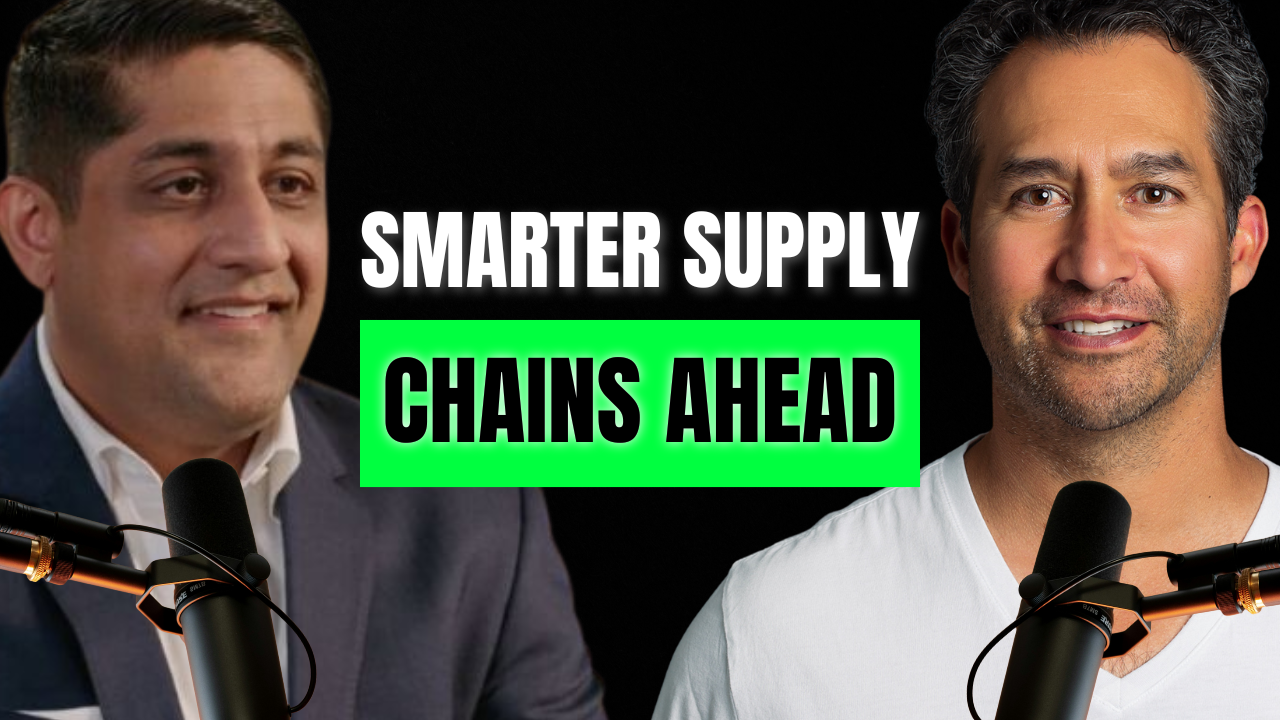
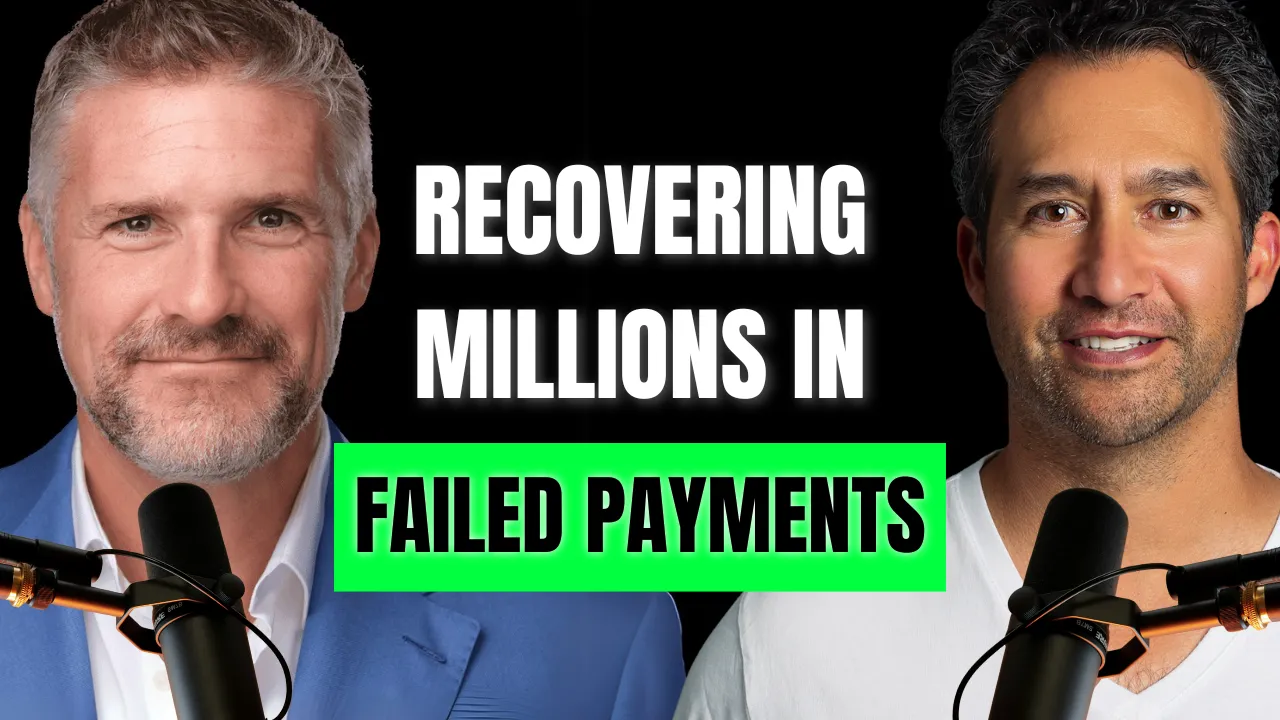
Jake Aaron Villarreal: I'm Jake Aaron Villarreal, born and raised in Silicon Valley. I'm going to take you behind the scenes to show what it's like to be a startup founder. The journey they're on, the problems they face, the products they build in an effort to make our lives better. I'm excited to have with us today Duncan Barrigan, founder and CEO of Lunos, Lunos AI, whatever you want to say it. Everything's got AI on the back end of it. I don't know if that's the correct spelling or correct pronunciation, but Duncan, I'm sure you'll correct us on this process.
Duncan Barrigan: Thank you very much for having me, Jake. Yes, the pronunciation I kind of I think I disagree with America, but America is going to win, so we'll see.
Jake Aaron Villarreal: Awesome. I like it. So, Duncan, before we jump in here, where are you joining us from today?
Duncan Barrigan: I am joining you from Lunos HQ here in New York in Chelsea.
Jake Aaron Villarreal: Very cool. I love New York. One of my favorite cities. I lived there for 5 years as I was working for the big O is what we called it was Oracle Corporation. But a lot going on there. Always lots of energy and innovation. There's Silicon Valley, you got Silicon Alley, you've got Silicon Beach. You know, you hit the trifecta in California as well as New York and I'm sure there's other places too. Austin and Denver and everywhere else. But whereabouts in the city are you in Chelsea? Is that where the headquarters of the company is too?
Duncan Barrigan: Yeah, exactly. We are, you know, in in startup way. I think as uh as someone put it the other day, it's like it's a good thing you're not in the super expensive part of the city. They said in that comforting venture capital way. Yeah. We're on uh on 7th A in Chelsea.
Jake Aaron Villarreal: Very cool. Well, you know, New York's known for its financial services and Wall Street and you know, you're in the fintech space. Before we jump in and talk about your company, give us a little background of you. You had a big success in Europe. Maybe it was in the US too, maybe both. Kind of walk us through how you got into technology and a little bit more of your past uh success and kind of what led you to seeing an opportunity to build a new company with Lunos today.
Duncan Barrigan: Yeah. So, I'm the accent probably gives it away that I'm not from New York. I am in fact British. So, uh, yes, I grew up in in the countryside of Britain and found my way to the tech scene in London about a decade ago. So, I I've spent my whole career in in fintech, basically. And the the sort of the the big success I' I've spent more than a decade now helping businesses to get paid, too. So, I joined what was then about a 30-40 person million dollar ARR startup called GoCardless in London in in 2015. Think for those who haven't come across it, sort of think Stripe for for bank payments, for direct debit.
And yeah, I ended up there. Did not expect to to stay so long, but ended up there. 7-8 years. We built it into a couple of billion dollar 150 I think it was about 150 million ARR when I left. However many hundreds and hundreds of people it was in a way that looks a bit different today I suppose for all for all businesses. But yeah, went through that went through that scaleup journey as chief product officer and for the second half of it I was also chief growth officer. So spent uh you know spent a long time helping businesses to get paid and then you know as we'll talk about Lunos is very much kind of the second very different solution to the to the same problem.
Jake Aaron Villarreal: Yeah. Well you know oftentimes you're at a company and you identify a problem but your company currently isn't solving it and then you have an opportunity to either go try and solve it or someone else is going to do it. What was it that you saw that you felt like you know what there's an opportunity to go try and build something to close the gap?
Duncan Barrigan: Yeah it's funny. It's, you know, obviously sometimes people think for a long time and and sort of gradually build ideas. For me, I I mean I I I'm a very full-on guy. I didn't I didn't figure this out while I was at GoCardless. I left and then took some time off and then started Lunos. But um it just came to me all of a sudden on the sofa to be honest. It was one more more one of those Eureka ideas than anything else. You know, GoCardless was mostly B to B2B. So it was helping businesses to get paid and uh used to spend all this time talking to people about for those who don't know more than a hundred trillion dollars a year of B2B transactions that go on and for literally all time they've been done almost entirely like human to human manually.
So I used to spend all this time talking to, you know, whatever the the big ride sharing company's B2B team about the 50 people they had in their accounts receivable department that were just working away trying to get paid by all their all their business customers. And you know back then it was the answer was the answer was direct debit. The answer was pull money from people's bank accounts, right? Which is a a really important part of the ecosystem. But I think it took leaving to realize why, you know, 95% plus of it doesn't work like that and has instead been done for literally thousands of years by humans. And my my epiphany was that it was it's actually really not a payments problem. It's a communication and negotiation problem. And that's why human-to-human B2B payments has been how it's been done since stone tablets in Mesopotamia, you know. So we're sort of very much one level above, you know, we're not a payments company. We're actually making AI workers that handle it like a human would to build that network of agent to agent payments to take us from thousands of years of, you know, humans always handling this to uh to the to the agents taking over for us.
Jake Aaron Villarreal: Yeah, I know in our previous call you'd mentioned there was, you know, for thousands of years it was a problem then and still a problem today of, you know, you provide a service, you want to get paid, you want to get paid now so you can pay your own bills or, you know, build the company, whatever. But you you you mentioned agents. So I want to talk about this world of AI and you know how is the system and maybe we're getting ahead of ourselves here but like I guess how is the system what's the process today of how it's happening with technology and how are agents how you see the vision of agents helping and what your product's doing now.
Duncan Barrigan: Yeah. So for those who it's kind of one of those areas that people have either experienced the world of how businesses pay each other or they haven't. So maybe to give people who haven't a bit of a flavor of it.
Jake Aaron Villarreal: I'll join that club.
Duncan Barrigan: Yeah. It's not at all like the way you think of it with with consumers. You know, this isn't that you check out and then you you know, you pay and and then you get the service afterwards. It's it's fundamentally much more of a flexible situation where for $120 trillion a year. Businesses uh trade with each other, but they pay each other afterwards. You know, this is essentially a trust network, right? So the journey that's always been done has been from what's the work I've done or what have I provided to you through to you know ultimately sometime later which can be literally months sometimes years later is now the you know the payment has been transferred for it, right?
So it's this crazy journey that you know when I when I talk about the thousands of years that the very first piece of writing is from is from Mesopotamia and I always say it's an invoice it could be a receipt I will confess you can't really tell the difference between an invoice and a receipt when it's written in uh you know an ancient script it's for barley was that after or before but you know like this is the first thing that people wrote down and that journey is essentially one of uh of people on both sides you know, are the amounts correct? When is this going to be processed? Have I got the approvals on my side? Have you got the approvals on your side? So it's just this mad mad, we call it the wild west, bring our our cowboy theme to bear, but uh yeah it's this wild west of just constant back and forth. I I speak to people who spent 20 hours trying to get a single invoice paid to give you a sense of of what can happen here.
Jake Aaron Villarreal: There's a real value of saving time and helping and having something else do it for you. So, you know, today most people don't even realize this is a problem that can be automated. How do you sell something people don't know is possible?
Duncan Barrigan: Yeah. And that that's very much the the the sort of the wide-eyed wow moment that we get to experience with people is because because it's been done this way forever. Everyone just assumes that there is no alternative. There are tons of other ways of doing it. As I said, you can pull money from people's bank account when they'll let you. But, you know, even that most of the time they won't let you. And even that, you've got a bunch of work. So, most people are coming at this as we do it the way that it's always been done. You know, we these days it's with a spreadsheet rather than a piece of paper, but you're, you know, you're writing down everything as you go and coming back to it the next day and creating a copy and all of this, going through it yourself.
So, it definitely means that you get some wonderful moments where people actually realize what's what's possible. The center of our approach is to say, and the epiphany I had really is people have done it that way for a reason. So we're not trying to tell people to do it differently. We're trying to make an AI worker that does the job like you would, but with two crucial differences. One is it's infinitely scalable. And the second is that it can be optimized in a way that humans can't because it can read all of the data and figure out what to do better each each time. But yeah, I think really the center of it is that we meet people where they are and we're not saying, you know, throw everything away, do it differently. We're just saying, look, the AI worker will join your team like a new team member and we'll do the job.
Yeah, especially at first, let's do the job how, you know, how you've been doing it. And then, you know, over time, you can start to see the little touches and the things that it can do. You know, it can thank everyone for paying, which is lovely because it doesn't take any effort to thank everyone. If you write the emails yourself, that takes a load of effort, right? So you start laying on these changes. But yeah, I think the heart of it is to plug into people's systems so they don't have to rip and replace and then to do the job like they would so that they're not being asked to change the way that they all know has, you know, has worked for them for all this time.
Jake Aaron Villarreal: Yeah. What's your ICP when you look at the market, you know, your business to business? Are you is it a certain size company? They have to have a certain amount of people in, you know, payables or receivables or, you know, is it a certain size company? Like what's ideal for you?
Duncan Barrigan: Yeah, I think the very tactical starting point I think the nature of this problem as I said obviously the you know the $100 trillion plus is is spread across like every sector every country the it's sort of enormously broad and ultimately we want to be more the Mastercard the Visa in the sense of we want to be the network whose agents are plugged into all the other systems that exist. So I think uh in the medium term I think ultimately working with other the providers of ERPs the providers of vertical software will be a big part of that go to market.
But I think one thing I learned at GoCardless the hard way was that when you're we were both partner and direct when you're through the partners, it's really hard to keep up the velocity of change because you're just so sort of disintermediated from your your customers. So especially given that now you can develop products faster than ever before like it's amazing to work directly. So we've started with the direct because it's amazing to be able to hear the feedback from someone on a Wednesday morning and you know ship it by Wednesday by Wednesday evening.
Jake Aaron Villarreal: Right.
Duncan Barrigan: Right. So yeah for for now we are our ICP is to focus on essentially mid-market businesses backed by private capital whether that's private equity or or venture capital who obviously have invoicing and uh you know looking to scale looking to improve how fast they collect the money and looking to to save a whole bunch of time in terms of how long it takes them to do it.
Jake Aaron Villarreal: Yeah. Great. When CFOs see your product, what's the reaction? What objections do they have?
Duncan Barrigan: Yeah, I mean, as I said, we get some amazing we get some amazing responses because people just don't think this is this is possible, especially those that are less tech-forward businesses. You know, it's sort of mind-blowing that that this is possible. So, definitely excitement is the number one reaction. I think it's it's funny some, you know, some products you're sort of having to convince people that they this is a good thing to have. When you're talking about collecting money faster for people with less effort, that's not the case. Their questions are always just about like, you know, does it does it actually work? How much does it cost me? And and how do I get like what does it take to get started are the only the only questions that you get.
So, uh, yeah, sort of the aside from excitement about the prospect, I think the the main thing we found, it was funny during during private beta, there was a moment where several of our customers in the same week said, you know, we've been looking at this and it actually works. The word actually was used by multiple people independently, which was really entertaining. I think it tells you about sort of people's people's, you know, some degree of skepticism about AI and being burned by, you know, other attempts to solve the problem. But it was yeah there was a really funny week where everyone told us that was the week when it it actually worked from that week onwards.
Jake Aaron Villarreal: Yeah. Really cool. Yeah. With AI and implementation of any new technologies today more than ever it's about what outcomes can I see? How quickly can I see them? What's it going to cost me? And how easy is it going to be to implement? You said that the space you're in is really like the wild west. What are some of the edge cases that make this problem so complex?
Duncan Barrigan: Yeah. I think I have to come back to the first email we ever reply... we ever received. So which I I think sums ever since I always called it the the land of a million edge cases as well as the wild west. So you know with the first test customer we'd sent out a bunch of emails and the first person to respond. We had already planned it to cope with a variety of different responses. So, you know, let's say they reply and say, "Oh, it's going to be in the payment run next Wednesday," or "I don't think this invoice is correct," or, you know, we had sort of 15 things that it was trying to sort of classify and and judge so that it could it could create structured data from them and and figure out how to respond.
But the very first email back was along the lines of "Check, 12, three, we actually put in the mail yesterday. These two invoices we think we've already paid." That one they repeated something again for the second sentence you know and then "That one actually we sent you the check, you never cashed it." And we sort of looked at this email, it took it took several of us like five minutes to try and interpret all of the things that were written in this thing um and I think it showed you the sort of your you know your model of the world versus how people respond. There was nonsense in there, was lots of points of good sense that needed to be recorded and sort of you know it was a sort of welcome you know welcome to the Wild West moment in terms of this needs to be able to deal with every edge case imaginable, including people just saying things that are completely irrelevant as well as things that are highly relevant. And also, it was fun that the very first thing that the AI did was in its replies was to be an AI that was chasing checks, which is is kind of a separate mind-blowing insight into the American world of B2B payments.
Jake Aaron Villarreal: Wow, that's crazy. If this works at scale, what changes about how the global economy operates?
Duncan Barrigan: This is actually what most excites me because the potential is huge. The example I often use, the analogy I often use is with self-driving cars, right? So, when one side of this network of receivables and payables uses an agent like Lunos, it's like having your own self-driving car. And that's great for the people involved, you know, it gets you more efficiently, more safely to your destination. You don't have to be the one driving. But when everyone drives self-driving cars, all the driver cars can drive closer together.
And in our case, the way that that'll work is that the number one reason businesses fail is cash flow. One of the number one constraints on the growth of the economy is businesses being able to efficiently fund themselves and and have the right cash flow. Once you have like a network of companies where you know, company A, B, C, and D are all trading with each other. If one of those companies is in need of cash flow, the agents can communicate, they can thrash something out and and agree, you know, this invoice, that invoice and this invoice are all paid early. And the net result is that you know money flows from company A to company D, right? So ultimately is going to make the economy more efficient and grow faster when agent to agent payments become a reality. And at first it's going to be like one of those smaller effect because you know you've just got your own self-driving car. But once all the cars on the road are self-driving then you know the equivalent in what it's it's going to be a faster growing and more efficient economy where fewer businesses go bust because they don't do this well rather than because they don't provide a great service that people value.
Jake Aaron Villarreal: Yeah, that that makes a ton of sense to me. You know, I want to switch gears a little bit in terms of the problem it solves. It's pretty clear. It sounds like if an agent can take away the human back and forth to get paid on the services or products that you provide of value and getting paid on time and faster in an accelerated way. That's great. So, it is a technology problem that's being solved or a human problem that's being solved with technology as a company. Give a little background of that. How long you guys been around now? How much have you raised if at all? And how big is the team?
Duncan Barrigan: So we first the idea first occurred to me in the summer of 2024. We the first people joined me uh late September 2024. So it's been what is that just over 18 months now and we as I said there was there was a lot of private beta because it turns out there are a lot of edge cases that you have to deal deal with. Um but yeah we are now uh 11 uh of us. Uh we've raised five million from General Catalyst, Cherry Ventures, bunch of CFOs, ex CFOs of companies like Eli Lilly and yeah, we are definitely still still just getting started.
Jake Aaron Villarreal: Yeah. Well, it sounds like it's right in line with every other AI startup, which is you don't need a ton of people. You have an idea, a good product vision, and you can execute quickly and get to market, test, see what works, see what doesn't, make changes, and continue to drive your product forward. You know, I think it was Elon Musk that said in the next 36 months, you'll see more millionaires than you did in the last 36 years just based on the speed of acceleration of technology and how it's solving problems that, you know, yesterday we couldn't do with, you know, bloated engineering teams and, you know, big marketing teams and, you know, where you can just be more nimble and scrappy. Sounds like you're right in line with a lot of other companies that we're working with and talking to. As a leader, as a leader of the company, what do you feel is like the biggest challenge for the organization today?
Duncan Barrigan: I think that ultimately I think that for most of my career, I've listened to people saying like, "Oh, the world is changing faster than ever." And I've just thought it was total hyperbole, you know, that this is just nonsense. You know, everyone just wanted to say that, but I think it's genuinely true right now.
Jake Aaron Villarreal: Yeah.
Duncan Barrigan: I look back at how I did any given task three months ago, 6 months ago, it they're not the same. you know how we code, how we how we do go to market, how I do work on product and write product specs and like all of these things are just changing so fast that I think the you know the biggest challenge is to stay ahead right because everyone else is moving so fast too you just got you know to keep driving the business forward at the pace at which it's possible you know you got to be relentless and that's what we we try to be but yeah I think it's a fabulous time to be building a company but it's also you know I think you're crazy if you're not a little daunted by the fact that the world this is genuinely for once actually changing changing faster than before.
Jake Aaron Villarreal: Yeah. You know, we have a founder Slack channel. It's for all the podcast guests to just connect, collaborate, and communicate like what's top of-mind. And I would say that's one of the top items that people talk about, which is, you know, the tooling and the technology is moving so quickly. The adoption at the acceleration they have to adopt it is it's crazy. Like you're building your company and you're adopting new process, new skills, new technologies to accelerate, you know, what you're bringing to markets. It's you're kind of building a company with a moving target with the tools and...
Duncan Barrigan: Very much so. Very much so.
Jake Aaron Villarreal: Everyone's kind of going through it together and there's really kind of a northstar vision that a lot of companies are trying to get to and it's moved a little bit left and right but I think if you ultimately if you have a good product that's solving a good problem um you're going to have success and it sounds like you're on a good track here which is...
Duncan Barrigan: Absolutely and I I I always think that that's that's the key is how do you make sure you're clear about what the problem is who your customers are and just and just focus on trying to solve it. I think that the difference is that now there's just so many different ways to be solving it across every dimension and you you know previously I think the advice was always well you know you shouldn't build too much in house and focus on your core competencies and don't try and reinvent how companies work you know that sort of like classic uh sort of first-time founder of people trying to reinvent how performance reviews work or something but suddenly actually some of these things could be reinvented now so it's a little bit different situation right maybe you shouldn't do it how you did it before because I sure as hell don't do anything how I still did GoCardless now because the world has changed, you know, like product management isn't the same, engineering isn't the same, marketing isn't the same. It's all it's all changing around us.
Jake Aaron Villarreal: Yeah. You know, one of the things we hear a lot of on the challenging side for founders and for companies is go to market. Like they've got the product, they've got the engineering, you know, engineers might be doing, you know, 80% less of coding and more about just reviews and guiding. But when it comes to go to marketing, there seems to be a real challenge to get above the noise to get to your customer base to connect with them with whatever challenge what's your experience been so far when it comes to go to market?
Duncan Barrigan: It's interesting I you know having been chief chief growth officer and running running growth and marketing at scale I think in that world when you've got teams of tens of people you know budgets of tens of millions you're talking about hundreds of millions in revenue the problem feels and is very it's fundamentally an analytical problem that's not to say like I'm a huge believer in brand I think anyone who who looks at Lunos.ai will probably realize that I'm a I'm a huge believer in uh that's not to say there aren't creative solutions to it, but like kind of ultimately the problem is is a funnel problem. I think the thing that feels very different about go to market in naught to one versus the you know the one the one to 150 I experienced is it like it obviously hits a lot more personally.
Jake Aaron Villarreal: Mm-hmm.
Duncan Barrigan: Ultimately the early part of the journey is is about finding the people to take that leap of faith on you. And I think I've I I come out of the experience with a feeling that the heroes of the of the startup ecosystem are actually not necessarily the founders. They're the people that are willing to be the very first people to use a product. Right? Someone has to be. None of these businesses would exist. There'd be plenty of founders, but none of these businesses would exist if there wasn't a set of customers that are willing to say, "You know what? This is a great idea. I'm gonna I'm gonna back you and help you do this." So, yeah, I come out of it feeling like it's it's actually a very personal relationship with the very earliest of customers. And I think that, you know, you have to lean into that. You have to recognize that they're taking a big punt on you and you have to, you know, you have to treat that as a serious as a serious obligation. So, like, how do you do the very best you can for all of these customers so they will go shout out and and find you more?
Jake Aaron Villarreal: I like that the tie-in with the hero's journey of the client always being the one that's the hero and solving a problem for them and ultimately you're the guide to help them get to that solution is such a fundamental story that goes back you know thousands of years too. So kind of tying both sides of that together is I think really good just an idea and a thought for to for the listeners to to kind of take away in terms of people. Let's talk about that. You know, technology is one thing, but your company's really nothing without your people. What's worked for you in terms of finding the right people when you go out and you you do your searches and you identify kind of what you know you need. Like recruiting is tough. What's worked for you?
Duncan Barrigan: I had the advantage of being able to I I wouldn't I wouldn't call it cheating, but obviously wanted to pull in the best people that I'd been working with previously and therefore, you know, a substantial portion of the team is is my my very favorites and the very best people from uh from GoCardless. uh you know such that sometimes other people pretend that they were there at various moments in GoCardless's past and pretend oh do you remember when but I obviously that's a thing that some people are able to do and others aren't I think what is really important though is to recognize that the core that you build will always carry through you know we've got and now most of the team isn't ex-GoCardless and we've had some fabulous new joiners that are are contributing enormously and I think that what kind of what you get with that is that people know when they interview obviously they're making judgments about you too. They're always judging what they think of your core and like if you want to have a top tier team, you have to ultimately the trade-off you make is you either have to spend more money or you have to wait longer, you know, like you've always got these three levers in hiring. You've got the quality, you've got the amount of money you're willing to spend on both the salaries and the recruitment, and you've got the time it takes you to do it.
And I think the key is to be really serious about those trade-offs and not pretend they don't exist. And often, especially early on, you know, you should take a bit longer. My belief is that the the team's worth way more than the idea. And it's worth, if necessary, you should spend that extra month making sure you get someone who's really awesome as your second engineer rather than someone who because otherwise the third and the fourth and the fifth engineer all know what the bar is like, right? So, yeah, I think you've got to be really open and and really serious about like that trade-off you make of quality versus time versus money. And you've got to especially early on like hold your bar up high so that that will then become more self-fulfilling as you...
Jake Aaron Villarreal: Yeah, that's great. Those are it's a really good strategy. You know, I've interviewed 30,000 people and we've been in the space, the people business for a long time and everything's changed. I mean from how you integrate your technologies to the outreach to the conversations to the interviews to the qualifications all that stuff is is changed with AI and it's helped you know we've been using AI for eight years so we've seen the trend trans transitions happening uh the cool part about it is when it comes to the people though there's really two things and I want to share this so everyone can learn from it. If you get these two things right, this is all you really need to know when you interview somebody. And we've we know this because the data has shown that the hundreds of startups we work with, they've scaled because this is their process they've used.
One is they've identified who they are and they've identified their culture like really well. So they know and culture means a lot of different things to a lot of different people, but one of the things is how you operate. That's part of your culture. That's who you are. That's the bar you set. So, if you're going to operate at a fast pace and you're going to break things but keep going, that might be how you operate. That needs to translate to the people you bring in or it might be very conservative and different. But whatever your culture is, define what that is so that you're matching the people that come in to interview. It's a it's a match. That's the first thing. You get that right. You only have one other thing to do is to make sure that what you want them to do when they come in and do the job, their competency matches what you need them to do to be successful.
If you get those two things right, everything else is kind of noise. What they look like, what they say, how you feel. Like ultimately, those are the two things. So, we try and make it really simple when we talk to companies, but just bottle it down. Most of the time you get right. It could be some edge cases where, you know, the person was not honest about what they said they were going to be able to do and they they don't have the competency or, you know, try and assess the character and the culture fit in the interviews. That's why we do interviews. There's a lot of companies that talk about automation of, you know, interviewing and recruiting is kind of going away and but it's a people business at the end of the day. There's still got to be people in the loop to to make those gut level decisions. So, I just want to share that because you've obviously built a team now and sounds like you've got a great company and you've done it well, but for others that haven't quite got to where you're at today, that's just some of the things we've seen from other startups that have done very well. If that makes sense.
Duncan Barrigan: Yeah, definitely. I think what what really resonates there is, you know, at various points and not 10 thousand. I've probably thousands but not 10,000 people I've interviewed myself and I I think one of the bits that I think is really easy to miss that resonates really well in what you're saying is that you have to be really clear about why people shouldn't join you as well as why they should. If you think of this as sort of like a one-way thing of like here's a great person, do I want them? Whereas exactly what you were saying on that on that first point around culture, like it it has to be like what makes a good fit for this? You might be a great person that is a bad fit for us and you should be really clear upfront about like what makes someone a bad fit for you because otherwise exactly as you say they're just not the right person in the right place.
Jake Aaron Villarreal: Yeah, absolutely. Well, you know, this is a show not just to hear a story. It's also to help you grow. Are there any roles that you want to talk about that you're looking for the next 3 6 9 12 months? Everything is free. They come to you. You hire them. It's awesome. So, anything you want to talk about now, feel free.
Duncan Barrigan: Thank you. Yes, I will definitely seize the opportunity. So, right now we're in the thick of interviewing for our founding account executive. So, I have been doing the sales myself alongside a whole bunch of other things and there's a very exciting opportunity to you know be given an entire pipeline that already exists and you know ramping leads and ops and everything and take that over. So, you know right now if you're listening and you are you are a great fit for New York account executive to take over the sales from me on everything you've heard today then definitely get in touch. Otherwise, I mean, obviously, if you're an engineer and you like the sound of building an AI worker that handles things like a human does, which I promise you is is is a lot harder than it may appear, then we would love to hear from you as well.
Jake Aaron Villarreal: Very cool. Duncan, if anyone wants to find Lunos, where do they go?
Duncan Barrigan: Yeah, we are lunos.ai. So, you can head to the website and you can catch me anytime. You know, I am the one with the cowboy cartoonish picture on LinkedIn, and you can drop me a message there anytime as well.
Jake Aaron Villarreal: I like that. The Wild West and the the cowboy cartoon. Duncan, thanks so much for jumping on here. I appreciate you sharing your story and for the listeners for listening. It means a lot to me you spent your time with us today. I'm your host Jake Aaron Villarreal signing off for now. We can't wait to catch up with you all on the next episode. Until then, Duncan, the world, take care. If you like what we're doing, don't forget to subscribe, leave a review on Apple Podcasts or wherever you listen, and follow us on YouTube where we go behind the scenes to learn what it takes to be a startup founder.






















.jpg)













.webp)
.webp)
.webp)

.webp)