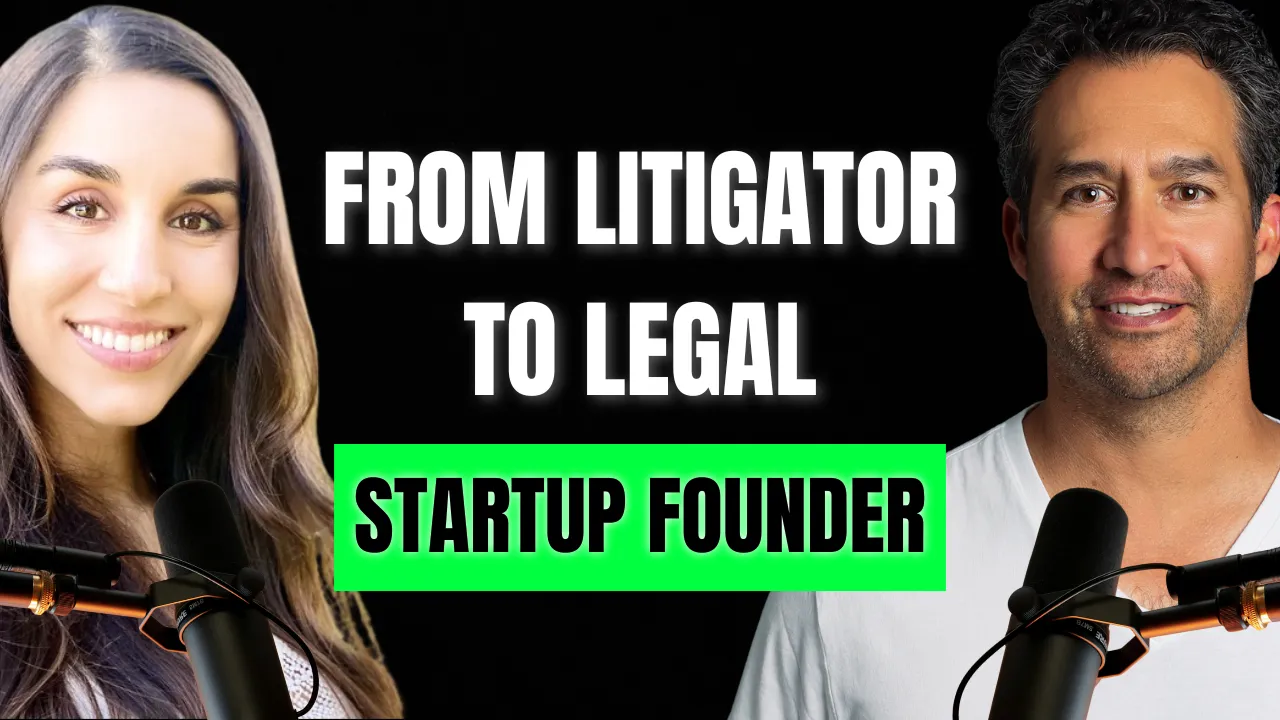
Jake Aaron Villarreal: Welcome to From the Ground Up, the podcast where we delve deep into the inspiring stories of entrepreneurs and their journey to build successful startups. I'm your host, Jake Aaron Villarreal, and in each episode, I sit down with the founders to learn about their experiences, the challenges they face, the lessons they've learned, and the insights they've gained while turning their dreams into reality. And super excited to bring to you today Vera Kopp, an MBA grad from Stanford who is the founder of inCast.me, which helps connect digital influencers with brands, companies you might know of like Uber, TikTok, PepsiCo, and many more. They help to create marketing campaigns with top influencers and generate significant results. Now of course, uh you're much more engaged and you know your story much better than me, but Vera, we'll listen to you. Thank you for joining. Welcome to our podcast.
Vera Kopp: Thank you so much for having me, Jake. It's a pleasure, and um it's very important to inspire other entrepreneurs and also companies that we, we have helped in the past with like data right. When it comes to working with creators, it's very important to look at data, look at performance, ROI, and then make recommendations. And that's what we do at inCast. We have been operating since 2017, actually rated out of Sao Paulo Startup Farm and Google Campus. We have hired today over 10,000 creators worldwide from Canada, Australia, Italy, UK, Latin America, Brazil in majority. And some of the brands that you mentioned, but TikTok being one of the, the number one companies, we instructed a long-tail campaign phase and growth strategies, which we can go in depth a little bit further.
Jake Aaron Villarreal: Yeah, great. We'll dive deep into inCast. Tell us first a little bit about yourself, where did you grow up?
Vera Kopp: Vera is a Brazilian at heart and soul. We, I spent half of my lifetime in Los Angeles, I moved to there when I was 21. And my town is called Londrina, Parana state of Brazil, but my heart is, is with the family of course. But uh after living so long in LA, I can say like [I'm] more American than Brazilian.
Jake Aaron Villarreal: Okay, that's the case where a lot of people have moved here. What was your first real job in Brazil that may have give you an impact or influence in wanting to have that entrepreneurial lifestyle?
Vera Kopp: How I think inspiration to become an entrepreneur came from my mother. Of like she's a real estate developer, she buys and sells properties. We, we grew up like at a very small town on the south of Brazil. And she was a teacher, she was raising like three kids by herself. So it was a big inspiration for me. First job as a model, as a teacher. I was teaching kids how to do the runway back in the days, it was like 16 um it was like a small like acting and modeling school. And then I think back in LA you know, when I moved to there, went to, to learn English, I think the very first experience was sitting in a table with a big agent in Hollywood. You go like "oh, I want to sit there, I want to be you know doing what she's doing." And I think for us women, thinking that we're capable of you know executing and we're capable of doing, empowering our results, we just you know get to do it and just do, do it. And here I am you know, 15 years later with 32 employees uh 10,000 creators that we hired. And I [am] always looking for, for something new. So we're launching a new product called Rainmaker which allows creators to book themselves some work and the brands to direct contact creators. Because what we do with inCast is more of an agency service. We create these strategies, we scout creators, we manage all the content, and we provide the report. So we're offering a tool as a SaaS, they can go on their own and choose the creators they want to be working with. And creators can share their link and be self-booked. We call it an Uber for creators.
Jake Aaron Villarreal: That's great, and there's a lot of creators out there so I'm sure there's a lot of opportunities to work with them. And we'll dive in a little bit more into what's in it for them as well as what's in it for the brands. Let's talk a little bit more about you before we get there. Entertainment, show business, modeling, acting is something you've done for, for a number of years. In fact, if I'm reading this correctly you were at the Ford Modeling Agency for roughly in the 10-year range. And that experience of being in front of the camera on stage really, you selling yourself, what did you learn there and what impact have you been able to apply to your businesses today?
Vera Kopp: I think the first lesson is to learn to be resilient. For getting into Ford Models was not an easy task. I applied and did audition and casting maybe five or six times. It was a sixth time that I was like, "you know what this has to work." And then I was just very persuasive to, to the bookers. "At least give me a year! Like week, week, I know I can make you money." Because at the end of the day they're looking for models and girls that can bring more work to, to their you know, to their books. And um resilient as well. Like when you go to audition ends it's a numbers game as a business right, as a startup too. So the numbers game is like you have to make as many auditions as you can during a week. So there are weeks that we were doing 20 or 25 auditions and we're booking two, three jobs. It's the odds, you're not gonna get every audition. You're going to... and on top of the first call audition, we have the second call audition where you meet the director, the producer, some of the casting members. They test chemistries and so forth. So that for me was more frightening uh, being in a room with more people versus just being in the room with the camera and the camera guy. That's you know, that was the easiest part.
And there's one specific job from you, is like incredibly like uh rewarding. I was a Budweiser girl for a year and a half campaign. My face was in the subways of New York City, the buildings and outdoor rewards in LA as well. And they auditioned five thousand, 5,000 girls.
Jake Aaron Villarreal: Wow, that's wild.
Vera Kopp: Five times. It was first call, second call, third call like I think the fourth call was in Vegas for, for a business trip. And they're like, "oh we need to see you on tape one more time." I was like "what is it? Like I, you know I still look the same." It was like I self-taped myself again, submitted, and then and then the director called me like "you got it, and they changed my hair to blonde." I was like "what would you do?" It was incredible. So I accepted. It was like, like uh you know you say yes for everything. So they want to change the hair color? Yes. Let's go to New York to shoot there? Yes. Let's go to the snow? Yes. The, the motive to, to be successful in life, you just you know go with the flow, be open to yes. I like it.
Jake Aaron Villarreal: Now, I lived in New York um you know in '98 T- time frame. Could I've seen that Budweiser commercial then or is it um older than... you so maybe it might have been much later. But just trying to put some time around when that happened for you.
Vera Kopp: 2004 and 2005 timeframe. And, and we were doing appearances in the entire country. On top of the ads we were going from city to city, we went to the 15 major cities in, in the US to do appearances to meet and greet the fans. It was a World Cup promotion, it was just incredible.
Jake Aaron Villarreal: So that was 2004 right yeah. The World Cup, back reverse the date. That's great. I know when you get a brand in the news or anywhere that you see or you hear your brand on commercials whatnot, it's pretty exciting. Um what's it like personally when you see yourself on a billboard or you're walking down a street in New York and or you're in the subway and you see your face? Like what's that feel like?
Vera Kopp: It's surreal. It's really surreal. But now it's even more surreal to like uh host events and teach people a lot of the things that I went through, like not only on the personal level but career level. Uh Facebook had a huge event for 5,000 people here in Brazil in October last year, and I was invited to be one of the guest speakers for small businesses, how to create content right. How to create an ad using creators or authentic content. And being there and having authority within the segments that we've been you know producing content for five years... we know a lot. But sometimes it's just being in front of other people and seeing your image on then you know reports or the the press after events and you're kind of like "Whoa, I am real. I am really doing what I'm doing." Because I like to be in the office with people. Like I'm a day-to-day operations person, not very... very close to my team. When you're out of the, the you know the routine, on the daily routine, you get to see your face there. That's kind of, it's, it's a little frightening, scary, but then it gives you the adrenaline, "I want more there." It doesn't get the company out there and it's not Vera out there right? Yeah it's important for the business too.
Jake Aaron Villarreal: Yeah that's great. Now when you launched inCast, we're going to dive into that more now. Um did you do that through I'm not sure if I read this correctly, 500 Startups? Or was it a different incubator or accelerator, or how did... where did you get, what was the launching pad for inCast?
Vera Kopp: And here's the parallel story. I moved to San Francisco back into 2015 and I broke my leg. So I couldn't uh do modeling work during that particular time. It was like six months long yeah, it was very, like a bad injury. I submitted a business plan to, to build this platform to Startup Rio. And Startup Rio gave me fifty thousand dollars to... actually 50,000 reais, which is $10,000, to develop the idea and the platform into the marketing strategies and everything. And we did execute really well. A year later I had 2020... actually 12,000 users. And we, we converted 3% into paying subscribers. But it wasn't scalable because the, the industry in Brazil it's really, really small. So then a year later I was part of, inCast was part of Startup Farm. Startup Farm is the biggest accelerator in South America and they have really great successful companies that have you know exited through the, the person from the last three to five years. And what I learned I think being in a room with 20 men as uh the only female founder. And I was alone right, they had team members and, and they were working on business ideas for much longer than I was. It just gave me more empowerment and courage to just you know be bold and be brave and just get through the, the churn or the churn rate of like you know the where startups fall on the first year. Uh we booked the very first client, was a big ticket, a huge celebrity in Brazil for 99Taxis, big competitor of Uber. And from that project we fueled up, we got to ByteDance, we got TikTok. And then last year we're part of 500 Startups. That's where the idea of Rainmaker was born. And I have a business advisor that took us to doing like the roadmap for technology and the process of like you know user interface. And then the tech team here in Brazil, like I went through two tech teams, but the actual tech team that's working on the product now they were able to capture all the functionalities that we need and we operate as an agency and convert into the doc. So all the steps are seamless and we're getting like really good feedback from users.
Jake Aaron Villarreal: That's really cool. So you really have two companies it sounds like, is that correct?
Vera Kopp: Three.
Jake Aaron Villarreal: Yeah.
Vera Kopp: 2018 I was very brave. There was an opportunity to do [an] initial pop-up experience, we call it today Funcast, where we take people into an Instagrammable place like what you see back here um. And we had Heineken and PepsiCo supporting us, being the the partners and sponsors of the big installation. We received 60,000 people throughout the 25 unique spaces that we built. And then from there we took to different malls, we went through 15 different malls, we probably have 120 visits, 120,000 visitors in total. And that company Funcast is expanding hugely this year. We're getting, we're getting a lot of big event producers like Lollapalooza, The Town, after us for us to produce unique experiences for the visitors and for the brands.
Jake Aaron Villarreal: Wow, that's wild. So you have three steps of three companies you're running at the same time. You must sleep about two hours a night, that's crazy.
Vera Kopp: No it goes like six, but when I'm in LA it's a little bit less because of the time difference, we're four hours or five hours from Brazil. But I can't complain, I have a great team and my Brazilian team that have people there with me for week... to five years. And it's just incredible to count with people, they're like reliable and they're like really vested into the business.
Jake Aaron Villarreal: That's great. Let's talk a little bit about inCast uh in terms of the idea. Where'd the idea come from? There's a lot out there in social media and brands and trying to get eyeballs on products. What was it that came together for you? How'd that happen?
Vera Kopp: The name came from building a platform for actors and models as a casting platform in 2015. But in '17 we found a niche space where social media was booming. TikTok was not around right, was only Instagram. So during the process of being in Startup Farm we built a calculator, it was the very, very first calculator for pricing. Because creators are getting like demand for uh public posts, they didn't know what to charge, how much to charge. Brands don't, still don't know what to offer, and prices fluctuate. So when you have a benchmark for, for industries and for segments... so for beauty is one price, for technology is another, and for variety or uh food or comedy it varies. Because we have more creators or what we call a micro-creator, a big creator, and [in] the tech industry he only has 500,000 followers, where a macro-creator in the beauty segment is, it's 20 million, 30 million. That's irrelevant. So that gave us the know-how, and uh we were the number one platform where local brands, especially in Latin America, Brazil, were searching to get pricing. And then inventory. We started managing 300, 500 creators in bulk for growth strategies for different brands. And that's when ByteDance was around right, with different products. BuzzFeed, Vigo like all those apps. So number one type of um clients for us are video apps or touch-up apps such as like AirBrush as well. And e-commerce really big. Like shopping, Amazon and local brands right, local e-commerce experience Mercado Libre in, as well.
Jake Aaron Villarreal: So if someone is an int- in social media and they have kids that are influencers or on YouTube and TikTok all the time and they have a following, what do you solve for them? What opportunities can you provide for that potential micro-influencer or that growing influencer?
Vera Kopp: If they are into any of the paid campaigns, they will get a 101 support from our team members to really give more details on the brand they're working with, the brand uh strategy in depth. We call it a tutorial. And if the campaign is like longer, we do a tutorial on a weekly basis as well, to make sure that the creator is speaking and writing about the brand with authenticity right. Because at the end of the day when you create content that's very authentic, we have more conversions for the brand. And um what we give them now, we're giving more support on uh, as they have an ability to book themselves to any jobs. They're not from inCast. Because the industry is huge and then they get inquiries every single day on their DMs or like emails. So we give them a tool, an ability to direct book themselves and not get charged big bucks because there's agencies they're charging 20 to 30% commissions, and in Rainmaker it's free. So they can use the platform for free, and clients will pay 10% on top of, on their rate. We also have like you know tips and, and, and the community building where other creators help those TikTok creators how to make great videos on TikTok in different segments right. Communities for beauty, communities for um comedy, pass, and they give support to each other as well.
Jake Aaron Villarreal: That's great. What's the bigger challenge, getting the brands to sign up with your platform or getting the creators to fulfill?
Vera Kopp: Whoever has right the money. And today we have a, a bigger competitive landscape so it's, it's just, it's challenging to, to acquire the brand. The ticket sizes are from 50,000 to 150,000 US dollars. So that is like a long-tail conversion. It takes three to six months to bring a new client. So our you know account executives need to keep a relationship with those uh marketing folks for a very long time, and really showing and giving them benefits of like working with us, and showing cases and case studies of you know very successful projects we've worked on.
Jake Aaron Villarreal: What do the brands get, what do they expect when they pay you that amount of money to come back to, to the company?
Vera Kopp: We allow inCast gives them relaxation, peace of mind in weekends and nights, because creators usually respond late at night and weekends. And they're not very structured right, sometimes they take three to five days to respond or to, to give us the content. So we give them ROI at the end of the day. We'll put together 100, 300, 500 creators for a specific project, we'll manage the scouting, the content management, and the report. 90% of the time we always get the ROI they're looking for, and that can be for CPM views or downloads based, or you know activation CPAs. It's um, we're very um metric driven. So that's going to give us the formula of like which creators we're going to recommend for the brand. And usually getting to access the audience of the creators really precisely gives us a little bit more of like direct return. Because when you as a brand you're looking for a creator that produces content for would say you know, a shaving cream, but you pick a guy that has 70% of an audience that is female. It's not gonna work! That shaving cream has to impact the audience of male. So we need to pick creators that have at minimum 60 to 70% of male audience to get the conversion from brand awareness to purchases, and to seeing the product and in-store and recognizing from the creator that they're watching.
Jake Aaron Villarreal: That's great. When you say peace of mind and time savings, I mean that's music to the ears of most founders or most brands or companies. It's, it's a lot to manage people that aren't very direct employees of yours and then you have to hope they're doing what you expect them to do, and ultimately get a good result. So it sounds like you handle a lot of that minutia in the middle which is I think really worth a lot of money. That's great. When you started the company and where it is today, what's the mission that you tell your audience, that you tell your employees, that you tell your clients about? What inCast, Funcast and Rainmaker, what's, they might have different missions, but at the end of it what's the core mission of what you bring to the market?
Vera Kopp: Accountability. When you work with creators you have no accountability that the creator will produce the content and he will show up. So we as a company, and my team, if creator A doesn't show up, we need to have five or 10 other options for a client that will show up. So we call it results-driven for a reason. Like at the end of the day, that marketing person needs to show up at the meeting with the reports in hand, and that's what we're going to offer. So our mission is this, save you know, we're here for you and it's just as accountable to present to the results.
Jake Aaron Villarreal: That's great, I love it. Can you give me a specific use case of a brand? You talked about TikTok and talk about a product if you can share that so that the listeners know clearly, "this is, this is a, this is a project you worked on and here's a specific outcome that came from that project."
Vera Kopp: That's um there is a very organic and also a startup, so I think it's a good case for startups that want to work with creators. And a lot of times we work with projects that are paid, we have performance, and we have seeding. Seeding is when we send creators gifts or the product they can test out, they can write reviews and they can post organically or not. So there were a specific company in South America called Sallve. It was created by a big blogger Julia Petit, she's a celebrity and actress and, and. With her product we sent out units and we had 80% of the creators posting organically. So if the, the bid or let's say they would pay a hundred thousand dollars, but that project cost them thirty thousand dollars because that was organic seeding. And our community management team were engaging with the creators to make sure that they would post. And it's very difficult to do that as a marketing strategist inside of the company. Like even Sallve, they kept repeating the 200 new creators for over a year because they knew they would have 80% retention. And if they would pay that, it will cost three times more. So the strategy of sending, seeding and then following up. And we have an internal tool called inCast Tracker, tracks all the posts for all the creators that we send gifts. So organically if they post with the hashtag of Sallve or you know what we write on a card when we send the gifts, it's, it's what they post. And then our tool is tracking in real time so we can amplify the reach.
And then I think when we talk about TikTok case, successful case, uh we built growth in content. So when TikTok was converting Musically into the, the main strategy was to age up. To age up the audience. So in the future they would monetize, and they're monetizing really well today. But back in 2018 we had this strategy of growth where we're inviting creators in bulk, 300, 500 creators in different verticals. Pets, food, beauty, cars, games, entertainment. So we're building TV channels for people that didn't know that TikTok existed and hooking them into coming back for more. So there's a big data that's very important for app companies, which is Daily Active Users. I can have millions of users, if it's app they're not coming back daily on the daily active users, then they can't really set up the growth and strategies in a long run right? So that's kind of like then a lot of companies are looking for investors, that's one of the number ones, numbers of users and then number of active users. And then traction in terms of you know how much then they're spending within the app. And then we see now TikTok monetizing on live streaming. So creators can live stream for hours, engage their audience, and they get paid by the audience. And also on kind of like an AdSense that YouTube worked for a very, very long time with YouTube creators and you know giving an opportunity for creators to monetize. But from the, from the TikTok perspective they're paying per video. So we have 300 creators producing thousands, 28,000 pieces of content every single month. And the engagement was always up and creators were gaining followers. So if you see a Tony Hawk, we onboarded Tony Hawk into TikTok. He had zero followers. I looked the other day, I think he's at 3.5 million or five million. It's just huge. And he's getting in sponsored deals now you know on a weekly basis, which is fantastic to see.
Jake Aaron Villarreal: That's incredible, I love that. You know there's been a lot of breakthroughs recently in AI, and platforms and companies are embedding it, trying to figure out how they could take advantage of some of those breakthroughs. Um do you see AI as part of your platform strategy, part of the roadmap? Is it already part of your platform? Where do you think that plays a role in inCast or your other companies?
Vera Kopp: Yes, when it comes to inCast, a lot of the demand to have creators building content with an app is just to have consistency. And consistency and repetition in marketing world is where you know we take 28 impacts in order for the brand to be remembered and recognized. So when we're working with creators and technology, using AI to bring that experience, we reduce the impact rate to get the brand recognized. And it's a very efficient way to replicate the content in mass and having the brand more you know exposed with the organic way of having the creators to, to create organic and payout content. There are um there is a roadmap for us to put AI into Rainmaker and offer to our clients to you know edit the content and put their logo and kind of special features into the content, but it's not available yet. I think also GPT, ChatGPT I think is something that will help brands and creators not only debrief the creators about the brand, but also creators to um have the, the ability to create caption for a post much easier. It takes time to think, and if you don't know much about the brand you need to study. So you know you can use a chat that can help you to just like come up with a very beautiful you know caption for your post just you know it's more engaging and the brand has more um of their slogan, more of their you know what uh what we call content into the post. It's not the basics, it's more in-depth.
Jake Aaron Villarreal: Yeah, that's great. Yeah, it seems like AI is really helping the creator community in a big way with um maybe not the end result, but really keeping the creative thoughts going and being able to pull ideas from um you know, I think they call it like white paper, white paper mental blocks or whatnot. But uh anyway, it's great to hear. I can see that really having an impact in a product like yours. As the leader of inCast and your other companies, what motivates and inspires you, and how do you maintain that sense of motivation and inspiration?
Vera Kopp: I think inspiration... getting um to inspire other people as well, aspire as me. But to get the job done right, it's like each product is, it's a challenge, we need to restart and finish. And at times we have thousands of creators of specific projects. Um I think inspiration of getting the job done more than the financial reward, is just the the getting completion. And of course, one day hopefully maybe selling the companies and retiring. I think every part I put different rewards at the results, like really, but the journey is what inspires me a lot. So I think you know teaching people, motivating, talking to clients. When we convert a new client to the house, it's like it's always excitement. And we have weekend meetings with the entire team. It's rewarding just getting the energy from the kids too, like from the people that are working with us.
Jake Aaron Villarreal: Yeah, that's great. You know as entrepreneurs we've started companies, some have made it, some haven't. Trials and tribulations. Can you talk about a time as an entrepreneur where you felt like you had failed and what you learned from that experience?
Vera Kopp: I think it very recently. We're in April now. January and February are the very hardest months for advertising industry and for influencer marketing. Maybe other companies can say otherwise, but for us was always. And we need to keep the team engaged, but the, the marketeers don't have this planning, so they're not spending and it's very tough. The last two, I invested a lot of energies into the automation into Rainmaker. And so when it comes to like end of the year and then January, February, we're like "okay, so the business didn't have the fuel for free and cash to self-sustain." It was never a thought of like "oh I have to close everything down," because I know always you know go up the next months. And, and things started already like we have new clients in-house and the existing clients booking more creators. It's just a little bit of the the loneliness and decision making and cutting costs. You see you know Facebook firing 5,000 people at bulk. Like thank goodness we didn't have to fire anyone here. But it's the responsibility of maintaining the business where you see that the entire um ecosystem of you know not only technology but advertising industries like they're you know cutting back in costs, and then cutting back into employees and expenses. And we just need to keep going.
Jake Aaron Villarreal: That's yeah, got it. The resilience. Even when the times are bad you have to keep a focus on where things are going to go, where you know you've been before, and things do turn around if you keep doing the little things. Keep the focus, keep grinding away, keep inspiring, keep leading. So that's great to hear. You know we help some of the best startups scale and everyone always asks us as they build their engineering teams or whether it's in the US or outside you know, "We want diversity candidates. We want to talk to people that are from you know different cultures, different genders." Talk to me about your experience with the non-profit Girls in Tech in Brazil and what's your role there?
Vera Kopp: How I was a mentor. So Girls in Tech is, is an organization that is global. And here in Brazil I met the local girls, they were representing Europe, and I think it was more like France and Italy in specific. And they were incubated inside of Cubo. Cubo is an innovation center powered by Itau Bank, which is the biggest Brazilian bank. And just gave us or me hi- the sense of empowerment with other women trying to do what we're doing. And at times we manage tech teams, are men. And at times we don't have things being delivered on time when you talk about tech right. We have you know sprints of development, but there's delays and you need to, to... I think to be able to manage the project as we do with creators, but with the tech team with efficiency and with diligence. And to just gave me a little bit more structure and empowerment. And also I learned how to speak in public with Girls in Tech. So we had little groups, we were going there together and talking [to] different, different teams um on a weekly basis. And that was like superb. That was the also like the, the feel of you know continuing to um become an entrepreneur.
Jake Aaron Villarreal: Yeah, that's great. Well you've had a long journey from Brazil to LA and traveled the world it sounds like in parts of your career. You've had an amazing career and you have amazing startups. I didn't know you had three, I thought there was one or two. But uh inspiring to know you can handle that much as a founder. If somebody wants to find you, find your company, inCast.me or Funcast, where can they go?
Vera Kopp: Hi, please email me. I respond to every single email that gets to me, which is vera@incast.me. So V-E-R-A at i-n-c-a-s-t dot m-e. I can give you tips of how to work with creators, we can create a free proposal. We can sit for a coffee here in Sao Paulo or in LA or in New York, wherever we are in the world. And I have a great team that can help you guys to create fantastic strategies and effective strategies with creators worldwide. TikTok, Instagram and YouTube. And also would love to get a mentor in terms of growth for tech. You mentioned that you, you have that expertise. Or love to talk further as we launch a new product which is more um, it's product marketing driven, right, different than, than what we do in relationship based people. We need growth hackers, we need really to focus on marketing strategies not only with creators but SEOs and other things to, to make Rainmaker a known tool for creators.
Jake Aaron Villarreal: Well I love the Rainmaker idea, and I think there's a lot to be said about a self-serve application that could take the bottleneck out of the process and open up opportunities for people that are sitting at home that might have a need for a tool like that. So really excited to keep learning about that product and your journey there. I think we have some companies we can connect you to that might need your current product, and we'll keep plugging away. Love to have you back on for an update.
Vera Kopp: Definitely keep in touch. So challenge accepted! Challenge: how many users can we get, daily active users, I know the you know the data that investors are looking for. And then we can start having later in the year investors meetings. I think it'll be fantastic.
Jake Aaron Villarreal: I love it! Okay great. Well thanks for joining here today. That's all for episode. We will continue plugging away. Vera, thanks so much for joining, we really appreciate your time and good luck here in the coming days.
Vera Kopp: Thank you.
Jake Aaron Villarreal: Before we wrap up, I want to give a big shout out to all the entrepreneurs that have joined to make this podcast possible. And for all the listeners for listening, it means the world to me that you chose to spend your time with us today. I'm your host Jake Aaron Villarreal signing off for now. We can't wait to connect with you all soon on the next episode. Take care.
This show is sponsored by Match Relevant, a company that helps venture-backed startups find the best people in the market and they do it in three simple steps. First, they sit down with founders to understand their story. Second, they tell their story into multiple candidate channels. And third, they schedule interviews within 48 hours. Find us at matchrelevant.com to learn more about how we do it.













.jpg)






.webp)
.webp)
.webp)
.webp)