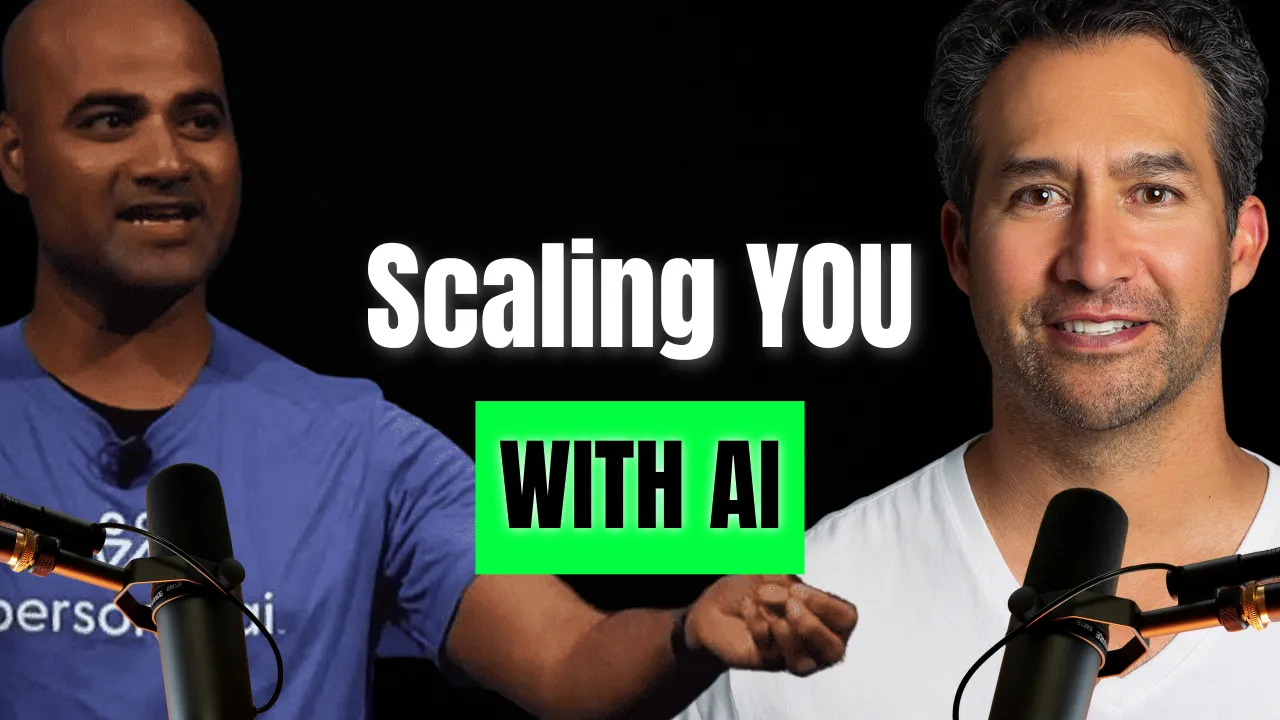
Jake Aaron Villarreal: I'm Jake Aaron Villarreal, born and raised in Silicon Valley, and here to take you behind the scenes to share what it's like to be a startup founder, their journey they're on, the problems they face, and the products they build in an effort to transform industries. I'm excited to have with us today, Sourabh Gupta, co-founder and CEO of Skit.ai. Sourabh, welcome to the show.
Sourabh Gupta: Thanks, Jake. Thanks for inviting me.
Jake Aaron Villarreal: Well, thanks for coming. And just a little bit more about Sourabh's company, Skit.ai. It's a global conversational AI startup launched in 2016 to enhance consumer brand engagement through artificial intelligence. With over 200 employees, Skit.ai serves 100 plus clients in the US, Canada, and India. Sourabh has earned multiple awards, including Forbes 30 Under 30, and we're happy to have him here with us today. Before we get started here, Rob, where, where are you joining us from?
Sourabh Gupta: Oh, I am in New York City.
Jake Aaron Villarreal: Very, very cool. Love New York. Lived there for a while and it's just a lot of energy, a lot of technology and a lot of startups in New York City. Um, before we talk about your company, Skit.ai, give us a little background of yourself. Um, where are you originally from and, um, what's your origin story? How did you get into technology and what was the idea behind building Skit?
Sourabh Gupta: Yeah. Um, so I'm born and raised in a small city in the northern part of India. Um, and I was, you know, pretty much there for the first 18 years of my life. Ended up in my undergrad. Um, even before I wanted to, you know, go to college, I sort of knew I wanted to build a company. You know, where I'm from, 95% of people around have some sort of a business, even if it is like a small of a setup. So that was very natural to me in some sense. Tried to start a company, I went to college, I had no idea it took to, you know, build a company. But I do remember in my third year I wanted to drop out. Parents didn't let me. They didn't believe I could build a company me to get a degree. Completed my four years, my degree, and then I went to Bangalore straight away. Sort of started uh in the final semester itself. But I went to Bangalore, spent a couple of months figuring out what to do. Uh my co-founder in college, we both sort of moved and spent a couple of months figuring out what to do. We knew we wanted to work on the edge of technology. Way we were thinking about it back then was, you know, we were 22, 23 year olds, right, like, we're like, "Hey, what can we do which, you know, um, we have where we have an advantage over anyone else, you know, who's much more experienced and older?" We said we understand technology, AI, you know, at that point of time. Today we talk about LLMs, but even back then 2016 deep learning was a thing. Like, you know, deep learning is so new, the papers have come up in the last couple of years, so why don't we read those and you know we can be an expert in that. Um so we, we got into that, then eventually we got into you know voice within AI. Then we're like, "Let's pick voice." Then we got into call center you know. So that's sort of how it happened.
Jake Aaron Villarreal: Yeah, that's great. Is this your first startup?
Sourabh Gupta: Oh, yeah. It is.
Jake Aaron Villarreal: Yeah. Really cool. You know, it's interesting. There's a lot of companies that start, but the founders have done this two or three or four times before and they've learned a lot and they come into that new opportunity and they really know the direction they want to take the company and they're very clear on how to do it. But the first time founder, there's a lot more learning because you're really building the plane as you fly it and you don't always have the answers. And it seems like you have made a lot of good decisions and right decisions. What's the size of the, of your company today in terms of employees again?
Sourabh Gupta: Yeah, I mean we're close to like 200 odd employees. We have over 100 customers. We have business in India, you know, North America, etc. I think there are like both sides to it on starting up without any experience. Not only it's our first startup, we've also not worked anywhere in our lives. So you know many of the things we had to figure out from scratch you know. You know, we were a two member company and then we became a 20 member company and then we were like, "Oh, there's a concept of HR policies," you know, that because we didn't even know it existed. Uh, you know, we've never worked anywhere. So, so there's a lot of that learning also that happens. But yeah, I mean it worked out very well for us, so no complaints.
Jake Aaron Villarreal: Yeah. God, that's amazing. Well, you know, you look at a, you look at the market and you think about AI and you think about all the areas that it could be applied. When you thought about your company and again, we always look at what's the business opportunity, what problem can you solve, and is it valuable enough for a company to pay for that service? What was the niche you started in and and targeted and and what niche are you in today?
Sourabh Gupta: Yeah, I think like what we started off with was uh, we've all called centers u in our lives and you know, the experience is terrible um right? You call these call centers and then you have to wait for God knows how long to even get a basic query answered. Um but that's something we knew. And uh we started and you know that's something we, we, we saw there was a real problem. And we saw that AI could solve that problem when we talked to people on the other side, the people who run call centers. They were equally frustrated, their own reasons. And uh that's the niche we saw and we went deep into it. What we are doing right now is a niche of the same problem. Uh right now what we're solving is a debt management problem um right, in the world, and this is basically you owe a debt. It could be a credit card debt, a medical debt, etc., how businesses engage with you. Uh obviously as a patient or you know a consumer you are frustrated that you are debt, you have a million questions, you might you know not have the money, and so on, so forth. And then on the other hand the collection companies or the collection agencies get a bad rep. Um so we're trying to bridge that gap right now.
Jake Aaron Villarreal: Well you know, debt is something that a lot of us at some point in our lives face. Um, and we get that call and it's from a debt collector and you know, you try and answer it the best you can. At the end of the day, you know, hopefully there's some sort of compromise you can get to and you know, you feel like, "Okay, you know, I feel pretty good about paying what I paid and, you know, that was an invoice I never saw" or whatever. Um, what's your product do differently than say someone calling in and trying to collect money?
Sourabh Gupta: Yeah, I think like, first of all, you know, many people uh have questions about the debt u right? So I'll give you a personal example. Last year I undergo surgery. It was a small surgery, uh just you know like two-hour surgery and uh did not even stay overnight in the hospital. I got it in NYU in New York and you know guess the amount I had to pay for the surgery? Uh $97,000.
Jake Aaron Villarreal: Wow. Whoa.
Sourabh Gupta: I'm not saying that's, that's the first invoice I got. $97,000 from NYU for an appendicitis surgery which is very regular you know surgery, you don't stay overnight and so on so forth and that's a lot of money to, to invoice. So I think the problem starts at that level wherein first my question is, "How can it be that kind of amount? Um right, what are the different components of that?" And you know so on so forth. So I won't get into the details, it's still you know case which is undergoing right now. I'm at a stage where we have reduced the bill from $97,000 to $19,000.
Jake Aaron Villarreal: Okay, all that, that's a big difference.
Sourabh Gupta: It's still undergoing, like let's see how much more they can reduce. So the problem starts from there, and eventually to you know "hopefully I can afford you know... what, what if you can't afford if you're a college student, you did not have a good insurance and so on so forth." So you want to be able to have these conversations. Often what ends up happening is it's tricky to have these conversations with people who might not have full information. We build a lot of omni channel AI conversational AI where you know in a very non-judgmental way it can understand you know what is your current financial situation, it can you know help you with payment plans, with you know settlements etc. Um so you can you know figure it all out, all while answering your questions like you know, "Will it impact your credit score? How much payment should you do in this month, in the next month?" and so on so forth. So, so that's sort of how we are looking at it right now and our product is evolving a lot because this is a huge massive problem across verticals.
Jake Aaron Villarreal: Yeah. You know, when you started your company, it was way before ChatGPT came out and you know that's really brought all, all companies in AI up a level in terms of interest and what they're solving and where they're doing it. Um, so timing wise sounds like it's always good to be ahead of the curve. Sounds like you were there.
Sourabh Gupta: Yeah.
Jake Aaron Villarreal: Um when you look at the product itself, who are you selling it to? Who's interested in your technology?
Sourabh Gupta: Sure. See, first of all, the you know, we have we have a point of view on ChatGPT itself or LLM uh you know, and we were talking about it briefly, you know, earlier. I think there were companies that were doing some sort of AI even back in 2010. Um right, or even before that there was some sort of technology. And then deep learning came in 2014, 15, somewhere around that. Then startups came in that were doing AI. Now LLMs have come in and we are seeing like new startups that have, you know, new AI companies that have come in and doing. From what we have seen, performance is just improving with these new kind of models. So with LLMs we don't see like a dramatic change in the world uh, but definitely very positive. We are very optimists about LLMs, it has improved our performance uh what it before. But it's not like things were not happening um before they, they sort of were.
Whom do we sell to? We sell to anyone and everyone who has collections in their organization. So it could be a company that just does collections or it could be a bank, a hospital, auto finance company or you know a captive or anyone who has anything to do with collection. So we help them manage their conversations with their uh end users.
Jake Aaron Villarreal: Got it. When I think of a company that's doing debt collection, I think of a bullpen of, you know, 50 people or 100 people in a call center with a list of targets to call and, you know, "I got to track this person down that didn't pay their, their bill for mortgage or they didn't pay their bill for medical." And, you know, just from a, a churn perspective, you know, if you're one of those people that are smiling and dialing and trying to collect, you know, it's probably commission based. It's probably a lot of um emotional conversations.
Sourabh Gupta: Yeah.
Jake Aaron Villarreal: And there's probably a good burnout in that space, too. So, is your product something that automates that, those calls? Like for the listeners that don't know your product, kind of walk us through the journey of when they get your product, what exactly it does and how does it work.
Sourabh Gupta: Yeah. So a product will typically be deployed customer, and this customer could be like a bank, insurance company, collection agency or a finance company, etc., that how that helps is it does automatic reachouts to people. Um so let's say you owe you know a bank a debt um and so we will start reminding you. First of all, even before your due date is there that you know, "You know, it's your due date coming up," and in a very, so trying to help the user. For example, if you don't pay by your due date, you have to pay interest. You don't want to pay interest if you can afford to, you know, pay before end, but sometimes you forget. So, we start with these reminder calls and then, you know, depending on the bucket you are in, like it could be 0 to 30, 30 to 60 days, however it is, we have strategies to have discussions with you.
Often than not, businesses are also very okay settling with lesser amount than the debt. Very often, you know, there are payment plans. You don't have to pay everything up front, like you can stagger it for a year, two years, three years. So bots are able to have these conversations with end users on you know SMS, uh message, um email, voice is the primary medium. So we are able to make phone calls. We also are deployed inbound. So if you are making a phone call to the bank to talk about debt or collection agency, you'll likely talk to a bot.
But there's also very strong uh interface with human agents. Um so we also believe AI is not at a stage where like, "Oh you know 90% of people are not needed." I think it's automating some part, but we need a very good marriage of humans with AI. So, we solve a lot of those interface problems. If you're transferring the call, is the human getting the full context? Uh they pick up the call and they're able to have that, you know, those conversations.
Jake Aaron Villarreal: Yeah, I got it. That sounds cool. You know, talking to bots can sometimes be positive and negative. I mean, the positive is you, you can get right to the answers you want. Hopefully, it's giving you the right responses. Um, and the negative is sometimes you want that person that you can talk to and you might be off script. It could be a question that maybe the bot doesn't know and then you kind of feel like "give me a real person." How do you compete against that?
Sourabh Gupta: That's a very valid and very good point you make because this is where we spend most of our time. Uh we believe the real problem or the hard problem is to actually be very customer centric or end user centric while trying to collect money. Uh and that is where we believe is the real answer because for most of these businesses, be a bank or hospital, like you want to care about your users also, just selfishly from a business point of view they're going to keep coming back. You know, I went to NYU, sure I got a surgery done, but it's not like I'm not going to need a hospital if for nothing else my regular you know checkups and stuff like that, so you want your users to keep coming back. Uh this is where we invest a lot of our time and energy, so you know any of our products that are deployed you'll typically see if you, if you say, "Oh, I want to talk to an agent. I want to talk to a representative," uh, we transfer the calls right away. If it's a call at 3:00 a.m. in the night, and there are no representatives, we take that data, we tell them, "We're going to call you back, you know, as soon as our offices open up," and so on so forth. So, that customer centricity is at the heart of our, you know, product.
Jake Aaron Villarreal: Yeah, that's great. Well, what's fascinating, you can listen to an actual call on your website. So, if you go to skit.ai, you can actually hear what it sounds talking to a bot. It sounds... I mean I couldn't really tell it was a bot. So the technology is advanced a ton which is very, very cool to hear and see. Um, why is this space important to you?
Sourabh Gupta: Yeah, I think like over time it has become important, especially after like my experience last year uh getting the surgery. And then you know I've started talking to people about it and I realized that more often than not like people are facing similar issues like either they have faced it themselves or you know one of their friends went through a similar you know process with someone calling them up. You know, like you were saying earlier you know, might get a call for a debt which I forgot to pay and all of a sudden you, I have a million questions. Um, so I feel like this is a real problem and it's a massive problem uh which you know has become personal to me uh recent past. So it feels like we, you know, we, we are at the right place at the right time where with advancements in AI it's very real to even solve that problem um to invest our time and energy in this.
Jake Aaron Villarreal: Gotcha. You know, when you're for any startup, you have to start with building a product or a service and you got to go to market and you got to hope that you're hitting the target. When you're going out pitching and presenting your product or service to a company, who cares most about that? Who are you actually selling to? Who's, who's that decision maker within your customer base?
Sourabh Gupta: Yeah. So it would be typically head of collections in larger organizations or it would be, you know, owners or you know CXOs in companies that primarily do collections. We sell it to them. Most of them, you know, that you talk to they talk the same language, right, have these discussions where like "we're getting a bad rep uh while doing all of this, but you know it's important even for people to clear their debt so their you know credit scores are not affected so you know the interest rates are etc." So that's our buyer. They care about their end users when they're collecting, and you know, our product sort of fits in directly, you know.
Jake Aaron Villarreal: Yeah. Gotcha. What's the benefit in terms of cost? I mean, do you kind of walk through that with them of, you know, by using your platform, there's you're going to reduce, you know, the hours it takes to collect or... like as a business owner, I want to know like if I'm going to spend money, I want to save money or make money, like what's, what's the, the value exchange there?
Sourabh Gupta: And, and you know we keep saying this internally that we, people look at us as a software business but we are actually an outcome-driven business. Uh we are a software business, of course we're selling software, but we're not selling software like let's say Slack sells software. You know, you're not doing your MBRs and QBRs with Slack asking them "oh you know, how many messages came in and you know what is the ROI I'm getting out of it." But our MBRs and QBRs with the customers are pretty much on the lines of "how much am I paying you? You know, how much are you collecting um out of it." So this is a direct impact that we drive either on topline or bottom line or both for some of our customers. Uh there's that.
In terms of numbers, I mean, I mean like it, it's very contextual depending on your debt type, complexity of workflows, complexity of conversations, etc. But we have seen like real impact where if agents were sort of spending 100 minutes, now they're spending 70, 75 minutes um on those 20, 25, 30 minutes are there, half of those conversations are happening on the bot, and then the rest half by agents, or the whole conversation is happening on the bot itself. Um in terms of is that reflecting in like... I mean, you know, one of the questions people ask is "oh does that mean like jobs are you know going to go away or whatever." By and large we have seen that it's very hard to attribute it to jobs because more often than not businesses have so much more work to do, so even the way we pitch is, "you know, you get your, free, you, your agents can get freed up and then they event- they, they end up having more work to do." So you know they'll start calling you know on more complex accounts or you know bigger you know debt amounts and so on so forth. But there is a real impact, there's a real ROI in terms of what humans were doing today now AI is able to do so there's cost saving.
Jake Aaron Villarreal: Yeah really cool. You know as an early mover in the AI for collection space what have been some of the biggest lessons you've learned about deploying this technology at enterprise scale?
Sourabh Gupta: Yeah um one of our biggest ch- learning has been it's one thing to you know create a demo and say that you know you have a bot uh, it's a whole different thing to actually deliver value to the customer. And what I mean by that is uh is in the details uh so many of those small, small, small edge cases that you have to solve. Uh first of all we are in a heavily compliant industry uh whenever you're making a collection call collection call you have to be very compliant like whom can you call? When can you call them? How many times can you call them? Can you say uh the, call what can you not say in the call? If they respond in a certain way what are the possible options in which we can respond? It's a heavily regulated industry and liability risk is real, like companies do get sued.
Making it work for in those constraints and also deliver value to the customer requires a lot of work. And this lot of work is like, you know, almost dirty work. You're sitting down, you're listing down all the edge cases and solving them. So what we're learning is like there's no magic wand that you know you, you just integrate ChatGPT or something like that and you know magically collections are going to happen or anything like that. So that's our learning. I think we believe like a lot of other companies are also learning the same thing. Um you know...
Jake Aaron Villarreal: Yeah. Yeah. We've hear, we hear a lot of the learnings going on especially in compliance with AI and, and just in general. Um you know when companies start they often start with a vision and you have a direction you want to take your company and then you evolve and you have products and services that continue to add value to your customer base. But you also sometimes have to go through shifts or pivots. What's, what's a shift or a change of direction you've taken the company that's really was needed and helped either accelerate or solve a problem in your journey so far?
Sourabh Gupta: Yeah, you know back in the days used to be called Vernacular.ai. We rebranded ourselves to Skit.ai. Vernacular means local languages and dialects and we were that because we were sort of the first ones to build local speech-to-text engines in Indian languages, because of a reason to exist. The only other one back then was Google and Google was not good in those days. Now it's pretty good. Um and you know we had no intentions to even expand outside India. Um we were like, "We are an Indian company. Um and we're going to build for India." That's the journey we were in for the first five years of our life.
Three years ago I, you know, decided, decided that we had to expand outside India uh primarily for TAM, with TAM concerns. Anything else you know, the moment you raise VC capital there's a certain revenue scale you have to get to for it to make, start making sense. Years ago I moved to New York City, that was one of the biggest shifts for us. And when I moved to New York City I knew zero people, so you know getting to a city, landing here um you know, and you know all of a sudden the expectation is "oh you're going to find product-market fit in the US." So I think that was a big move and a big journey for us. Also one of the challenging you know tasks we had to do. Um now from there to over 100 customers within North America. I mean, we've come a long way in the last two, three years. Um, so that's been very exciting.
Jake Aaron Villarreal: Yeah, that's amazing. Anytime you go outside your own country, there's a lot of unknowns, whether it's, you know, the, the legal system or the language or the customs and culture. There's a lot you have to kind of get up to speed on pretty quick. Have you had any guidance from anyone once you landed in the US that kind of, like a coach or anyone to kind of give you direction? Maybe your investors or is it you just kind of taking the bull by the horns and learning as you go?
Sourabh Gupta: I mean, bit of both. Like we do have a strong support system um in terms of our advisers, some of our investors as well. So we do have support systems. They're very helpful. It's not like we didn't know any people in the US. We knew people in the US. New York City is just you know all of a sudden no one here, anything else people here. But you know there was still like this cold start problem, right? Like okay, sure, you have a business in India, you maybe have large enterprises in India. But you have to expand in a huge country, where do you start? Um you know, in India we, we work with banks and insurance companies and airlines and telcos and all of a sudden you are in a new country. And you know who's going to listen to you? And then you know there's other competition, so you have to figure out how you differentiate from everyone else. And you have to you know find a reason to exist, so you have to find a niche. So a lot of it was just you know, pull by the horn as well, go out there and figure out like, you know.
Jake Aaron Villarreal: Yeah. Well, you know what? As a founder myself, you know, oftentimes you're founder-led with, you know, new opportunities and sales and whatnot. And sometimes you, you have a team that does it for you, depends on the location. But yeah, there's um, there's nothing wrong with having to pick up a phone and make a call and get in front of somebody and you know meet for a lunch and you know get that 30 seconds to pitch what you have. And you know someone's got to do it. You got to start somewhere. So you know as the leader you got to lead.
Sourabh Gupta: Yeah. Uh I mean at least our learning has been like a lot of these zero-to-one things have to be like founder when you don't have any answers at all and you don't know what you're doing also. Because you are able to take executive decisions um you know on the call or in the meeting itself. Usually try to do a lot of zero to one things I, I drive them myself even you know today. Getting on, yeah, getting my hands dirty is the only way we have learned to you know, build.
Jake Aaron Villarreal: Yeah, really cool. Um for For you personally, what's been a breakthrough as you've evolved with your company as a leader that you could share with the company or with the audience where you know there's a lot of engineers are thinking about building a company that might be listening or just in general maybe other founders that are trying to accelerate their company. Looks like you've done a pretty good job. What's, what's a breakthrough that you've personally gone through that's helped you become a better leader?
Sourabh Gupta: Yeah, I think like one of the things is you know many of us come from like a tech or a product background uh, not really a sales background because you know you start young straight out of college so that kind of stuff. And anytime like there's a problem you know I think by design um you know you want to go back to product and you're like, "Oh, I can fix it from product, I can fix it from engineering." Uh but I think there is no substitute to talking to customers, being in front of them. Um I think uh it's, it's kind of textbook in some sense. Uh but one of the things that you know if I look back and think like if anytime there was any problem, u- I think intuitively my you know reaction ends up being "let me go talk to my product team," but my learning is "I need to go and talk to my customers, uh understand their problems and you know focus on solving them." So I think this is one of the things that everyone from engineering, product background needs to like you know keep in their mind I guess. Um so we're learning.
Jake Aaron Villarreal: Yeah that's a great one. Yeah a lot of engineers become the founders and they have to get different experiences and skills to to really build the company. So I think that's really important. You know, looking ahead, where do you see the biggest opportunities and threats for Skit as the AI landscape continues to rapidly evolve?
Sourabh Gupta: Yeah, opportunity is very clear in front of us, like it's a huge unsolved problem, debt management, not just in, in the States, but worldwide. Um, so from an opportunity point of view, we, we do have some markets we want to explore in the short term and the long term. Um, so we fairly clear, we believe it's an execution game. Uh from a risk point of view, compliance is becoming, regulation is a real risk for us. For example, there's a regulation came in by FCC earlier this year where they said any, you know, someone called residents of New Hampshire cloning Joe Biden's voice. Um and that resulted in FCC coming up with a regulation that any AI generated voice needs a prior consent of the user. For example, Jake, if you, let's say, you know, you had an invoice 3 years ago, 5 years ago, 10 years ago, I can't call you using a bot unless in your agreement with your, you know, whoever your vendor was, you know, who gave you that voice, there was a, a statement that said that vendor could call you using AI generated voice.
Jake Aaron Villarreal: Oh, wow.
Sourabh Gupta: Yeah. So it was a sort of a collateral you know damage in, in some sense wherein I think they did it for more marketing and spammy use cases. Um so it became a gray area in collections all of a sudden. Like, can you do that? Can you not do that? And so on so forth. So I believe like that is a real risk. Regulations are still getting ironed out. Still don't have a full picture and you know we, we are doing, taking some action strategically to make sure we have a balance of products. We have a balance of solutions and industries. So regulation does not impact like you know 100% at any point of time. But you know I would say that's a real risk for us.
Jake Aaron Villarreal: Yeah. Yeah. You never know what's going to come up in the news the next day or something, a lot can change and takes whole industries you know out. So there's a lot to kind of be aware of as you look into 2025. What's on the road map on the technology side that you're excited about?
Sourabh Gupta: Yeah, I think, I think one thing we're getting very excited about is LLMs and the impact it can have. So imagine like all of our customers we were deployed on the previous stack and then we deployed LLMs. Most of our stack is on LLM now. Magically their numbers are much higher than before. So that is something that keeps exciting us. Like I'm very curious what the you know what OpenAI is going to announce next and so on so forth. So we're very excited about advancements of AI and how it can help.
Every time AI gets advanced, compliance problem also increases for us because the more AI can handle, the more you also have to figure out that you know you, you... AI does not understand compliance. AI does not understand CAN-SPAM but you know TCPA or FDCPA or you know whatever these other bodies in the US have defined it to do or not to do. So I think those are the things you also need to um sort of work on. That's, that's the priority for next year.
Jake Aaron Villarreal: Yeah. Gotcha. You know as you continue to grow um you know every company has roles they need to fill and scale. And so for the listeners, who knows, maybe there's somebody out there that might be a good fit for your company. Talk a little bit about the growth that you have coming up and some of the roles that you have a need for and, and you never know maybe someone will hear it and connect with you directly and you'll be all set.
Sourabh Gupta: Yeah, I mean we are having our best quarter, this quarter is our best quarter ever. So we are kind of you know growing well. Um we are looking for GTM talent in the US. Um so this is you know sales, primarily sales. Like people who can you know enterprise sales, like larger deals etc. And in India we are looking for R&D, so product management, engineering, machine learning and so on. Um so we are open, like you can reach out to me on LinkedIn or something.
Jake Aaron Villarreal: Yeah really cool. Okay well before we um finish up here um give us some insights where if anybody wants to find you or or find your company where do they go?
Sourabh Gupta: Yeah I mean we are skit.ai I, um just the website, but I'm on LinkedIn and Twitter. Um, um I don't know if we have a way to share the links.
Jake Aaron Villarreal: Um yeah, we'll put that in the description.
Sourabh Gupta: I'm Sourabh SG on LinkedIn, on, on Twitter. I don't know what I'm l- on, as in LinkedIn, but probably put links and...
Jake Aaron Villarreal: Well, we'll get all your links in the episode when we post this. And the website is skits, skit.ai. AI. And um yeah, check them out. I think it's fascinating. I love the space you're in and, and can't wait to see how things go for you in the next 6, 12, 18 months. Be great to have you back on and get an update. Um so, thanks for coming on and sharing your story. Really appreciate it, Rob. And thanks for all the listeners for listening to us on this Friday. Means a lot to us that you spent your time with us. Um my name is Jake Aaron Villarreal, host of the show, signing off for now. I can't wait to catch up with you all in the next episode. Until then, take care.
Before we wrap up, I want to give a big shout out to all the entrepreneurs that have joined to make this podcast possible. And for all the listeners for listening, it means the world to me that you chose to spend your time with us today. I'm your host, Jake Aaron Villarreal, signing off for now, but can't wait to connect with you all soon on the next episode. Take care.
This show is sponsored by Match Relevant, a company that helps venture-backed startups find the best people in the market. And they do it in three simple steps. First, they sit down with founders to understand their story. Second, they tell their story into multiple candidate channels. And third, they schedule interviews within 48 hours. Find us at matchrelevant.com to learn more about how we do it.




















.jpg)










.webp)
.webp)
.webp)
.webp)