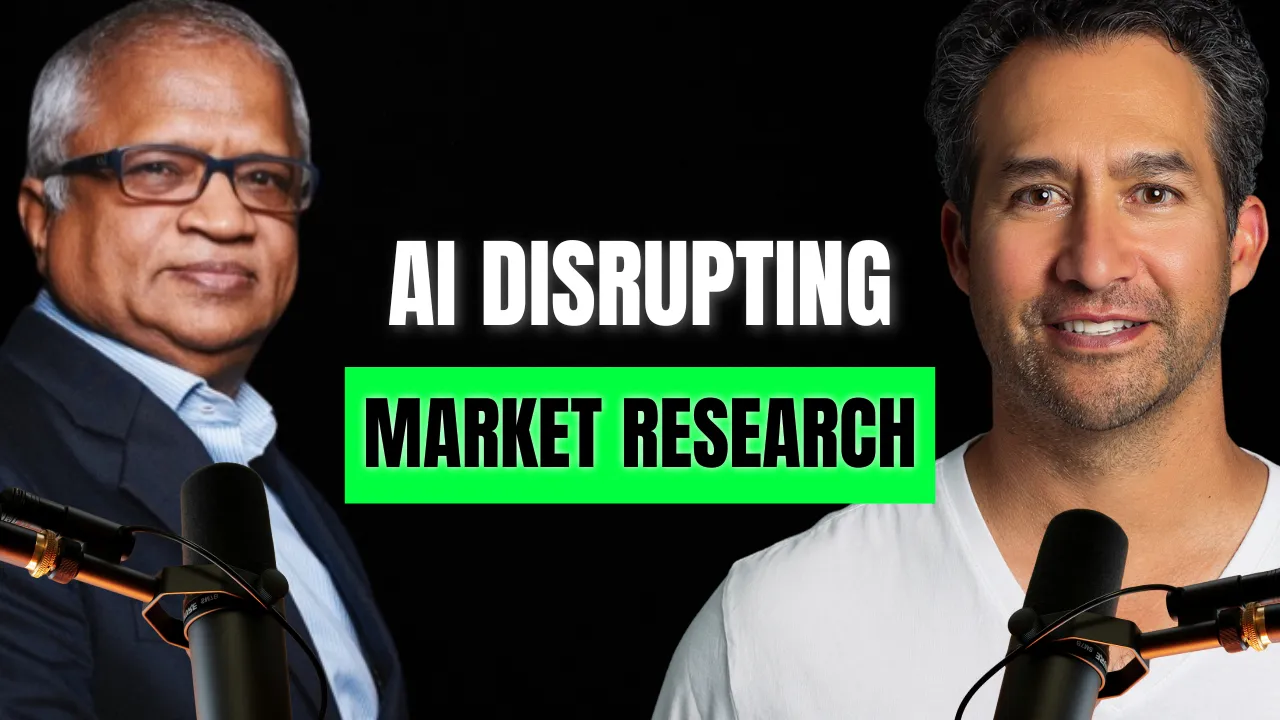
Jake Aaron Villarreal: Welcome to our podcast, From the Ground Up, where we interview startup founders exploring their journeys, their success, challenges, and lessons learned. We hope you be inspired in discovering what it takes to build a thriving startup. I'm your host, Jake Aaron Villarreal, and excited to have with us today Rana Gujral, founder of Behavioral Signals, an LA-based startup in the AI space. Rana, thanks for joining the show today.
Rana Gujral: It's a pleasure, Jake, thank you for having me.
Jake Aaron Villarreal: Great. So you've got a great story. Um, we're going to talk about the, the company you built and how it mixes in with AI in today's world. And also we'll talk about you, kind of where it all started and where it began. It's a great story because it's different. Um, for the listeners that we talk to, with other founders that really have a starting where you, you come into an accelerator, you come out of that, you build a product or you have an idea and you take that to market, you get funded and you hope for the best. But yours is more unique in the fact that you went into technology and then you had a very quick rise to success within the enterprise. From there you went and went you know, came out of MIT and then applied your core skills in management consulting as well as uh turnaround companies. So maybe not all in that order, but we're going to start off, so just a little bit more background about um you. Kind of walk us through: you're today a startup founder, you're an investor, you're probably a mentor, I know you contributed to articles for TechCrunch and Forbes magazine around technologies and innovation. Kind of how did this all begin for you?
Rana Gujral: That's um, it's been an amazing journey. Um, and I, you know, I feel um I've been really fortunate to have had uh these many amazing experiences presented to me. Uh, my early days as you just said, you know, um, I mean I've, I've been in technology pretty much my entire career. My early days uh sort of were in some early exploration around various other I'd say related aspects but not quite programming. I started off as, as a programmer. Um, had a lot of fun doing it. Um I, I realized that I wanted to go explore the other side of the business uh outside of building a product. And so um management consulting was very alluring. Um, so after I went to business school I uh you know, went into engagement consulting, management consulting space for a bit. Um realized I uh, I like building products better, so I came quickly back into building products. Um, and um you know worked at some very large uh product uh and public companies where I was part of some iconic product journeys, uh some really amazing experiences. Um had a lot of fun building um Google TV, which was a early precursor to Chromecast back in the day, um among other interesting product lines uh which were in many ways ahead of its time. Like for example uh Logitech had this view of uh smart home and digital home, and this was, this was a time when you know, the homes were not smart and there was, there were, there were uh you know very sort of disparate pieces of technology still coming together, but there was this vision that at some point it will be smart and there will be these building blocks. And so we started to sort of think about those things uh from various experiences: connected devices and connected experiences, you know um including sort of like home security systems to home entertainment systems.
Um, and then um I had uh this amazing opportunity to go be part of this turnaround uh journey at this iconic company that had been in business for over 25 years. Um, you know, at its heyday was doing close to half a billion in sales, and then things went down south. And um this company was really um close to being bankrupt, it was a few weeks out from folding up. Um and backed by big private equity players, uh there was a chance to sort of go work on a turnaround. Um so I jumped on that uh to go, you know, explore that potential. And uh we had this amazing opportunity to go rebuild the product line, um look at uh innovation from grounds up, um and bring that company back to life. Uh long story short, uh we were very successful in doing so. Uh we were able to, you know, turn around to be about 110 million in a little bit over two years. Um that, that happened very quickly, and eventually the company um held a very successful IPO um at 4.4 billion.
Um, I um also had this innate desire to go uh do a company from grounds up, because at that point of my career I had um had quite a bit of success in the corporate world, um and had also had [a] good amount of success in building products that [were] successful. Um and outside of that you know, we had this amazing opportunity to turn around this company which was quite a journey, but um I, I wanted to sort of you know uh explore what it takes to build a company from a paper napkin idea stage. Um because that first, you know, million dollars in sales, that first sort of uh client uh which manifests from an idea you had, um is a very different feeling, a very different experience. So um I launched a company called Tize. This was um a vertical SaaS, uh we built a workflow optimization engine uh that optimized uh the business processes of a very archaic industry, which was specialty chemicals, which had a lot of complex processes. And so we built these software systems very specifically for that industry, that's why it's called vertical SaaS. Um and we also used uh machine learning uh which again was ahead of its time. We built these engines that predicted commodity prices um ahead of you know three months out in the future. And um we had some early success, that we got acquired by.
And then I um went back to the corporate world for a bit. And then you know um uh I've been part of this uh amazing journey at Behavioral Signals. And Behavioral Signals is um, is both uh a startup um and it's also a mission. Um and um you know, we're at the very core building essential building blocks of AGI, um that it will eventually lead to more empathetic interactions with machines down in the future. Um, and uh in many ways you know, uh we've been focused on sort of uh doing things which haven't been done before. I mean in the, in the emotional behavioral space uh, for the most part uh most of the companies were uh still looking at uh you know like on the AI side, still very much sort of focused on the spoken word. So you know, you, you take a transcription engine or an ASR and convert the spoken word, uh audio into the spoken word, and then parse the words for meaning. And uh, needless to say, is not a very good way of doing it. I mean you're losing many elements of a conversation when you're focused on just the words. And uh, but the tone of voice has been you know very elusive, it's very difficult, it's very hard to um I guess get right. Um there was not, not enough data back in the day. So [my] co-founders also, you know, have amazing chops in this field, and some of the early research was done inside of USC, um at SAIL Labs where some of these models were built to help um you know kids who uh suffered with autism. And you know, a lot of the kids who are autistic are super smart, but they struggle with understanding the emotional and behavioral quotient of the person that they're interacting with. So the thought process was, "what if you can build a tool that could help them do so? Like you know in real time, help them assess uh what is the emotional behavioral state of mind uh of the person that they're interacting with?" And so that's how it all started.
Um and then we built these engines uh you know which started to perform really well. But it took a long time, you know, in in machine learning, in AI, uh you're always, especially if you're building um um an aspect that is closer to deep learning, which is uh a core human brain function, and you're trying to replicate that in the software system, you always have to sort of uh measure the progression in comparison to "how well can a human do it?" And uh "where are you in terms of sort of that benchmark?" And so that's sort of uh measured oftentimes by this number called an F-score. And F-score is um you know is a number typically between zero and one, you know, one being the highest it can be or 100%. Um and it's a combination of two things: one is precision, which is accuracy, and second is recall, which is false alerts. And so you, you'd benchmark a human capability and have an F-score of that. And uh a typical average human F-score for um understanding emotions and behavior uh from the tone of voice is about .8. Um you know obviously um females do this better than men.
Jake Aaron Villarreal: That's just known, yeah. We've been all told this and it's actually true.
Rana Gujral: Um, but on average it's about .8. Which means about 80% of the times we're right, and 20% of the times our brains are wrong in assessing the emotional behavioral quotient. Um and so when we started off uh we quickly got to .5, .6, which was really exciting. But then it's not really sufficient to go build compelling business use cases on or solve industry problems. And it took a long time for us to get to .7, very, very long time to get to .8. And then we had a point of inflection and then we you know quickly crossed the, the human threshold. And currently we're sort of you know uh beyond that. We're in the .9 category. And so then when you get to that point, things become really exciting because now you have a software system that has replicated an essential brain function. And it is going to obviously play a huge role in you know, in the future AGI whenever that emerges. Um because you're, you're looking at building an AI that is more and more like human. And these essential brain functions really quantify uh what it means to be a human. And so now you can have a software system assess uh the emotional behavioral context of a conversation and of an individual [in] real-time uh from these nonverbal cues, which is pitch and tonal variance, intonation, prosody.
Um and so um you know uh that's the space that we're playing in. And um, and obviously many different applications uh we have. A core business focus uh around optimizing interactions uh between uh call center agents and the customers that are calling in. Uh but the technology can also be applied in many other industry sectors. And we do dabble in some other ancillary areas in parallel as well. So yeah, it's been quite a journey uh and it continues.
Jake Aaron Villarreal: Yeah, no it's great. I want to go back to one thing you mentioned, and I have a couple questions. One, you said that women were better, or at least more I don't know, may, maybe more emotionally connected to the tone of being able to listen to communication and maybe understand what that person's feeling. How is, and, and if it's statistically or it's, it's ranked that way, what is it you think they have that men don't have?
Rana Gujral: Um, I mean, are you specifically talking about sort of uh, you know, male/female comparison?
Jake Aaron Villarreal: Yeah, like you mentioned that.
Rana Gujral: Yeah. In your studies or when you were working through the, your research rather. Yeah, I mean I think you know um it's not necessarily uh totally understood. I mean there's a lot of brain functions, there's a lot of brain capabilities or human capabilities that we don't really understand. It is what it is. What we can do is we can measure it, right? So we could sort of try to understand um sort of like the points of differences, why do, why do they exist. I mean um I, I you know I don't know uh if I personally completely totally understand um why those differences occur um in fact.
You know, like interestingly I'd say um we've been able to replicate, and this, this is an interesting uh paradigm in AI. Um like for example, when you're trying to replicate a brain function um, like we did for extracting these signals from tone of voice. Um we took a stab at a hypothetical direction that we could take to go uh do so, and you'd build a model um and then you, you train the model. And then you, you see how the model performs, and you keep tweaking it. And if you don't get the results, you build a different model and you try out different ideas. And then suddenly, either it works or it continues to not work, and you keep trying. But let's say it works, and in our case it worked. And now we have this uh model that performs really well uh, but we don't really know if that model replicates how the human does it, right? So we've found a way, but is it actually, has it actually cracked the code of how humans do it? We don't know. Um and uh so a lot of these things are still mysteries for us. I mean you know uh, there's potentially many different ways to get to those end points. Um you know, a lot of this is a bit of an experimentation.
Jake Aaron Villarreal: Yeah, we hear that a lot with companies in AI where there's a lot of lab testing and you finally figure out what you're trying to get. And then you continue to iterate and move forward and you find your market, you find the applications that it suits. Um, walk us through a little bit about the applications that you, you talked about, call center and things like that. But give us a specific use case where maybe you first started applying it and you found that, "okay, we have a market here." What was that and how did you find that market?
Rana Gujral: We actually tested a variety of different ideas before narrowing onto um, you know the use case that we're focused on today. Um I mean, when you're talking about um applying a capability that understands the emotional behavioral quotient and also the state of mind... Uh but let me, let me describe the, the technology a little bit better, that, that will be a good sort of uh you know building block to this conversation.
So what our engine does is, in a real live conversation like ours um, which could include two parties or multiple parties, u-, it could extract signals [in] real time, uh specifically focused on the nonverbal cues. Which means it's not processing the spoken word. Um at no point uh you're using an ASR to take the audio, converting that into actual words. So your words don't matter, uh your language doesn't matter. You could have, be having this conversation in any language. Uh your dialects or accents don't matter. Um, and then from the non-verbal cues, which is pitch and tonal variance, intonation, prosody um and etc. uh, you are extracting signals. But the signals that you're extracting can be bucketed into three categories. First there is the bucket of emotions, like anger, happiness, sadness. There's a whole range of emotions you can tap into. Then there is the bucket of behaviors, like engagement, empathy, politeness, etc. Um, then there's this super interesting bucket which is um, you're taking some of these uh low-level signals and combining them towards a greater level of understanding of a mental state or a behavioral state. Um you know you call it like you know some advanced classifiers.
Um, so this is where you could identify someone's level of experience or satisfaction let's say, you know, customer satisfaction or overall satisfaction uh in the moment, live. So think of this as a live NPS score um, or uh your engagement meter. Um but also very interesting things such as stress. Like, are you stressed? Let's see how stressed are you. Um you know, or you're under some sort of a duress. Uh or control. Control is interesting, control is more of you know, you're saying something, but um do you want to say it or is someone making you say it, you know, detecting that. Um and intent. I mean you could do very complex intent markers, which is intent for an action or intent to not do an action. Um and uh you could, you could identify that [in] real-time. So you're going to intent to like, propensity to pay uh that would be in a debt collection scenario, propensity to buy which is in a you know sales scenario. So all of those things are uh possible uh from the core tech. You could apply this core technology in many different industry verticals. You could uh certainly you know uh apply it on the healthcare side. There's a lot of uh research now that's being done that you could predict certain pathologies using certain vocal biomarkers and also just sort of well-being, etc.
Um but the most, and, and... but the, the there are two sort of broad areas of application. One is human-to-human interactions, and then there is human-to-machine interactions. Um the human-to-human interactions mostly happen in the business setting. Um so this is where you know most of our human-to-human business interactions happen in call centers. You know everything is digitized. You know you're not necessarily walking into a you, you know a business anymore, you're interacting with them by calling them. And um so that's one big area of optimization because it's still very much broken as, as you would know. And um then there's the human-to-machine interaction, which is you know building these machines that you can talk to, but having a more human-like experience or interaction with these machines. So giving these machines, who, which is in a voice conversation with you, or voice interaction with you, uh the ability of uh human uh to understand the emotions and the behaviors uh from your tone so that they can uh be more accurate in their responses, or more empathetic in their responses. So those are sort of the two areas.
So we tested a lot of those areas um both on the human-to-machine side and on the human-to-human communication side. And one opportunity eventually we narrowed down onto was uh actually quite interesting. Which was um, first off what we were able to do was to you know, create what we call a "conversational bioprint" of a, a person based on a previous audio interaction. What is this? Well, a conversational bioprint is really, it's a, it's a vector file of you know, between 75 to 100 attributes that range from various things such as: how do you converse? How do you speak? Do you speak fast, do you speak slow? What emotions and behaviors do you typically exude in a conversation that's unique to you, um you know, among other things? So you know, various attributes, between 75 to 100. But when you put it all together, there's this one bioprint that encapsulates a deep understanding of how you converse. And you would have one that's unique to you, I would have one that's unique to me. It's very similar to you know, a fingerprint, which makes us, makes us unique as individuals.
Um once you have those bioprints, um you can use those bioprints to make intelligent decisions around who should be paired with who if there's a conversation to happen uh to ensure um that there's going to be a great flow of the conversation. You got to have a good dialogue, good conversation. Um and um if you are able to pair people together who are bound to have a great conversation, um it automatically, directly impacts whatever is the outcome of the conversation. Whether that's customer satisfaction, or sales, or you know debt collection, or whatever that is. So we were able to build that product, which has never been built before. Right, so there's, has been products that do do this matchmaking, but they use very different approaches. They use complex Bayesian heuristics, use a lot of data, public data sets etc., but not really essentially using a bioprint that can be created [in] real-time using tone of voice. And then matchmaking can happen dynamically [in] real-time using you know, using these voice engines. Um and then bam, two people are put together who are bound to have a great conversation.
Um so that's the product we brought to market, it's called AI Mediated Conversations. Um obviously it's uh very well suited for call centers. Um a lot of the clients that we have are financial institutions, banks, you know collection houses, BPOs, etc. Um and they're using it to optimize the client experience but also optimize the various uh outcomes that they want to optimize. So you could tune the matching towards the outcome that you require. Um it's very interesting the way it works. It's like you know, I'll just give you one more anecdote. You know, we've all been in uh one of the two situations uh, or both of those situations that I'll describe. One would be, let's say you're discussing something with someone and it's actually some sort of a negotiation. And you're, it's a tense, adversarial conversation. You're trying to get to, you're trying to get your point across and the other person trying to get their point across, and it becomes really engaged and gnarly and tense. And you walk out of that conversation without being able to get your point across, so in some ways you lose that discussion, but you feel good about that dialogue. You, you talk to yourself and you say "you know, I, I didn't get my point across, or I didn't win that dialogue, but boy that was a good conversation. I feel good about it." That's one instance.
And there's a second instance where you know you met someone at a party or it's a casual meetup and not discussing anything controversial, you're not negotiating anything, it's not tense, it's just casual conversation. And in about five minutes you're like, "I can't stand it, someone help me you know get me out of here." And, and, and, and so it's like, why does that happen right? Uh and, and again, you know, it's a situation where uh you try to get something addressed and you're calling a call center uh and you may have had a couple of conversations and um you're heated, you're tense, I mean you're, you have an agenda and you call. And someone picks up and all they do is greet you and ask you for your name. And you know that's it, and you've made up your mind it's not going to go well. You're like, "Oh no, not, not him or her," right. And you, you instantly know. And sometimes you know, some people just hang up then and there and redial to get a different agent. Um and it's because you know, sometimes those bioprints click, they match randomly, and you get the person who matches your conversational rhythm. Um and other times it clashes. And uh what we make happen is we maximize the chances that it always matches versus clashing. And there's no technology like that that exists in the world today outside of what we built. Um because um you'd need a human psychologist on both sides doing that matchmaking to make that happen. But AI can do it at scale.
Jake Aaron Villarreal: That's incredible. I know we're in the business uh, we recruit and we have, you know, I've interviewed 20,000 people. And in that process, I'm sure there's many people that I felt and they felt weren't compatible with me or me with them or the opportunity. So the question I have is how quickly can you create or can the AI understand the bioprint and then make that match happen, whether it's switching from this call center person to that call center person based on matching that bioprint to that type of person. And what's, how much conversation is needed before you can actually define it?
Rana Gujral: Yeah. So uh we're getting better and better at this. Uh at this point today um we uh, we can create a bioprint uh from an interaction that's um anywhere between a minute and a half to two minutes in length. Uh we don't need any more, right? So a minute and a half, two minutes uh is enough of a dialogue to create a bioprint for both parties. If there are two parties in a conversation, you can create a bioprint for both. And then um you know, and you could do it real-time. Like, so you know, real-time in the sense like uh live, not real-time I guess. Um so as soon as you have enough data in a minute and a half, two minutes, you can create that bioprint. And then you could also sort of uh you know, use that to matchmake [in] real-time um you know from that perspective.
Now uh we're working on certain improvements uh which when we get to, uh you could potentially create a bioprint with maybe a few seconds, like 15, 20 seconds, or you know uh about that of interaction. And when you do that, you're potentially going to be able to create a bioprint uh of at least the client uh when the client's interacting with the IVR system, which is not even human, right. So this is the IVR pre-recorded system, the very annoying system which asks you these questions you know, you know "if it's this press this, if it's that press this" and you know, it's about a minute gone uh before you get to your agenda. Uh but you could create a bioprint then and there. And so by the time it comes to that they are ready to speak to a human, you could quickly match because you already have the bioprints of the agents. That's the easy part, uh right, you know. And you could, you could do a live matchmaking there. You don't need a previous conversation in place to do the matchmaking.
Jake Aaron Villarreal: That's great. So once you have that compatibility match, the odds are it's going to improve the outcome of that conversation, whether it's you know appeasing an unhappy customer or collecting that data or that, that, that money that you're owed, whatever it happens to be in debt collection. Um that's great.
Rana Gujral: Yeah. I mean, so you know, when you, when you bring the right two people together and increase the chances of a great conversation, um everything else remaining untouched or same... which means they're the same agent that you had with the same training that you had, and they're certainly the similar type of clients that you had with the same problems and use cases, but you're just having two humans come together having a great conversation... um you have a better satisfied agent, more engaged agent, you have a better satisfied client, more satisfied client. And outcomes, whether that be you know more sales or debt collection or whatever that situation be, um increase. So we're, we uh, we're currently tracking double-digit improvements in all the KPIs, whereas the typical industry um you know uses anywhere from 1 to 3% as big wins in terms of the improvements with the software technologies that you use. Um that's because you know you, you're using different capabilities to get to those results, and we're using human psychology and human compatibility that can be uh you know used [in] real-time to bring the right two people together. And then you know, um let nature take its course.
Jake Aaron Villarreal: Yeah. There's so many applications for this product. I'm excited to see where it goes and, and the growth of it. Let's go back a little bit in terms of the company itself. How big are you today employee-wide, and talk about the funding. Uh how much have you raised, what round, and, and who has led or who's been part of your funding?
Rana Gujral: Yeah, so we tend to uh you know keep uh some of our round sizes uh a little bit under wraps. Uh we're still working towards a few milestones, but um we're uh we've... I'll give you some uh high-levels. Uh we're still relatively small, um we're headquartered out of LA uh with um teams in San Francisco, Bay Area, LA of course. Um but also um a very targeted R&D research team in Athens in Greece. Um so those are the three locations. We have a few other people that are spread out um in different parts of [the] US, but those are our three locations that we you know primarily work out of. Uh we've done um uh four rounds um and they're still early rounds. And we've had uh some really good investors who have supported us uh through this journey. Uh Kairos Ventures out of LA, Rogue Ventures, um and Brookstead Equity, and also um In-Q-Tel. Um which is a very interesting firm, they are the CIA's VC firm. A very sophisticated deep tech investor. Um and uh you know we just had a, we just closed a recent round and we have a brand new investor joining our team as well, CS Ventures, uh which is founded by Russ Carson. Uh the iconic Russ Carson. And so excited to have them on board as well.
Jake Aaron Villarreal: That's great. You know, when you get investors on board there's always a strategic aspect of it. You hope they bring something to the table. Maybe it's they have a bigger network, they bring clients, they can get you inroads to new opportunities. Um your founders seem like they're, or your investors seem like there's a, there's a uh some really good diversity there. Um out of that, where do you think the biggest opportunity is for your product as you go forward?
Rana Gujral: Yeah I mean, you know, um we uh um uh we're exploring new um directions uh while we are very focused on building our, on our core opportunity. And um you know, as I said, our, our core focus uh is um optimizing these interactions um in a contact center by you know using the behavioral psychology and voice AI to really sort of like you know bring the best out of every human out there, right? So for example... so [you] could say you know it's less about training. It's less about saying you have a bad agent or a good agent. There's no good agents or bad agents, they're just humans. And um humans are not necessarily always compatible, right? Uh they have their unique uh aspects. Uh but if you maximize the potential of their uniqueness uh you can bring the best out of them and also bring the best outcomes to your business. And so that's a capability that is then made possible by this product Mediated Conversations. That remains our core. I mean so we're very focused on uh building that out.
Uh we um have also taken a slightly I'd say unconventional path of you know um going after uh more of a enterprise rollout versus you know a sort of a, a SaaS offering. Uh which um you know has its pros and cons. And so, but because of the path that we've chosen, uh we are largely selling right now through channels, through large channel partners. Like you know Genpact, through Datacom, uh EY among others, those, those are the channel partners that we focus on. Um and so that remains our core and we continue to focus on that.
But outside of that um you know we've recently started to explore some very interesting use cases uh which are not related to our core. And which is applying our technology uh towards uh use cases that are uh in the law enforcement and uh you know national security realm. And uh we have various capabilities around um understanding, modeling and uh you know tracking variances in, in behavioral mapping. And you could use that for uh some of those use cases. Uh we have capabilities around um also sort of you know understanding threat, um understanding elements of fraud or trustworthiness. Um we, we actually have done a lot of work in the area of deepfakes, and some of the things that we'll be announcing soon, we haven't publicly announced yet um, so stay tuned on that. Uh and uh and also you know um sort of really sort of uh uh improving the current capabilities that exist in sort of the you know the, the polygraph world uh so to say, right? Which is very inadequate and problematic, and so, of we could really improve on, improve on those areas.
So some of those things uh we're sort of like you know, just uh starting the journey on. And so we are uh working with some government clients towards some of the interesting use cases in that space. Um and we'll continue to do that. I mean I, I think you know um, it, it those use cases are uh very synergistic to our core, so it's not a distraction. Uh we're using the same building blocks that we have to go solve a slightly different problem. Uh but also some of the things that we're building specifically for that market uh we're uh you know, we're able to bring it back into uh our core offering. Uh you know because banks are just as interested in uh predicting uh an intent to fraud, or assessing trustworthiness and etc. Um a big problem now, but I think it will be a massive problem um you know in the era of deepfakes and uh where you know most of these, most of the conversations are, most of the banks are potentially eventually at some point going to become neo-banks, right? I mean even the traditional banks are mostly operating as neo-banks today. I mean how often do you actually go to a b- bank branch? Um there's not a lot of reasons to. Um and so you know, your interactions are then largely all digital and you know and voice-based, and so some of these tools become really, really important.
Jake Aaron Villarreal: Yeah, that's really cool. You know, you mentioned something I think is interesting. You talked about your product and getting into the market through channel partners. And I know that for a lot of companies you think you got to build a product, get to market, and then build a sales team and sell it and get out there as a startup and get your brand in front of customers. But you know almost every big company has a channel partner um channel. And it's, it's a significant amount of revenue for them. It's also a strategic direction you might want to take your company. But I think it's really, how did you even begin to start to build a um a channel partner?
Rana Gujral: Yeah. You know, you know I, I, I'd say uh when you are um taking a step towards enterprise sales, you'll realize quickly enough uh, especially so if you are uh building something that is um new and cutting edge um like an AI implementation. Is that, let's say you built a product um that hits bang on target on the KPIs that the client wants. Um it's exactly the problem they're looking to solve and you're solving it uh in a massive way, which makes, you're making a massive improvement. That doesn't mean that they can buy from you, by the way. Right? So, so you know, you could go to uh Goldman Sachs or Citibank and say, "You know you have this big problem," and, or they come to you and say, "We have this big problem and you know we could solve this and we can fix it, let's show you how." And uh, and it's not un- hypothetical. You could actually also you know uh do a full A/B test and do a measure on that, and you could show the ROI on that. But that still doesn't mean that they can buy from you.
There's a lot of uh complexity in implementation and deployment, right? And uh it's, it's a, it's a collection of things uh ranging from just the complexity of the, the, the technical stack where you have so many different pieces in it. And you have this new piece that you want to add that needs to integrate and operate peacefully, and you know, safe and coexist with that stack. But also there's regulations, there's compliance, uh there's GDPR, there's SOC 2, there's AI and PII considerations, um then there are unique country laws etc., etc. Then there is the risk assessment, even if you pass on all of those things, vendor onboarding in some of these companies, which you only start after you've closed the deal. Which could take about a year or a year and a half, can last for two years, up to two years. Right? So you're looking at three to four years to go get your product running uh, where you, you could do that in three weeks. Right? I mean technically you could just deploy and be ready and, and... but you know, that doesn't mean so.
Um channel partners are immensely valuable uh to go solve that complexity. Especially for a, a small um relatively new AI player in the market uh that is building something that is um you know first of its kind, it's cutting edge. Um if you're building something more commoditized then it's somewhat easier. Um and so I think you know the channel partners play a huge role, and I think we learned that fairly early on. That uh, we do direct sales as well, uh but it's a lower part of our strategy just because um a lot of the clients that we're going out... we're going out after large accounts, and with larger deals, and um most of these clients have very large companies, and many of them are public companies, public banks, and financial institutions. And um the, the benchmark for security and compliance is just extraordinarily high. Um and uh I mean we do have some advantages on our side that you know we, we don't really have a lot of PII that we touch or personally identifiable information, because we're primarily focused on the tone of voice. Uh which means we're not ever using, um handling data that is personally identifiable. Uh like in, in many ways we're GDPR ready out of the box because there's nothing to redact, we don't even take the audio [and] convert that into text. But even so, uh there are other considerations that come to play. Um so for us yeah I mean um you know uh we, we had to do it. We had no choice and uh, and I, and I feel uh, I feel that's, that's the right strategy for something like uh the product that we bring to market.
Jake Aaron Villarreal: Yeah, you know, as I mentioned a little bit earlier, you're more unique than other entrepreneurs where you, you've you know been at startups, you've done the turnaround, uh you understand enterprise. You know of that experience, specifically being in a turnaround, having to make some hard decisions, maybe having to let people go, having to tighten up the funding, figuring out how to redirect or pivot the company. What's one or two of the biggest lessons that you learned that you've applied to your current startup or maybe even your previous startup that's been really beneficial?
Rana Gujral: There are a lot of lessons, a lot of experiences, a lot of takeaways. Um I, I'll tell you um about one specific aspect of that turnaround. Um so when we looked at turning, turning around this company, um you know it had a very iconic uh brand with a very loyal following uh in the market. Um and the customers really were begging and screaming for this company to be saved. Um so we felt that was very promising. Um you know there is uh certainly you know uh a fan base um that, that wants this company to survive. Um but when you look at a turnaround right, and you look at a turnaround especially at that scale where the company was close to 300 million in debt at that point, um and you look at "okay, how do you bring it back to profitability?" you look at all the obvious pieces, right? So you have like these five offices, one of, one of them is this swanky and a, executive suite. And I mean you guys are bankrupt, why do you have that right? Uh you know, why you know, literally at that time I, I recall now there was this beautiful office um with seven floors. And the seventh floor was this massive uh you know 10, 15,000 square feet space uh with seven offices uh for seven executives. Uh each you know about 2,000 square feet office with a live-in ex-, executive assistant. So you look at all that stuff and you're like, "okay, that's got to go," right? And so those things have to change.
Um you have to cut cost. You're also looking at people. Uh who's the right team, who's not the right team. So you have to you know um get the right team assembled towards the new goal that you have. Um and you're fixing up various business processes and everything. All of those things make sense, but we quickly realized that none of that is going to actually eventually help. Um you're, you're too deep down. And yeah, they'll all help a little bit, but it [is] not going to get you out of that hole. Um you know, and so then what do you do right? And so we actually realized that again, the only way you could actually help turn this company around is uh by bringing something so disruptive and innovative to the market that the market's never seen before. So we had to go back to the drawing board and say, "Okay, let's take a look at the, the, the product and the experience that we're selling and everything that's wrong with it. And what would be the utopian experience, forgetting about the engineering piece or whether it's possible or not, if you were to just dream it? If you had to dream that experience, what would it take, what would that experience look like?" I mean let's say it's... this is the "concept car" model right. Which is like you know, um some of those are not practical in reality.
And so I mean this particular product um had a lot of complexities. It's, it's like a 3D printer type of a device. Not a 3D printer, it's like a, more of a device that you could design on a software system and then it cuts, writes, embosses. So a lot of mechanical pieces, all very robotic. Uh which had to be calibrated and set up by a very non-technical uh you know consumer. And so you look at it and say you know "can you replace this with uh like a dial, um that would be more prevalent in, I'd say, a washing machine or a microwave?" Because when you're doing a load of laundry you're not really you know calibrating the temperature and the spin cycles, you're just putting it on "that" and the machine takes care of everything. Can you do that in a mechanical robotic device? There's a different level of complexity. Um and so when we knew what it would take to disrupt, we then just decided to go ahead and try it out. And uh at that time it was more of um you know um the impossibility of that. And a lot of people said it can't be done, and then they left. Uh and then there were some crazies who said, "I think it can be done" as like, "Okay come on, let's start, let's join, you know build this out." And uh and it just worked. I mean and so it made it happen, and then it's, the rest is history, right.
And so, so I think you know the big lesson is: sometimes um there is no substitute for innovation, right. You could have the best entrepreneurs, um you could have the most sophisticated executives, you could have the smartest teams from Ivy Leagues. Uh not to say that Ivy Leagues are the smartest. Uh and oftentimes you know, in my experiences, you know, it's been, it's been the worse. But uh none of that really will get you uh out of the, the situation that you're in. Um you have to innovate yourself out of it. And uh oftentimes innovation is the only answer, and it's the hardest thing to do. And so I keep reminding myself about that, right. I mean so building a startup is a super hard journey. Um everything is going wrong oftentimes, I mean you're dealing with uh you know team issues, investor issues, product issues. All of those situations. Uh but if you're innovating, uh I, I, I tell myself you're on the right track. You keep innovating. Have you moved the needle on innovation? Have you done something unique, have you built something you know that is um you know really worth uh sort of being proud of? Then you're on the right track. I mean, other things fall in line, and uh it's a, I mean you could continue to focus on flawless execution and all of those things, and um you still won't get anywhere in the long term.
Jake Aaron Villarreal: Yeah, well said. God Rana, everything you're talking about is captivating. I feel like I could talk to you all day long here. Um but I know we got to wrap up. What is there anything that I haven't asked you that you would like to share?
Rana Gujral: Um that, I mean I, I, I think we've had a really good uh conversation, so I can't come up with uh a particular thing. Um I mean I just, uh I mean I'd ask you maybe a question in terms of like you know how, uh what has your biggest learning been talking to a lot of entrepreneurs? I mean how, how does that uh sort of uh compare with some of the things uh that you've seen yourself?
Jake Aaron Villarreal: Yeah, I mean in terms of listening to lots of entrepreneurs and talking to them about how they're going about their business or innovating or trying to get to market, I think it's all, the path I think is fairly similar. I think there's just different places you start and different problems you're trying to solve. So for us you know, it's always about you know, what's the person like, what's inside that person that really is going to be able to understand the problem at hand and be able to solve it? And we hear their stories about you know they're looking into the abyss, their funds are running out, they don't know where to go, and they figure out how to get it done. I think sometimes you just got to show up. I think it's just like a day-to-day thing, you just show up and eventually you start to find your path. And it seems to be a reoccurring theme that we hear. So I don't think you always know where you're going to end up. And myself, I've had my own companies as well, as you know sometimes you're going through the forest and you're not sure where the destination is and you just keep going. And eventually you see it and then you focus and you keep going and you get there. So it's great. But you know you have those ups and downs or ebbs and flows that are, can be scary, they can be exciting, they could be questionable at times. I think you just keep going.
Uh your experience to me is uh maybe more interesting than others because you've been at the enterprise level, you've, you've been at companies that were not going the right direction and having to turn them around. It's not just about turning the company around, you have to turn people around, and to do that you lose them or they're with you and you move forward. So um it's, I I think it's fascinating and [would] love to talk to more founders that have gone through that experience. I think there's a lot of pivot stories in there for startups. You know you have an idea and you maybe have to pivot left or right as you go. But when you're starting in the wrong direction and it's a complete pivot, I think that experience has got to be very different. So that's kind of a, just my, my thoughts. If, if people wanted to find you or find your company Behavioral Signals, where would they go to do that?
Rana Gujral: Yeah so go to behavioralsignals.com. Uh and you know if you're working on something interesting which you think uh might be sort of worth a discussion, I'm fairly uh you know well present on social media. So you could reach me on Twitter, my first and the last name @ranagujral, uh or you know uh any, anywhere else. Um you know LinkedIn, um happy to, happy to chat.
Jake Aaron Villarreal: Rana, thanks for joining us today um and thanks for all the listeners that are listening, it means the world to me and to us. Uh my name is Jake Aaron Villarreal and we're signing off for now, but can't wait to connect with to you again soon on the next episode. Take care.
Before we wrap up, I want to give a big shout out to all the entrepreneurs that have joined to make this podcast possible. And for all the listeners for listening, it means the world to me that you chose to spend your time with us today. I'm your host Jake Aaron Villarreal signing off for now. We can't wait to connect with you all soon on the next episode. Take care.
This show is sponsored by Match Relevant, a company that helps venture-backed startups find the best people in the market and they do it in three simple steps. First, they sit down with founders to understand their story. Second, they tell their story into multiple candidate channels. And third, they schedule interviews within 48 hours. Find us at matchrelevant.com to learn more about how we do it.










.jpg)






.webp)
.webp)
.webp)
.webp)