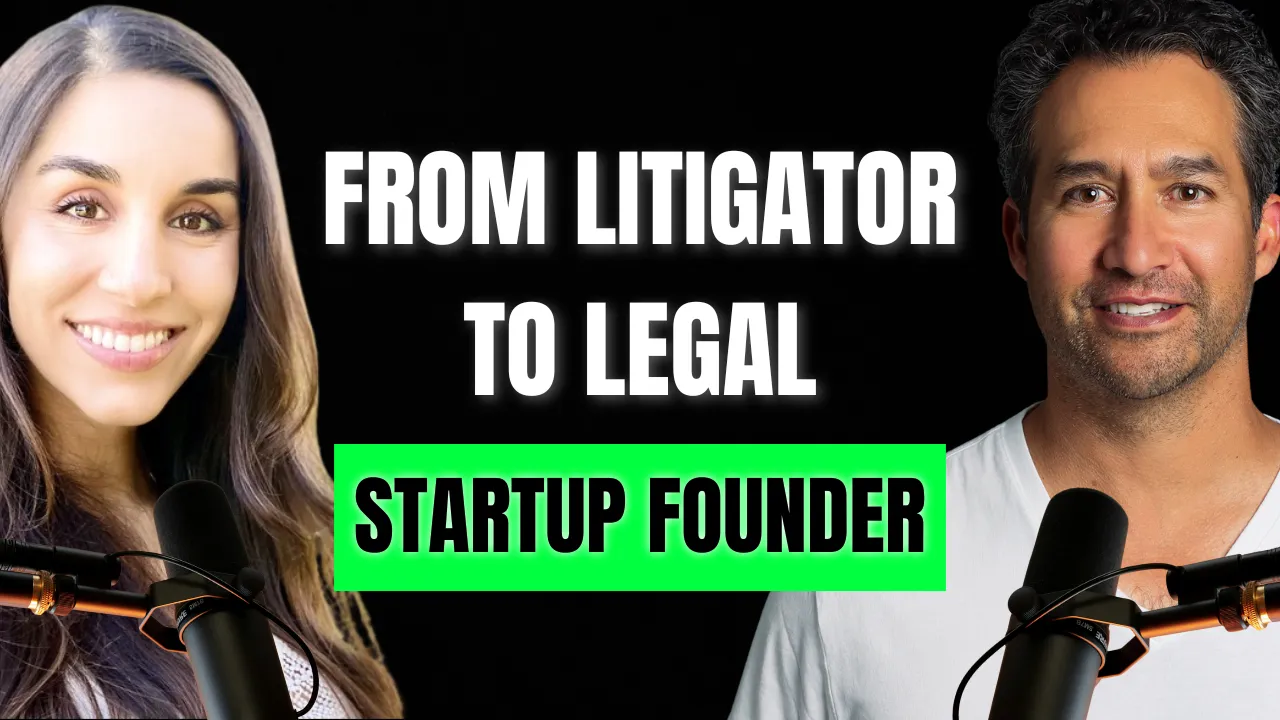
Jake Aaron Villarreal: Welcome to our podcast, Born in Silicon Valley, where we interview startup founders exploring their journeys, their success, challenges, and lessons learned. We hope you be inspired and discover what it takes to build a thriving startup. I'm your host, Jake Aaron Villarreal, and here with us today, we have Pardis Noorzad, founder and CEO of General Folders. Pardis, welcome to the show.
Pardis Noorzad: Thank you so much for having me on, Jake. It's great to be here.
Jake Aaron Villarreal: Well, very cool. Happy that you're, you're here today. Um, a little bit about Pardis. Uh, she is not only the founder and CEO of General Folders, but she's on a mission to make business collaboration simple and secure. Pardis led a team at Twitter covering consumer data science and was a head of data science at Carbon Health. She has also built products in growth stage fintech and digital health and early stage AI companies as well.
So, I guess before we get into talking about your company, um, uh, where you, where you dialing in from today?
Pardis Noorzad: Uh, I'm at SDSU. Uh, they were kind enough to let us stay here for longer after our, um, kind of residency as part of, uh, Techstars San Diego. Uh, so yeah, doing that from an office at SDSU.
Jake Aaron Villarreal: Very cool. My alma mater and you know happy to be an alum of SDSU. Great school and God what a great town. Truly. Are you originally from there?
Pardis Noorzad: No, I moved uh around a year ago uh from San Francisco, um where I was working for a couple of companies and started General Folders.
Jake Aaron Villarreal: Very cool. Um let's talk a little bit about you before we dive into General Folders. So uh you know, you've been at good companies: Carbon Health, Twitter, others. What um what kind of shaped you into getting into technology? And, and really, is this your first startup that you're building?
Pardis Noorzad: Yes, it's my first startup, although uh I worked at a lot of startups. Uh I worked at a very early stage uh company as their first employee. Um they had just raised their pre-seed. Um and uh I also worked at uh the fintech company Paytm. Uh at the time uh it was a spin-off of Paytm, actually Paytm Labs. I joined as employee 25. Um and um Carbon Health I joined at 45. Um and Twitter was uh kind of the public company I worked for.
Jake Aaron Villarreal: That's great. I'm assuming that Twitter was before it was acquired.
Pardis Noorzad: Yes.
Jake Aaron Villarreal: Um and you know, lots of data flowing back and forth at Twitter. What was it that was kind of the attraction for you to join a bigger, more public company like Twitter at the time?
Pardis Noorzad: Totally. I mean that was such a wonderful experience. I, I really wanted to uh... so my um graduate degree uh was in social networks. And I was researching kind of graph models of social networks and, and all of that. And so uh definitely fascinated with um kind of you know working at that scale. Um at the same time, also a huge fan of the product and uh kind of what it enabled and um you know, felt like it really did contribute to me building my career, um you know building my network, um you know being able to work with amazing people. And so, um, yeah, it just felt like such a cool, cool experience in a, in a great city.
Jake Aaron Villarreal: Cool. Now, uh, where did you end up going to school?
Pardis Noorzad: Yeah, so I did my undergrad uh, in software engineering at University of Tehran, um and also did a graduate degree there uh at um uh another school in Tehran um in AI. Um and then I moved to Toronto and uh studied at Ryerson University, where I was studying applied math uh with a focus on um graph models of online social networks.
Jake Aaron Villarreal: It's amazing how much has come out of Toronto. I mean with AI and truly OpenAI, and it seems like almost the birthplace of artificial intelligence. Um how much of that influence or proximity kind of, I don't know, got into your DNA uh with how you ended up building what you're building today in terms of AI and just the, I guess, the foundation around that?
Pardis Noorzad: Totally. I mean, I was still in school um when a lot of the kind of, you know, the, the time when the deep learning research was really gaining some um kind of attention. And um I think it was 2010, 2011, 2012, I was still in school uh when I started studying AI. So, and it was like multiple universities where uh you know University of Alberta, University of Montreal, University of Toronto in Canada. And then uh of course you had Berkeley and Stanford and MIT uh and all of these uh kind of uh universities in the States, and uh a couple in um France and all of that. So there was all this stuff going on. So really, really inspiring time to be studying AI. Um and uh luckily my school was also very kind of into it. And um you know, and um I, you know walking across campus you'd see like this room where people were working on robots and everything, and uh using reinforcement learning and, and all of that. So it was kind of um you know, everything kind of came together to inspire to go towards uh this field.
Jake Aaron Villarreal: Yeah, you know, there is so much going on. It seems like AI is infiltrating every technology company we talk to and every industry we're working with. Um, talk to us about your company, General Folders. Um, and what really inspired you to, to really help solve the problem, and, and maybe go even a step further back to, to share what were some of the experiences that you were going through that you thought, "You know, there's probably a product I could build around this problem I'm continually trying to solve." So, for the listeners, kind of give us a, sort of a more background foundation of, of, of how this came about.
Pardis Noorzad: Absolutely. You know, um like every company I worked at, the first company was actually an AI platform company. We were building for retailers, um and uh various models and all of that. We wanted to be their analytics/AI arm, and so uh we had to bring their data into our warehouse. And this was, you know, pretty modern companies, but also older retailers and across the board. There were so many challenges in, in moving this data around and having them share it with us in a way where we will, we were able to um kind of securely manage and, and work with that data. Um and uh the whole time I was there, this uh kind of started uh you know, it was there at the beginning and there as I was leaving the company. And, you know, um took a lot of our engineering kind of time and effort uh for, for that entire uh for my tenure.
And so uh but then moving to different companies, it kept coming up. To the point where at Carbon Health, because I was actually responsible for all of the data at the company, uh it was this opportunity to see all of the kind of transactions that were happening. And what I realized is that every time two companies work together, um you know, there's always this data transfer aspect and uh this is just like how companies work, you know, how business is done. And, and so um that was when I um, you know, we on our team, on the data team spending a lot of time on this uh making sure that the data is handled properly and securely and on the right cadence and all of that. And it's the right data to the right uh customer or business partner. Um and uh that's when I started kind of looking for some tool um to, to manage this. And um you know, evaluated a lot of great tools and uh you know um and really didn't find something in this area.
And uh started kind of talking to other data practitioners trying to find uh an entrepreneur to, to kind of build this. Um but then ultimately went to our CEO and said, "You know, I think we should build out a team to kind of manage this. I think we need a team of experts who are just focused on this problem and will solve it. Uh I think it will ultimately save us a lot of time and headaches and all of that." And so um when I left uh I had a couple of ideas for, for startups and I, I thought, you know, this I think is um really something I, you know, I know how to talk about and I really care about. And so that's kind of what I decided to focus on.
Jake Aaron Villarreal: So let's talk about the market a little bit. You know, there's lots of companies that collaborate and partner: technology companies, healthcare companies, finance companies, and there's a lot of conversations that happen and systems that integrate and documents that get transferred back and forth and piles of data that has to get, you know, transferred from one company to, to another. So, you know, I'll take one simple use case kind of walking through maybe some of your own content, of, you know, there is a huge trend happening of acquisitions of companies over the next 5 to 10 years because of baby boomers, you know, retiring or going out. They're literally just going to turn off the keys and the lights and shut their business down. But a lot of them are going to be acquired. And if you're going to acquire a company, you have to understand what you're really getting in that company. And to really understand the company, sometimes you got to get data from that company too. Might be a lot of data. So, walk us through what your solution will do. If I'm a buyer of a company that maybe we're going through due diligence, I want to get a lot of data and I want to do it in a way that it's easy, it's secure, it's accessible, and easy to really go through. What will your product do in that use case?
Pardis Noorzad: Definitely. And uh yeah this is a great, great example uh and also something we saw at Carbon Health uh as well uh where uh the initial phases of an M&A is kind of due diligence. And you know you still haven't signed a contract but you still want to be able to do your research, you know have your uh team of analysts kind of review revenue uh and all of that. Um and so in that kind of phase you, you have like uh some data that you transfer and absolutely you can use General Folders to connect to the source at the um company being acquired and um the destination at the com- company uh that's buying. And uh, and uh transfer the data on a... in this case one-time basis. Um but ultimately if you decide that the deal should go through you would want to set up um kind of full transfer of assets into wherever um kind of um you know you're storing your data.
And we actually had this uh kind of issue and, and just thinking through how to enable this. You know, the company being acquired, you can imagine they were so busy, did not have time to help with this. And um you know, um that even causes additional problems. So having some uh kind of tool to manage this um and properly manage that data for a company that's being acquired. You know, they're, they have kind of um um a checklist that they need to get through as well with their customers and how that data needs to be managed or what needs to be deleted and so on. And so, um, really having tools that automate that process, um, and manage it for you is, is ideal.
Jake Aaron Villarreal: And so, that's what your product does. Now, that's, that's kind of one use case. Um, but talk us through maybe other use cases that you're seeing this very relevant in.
Pardis Noorzad: Absolutely. So I, I think the, the use... the use case that we're um going after right now at this phase of the company is um you know very much for that kind of startup I was working at uh very early on in my career. And that is very relevant today as well, where there are these AI platform companies um that are training models and want to bring their customer data to their warehouse where they have optimized for hardware and um other things um to kind of train these models. And they want to bring in this data on a configurable cadence um and want to do it securely and all of that. But also um don't want to put the burden uh of the work on their customers. And so uh we kind of help them set up these pipelines, set the cadence and the right uh, with the right security in place um you know um to, to kind of enable these um cross company uh data transfers.
Jake Aaron Villarreal: So that's one technology company to another technology essentially.
Pardis Noorzad: Um it could also, I mean some of these uh customers have their uh you know their customers might not be uh a technology company, but usually what they are is very tech-forward. And so, because they're already using uh you know, they're, they're already customers of an AI company, um and so you could tell that they're very um tech-savvy and tech-forward.
Jake Aaron Villarreal: Yeah. You know on your website, and oftentimes content on websites change and is modified, and maybe this is old, maybe it's new. But it says "the first AI-powered data logistics company." Define data logistics for us.
Pardis Noorzad: Definitely. I, I really um like this idea of uh calling General Folders a data logistics company. Because data logistics has all these uh various steps and uh we also kind- kind of implement um those steps for um moving or sharing data. And so the fact that you know logistics is a kind of complex um and um multifaceted uh kind of uh process to, to get you know goods from uh source to destination. Um, I, I wanted to kind of clarify that General Folders is also doing all of those things, whether it be on the monitoring side, whether it be on the auditing side, um, whether it be on uh the billing and accounting side of things. Um, but also offering visibility to both sides and, and all of that. So it's like a uh you know multifaceted solving all of the aspect of that problem.
Jake Aaron Villarreal: Yeah. Wow. There's a lot here going on. Um how do you position General Folders in the SaaS and infrastructure ecosystem? And I see uh on the website that you're categorizing it as a data logistics company which we kind of just talked about, but kind of give us you know your value proposition here.
Pardis Noorzad: For sure. Um you know, there are um... some will see this as a uh kind of data integrations tool. Um some will see it as an ETL tool potentially. Um but I would say it's, right now I'd like to categorize it as um kind of data logistics just because um there's uh the infrastructure problem that we're solving, but also the complexity uh that arises from two companies being involved in a transaction. Um and so um from that aspect I want to differentiate it from kind of existing products on the market.
Jake Aaron Villarreal: And if you look in a market, as you go to market yourself, who is the product for within the company that you're working with that might be using your product?
Pardis Noorzad: Definitely. And right now you know as we have our kind of intake form of uh trying to find customers who might be interested, um I've actually differentiated between the roles. So right now building for um you know uh the people who are right now handling data transfer at companies. So that might be the engineers, the DevOps team, IT team, uh data team, data engineering. Uh so kind of building for that persona. Um however, uh we do want to kind of consider uh you know, a lot of times it's maybe the marketing team uh that is kind of trying to buy something like this. Or uh the sales and partnerships team that are the very motivated party. And uh actually at Carbon Health, w- was really seeing that you know um our partnerships team was, was the one who really kind of wanted something solid here, you know.
Jake Aaron Villarreal: Well, yeah, it's, it's, it seems like it's a very broad area that your product can be used at. What types of companies benefit from General Folders?
Pardis Noorzad: Definitely. And, and you know like as we look um you know towards the market for this product, and um ultimately you know as I said, this is how companies collaborate. And uh and of course you know we can't reach the entire market uh today. And we're focused on um very tech-forward, tech-savvy customers who are looking to kind of modernize this aspect of their pipeline um when it comes to working with other companies. And ultimately, uh however, we're um definitely kind of looking to um bigger companies and um you know, more established uh players uh to, to kind of understand their needs and how this product can evolve to really work within their um kind of data stack.
Jake Aaron Villarreal: Yeah, I mean there's, there's so much data that's being produced today, whether it's from a big company like Meta, you know, big social network, to, you know, smaller companies in the AI space that data is being created and worked on and distributed. And it just seems like it's continually just growing and having any tools that can help in that process would be helpful. There's a lot out there today. Um, what's the competition landscape look like for you?
Pardis Noorzad: Yeah. So I think the companies right now thinking about this are still in the early days. In that um you know uh I would say like, and it's like [a] very actively changing ecosystem. Just within the last two, three years that I've been observing uh kind of this um kind of uh, you know, landscape. And um there's of course you know uh Snowflake um I think has a very unique point of view about this problem and they've been uh over the past years been um you know doing more and more and uh thinking through um how to solve some of the challenges here. There's kind of uh GCP, Google has been doing a lot, AWS, and uh through Redshift and other products has been doing a lot. Um but then there are smaller companies as well um that I think have very interesting approaches uh towards this problem. And I'm, right now I'm kind of following uh th- those kind of uh trends as well. And it's really interesting to see how each of us is like uh you know tackling uh the challenges that exist. And so uh I think we have a lot of very exciting years ahead in this space.
Jake Aaron Villarreal: Yeah, lots of innovation happening. Where are you at in the stage of your company? You know, we w- we talk to a lot of companies that come out of Techstars and Y Combinator and some are just bootstrapped. And um they're all at different stages, all with different challenges. Um where, kind of give us a, a timeline of where you're at.
Pardis Noorzad: Definitely. So um I raised my angel round um on the earlier side, I guess Q2. Um and then I was lucky to get into Techstars. Um and that program has um uh been... so, so now like that's concluded about a month ago. And so yeah, preparing for the next steps. And um excited, I think it's been like 2023 has been a really productive year.
Jake Aaron Villarreal: Yeah, I bet AI all as well is just continuing to, to be part of every conversation that we're having. But it's good to kind of hear where you're at in your phase. Um, talk about the name General Folders. Where'd that come from? I love it, by the way.
Pardis Noorzad: Thank you. Thank you. Well, I really like folders as a concept in uh operating systems and for organization of data and all of that. So huge, huge fan of folders. Um and uh then the kind of uh, and, and General Folders is supposed to mean kind of uh also like uh pointing out the fact that uh you know uh General Folders is very stack agnostic and it's supposed to work uh with any source and any destination. Um and so kind of points to that to some extent. Ultimately were actually very inspired by um you know General Electric and General Motors uh as kind of that naming scheme. Um...
Jake Aaron Villarreal: Yeah, it resonates big time. Um as you uh you know continue to build your company, what's your um, what, what are you excited about as you kind of look to 2024? You're raising capital, you're building a team, continuing to scale. Like what's, what are the top priorities? What are you excited about in on the platform?
Pardis Noorzad: Definitely. So I, uh, my, my goal is uh that we can publicly launch the product. Um currently uh working with 16, 17 almost uh engineers and designers and uh really, yeah, a really great team. Um and um, and so uh yeah, definitely hopeful on bringing on uh more people, uh growing the uh the company. Um but uh yeah, learning more about uh the customers and um yeah, very exciting stuff ahead.
Jake Aaron Villarreal: Great. So are you still in the process of getting customer feedback and you know building out features and functionality, or is it, platform is up, it's running, you have active paying customers? Like where, where you at there?
Pardis Noorzad: Yeah, platform is up and running. Um on the kind of customer side uh working on uh gathering as much feedback to get to a place where um we're kind of monetizing uh the platform. Um but so far it has been um kind of um testing this out, making sure that the right connections are in place. Um but it's going well um in kind of uh this phase of the company.
Jake Aaron Villarreal: Yeah. Really cool. If companies are listening to this and by the way I think you should check out the website and learn a little bit more about it. What uh where would they go to find you or, or the website? Uh potentially try it out or you know do a pilot project or become a customer. That would be awesome.
Pardis Noorzad: Yeah. So um uh you know, after the show I can share um kind of a link to um schedule some time with me. I'd love to, to meet with them. But also uh if they go to the website generalfolders.com, uh there's a uh you know simple intake form and uh they can also book some time uh through that.
Jake Aaron Villarreal: Great. And in terms of the product itself, um, how easy is it to start using?
Pardis Noorzad: Yeah, that part, you know, we've spent so a lot of time on. Uh, I, I would say because, you know, had the mockups, got a lot of feedback on the uh, you know, product mockups before we actually built anything. And so, uh, we tried to make it as straightforward and simple as possible. So there's, you know, no uh need to read uh kind of any additional kind of how-to docs to, to use the product.
Jake Aaron Villarreal: That sounds great. Simplicity is uh something that you know people want to know about in terms of pricing. Just curious. I don't know if you have a pricing model set up yet or uh still more in the buildout phase, but what uh what can companies expect to pay if they were to use your product?
Pardis Noorzad: Definitely. I, I would say um let's talk about that um, um especially because as we're kind of um you know at that phase where we're having those conversations. Um it uh definitely differs based on volume of data uh that's transferred. So we'll ultimately do um kind of usage based pricing. Um, but we do want to offer kind of credit bundles uh that make sense for each kind of phase of the company that they may be at.
Jake Aaron Villarreal: Makes, makes sense. Well, I love what you're building. I know there's a, a demand for it. We have a lot of founders and companies that we work with that uh I'm sure we can make some introductions that will be helpful for you. Um, in terms of uh I guess I just want to switch gears here, just get a little more personal about uh you. I call it three questions. Three questions with three simple answers. So for other founders potentially to learn from your experience. Um where do you go uh to, to think, to innovate, to go, I don't know, creative mindset wise, where, where do you go to do that?
Pardis Noorzad: Uh wow, very interesting question. Um I would say kind of coffee shops are probably... Starbucks. Yeah, actually yes. Uh love, love a lot of the Starbucks uh kind of uh coffee shops as well. Um uh but yeah, um I, I think that's been um you know a lot where I do a lot of my thinking. Co- coffee shops or co-working spaces or the space that SDSU has, has kind of kindly provided for us. Um but yeah, uh probably places where there are other people, it's always more inspiring. Um but you know, just sitting somewhere and, and thinking.
Jake Aaron Villarreal: Yeah, really cool. Um what do you do to keep a positive perspective in the roller coaster of building a startup?
Pardis Noorzad: Um friends. Um you know friends in the space, uh other founders. Uh it's been really great to be able... like I feel energized every time I speak to another founder or just friends. Um and you know, uh family, kind of talking through some of the challenges and, and you know, hearing their um encouraged words of encouragement and, and all of that. And certainly kind of the accelerator program I would say has done wonders uh as well. Um, so yeah, also like conferences and, and things like that. Just being able to talk to practitioners and uh hearing their feedback about product and you know some of their um challenges in, in dealing with uh kind of some of the problems that General Folders is trying to solve. Um all of that has been like you know kept, kept me going.
Jake Aaron Villarreal: That's great. Last question for you as we wrap up here. Um, what's some advice or something that you've gotten from another founder that you thought was really insightful or priceless that you could share with listeners?
Pardis Noorzad: Um, I think there's, there's a lot of things I've heard. You know, one, one founder, for example, told me like it's really important to pay attention to your general well-being and, and all of that, because you're, you're building this for the long term. And, and so um that was really valuable to hear, needed to hear. Um you know, there was uh advice on um kind of um what type of markets to go after you know initially. Like "well, if I am able to sign this really big customer, seems they're interested early on, um you know, it could really um help uh growth." And, and you know some advice that you hear there is like um "big company will have so many needs and requests and all of that and maybe they're not the best first customer uh for a product." Um and so of course, you know, there's, there's varying opinions at different places. But really finding uh that good advice for your company and where you're at um is, is super valuable. I can think of so many more, uh you know, when it comes to pitching and um understanding the venture landscape and, and all of that as well. Um, but yeah...
Jake Aaron Villarreal: That's great. Well, I'm sure those will come in handy as you go into, you know, pitch mode and present and look at securing capital from, you know, VC firms and others out there. Um, this is great. I love what you're creating. Um, Pardis, uh, this is a fascinating topic and one that I want to follow up and see how things go for you in the future here. And so as we wrap up, uh, I want to thank you so much for your story and your courage to come on and share it. And, uh, for the listeners for taking your time to spend with us today. Means to me that you've spent it with us. My name is Jake Aaron Villarreal. I'm the host of the show and can't wait to catch up with you on the next episode. Until then, take care.
Before we wrap up, I want to give a big shout out to all the entrepreneurs that join to make this podcast possible. And for all the listeners for listening, it means the world to me that you chose to spend your time with us today. I'm your host Jake Aaron Villarreal. Signing off for now. We can't wait to connect with you all soon on the next episode. Take care.
This show is sponsored by Match Relevant, a company that helps venture-backed startups find the best people in the market. And they do it in three simple steps. First, they sit down with founders to understand their story. Second, they tell their story into multiple candidate channels. And third, they schedule interviews within 48 hours. Find us at matchrelevant.com to learn more about how we do it.










.jpg)





.webp)
.webp)
.webp)
.webp)