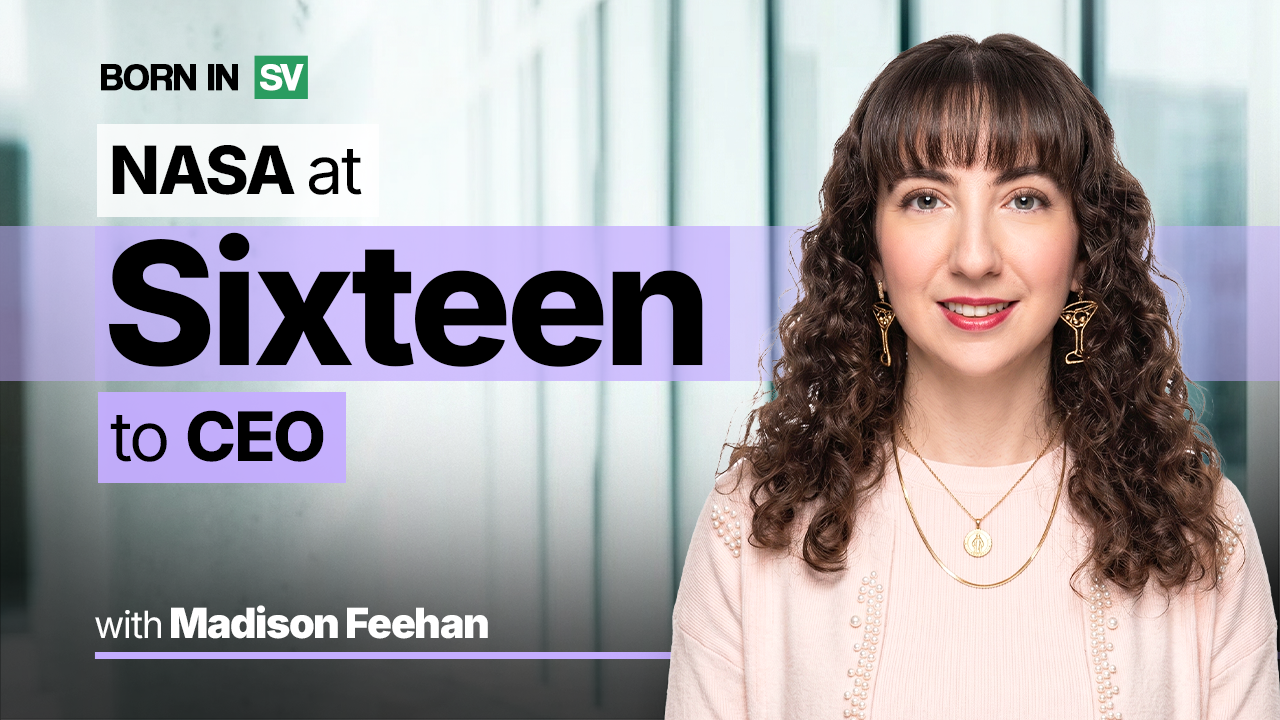
Jake Aaron Villarreal: I'm Jake Aaron Villarreal, born and raised in Silicon Valley, and here to take you behind the scenes to show what it's like to be a startup founder, the journey they're on, the problems they face, and the products they build that are transforming industries. I'm excited to have with us today, Channi Greenwall, founder and CEO of Olympix. Channi, welcome to the show.
Channi Greenwall: Thank you. Thank you so much for having me.
Jake Aaron Villarreal: Great. So, a little bit more about Channi. She holds a BS in computer science and an MS in security engineering from NYU. She's the founder of Olympix, the premier proactive security tool for web3... for the web3 ecosystem. Under her guidance, Olympix has set the standard for proactive smart contract security, utilized by over 20% of Solidity developers and securing more than $8 billion in total value locked across protocols. Committed to advancing the Olympix security tool set, Channi empowers web3 developers to redefine their security practices from inception. Prior to Olympix, she engineered mission-critical security infrastructure at JPMorgan Chase, followed by a role as a product lead at SecurityScorecard.
Got a great background there and excited to kind of dig in a little bit on your background as a person and as an entrepreneur. But before we do that, where are you calling in from today?
Channi Greenwall: Um, New York.
Jake Aaron Villarreal: Love that town. Spent a lot of time there. So, you're in a really good spot there with energy. Um, talk to us a little bit about...
Channi Greenwall: What's that? It's very fast-paced, which I like.
Jake Aaron Villarreal: Yeah, very fast-paced. God, too fast sometimes. Uh, a lot of fun. So, talk to me a little bit about you. How did you get into technology and a little bit more about your sort of upbringing and origin story? How did you kind of progress from really a kid to entrepreneur to leading a startup?
Channi Greenwall: Sure. Yeah. A lot of questions in there. I can try and weave in a couple stories throughout my lifetime, but I think I've always just been very competitive and I've loved to build. So, since I was little and to date, I love putting together IKEA furniture. When I was younger, I think like five or six, I had a lemonade stand and I made my babysitter help me put wheels on it so we could optimize for traffic. So like, and through high school, I was building robots and, you know, I would bedazzle them. So I'd make them my own. I like to have a little spin on everything.
And then in terms of competition, I'm very inherently competitive. I love winning. I love the feeling of winning. It's not a monetary driver. It's just like a... I don't know, it's the feeling. So even in middle school there were these things called magazine sales. I don't know if you're familiar or had it when you were growing up, but sell x amount of magazines and you get these prizes, and they give you the prize book before. I really wanted the speakers. I had to make the most sales. I was doing really good, but I had this stiff competition. This kid named Ammy and his... my neighbors were his first cousins. So obviously they bought for him, from him. But it was my territory. So I like had to convince them. So I'm like, "I'll walk your dog for like three weeks if you just bought" and like I would do anything to win. And I got my speakers. And so I think that like love for building and winning has is just part of my personality.
And so throughout college... college that manifested as hackathons. Like I'd compete in many hackathons. I loved winning hackathons. I loved having the autonomy of putting together a team. Like I knew who was smart and who and who... let me phrase this right, and who I didn't want on my team. And so I'd make sure to like convince everyone... and engineers are, you know, pretty easy to to get moving when you want to get them on your team. They're easy to to rattle together. So I I won a lot of hackathons and throughout college. And yeah, so I'd say like those pieces were all integrated.
And then throughout even my first job, I had accepted a couple offers. So I'd worked at JPMorgan all through grad school. And I actually had gotten that job because I started by interning there. I did really well. The MD liked me a lot and he kept me full-time during the year while I was doing my master's and I was working pretty closely with him. And then when it came time for a full-time job, I didn't want to stay in at JPMorgan, I just like, I wanted to move to a startup type role. And so I actually got in touch with Sam, who's one of the co-founders of SecurityScorecard, and he was like, "What kind of role are you looking for?" And I'm like, "I'm looking to work for you." And so some... for some reason, by maybe a big stroke of luck and confidence, he hired me directly under him and I was able to be a product lead there, built out a new product line. So I think like I just, if I want something I go for it. And whatever my definition of winning in that area is, I really like put my best foot forward to get it, and to get like the job or the position or the you know prize I want. And right now it happens to be, you know, highly tied into our missions and goals at, our mission and goals at Olympix.
Jake Aaron Villarreal: Yeah, that's really cool. You know, oftentimes when we work with so many different companies and founders, there's a competitive edge or a chip on the shoulder or something that drives them. It's not the money. Oftentimes it's solving a problem that they faced growing up or maybe just the fact people don't believe they can do something that they want to try to do and that it drives them. So it's not about the money oftentimes, it's about the purpose behind what you're doing and why you're doing it. So it's uh, I can feel your passion. I can feel the drive behind your conversation. Um, you know, when you look at business, it's oftentimes about understanding the problems in the market that need to be fixed or create a solution for the problem. Talk to me a little bit about the problem you're solving today at Olympix.
Channi Greenwall: Yeah. So, maybe it'd be helpful if I zoom out and I tell you a bit about the web3 attack surface, then I jump into kind of how security is approached, you know, before Olympix and after Olympix. So when we use the word attack surface in security, it's the amount of space... and anything can introduce or expand the attack surface, whether it's new software or a new employee clicking on a link, right? Any, any new piece of personnel or software can make you more vulnerable. And so, you know, within organizations traditionally, you want to try and contain that attack surface and put as many protections in place. Um, so I'm kind of going to run you through three different, three things that differ from the web2 to the web3 attack surface.
So the first is the immutable nature of code. In web2, we live and breathe patch-redeploy, patch-redeploy. What does that mean? Like just how Mark Zuckerberg says, you can move quick and break things. You have that luxury that you can ship a piece of software and if a user reports a bug, no problem. We'll fix it. Web3, changing your source code is another animal in a completely different software development lifecycle. The second reason is the transparent nature. So in web2, again traditional software development, you have the luxury of a firewall, you have security via obscurity. In web3, you can extract everything at a source or bytecode level, you're actually able to see what's going on there. And the third reason is the direct access to liquidity. So again in web2, if you get exploited, bad actor comes out after, you know, regulatory might come down, your reputational damage is definitely there, but your company's not sinking. In web3, a bad actor can say like, "Oh line 82 on your contract, there's a reentrancy vulnerability and your protocol has 40 million in liquidity. I'll have that in my wallet in a matter of hours." So over 16 billion has been exploited to date. The reason for that is there wasn't ever proper security infrastructure.
So prior to Olympix, the way security looked like in this ecosystem... and and let me just preface by saying even though there wasn't security infrastructure, you know, hundreds of billions are circulating through the ecosystem. So the need and, and the want for this technology to exist is so there that people will push through it. And, and I like to kind of zoom out and think of it just like a natural evolution in the sense that innovation always precedes security. We don't even have to speak technically. If you know, you build a house, you're building the house first in the foundation. Then all of a sudden you have neighbors. Then maybe you put an alarm system. Then you know a little something happens and a car gets, breaks into, then police station, right? Like security doesn't matter until it does. And we're kind of at that pivotal point where in order to grow more, there needs to be a better security stack. So that's how Olympix kind of came in.
Prior to Olympix, the best practices revolved around a manual code audit, which means someone actually comes in, looks at your code, tells you where you potentially could be exploited, any vulnerabilities occurring, and gives you recommendations, and you'll change that accordingly. Problem with that was in 2022, 90% of exploited contracts were audited. So an audit is not foolproof and it's also really expensive. Um it ranges anywhere from 25k to 500k and you're getting that at least once a year. So it's really not sustainable. You can't enable millions of developers [to] join the ecosystem to pay that much right. So during this time, 2022, when Olympix started, a lot of other security companies started too and they're on the reactive side, which is also an incredibly necessary piece. They're telling you, "if you get hacked, we let you know." We took a different approach. We said, "What if we didn't rely solely on the third party to tell me how my security is? What if we gave the team..." And that's what we do.
So, we have... I don't want to get too technical here because it might just go over people's head. But we have various tools that enable them to own security from the start and actually automate pieces that historically the third party owned. So, I'm all for and encourage and think it's an absolute must that you get that third party audit, but you need to heighten the chances that that's going to be a successful audit. And the more you can lessen the reliance, meaning the more you can own that they historically were owning, the more time they have to actually look for something novel and find something novel, and you'll have cleaner code in the end. So, we're building those tools and we're trying to automate more and more of what was historically owned by the auditor to make space for great auditors to find things that have been never seen historically that tools couldn't pick up on, right? And we believe the future looks like that. The next million developers aren't going to enter in a world where they're paying 25k to 500k a pop for an audit yearly. It's not sustainable. You know, it's very hard to fundraise, I know it, and these people can't raise this kind of money to build their protocols. They need other opportunities and other ways to have, you know, security tooling and a security mindset.
Jake Aaron Villarreal: That's great. Well, well defined. Um, that important to you.
Channi Greenwall: I think it's a really cool problem to solve. So, I guess I'll backtrack to when I was doing my master's. I used to hack my dad's, he has an insulin pump. He's diabetic. And medical device security was very interesting to me. And medical device security, aerospace security, and smart contract security are kind of similar in the sense that it's like life or death. You know, you mess up with a Boeing, we see what happens, right? You mess up with a medical device and you're someone important and someone wants to cut, they can. You mess up with a smart contract, millions of dollars of people's money, someone who's saving from a foreign country, whatever, is gone. So like the ramifications are so severe.
And so once I realized that I was like, I want to start a medical device security company. And then as I started to look into it, like the first step when you're like, "oh I want to start a company," is you do a lot of research and see, "can I form like a one pager or a deck or something?" When I did that, I was like, "Oof, no, this is too much of an undertaking because every device's design is so different and then the regulatory piece also. It's just like, it wasn't a mountain I wanted to climb." And, but that type of attack surface was very appealing to me.
And so I launched an NFT project for fun actually while I was working at SecurityScorecard, which is my job before I started Olympix. And I was doing it from like 9:00 p.m. to 1:00 a.m. Like it was after work and my hours were a little longer. So I hired, not hired, I got 10... I didn't pay them, that's why I'm saying I didn't hire, but like 10 interns from Carnegie Mellon helped me with the social and everything for this NFT project I was going to launch. I just wanted to do it because a lot of really smart people I knew were moving full-time into the web3 space, whether it be DeFi, NFTs. And I can read about something all I want, but personally I just absorb best by doing. So I'm like, "What's the big deal? I'll launch an NFT project like everyone's doing it," you know. And in doing so is when I realized how large the attack surface was and I wanted to see, I was like curious, I was like, "People must be building the coolest security solutions, like the innovation must be crazy because there's so much money in the space and the attack surface looks like, of course... of course there's the craziest security solutions right? Like, no-brainer." Guess not. So I was just like, "Someone needs to do this. Like this is the opportunity of a lifetime. If you do this, you unlock so much for, for everyone."
Everyone, because I I like to think about it this way. In like the US, the idea of crypto or web3, you know like, people use these terms very loosely, but the ecosystem in general is like neither here nor there. Some people are for it, some people aren't. Doesn't affect us that much because we have the luxury of relying on our dollar. Our dollar is going to kind of maintain its value no matter how the political situation. Whereas in Venezuela, in Brazil, that isn't their truth. So having alternative investments and assets that they can put their money into is a lot more promising for them. So the kind of responsibility you have as someone running a DeFi protocol where someone's savings could be in there is heightened. It's not, it's not random money. It's individual people's monies. It's funds, right? There's, and and so you have to take security seriously because if you don't, all that money can be gone. And what's really bad is historical APT groups that historically act in the web2 ecosystem, such as Lazarus from North Korea, have really been going after the web3 ecosystem because it's so easy. They can just pull money and they're actually funding their nuclear program with money from web3 exploits. Like that's how lucrative it is.
Jake Aaron Villarreal: Wow. So yeah, it's it's extremely impactful.
Channi Greenwall: Like it's not just like "I'm building some password man-" like, not, not to buck on anyone's idea. It's just for me personally, it, like it ignites something in me that not only am I solving something that like no one has gone after and no one's thought like is even possible, which I think by the way is half the battle, just having the balls to go after it when no one else is doing it yet. But also it, it really can impact a lot of people globally. And, and that's pretty cool if you're the person who gets to do that. So like it's so much more about that for me. And everyone on my team gets so excited about it too. It's, it's, it's really cool. I don't know.
Jake Aaron Villarreal: Yeah. I mean there's a real, you [have] a real impact that you can see and also be behind that's saving a lot of heartache down the road or issues for people, individuals and companies and countries. So I I understand like why you're doing it much more now after you, after hearing that. I want to go back to something you mentioned because we, we work with a lot of startups and talk with a lot of startups. And you, you were able to get, go to Carnegie Mellon and get 10 interns behind a project. Um that sounds like a tough battle in itself to, to get people to work and maybe work for free, or maybe there's a value that they get, maybe through experience of being part of a project. But what, what was your strategy in getting people from one of the best schools in the world really excited to work on something that was just a project?
Channi Greenwall: I think if you're doing something cool and the people are smart and self-motivated, it's actually not that hard. We have interns all the time. Um, you give them academic credit, so that's how you can legally have people work for free. So, it's a benefit for them. It's better than them taking like some random jazz class. And I I don't think it's that hard. I think if you're doing something meaningful and they get hands-on experience with a company doing something really big and growing quickly, it's a huge opportunity for them. And I like the kind of people... I'm drawn to the kind of people who jump on every opportunity and ride it and make the most of it and prove, and have like a consistent need to prove themselves. And those kind of people like, will always show up for projects like this or for like any opportunity where it seems somewhat promising. It's better than like sitting back watching, right?
Jake Aaron Villarreal: Yeah. Well, you have a background that I'm sure they'd be interested in talking because you came from engineering and you, you're a startup founder. So, they would be I'm sure interested to at least listen. What's the process? Do you reach out to professors? Do you talk to candidates and students directly?
Channi Greenwall: Actually came from someone who's now an investor of mine. But at, through Olympix, we've actually had our fair share of interns. And yeah, you actually just scrape the university pages. So, whatever city you're in and you see the university that like, you see fit. Like for us, we'll look for, we'll message a lot of people in the security club or the security teachers, we'll say, "Who are your TAs and A students? Like, will you send this to them?" And you just... they'll forward an email. Like, why wouldn't they? It's for their students to have an opportunity. It's a win-win forward for them. And then we get a lot of help.
Jake Aaron Villarreal: That's really cool.
Channi Greenwall: ...universities, you look for the type of teachers that would be teaching the classes. You ask them for their TAs or best students and you have them forward and it's pretty quick turnaround. Um, yeah, and you give them academic credit.
Jake Aaron Villarreal: I'm sure companies who are listening to this will pick up on that. And we get asked a lot, you know, "Hey, it's great if you can help us find these really hard to find AI engineers, but it's also would be great to have, you know, some interns that we could train up and educate over the next year or two and really get some, you know, cost benefit for the company, but also create some opportunities for these younger, you know, engineers." So, it's just really interesting to hear that trial period, right?
Channi Greenwall: So we had two, three interns last summer, and one of them is with us now. And so we got two months to like really see how incredible he was and then we're like "we need you on our team, come join."
Jake Aaron Villarreal: Right.
Channi Greenwall: So also getting them before other people get them and like getting the opportunity to work with them is like the biggest privilege in the world. Because these kind of people who are that level, they can go anywhere. And like you have to know that as a CEO, as a boss, right? That these people and like, they have to choose to work for you when they're that smart, when they're level... Like for each person we hire, we probably interview like anywhere from two to 300 people, just counting screens, counting all of that. It's a very rigorous process. There's a lot of people who are good, but incredible? No. And like to screen and dig for those. They have to, those people are the people that choose to work for you. So you need to like vet them, and then you have to make it really appealing for them too. And those type of people tend to want to work on really hard, you know, meaningful problems, which we happen to be solving. So it's like, it's been a good combo. Um but yeah, hiring is a, it's an undertaking, but it's the most important part of the job I think.
Jake Aaron Villarreal: Yeah, 100%. Um talk a little bit about the product itself. So you've talked about the problem you solve. If you're a developer out there or an engineer, walk us through, and you can get as technical as you want, the product itself, your tool set, what are they getting? What are they working with? How does it work?
Channi Greenwall: So we have a suite of tools ranging from static analysis to automated unit testing uh to symbolic execution to mutation testing. So, our free... maybe it'd be good for me to just highlight on the tool that we have a free version of, that has 25% market share now. And that tool is a static analyzer. So, while you're writing code, think of it like Grammarly for code security. While you're writing code in real time, it's finding vulnerabilities. It's highlighting them and it's giving you a description of how, what they are and how they played out historically in real world exploits. So, you're kind of, it's creating micro teaching moments for developers and allowing them... everyone's human, right? Like just like we make spelling errors, you can make a pattern mistake and accidentally introduce a reentrancy or block timestamps or something like that. It could be catastrophic for your company. So having a tool that's just like looking over your shoulder, letting you know if you do and, and non-invasive is very helpful for developers.
Our other tools are, you know, I could go into depth with them, but it's, it's very, they're, they're pretty technical, but they're just other iterations of finding bugs and potential exploit vectors uh within the code that, that could be exploited and helping you identify them prior to an audit so your team can fix them and...
Jake Aaron Villarreal: Got it. Cool. Um, talk a little bit about who cares about this problem. So when you're out there pitching your product to a company or individuals in general that are maybe building their own technology platforms, who are you selling to? Who's interested? Who hears what you're building, go, "Oh my God, if we don't have that, we're in trouble."
Channi Greenwall: Yeah. So it really ranges. If you were to broaden it and say like, "what does the category look like?" It's anyone who writes Solidity smart contracts. But we have customers that range from DeFi protocols to stablecoins to gaming platforms. So if you think about it this way, if you know that an audit isn't foolproof and you're paying for that, any additional measure... like usually the people who feel that way and have the budget will get multiple audits, but then you look at a protocol like Euler who had six audits and still got exploited. Like you never feel safe enough in this ecosystem and the repercussions are so high. Losing your company is not a joke. So, so any extra piece is, is very comforting for people. And because we have that track record, uh, people seem to respond quite well when we pitch these tools to them or showcase them to them. And I believe now 50% of Fortune 500s, according to Coinbase's report that came out a couple days ago, are building something on-chain. So, I imagine in the next two or three years, we'll begin actually working with a good portion of them.
Jake Aaron Villarreal: That's great. So who in the company would, antenna should be going up right now when they're listening to this?
Channi Greenwall: CTO or CISO. Depending, like some of these companies just have a CTO, some have like some security person. It really depends on the size. So like a couple of companies we were working with now are a lot bigger. So they of course have really seasoned security teams, which is really cool. The security teams are extra excited because they know every detail. They'll go into like how our compiler is built, you know. And then some, it's just a CTO who's, it's part of his job to own security. So on top of being a CTO, he's trying to be a CISO and he has all these hats on. So any[thing to] make that easier. Again, very responsive to, to that.
Jake Aaron Villarreal: But specific to web3, correct?
Channi Greenwall: Yes. Specific to web3, they have to be writing Solidity smart contracts for us to be helpful for them.
Jake Aaron Villarreal: Yeah. As you look at your company today, uh how big are you as an organization, as an employee base?
Channi Greenwall: Yeah. Uh six people. We're really small and we're really lean.
Jake Aaron Villarreal: Yeah. Okay, that's great. Uh, more than half of our cu- customer base is, you know, under 20 employees. So, that's pretty normal. But, you know, they say that with technology today, um, in AI in particular, there's going to be, you know, three people companies that will be a billion dollars in revenue, you know, just based on the ability to take a technology and scale it out. So, small can be really, really good. And I guess when you look at uh your company today, what's the biggest challenge you're you're facing?
Channi Greenwall: It's a good question. I would actually say probably building to demand. Like it comes in waves and sometimes we feel like we don't have enough people. So a lot of us wear a lot of hats. So I'd say it's just very exhausting, but like in a good way. It's a really good problem to have. And I think the problem changes every couple months. But like if you were to ask me this week or the last like month, it's really building to demand. We have so many different things coming from different customers that they want, that they're, they want to see or they want to onboard, and we're like trying to get everything on the calendar. And then I'm going to the conference in Brussels. So we have a week that we're not there because we're at the conference. And so, so I think headcount is, is probably the biggest thing, but it just doesn't make sense for us to expand our headcount quite yet because we haven't done like an additional fundraising round. We want to hit certain milestones first. So just have that push-through phase. I think it's a really healthy place to be.
Jake Aaron Villarreal: Yeah, it's a, it's a good place to be and it's also one that can be exhausting at times, but rewarding as well as you kind of break through and get to that next level. So, we we kind of I I hear where you're at. It's not an uncommon uh challenge to, to be facing.
Channi Greenwall: Uh you know, every company goes through... "market, we have people paying, we have significant market share, we've done a lot." But it's like, "we want to hit more milestones before we go out for a fundraise." So, it's like, it's like that in between. And you're just trying to like, "how, how far can you get on this race, you know, before you take a water break?"
Jake Aaron Villarreal: Yeah, no doubt. You keep pushing as far as you can. Uh, you know, every company goes through pivots and shifts. Um, in your company, you know, it's been around for a bit. What, has there been any one pivot that you said, "We got to really turn the corner around this" or "we got to rethink what we're doing to really hit our target?" Like what's, what's been one or two that you can share that will be a lesson learned maybe for other uh founders?
Channi Greenwall: We haven't had any pivot, like we've, we kind of hit the nail on the head and staying strong on our, our mission, on our first product and iterations. I will say though, like a lot of the iterations and the continuous growth of our product tool suite, since it is a suite, have come from the bottom up. So I, my leadership style is more like "here's the what and the why. Here's where we're going." And I really like to pull to the team. We hire the best people so they can tell us how, so they can give us the ideas. They can come up. So everyone has that autonomy and I would say there were a lot of things I thought like, "Oh, we'd never develop or never go into that." Someone on our team just proved us wrong. We have this thing on our team called 24-hour POCs where whenever someone has an idea, and our team is um primarily engineering, so they have 24 hours to mock up a POC, like a proof of concept of like how this would look, and they'll code something up really quick. Like everyone loves a hackathon style uh event, uh and they'll present it at standup. And more often than not, we'll go after it. So everyone has that autonomy. So I'd say like a lot of things that we actually ended up developing weren't things they necessarily thought would go in that order or we would develop at all. So it just starts with having great...
Jake Aaron Villarreal: You know, every company goes through certain periods where they have breakthroughs. It might be the company that creates a new technology, or it can be you personally as the leader that you're getting through to another level that you know you need to get to. Has there been any one that you can share?
Channi Greenwall: Yeah, I think the biggest thing that I've learned, and I'd give this advice back to people, is no one knows what's best for your company but you. You are the only one qualified. And so when it's early stages, especially as a first-time founder, you're going to have so much advice and you're going to have such qualified people giving you that advice, but at the end of the day, they're not sitting in on it every single day. And there are going to be great pieces of advice within that. Just take it with like 10 grains of salt, right? Because even, you know, throughout hiring and stuff, I've been told by really smart, incredible people I respect a lot, like "if you off- you should offer them two packages. One with a little higher salary, a little less equity, and one with a little lower salary and more equity. And if they don't take the one with more equity, you shouldn't, you should rescind the offer." And I guess as an ongoing principle, maybe that, you know, from a macro perspective works out. But sometimes there are people who need to feed their family, who have little, right? Like you don't understand each individual situation.
So like that's just an example of like different advice you'll get from people, sometimes like makes sense if you listen, but it doesn't make sense for each individual situation. And and everything you do, you just need to listen to yourself. Like you know, and even in terms of vision, like some... you'll get so many ideas. So product direction, everything. And everyone's really just trying to help. They really are. But if you have conviction somewhere else, even spending an hour researching in it is an hour you could have spent somewhere else. So if you have conviction, you know what you're going to do for the next 30 days, it's not worth your time in that hour, that month. Because when you're an early stage startup, you don't have the resources to have an hour here, an hour there. You're you're trying to, you know, make two hours to see your family that week, you know, that's, yeah, that's the situation you're in. So, it's, it's really being thoughtful on your time and trusting your gut because your gut knows and you're the one on the phone with customers all day. You're the one in the market.
Jake Aaron Villarreal: Yeah, that's really true. Early on when we were building our company, we had some consultants come in and talk to, talk to us about, you know, "here's how you build and scale and grow," and... but yeah, they were consultants and it was a different time for them. It, a lot of the stuff they told us didn't apply and we didn't take it. Uh some of the stuff they, they shared we should have, and we didn't. And we were able to... by doing so, we missed out on also. Yeah, it's a trade-off.
Channi Greenwall: Yeah, it's a trade-off.
Jake Aaron Villarreal: But what we look at is energy leaks. And we, when I, when I say energy leak, it's what are the things that you're working on that others are telling you you should be doing, and ultimately it drains your energy and you're not focused on where you should be as the company owner that's in the trenches. Like you kind of know what's important. So we try and avoid the energy leaks where we can. And they creep up on you. You don't realize it and you're exhausted and you don't know why. "Oh my God, I've been taking a break or we're working on something we shouldn't be working on." Focus, refocus, and continue to redirect. So, um do that a lot. We also have experienced that quite some, quite a bit as well.
Um as, as a company founder now that you've gone through your journey, you're continuing to build and grow. Um back, even if it hasn't been, you know, 10 or 15 years, it's been a few years. Is there something that you wish you would have known before you started or wish someone would have told you before you embarked on this journey?
Channi Greenwall: No, I don't really have anything. I think it's just go for it. Like um I think a lot of people will tell you reasons not to do it. And I think if you have an idea and you have conviction, you should go for it because you'll figure it out somewhere or another. No idea comes fully formed. And so if you want to go for something, like if you keep pushing, keep giving iterations, you'll eventually get there. But yeah, nothing in partic-.
Jake Aaron Villarreal: How about hiring? I mean, look, as a founder of a company, it's not like you're sitting down interviewing people, you know, 40 hours a week. It's a learned process. So, what was, what, what would, do you wish someone would have told you before you started hiring that now you know that you have your framework that you use that would be beneficial for others to hear?
Channi Greenwall: I'll, I'll tell you my formula and it involves extracting a large amount of time and energy from a person, because then you get maximal information about them and how they work with your team. And so it actually does start with the hiring process and it's quite rigorous. So I'll hire a virtual assistant for like $5 an hour and I'll train them on what kind of profiles I'm looking for and I will have them do extensive cold outreach from my LinkedIn looking for that profile. Message them, you know, connect, add a note, right? Then I see inbound who responds and I deal with it from there.
Schedule a call, Calendly link. I will, when I'm in hiring season, when hiring is my P1, I need this person on my team because that's how I'm going to get to the next level, I will set a window like whether it be like historically it's been like 5:00 p.m. to 9:00 p.m. And Monday through Thursday, sometimes even Sunday through Thursday, 5:00 p.m. to 9:00 p.m., my Calendly, that's non-stop 15 minute screens, right? And that's the first level for anyone. And most people can pass the screen. Probably like 30% don't.
Then from there, you're sending them a long assignment. So I actually will tailor an assignment of like, for example, a problem we're currently trying to solve. And I'll say, "Come back with how you would approach this." And people will come back with all different kinds of ideas. So anything varying from, you know, a code POC, so actually building it out, to a slideshow to a 10-page document. Uh, and it really helps us understand like how do they think, how do they put research together, how do they, how do they articulate their ideas? And we, and we get a good sense of how committed they are to solving the problem. And they, because you give them a problem you're already solving, they begin to fall in love with kind of what the company's doing because they're touching it, which is what you want. You want someone just as invested as you are. From there, they present it.
Then we do a... I'm, I'm telling, taking you through the engineering hiring process because that's what we do most of the time... the code walkthrough. So, we have them bring a piece of code they're proud of and we ask them questions about it, understand their design decision-making. Um understand how they write code, what type of code they write, which one they chose tells us a lot about them.
And then from there, this is the most important step that I think everyone should do is a full day in person. And so we ask them to take a day off work or we'll flex and do a Sunday. We'll compensate them for that day. And during that day, you're going to be given a challenge and you're going to get the opportunity to work with people from our team on that challenge. So, you're going to be like owning the project, but like throughout the day, multiple touch points with members of our team who are going to collaborate with you and help you bounce ideas. And after that, we 100% know, is this person for us or not? And they also 100% know, is this company for me or not? Because they've spent so much time. It's, it's almost a foolproof formula in my opinion. So extract an energy and, and you'll know. Because usually if someone makes hires they know in the first week also. So if you can get that amount of hours out of them before the job, you also know how committed they are. Listen, it's intense and whatever, but you have to be intense or whatever when you're an early stage startup and have limited resources. And mis-hiring is really expensive.
Jake Aaron Villarreal: Yeah. It's 50 to 100% of the replacement of a, a bad hire is really what the numbers look like. What have you learned about yourself as a leader? Like what have you felt like "I'm really good here and I, I need to get better there"?
Channi Greenwall: So I am really good at, I think I lean into my natural leadership style, which is a little bit more hands off and more set a direction and give people space. And I have a natural like, I'm naturally pretty empathetic I'd say, and so people are able to share and and be close to me and like our team is very close-knit. Uh, so I think people really love working on Olympix. I'd say where I could work on it is, because I'm so overwhelmed with kind of everything I'm doing, I just like everyone, I wear a lot of hats. Um, but my schedule is usually, you know, 8:00 a.m. to 9:00 p.m. booked back-to-back. Um, pretty much daily. And so what I've had to do in order to get, make sure I'm checking in with everyone is setting up just like, I think it sounds pretty normal, but like I wasn't, it was just something that I had to set into my routine, was weekly one-on-ones, metric tracking, stuff like that. I don't, I don't think it was hard or like, didn't wasn't natural. It was just new to me. So you just have to like learn what you have to do to support people and then set it up. I'm trying to think where else, where I like I lie...
Jake Aaron Villarreal: That's great. I like that. I like the confidence and obviously you've got a good product and it sounds like a great team that is bought into solving a a really massive problem with a great mission. What are you excited about? What's on the roadmap as you, as we're really halfway through 2024 heading into 2025?
Channi Greenwall: I'm excited about it being real. So what I mean by that is when you start a company, it's a vision and hopefully you get funding. Okay. Then you get funding. Hopefully I can hire a team. Okay, then you hire a fantastic team. Hopefully I can build something. Okay, you build something. Hopefully people will adopt it. Okay, they adopt it. Hopefully people will pay. Okay, they pay. Then it's real. Then it's just like, how fast can you run? So finally being at that place where I'd say like it's real. That's how, that's how I articulate it. I'm really excited about.
And then just the immense opportunity that comes with it being real on like what we get to build. And so our roadmap varies, but just, just more security tools that are going to automate more and more what historically was a manual process is pretty cool. And then bringing on new team members, like we just signed an exciting, really cool new team member who has over 30 years of experience uh, formerly a CTO. Incredible. And so like as you become more and more real like I guess you get product-market fit and and these pieces, if you want to technically define them with startup words, also people who maybe historically wouldn't come work with you, will. And then your team gets upleveled and then everything gets upleveled so you just get more and more excited for the next step. Yeah I I couldn't be more excited. It's a lot more uncertain in the early days.
Jake Aaron Villarreal: Yeah that's great. Well I can feel your passion. So excited about where things head for you. If uh anyone wants to find you or find your company, Olympix, where do they go?
Channi Greenwall: And just add me on LinkedIn and then um Olympix.ai for our website.
Jake Aaron Villarreal: Great. Well, thanks so much for coming on here today. I really appreciate your, your time and sharing your story. And you know, for all the listeners listening, it means a lot to me that you spent it with us. I'm your host, Jake Aaron Villarreal. Uh signing off for now. Can't wait to catch up with you all in the next episode. Until then, take care.
Before we wrap up, I want to give a big shout out to all the entrepreneurs that are joining to make this podcast possible. And for all the listeners for listening, it means the world to me that you chose to spend your time with us today. I'm your host Jake Aaron Villarreal signing out for now. We can't wait to connect with you all soon on the next episode. Take care.
This show is sponsored by Match Relevant, a company that helps venture-backed startups find the best people in the market. And they do it in three simple steps. First, they sit down with founders to understand their story. Second, they tell their story into multiple candidate channels. And third, they schedule interviews within 48 hours. Find us at matchrelevant.com to learn more about how we do it.





















.jpg)




















.webp)



.webp)
.webp)



.webp)