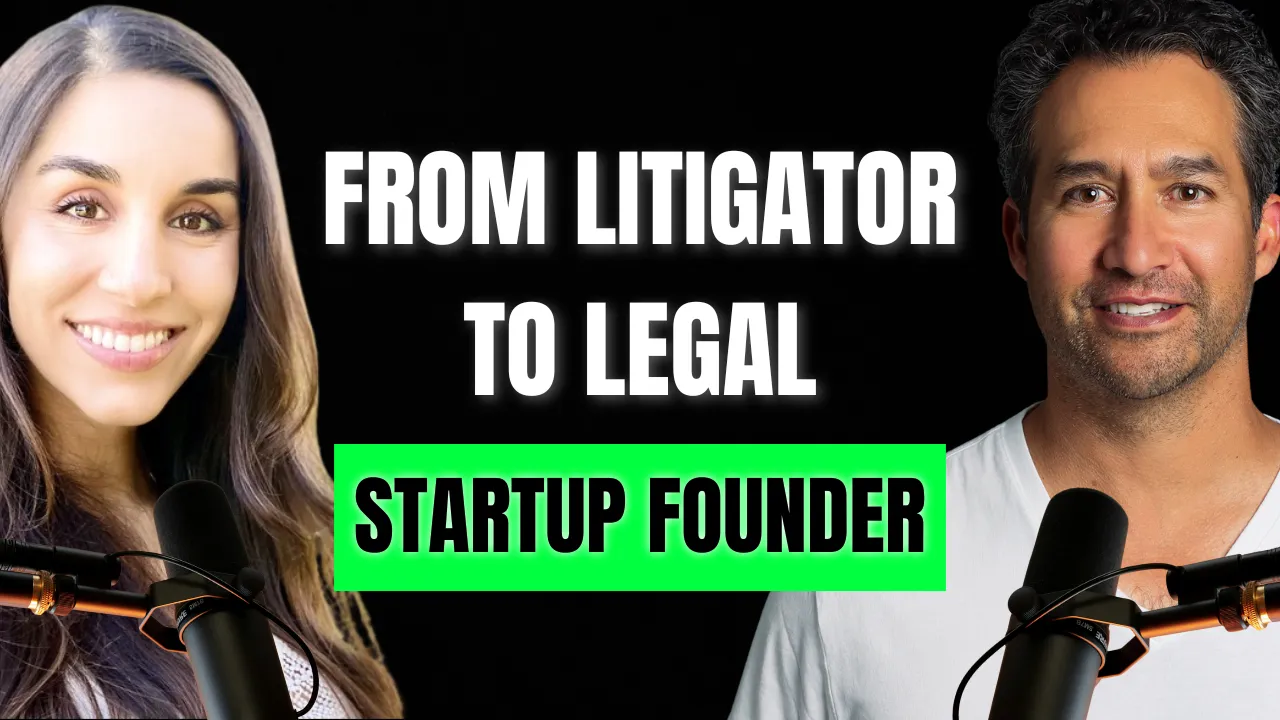
Jake Aaron Villarreal: Welcome to our podcast, Born in Silicon Valley, where we interview startup founders exploring their journeys, their success, challenges, and lessons learned. We hope you be inspired in discovering what it takes to build a thriving startup. I'm your host, Jake Aaron Villarreal, and here with us today we have Oana Manolache, the co-founder and CEO of Sequel.io. Oana, welcome to the show.
Oana Manolache: So good to be here. Thank you for having me, Jake.
Jake Aaron Villarreal: Great. Well, thanks for joining. And uh a little bit more about Oana, she's the CEO and co-founder. She leads the company. It's a platform that helps data-driven marketers boost revenue by hosting webinars on their own websites and repurposing video content at AI speed. Previously, she served as a country board member, led marketing efforts, and was a spokesperson for HP in one of the company's most profitable units. Her work expanded through Western Europe and North America, earning her a spot on the Forbes 30 under 30 list. Oana has worked and lived in numerous countries, considers herself a global citizen, and is a staunch advocate of the power of diversity, which led her to build a fully remote SF-based company culture. You've got a lot going on there, Oana. I love uh sort of the makeup of, of your background and of the culture that you're building in your current company. Before we get into talking about your company here, Sequel, where, where are you calling in from today?
Oana Manolache: San Francisco. My home is San Francisco, California.
Jake Aaron Villarreal: Oh, I love it. Yeah, I live there. It's not too far from where I grew up. Are you um originally from what part of the world?
Oana Manolache: Like I, like I was mentioning as well early when we were chatting is I am such a citizen of the world. My heart is in so many homes. I was born in Romania. I moved to England when I was 18 for my studies. That's where I started my career at HP. And in the process of that, I lived a little bit in Germany, a little bit in Barcelona, um but mostly in the UK for about seven years. And then um HP moved me to the US um and where I started leading the North America marketing team for a business unit about seven, eight years ago. Um but then about four years uh into, into the role, I, I left to actually start what is now Sequel. Um and I moved from the East Coast to San Francisco in the middle of the pandemic in 2020. Uh one, for a better weather, and then two, obviously to uh build talent here, um build investor network and uh, and build the company.
Jake Aaron Villarreal: Well, I, I want to get into your company because it's a product that I feel like our- we could use uh and I'm sure a lot of our guests should use and we should. Uh uh before we do that though, I want to talk a little bit about HP. I, I grew up in between Apple, Oracle, HP, Google, Facebook, all kind of in the, in between there in Silicon Valley. HP was always one of the leading companies that was innovating far before all these companies that came out after them. Um you, you joined there and it seemed like it had such an impact on your early career and really kind of made you who you are in some capacity in terms of an entrepreneur. Uh you moved up the ranks pretty fast. That was something you shared with us early on. What's in your DNA that you feel like kind of helped shape you to really push the envelope, to ruffle feathers, to step on toes, to get to a higher rank within the company? Um which to me sounds very entrepreneurial, but kind of walk us through what your experience was like there in a big company.
Oana Manolache: Yeah, it's, it's interesting. While HP sounds like I, I have like big core experience, and I do, and I had an incredible um... I was lucky to have some incredible mentors in there. I worked in so many different parts at HP and so many different teams that some of them feel, felt like an- like a startup, f- like a small team, like an entrepreneurship. And it really gave me that chance to understand how the entire organization uh works. So um I started my career at HP in the UK. I was an intern actually between my second and my third year at university. And just before I finished my studies they asked me to come back to be uh full-time. And I joined a team um in the UK for uh printing. And a lot of people don't know but print for HP is one of their, their best, most profitable businesses.
And um and it, it was great because I was able to work very closely with everyone in the team. So I would go um with the sales team and kind of do enterprise sales, sales motions. I would teach customers how to use our product the best, doing a lot of customer success. Obviously, I drove all the marketing initiatives in there. Everything from events to email marketing to digital and campaigns and working with the kind of European team. Um but I also worked very closely with the country manager at that point. And really kind of sitting next to him a lot and understanding everything that he's doing from like a team structure perspective, how they're looking at like quotas, and how they're thinking about um asking for more budget from, from worldwide. And really gave me that insight on the impact that my work as a marketer has overall on the company.
And um then I moved to the US uh to lead a digital transformation for a similar business unit. Um, and it was incredible because I went from more of a understanding like a startup environment, like having uh being able to work closely with all the stakeholders for one region, to the global team, understanding the amplification of our programs. And the US experience at HP taught me how to take you know like a small program and really think big, think global. How do we take this campaign into like alliances? How do we build this into a movement rather than impacting just one region, but really impacting US and all the other regions that would, would adapt the campaign and work very closely with the global team. Um I had the privilege of working with the CMO at that time, Vikrant, and that really taught me how to scale.
So all of the experience that I had at HP really put me in a perfect position to start what I started right now, selling into marketers on the pain point that I was feeling when I was at HP. And um and I moved quickly through the ranks because I think of two traits that probably every entrepreneur should have, which is curiosity, like insane curiosity about everything, not just marketing, as well as determination. And thinking like, how hard can it be to take over you know like the management position at the age of 33? Like how hard can that be? So, it's having that little bit of kind of being naive and having determination as well as being curious about how everything works and also confidence to actually step up and ask the right questions. And to, you know, put yourself out there whether you get it or not, or, you know, you get the responses you want or not.
Jake Aaron Villarreal: I mean, I think confidence is, plays a big part in anything you're creating or building. Um, where does the confidence come from?
Oana Manolache: Um I don't, I think that confidence, confidence is still being built. And I have to admit many times it was impostor syndrome as well. Like I would go in and thinking like, "Do I really know what I'm doing?" I was young and I was on the management board of, of HP in the UK, one of the strongest countries in Europe. And many times I would sit there and I'm thinking, "Why am I here?" But I'm just going to do my best and I'm, I'm going to learn and kind of build that up. And I think that eventually from that you start building up the confidence uh that you know is backed by some of your performance. It's backed by um by the impact that you're seeing your work is, is having. But I think I'm still building that up. And I think a lot of, a lot of founders out there have a combination between confidence knowing what they're doing as well as a bit of an impostor syndrome of like pushing more, like, "Am I doing the right things?"
Jake Aaron Villarreal: Yeah. Really cool. Well, you talked a little bit about your experience in marketing and a little bit about the tool or the platform you're creating. Um, walk us through the moment with- that inspired you to say, "Look, I think we could do something different, better, and bring something to market that you're- you were having a problem with uh in your own work."
Oana Manolache: Yeah, we built Sequel so differently from everyone else. Uh, and we keep doing that actually in a lot of aspects. Um it was early on as a marketer at HP, we would build these like incredible digital experiences. I could, I commend the team and the agencies we would work with for creating these beautiful websites and landing pages. And the one point where I found frustrating um as a marketer in general, not just at HP, was that a lot of times marketers are creating these digital experiences and their go-to market strategy is doing webinars with partners. Which is valid, because you bring your entire ecosystem into a live session to amplify your message, to talk about the things that you're doing, to really engage your audience.
The biggest problem though that I was experiencing was that while creating these gorgeous like digital experiences, we would push everybody to an app. And I think we would use ON24 back then or WebEx or something. So it was an app that was not engaging and it was somewhere else. And then we would send people a lot of messages be like, "No, come back to this, to explore our products, to explore our customer success stories, to talk to our sales teams." And many times, you know, those emails go into spam or you just turn off your Zoom app and then you go make a cup of coffee. You're not going to go back into that company's website. You have other things to do.
So, I remember being frustrated and thinking, "You could embed anything on your website. And we do like perfectly positioned call to actions and, and forms and success stories. And we care so much about branding. But the one thing before Sequel that you couldn't do is actually engage your audience live directly on your website." So, I assembled a team, started a bit of an MVP. And, and um and we realized that we were not- I was not the, the only marketer that was annoyed by that. And we actually wanted to weather the storm a little bit because we started this like two months before the pandemic. This is like December, January, just before the pandemic. And everyone would build virtual event platforms. And I didn't want to build a virtual event platform. I'm like, "People are not going to sit in front of their laptops for four days in four different stages after the pandemic." So, I just really wanted to build for companies that want to bring their audiences into their website in a recurrent basis, like bringing them into sessions, into the webinars rather than, you know, just like one time into a conference that would come in in person.
And uh we just focused on building that. And it was uh obviously it was an interesting time going against the grain, but now we're kind of uh reaping the benefits because obviously virtual event platforms are not really the way to go. Uh big conferences are in person and they should be. People build connections. But what is rising is like almost 90% of marketers are using webinars as their number one demand generation tool or strategy. Um and uh they still have to drive people outside of their platform. So nothing has changed there. Um and that's basically the major change and the differentiator that we want to bring to them.
Jake Aaron Villarreal: Incredible. So you know as a company that you know we host the podcast, we have other content and you know webinars is an, is an area that we've toyed around with as well. Um what's the result that a company can get if they use your platform? They're going to have people coming to listen to what they're sharing or what content they're producing and it's going to be on their website. But what's the results that they get by those listeners or their audience staying on the website versus going to a third-party platform where you host a webinar and you log into it and then you kind of move away and come back to your, your own company. What's the, what's the real benefit?
Oana Manolache: There's so many benefits. It's the reason why, why wouldn't you put your customer success stories on a platform with customer success stories of your competitors right? So there's so many benefits. I would say that the three major benefits would be: one is website traffic. So everybody actually coming into your website, building up that traffic, building up that SEO. The second one is high value actions. And this is where I love the most, I love us impacting our customers' actual revenue. As a matter of fact, um Userpilot is a great customer of ours. They tripled the amount of demos they booked from webinars in eight months since they switched to Sequel. Because everybody comes and engages in their own, in your own website, in front of your call to action, in front of your success stories and product launches. And that content journey is happening so fast that they're like, "Oh, this is interesting. I didn't know about this company. Let me book some time with them." Or like if you're a PLG company, "Oh, I'll sign up. This looks interesting." So while you're having the session and the webinar, they poke around and automatically you actually kind of schedule more time with uh you know with the company.
And number three is data. We are built purposefully for data-driven marketers. And I think that especially with the era of efficiency, you cannot get away from being a data-driven marketer. You have to know what channels are working. And what we give marketers, we give them a lot of more insights, consolidating all of their data points. So you know everybody who registered, who engaged at what level, with intent and engagement scores per individual coming to your session. And because it's instant on demand directly on your website, we aggregate with those that are actually coming for on demand as well, giving you insights for let's say Jake came to like five live sessions, watched two on demand.
And then we go even beyond that. It's on your website. It's first party data actually that Sequel offers. But we also tell you where they went afterwards. So we know that Jake came and attended a live session, asked these three questions, checked out this kind of customer success story, looked at the product launch. So you have that entire journey which we give to our, to our customers, to marketers so that they can actually build more customized approaches to convert those high intent leads and understanding their audience. So it's website traffic, conversion to revenue, and data insights.
Jake Aaron Villarreal: Amazing. Um in the, in, in, in the process of building what you've, what you're creating, it sounds like you're also most likely displacing other tools and products that you might not need to use. I mean, today as a company and as marketers, you have to use multiple different tools to do specific tasks. What are the things that you can displace or maybe just give us an idea of the functions that you typically don't need to pay twice for if you use your platform?
Oana Manolache: That is, that was the number one um thing that we were, not number one, but one of the main reasons why we were winning so much in the era of efficiency is that people were looking to cut tools. And it's not just the cost, but it's also making these tools talk to each other really well. And aggregating that information which makes the marketing ops teams go crazy trying to figure out so many different data points. And having one tool that does multiple things obviously brings a lot more actionable data into the company.
Usually what we replace, um so there's times where we could even replace like registration forms. Although we integrate with like Marketo registrations and others, but many times our customers decide to even replace the registration form. Uh then obviously we replace the webinar experience. May that be Zoom, ON24 or Goldcast, whatever you're using. Um we replace the on-demand uh services and solutions like a Wistia or a Vimeo or like a YouTube so you don't have to use another on-demand provider embedded in your website. The moment the session has finished is automatically available for replay. And then we also displace like repurposing. Um we have, we turn all the webinars instantly into AI- into SEO optimized blog posts using AI, as well as social media posts, into snackable like little videos. You can trim it. So like from a video editor perspective uh we replace, uh we replace that as well.
And then of course for big conferences, I know many companies are using one webinar, one tool for webinars and one tool for big conferences for a variety of reasons. But our customers are using us for their webinar series and they're having also a conference add-on uh for their year. For example, Carta is just about to, to host their second equity summit with us. They hosted it last year. It's like 10,000 people, celebrities coming through. We even hosted like events for like 70 or 80,000 people. And um and it's just an incredible beautiful experience because all of these people come to your website, everything's designed however you want it to be designed, and we replace that too. So usually about like four to five different tools um for, for an organization.
Jake Aaron Villarreal: And Carta is a, a great... and a big company. We, you know, I invest in startups and Carta is one of the platforms oftentimes they're, you know, the equities and stocks and whatnot are going through. And um really cool to hear that. When I worked at Oracle and I was there for seven years, one of the things they talked about a lot was you know, "We eat, we eat our own dog food. What we build we actually use." So in the beginning, you know, when the web was just coming around, it was "how do we take our apps that are ERP and, you know, bring them online," and then it was web-based applications and CRM and all these things. And we had to use them and learn them. What uh in what ways are you eating your own dog food with your product?
Oana Manolache: It's the beauty of having built a MarTech solution. We use it for marketing all the time. Like every company, right? It's sometimes hard when you build something that is just so niche that you can't really use it in your day-to-day. But we can. Which helps us with product innovation. Every time like we have new features and my marketing team starts using it, they're like, "Oh, there's a bug here or maybe there should be a better thing to do there." So, it really helps us with product innovation. So, we use Sequel um for uh our Game Changer series. Every week on Tuesday and Thursday, I host live a go-to-market leader, CMO uh directly on our website, of course using Sequel. And uh these are our Game Changers and we have incredible marketers that we truly learn from. Like these are people that we bring for our community to learn from. The CMOs of companies like Jellyfish and, and Amazon and Paddle and um you name it, all M- um Miro and, and so many others that come and share uh insights with our marketing community.
Obviously, we use this for a lot of content and to give value to our marketing community, but also our webinar series is driving about 87% of our pipeline because um we obviously have it on our website. So, people automatically are poking around and learning more about us from kind of a top of funnel perspective. Um but also is the way that we have built um our kind of webinar series and, and kind of expanding it. As a matter of fact, we're very soon going to be uh releasing the, we call it "Game Changers in a Box," giving our entire strategy, all the structure, even email templates or the way we invite speakers or the way they're sharing it on LinkedIn. All of this where we bucket into kind of one um like a one piece of asset and we're going to give it to all the marketers so that they can scale their webinar series as much as uh as we did as well.
Jake Aaron Villarreal: Wow, that's amazing. You know, webinar is a term that's been out for a long time. It used to mean something very different than it means today. You talk about the value of webinars and how many companies are using it to drive opportunities. What's worked for you? Give us a little behind the scenes snapshot of if you're a company out there that has a SaaS platform and you want to do a webinar, but you're really not sure sort of best case scenario how to execute it. What are some of the things that you've seen or maybe some of the trends that are out there that, that they should be thinking about?
Oana Manolache: Yeah, a couple of steps. One is um decide what you're doing the series for. That's super important because um you want to track against that. So, is this to build pipeline? Then make sure that you have that as a measurement. Is this to build a community? Then obviously you'll bring people that are very influential that have like a huge network. So you got to decide first of all the, the objective of your webinar series. And then once you know that, and kind of build a little bit of a reporting around it.
The second is deciding um the structure and the speakers that you're going to bring in. So what we decided to do is uh to bring two types of speakers. One could be experts and um and people that are influential in the marketing and go, kind of go-to-market community so that all the other marketers could learn from them. So that we can also build owned content with them that will amplify our voice and trust. And then second would be around uh partnerships. Very successful for us were brand partnerships. We partner with companies like 6sense and G2 and Mutiny and Chili Piper and Stensul. Incredible other organizations that are pretty much kind of complementary in terms of the solutions that we're, that we're providing. And many times doing a webinar together provides more value to our target market like demand leaders or marketing ops leaders, understanding how these solutions could pull well together. And getting insights from companies. But also we're activating both of our ecosystem. And uh bring them into you know, kind of into a moment or into an experience that really adds value. So I think the speakers are, are huge um and kind of understanding the content are a huge part of like a success of a, of a webinar series.
And then number three is bringing people to your sessions. Uh it's all about finding interesting channels that you can activate to really bring them in. Such as amplification of your network. Uh the speakers making it super easy for them to share before the session uh the fact that they're going to be speaking at your sessions. And then very easy for them afterwards to give them snackable content that they can share for their own marketing purposes. So you feel like you didn't just add value to the audience, but also to those pe- people who kind of took time out of their schedule to come and, and be a, a guest speaker on your, on your uh series. Um and integrating that in the rest of the marketing strategy. Like how do you use that afterwards for your social um, for kind of outbound sales, um or like paid uh you know paid search and, and so many others. Webinars is not a standalone initiative. If you don't integrate it with the rest of your marketing strategy, then it just in silos is very hard for it to work.
Jake Aaron Villarreal: Yeah, that makes a lot of sense. Um, and I'm sure that will be helpful and insightful for others to, to use and, and, and listen to. Um, Google has made changes that are creating, you know, new strategies that marketers are having to invest in their own content, in their own channels. Talk about some of the changes Google is making that is changing the landscape of marketing.
Oana Manolache: I mean it's a long time coming. Like Google's been talking about deprecating third-party cookies for a very long time. Uh and it finally happens this year. In January, I think they replicate... they deprecated, you know, 1% or, or more of third party cookies. And it will continue to do so for the rest of the year. Which is going to make... well, it's good for privacy and good for like the individual, but it's going to make a very e- very hard job for marketers to retarget their target market and really be able to find them on other sites and other platforms. And that really pushes marketers to invest a lot more in their first-party data, in their own channel, in their own content, and rely on the things that they can control a lot more.
And it's not just Google deprecating cookies. It's also like LinkedIn changing algorithms every other day, or like Twitter and the same. Like we've seen what happens when a platform kind of goes down. You go back and rely on your own channel and, and, and data. And more companies have started doing that also for efficiency. Uh, investing in their own websites. Um, looking at conversion a lot more. It's, you know, it's similar to when you buy a Mac. When you go and buy a MacBook, you're not going to go to a Best Buy. You go to a Best Buy to buy anything else, but you go to an Apple store because you know that when you buy a MacBook in an Apple store is a certain experience that you have. And they know that. And they built that Apple store in such a way where you're not just going to go and buy a Mac. You might get an AirPod as well. You might get like all kinds of other things around it.
And it's the same for an organization as well. Just from a digital perspective, trying to get you into their own digital experience. Like the platformization. Getting you into their own digital experience so that you can have that unique experience that is relevant to their brand as well as enticing you to learn more about all their other products and really kind of take those actions in, in a more meaningful way. Um so while there's a huge trend obviously on deprecation of third-party cookies and like pushing into the own channel, I think it's going... it's kind of shifting marketers to take the, the right decisions for the future of their companies uh overall.
Jake Aaron Villarreal: Yeah. Lots of changings that, that we have to understand and pivot and, and maybe switch our own strategies up in terms of how we reach our own target audience. Um you've built a company. Uh it's, is it based all in SF or is it fully remote?
Oana Manolache: It's fully remote. We started building it fully remote and decided to continue doing so.
Jake Aaron Villarreal: And what's the uh, what's worked for you in, in building the remote company and culture and how big are you today?
Oana Manolache: It's not easy to build a remote team culture. I think you have to be a lot more intentional when you build a remote team. Um we're about 15, 17 people today across the world full-time. And then of course we work with a ton of great contractors and freelancers uh and agencies. Um and we've built... it's pretty well um balanced between like East Coast, West Coast. We have some people outside of the US as well. Uh and like I mentioned, it's in, in insanely intentional everything that we do.
One, we had to build this remote team culture while we were, were learning what remote work means. And it was relying on other leaders understanding how they're building theirs and understanding best practices. So it helped being open about our challenges and opportunities with other organizations and learning from each other. That was tremendously helpful.
Then two, I decided to build this organization with um an insane amount of transparency. Because it's, when you're in person, that transfer of data is happening a lot more naturally. When everything is remote, we had to make the decision to be transparent across the board from financials to OKRs to objectives and plans and the team to really have that open space to communicate with each other.
And that basically also led us building a flexible kind of work style in a way where obviously we operate sometimes on different time zones. But we care the most about performance rather than "what were you doing between 2 p.m. and 3 p.m." That's not as important as it is of like really achieving our goals. So we have something called monthly OKRs where every month we have our, our goals set for the month. We're extremely fast in changing those in a fast-paced environment. We have "big rocks" every Friday where we check how we're doing uh kind of progress towards our, our monthly OKRs. And every Friday every person in the team sets their "big rock" for the following week. Basically, if everything else fails, what's the one thing that will push the company forward? And um that builds a pretty good culture on wanting to be better ourselves, to grow ourselves a lot more, as well as learning from the A players.
Um obviously I miss the you know kind of the, the water cooler moments. We bring the team together every three months for like leadership planning. We also bring the entire organization together once a year to kind of get to know each other. And I have to say when we're in person sometimes it's just so nice to be able to have those more organic conversations. We try to replicate that a little bit virtually. Um, but I'm a strong believer that there's so much incredible talent everywhere in the world. And for us right now, making the most of that talent, giving those people the right kind of work life balance that they want while also being A players and experts in their field, bringing all of that together from different parts of the world uh brings a lot of opportunities for us and also diversity in the team. We learn about all kinds of countries', you know, kind of uh um traditions while uh while doing this.
Jake Aaron Villarreal: That's great. I love what you've created. What's worked for you uh in getting it right when it comes to hiring?
Oana Manolache: Um we made a lot of mistakes um obviously as we were building the team. And uh learning the type of, the type of people that we wanted to bring in the team, 'cuz when you're a startup and a first-time founder as well, I was learning the type of culture that I wanted to build while also hiring in that culture. And funnily enough, a lot of the people who are with us, even employee number two and three early on, they were a big part in allowing us to define that culture, culture. So, we made a couple of mistakes. I know people don't like to talk about mistakes, but actually I think those are a lot more valuable.
One um was around not caring about the culture as much as we... not necessarily culture, like the traits. Um and we cared more about um the kind of the backgrounds. In a sense of we needed people to come in hungry, to want to be builders from ground up. Sometimes we got a little bit infatuated with like logos and they coming from big companies or like having like a certain amount of experience, instead of looking for the traits that really make early stage startup uh employees the greatest. Um that was one.
And then the second one, thinking that we need um a lot of people to accomplish something. Um we realized that early on we were thinking of "Oh, we need a team of X in order to do this." But what we really needed was to prioritize really, really well what's the most important thing for us to actually do, and people who are insanely creative doing things differently rather than you know, spending a huge amount of money and just throwing money at things. But how about we kind of adopt a more creative way of doing things? That actually ended up having a much bigger impact on our performance in across the entire business, marketing, sales, engineering. So those were kind of two things.
Um, and also A players. Like I un- underestimated how important it is to bring A players, thinking, "Oh, you know, this person could eventually kind of become an A player." But with, with a, with a team so small of like 15 people, we needed every single person to really be on top of their game uh and be willing to, to grow and to help others um in the process. So, uh we, we learned a lot from it and the team that we have right now is just incredible. So, I love working with them every day.
Jake Aaron Villarreal: That's great. Well, as we wrap up here, I want to ask you one last question. Um, since you really are deep into the marketing side of, of, of the business, what uh what's a book that you feel like others can read or who knows, maybe a podcast that you host or something that is uh really insightful to learn about marketing, and specifically in today's world, that you think was helpful for you or maybe helpful for others?
Oana Manolache: H- that's a good question. A couple of podcasts that I like a lot are Against the Grain. Um GTM, I think they rebranded themselves. Uh but search for GTM, you will, it will come up. Um SaaStr sometimes brings like marketing leaders and go-to-market leaders. Uh and I, I like hearing those two. And in terms of the book, um I read a lot of like startup more type of books. Actually, one that got turned into a podcast that I thought was very interesting for marketers stepping into their leadership roles was "The First Time CMO." Uh is very interesting. Is, is the CMO of Cognism. Uh she's very cool talking about her journey. Uh so these are a couple of things that I think could really benefit marketers as they scale uh their organization.
Jake Aaron Villarreal: Uh great and thank, thanks for sharing that. Um, and I want to thanks for sharing your story. I really appreciate you coming on here and, and hearing from the, really the beginning to where you're at today. If anybody wants to find you or find your company, uh, Sequel.io, where do they go?
Oana Manolache: Well, Sequel.io is obviously the fastest way of getting there. And, uh, just find me on LinkedIn, connect with me. Happy to meet u- other people in the industry.
Jake Aaron Villarreal: Great. Well, thanks for joining and thanks for all the listeners for listening. It means a lot to me. Appreciate it. Uh I'm your host Jake Aaron Villarreal signing off for now but can't wait to catch up with you all in the next episode. Until then and the listeners take care.
Oana Manolache: Thank you.
Jake Aaron Villarreal: Before we wrap up, I want to give a big shout out to all the entrepreneurs that have joined to make this podcast possible. And for all the listeners for listening, it means the world to me that you chose to spend your time with us today. I'm your host Jake Aaron Villarreal. Signing off for now, but can't wait to connect with you all soon on the next episode. Take care.
This show is sponsored by Match Relevant, a company that helps venture-backed startups find the best people in the market. And they do it in three simple steps. First, they sit down with founders to understand their story. Second, they tell their story into multiple candidate channels. And third, they schedule interviews within 48 hours. Find us at matchrelevant.com to learn more about how we do it.













.jpg)








.webp)
.webp)
.webp)

.webp)