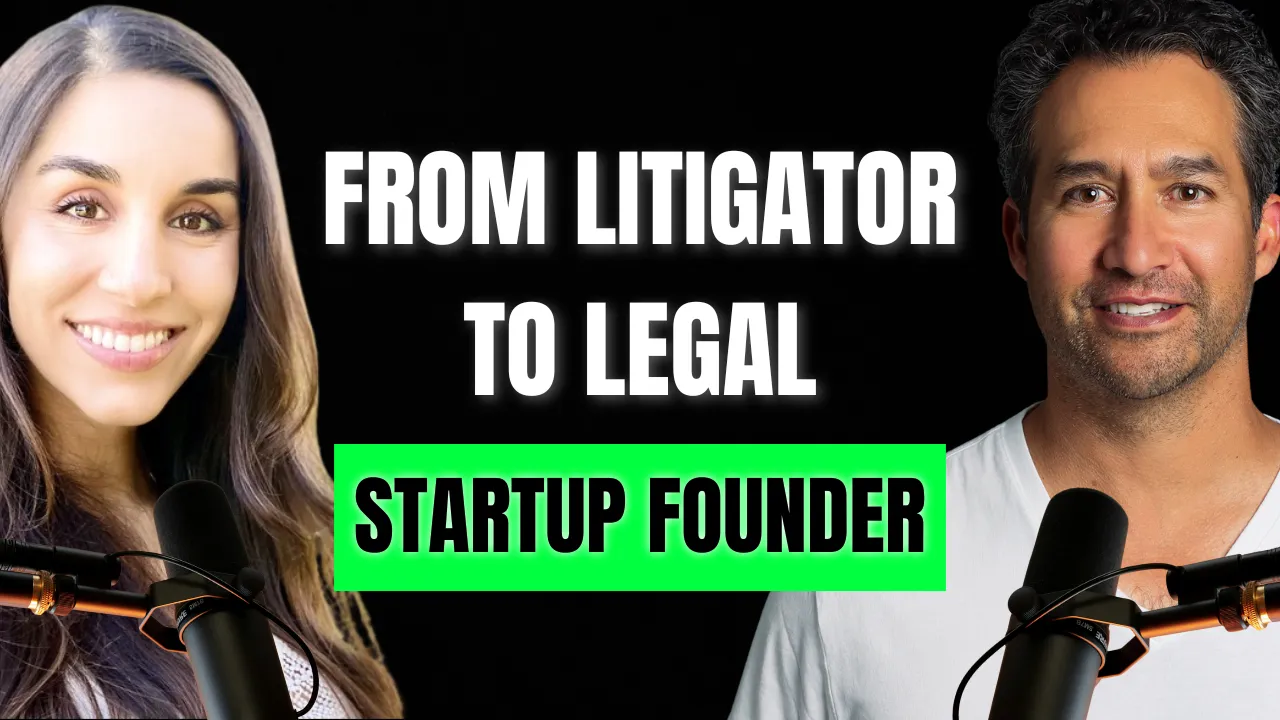
Jake Aaron Villarreal: Welcome to our podcast From the Ground Up where we interview startup founders exploring their journeys, their successes, challenges and lessons learned. We hope you'd be inspired in discovering what it takes to build a thriving startup. I'm your host Jake Aaron Villarreal, and here with us today we have Jen Henderson, the founder and CEO of Tilt. Jen, welcome to the show.
Jennifer Henderson: Thanks for having me.
Jake Aaron Villarreal: Great. So a little bit more about Tilt. Tilt is revolutionizing employee leave in the workplace. Tilt's SaaS platform creates a human experience through technology to support, to support every aspect of leave of absence. She spent... Jen spent 15 years in Corporate America prior to founding Tilt in a variety of operational roles. So uh, Jen, before we dive in here, um where are you calling in from today?
Jennifer Henderson: I'm based in Northern Colorado, right outside the Fort Collins area.
Jake Aaron Villarreal: Great. And are you from there originally?
Jennifer Henderson: Oh no, no, I've been all over the place. Uh actually a UK citizen by birth, uh grew up outside of Chicago, unfortunately still a Bears fan, and, and here in Fort Collins for a good number.
Jake Aaron Villarreal: Got it. Yeah, I'm a big NFL fan, so I, I understand what you're saying there. Um great. Well prior to launching Tilt as we talked about, you spent a number of years in Corporate America, in fact 11 years at Starbucks. What experiences there have prepared you to start your own company, if any?
Jennifer Henderson: Oh my gosh, I love that question and "there's a lot" is the short answer. I wish I knew um going into that brand straight out of college what, how valuable it was for my formative professional years, but I definitely know now in retrospect. I truly got a front row seat to watching a couple things that I think Starbucks is best in class in. One is drinking the Kool-Aid. So Howard Schultz is a magnanimous leader and he continued to demonstrate time and time again how to navigate financial crisis, how to navigate brand uh disruption. And his fortitude in consistent communication and always pointing back to the mission was... at the time again I, I had really no idea what I was learning, but something I've looked back on several times since starting Tilt around navigating uh unforeseen and uncharted waters. So I would put that first and foremost.
And then the second, which is actually fundamental to the idea of Tilt, is I saw how scale uh really necessitates operationalizing systems and processes. So when I went through my uh leave experiences in Corporate America and thought "there was a better way," believed in my bones because I really didn't know any other way, thanks to Starbucks, that you needed to operationalize it so everybody's going to have the same leave experience, everybody's going to have the same process. So that you disrupt, or you reduce the probability of um, in leave case, discrimination and bias and sometimes even legal hot water. And that's because you get the same vanilla latte in Colorado that you do in California, that you do in Tokyo. There's a way to do every process within Starbucks, and I know they take a lot of their inspiration from Toyota. And it's just, it, it was the best first career I could have asked for.
Jake Aaron Villarreal: That's great. Yeah, well everyone knows that brand and they've grown, they've scaled and they've got a great operation. For those that haven't had a startup before, or have thought about it but are currently in Corporate America, what was it that you sort of got in that experience that led you to take the plunge to say "You know what, I'm gonna start my own company" and, and what was that journey like for you? For Starbucks specifically, during my time there, for, for, for deciding to move on after Starbucks. You had more corporate experience uh prior to starting your startup. Yeah, um let me backtrack a little bit. Was... is this your first startup?
Jennifer Henderson: Yes.
Jake Aaron Villarreal: Okay, great. So making that leap from Corporate America, which some of us have had to do myself included, to being an entrepreneur and kind of running the show. What was that experience like for you? And for others that are sitting behind a desk working for a company that might want to become an entrepreneur at some point, what's some advice you can provide there as well?
Jennifer Henderson: Yeah. My origin story of becoming an entrepreneur is very simple. I was incredibly pissed off, and that's the, the long and short of it. I, as I alluded to in my previous answer, I had a really crappy leave experience twice under two different corporate umbrellas. And I just believed that it, it could be better, and as a parent, I felt a tremendous responsibility to try to make it better for my children. So I didn't have a well thought out plan whatsoever. I didn't have um experience, exposure, or connective tissue to the entrepreneurship and startup world. Um I just was mad. So I think naivety was absolutely to my advantage. I luckily have a very supportive uh partner and community around me that I was able to lean into for those first couple formative years, um both financially and through connections and networks and all the things, uh to learn what I needed to learn to get Tilt off the ground, and then here we are six years later.
Jake Aaron Villarreal: That's great. Let's talk about Tilt. Um we learned a little bit more about what inspired you to create Tilt. What, what's the problem that it solves for, for those that are not in you know, Corporate America or not really thinking about what leave of absence really means to a company and the challenges around it?
Jennifer Henderson: You'd be hard-pressed to find uh a human who doesn't have some sort of a leave need at some point in their life. And leaves can be certainly parental are kind of the most front and center and obvious. You welcome a baby into this world either through adoption, surrogacy, yourself. Lots of paths [to] parenthood. Medical. There's military. There's a very big surge, and we're grateful to see it, of mental wellness leaves. And from there you kind of have these uh other variations that are popping up pretty frequently actually in, in leave of absence options. So the problem that I experienced, while it was singular to Corporate America, is actually pervasive around the workforce. And that is that, one of our very first users said, "If you don't hit the manager jackpot, it doesn't matter what your leave of absence policy or benefits or state you're doing, it doesn't matter. The manager kind of holds the king, keys to the kingdom in your typical leave of absence experience."
And I thought, "Well that's not awesome because being a manager number one is hard in and of itself, but to have so much of your life held in that um role of the dice scenario uh just didn't seem smart." Right? Fair. Kind of unique, name it, so it doesn't... leave happens everywhere. Great. For us, from a business perspective, leave also has become far more complex, especially in the last five years. There's 13 states that have passed paid leave legislation, Colorado being one of them. Um that means employers of all shapes and sizes have to comply with leave laws and it's really hard to figure that out. I uh very early on looked to TurboTax as the inspiration of taking something incredibly desperate, fear-inducing, complex and simplifying it into a technology and a widget and a guided uh journey. That's exactly what we're doing with Tilt.
Jake Aaron Villarreal: So if I have a company of say 500 employees and I've got you know people that are coming and going all the time, they're having babies, they're getting sick, whatnot. What's the typical way companies are managing leave of absence, and what do you differing from what's traditionally been done?
Jennifer Henderson: Spreadsheets is the first answer. You'd be amazed um how complex uh we've seen HR and people operation teams uh build out Excel docs and Google Sheets, it's, it's absolutely incredible. And then the other current state is insurance providers. So often a leave of absence is supplemented from a pay capacity through a short-term disability policy that's purchased through MetLife or Guardian or Hartford or kind of you name it. So an organization will tell an individual who needs a leave of absence, "Talk to the insurance company, reach out to them." It's an independent third party, it's a 1-800 number, it's never the same person twice, and it is singularly focused on that part of your leave that is impacted by the short-term disability policy. The problem with that scenario is that there's a lot of other moving pieces with a leave of absence. There's your company policy. In these 13 states that have passed paid leave legislation, there's a state policy. And so only having the outreach to that one provider is not complete and also really frustrating from a user experience standpoint. The spreadsheet um problems are pretty self-explanatory. Those don't scale very well, they're prone to human error, um with the complexity that's arisen especially as I mentioned in the last five years, they just can't handle how to "if-then" through kind of cells and formulas. It is absolutely ripe (and very biased I understand), but ripe for a technology solution.
Jake Aaron Villarreal: So your product is not spreadsheets. It's an application. And when the user is using your application, who's your typical user of Tilt in the company?
Jennifer Henderson: We have four. We have four user profiles. The most obvious is an employee going on a leave of absence. Uh the second, and the actually we're the only vendor in the space that does this, but we also have a manager profile. So managers will have their own leave plan um to prevent the jackpot phenomenon that I mentioned earlier. And then our HR or people operations business partners. Those are our internal champions, super users, etc. that are very excited to get this off their plate. Leave is an incredibly unpopular job to be done in the HR world. And then the fourth user that we support is payroll. So we provide all the pay calculations for a leave of absence and provide that in a report for our payroll partners.
Jake Aaron Villarreal: What happens if you get it wrong when it comes to leave of absence?
Jennifer Henderson: Yeah, uh it's very easy to do. First and foremost, not only from what are you eligible for, but what is the pay component? What is the job protection component? And, and when and how? And I certainly won't get into the complexities about how FMLA is um calculated and the different variations of those types of uh banks essentially. But suffice it to say that the ability and the areas to step out of compliance are enormous, and one of the main reasons that, that employers are looking for an outsourced solution. Because they recognize and often have experienced the consequences of doing it wrong. So what happens is, we don't have enough time. There's too many different combinations of this going sideways. Uh but I would say it is not any fault of um HR typically, the ones trying to do this. It's become completely untenable to do in-house. And, and our heart goes out to those individuals trying to navigate this on their own.
Jake Aaron Villarreal: So, so your product goes ahead and manages the risk of nothing going south if you're looking at leave of absence within your company? One employee, 50 employees, random times during the year, and all the detail that goes into managing that process it sounds like.
Jennifer Henderson: Yeah, we, I would say more accurately, we remove or reduce the risk potential by automating the process. I mean we have a, an internal benefits knowledge engine that has codified all these leave laws and all these pay components and all these disparate parts that I keep speaking to, and created that uh systematically in the product.
Jake Aaron Villarreal: That's great. U- let's shift gears a little bit here. Uh as a company, um you started this six years ago, you raised funding. Uh and uh I guess in terms of thinking about taking an idea, making it a product and then going to market, what was your process there? Who are you selling to within a company?
Jennifer Henderson: Very often it's HR and people operations teams. But to your point, supporting a company less than 50 employees is a very different buyer persona than over 5,000. So our sales team and marketing team has to be extremely nimble in understanding the pain points for those different user profiles depending on typically the size of organization that we're speaking to.
Jake Aaron Villarreal: Makes sense. You seem very clear-minded and organized in how you convey what your product does and the details around what it's um helping companies do. Good. Um as a solo... uh let me backtrack, um do you have founder, co-founders or are you kind of the, the solopreneur?
Jennifer Henderson: I am the uh absolute living breathing example of all the headwinds you can create. First-time female solo founder. Uh and I'll even throw in there with young kids, so I'm, I'm a bit unique and all the cards are stacked against us if you look at the data.
Jake Aaron Villarreal: Yeah, that's great. Um what's your... what's been a few things have really I guess shocked you at the experience of starting your own company where you kind of are on the hook for everything, and at the same time you get the benefit of all the success too?
Jennifer Henderson: Um I think the thing that has shocked me and actually boils my blood is the 2% phenomenon. 2% of venture funding going to female and underrepresented founders is insane. And how that has manifested in my fundraising experience. We've now raised five rounds of capital, is very apparent as to why we're in that situation today. And it is, um, it is something that I will say, when Tilt is ready to be passed on to someone else or IPO or whatever the future might hold for us, um that's, that's the other side of the table that I can't wait to get to because we are missing out on an incredible opportunity of talent and ideas and startup community because of that 2% phenomenon.
Jake Aaron Villarreal: Yeah, I, I've heard that before and I can understand it as well. And you know, there's certain things that you would just think would be equal in different ways and you have to kind of fight for what you want and go after it. So uh, I like the grit of doing what you want to do and going for it. Um as a company, you said you raised five rounds. What's the journey been like for you of raising capital?
Jennifer Henderson: The hardest thing I've ever done. Uh raising capital is not for the faint of heart and uh I, I remember early on in my uh on entrepreneurial career many people saying "If you can bootstrap this, do it. Don't get on the fundraising treadmill." Um I know it doesn't look like all the fame and glory, and what could you do with one, two, five, 10, 20 million versus slow and methodically growing through revenue-based bootstrapping. But I absolutely now um understand why that was the recommendation of so many of my trusted advisers. Because it is, it is a now a necessity. So now we're in the alphabet, we've raised our Series A, almost our Series B, and to get to cash flow positive when the growth expectations are what they are in the alphabet, it's just a very precarious place to be to um continue to have to raise. Whereas in this current economic climate as uh the finish line has shifted, is what I'll say in a, in a PC way, and what investors are looking at for demonstrations of an investable and an exciting business, I, I think there is far more appetite to get to cash flow positive, which is where honestly I would very much like us to be. To get off of the necessity for the fundraising and instead treat it as the growth opportunity and an investment um that is um nice to have, not have to have, because it's hard.
Jake Aaron Villarreal: Yeah, it's really hard. Yeah, I hear you. Um, let's talk about, you talked about growth opportunity. Let's talk about the, the opportunity and the market opportunity you have at Tilt. Yeah, how big of an opportunity is this? Can you give us some numbers?
Jennifer Henderson: Yes. Uh so as I mentioned earlier, leave happens to everyone everywhere at some point in their career. Uh and that's a very big TAM or a total addressable market when you look at how many workers there are here in the US. But what's unique to the problem that we're solving is it's actually a global phenomenon and it's a global problem. So when you talk about yeah there, there's absolutely a defensible path to a billion dollar TAM here just domestically. You expand that internationally and it gets into some pretty big billion dollar numbers. The question is "where do we go first?" Um our customers that we support today, almost 350 of them, are pulling us internationally. And they're saying "Love it, need it, want it, and we have employees who sit in Italy and who sit in the UK and who sit in Japan." So we really need to figure out how and when we're going to be able to support those because the leave landscape is just as broken, even though policies are different internationally.
Jake Aaron Villarreal: Can you put some percentages around how many people or what the statistics are within a company, say a 500 employee company, how many people annually within a company or employees take leave of absence?
Jennifer Henderson: Pre-COVID-19, so pre-March of 2020, it's about 7% annual run rate of employee populations engaging in some sort of a leave of absence. Since that moment in time, it has in fact doubled. So we support for between 10 to 15% of an employee population engaging in a leave every year.
Jake Aaron Villarreal: Wow. That's incredible. I just, I have... I had no idea it was that big. Um and the risks of making sure that you do it the right way um, it doesn't sound like a lot of fun to have to manage the details and the process. It's, you know, look, you're running a company. You're going to market, you're building a product, you're solving a problem. Oh and then by the way, you have to think about these logistical things of you know, your workforce having to take a leave, which is totally needed and required at times. But at the same time, you have to backfill those roles, you have to make sure you have support behind when people are leaving. If you're talking 7 to 14% of your company at any given point in time over the course of a year leaving the organization, how do you keep a consistent team operating? Uh how do companies typically plan for that?
Jennifer Henderson: Uh well they really can't. Um leave of absence planning is a moving target. Because we'd love to say, you know, your kind of typical parental leave where somebody announces that they're expecting or their partner is expecting and you have X number of months to pre-plan for it, uh that's kind of the best-case scenario from a planning standpoint. But what's happened in this new world of work in particular is there's no law requiring people to disclose pregnancies at a certain moment in time. So a lot of employees, especially those that are fearful of repercussions and potentially have seen or experienced firsthand what their organization has done to those who have taken a leave... It's very common to see discrimination, sometimes um inadvertent, sometimes very explicit. So you're taken off uh career tracks, you're kind of sidelined from a promotion, you're no longer considered for stretch assignments, kind of you name it, we've seen it and seen it many, many times. So often we, we see people aren't disclosing they're expecting until second, third trimester, which really truncates the planning time for everyone.
Um and then you have the other leaves which are very rarely pre-planned. You have an accident and it's a medical leave that's emergent and urgent and the person is already in the hospital or a similar situation. Um mental wellness, definitely hard to pre-plan for that. So I would say the lion's share of the leaves that we support um are either very short preparation or none at all.
Jake Aaron Villarreal: Interesting. You know you talked about the 13 states. Um for those that aren't really in this niche, walk us through specifically what, what that is about, sort of the laws, the regulations that have passed there. Um and then how about the other states, what's going on with the other ones?
Jennifer Henderson: Yeah, man I wish I could uh show you a quick demo of the product. Cuz we have a really clear demonstration of that answer, which is California is the hardest state to take a leave in bar none, without question. They have the most amount of programs that impact a leave of absence, both job protection and pay augmentation. So you can be navigating six different inputs of one leave of absence very easily in an organization. And that is really hard to do. And then you add into that... that will stay consistent with the parental experience... if a baby comes early or late, very rarely do they follow their due date, all of that planning shifts and all of those downstream effects need to be edited. So it is really, really complex. And of course all of those 13 states have stood up their programs a little bit differently. So even if you become an SME and understand how to navigate California paid leave, that isn't a copy-paste for how New York is doing it, or Washington or Colorado etc. Um so that just again, it enormously increases the expectation of um competence and understanding of this space.
And then the remaining states... and I love that you asked that question... it's not if, but when. There's already those that we know it's on the ballot. There's already those that we know are the most likely to pass it next. And then you have the federal government. And again, it's not if, but when they revise FMLA and update it to include a paid component. Which we very much believe we are light years behind um. We are the only industrialized nation in the, in the entire world that doesn't have a federal paid leave program. So it's coming and it's coming with increased complexity. So what is hard now for 13 states will inevitably be 20 and then eventually the whole Union.
Jake Aaron Villarreal: Wow, it's really interesting. Um you started the company, you've built it out, I like the solution you have. Uh how big are you as a company? What's the employee headcount look like, and are you local? Are you nationwide? International?
Jennifer Henderson: 85 full-time, fully remote uh employees with Tilt. We started remote before it was cool. We've maintained remote. Uh and that brings a very unique set of complexities that I know a lot of people have had opinions about over the last few years in particular. Um we have our largest concentration here in the Colorado area where I sit and uh much of my leadership team sits, and second to that is Nebraska coincidentally. So that's our second largest representation.
Jake Aaron Villarreal: That's great. When you build a remote team or distributed team, you know, culture is a little bit different in terms of how you build the culture. What's your culture like if someone wanted to work for your company and what, what have you done to help kind of build out that culture uh as you grow?
Jennifer Henderson: I think my one-word answer to what is our culture like is "intentional". I thankfully um lean on my background in Corporate America very often because it was always operational roles as you mentioned at the top of the conversation. And what that meant is I've had a lot of reps of hiring, developing, firing, reallocating talent in a variety of different places throughout my career. And how that shows up as a competitive advantage at Tilt is I fundamentally believe that creating an intentional culture that puts people in the right seat on the right bus and shines the spotlight on them at the right time to allow them to do their life's best work, that's the secret sauce. And fundamentally, that's what we have built from employee number two.
And when I talk to other founders, this culture enigma becomes very late stage I will say. And very much an afterthought more often than not. And uh that has been very unique but held incredibly close to our internal thesis. So as an example, you'll see a lot in organizations' values... you often see it on the internal flap of an employee handbook and it's even more fun when they make it into an acronym right, and they'll have like "A for Awesome" or whatever it might be. And I chuckle at that because I've just been around the block enough to know that very infrequently are those values anything more than a rote "Hey, tell us our values, let's talk about it." Sometimes it's, it's tied to a performance review, but it's very much a poster on a wall. I uh from the very beginning have reoriented our values to be virtues. Virtues by definition are active demonstrations of what we hold most close to our core um culture. And those virtues are what we hire against. They're what we develop our team. They're what we celebrate in our Slack channels. Um and they're what we fire against. So those virtues are constantly being checked as our filter of the world and how we want to build this organization as we grow and scale.
Jake Aaron Villarreal: I love that. Wow. I haven't heard it described like that before, but I know culture is kind of a moving target for a lot of companies. And you start early, maybe it's a little bit easier to control and grow and amend. But "virtues" is, is really uh... I, I love how you shared that. Um as a company there's a lot of ups and downs. What uh what keeps you up at night?
Jennifer Henderson: Uh it kind of depends on the day. Uh first of all I will say I don't, nothing keeps me up at night. I very much believe... and to all the founders out there, please protect your sleep. Um I've seen firsthand what sleep uh degradation does to everything in your life. And so I don't lose sleep first and foremost, or very, very rarely I would say. But what I wake up first thinking about and causes me the most heartburn is moving fast enough. And that's not necessarily a competitive land grab mindset. It's more a, so many people are hurting by this not being fixed fast enough and we have stories every single day of what that looks like to the humans that we support. That I just want to get there as fast as humanly possible. And when investors honestly ask me "What do you want to do Jen? You want to be acquired? Do you want to go IPO? Do you want to merge? Like what's, what's the exit strategy here? When am I getting my money back?" right, um it's, oh it's been the same answer for six years. It's, it's path to the most amount of people as fast as possible. How can we get in front of people as fast as we can? And whichever one of those answers um is X, Y, or Z, that's where we're going to go. Because the pain of this is not inconvenient, it's not you know, the vitamin pain pill differentiation. The pain of this is life-altering and that's hell of a motivation to move quickly.
Jake Aaron Villarreal: No doubt. I love that. Um okay great. I'm going to ask a couple, we call it "three questions." Just three simple questions, three simple answers. Uh uh where do you go to think big or to brainstorm?
Jennifer Henderson: Working out.
Jake Aaron Villarreal: What advice have you gotten from another founder that's been priceless as a founder?
Jennifer Henderson: Uh, if you don't have a visceral connection to the solution that you're bringing into the world, it keeps you up at night so to speak, or it's what you're naturally scrolling in your feed on a Sunday morning, you're living on borrowed time.
Jake Aaron Villarreal: What works for you in staying positive when the business is going through challenging times?
Jennifer Henderson: Uh, I have a living breathing reminder of the urgency of this problem becoming better and that's my kids. And so staying positive or staying motivated I would say are their little eyeballs and saying that this has to be better for them by the time they enter the workforce. So I have a clock. I have 10 years to get this done.
Jake Aaron Villarreal: I like it. Put a time on it. Execute. Uh as a um founder I just want to thank you for coming on and sharing your story. And also hopefully inspiring others to um take that step out of Corporate America if they have an idea, if they're inspired to go try and build something. Um looking into 2024, what's on the horizon? What are you excited about?
Jennifer Henderson: Really big, big growth year for us. Um we are excited about some potential uh new partners that we're having conversations with to help us accomplish that North Star that I mentioned, which is helping more people as fast as possible. So it's going to be a big growth year and, and we're here for it. We can't wait.
Jake Aaron Villarreal: That's great to hear. If somebody wanted to find you or find Tilt, where do they go?
Jennifer Henderson: hellotilt.com is our URL. And I'm on LinkedIn. Uh happy to connect and, and yeah. Hope this was helpful. Thanks for having me.
Jake Aaron Villarreal: Yeah, well Jen, thanks for joining, really appreciate your time. And for the listeners, thanks for listening. It means the world to us that you've chosen that, to be with us today. Um I'm Jake Aaron Villarreal, the host of the podcast, founder of Match Relevant. Thank you for joining and look forward to catching up with you all on the next episode. Until then, take care.
Before we wrap up, I want to give a big shout out to all the entrepreneurs that have joined to make this podcast possible. And for all the listeners for listening, it means the world to me that you chose to spend your time with us today. I'm your host Jake Aaron Villarreal signing off for now, but can't wait to connect with you all soon on the next episode. Take care.
This show is sponsored by Match Relevant, a company that helps venture-backed startups find the best people in the market. And they do it in three simple steps. First, they sit down with founders to understand their story. Second, they tell their story into multiple candidate channels. And third, they schedule interviews within 48 hours. Find us at matchrelevant.com to learn more about how we do it.


























.jpg)





















.webp)




.webp)
.webp)



.webp)