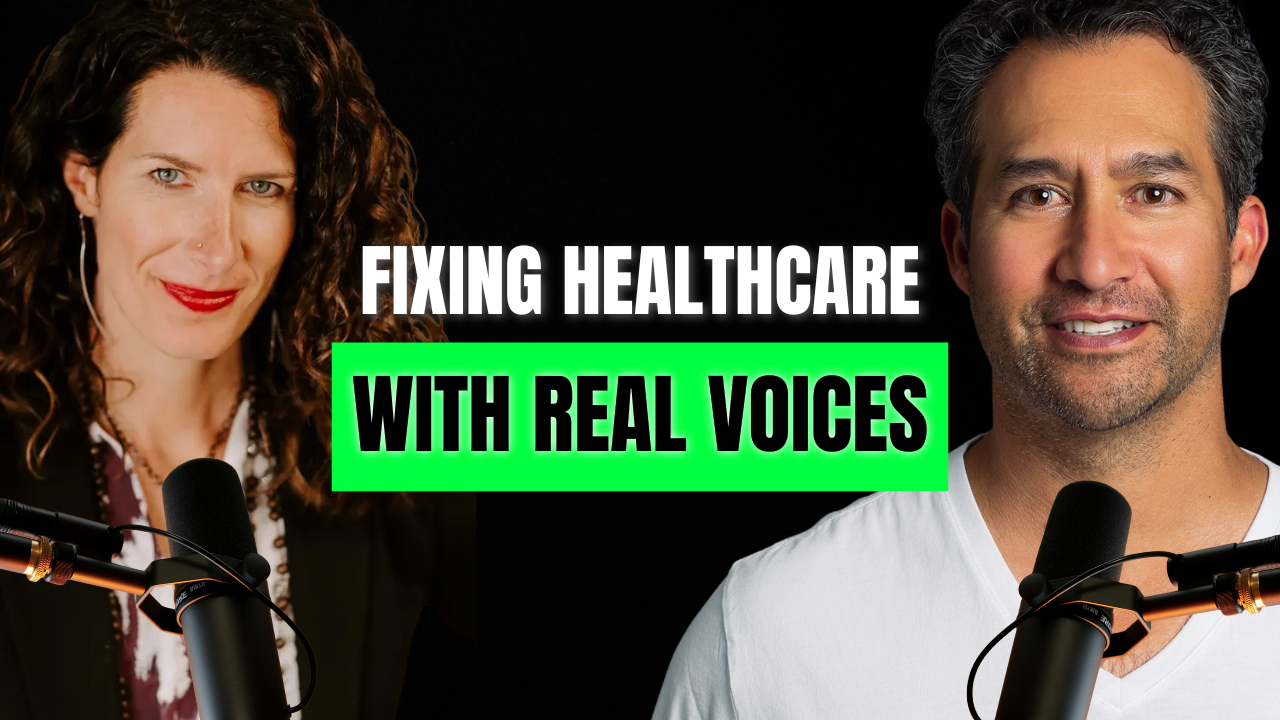
Jake Aaron Villarreal: Welcome to our podcast From the Ground Up where we interview startup founders exploring their journeys, their successes, challenges and lessons learned. We hope you'd be inspired in discovering what it takes to build a thriving startup. I'm your host Jake Aaron Villarreal and here with us today we have Twisha Anand, the founder or co-founder rather of humanest, uh a funded startup that's providing access to mental health care through a community-powered mental health platform in 150 countries. Twisha, welcome to the show.
Twisha Anand: Happy to be here. Thank you for having me.
Jake Aaron Villarreal: Great. So a little bit about Twisha, um she is a business leader and entrepreneur with over a decade of experience in the mental health space. She has combined with her back- this combined with her background in engineering, business, and psychology um has really been beneficial as she continues to build an effective and scalable mental health solution in the market. Before we dive in here, um tell us a little bit about you, your educational background, and a little bit about your co-founder as well.
Twisha Anand: Yeah, absolutely. Um so like you mentioned, I, my background is like this quirky mix of engineering and psychology and business. And I'm an engineer, um I did engineering in undergrad after which I did my MBA and then a PhD in organizational behavior. And my PhD thesis looked at inhibitions to seeking help. And um at that time back when I graduated, um mental health field was like this kind of a white space when it came to startups. And um during my last meeting with, with my PhD advisor I remember I told her that you know, I studied... I spent five years of my life studying inhibitions to seeking help and the one theme that kept coming out, out of my research was just like the need for emotional support when I interview, interviewed my, my participants in my research. And then I just... and this is, this is when I was in India... and I just told her, "Wouldn't it be so wonderful if we could create like a peer support platform where people could just lean on each other and seek help, and thereby the inhibitions kind of reduced right there?"
So uh lo and behold, a year later I read about this new startup that was doing just that here in the US. So I wrote to them and I joined them as the first employee. And I headed operations there for close to six years and grew and scaled the community there. And um I can spend the entire day talking about the power of peer support, but I will uh use the rest of the conversation for that and I will move on to my co-founders. Uh the, uh my other co-founder is Lara Gregorio, who is a therapist by profession. She spent over two decades providing services on the front lines as well as sitting on the executive behavioral health boards of various bigger companies. Um and the other co-founder is Dr. Tom Insel, who a lot of your listeners might have heard about. He's a psychiatrist and has spent over 40 years in, in his profession and has been the ex-Director of National Institute of Mental Health. So um the three of us came up with the idea of humanest and we've been building it ever since.
Jake Aaron Villarreal: I love the team. You know, when you're talking about startups, most of the time when companies get funded it's really about the team, and they may make a pivot based on the product or the thesis they have. And when they bring it to market it, they're really betting on the people that are executing on that plan, and if they have to change they still believe that they can execute on that next plan. When you started with your thesis and where you're at today, how different is it if at all?
Twisha Anand: So we are not different in terms of intervention. The kind of intervention that we are building at humanest does not rely on just the one-on-one model. Um here we have um... we are following something called a stepped care approach, which is a well-researched um intervention in which we are providing different levels of care depending on the need of the person in the moment. Not everybody needs therapy at all times. Therapy is not available at all times. So how do we start with providing things, simple things such as peer support, and then you know maybe group support, and then next level would be skill building, and, and then next level would be maybe a one-on-one counseling session, and then a therapy session. Like there are levels, different steps of care that people can do.
That said, um we when we started out, we did go ahead with this. Even today we are working on this. The thing that has evolved with time is um essentially the kind of market that we started with. Early on we were more oriented towards like a direct to consumer approach uh, but soon enough we realized that this is, what we're working with is a population health model that can like, that can truly scale and is community powered. So with that in mind, we went ahead and um tried out the B2B space, where we found tremendous success. Because now here, as we partner with colleges and nonprofits, we are acquiring multiple users at once, and that's the community that we're building. So that just makes our intervention more scalable inherently. And as of today we are both D2C and B2B, so we are all over.
Jake Aaron Villarreal: Talk to us about mental health care workers. We had a call a while back and you, you shared a little bit about in general the shortages of service providers or mental health therapists, and in some capacity it seems like it's a really big problem to solve. Can you give us some perspective of the numbers?
Twisha Anand: Absolutely. The thing that humanest is out there to solve is essentially workforce shortage. As of today, just in the United States, there are places called workforce deserts, mental health workforce deserts. They are designated as such because there's just such severe shortage of any, any sort of mental health professionals providing support. So far, the entire mental health space has relied just on one model, which is one-on-one therapy, which it may or may not be accessible, suitable, uh available to a lot of people. And it does not scale.
So if you compare it with the physical health field, wherein if you have a headache you can take a Tylenol and if you have a scraped knee you put a Band-Aid, but if you have a bigger ailment you go to the doctor. Whereas in mental health, you, for every little thing, um if you, if you see a friend struggling, you would just have one answer which is "go see a therapist." And because of that, what's happening is that a lot of people who may not really need therapy are accessing the, the hours that can be spent on people who can, who really need therapy. And because of that, there is this lopsided distribution of effort when it comes to therapy. And in addition, it's expensive, it's not scalable. And it's the equivalent of every time you get a skinned knee you're running to a surgeon. That's what's happening here.
Um what we are solving for is essentially um provide... making each one of us helpers, making each one of us peer supporters, wherein we can all of us have something to give, all of us have lived experiences. My experience may be very similar to what something is go, some- what someone is going through as of today and I might have overcome in the past. How can I use my experience in order to help another person overcome their challenges? How can I share my wisdom there? So, so now here what, what we have done is, we have... the helper and the help seeker are the same person depending on the time and the moment and the problem they are talking about. So um in addition what we are doing is we are, we are creating a more structured curriculum uh here at humanest, where we are training people to become better help seekers.
So one is, you know, you meet somebody, you meet a friend who's struggling, you give your own wisdom, you support them the best way you can. That's one way. In addition, as people help others on our platform, they are able to earn points and those points translate into badges. And each badge unlocks a new training that has clinical exercises and worksheets that you can do in order to make yourself a better helper. So we have gamified helping um and we are creating this workforce from within our communities. The other way it has worked beautifully is that us being a global community, we are the most diverse help-giving platform because we build from within. No matter what you look like, no matter what your background is, we always have someone who is like you around. And some of them may even be formally trained at our, on our platform.
Jake Aaron Villarreal: That sounds amazing. Um, it also sounds very challenging to be able to not just really create a new category or build a new workforce, but also get people interested and wanting to do it. Uh if you look at the market today and I guess where you kind of fit in there, serving the people you've served. Walk us through the, the amount of patients or the amount of users that you've actually helped so far.
Twisha Anand: Yeah, so right now we are in 115 countries and growing every day. Um so far we've helped over 20,000 people from all over the world, dealing with all sorts of challenges. Um yeah, so it's been incredible. Just in the last months we've seen about 300% growth in the users. So which can tell you how big the, the need is right now, not only in the US but all over the world. And I, I think I missed out on the stats earlier. Just to put things in perspective, um the recommended ratio of provider to patients is 1 is to 30,000, and 1 is to 20,000 in areas, in communities where the need is severe. To put things in perspective, um in the United States itself, one out of three people do not, one-third of the population does not have that access. And if you step out of this country um, for example, in India the ratio is 0.7 providers for 100,000 people. And in Africa it is 1.4 to 100,000 people. The global ratio is nine providers to 100,000 people. That's the number that we are looking at. And it is, it's not an ep- epidemic that's coming up, it's already, we are in there. Um and what we are here to solve is like to just make each one of us a helper and a help seeker.
Jake Aaron Villarreal: Right there, you know, there is two parts of the equation. One is I have a problem and I need to seek help so I can get answers to help me, you know, feel better, live better. But there's a stigma around first admitting that you have an issue and then where do you go to get that help. So um talking about mental health can be, you know, inhibited by a variety of, of, of things: social, cultural, personal factors. How are you breaking through the barriers to inspire patients to take action on their own behalf?
Twisha Anand: Yeah um, so when back when I started, and that's over 11 years ago, uh stigma was very high. And one of the reasons why I stepped into the mental health space was because in my community where I grew up in India, either you are crazy or you're normal, there's nothing in the middle. Um but as of today, the way I have seen the mental health conversation evolve um, especially the Gen Z, the younger generation that has started to lean more towards authenticity where they're not scared, their inhibition is lower. But that said, once you go global, you also look at communities where even talking about anything related to hopelessness or depression is just a no-no. So yes, we've come a long way. So we are seeing different segments. So there are certain segments that are authentic, that are outspoken, that, that do not struggle with stigma. And then there are segments where the stigma is still very high.
Um now what the challenge here is how do you combine all of them and make each person valuable in the community. So there are, there are a few ways that we have overcome that. One is that we keep uh the username optional. So like some people like to use a real name, some people like to use anonymous names and we're totally fine with that. The second way we do it is uh by just making the conversations free flowing. We have like a general space where people support each other. So say a student from Princeton who is undergoing anxiety bouts is talking to a single mother, young mother in Pakistan who is struggling to raise her children. So it's that variety where people can see different perspectives and they can see like, they can put their problems in perspective and see you know how much struggle is, is all around and how much they have to help each other. So imagine this single mother in Pakistan being able to help a stud-, student in Princeton. That just becomes so validating and so empowering for her. She feels meaningful. Similarly, a student from Princeton looks at the other person's problems and just things, sees things in perspective and, and feels valuable and by doing acts of kindness there. So it's a very rich giving community that we're building here.
Jake Aaron Villarreal: Really inspiring. I want to go back a little bit to the moment that inspired you to build this. I know you had the idea and then you went to go work for another company that was already sort of building in that space. What they were building and what you're building now, the inspiration seems like it's changed a little bit. You have your, you've carved out your own strategy and your own niche. Um talk to us a little bit about the inspiration and did it come from way before the idea of building a company? Where did this really all stem from for you?
Twisha Anand: Yeah, so this, this went on very slowly in my life. Um like I mentioned, I grew up in India. The city I grew up in all my life um had the second largest inpatient psychiatrist [hospital] uh, and um whenever we used to pass through that um the conversation was, "Oh look, that's the looney bin, that's the looney." Like that's what we used to call it. So you let alone sensitivity, either it was just like you're either crazy and you don't even deserve to be in the real world or you're, you're normal because you're outside that gate. So that's, that was the conversation back then. And um a few years later I entered, I, we didn't think much of it. Yes, people used to get, you know, challenges in life, but they used to share with neighbors and friends and you know, life used to go on.
Um after a few years I ended up at IIM Ahmedabad, which is the best business school in Southeast Asia. That's where I studied. And that institute is like the Harvard of Southeast Asia, that's what it's called. So the pressure is enormous. There are students from all sorts of backgrounds: rich, poor, educated, less educated. Like everywhere, they are there. The ultimate goal is to get placed in a phenomenal company and to get a great job. Um the placement season is the most uh stressful on campus. This is the campus that is also very well funded. I don't, I still don't know the name of the counselor, if, if, if we had one on campus. I lived there for five years. So this, the way we got through was the PhD students were asked to be on the campus place- placement grounds and have emotionally support students through the placement season. So I observed and lived through this peer support time where we were supporting our classmates through hard times. It was in a very unorganized manner, but it was effective, it worked, and we all got through, got through it together.
Then came my PhD research. Then all the interviews, even at workplace, people just continued to say that the need for emotional support is high, they want their cowork- ers to understand what they're going through, but it's hard to express that. It's hard to seek help. So you know, all those things just came together and gave rise to this idea of, "Why can't all of us become helpers and help seekers at different points in time?" At... when I joined the startup, I met Lara there. So Lara and I have actually worked together for over eight years now. We have a long history together, and she was building the therapy component, I was building the community component. And we had the same values. She came from this background too, that peer support is incredibly important and incredibly valuable and we can solve a lot of problems with that. So then we got together and then we looked at all the gaps that are still in the system, and that's when humanest was born.
The one thing that we are doing is we are also, because we have the stepped care system, we are able to track our members through their entire journey. Unlike a therapy session where if you're lucky you have weekly meetings and then for 165 hours you have nothing. You see your therapist for an hour, 165 hours nothing. Again, you go one hour, 165 hours nothing. So because we have the stepped care system, once a member is in our system, we measure... we measure their mood, their distress level, their motivation. So we know what they're going through in their journey, what kind of interventions they're seeking. So it's a very uh data informed, deliberately designed model. And eventually the goal is to build some sort of a recommendation engine that informs the users, saying that you know, "your here, here are your intake questions. Based on what you said, other people like you have benefited from XY and Z intervention." So we are able to intelligently guide people through their journey. So uh humanest essentially as of today is like an amalgamation of all our life experiences, all our professional experiences, as well as whatever we've learned from the, from the field of mental health in all these years.
Jake Aaron Villarreal: It's amazing. You know, as a, as a potential patient that would look at your platform, when they go on and they get um I don't know, a therapy session that has transacted, what do they pay and what do they get at the end of that hour? Do they have a tangible tool or strategy or is it the traditional therapeutic process where you're listened to over and over and over and at some point they allow you to find your own answers? Like what's... I want to walk away with knowing that I'm spending my time because I have a problem, give me a solution I can use not next month but like now. What, what do you do?
Twisha Anand: Yeah, I love that question because that is one of our biggest differentiators and we've all been in therapy at one point or another and we know that um the way the traditional therapy goes is that you will go in, you will talk a lot, u- maybe open up a few old wounds, and it's hard to wrap up everything um in an hour. And then you walk out with sometimes open wounds that are even more hurtful than when you walked in. Um so the way we are, we are offering our sessions is through a strength-based solution-focused approach. That's what we call it, uh which means that we believe that the strength to overcome challenges lies within the individual himself or herself. And um when the, when, when our, when our sessions start, the therapist and the client, they come up with some goals to achieve at the end of the hour. And at the end of this, it's, it's more like a forward-looking approach. "What are you here for? How can you, how can we get you from point A to point B?" That's it. And then at the end of the hour, the client walks away with something called an action plan. Which means that these are the things that you actually do. These are actionable things so you can, you can go from your point A to point B.
Some of the action plan may also include a social prescription. And by that we mean practicing skills in the community, seeking support in the community, doing certain courses or workshops that we offer in the community. Some of it might also be that. So our each session is, we look at each session as being self-contained. So we don't ask you to book like four weeks in a row. It's like, you come in when you need something, we'll give you that dose and then you're on your way until we see you again.
Jake Aaron Villarreal: Really cool. Yeah, I mean I, I just think that this is a, a totally different view of looking at mental health. And also being able to get tangible and tactical tools that can help you really at any level. Um uh as a company, let's talk a little bit about your company. So you started it, um talk to us how long you've been a business? Were you bootstrapped? Do you raise capital? Uh zero to one there's a lot of building that happens. And you know, you get into market and you hope that you have a target market fit. And then you continue to build. Walk us through your journey.
Twisha Anand: Yeah, so we launched March of 2020, a week before COVID hit. Um we were lucky that uh our platform is all um online, it's all like telehealth. So um if anything we were not that badly impacted, although the world took a few months to come back to the new order. Um we did a, we did, we did a small friends and family round back then, um but since then we've been bootstrapped. Um the model that we have is extremely scalable. It's not 1 is to 1, it's 1 is to 1,000. Um that's the level of scale that we're looking at. So our unit economics is working out very, very well, and um are, we are also producing incredibly high gross margins because of that. So we are bootstrapped for now. The thing that we have seen in the last few months is this incredible growth and it is ballooning every day. So I am, we are kind of gearing up to raise our next round just, just to manage with this tremendous growth that we've had globally.
Jake Aaron Villarreal: Really amazing. You know there's um moments as a founder that you have to make big decisions. It takes courage, there's fear, there's left and right turns. Was there a moment that led to major breakthroughs at your current company you can recall or share with us?
Twisha Anand: Yes, and I alluded to it briefly earlier on um in this conversation. We started D2C. The idea was to build um almost like a Peloton-like model where you know, we have these therapists who are kind of influencers, and then they provide all these interventions. But um I still think that um just this peer support model needs a lot of people to work, like it's, it's community. So you need communities to work. And because of that we struggled um at the end of year one. We were uh you were still wondering what to do because as you can imagine, the runway was drying up and we were not even sure where, you know, like how to scale up further.
And um the thing that we did not leave was hope. We are in the business of giving hope to others, so we practice what we preach. And so we continued to pursue the B2B leads that we had. We did have um relationships with various colleges and you know nonprofits and, and other organizations. And we continued to learn. That is one something that I feel like if I stop learning I'm dead, I'm finished. So we, we continued to learn from them. And then we realized that the need is so enormous even at organizational level that we just ended up the in the B2B space and that just gave us new fuel, new, new members and new energy. And that's when we just, we just took off and there's been no looking back ever since.
Jake Aaron Villarreal: Really cool. What's something that's been surprising to you as you build this company that you didn't think about in your journey, positive or negative, that really is uh has been enlightening for you?
Twisha Anand: Yeah, so two things. Um the first one is that building, like working at a startup is very different than building your own startup. Um the, the first thing that comes to mind is how much work it takes just to run a company. You forget the ideas, forget the growth, forget the strategy. Your legal, your accounting, your finance, you know, just the, the daily checks, the requirements that are just needed for just your day-to-day. You know, think of it like your food and water. That is, that just takes so much time and money and energy. So my advice to any aspiring founder would be "please budget for that." Like you can, you may have this really shiny idea in your head and you can think you can reach for the stars and "we'll do this and we'll do that." You need to eat and drink, that's your comp-, your company needs to eat and drink. So please budget for all those extra, like I wouldn't even call them necessary evils, but they're like, they're just there, they, they need, they're needed for your company to run. So that was a big learning. Um we, we learned to manage it, but it's still, it's still a good chunk of u- startup resources.
Um the second thing that I learned was I think I was almost in denial because I was actually told by a lot of my mentors that biases exist in the industry. And I was almost in denial. "I mean no, no, no, the you know just, it's not there, and you know people are, it's all meritocracy, and you know just like who cares about biases?" And they do exist, both positive and negative. So just learn early on um who's on your side. I think a value fit is tremendously important, especially when you're building something that's not been done before. One of the reasons why we've been very selective about investors or partners is because we know the path we are at, and we would like to work only with those people who espouse the same values as us. So definitely look for the value fit.
Jake Aaron Villarreal: As a woman founder leading a startup and building something that has a lot of value, and also help that's supporting people that are in pain and hopefully you're making their lives better, making the world better really. Um what advice can you give to other women founders of startups that you've really been able to learn that you can share with them?
Twisha Anand: Yeah, so my first advice would be that uh we are i-, we are amazing multitaskers. Um we can be dropping our kids to school and still taking calls um and doing equally well there. So continue like, keep up the multitasking. Um and there will be challenges, but you will find supporters. There are a lot of supporters around. Um please lean on your network. Um the other thing that I would say is um, and I'm going to be very candid here, we will have to show prepar-, prepare to show more results for the same outcome as compared to others. So for say, for anything that needs one check mark, check mark three boxes before you reach out to others. Because as women, uh in my experience you just need to show more proof in order to, to prove yourself.
Jake Aaron Villarreal: Yeah, I ask that question because we interview a lot of founders, men and women, and uh I agree with you. I think that you know it's, for good or for bad there's just different challenges for, for both sides right. Um but you have to understand what are the opportunities within those challenges that you can really succeed and how you approach it might be a little bit different. Um the good news is it's a free world and there's opportunities for everybody. It's just I think the, the best ideas typically win when it comes to strategy, when it comes to opportunities to build a company. And so there's no advantage from the outside looking in, but when you're that leader you might feel and see and sense what those are. So that insight is really good uh, and thanks for sharing that.
Twisha Anand: Yeah, ab-, absolutely. And then the I would just add, the silver lining here is that we end up becoming overachievers because of that.
Jake Aaron Villarreal: Yeah, no doubt, I believe that 100%. And I also agree with you, I think you're much better multitaskers than, than, than, than we are as men. Uh it's amazing what you can do what we can't. So anyway, really uh really impressive. Um as you look into 2024, 2024, what's, what's on the list of humanest in terms of uh the road map and, and where you're going next as a company?
Twisha Anand: Yeah, uh 2024 looks very exciting for us. Uh there are several things uh cooking right now. So we are um based on whatever we've learned in the past three years, we are launching our new product, our new platform next month. So we are super excited about, about that and at the same time super busy with that launch. So um that's one thing that, that we are really looking forward to. The one thing that we, that we are especially building in is like uh basically outcome tracking, engagement measurement, lots of graphs and charts that our users can use uh in order to track their progress and in order to be more mindful of what kind of intervention they need to use next in order to better their mental health, health.
Um the next thing that we're look-, looking forward to is a lot more growth. 115 countries, there are total 195 in the world, so that's where we are headed. We even have users from Antarctica! I was like, I was so excited to see users from Antarctica on our platform. Um but we want to be like, we want to serve everyone in the world, that's our goal. So growth, that's the next thing.
Uh there is so much rich data that we are accumulating here, and by next year um I'm looking forward to just working on that data to see you know like geographically what's the geographical distribution of topics of interest, the kind of interventions that work. There is just so much research opportunity. Some research collaboration is another thing that we would seek in order to see you know cultural differences, geographical differences when it comes to mental health needs and interventions. Um and of course the third thing on the horizon is a fundraise just to keep up with this enormous growth and demand that we are in the middle of right, right now.
Jake Aaron Villarreal: Amazing. I'm sure your community would love to hear this story too. They might not know what's behind the scenes of their founder of what platform they're on daily and helping others. So hopefully you'll be able to share that with them. Your story is amazing. Um if somebody wanted to find out about humanest, where would they go? And if they wanted to connect with you, how would they do that?
Twisha Anand: Yeah, just uh humanestcare.com. That's our URL. And they can write to us anytime. So there are two ways to approach us. If you just scroll down um there, there is a form like a just like a form that they can submit. Or they can write to us on hello@humanestcare.com. And if they want to reach me directly, I'm just at twisha@humanestcare.com. It's all simple.
Jake Aaron Villarreal: Great. Well there you have it. Uh Twisha, thank you so much for joining uh and having the courage to come on the show and talk about your story. Um and to all the listeners listening, thank you for taking your time today. It means the world to me for choosing your time to spend with us. My name is Jake Aaron Villarreal signing off for now, but can't wait to connect with you all on the next episode. Until then, take care.
Before we wrap up, I want to give a big shout out to all the entrepreneurs that are joined to make this podcast possible. And for all the listeners for listening, it means the world to me that you chose to spend your time with us today. I'm your host Jake Aaron Villarreal signing off for now, but can't wait to connect with you all soon on the next episode. Take care.
This show is sponsored by Match Relevant, a company that helps venture-backed startups find the best people in the market. And they do it in three simple steps. First, they sit down with founders to understand their story. Second, they tell their story into multiple candidate channels. And third, they schedule interviews within 48 hours. Find us at matchrelevant.com to learn more about how we do it.











.jpg)










.webp)
.webp)
.webp)

.webp)