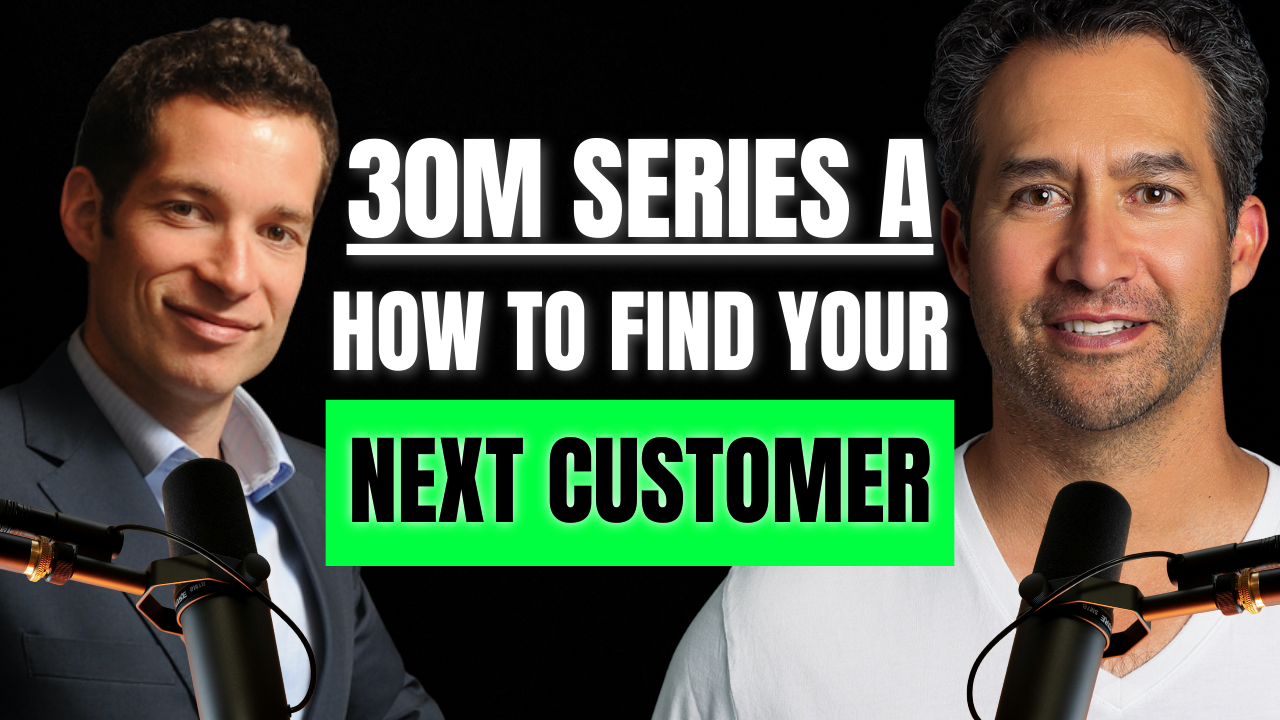
Jake Aaron Villarreal: Welcome to our podcast, From the Ground Up, where we interview startup founders exploring their journeys, their success, challenges, and lessons learned. We hope to be inspired in discovering what it takes to build a thriving startup. I'm your host, Jake Aaron Villarreal, and here with us today we have Yan Wu. Yan Wu is a co-founder and COO of Bond Financial Technologies, which was acquired by FIS, a $35 billion company. Prior to that, he was a VP of Data at SoFi, a $10 billion fintech, and began his career at BlackRock. So we'll dive into your current startup, but prior to that, you've got a lot of experience at multiple companies. The one I want to talk about is the company that you're at today, Bond, and the, the decision to go out and raise capital to build it. But tell us about the story of going through the process of being acquired.
Yan Wu: Um, yeah, definitely. The process of being acquired, uh, as you probably know in your career um, is one that uh not a lot of people experience, and they experience it through stories and uh these joyous posts and things like that. Um, I would say the experience of getting acquired was inherently very, very messy. It's not the prettiest uh work that you do, but ultimately it is for the benefit of the employees, the shareholders, and the investors uh for the time and the effort that they spend in the organization.
So I would classify it as there are three of distinct steps for anybody thinking about uh going through the journey. Uh the first one is um getting your house in order. So before you do anything, it comes to diligence. You got to make sure your systems are in place, your HR functions are um hard, your financials are current, they're audited, and they look clean, and any blips along the uh the the journey, you have a good explanation for, okay? So you got to make sure your company is ready to be looked at because every, every single part of this company is going to be torn apart and looked at closely when it comes to um financials and diligence and technical aptitude and things that nature. That's point number one.
Point number two is the actual experience itself when it comes to finding the right home for your company and being um acquired by somebody. It's nothing short of going on 50, 100, 200 blind dates. The problem with that is number one, um the ability for you to do anything new um is very low. The um, you know, most acquirers want you to be relatively stable, don't want to see anything that's sort of pending. Whether you have new product releases or you have new customers you're launching, you want to do new things, you want to try new products, it's just, it's a, it's a time period where it's very stagnant and you're trying to hold a very constant picture of what your company looks like. Um and then after that, you're telling the same story over and over and over and over again, and you got to maintain that hype and that excitement for like the 50th time that week uh in order to, to find the right um uh partner for you to be acquired. Okay?
And then I think the last part that a lot of people um underestimate is that in order for you to succeed throughout the acquisition, I would essentially treat the first 90 to 120 days in the new company as still part of the acquisition process. Okay, so it's, you know, you've gone through a lot, you, you built this company for many, many years, you've gone through tons of diligence and you just want to rest. Um, my advice to anybody going through this process is make sure that you treat the first 90 days as essentially a new job that you have. As a founder, your job is to make sure that um the swim lanes for you and your team are clear, that there's a cultural alignment between you and the acquirer, and the fact that there's like less and less friction on a daily basis. If that happens, you have a great shot at making sure everybody gets retained and for all the reasons that the M&A occurred, um that has a high probability of being successful. So those are probably the three distinct stages I would call uh when it comes to an acquisition.
Jake Aaron Villarreal: That's great. You know, for a company to buy another company, there has to be a value they see in the technology, if it's a tech startup like yours was. If uh, you know, the people that come along with it, the problem it solved for the company by acquiring that organization um, it's got to fit. For... talk to us about the problem that Bond solves and how that integrates with FIS or FIS, however it's defined, whatever, whatever you call it in, in the company culture. Uh is it FIS or F-I-S?
Yan Wu: F-I-S.
Jake Aaron Villarreal: So walk us through that.
Yan Wu: Yeah, it's a great question. So um, Bond Financial Technologies, we are a Banking-as-a-Service platform that helps software companies embed financial experiences. Um think of it as when you do checkouts, when you do payments, when you do um uh like credit card transactions within software, instead of going to a bank or opening up a point-of-sale solution or like using another piece of hardware, okay? So we allow software companies to embed financial infrastructure into s- into their applications. Um and so FIS is a uh company that's been around for many, many years that's great reputation within financial services. Uh the technical challenges that they face is that they have a technology stack that is monolithic on-core, built, you know, primarily through acquisition throughout the '90s and in the early 2000s. And so what they essentially have is a huge customer base globally um across many different uh financial services uh segments. What they have challenges with is obviously becoming more modern in terms, terms of technology and the culture of hiring um Silicon Valley based or hiring um you know modern microservice engineers. And so the um home for FIS for us made a ton of sense because we could bring technology that it would take them uh a long, arduous time to build, and they would have that as part of their ecosystem. And for us as Bond, we can deliver the technology through scale because we are cloud-based and not on-prem. And so that became uh quite uh an appealing um value proposition for both parties.
Jake Aaron Villarreal: And when you went out to, to, to... when you got acquired, what's the process like? I mean you, you talked a little bit about, you know, you can talk to hundreds of companies kind of like blind dates. They might want to talk with you, you're reaching out to them. Um was it them coming to you or you just putting it out there that you were looking to find, you know, a company that could help scale the business, you know, in, in a faster pace?
Yan Wu: Yeah, that's a great question. So um I would say, again, this is a learning for any founder out there who uh is in the process of being acquired or thinking about running a process for uh being acquired. Um we've known FIS for uh the better part of our existence. We actually talked to FIS um I would say two years before the acquisition happened about commercial engagements where, you know, we thought we could sell into their customer base or we can create a revenue share business model together. Um and then, you know, I think throughout that process we've always kept in touch and about a year before the actual closing day, we had act-, we had done preliminary diligence with FIS. At the time they weren't ready to move forward simply because I think there were a lot of things going on. At a company like that, they're a, call it a $35, $40 billion company with global presence. We're a Silicon Valley based startup with 35, 40 people, right? So they had a lot of stuff going on. And so um we decided to part ways at that time and talk to other folks. Um and then when we were about to close with another party, the FIS team came back and you know, they wanted to relook at this deal. We asked if they were serious about it, they were absolutely serious about it. This time around they were able to close the deal uh in about, in less than 21 days, which is just completely unheard of, particularly for a s-, a team that size. So the corporate development team uh at FIS is led by Richard Ma, is an incredible team, and I'm really grateful for everything that they did to get this deal done across the finish line in such a short period of time.
Jake Aaron Villarreal: You know, for some, the experience, they, entrepreneurs will never have it. And others, they've gone through it multiple times. They've had small companies that became big and they get acquired. Um there's something about that experience that can be really fun and it can be very harrowing. What was it like for you?
Yan Wu: Um I would uh, and, and I'm sure Jake, you've, you've been through this too. The classification of going through an acquisition, I would never define as fun. It is, it is grueling, intense. Um it's grueling, it's intense. It feels um very much not like you're on strong footing. It's essentially having an army of people come into your house looking through the closets and looking through the attics trying to find things that may or may not jibe with what they're looking for. And then in the end when it's done, you just have a sense of relief that it's all over, right? Um but again, the, the experience is not necessarily for you as a founder, and none of this uh, reasons why you start a company should ever be, right? I think this is for the fact that you demonstrated there was value, you've had people that have been with you for a long time that deserve uh something uh in the long lines of an exit, and you have investors that have held their ground and been supportive throughout the entire experience. So that's the reason why you do it, you know?
Jake Aaron Villarreal: Yeah. I know my experience was, you know, it's, you, you ask all the right questions and they ask you all the right questions and you know, you're going through this months at a time and you kind of start going back to some of the things that you were really asking for and hoping to get. And you know, everything response-wise sounds great. But then when it details like "yeah that's, we're going..." you're like, "yeah, we talked about that." It's like this uh constant negotiation. And eventually I think it's kind of a process of who can wear down uh you know, the slowest, you know, might win. And it's a, it's a, you know, you look for the win-win and, and luckily it sounds like you got that. Uh we got that too, but yeah it's definitely an interesting experience when you, when it's all said and done. Now you're working at a big company where you're at today. Um what do you feel like you've gained and what do you feel like you've lost?
Yan Wu: Oh, that's a great question. Um look, I think on, on what we gain is a feeling in stability and support that you don't have when it comes to being a startup founder. Um the uh you know nights where you're trying to figure out "Are we going to get product-market fit? Are we going to close this deal? Right? What if somebody with more capital, more brand recognition, more capabilities comes and undercuts you? What are you going to do? How are we going to make payroll? How, what are we going to do about the next fundraise?" All these things that you constantly worry about, all of that goes away in terms of uh being at a company of this size with this capitalization. Um and then what you lose is autonomy, the ability to move fast, quickly, and the ability to make decisions at the pace that you want to, right? We have, you know we have a board now, we have departmental heads that we have to um manage, uh we got processes in place, we got things like HR and Finance functions that we didn't really have in the past. And so look, I think it's not necessarily good or bad, it's just a matter of whether or not that stage is the optimal stage for [your] personality type and things that you want to do in your career. And I think that's the biggest thing that I've learned uh since I've been here at FIS.
Jake Aaron Villarreal: Yeah. Yeah, pros and cons to both scenarios for you. And also for the company that acquires, you don't always know what you get when you acquire a company too. So you know, you might think you got a team that can deliver different areas and find out, maybe, maybe it's not what you bought. At the same time um you know, it could be the technology isn't mature at the level you thought. So there's risks on both sides, but it's good to, to go through the process. You know, you've been a Data Scientist, you've got technology experience, you've been [at] multiple startups. You've got big brand experience. You know the financial services sector from BlackRock. And all that is great insights to have in your career when you're talking to other founders, let's say, you know, early-stage companies. What, what's the role really that the founder should be focused on as they're leading that early-stage company, in your opinion?
Yan Wu: Yeah, it's a great, great question. So, you know, I'll preface it by saying this is mostly applicable to, you know, founders [of] tech companies um that are high growth and/or venture funded. The role of the founder in my opinion is very, very simple: it's to get to product-market fit. Now I've, I've heard a lot of people say things that I think are true in ancillary ways. So some people have said, "well, the founder is responsible for shipping products and getting MVPs out there, get, doing market research. Founder is responsible for doing sales and making sure that we can collect revenue and get adoption." Those things are all great, right? But I think the point, particularly early stage, the role of the founder is to really get to product-market fit. How do you know? I think you generally know when you hit it. Um where things are growing, people are coming back and using your product over and over again, people like it, and you're having a, you're really having a struggle to get resources to make sure that you can um you can uh service the customers that are coming on board because growth is going so fast. And if you have to ask yourself whether or not you have product-market fit, it's most likely that you have, don't have it yet.
Jake Aaron Villarreal: Yeah. What's the biggest challenge, or maybe not the biggest challenge, but what's the biggest mistake you see founders of startups make?
Yan Wu: Wow. Um that's a great question. Uh I think mistake number one is letting... um I think mistake number one is prolonging mistakes that you know are the wrong decisions. What I mean by that is look, a lot of times when people start a new startup, founder for the first time, they're also the first time that they're hiring, particularly for roles that they're not uh, you know, they don't have a lot of domain expertise in. Or they're trying to do the first sale and they never done sales before. Or you know they're trying to build an engineering team and [it] might be the first time they're leading engineering, right? So you're going to have a lot of firsts, and you have to accept the fact that you make a lot of mistakes. That's not, that's a feature, that's not a bug when it comes to being a founder. The biggest mistake that I've seen founders make is not acting on uh things that they know need to change. This is highly, highly common. When it comes to hiring your first salesperson who doesn't work out, we find reasons to keep them around and try not to have the hard conversations. Or we like launched a product, it's been three or four months, the take rate's not great, customers are churning, you know, you have to make a change. So I think the big, biggest thing when it comes to a founders at the early stage is that your time and your attention are the highest valued currency. And you have to make sure that when you find things that need to change, that you do it quickly, efficiently so that you can move on and hopefully be on a better path. That's probably the biggest mistake I see founders at this stage make.
Jake Aaron Villarreal: Yeah, it's really interesting you say that about hiring because, you know, we're in the business of helping companies scale up. And one of the things that we've seen of the successful leaders of startups is the founders are so intimately involved in the hiring process, not just at the beginning but really very much throughout the growth of the company. I'm saying up to the first 50 to 100 employees minimum. It's top of mind. They're moving calendars around to make sure that they're prioritizing not just the, the hiring process, but being involved in it. And I think a lot of founders that don't know, they haven't done it before, they get to a point where they just want to start delegating that off to, you know, "you do the first interviews and you get through and I'll do the final 30 to, 30 minutes to 90 minutes sitting down, making sure it's just like checking off a box." But from our experience, and we worked with hundreds of companies, it's always the ones that prioritize that that seem to build the right teams. Because at the end of the day, technology is a feature that runs things, but it's the people that build the company. And it's, it's really everything, you know? So yeah, it's shocking to see how some just don't think it's as critical for them to be involved as much as they should.
Yan Wu: Yeah, I think the thing that you hit on the spot there is particularly the first set of, just call it the first 10 people, are so critical from a culture perspective. And what I found is that culture fit uh is so much more important than skills overlay. And I think this mistake is, you know, you've probably seen this in talking to founders as well. Do you need the perfect pedigree head of sales hire? Maybe not, right. But do they believe in [the] mission to the point where they will stay up late, they will wake up early, they will send that 100 outbound emails that they don't want to send when they have the flu because they believe in the mission? They absolutely will. And that's why it's so important for founders to be intimately involved in building that initial team of call it 10 people, you know.
Jake Aaron Villarreal: Yeah, I agree with that. What's the most important thing a founder can do to grow faster?
Yan Wu: Yeah. So um this is a great question because there are a lot of myths in terms of growing. So uh first myth is that you need more people. There's this idea particularly uh you know, in the '21 through '23 era where money was cheap, that if you just hired more people that you'll grow faster. And that's simply not the case. What I found over and over again is that when you start bringing on hordes and hordes of people, um you're trying to get everybody to work together, to see alignment in their roles, of other people's roles and how they fit in within this ecosystem that's inherently not been proven to work yet. And so when you're [an] early stage company trying to prove out let's say your sales process, and without doing a repeatable model you bring 10 account executives in, it's not going to work. And that's the biggest mistake that people make in, on the hiring side when they have uh this like knee-jerk reaction to bring a lot of people on.
And then the second thing is um that, you know, they feel like having more products and shipping more features is going to result in more revenue. Um and you know, we made this mistake uh at Bond, thinking that "well, if we build 10 products instead of one product, we're just going to have more revenue." It's super confusing to buyers. Number one, they look at you and they're like, "Well, what do you do?" And we tell them we provide feature A, we do B, we do C, we do D, we also do E and F. And then they come back and they scratch their heads and they say, "So what do you do?" Right. Um and then the second thing uh about that model is that the only reason why you should build as a, as a, as a startup, you should build a second product is because your first product is tapping out on TAM. Okay, so assuming that you are in an industry that is growing, right, like you're not in like the newspaper industry, right? You're in an industry that's growing, um you should be growing your business with one product. And the only reason why [to] go to a second product is because your growth slows down in product one because the TAM, it- you're tapping out the TAM. And those are the two reasons why I think having a lean team, staying very focused on product is the best way to grow your business, not the other way around.
Jake Aaron Villarreal: Yeah, that's great. Um I want to go back a little bit to what we shared in the beginning, which was you were at SoFi, $10 billion company. Um as, as you were there, uh what, what lessons did you learn there that you applied to Bond as you started to, to build Bond and really thinking about the, the, the gap in the market that you saw. What was the inspiration around again seeing a gap and then building Bond that kind of filled that gap?
Yan Wu: It's a great question. I learned so much of um, you know, I learned so much about how to operate a company when I was at SoFi. Um there was one thing that I learned about the market and also one thing from a culture perspective that I really took with me in starting this company. So you know, at SoFi the um, the uh product set was a primarily a student loan lending product and then a personal lending product. And when it came to um... I'm gonna have to re, resay this answer here. So um, let me gather my thoughts.
Jake Aaron Villarreal: Yeah, take your time.
Yan Wu: What was I gonna say about SoFi? Yeah. So, you know, um at SoFi I learned uh two variable, val-, v- very, at SoFi I learned two variable variable... Oh my God. At SoFi, you know, at SoFi I learned um two incredibly valuable things. One about the marketplace and another about culture. So within the marketplace, SoFi was a um modern uh mobile based financial product targeted at uh consumers. And everything was mobile. What we learned was that the backend simply just didn't exist. And as a result, engineers were taking, you know, different pieces of legacy technology, hoping to put things together in a way that functions and that became the customer experience. And a big reason why we started Bond Financial Technologies is, "can we build modern developer tools for today's engineers to be able to build financial products?" And that was a huge gap we saw in the market.
The second thing that I learned at SoFi was much more around being a culture of doing the impossible. So back in '20 we decided to go from one product to seven different products. We expanded all the product sets at the same exact time with really no new headcount because we were, so, we were facing a cash crunch at that time. So the CEO looked at all of the senior leadership and they said, "We got a mission here. It's to become the super app for um our consumer base. We got to do it with the same number of people. Can I count on you to do it?" We all looked at each other, we said, "Yes, let's do it." And then within the next three years, we launched seven new products. It was scary. It was crazy. Nothing ever went according to plan. But, you know, overall as we look back on it, it was an incredible journey. Adoption was amazing. The marketing on SoFi was fantastic. And we ultimately uh were able to take that company public uh to where it is today. So those are two things that I learned from that experience at SoFi that I carry with me uh to, up until today.
Jake Aaron Villarreal: Yeah, really cool. Um, building a team of engineers and salespeople and marketers and everything that happens to be part of a company is, is critically, critically important. What have you learned that's helped you filter out talent to make sure that you get it right when you're, when you're building your teams?
Yan Wu: It's a great, great question. So, the, for early-stage companies and startups... R size, again, I think it's really, really important that people have culture fit of being able to do things that are um, you know, fit within the culture of a startup. And what I mean by that is you'll talk to a lot of people that brag about things like, "I had this P&L" or "I had this many people in my org" or "I had you know this many direct reports," things of that nature. None of that's really interesting to me. What I'm interested in is when was [the] last time you did something that was impossible? Right? When, when were you faced with just an impossible timeline or you had to go to market and launch a product with no like support, or you have to build a new feature or resolve a technical incident but none of the engineers were available, or like the heavy engineering was on wedding day or whatever. Right? What did you do that was just at the time you felt was completely impossible, and how did you do it, and what happened with it? Right.
And I think what you'll find is that people who are trying to get into the startup world, a lot of them romanticize about that idea, but they don't understand the fact that, "hey, if it's just me and you, Jake, in this company, you're running sales and I'm doing engineering, and I get hit with the flu, and you got an angry customer about technology doesn't work, you got to figure out a way to deal with it and make sure that they get what they need even though I'm not there." And vice versa, right? And so the question of these questions that um I tend to ask people about times in their careers where they accomplished something that they felt was impossible when they first started, tell me what type of person they are when things go right and, you know as well as I do um, in starting a company that nothing ever goes right, and you got to be prepared for all these curve balls that come, you know. Um and that's the way that I think I like to ask these questions to candidates.
Jake Aaron Villarreal: Yeah, that's such an important aspect. You know, we like to understand like the resourcefulness of someone too, not just the resources they have, because at a startup you don't have a ton. You got to figure things out, you got to be strategic and you got to take chances. So those are some of the things that we try and pull out, you know. One litmus test that I love to do when we hire people is, you know, once they go through the process uh is to really understand you know, after it's all said and done, could I see myself working for that person? Like they might be younger, they might have less experience, but do they feel like a leader, do they feel like they communicate at a level that I would be happy putting them in front of a customer or you know leading a team? Um, and so that's kind of my last sort of checkbox to say, "Everything about them I like. Can I see myself working for them? Yes or probably not. Okay, they're probably not going to be a fit." Um so you know, I want to kind of, I, I want to switch gears here uh to what we call Three Questions. It's simply that, just three personal questions about you, to you, and uh three simple answers. So the first one is: what do you, where do you go to think big or to brainstorm?
Yan Wu: Uh that's a great, great question. I like to go on walks in nature free of keyboards and podcasts or like headphones, anything like that. Um I find that, you know, kind of disengaging from the day-to-day allows you to work uh on your business and on yourself instead of within the business. The, you know, I found the, the biggest inhibitor to my company um when I was running Bond is like, my development as a person. And I just don't think that that happens in front of a keyboard looking at emails and Slack and incidents all day long. So I tend to go out [to] nature, try to go on walks, try to think without any distractions, and I feel like that's really, really helpful in terms of making big decisions or making big uh directional changes within the organization.
Jake Aaron Villarreal: Yeah, really cool. Um what advice have you gotten from another founder that you felt was priceless, that's worth sharing with the listeners today?
Yan Wu: Yeah, I think the, the best advice that I got was from someone who um had uh, this person was, you know, multiple time founder uh worth hundreds of millions of dollars, had three or four exits. And they sat down one day and they said, "Look, this stuff... house, cars, F- etc., none of that stuff matters. Quite frankly, in the next six months nobody's going to remember that I sold my company right. So make sure that when you're doing this, do it for yourself. Don't do it for anybody else. Don't do it for the wrong reasons. Don't do it for fame and don't do it for money and don't do it for perception of others. Do it because you feel passionate about this problem and that you feel like the world is a better place if you're able to solve this problem." And that's been such a great life lesson for me uh particularly during the times where it got hard. Um I was able to reflect on the fact that we are doing things that are inherently changing the way money moves. That was such a satisfa- uh, a satisfying feeling for me um to call on in those times.
Jake Aaron Villarreal: Yeah, really cool. Love that. Uh what, what do you do to stay positive in the roller coaster of the startup journey?
Yan Wu: Oh man. Um you know, this was something that I had to learn, not really good at it. Um I think uh every time that you have a win of any sort, celebrate it. It doesn't matter how big it is, right? We don't need to have a big offsite and buy people hotel rooms, flights and get them together and make a big whoop-de-doo about it, right? Um I think a, a message, email to the team goes a long way. One slide in an all-hands deck goes an incredible way. And you know, there was someone who told me, like, employees when they're going through a journey with you, these are just as important times in their journey right as, you know, things like getting more stock or getting liquidity or getting paid or getting a raise. These things are just as important if not more important. And you know, I think that's something that I had to learn to do um better because when you're starting, now you're kind of just pushing a hill, uh rock up a hill on everything in your company. Because it's the first time that you're making a sale, pushing out product, making a hire, right? Having a customer. And uh to be able to celebrate that uh um throughout the entire journey in small ways helps keep the energy up and keep people motivated.
Jake Aaron Villarreal: Yeah, really cool. That's great. Um as you look into 2024, what are you excited about uh about your current company that you're at today and kind of what's on the roadmap that uh you're looking to grow, build, scale?
Yan Wu: Yeah. Look, um, you know, I think FIS has been nothing [but] tremendous uh to us. Um I as a founder deeply, de-, deeply thankful for the experience here. Um but I also do know that as a, as an entrepreneur um, you know, my best marginal utility for any organization is not at a place at 65,000 people. So I'll be moving on at the end of the year, uh transitioning my responsibility to the FIS team. They've got a great team here and I think they're going to do fantastic things. Um I'm super excited about embedded finance still. Um which is the, you know, essentially I feel like software and financial services, the line between the two of them are going to continue to blur. What is software and what is payments is going to be more and more integrated. And so um you know, when 2024 happens, I'll looking at new opportunities uh within embedded finance to see whether uh, you know, to you know, start another company um to help uh SaaS companies with uh embedded financial products.
Jake Aaron Villarreal: Really cool. That's awesome to hear that. I like the transition going into a new year with, you know, a green field of opportunities deciding on what you want to do next, whether it's building a company or being on a different journey, whatever that path might be. If someone wanted to find you or connect with you, whether they've got an idea, they want to build something and get your insights, or maybe you know at some point they might want to work or collaborate with you, where would they find you?
Yan Wu: Yeah. Best way uh to find me and where I'm most active is, is on LinkedIn. Uh you know, I'm pretty easy to find. Yan Wu on LinkedIn, you'll find me. I'm pretty active. I like to engage my audience that way. And hopefully I've been helpful in the content that I've been pushing out to the, to the community there.
Jake Aaron Villarreal: Yeah, absolutely. Well, Yan, thanks for joining us today. Thanks for uh sharing your story and to all the listeners for listening. Uh it means the world to us that you spent your time with us on this beautiful Friday. I'm Jake Aaron Villarreal, the host of the show, and can't wait to connect with everyone on the next episode. Until then, enjoy the holidays and take care.
Before we wrap up, I want to give a big shout out to all the entrepreneurs that have joined to make this podcast possible and for all the listeners for listening. It means the world to me that you chose to spend your time with us today. I'm your host Jake Aaron Villarreal signing off for now. We can't wait to connect with you all soon on the next episode. Take care.
This show is sponsored by Match Relevant, a company that helps venture-backed startups find the best people in the market and they do it in three simple steps. First, they sit down with founders to understand their story. Second, they tell their story into multiple candidate channels. And third, they schedule interviews within 48 hours. Find us at matchrelevant.com to learn more about how we do it.















.jpg)








.webp)
.webp)
.webp)

.webp)