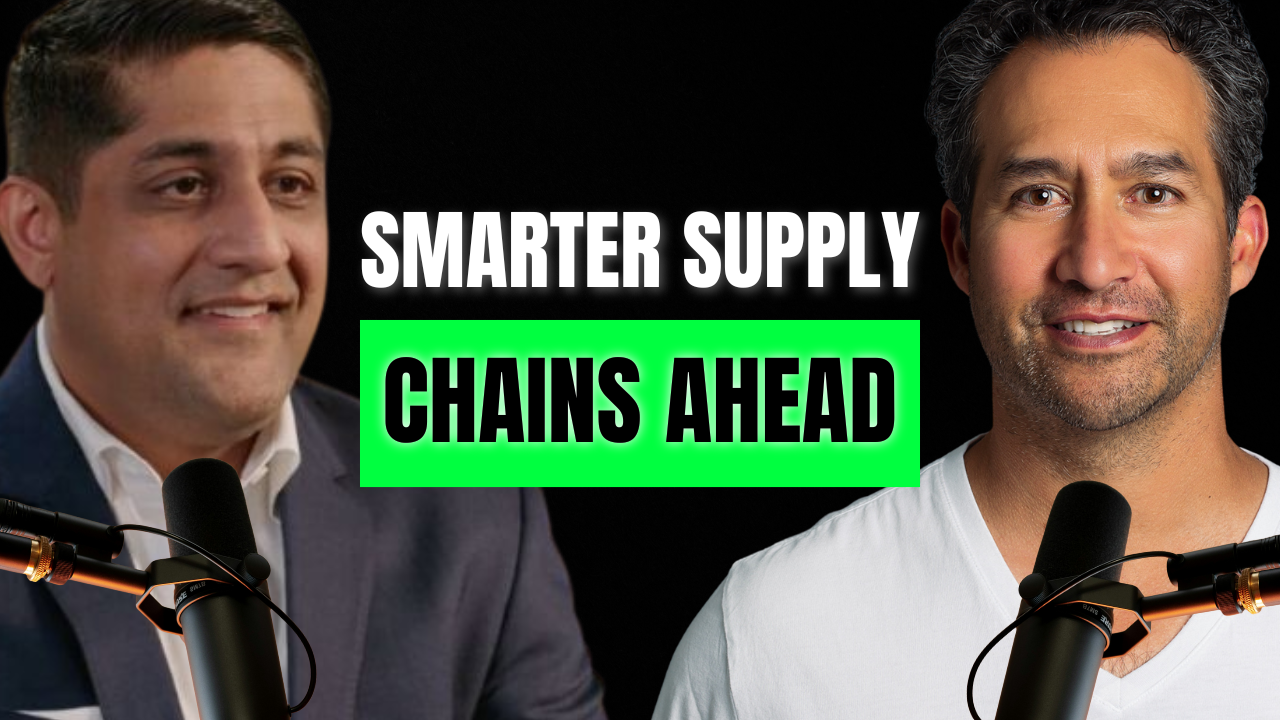
Jake Aaron Villarreal: I'm Jake Aaron Villarreal, born and raised in Silicon Valley here to take you behind the scenes to share what it's like to be a startup founder, the journey they're on, the problems they face and the products they build in an effort to transform industries. I'm excited to have with us today Forest Flager, co-founder and CEO of Parspec, funded by Innovation Endeavors. Forest, welcome to the show.
Forest Flager: Thanks, Jake. Pleasure to be here.
Jake Aaron Villarreal: Great. A little bit more about Forest. He holds a PhD from Stanford in civil engineering and is a leader in construction technology, known for pioneering innovations that enhance project efficiency and sustainability, and their startup utilizes AI to serve the supply chain for the building and construction industry. Before we jump in here Forest, where are you calling from today?
Forest Flager: Just south of San Francisco, at San Mateo.
Jake Aaron Villarreal: Very cool. Yeah, I know that area pretty well. My days at Oracle. So, glad to uh, glad to hear you're in good, good shape there location wise. Before we really jump into your company and talk about the problems you're solving there, give us a little background of you. I know we're kind of both from the same general area in San Jose, Santa Cruz region of California. But give us a little bit background of how did you get into technology? And more importantly, what was your past like? Were you on the innovative side as a young kid? Have paper routes? Sell lemonade? Give us a little background to you.
Forest Flager: Yeah, I grew up in Santa Cruz. I kind of grew up with construction. A small GC. And really, he was really interested in green design and sustainability. That was kind of like a big passion in general of Santa Cruz at the time. And so I grew up really being passionate about how to make buildings more energy efficient and sustainable. And that sort of led to a career where I started in, in design and engineering. So I kind of went from being a practitioner, designing buildings, to working on technology to support the, support the industry.
Jake Aaron Villarreal: That's great. Yeah, oftentimes it's so, parents that give us that guidance or influence us and where we end up. It might not be exactly what they do, but it certainly has an impact if it's, if you're around it a lot. So really cool to hear that. In terms of how we look at business, it's usually about what problem can be solved and can you build a service or a product that's valuable enough someone will pay for it. Talk a little bit about Parspec and the problem you're solving as you have been in the market now for a while.
Forest Flager: Yeah, I mean, I think the fundamental problem Parspec is solving is trying to make to connect various stakeholders in the process with information about products. So you know I mentioned that I started my career as a designer. It was always somewhat of a challenge to uh research new products, right? You may have goals around say designing more efficient buildings. Understanding what's available on the market and, and what are the tools that you can use as a designer was always pretty challenging just because information was sort of buried in product documents across you know, hundreds of manufacturers. And so fundamentally, Parspec is trying to make it easier for different practitioners to learn and get data about products. And the customers that we are primarily serving today are distributors, which is you know, they're part of the supply chain.
Jake Aaron Villarreal: Well, I think it's a little bit fascinating. And you know, even being in the industry, I didn't quite understand the role that the distributor plays. So, just kind of summarize that.
Forest Flager: So like, you know, most contractors, when they're buying material, they're buying through a wholesale channel. So they're buying from a distributor. And typically they're not actually specifying a particular set of products. They're basically sending the drawings and specifications to a distributor, and the distributor is actually matching those requirements with available products in the market that meet like, cost and schedule constraints for the project. So the distributor, you know, with that burden, like we're, we're essentially making it much easier for the distributor to identify products that meet the design specifications.
Jake Aaron Villarreal: So, kind of let's walk back a little bit. Take a project from the ground up, you have an idea, somebody wants to build a building. They have to work with an architect to understand how it's going to be built. They're going to need those supplies to build the com- building. Uh, they're going to go through a distributor to help them provide what the cost will be around those materials they're going to need. And from that perspective, there's some complexity in the process, which is what type of products are going to be sustainable potentially or specific to the requirements that that builder has, as well as the cost. Where to get them, how quickly you can get those parts, and, and, and, and more importantly, who's going to help you put that together. So if I'm thinking about the distributor, their problem is to understand what you need and then go out in the market and try and find these parts wherever they're at, look at the costs, make sure that [it's] the right cost and win a proposal for themselves to be part of that process. Is that correct?
Forest Flager: That's right. I mean, just to give you an idea of that challenge, right? Parspec is initially serving electrical products and distributors, right? So there are over 3,000 different suppliers of electrical products. And we're talking about basically millions upon millions of different product types, right. So I think Parspec is indexing over three million product families, right, just in the electrical space. So you can imagine how it's hard for any expert just to stay apprised of everything that's available in the market and what might be the best fit for a given application. And that's you know, part of the problem that Parspec is solving. The distributor happens to be an expert in that space. And so we're helping them essentially do their job better.
Jake Aaron Villarreal: That's great. Well, it's great to know that AI can play a role in that. Walk, walk us through a little bit that maybe people that don't know exactly all the different kinds of value points AI can provide. What specifically does AI do in this case for the distributor?
Forest Flager: Sure. So information about products today is typically hosted on manufacturer [websites] and it's typically in like PDF documentation that the manufacturers publish on those sites. So if you, if you think of a product catalog, you're typically navigating to that product and then you can see all the information about that product. All the technical details, you're getting like warranty information, install information. All of that is posted in documents. And so what Parspec is doing is we're crawling those manufacturer websites. We're indexing all of the different documents that pertain to products, data sheets, install guides, warranties. And then we're leveraging computer vision and ML to extract out relevant information from those data sheets so that we can programmatically look at a design specification that's like a PDF document and like natural language, right, and match that to available products in the market that satisfy those requirements.
Jake Aaron Villarreal: That's great. Yeah, I can understand the value that that would have for the distributor who's sitting there trying to figure out "how do I get my proposal in front of my customer quickly and with the best cost so I can win the project." Talk a little bit about why this is important to you. You, you have a PhD in civil engineering and now you're leading a technology startup for all practical purposes. Why is this space uh so important to you and I can assume it's maybe from your upbringing, but just want to hear if there's another layer in there.
Forest Flager: Yeah. So I think many are aware of um the impact that you know, buildings have on the economy. And that's right, so like construction is, you know, 14% of global GP- GDP and the emissions from buildings are 40% of global carbon emissions, right? And so the products that go into buildings have a significant impact on cost, right, housing affordability, and environmental impact. Um, and I believe that one of the reasons why we haven't been innovating as fast as I think we could in this space is because it's very hard to educate the market about new products, right. Because in order to educate through the wholesale channel, you have you know, distributors and sales agents that are basically educating contractors about new products that are available. And the tools that they have to do that are pretty crude, right. Today they're manually looking on manufacturer websites, they're doing lunch and learns. It's a very boots on the ground process.
And I believe you know with the technology available today, we can make it much easier for contractors and therefore the industry in general to discover new products and to design more efficient buildings. And once we make that process easier, we're encouraging further innovation by product manufacturers, right. Because it's easier to get those new products to market, they don't have to spend quite as much educating the sales channel and pushing those products through, through distribution. So it's, it's basically trying to leverage the power of technology to make it easier to discover and, and purchase new and higher performing products.
Jake Aaron Villarreal: That's great. For the listeners that can't see your screen or understand the proc- process of the flow of your application. Just kind of give us a visual. What, what's the experience like for a distributor who's sitting in front of a computer? What are they looking at, what are they pulling out of the system, and how quickly does this work?
Forest Flager: Yeah. It's a great question, right. So typically a distributor will get like a request for a quote from a contractor. That'll be typically an email with like PDF attachments that'll contain like the d- design specifications. What they would do is they would take that design spec, which is a PDF document in natural language, they'd upload it to Parspec. Parspec would parse out the requirements that are included in the specification. And then match those requirements to available products in the marketplace that a distributor works with that meet those specs. So imagine you know, a bill of materials that may have you know, 15 line items. For each line item we're saying there are 15 compliant products from your manufacturers that meet the spec. And then the distributor would have the ability to look through those options and pick the one that they want to quote to that customer. So we'd be providing like the complete set of information about each product and enabling essentially the salesperson for the distributor to make a, a great decision in terms of what's the best product to select for this particular application.
Jake Aaron Villarreal: Gotcha. It seems like speed would be a natural competitive advantage in that process for the distributor, but also the cost.
Forest Flager: Yeah. I mean from a, from a business perspective, right now it's taking distributors two to four hours per quote that they develop. And they typically only win about 10 to 15% of the jobs that they quote. So when you look at it in aggregate, for every one project you've got 20 to 30 hours of time just invested in the quoting process. And those orders are only like $100,000 or so. So it's a significant component of the cost of sale for distributors. And the re- because it's so labor intensive, they're actually selective about what contractors they respond to. So not every contractor gets a response. And so we're enabling, by fundamentally changing time to quote, we're enabling distributors to respond to all the qualified requests that they get, and bid more jobs, and ultimately win more revenue. That's the, the business value for the distributor.
Jake Aaron Villarreal: That's great. Um, you know anytime you bring a new product into market you have to pitch and sell it to people within the company. Who cares most about this solution that you're selling into the market? Who you selling to?
Forest Flager: Yeah. So you have the, the user, the end user, which is the salesperson or quotations person. They're basically living in this application, right? Because it's a significant component of the work that they do on a daily basis. So usability and user-friendly interface makes a big difference to them. So you know winning the user at the grassroots level has been something that has been really successful for us. And then we're also selling to the sort of corporate buyer, right. Eventually we're talking to like a Chief Digital Officer, a Chief Information Officer that's trying to drive digital transformation for their business. So once we've getting some validation for the users, usually the end buyer is someone in charge of software or digital purchases for the enterprise.
Jake Aaron Villarreal: Got it. Got it. It makes total sense. You have the more of a complex sale at the high end and more of a "try it before you buy it" at the lower end. And hopefully get some traction there, which makes a ton of sense to me. As a company, what's the biggest challenge you're facing currently?
Forest Flager: I think we're learning about the enterprise sales process, right? I mean, you kind of touched on it being a complex process. It's really different for every organization. So understanding how to do that effectively um is something that we're learning. I mean we've been fortunate enough to hire a great sales leader recently that is experienced with enterprise selling. I would say that's probably the first challenge, right. And, and the second challenge is just around continuing to innovate with the product, right. We're, we're hoping to expand into other verticals besides electrical. And so a lot of interesting technical innovation to, to make it possible for us to rapidly scale into, into the next product segments that are part of the construction process.
Jake Aaron Villarreal: You know, every company goes through shifts and pivots. It's not a straight line of success for you. What's a, what's a shift you've gone through as a company in your history so far that you think has had an impact or really, really led to a breakthrough so far?
Forest Flager: Yeah. I think probably the biggest pivot was almost pre-company, right. I mean, I, I came from a design background, and so our initial sort of idea for the company was to serve designers, right. And help make product discovery easier. And we, you know, although we didn't set up the venture, we were really exploring like building that solution. We learned through doing a lot of research, research, that the best place to start with this solution is actually serving the distributor, because the distributor has the proprietary data that the designer does not have access to, related to the pricing and lead time of the product, which is critical to the purchasing decision. And so that was a pretty big shift for us to basically change the customer that we were serving. Although we had the same fundamental technology of wanting to provide better data, like our go-to-market approach completely shift to, to serve a different uh customer that frankly I was less familiar with, like having been a designer. So learning the intricacies of you know, that customer and how we could add value to their workflow was probably the biggest shift that we did as a company. And that was about three years ago. So since then I think it, we've been more or less able to you know hold to the vision of the initial product.
Jake Aaron Villarreal: That's great. Very cool. You know, oftentimes we ask what's the breakthrough in what the company's done techn-, technology-wise. But I want to ask you a different question. What's the biggest breakthrough you've had as a leader? You've raised $11 million in a seed funding event. You have built a company that's not just in the US but international, got a bunch of employees. What's been your biggest breakthrough in this process so far as you continue to build and grow your company?
Forest Flager: For me it's probably as a, as a sort of founder of a small business, you're sort of constantly dancing between like the vision of like getting everyone inspired as to like where we're going as a company. And that includes you know investors, employees, new hires. You want them to like believe passionately in where we're going. At the same time, for those that have done startups, right, you have to be kind of like ruthlessly prioritizing, like what is the next step that's going to deliver the proof point to you know deliver value to customers and ultimately you know get the next funding round, grow the business. So I think being able to be effective at both long-term and short-term sort of management of the team is something that frankly I learned on the job. But I feel like you know, as we're growing as a company, and a part of it is hiring a great initial group of people that can, can help with that process. But I feel like that's been the biggest growth process for me is to be effective on both of those levels. Both kind of like tactical operational management, as well as sort of serving as the vision and inspiration for the vision of the business.
Jake Aaron Villarreal: Yeah, everyone looks at you as the leader, you know: where are we going, how are we going to get there, inspiring them, your body language, your energy level, what you say, the messaging, all that impacts people and their belief of are they on the right bus that's going to take them to the, you know, to their goal.
Forest Flager: So I actually have a strong view there, right? Is in that I think, I think a-, one of the reasons why people join a startup is for a shared sense of ownership around both making decisions and ultimately in the like you know, success of the business. And so you know I strongly believe in giving those early hires like basically a lot of equity and ownership of the business. And like from a leadership perspective, making it a shared vision rather than like a hero's vision of the founder. I mean, I fundamentally take, it takes a vis-, village, right, to, to build a company. And so you know, that's just a personal philosophy of what I think is successful for, for building a company. But I think it attracts the right type of talent that wants to have ownership and sort of control over their destiny and ultimately benefit from the success of, of the business.
Jake Aaron Villarreal: Yeah, those are great points. Talk a little bit about the culture you're building. So there's people out there listening that "hey, they might want to reach out, they might want to join a company like yours." What do they get into? You're innovative, you're building a technology that's breaking ground in, in a good sector. But talk about the people, talk about the culture, talk about the mindset you like to have within your company as you continue to grow and hire people there.
Forest Flager: I mean, I, I think that there are probably two things that I think are important right into the, to the culture of the business. And fundamental, I mean, one I think we talked about a little bit around like having ownership and accountability, that being a clear value uh to the business. And the second is I, I believe that, well we're looking for people that really believe and want to have an impact on the world. And what I, what I mean by that is you know, if you look at the sector we're working in, why someone would join Parspec instead of maybe going to like a Big Tech firm, is like the built environment has a huge impact, which we discussed earlier, on the economy and natural environment, and is I would say a relative greenfield in terms of like the technology being used in the industry. And so I really like uh team members that are hungry to like make an impact on that segment, right. They, they see an opportunity to, to tackle a big market that has been, I would say it's relatively hard to get new technology adopted. So that takes a certain determination and persistence and grit in the type of employees we hire. But also I think what drives that is the belief that you can do a lot of good by bringing that change. So you know, those are some of the values we're looking for, right? That sort of like attention to detail and grit required to, to make change and drive adoption in a, you know, fragmented industry that has been slow to adopt. But also sort of a passion for like, drive, having an impact, more, more than you know, a broader impact on the industry.
Jake Aaron Villarreal: Yeah, makes sense. Well said. Well you know, we're halfway through two, 2024 and heading into 2025. What are you excited about? What's on the roadmap as you continue to grow and innovate within your platform?
Forest Flager: Yeah. So I think we're really looking at what we've been able to do today is take publicly, publicly available information, right, around products and their technical attributes and deliver value to our customers. One of the things that I'm really excited about is now that we're getting access to these customers' their order history, all the pricing and lead time information, the, the, the sort of information that's private to them, is leveraging that data to really help them make better decisions rather than just surface up options to them. Actually be able to provide insights on how a certain decision might impact their win rate or might drive profitability. And I think we have... these customers have that data to be able to drive those sorts of decisions. And I'm really excited for the impact that that could have on improving decision making for product selection.
Jake Aaron Villarreal: Yeah. I like that analytics view. That's really, really valuable, especially if it's their own internal data. Just half the battle is just how do you get that access to the data and then how do you present it. So if you're able to help them through that, I think that's...
Forest Flager: I mean we're seeing this broadly, right? With a lot of the, you know, AI revolution that we've seen in the last couple of years has really unlocked making data more accessible and useful. So I think we're, you know, just one of many companies that are leveraging you know large language models and other advancing technologies to help, help make that more accessible, right, to the end user.
Jake Aaron Villarreal: Yeah. Makes total sense. Well, you're in, in a, in a perfect phase right now with this huge transformation, AI. And can't wait to kind of see how things go in the future. You know, my last question as we wrap up for you is, you've been running the company now for three, four years. What's, what's something you wish someone would have told you before you started building this company that you know now, that would be helpful for other listeners to hear?
Forest Flager: Yeah, great question, Jake. I would say that, that what I wish I learned is kind of the importance of like establishing and codifying a clear set of values and culture like earlier in the vision of the company. I think everyone that starts a business, they, they typically have like a group of people that you know, are kind of like core to that business. But I think it's, at least for me, there were a lot of... we didn't take the time to really codify and understand what made someone a great fit for our business. And so that impacted you know our ability to hire successfully. And I think over time we learned the value of really codifying that and making that repeatable. And I really think that's essential to scaling effectively and maintaining like the quality of talent as you grow, is basically writing it down and, and enabling candidates to really understand what type of culture they're coming into and whether that's a good fit for, for them.
Jake Aaron Villarreal: Yeah, God, it's such a critical part to the business. It's the people that really drive the company. Does the technology is, is there. But it's really the people behind it and how you execute. You know we, we're in the business of helping companies grow and scale on the recruitment side. And I, I'll tell you the companies that really understand their values and understand their culture and can present it in a way that they are all aligned makes it easy for candidates to understand what they're getting into, but also really executing and how to hire the right people. You know, one of the things we hear a lot of when companies like yours or others work with third parties like ours on the recruitment side, is they don't understand our company, they don't understand our values, they don't understand our culture. And so it's hard for them to really find the right people for us because they don't really know us. So we, we did things a little bit different once we understood that, and we spend a little bit more time upfront understanding them so that we bring the right people to them, it doesn't waste them time. Which is, as a founder as you know, the number one thing that's important is your time and your focus. And if you do those things right, then great, you work with the right partners, then great, you're not wasting your time. I think values are so important. So thanks for sharing that. It's really, really important and really, really cool.
Forest Flager: Yeah, I mean I, I completely agree. I mean finding a great talent partner is essential, but I would say when it doesn't work, it's more often an issue with the company, right, not being able to artic-, clearly articulate like what they're looking, looking for. At least you know, I know that firsthand because we had that challenge, right? And, and so definitely a learning that, that I wish I would have you know brought into the business earlier.
Jake Aaron Villarreal: Yeah, so valuable. Well, really cool. Well, if anybody wants to learn more about your company, Parspec, or find you, where do they go?
Forest Flager: Yeah, I mean you can definitely check us out. Our website is parspec.io. So that's p-a-r-s-p-e-c.io. Um, and if anyone is inspired and wants to reach out to me personally, it's just my first name forest or forest@parspec.io. Happy to chat and thanks again for having me on, Jake. Great talking with you.
Jake Aaron Villarreal: Yeah, well thanks for sharing your story and for all the listeners for listening, it means a lot to me that you spent your time with us today. I'm your host Jake Aaron Villarreal signing off for now, but can't wait to catch up with you all on the next episode. Until then, take care.
Before we wrap up, I want to give a big shout out to all the entrepreneurs that have joined to make this podcast possible, and for all the listeners for listening. It means the world to me that you chose to spend your time with us today. I'm your host Jake Aaron Villarreal, signing off for now, but can't wait to connect with you all soon on the next episode. Take care.
This show is sponsored by Match Relevant, a company that helps venture-backed startups find the best people in the market. And they do it in three simple steps. First, they sit down with founders to understand their story. Second, they tell their story into multiple candidate channels. And third, they schedule interviews within 48 hours. Find us at matchrelevant.com to learn more about how we do it.


















.jpg)











.webp)


.webp)
.webp)


.webp)