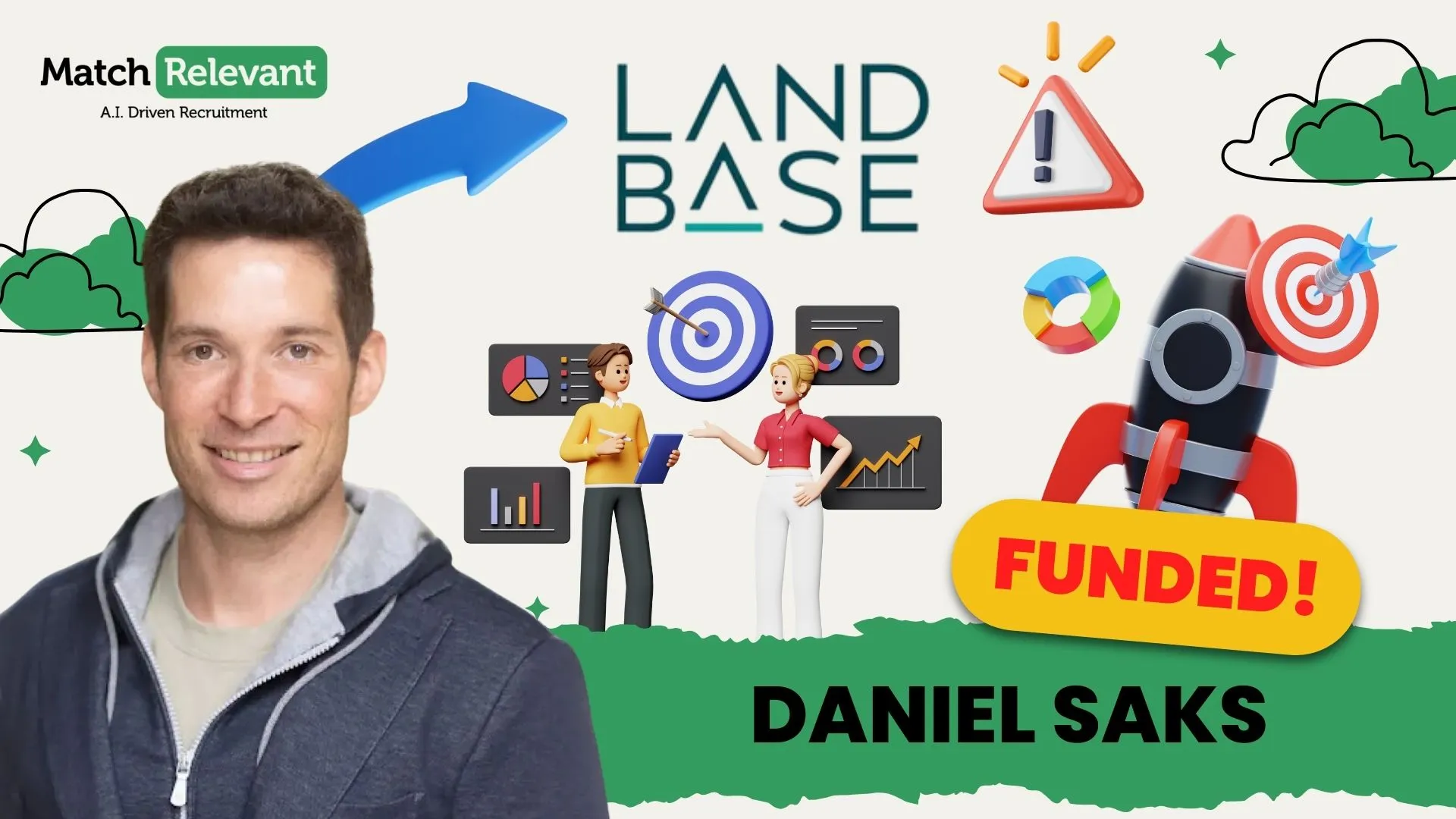
Jake Aaron Villarreal: Welcome to From the Ground Up, the podcast where we delve deep into the inspiring stories of entrepreneurs and their journey to build successful startups. I'm your host, Jake Aaron Villarreal, and in each episode I sit down with the founders to learn about their experiences, the challenges they face, the lessons they've learned, and the insights they've gained while turning their dreams into reality. And excited for us to have today Adam Stone, the CEO of StartADAM, the automation communication platform that helps remote and hybrid teams be more efficient in how they collaborate with the tools they prefer to use and how they get it done. Adam, welcome to the show.
Adam Stone: Thanks Jake, appreciate you having me.
Jake Aaron Villarreal: Now we're going to dive more into your company and you're going to explain exactly your value proposition and the details of how your platform automates processes. But before we do that we're going to dive a little bit more into you. I'll give just a little summary. So Adam, at the age of 14 you launched a company you grew to 130,000 paying customers. At 18 you won the Australian Global Student Entrepreneur Award for Inter-, Entrepreneurs Organization. You also were the second youngest or I should say rather yeah, the second youngest founder to graduate from 500 Startups, the accelerator that we all know well and love. And at eight years into your experience you now lead StartADAM. So let's dive into your background a little bit here. Um where did you grow up?
Adam Stone: Uh that's a, that's an interesting question. Also I love the research that you do, that's, that's really awesome. Uh yeah so I grew up, I'm, I'm Australian, I grew up mostly in Melbourne but I went to middle school in Chicago. So between the ages of 9 and 14 I was living in Chicago with my family and then [at] the age 14 moved back to Australia. And that was actually the first probably business challenge ever, was I was selling BB guns on eBay when I was 11 or 12. And then when we moved back to Australia they're clas-, uh Class A weapons, in the same category as a shotgun. So I wanted to start another business that was not related to weapons! From my 20s I sort of traveled around and now I'm based in Los Angeles.
Jake Aaron Villarreal: Got it, that's great. What was your first real job as a kid? I mean selling BB guns at 11 years old I assume was probably a great start as an entrepreneur, but did you have any jobs prior to that?
Adam Stone: When I was 15 my mum encouraged me to get a job at McDonald's so I could see how money is actually made. And I will forever have $10.26 in my mind as the amount that an hour of work is worth. So every time I spend a hundred dollars, that's 10 hours of hard work and labor. So that was the only real job that, that I've had thankfully.
Jake Aaron Villarreal: Wow, that's great. I know a lot of people have worked at McDonald's. It's a great company but not many that, that I know have built startups and grown on to really have a lot of success in many different parts of their business. It's a great place to start and it's really the foundation of how America has been built you know fast food and, and the food that you need to get quickly. And it's, it's great that you had that experience.
Adam Stone: It's actually a great job for someone uh in their teens um, even if you're entrepreneurially minded. It teaches you the value of you know hard work and everything. But also I mean there was a founder in Australia called Ruslan Kogan, he started uh one of Australia's biggest e-commerce brands called kogan.com. Anyway through this stage, like the business grew because of press. And there was a big press article, he got rejected from applying to work at McDonald's and he wanted to work there so he could learn the processes of the company. It's amazingly process-oriented company where no matter where around the world you go, the Big Mac is the same thing, made by millions of different people. So as we you know try to create a consistent product experience, it's an important learning.
Jake Aaron Villarreal: Absolutely yeah. Now what, what, what inspired you to be an entrepreneur? What was like in your DNA, did you have a model? Were your parents entrepreneurs, how did that come about?
Adam Stone: Yeah, so my mom was uh always a computer programmer. When I was growing up she coded in COBOL and other languages. My dad was uh an entrepreneur. So my mom was sort of the breadwinner, my dad was running a running a business. But I had this entrepreneurial journey, and I'm, I always say I'm incredibly fortunate because I grew up sort of lower middle class. Then my dad read a book called The E-Myth Revisited which he swears by, it's all about creating processes around your organization, uh and decided we needed to move to the US to scale his company. And so then I saw that whole experience and the stress and that the phone calls every day, I, was, it was... so it's in my DNA, but it's also my upbringing was seeing the true entrepreneurial journey and then ultimately I saw the success. Um so he was able to sell it to a public company and so in my teens I saw how the lifestyle changed, it changed... excuse my dog squeaking on her toy! Yeah, I saw her, I saw the lifestyle sort of improvement that we got from this stressful period and entrepreneurial journey. So I showed, I saw this, this, the full entrepreneurial arc which I think even helps me today, where it's like entrepreneurialism is hard, hard, but we're all in it because there's potentially something on the other side. And I think I know there's something on the other side because my dad went through that, my first business sort of went through that, and so yeah I'm just lucky to see the other side of the hard work but also I know the hard work.
Jake Aaron Villarreal: Yeah, got it. So we'll talk about your company StartADAM. What was your first startup that you launched had 130,000 paying customers? What was that, walk us through that a little bit.
Adam Stone: Yeah, so my first business was uh selling mobile phone software. And we scaled that as you said to 130,000 or so paying customers globally. But what was really interesting was uh how process-oriented we actually were, and how automated we were [with] fulfillment um, and yeah, delivery. We had 400 support tickets a day at some point, um but I was working 10 minutes a week on the business.
Jake Aaron Villarreal: Wow.
Adam Stone: Um because I was in high school and university so I had no choice but to figure out ways of scaling the business. Education was important for me. I mean I, I wasn't really interested in dropping out or anything, business has always been to support my lifestyle and I like to remind myself of that. So my lifestyle at the time was simple, I was a student, I had friends, I wanted to socialize um uh and I think yeah, that was a very important thing for me. So constructing processes and scaling [a] team that had to be self-sufficient was important. So I learned out of that, that my time needs to be leveraged. My time isn't what runs the company, my time is what grows the company or keeps it going uh I think [there] is a, there's a difference there.
Jake Aaron Villarreal: Absolutely, yeah. It's operating in the business and then growing the business and how you improve the business is I think very important for the leader of the company. Um, how big did you grow that company as a team or was it just you?
Adam Stone: No, no, so we had a team of, I think at our biggest probably 20 something people.
Jake Aaron Villarreal: Um yeah, so 20 people in high school that you're running the company, and then you graduate high school and you're in the US is correct, or you still be in Australia at this point?
Adam Stone: Uh went US when I was like 20 some, 20 yeah.
Jake Aaron Villarreal: Okay got it. So what was the next company after that?
Adam Stone: So yeah, so I actually moved to the US to start the next company which was Speedlancer. And so Speedlancer was the first verticalized freelancing marketplace platform. Now I have a list of 700! And that was part of the pivot to StartADAM, was just this influx of services businesses in a post-COVID landscape where everyone realized that, "oh, companies and people work from home, why aren't there platforms that match these people together?" But Speedlancer was the first one. And we were very early to the market, every investor thought we were totally crazy, but I was a big user of Upwork, which was oDesk and Elance and they merged into Upwork. I was I remember probably one of the first users of Fiverr, um and so I loved Fiverr.
Jake Aaron Villarreal: Yeah, I mean it was just a miracle!
Adam Stone: Um and so that was part of the way that I scaled that business down to a 10 minute... the previous business down to a 10 minute work week was by leveraging these platforms so that I could hire people who were not sitting next to me. And so I knew there was a demand but I also knew there was a bunch of issues with it. So the hiring, picking, choosing, recruiting process. Handing off work from one person to the next, because you can't really find a broad generalist who is very good at everything. Someone's good at content writing, they're good at content writing, but they're not necessarily a good researcher, so I need to have a researcher and then a writer. Then you need to find another designer. And I realized that agencies (which were actually, I was told by the previous CEO of Upwork, half of their workers were actually agencies delivering work). And that's because you have multiple people who all need to contribute to delivering a campaign. So there was all this major fluff. You've got Upwork fees, you have agency fees, and then um you have sort of the inefficiencies of, of dealing with that.
And so Speedlancer was born as a very high-margin services business which used technology to assemble teams of talent together on the fly. And so we were the first uh, probably still the only workflow-driven freelancing platform. Um where if you want to hire a content marketing team, we do exactly that. Or a podcast production team, we can reach out to people for you, edit the video, create social media clips around it, create the graphic, do talking heads animation. So we had 200 of these bundles or workflows which actually is dispatched to workers, to individuals, connected them together, handed off work from one to the next, briefed them on what they needed to do. I mean we were producing full animation videos without actually a human producer at all! And what was cool was we were the first Slack integration that did anything. So we matched clients with freelancers and then brought the freelancer in and out of the same channel according to their step of the workflow, and it would follow up with the freelancer until the task is done. If they were running late, we'd let the client know. If it was a deliverable, the freelancer would deliver the task, it would go to the client, the client would give a thumbs up or ask for a revision all in Slack. And it was anonymized because it was our Slackbot in the middle.
And so anyway, at the end of COVID I wanted to build more integrations. So not just Slack, wanted to build on Microsoft Teams as well. So speaking with our development advisor and we sort of discussed that, "Yeah, we can build all those integrations, but it would require a full rebuild of the infrastructure." And then we were discussing, "we're going to do a full rebuild of the infrastructure, let's do it properly as a standalone SaaS that actually helps other companies and marketplaces." And that's where StartADAM was born. So we're an automation suite uh designed for any human-to-human business interaction. Which it turns out, most business interactions are human-to-human at some point, there's humans involved right. So it doesn't make sense to me that we need to log onto all these different platforms to get work done. Uh everything should be sort of chat oriented, chat first, and that hasn't really been done properly yet. So that's what we're heads down working on.
Jake Aaron Villarreal: That's great. Now are you an engineer by trade or how did you build an engineering team? It sounds like you're the product visionary, you've got the idea, the concept. How did you pull engineering together to build a platform like this?
Adam Stone: I mean from a young age I hired my first engineer when I was 14 or 15 uh off Upwork. So I've been, I've been working with engineers from a young age nonstop. So I, I'm definitely not technical. I, I equate it to um being a blind person (and I don't mean anything against blind people) it's just an analogy right. Like I'm navigating around streets um without using my eyes. Like I don't know how to code and it is challenging and it's a bit ridiculous at times. And I know people say "oh you know you can't be a tech founder of a tech company without knowing how to code." Well you have different perspectives, different visions that you can add right. Like I'm thinking so in-depth about the product experience itself and how different APIs might fit together. So I'm technical, I just can't code. Um and I leave the coding to the, to our professionals. We've got an amazing engineering team. My CTO is, say, our co-founders are an AI professor from, from Brazil with a background in social robotics, social robots and AI. Um so yeah I don't know, like it forces me to get a really good team around me to make up for my uh...
Jake Aaron Villarreal: Yeah that's great. I know that everybody can't be an engineer and but it's really the product and understanding if there's a gap in the market you can bring a product into that can fill a need, and it sounds like you're doing that with StartADAM. Um you talked a little bit about the idea and how, how it came into a transition to bringing this from your previous company to market. Um at what point in that company did you have the aha moment of "you know there's probably more demand here that we can create" or "maybe building a SaaS company will open this up a lot more to other companies"? Like how did that come together? Was that the other company doing great or was it, did you see, I mean there was a lot of competition in, in the marketplace at that point? Was it just a question of "we have something, we know where we can navigate towards but we got to look at you know another market or a rebuild?" Like walk me through that just a little bit more.
Adam Stone: Definitely a lot of competition especially since COVID. The company was doing okay as I said, investors never believed in us. So we sort of raised a small amount of money a few times, and had a couple of large rounds fall through at the last minute for a couple of reasons. Had a co-founder pull out 24 hours before funds were due to be wired in 2019, he just wasn't feeling it anymore. Um before that we had a diligence fall through because part of the diligence was uh, [the] fund who decided to get a logo designed with us and they didn't like the logo. It's like, "well your current logo is fine, you're not actually testing it as a real customer." Um yeah, there were three rounds that fell through. Another one went through six weeks of daily due diligence and then pulled out because the other partner couldn't get conviction around freelancing marketplaces. These rounds, rounds range from small to large and they got very close, you know. And so dealt with... you talked about setbacks in the beginning, I'm like "Yo, you got a lot of setbacks!" Like I've kind of, I don't know if I can swear on this one, but a lot of setbacks uh over an eight year period. I mean I had a visa rejected, I wasn't allowed in the US for two and a half [years]. So just like setback after setback after setback. We were doing... it was like we were designed to fail kind of.
But um, despite that, we had pages and pages and pages of five-star reviews from our customers and that's what kept us going, and the impact we were making to freelancers and giving them gap fit-, gap filler work was important. So we did about 10,000 projects, so not like a million projects like some of our competitors, or a couple of the competitors have done, um but we certainly didn't do enough where we could break out you know, and become a, become a success or a household name that, that people actually know. So to answer your question of when it became a SaaS, it was most interesting. It sort of just happened. It was like maybe the last hurrah in a way of transitioning this thing and tried to use our technology for, for another more valuable uh way. And I think we're really onto something potentially if we can position it right in the market.
Jake Aaron Villarreal: That's great. Yeah, I mean there's so many lessons that are learned. We've talked to so many founders that you know the, the trials and tribulations are just incredible. If you could put a film on it, I think it would open up the eyes to a lot of potential entrepreneurs that are thinking about going into it. You just, you never know the true story of, you know, when it's good it's great, but when it's not good, like what you have to go through. And it takes a certain person that can stomach a certain amount of you know perseverance. So that's great to um to hear those. I think a lot of the, the learning and the lessons that come out of those experiences so that you can continue to grow and build and inspire others too. So I have not talked to a founder yet that hasn't had a tremendous downside before they had upside. And I've interviewed over 20,000 people. And not all entrepreneurs and founders, but you know there's always opportunities to grow and build and, and create. But it has to come from that chip on your shoulder, the ability to believe that you have an idea that you can bring to another level and, and hopefully you have the right team to do that with you. But as the leader you're the one that has to inspire and provide the vision and, and be the positive voice. And so you know I think it's important to um to have the makeup and the DNA. And if you started early it just gives you I think more of an advantage to continue to build you know this startup and other startups, you never know where things go. Give me a specific use case so for the listeners that want to StartADAM, walk me through a specific use case of how it would work.
Adam Stone: Yeah. So we're building um I guess very use case value oriented product in, in en route to our vision of being this you know chat OS. So the use cases right now uh, last week we actually acquired the domain a.link. Um so you could have uh I don't want to mis-say your last name URL, okay perfect. Uh so you could have a.link/jakevillareal, right. Um and whenever anyone clicks on that link it will actually connect you from your conversation tool to theirs. So let's say you're on Slack all day or Discord all day, and the other person's on Microsoft Teams or Telegram or Discord, WhatsApp, SMS. It doesn't matter what platform they're on, they can connect with you from that tool, to yours.
The next thing that does is it enables you to add those leads into a CRM. It's like HubSpot or Salesforce, which is going to come out in the next um you know hopefully month, uh a copy of the conversation actually going to your CRMs is super useful for sales teams. Also be useful for just like us to stay connected. Like why should we have to email, uh why can't we just do it via chat? So we give everyone their a.link. And what that is, that, that, that ingests new users for us. It's very useful for services teams, startups do it, you've got a bunch of contractors, you sort of contractors with a bunch of clients and so on. And then what we're building is the ability to superpower the conversation. So payments, translation, ability to set reminders and tasks for you or the other person. We already have a Jira and a Trello integration where you can actually assign a task to multiple people from those tools, and it follows up with that person until the task is done, and then asks you to review the work once it's delivered, and updates uh you or the client when the task is done. So we're building a full project management automation and communication hub uh where it's communication centric and tool agnostic.
Jake Aaron Villarreal: Wow, that's great. And you can claim your a.links, you authorize your tool, and then it'll put you through a chat flow where you can claim your a.link, create a new group between many other people. Another feature we're releasing really soon is called broadcast groups. So you can create a group, you get the group link for that group, and then you can change it to a broadcast only channel, so you can send messages. So if you wanted to create one for your podcast uh you could have like a.link/matchrelevant for example, and anyone can join and it's like a newsletter but it's chat-based. So you can...
Adam Stone: Wow.
Jake Aaron Villarreal: You can send out... so you can subscribe from any communication tool you like? So do you need to have a subscription to whatever tool you're using, which you typically would have anyway, and then from there you just can link to whatever other tool whoever's on your team or collaborate with whoever you want to collaborate with, without any further integration work you need to do personally? Your system, your application kind of sits in the middle of multiple different collaboration tools and, and essentially you're just off and running.
Adam Stone: Yes, exactly.
Jake Aaron Villarreal: That's great. Um where do you see the big opportunity in, in the business currently?
Adam Stone: A few things. We've got some benefits in terms of virality. Um so one user either way talking, I innately invite you to the conversation. Uh if there's three of us having a discussion, I need to invite two other people to the conversation. Uh you can then, you will then be given your a.link. So we're hoping that say 10% of people go and invite someone else to a conversation. Say to your accountant, "Why do I have to email my accountant, they should be interacting with [me]?" Right? So I can just send my a.link, anyone here can join a.link/adamstone, talking directly with me. Um, why doesn't my accountant and my lawyer talk to me that way? So hopefully we get some virality um and additional users. So we've started to see that uh already. Um and then I guess going upmarket and really trying to charge companies for being in-, involved in a chat operating system or chatifying their business. We've got some advantages innately there where we can build your platform on multiple different tools very rapidly.
Jake Aaron Villarreal: Got it. So the pay model is really enterprise, to the big companies. And then as an individual user, if I have an a.link or the link that you can join, that's, is that free? Or how does that work?
Adam Stone: So you can join as many channels as you want. Otherwise we'll give you two channels that you can create for free, or two groups for free. And beyond that you pay $13.99 per month and you get unlimited groups that you can create.
Jake Aaron Villarreal: That's great.
Adam Stone: And then you go if you're printing broadcast groups, that's part of that premium feature set, which would be about $25 a month. But it means you could have a newsletter running to people's communication tools for only twenty-five dollars a month.
Jake Aaron Villarreal: That's great. Yeah, we definitely have to talk. Um, you said your lead engineer is uh I got a lot of background AI. With the recent breakthroughs in AI, do you see that playing a role in your, in your platform?
Adam Stone: Yes, absolutely. I think that um, AI as a collaborative assistant is very interesting for us. Um I think that collaborating... let's say I'm collaborating with a marketing contractor or marketing agency, and we're trying to come up with ideas. We're talking together to ideate. Not all the time, but you know a lot of the time, having ChatGPT in there with you in the conversation is um very interesting for us. Um yeah, I think that's, that's one way. Another way is, let's say, you'll like this, I'm going to make it a bit more engineer-oriented. Um we integrate with Jira and you can get weekly updates on your team's Jira progress sent to you as an AI summary in a specific channel each week. And that can be done for clients also. So if you're a development agency, anyone in the chat channel can request a weekly update be sent in the channel. And then we want to expand that to multiple areas of the organization.
Jake Aaron Villarreal: Wow, that's great. Yeah, it's integrated into a lot of different sectors, so I think software in, in SaaS is really, I mean it's a natural fit if you can find the opportunity there. But that's really cool. Um, talk to me a little bit about younger in your career. We just, I want to loop back a little bit here on 500 Startups. How did that come about and what were you pitching there?
Adam Stone: Uh so I, my dad run an accelerator program in Melbourne, Australia, so it was the first accelerator in Melbourne called AngelCube back in the day. And I was sort of... we could call it interning at the start, at one of their events. And so they had a startup batch in the program. Um and uh yeah, they did a startup batch and Dave McClure from 500 Startups came in and gave everyone the chance to pitch him on their company. And everyone had to prepare, pre-prepare these 90 second pitches. And I was sitting in the corner of the room and I was like "Hey, does anyone mind if I do a pitch on something I'm thinking about?" And it was Speedlancer, before we had built anything at all. Um and um, so everyone was like "Yeah, sure." And but everyone else had prepared their pitch and I hadn't. So I came in with a totally unprepared 90 second pitch uh, and Dave was quiet and didn't give me any feedback. And I was like, "It's a little bit arrogant. Like, why didn't he give me any feedback? Gave everyone else feedback." He just looked at me, he goes, "Then next." I was like "Thanks. Why didn't I get any feedback?"
And then the next day he came up to me and he goes, um "How do I invest?" And I was like "Wow." Because I'd seen other, like I was involved in this, not in... my dad had run the accelerator for a good couple of years before that, and I'd seen some of his companies go to 500. I was like, "Wow that's so cool." And I mean it just wasn't on my radar you know, when something's like so cool to you you don't even, it's not even on your agenda, is it? Not even on your cards. Like I was 19 years old, I was like "Maybe one day I'll build something worthy of that," you know. Uh and it got offered to me and it was, I originally said no. I rejected Dave because he um said I needed to go there in two weeks, and I was in law school actually in Australia. And I said uh "Can I join next year? Like I can't do right now, I'm in the middle of the semester." Uh and he goes, "No, now or never." I was like "All right." And I'm very grateful, I'm actually speaking to Dave later today funnily enough, um but very grateful. I wouldn't be sitting with you now if he didn't do that to me, or take that chance on me. Like in all ways, I wouldn't, I probably wouldn't be living in LA, like it just... uh one of those things.
Who is it that's uh um, who's the guy just... I Am Not Your Guru, forget his name though. Like Tony Robbins?
Jake Aaron Villarreal: Yeah, Tony Robbins.
Adam Stone: Thank you, I just went blank. But he says in, in that, in, in that um movie is your life, if you look back on it, changes from one to two pivotal events where you can see the path sort of fork in the road. And you need to be open when these events come to you. You need to be open to pick the, pick the right path. And I think yeah, it's just very, very profound.
Jake Aaron Villarreal: Yeah that's great. Yeah, that's, sorry to cut you off there. I'm a huge Tony Robbins fan and I believe a lot of um his strategies and thoughts and how he approaches not just business but also life is incredible. I mean he's got now 106 companies, does 7 billion a year in revenue. Um but it's yeah, psychology is 80% of business, 20% innovation. So I think it's, I think that's what it is, I think it's 80/20. Marketing, innovation, and marketing. So um that's great that you pulled that out of there. 500 Startups is a, is an accelerator that we love. Did you go all the way through the process and from there launch the company, or a company that was Speedlancer?
Adam Stone: So we came in with nothing and we ended up with a product. Um, that was a stressful period also, like I had outsourced the entire team. So I'm just sitting there, everyone else has a 20 person team or 10 person team, and uh 500 actually grew me like two months into the program. They pulled me into a boardroom with like 10 people and they were like "What are you doing all day?" Uh and I was like "Well I've got a team, like I've got like five or six people, engineers, customer support, like everything, we're doing some transactions." And they're like "all right." But they didn't believe me because I was just me sort of sitting at my laptop and working hard. And they're like, "what are you doing?" Like we had no product! Like it was stressful. But anyway, we got through it.
Jake Aaron Villarreal: What's your experience been like post-COVID um with this remote works and and hybrid and the trend of potentially coming back? Like how is your company operating today? Are you 100% remote, are you hybrid, you're out of... what's um what's the makeup look like there?
Adam Stone: Yeah, we're fully remote or just yeah, distributed. We have a team [in] Brazil, and then we have a couple of contractors in the Philippines and Turkey. Um yeah, so fully remote I would say, yeah.
Jake Aaron Villarreal: Got it, great. So your product and your platform StartADAM, is it for companies that are also on site or is it only really perfect for remote collaboration?
Adam Stone: No, so the whole thing is we want, we understand that a company is not just all in one spot, not all centralized. There's going to be people involved, agencies, contractors, other firms, freelancers, part-timers, whatever, who are not, you don't sit in your Microsoft Teams account right. So we as we build our project management, our hii project manager uh suite, we want it to be tool agnostic. So we are made just as much for internal teams as external collaborators, as we call them.
Jake Aaron Villarreal: Got it. Great, well I know that um being an entrepreneur has a lot of successes and failures. You talked a little bit about some of the pains you had just trying to come to America and a lot of starts and stops. What's the one... let's not call it a failure, or a lesson learned that you've gained over the last eight years that you could share with the audience, the listeners that are startup founders today, might be founders in the future?
Adam Stone: Yeah, I mean you talked a lot about psychology. It's something I'm really fascinated by out of necessity right. Um I think one of the things you have to learn to be a long-term startup founder, like think of Jack Dorsey, think of Elon Musk or whatever, they've all been on it for just so long. Um Jack Dorsey starts his day every day with meditation, so he says regardless of what happens later that day (or maybe it's yoga, I think it's meditation), but he says he does something for himself (AKA yoga), such that the rest of the day no matter what happens it's already been a good day, right. So he's made it a good day regardless of what happens in his company. And I think to be a startup founder, you're just gonna get, you get bashed in the head the first time you get up, right. It's like imagine you go with a ring and you get knocked out. And you're like, "Well, fuck" (excuse my language) "but you can either walk out and be like, 'No, that's not for me,' or you find a way to stay in that ring until eventually you win." But if you don't win, at least you've had a good fight right, you've enjoyed the actual art of boxing, which I'm also a fan of.
But I think um yes, psychology is just really important. And I've learned, yes about learnings, like for me I've learned how to develop the emotional resistance, resilience sorry, over the last uh eight years especially. But I'm also very fortunate because I had an early win and I think that helps me. And I saw my dad's win. So it's nice when you see success that not everyone sees, so to not know that success can be possible. That's why I think role models are so important, you need to know that success is possible even when you see it for yourself. And then you see it, trust your ability to keep getting up. You stand up, get knocked down and stand back up. You get knocked down, you stand back up. And uh you have to sort of develop a passion for that whole rhythm.
Jake Aaron Villarreal: Yeah that's great. There's a lot of uh employees today that work for leaders that aren't inspired, they might not feel like they're taking the company in the direction they think or believe it can, it should go. What's the mission of StartADAM, and what do you convey to not just the, the world but to your employees about what you're building and the purpose behind it?
Adam Stone: Uh it's a very similar vision to Speedlancer actually. Our mission for Speedlancer was always that technology can assist um people-to-people interactions. So I don't like building technology personally that replaces people. Um I respect people that do, but it's just not something I'm personally passionate about. I like to see the people on the other end that it impacts, it helps. And um that's just part of the passion. And so with Speedlancer you know, using technology to give freelancers gap filler work in their day and to smooth out their cash flow and give them projects when they're sitting on their couch with nothing else to do, that was really cool. And then impacting clients uh where they could realize the talent they could have instantly available. Uh and just seeing that on both sides is cool.
So with StartADAM, it's the same sort of vision. It's using technology to connect people and connect applications together in a new, much more intuitive um way. And so I think that's, I think that's our vision is increasing productivity using technology to impact our interactions on a daily basis.
Jake Aaron Villarreal: That's great. How do you stay positive?
Adam Stone: The sun rises every day, doesn't it? So I don't know, shit happens in life but we gotta look for the positives.
Jake Aaron Villarreal: That's great, yep, I love it. Great, well cool. Well I love what you're building. I actually am going to introduce you to some, some CEOs I think could take advantage of your product. Um you've had an amazing career journey at a young age and I'm sure that a lot of listeners here that are also young will be inspired by your story. Um love to check back in with you and you know in a while down the road to see the growth and the progress again. Just for the listeners, where can they go to find StartADAM?
Adam Stone: Um thank you, you're very sweet. The uh yeah the best way would be startadam.com. You can type in your email and click "let's go". You could also go to a.link and sign up that way.
Jake Aaron Villarreal: Perfect, well there you have it. You've heard it right from the man's voice. Thanks Adam for joining today. Appreciate your time and look forward to the future, and we'll see you on the next episode.
Before we wrap up, I want to give a big shout out to all the entrepreneurs that have joined to make this podcast possible. And for all the listeners for listening, it means the world to me that you chose to spend your time with us today. I'm your host Jake Aaron Villarreal signing off for now, but can't wait to connect with you all soon on the next episode. Take care.
This show is sponsored by Match Relevant, a company that helps venture-backed startups find the best people in the market. And they do it in three simple steps. First, they sit down with founders to understand their story. Second, they tell their story into multiple candidate channels. And third, they schedule interviews within 48 hours. Find us at matchrelevant.com to learn more about how we do it.















.jpg)









.webp)
.webp)
.webp)

.webp)