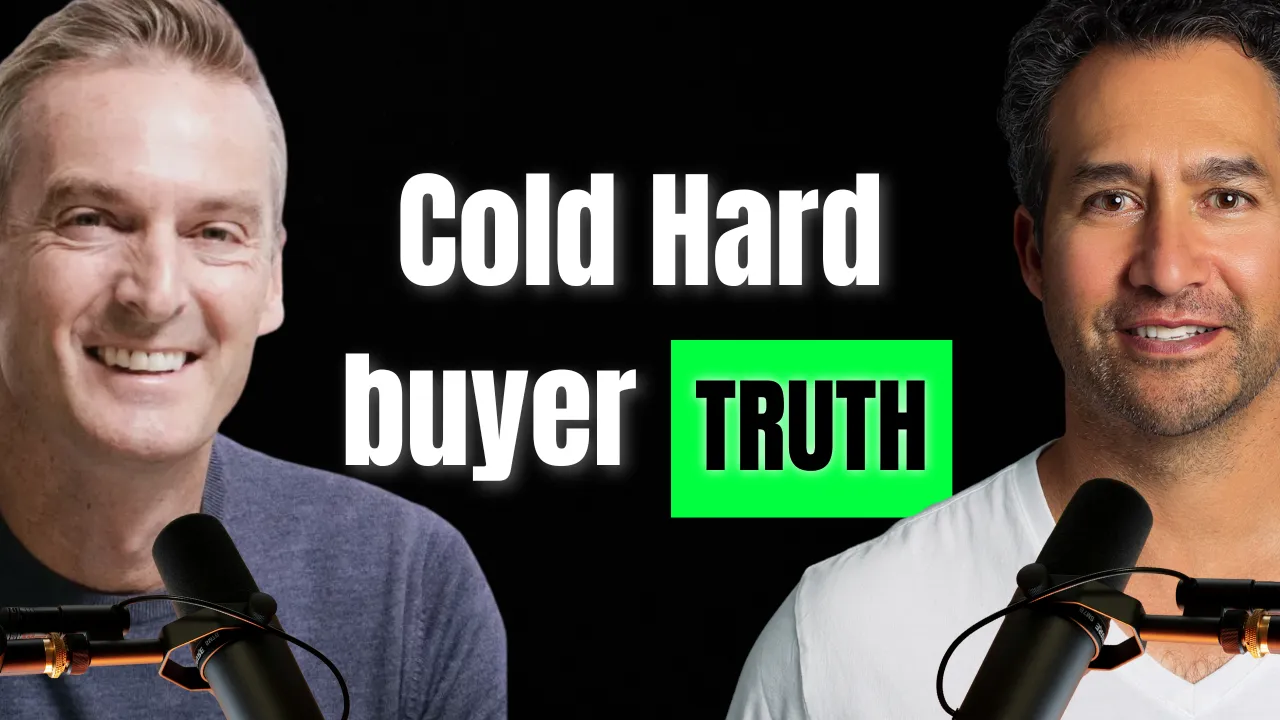
Jake Aaron Villarreal: Welcome to our podcast, From the Ground Up, where we interview startup founders exploring their journeys, their success, challenges, and lessons learned. We hope you'd be inspired in discovering what it takes to build a thriving startup. I'm your host, Jake Aaron Villarreal, and here with us today we have Anis Bennaceur, the co-founder and CEO of a company called Attention. It's one of the fastest growing startups in the world and changing how sales is done through the use of AI. It's a fascinating story. Anis, welcome to the show.
Anis Bennaceur: Thank you very much Jake, how are you doing today?
Jake Aaron Villarreal: I'm doing great. Yeah, thanks for joining. Uh I guess a little bit more about Anis. He leads one of the fastest growing startups in the world, revolutionizing sales and AI with AI. With a career starting at Tinder in the early days and as a second-time founder, Anis has spent over a decade in sales and growth. Before we dive in here a little bit Anis, where, where, where are we reaching you at today, where are you calling from?
Anis Bennaceur: I'm in New York City.
Jake Aaron Villarreal: Great. Are you originally from there?
Anis Bennaceur: No, I'm actually French. I grew up in London, studied in France, started also my career in France um and moved to New York in 2015.
Jake Aaron Villarreal: Great. International flavor, I love it. And in the startup space which uh we spend a lot of time in, uh we're going to talk about your company and kind of where it's at in the market and the opportunities you see and what you're building. Before we do that I want to take a step back and uh learn a little bit more about you. Um walk us through maybe a little bit of your earlier, younger days in building technology companies or building startups, and then walk us through a little bit about Tinder and what you were doing for Tinder as they were scaling you know globally.
Anis Bennaceur: Yeah of course. So I'll start in my... talking about my earlier days. So I learned to code as a kid. Like you know a lot of startup founders today, I learned to code at the age of 12 or 13 uh with tutorials um in the internet. It was back in the early 2000s and I very much got addicted to just writing code. Um I, I had like a lot of again, a lot of founders... to say you know, small businesses left and right. And then went to study in France, uh studied uh math and statistics, what they call "prépa." Then went to one of the top schools and actually before Tinder, what happened was I first started off in investment banking. Um I don't really talk about it that much, but one of the first things that I learned in investment banking and merger and acquisitions was to work extremely hard, to work you know insane hours and to be extremely uh rigorous, which is something that everyone needs in their career right? How can you be extremely serious, rigorous, paying attention to detail, but also have the ability to work these insane hours? Um that just, that is some... that is something that you pick up and keep for life, right?
Um over time, uh what happened with Tinder was I had a good friend of mine in uh Paris who told me "Hey, I actually just uh spoke with the founders of this new app." This was back in 2013 um in summer. And so he was telling me "I, I met the founders of this new app called Tinder. At the time nobody was using it in France, and they want me to do all the, the, the growth and distribution in France. And I would love to uh know whether you're interested in working with me on that." And I tri- I signed up for the app, I tried it out uh couldn't see that many profiles. But very quickly I got addicted to it. And as my first passion for um tech from my early days came back, I was, I was thinking to myself "Hey actually this might be a great idea and a great route for me to go back to the startup world." At the time Tinder I was I think 6 to 9 months old and I thought it was going to be a great opportunity to work with uh founders.
So I went in, I jumped in, worked with that friend of mine. Uh we directly uh met with the founders of Tinder. At the time uh you know Whitney Wolfe, when she was still at Tinder before going to Bumble. And we were doing a lot of things that didn't scale. We were going around uh college campuses spreading the word, uh sponsoring different clubs and events left and right just to get very quick adoption of the product. And one of the things that we very quickly understood about Tinder was: if you want to have a successful product within a, a marketplace like that you need to get the hardest to get users, which are actually pretty girls. That's what happened with dating apps. If you got pretty girls on the app, a lot of people will join, guys will join easily. All of the effort that we, we had to spend, all the money that we had to spend on marketing was all about getting pretty girls on that dating app.
Jake Aaron Villarreal: It was a dream job right when you think about it coming back from working 14 hours a day in investment banking and doing that, that sounds like a lot of fun.
Anis Bennaceur: Um no doubt. Pretty quickly after uh we had a great strategy that worked out really well, very quickly after you know 12 to 16, 18 months, uh I, I did not... I felt like my learning curve was stalling and it was not a very technical job. Um so at one point I just wanted to start moving to uh to the US, because at the time, this was in 2015, if you wanted to be successful as a startup you could not stay in France. I think things are changing today, they definitely are. But at the time I didn't think so. And you know, I was lucky enough to be born in the US and that made me you know a, a citizen, so an American citizen. So I took that chance right away, moved to New York in 2015, and started Mixer as a founder.
Jake Aaron Villarreal: That's great, and what did Mixer do?
Anis Bennaceur: Yeah, so Mixer was a, we iterated a lot actually on what we wanted to build in the early days like a lot of startups. But uh eventually what we built was a professional network for creatives. We were ahead of our time, but we, we really realized that a lot of creatives did not have any networks to connect with one another. It was the early days of Instagram, and um it wasn't as much to connect with one another. They didn't really have that DM uh function to message each other, and you could not find other creatives that easily. So we ended up building one of the largest and fastest growing professional network for, networks for creatives.
And one of the things I learned from Tinder was again, if you want to build a successful marketplace, a successful network, you need to get to focus on the hardest to get uh users on your platform. Those were at the end of the day very successful, talented, well-known uh creatives. So we ended up having musicians, like you know uh band members from The Strokes uh or Maroon 5, a lot of very famous and talented musicians, Oscar-awarded film filmmakers and, and directors, um world class uh graphic designers, animators. And um once we started getting all of those very hard to get creatives on the platform, it started growing very fast. And in order to be able to do that, so Mixer was a bootstrapped business, we didn't get any funding. Just some angel funding at the beginning, but that, that was about it. We had to figure out how to get some of the hardest to get creatives in the world to trust you with their media, uh media access on their phones, and also share their contacts on your app. And for that you have to be an excellent growth hacker. You have to figure, figure out a lot of things. How to get them to hear about you, then how to get them to trust you uh by signing up to your platform. And I learned a lot about being a, a world class growth hacker during those six years.
Jake Aaron Villarreal: What do you have to give a creative that's at the top of their game to join a platform you know, really for free or whatever, whatever the cost would be? What, what do they get back from you?
Anis Bennaceur: That's a great question. At the end of the day, everyone wants to network, right? There's always someone above you. There's some, always someone else that you want to get access to. When I would speak with you know Albert Hammond Jr. from The Strokes and he would tell me "Hey you know, like I, I, I'm always as a musician very much interested in people in other sorts of creative fields. You know, filmmakers, and you... you get to connect with people that you don't really get to meet on a daily basis, that you actually have direct access to and that will respond to you." I remember there were examples of I think I mentioned Maroon 5 earlier, uh their guitar, their guitarists ending up uh working on an animation film with a top uh animator from our, our platform. Those people you know making connections and working together was very magi-, very much magical. We had so many examples of those you know, photographers who were just in fashion going out working with filmmakers, and you just had so much, so many cross discipline um connections that were happening. And this is what a lot of our users were finding, getting out of their kind of like small circle of...
Jake Aaron Villarreal: That's great, yeah I totally understand getting into a different ecosystem where connecting with others that you wouldn't necessarily get the access to would be really valuable. I'm going to actually ask you a question a little bit more about Tinder. What did you give the, the good-looking girls to join a platform that maybe they hadn't heard about, maybe didn't want to be on, but maybe there was some value that they would get out of it? What was the, what was the pitch to them there?
Anis Bennaceur: Yeah, that's a great question. I remember it very well actually as if it was yesterday. So what we would do is we would have uh very good looking people uh come with us and get these people to sign up on Tinder in real time. They would hand us their phones, and we would have these people create an account for them, right? And a lot of these... the pitch that was given to them was "Hey, do you want to find out who in, who around you is interested in you? Who around you likes you?" And the answer is yes, everyone wants to know who likes "I want to know who likes me." And so um, "check out this app, it's one of the fastest growing apps in the US and actually in the world, it's, it's called Tinder, you're going to love it, you're going to meet great people on that." And automatically people would be... it was very counterintuitive, but a lot of these pretty people were like "Hey you know what, I'm interested, I'll try it out." There was some of that, and then obviously when we would sponsor events uh, parties and so on, um if, what we would do is if you had signed up on the app and created a profile you'd get into that party for free. And so obviously a lot of girls, uh pretty girls at least would, would do it, right? "Hey, why not? Like I'll get my ticket for free and I'll get free drinks if I have the app, I'll do it."
Jake Aaron Villarreal: Yeah, that's great. Yeah, it's, it's always curious to me how some of the growth hacking strategies work and what really can be scalable. It sounds like to do a lot of pounding the pavement with that type of strategy. But ultimately it starts to build and you get awareness and traction. So really cool. Let's switch gears to your current company, Attention. What was the idea behind what you created, what you have today, and just kind of walk us through how that evolved?
Anis Bennaceur: Yeah. So I'll take a step back and uh just finish the story about Mixer, which is yeah, our journey at Mixer, we started making a lot of money from user subscriptions. But then at one point um we realized that if we really wanted our business to make a lot more revenue we need to start selling B2B uh subscriptions. And the only route to go after thinking a lot about it was uh selling job postings on the platform uh to, to creative teams, to creative studios and companies. Just like the same business model as LinkedIn in a way. Um and so we started building over at Mixer a sales team that will go after these companies, reach out to them and try to close them for uh yearly subscriptions. Um at the time I learned a lot about sales um and understanding how to close enterprise clients, and we did you know, we closed companies like Capital One, Square, Cartier, Havas Media and so on. Um and we saw a lot of the frictions right. Like we signed up for, we brought in a sales leader who got us our first CRM, Salesforce, and realized that Salesforce was never actually built, filled out. And also um no one in the team was asking the right questions on discovery calls. And there were so many problems that we felt like we could have solved um with the right technology and we figured out that no one was really doing it well.
Um so when, after exiting uh Mixer in 2021 I kind of had a pretty good idea of what I wanted to build. And I also met my co-founder Mattia, who was the founder of Swipecast, our biggest competitor, who also was dealing with the same challenges. So we went in together and decided to build AI for sales. That's very broad, what does that mean? That means at the end of the day uh, for us at least, filling out your CRM automatically with AI right after your calls. Um and coaching, right? Making sure that your reps are getting better and better, they're getting that 1% improvement every single day and that they're ending up becoming the best at their craft, right. Um and so that's what we did. We went in, our wedge was automatically filling in Salesforce. Everyone hates filling in their CRM and that pain was big and resonated very well, was a must have for any single sales leader. And so we started selling that and we over... as we were selling that feature we kept on building and iterating other features that improved coaching capabilities for, for sales.
Jake Aaron Villarreal: That's great, yeah. I spent a lot of time selling technology when I was at Oracle and I can tell you when Oracle transitioned to add apps to their platform, CRM was one of them. And I remember the manager hounding us to just put the data in the platform so they can understand the forecast. And it was like the last thing you wanted to do after a sales day is to go back and get all your notes and put it all in the application. And then you know, it wasn't as valuable at the time you thought for yourself, it was more for management. Um but yeah I can understand that problem a lot of companies have, sales teams. U- walk us through the different personas of how your product helps. So let's start maybe with the sales rep you talked a little bit about that. Is it the conversations they're having that's pulling the data into the platform? Walk us through exactly how it works.
Anis Bennaceur: So very simple. As the sales rep level, they have a conversation like this one. The conversation gets recorded, we have a transcript. The transcript gets processed, processed by AI, and then it ends up filling up every single field in your Salesforce. Whatever you need, you know it could be MEDDPICC related um or SPICE. Any, any framework, any specific information that you need to know about and capture as an org about your customer or your deal um gets automatically filled out and goes straight into your, your, your CRM right when your call ends. And we can integrate with most CRMs today.
Jake Aaron Villarreal: So if I'm a sales rep and I'm having a conversation, I know the questions, the qualifying questions I need to ask my potential customer or wherever I'm at in the sales process. And it's recording it, and it's pulling that data into the app and into my CRM system, so I'm not having to take any notes. What's it do for the manager that's managing these sales reps?
Anis Bennaceur: Yeah, so the big pain point for managers is that when they're going into forecasting uh mode and getting, going into the CRM to understand what's real versus what's a long shot, they most of the time the information is incomplete uh if not empty. And so the impact on the manager is to know exactly what's happening within each deal so that they can strategize uh um and again for forecasting, they get to understand what's going to close at the end of the month or at the end of the quarter.
Jake Aaron Villarreal: Got it. So on your website where it says "Attention teaches you why you're winning and losing deals and helps you do something about it," it sounds like that's the data it's capturing, that then you understand what we need to do to get this deal done or what we missed in that qualification call that we can go back to details like that.
Anis Bennaceur: Yeah, good question. So there are two parts of our product. What's uh on a call to call basis, understanding what's happening within a specific call, getting to the nitty-gritty of things, what are the risks that call behind you know the deal according to the call, what are the, the opportunities for, for improvement. But also um our platform has the ability to show you things in aggregate. You can take your entire collection of calls, of conversations. Um you can segment them based on you know intro calls or you know calls from the last quarter or calls within this specific industry or this specific uh, or only calls from the enterprise deals. And you can ask it any question such as "Why have we been losing deals? Why, what are our top reps doing that other reps are not doing as well?" And Attention will generate a report for you within a few minutes analyzing your entire collection of calls and giving you a report with examples uh shown in that report, quotes from the conversations where that, that justified the answer. When you think about it, that would take any analyst a month worth of work to get that, that report. Attention will deliver that to you within a few minutes at, with the most accuracy.
Jake Aaron Villarreal: Wow, sounds amazing. Um with the recent breakthroughs of AI uh you know, it seems like a lot of companies are building different aspects of AI into their, into their platforms. How long have you been building Attention now?
Anis Bennaceur: So it's been a little over 3 years. We started in September of 2020 uh and uh it only took us a little over a year before we started selling. We took us a year before we started iterating with users, actually nine months before we started iterating with users. Um and then another six months, after six months of iteration we started selling. And so we, we've actually been starting selling earlier this year.
Jake Aaron Villarreal: And what's the, the sales cycle like for you? I mean it's a subscription-based model I'm assuming. Like beginning to end, what's that look like, and you know just, I don't know if you can share this, but capital you raised, you know, how things going.
Anis Bennaceur: Yeah, so publicly we've raised $3.1 million from some incredible VCs. Um Eniac Ventures based here in New York, and Frst uh based in France, um and a few other ones uh Maschmeyer Ventures, Liquid 2 Ventures, and Ride Ventures. Um and also a bunch of founders, the founders of Ramp, the founders of Truework, the founders of uh CB Insights and so on. Um now when it comes to uh deal um deal cycles, it's all over the place. Uh it's, it's interesting, I would say that on average we close deals within two to four weeks. Uh but then we've seen also uh six-figure deals that close within 5 days.
Jake Aaron Villarreal: Wow.
Anis Bennaceur: And then, and then also uh you know uh five-figure, low five-figure deals took months just because the company took forever to close. But the average would be two to four weeks. And we've been using our own software to um you know optimize deal velocity u- and actual uh you know the ratio, the ACV over deal velocity ratio. Uh we've been closing bigger and bigger deals over time in faster and faster moments because our software has been teaching every single one of our sales reps, including myself, how to create enough urgency for each one of your deals and how to be able to move things forward very quickly.
Jake Aaron Villarreal: What's the outreach um functionality like for your platform? Say I've had a call, notes are uploaded, you know, you got to get on to the next call, you're going on the next process. And by the way, I got to go back and I got to fire out an email. I got to maybe set up another scheduled call. What's, what functionality does your platform have there?
Anis Bennaceur: Yeah. So every experience is going to be different based on how much pipeline you have, how, how many deals you have to deal with. But uh typically let's say you finish your call, uh you have to jump on the next call and so on. Whenever you have a free moment, instead of you know going in and typing in all the information manually into Salesforce, you click three buttons and everything gets pushed directly. You can even have it fully automated. If you need to write a follow-up email to your customer, um Attention will actually replicate your best emails sent out uh within specific templates and write those emails for you, have them in your inbox as a draft, and all you have to do is review it and send it or have it automatically sent. Uh there's a lot of... where a lot of what we see from a lot of our customers is that they want to have the "human in the loop" uh part at the end of the process before you know pushing to the CRM, sending the information, or sending the email to the client. Um while some others just say, "Hey, this looks great to me, just have it always auto push to CRM, always send the email automatically." Um and at the end of the day, it really depends on your deal cycles on and the types of customers that you're selling to.
Jake Aaron Villarreal: Got it. You know, there's competition in any market where there's big opportunities. For you, uh what do you, what do you see there? And, and, and, and are your competitors yet aware of kind of what you're building? It sounds like a per- pretty sleek op-, you know, offering that you got going on here.
Anis Bennaceur: Thanks, yeah, absolutely. I think that uh given how fast we've been moving this year uh and how many customers we've been getting, I'm also... in all modesty I would consider uh myself as a world-class uh growth hacker. So we've been getting a lot of [leads] coming in through all the tactics that I've been deploying and that I've been dreaming about deploying for a while. Um so we've been growing extremely fast. And we've been also very loud. I post whenever I have a minute, I post on LinkedIn, my LinkedIn posts get very visible, and I know that all of our customers notice... sorry, all of our competitors notice us today, right? A, B... also when we do go after customers that are owned or that are working with our competitors, they try to buy back, which you know is very fair at the end of the day, right? So they all know about us. They try to, you know, spread lies. Some of them are very... will say good things, some of them will spread lies about us.
Jake Aaron Villarreal: Wow, it's pretty crazy out there, huh?
Anis Bennaceur: Yeah. But at the end of the day, you know what, I believe in hard facts. I believe in data points, I believe in however we serve our customers. And we have near 100% retention. And our cu- actually 100% net retention um if you take into account upsells and growth within accounts. And I um, the facts speak for themselves, right? Customers are extremely happy. They post about us on LinkedIn, they comment [on] all of my LinkedIn posts as a founder, which is extremely gratifying.
Jake Aaron Villarreal: Yeah, that's really cool. So it sounds like anybody who's in sales or any company that's got a sales force could potentially be a prospect for you. How big is the market that you're, that you're going after?
Anis Bennaceur: Um yeah, it's huge right. That's one of the things we're going after. A, a massive TAM, it's [a] 100 billion dollar market, annual market. And for us, to prioritize the right accounts you have to really build the right strategies based on intent, the right triggers, who is actually in the market. Um you have to prioritize things so that you're able to close the, the, the bigger deals in uh the shortest amount of time. And for that you have to be extremely thoughtful.
Jake Aaron Villarreal: Yeah, it's fascinating what you're creating. You know we hear all the time, it's not just the founders that make a company great, but the people they decide to hire. How do you filter for talent to ensure you get it right as you're scaling your, your company?
Anis Bennaceur: That's super interesting. I, I, I actually spent a lot of time thinking about this uh almost with the uh with the the uh intensity of a world-class chess player. So here's the thing. I believe that uh you have to be extremely careful about who you hire and who you bring into your company. Um you have to... the biggest filter that I look for when hiring someone is: "Are they on the quest for excellence?" I think that is extremely important. Have they demonstrated in their past lives that they've tried to be the best at their craft, that they're trying to be the best in the world at what they do? And if the answer is yes, right, if they're obsessed with being the best, then at that point that is the very first filter for talent. And as a matter of fact, I mean one of our sales reps uh, Connor uh, you [know] was at one point the highest paid professional frisbee player in the world. Um, yeah. And when he shared that story and we, we found out it was true, I was like "Okay, I want this guy on my team," right? Um, every single one of our engineers today, I just had an, our monthly one-on-one with our engineers, and they are absolutely obsessed with their work. They work, they work as much as I did where in my investment banking days. And when they, they tell me that they love this opportunity, they love working on this, you know I'm extremely happy, that makes me, that makes... they tell me that they thank me every, every, on every one-on-one for this opportunity that they have. And that makes me feel very grateful for having such uh great employees. Um so yeah, uh quest for excellence and obsession for uh for their job I would say those are the two. And I would say, I would say the last thing uh is that you know all of the next employees that we're going to hire are going to be mirroring the first 10 employees that we have. So we have... that's why we have to make sure that every single next person that we add is fully bought into these values so that the next ones very much reflect uh the people that we currently have in the company.
Jake Aaron Villarreal: Makes sense. So as a company today, are you all in New York City, are you distributed?
Anis Bennaceur: So um, for the non-engineers uh, every single one is in New York City. Um my co-founder and CTO is also in New York City. And then we have a hub of engineers actually in Latin America. An office in uh Colombia, Medellin, where um my co-founder knows, has a very strong network of engineers there. And so our VP of Engineering and most of, and all of our engineers are there. They're all in the same office. They're all in the same office in M- and uh we're very um, we're pretty strict about uh in-office culture.
Jake Aaron Villarreal: That's great, really smart too. I like the labor distribution. And uh you know, if you look at remote sometimes it's harder to, to create culture. But if you're in-office maybe it's a little bit different. Culture for some founders is, is very important from the beginning as they start their company. How do you, how do you define company culture and what's worked for you in building um culture across you know really in some ways a distributed model but also in-office?
Anis Bennaceur: Yeah. So in addition to the points that I mentioned earlier, I would say that um we want people who are, who just bring their work selves at work, not their whole selves. We think that is extremely important. All we want to hear about is you know what you have to say about your work, your projects. I don't want to hear about your political views, I don't want to hear about your religious views, I don't want to hear about your personal causes or anything like that. Neither me nor anyone else in the office. So all of this you should not bring it to the office. A.
B, the second thing is we want you to always you know, to execute everything that you have to execute with the utmost confidence, but once it's executed, just self-reflect and think "how could I have done this better?" That's extremely important. If you, once you execute things, if you don't take the time to think about what you did and what you could have done better, you're never going to be able to um to improve. And so that is also, that very core value is also um built within our product right. At the end of the day, the whole coaching side of our product is all about how can you improve every single day by 1% so that you get to excellence.
Jake Aaron Villarreal: Yeah, makes, makes a lot of sense. As you look out in the world now uh you know there's companies that are starting every day, lots of startups, lots of companies in technology, lots of opportunities to sell products. Um how do you think the world of startups is going to, going to evolve?
Anis Bennaceur: Yeah, good question. So the way I view things is that there's a massive um transformation with AI in the world. And I've been saying that ever since we started Attention. I think there's a massive opportunity to completely change the way of doing things today. Uh from the way you create your sales teams, your BDR, your BDR teams, your marketing teams, your customer success teams, and you can do a lot more with less if you're able to op-, optimize right workflows and automations across your business. Right? I think that having too many employees is a diminishing factor on, on the way you're doing things and your ability to scale fast. And so if you're able to reinvent the wheel, especially with AI and with uh all the new automations that are possible today, you can build a uh, a massive business with a tenth of the workforce. And so I'm starting to see this across a lot of small, smaller startups that are getting to uh to, to pretty big revenue numbers uh with you know under 10 people, right? Uh and, and very few businesses are able to do this. So I, I do think that a lot of the businesses that are, have been starting the last year or so are going to be able to do it while a lot of the incumbents are going to get stuck in the old ways of doing things.
Jake Aaron Villarreal: Yeah. Yeah, I hear you. Yeah, there's a lot of you know discussion around path to profitability, and not just raise a lot of capital and grow and we'll find product-market fit at some point. It's you know, investors want to see the traction, they want to see how you're going to help return their investment. And ultimately bring in a, a good product to market that's solving a real problem, not just a nice-to-have problem. Um uh today uh in the phase and life cycle of your company, what keeps you up at night?
Anis Bennaceur: Yeah. Um man, so many things. I think, I think overall, how can we sustain our growth rate? We have an incredible growth rate, and what really keeps me up at night is how can we replicate that same growth rate every single month for the next months and quarters. Um and I think every single minute about this, right? How are we going to scale the business in a smart way that is not going to cause you know uh technical or infrastructure team depth across the business? How are we going to make sure that we're able to um serve our growing amount of customers in a very smart way without having too many bottlenecks? At the end of the day we have, you know like any other business, we have problems every single day, every single week, and they change right. Just this morning I had a problem where a legacy incumbent was spreading lies about us and trying to get back on a deal that we're about to win, and how do I put all of my energy and my, my focus to win against them, right? Um so there are a lot of battles and I have to every single day win these battles and yeah, I, I can...
Jake Aaron Villarreal: There's a lot going on. I like it. Um it sounds, I can hear your passion, sounds like you're onto something really cool. I'm going to switch gears here to really three questions, uh we call them Three Questions or just a simple question, simple response. Um where do you go to think big or to brainstorm?
Anis Bennaceur: Yeah. Um I brainstorm every single time whenever I'm not you know, whenever I'm not working on my computer or you know executing. The rest of the time I'm obsessed with the business, thinking about you know, about every single thing that we have to do to go big. So and I I I just, whenever I have time on my own I'm just always in my thoughts right. Um when it comes to listening to other resources, I try to listen, I've been listening to podcasts um some great ones there. I would say uh actually I just um, some of the top VCs in the world I think have great, great views. Um I love reading every single Paul Graham essay for example. I think he's one of the best things that happened to tech. Um I would try to listen to other people like yeah, Keith Rabois over at Founders Fund is great. Um obviously talking to my own VCs all the time and sharing thoughts. You know uh I'm, I'm very grateful and lucky to have VCs who are very much open to uh exchanging ideas and will never judge me for you know uh overthinking an idea and sharing something with them. And that is extremely uh, that is extremely rare.
Jake Aaron Villarreal: Yeah, that's really good. Uh what advice have you gotten from another founder that's been priceless for you as a founder?
Anis Bennaceur: Um one of the, yeah uh good question. So when we first started Attention we had uh a call, Mattia my co-founder and I had a call with Karim uh the CTO and founder of Ramp. Um and I remember very well after we finished that call he told me, "Hey, I never had a call with someone who had such high signal over noise ratio. Every single sentence that he was saying was incredible, and you could feel you know lasers coming, laser beams coming out of his eyes." Um and that was the most incredible conversation I had with a founder, where everything that he said made perfect, perfect sense. One of the first things that, and I'll always remember it, he said, "Hey, what's gonna make you guys succeed as a startup is um uh optimizing for product-market fit and the speed of iteration that you're going to go for. Just focus on that, don't overthink technical debt at first. Because uh once you get to product-market fit you're going to be able to rewrite a lot of the code and get things done in uh much, much uh better. So do things that break, try to go very fast, iterate as fast as possible." And the way he said that to us, we [were] like "that makes a ton of sense, but we never really thought of doing things that way."
And actually, going to be my next post, LinkedIn post actually tomorrow uh. But one of the things that we did was when we had several ideas that we wanted to test out, and one of the hacks that Mattia and I had at the time was "hey, we could try to build something and try to sell it, but that's going to take time and resources and so on. What if we try to find, for any new idea that we had, we try to find a very early-stage product that already existed somewhere in the market that no one had heard of? We would sign up for it, we would remove the logo from the product, you know do an inspect, delete element, and try to demo it to potential customers and see if they would buy it or not." And that allowed us within a few minutes to find out which idea was good or not, and to just eliminate a lot of bad ideas that we could have had because those were deemed as nice to have by uh...
Jake Aaron Villarreal: Wow, that's amazing. Good piece of advice. What works for you in staying positive when the business is going through challenging times or its ups and downs?
Anis Bennaceur: Um I think we went through so many ups and downs that now that I'm almost um... let's put it this way, in the first business that I had I went through so many downs. There were times where you know I had to just eat pasta and butter every single day uh in order to survive. And that, I went through such slow downs there and you know trying to bootstrap and scale a business for six years you become a real hustler. And so when you go through those times, those mark you forever, and they make you unstoppable as a founder. And so today when I go through any down I always remember through the very tough times I went to as a first-time founder, and I just think to myself "it's okay, we're going to solve it, stay optimistic, tomorrow is going to be a better day."
Jake Aaron Villarreal: Yeah, I like that perspective. Sounds like you're battle tested and you've got a lot uh to look forward to from that experience moving forward. As you look at, to 2024, what's on the roadmap for Attention, what are you excited about?
Anis Bennaceur: Yeah. Um I've been, one of the things that I'm very grateful for is seeing how much my team has been growing personally and professionally every single month. I feel like I'm discovering new people because they're getting so good so that, at what they're doing, and that is incredible. And I'm very much excited about this, I'm very much excited about growing the size of our org you know to a reasonable extent with excellent people who will be challenging us and who will be pushing us to being better versions of ourselves. That's kind of like one of the biggest things that I'm excited about. Then obviously 10Xing our, our customer base and our revenue base, and maintaining our product-market fit.
Jake Aaron Villarreal: Yeah that's really cool. Well Anis, I'm so excited that uh we've had a chance to chat here and you came on and are able to tell your story. Um if people want to find you or find Attention, where do they go?
Anis Bennaceur: Yeah so attention.tech as in technology, um that's our website. Um if they want to find me, don't email me, my inbox is destroyed. LinkedIn connection or follow me on LinkedIn, uh that I can respond there.
Jake Aaron Villarreal: Great. Well thanks so much for coming on today. And thanks for all the listeners for listening, it means the world to us you spent your time with us. My name is Jake Aaron Villarreal, want to thank you for joining and look forward to catching up with everyone on the next episode. Until then, take care.
Anis Bennaceur: Thank you Jake, bye.
Jake Aaron Villarreal: Before we wrap up I want to give a big shout out to all the entrepreneurs that have joined to make this podcast possible. And for all the listeners for listening, it means the world to me that you chose to spend your time with us today. I'm your host Jake Aaron Villarreal signing off for now. We can't wait to connect with you all soon on the next episode. Take care.
This show is sponsored by Match Relevant, a company that helps venture-backed startups find the best people in the market and they do it at three simple steps. First, they sit down with founders to understand their story. Second, they tell their story into multiple candidate channels. And third, they schedule interviews within 48 hours. Find us at matchrelevant.com to learn more about how we do it.















.jpg)












.webp)
.webp)
.webp)

.webp)